
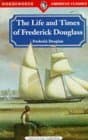
Core Idea
- Difficulty
- Medium
- Read it if
- You want a first-hand account of American slavery, its psychological and physical tolls, and the intellectual journey of one of history's most powerful advocates for human rights.
- Skip it if
- You are looking for a light read or prefer modern historical analysis over primary source narrative.
Key Takeaways from Life and Times of Frederick Douglass
Knowledge as Emancipation
Literacy was not just education, but a weapon against slavery.
Douglass's path from a boy secretly learning the alphabet to a skilled speaker and writer shows the power of knowledge. He understood early that illiteracy was a main part of slavery, kept in place to keep enslaved people unaware of their rights and the world. His secret lessons, first from Mrs. Auld and then from white children, were acts of rebellion. Learning to read, though it first made him feel more pain by showing him the extent of his bondage, gave him the tools for his escape and his fight against slavery. It turned his despair into resolve, helping him explain his experiences and argue for freedom.
“I would at times feel that learning to read had been a curse rather than a blessing. It had given me a view of my wretched condition, without the remedy. It opened my eyes to the horrible pit, but to no ladder upon which to get out.”
In the book: Douglass recounts Mrs. Auld's initial kindness in teaching him the alphabet, which was abruptly stopped by her husband, Hugh Auld, who declared that 'learning would spoil the best n****r in the world.' This moment solidified Douglass's understanding that knowledge was inherently dangerous to the slave system.
Try this: Actively seek knowledge and understanding, especially in areas where information is suppressed or distorted. Recognize that true liberation often begins with intellectual empowerment and the ability to articulate one's own narrative.
Related ideas: literacy, emancipation, resistance, self-education
Slavery's Corrupting Influence
The institution of slavery dehumanized not just the enslaved, but also the enslavers.
Douglass shows how slavery was a moral poison, damaging the humanity of everyone it touched. His most striking example is Mrs. Auld, who at first was kind and taught him to read. But under the slave system and her husband's warnings, she became cruel and opposed his education. This shows that slavery was not just about money but an idea that twisted morals and stopped empathy, even in people who might have been decent. It made slave owners tyrants, taking away their own compassion and honesty.
“Slavery proved as injurious to her as it did to me. When I went there, she was a pious, warm, and tender-hearted woman. The tender heart became stone, and the lamblike disposition gave way to one of tiger-like fierceness.”
In the book: The dramatic change in Mrs. Auld's character, from a woman who treated him 'as she would a white child' to one who became 'even more violent in her opposition' to his learning, serves as a stark example of slavery's corrupting power.
Try this: Examine systems and ideologies for their potential to corrupt individuals, even those with good intentions. Resist participating in systems that demand the dehumanization of others, as they inevitably diminish one's own humanity.
Related ideas: dehumanization, moral-corruption, systemic-evil, empathy-erosion
Resistance in Many Forms
From covert acts to open defiance, resistance was constant and varied.
Douglass's story is full of examples of resistance, showing that enslaved people were not passive. His own journey started with secret learning, then grew to physical resistance against the 'slave-breaker' Covey. This fight was a key moment that brought back his sense of self and determination. Besides direct fights, resistance appeared in small ways: pretending to be sick, working slowly, keeping cultural practices, and, importantly, sharing information and planning escapes. These acts, big or small, weakened slavery and affirmed the humanity of those it tried to deny. Douglass's story emphasizes that freedom was earned, not given, through efforts on many fronts.
“I was a slave — a slave for life. I might as well be killed by the sword as by starvation. I had made up my mind to get a blow in, if I could, against my oppressor.”
In the book: His famous fight with Edward Covey, where Douglass 'resolved to fight,' resisting for nearly two hours, marked a turning point. He declared, 'I was a changed being after that fight. I was nothing before; I was a man now.' This act of self-defense broke Covey's power over him and instilled a renewed sense of self-worth.
Try this: Recognize and support diverse forms of resistance against injustice, understanding that direct confrontation is not the only valid method. Find ways to assert agency and humanity even within oppressive structures.
Related ideas: resistance, agency, rebellion, self-preservation
The Hypocrisy of Christianity
Many enslavers used religion to justify brutality, exposing a profound moral contradiction.
Douglass shows the great hypocrisy of slave owners who claimed to be Christian while doing terrible things. He separates the 'Christianity of the land' from the 'Christianity of Christ,' saying the first was used to support a bad system. Masters like Captain Auld, who became religious, often grew even more cruel, using the Bible to justify their harshness and denying enslaved people the spiritual comfort they claimed for themselves. This criticism of religious hypocrisy is strong, showing how deeply slavery was rooted, even twisting holy texts to serve its purposes. Douglass's critique is not of faith itself, but of its dishonest use for oppression.
“I prayed for freedom for twenty years, but received no answer until I prayed with my legs.”
In the book: Douglass notes that his master, Captain Auld, became 'more cruel and hateful in all his ways' after his conversion at a Methodist camp meeting. He would quote scripture to justify withholding food and inflicting punishment, often praying loudly while simultaneously starving and beating his enslaved people.
Try this: Critically examine how religious or moral doctrines are used to justify power imbalances or oppression. Challenge interpretations that contradict fundamental principles of justice and human dignity.
Related ideas: religious-hypocrisy, moral-relativism, spiritual-abuse, false-piety
The Psychological Scars of Slavery
Beyond physical suffering, slavery inflicted deep and lasting psychological trauma.
Douglass clearly describes the psychological harm of slavery. He talks about the systematic breaking of spirit, the constant fear, families being split apart, and identity being taken away. Being treated as property, a 'thing' instead of a person, was very damaging. The fear of punishment, not knowing what would happen, and seeing cruel acts against others created an atmosphere of terror and sadness. Even after his escape, the psychological scars remained, showing as deep distrust and a constant awareness of the injustice he had lived through. This points out that freedom was not just about physical release, but a long process of getting back one's mental and emotional health.
“I was now, for the first time, a slave in fact. I was now to learn the bitter lesson, that I was not only a slave, but a chattel, an article of property, a thing, and not a person.”
In the book: Douglass recounts the deep emotional pain of being separated from his mother at a young age, and later witnessing the brutal whipping of his Aunt Hester, which left an indelible mark of terror and helplessness on his psyche.
Try this: Recognize the long-term psychological impacts of trauma and systemic oppression. Support efforts for healing, reconciliation, and the creation of environments that foster dignity and mental well-being for all.
Related ideas: psychological-trauma, dehumanization, identity-loss, intergenerational-trauma
The Power of Narrative and Voice
Telling one's own story is a crucial act of self-determination and social change.
Douglass being an orator and author was a direct challenge to the slave system, which tried to silence and erase the voices of enslaved people. By carefully writing down his experiences, from the harsh reality of plantation life to the intellectual awakening that led to his escape, he provided clear proof against romanticized or dehumanizing stories of slavery. His skilled and clear voice, developed through self-education and abolitionist speeches, became a tool for social change. This autobiography is not just a personal story; it is a political act, showing how individual stories can break down oppressive ideas and energize movements for justice. He owned his story, and in doing so, owned his freedom.
“I have been frequently asked how I felt when I found myself in a free State. I have never been able to answer the question with any satisfaction to myself. It was a moment of profound emotion, a moment for which I had longed and toiled, but it was also a moment of immense uncertainty.”
In the book: His detailed descriptions of his experiences, such as the cruelty of Mr. Gore, the overseer who shot Demby for refusing to leave a creek, or the specific accounts of hunger and exposure, provided undeniable evidence to abolitionist audiences who often doubted the severity of slavery.
Try this: Empower marginalized voices to tell their stories without mediation. Understand that personal narratives are essential for challenging dominant narratives and fostering empathy and understanding in society.
Related ideas: narrative-power, autobiography, voice, social-change, self-determination
The Nuance of Freedom
Escape to the North was a beginning, not an end, to the struggle for true liberty.
Douglass's escape to the North was a great achievement, but he makes it clear that his troubles did not end there. He describes the worries of a person on the run, the constant fear of being caught, and the difficulty of finding work and making a new life in a society still full of racial bias. He faced discrimination, money problems, and the mental weight of living as a 'fugitive from injustice.' This detailed look at freedom shows that legal freedom was only one step; true liberty needed full civil rights, economic chances, and an end to systemic racism. His journey shows that freedom is a complex, ongoing process, not a single event.
“I was now my own master. But I was not free; I had simply exchanged masters. I was a freeman, but I was not a citizen.”
In the book: Upon arriving in New Bedford, Massachusetts, Douglass describes his struggle to find work, encountering prejudice even among white laborers who refused to work alongside him. He also details the persistent fear of being identified by former associates or bounty hunters.
Try this: Recognize that achieving justice is often a multi-stage process. Support ongoing efforts to dismantle systemic barriers, even after initial legal or social reforms, to ensure true equity and freedom for all.
Related ideas: fugitive-life, racial-prejudice, civil-rights, systemic-barriers, post-emancipation-struggle
The Imperative of Abolitionism
Active participation in social movements is necessary to dismantle oppression.
Douglass's life became closely tied to the abolitionist movement. His personal story, told with strong words, became an important weapon in the fight against slavery. He went from a private fugitive to a public figure, understanding that his freedom was not complete without the freedom of all enslaved people. His choice to publish his autobiography, despite the big risk of revealing his identity, shows his strong commitment to the cause. He lectured, wrote, and organized, proving that individual experience, when used for group action, can start big social change. His work shows the moral need to not just escape oppression, but to actively work to end it for everyone.
“I have no words to describe the delight with which I beheld the movements of the anti-slavery movement, and to hear the eloquent appeals of its devoted advocates.”
In the book: Douglass's early involvement with William Lloyd Garrison and the American Anti-Slavery Society, where he became a prominent speaker, despite initially being advised to 'stick to the facts' and not speak too 'learnedly,' lest people doubt he was ever enslaved.
Try this: Identify injustices and actively participate in movements dedicated to their eradication. Leverage personal experiences and skills to contribute to collective efforts for social justice.
Related ideas: abolitionism, social-justice, activism, collective-action, moral-imperative
The Brutality of the Overseer System
Overseers were agents of terror, enforcing slavery's cruelty with impunity.
Douglass gives disturbing insights into the overseer system, which was the most immediate and cruel part of slavery for most enslaved people. Men like Mr. Gore and Mr. Severe were not just supervisors; they were tools of terror, allowed to use extreme violence with little oversight. Douglass details their random cruelty, their mental manipulation, and their casual disregard for human life. The overseer system ensured constant watching and punishment, breaking the spirit and body of enslaved people, and creating a place where fear was the main motivation. This clear picture shows the systematic violence within slavery, which went far beyond the plantation owner to a group of enforcers.
“He was a cruel man, hardened by a long course of slaveholding. He would whip a slave for looking him in the eye, and for not looking him in the eye.”
In the book: The harrowing account of Mr. Gore shooting Demby, an enslaved man, for stepping into a creek to cool himself after a whipping, and then calmly explaining his actions to Colonel Lloyd by stating it was necessary 'to prevent the slaves from taking liberties.'
Try this: Examine the role of enforcers and intermediaries in oppressive systems. Understand how power structures delegate cruelty and maintain control through fear and violence, and challenge these mechanisms.
Related ideas: overseer-system, brutality, violence, fear-control, systemic-violence
Family Separation as a Weapon
The deliberate breaking of family bonds was a core cruelty of slavery.
Douglass's personal experience of being separated from his mother as a baby is a sad example of one of slavery's worst cruelties. This policy was meant to stop strong family bonds among enslaved people, making them less connected and more reliant on their owners. The story shows the great emotional pain caused by these separations, and the strength of those who tried to keep family ties despite huge problems. Douglass's telling of his brief, secret visits with his mother highlights the deep human need for family and the brutal nature of a system that actively denied it.
“I never saw my mother, to know her as such, more than four or five times in my life; and each of these times was a mere chance interview, in the night, by stealth, when she had walked the whole twelve miles from her own cabin to see me.”
In the book: His early life, where he was taken from his mother as an infant and only saw her a few times, always at night, before her death. He notes that this practice was common, intended to stifle affection and sever natural ties.
Try this: Advocate for policies that protect family unity and oppose any system that intentionally separates families or denies parental rights. Support initiatives that help families reconnect and heal from past separations.
Related ideas: family-separation, emotional-trauma, human-bonds, slavery's-cruelty, parental-rights
Life and Times of Frederick Douglass Quotes
“I would unite with anybody to do right and with nobody to do wrong.”
“It is easier to build strong children than to repair broken men.”
“Power concedes nothing without a demand. It never did and it never will.”
“The soul that is within me no man can degrade.”
“I prefer to be true to myself, even at the hazard of incurring the ridicule of others, rather than to be false, and to incur my own abhorrence.”
“Where justice is denied, where poverty is enforced, where ignorance prevails, and where any one class is made to feel that society is an organized conspiracy to oppress, rob and degrade them, neither persons nor property will be safe.”
“The limits of tyrants are prescribed by the endurance of those whom they oppress.”
“A man's rights rest in three boxes: the ballot box, the jury box, and the cartridge box.”
“No man can put a chain about the ankle of his fellow man without at last finding the other end fastened about his own neck.”
“The life of the nation is secure only while the nation is honest, truthful, and virtuous.”
“I prayed for twenty years but received no answer until I prayed with my legs.”
“The white man's happiness cannot be purchased by the black man's misery.”
“If there is no struggle, there is no progress.”
“To make a contented slave, it is necessary to make a thoughtless one.”
Quiz
10 questions on the main ideas. Each answer comes with a short explanation.
Question 1
What was Frederick Douglass's birth name as recorded in the book?
- Frederick Augustus Washington Bailey
- Frederick Johnson Douglass
- Frederick Washington Johnson
- Frederick Augustus Johnson
Show answer
A. Frederick Augustus Washington Bailey Douglass was born Frederick Augustus Washington Bailey on a Maryland plantation. He changed his name after escaping to the North to avoid recapture, eventually settling on Frederick Douglass as his public name.
Question 2
What pivotal event in Douglass's childhood first sparked his desire for freedom?
- Being separated from his mother as an infant
- Witnessing his aunt being brutally whipped
- Learning to read from his mistress
- Being sent to work in Baltimore
Show answer
B. Witnessing his aunt being brutally whipped Douglass describes witnessing the savage whipping of his Aunt Hester by their master as a traumatic childhood moment that awakened him to the brutal reality of slavery and planted seeds of resistance.
Question 3
How did Douglass initially learn to read and write?
- Through formal schooling arranged by abolitionists
- By secretly observing white children's lessons
- From his mistress Sophia Auld before she was forbidden to teach him
- Through correspondence courses while working on the plantation
Show answer
C. From his mistress Sophia Auld before she was forbidden to teach him Sophia Auld, wife of his Baltimore owner Hugh Auld, began teaching young Frederick the alphabet. When Hugh discovered this, he forbade it, declaring education would make slaves unfit for slavery, which only strengthened Douglass's determination to learn.
Question 4
What was Douglass's primary argument about the relationship between slavery and religion in the American South?
- That Southern Christianity was pure and uncorrupted by slavery
- That slaveholders used Christianity to justify and perpetuate slavery
- That religion had no influence on the institution of slavery
- That only Catholic slaveholders were hypocritical about slavery
Show answer
B. That slaveholders used Christianity to justify and perpetuate slavery Douglass argued forcefully that Southern Christianity was a hypocritical perversion that used biblical interpretation to defend slavery, making religious slaveholders the cruelest of all because they claimed divine sanction for their brutality.
Question 5
What was the 'Covey incident' that Douglass describes as a turning point in his life?
- His successful escape from the plantation
- A physical confrontation where he fought back against a brutal overseer
- His first public speech to white abolitionists
- The moment he decided to change his name
Show answer
B. A physical confrontation where he fought back against a brutal overseer After enduring extreme brutality from overseer Edward Covey, the 16-year-old Douglass fought back physically for two hours. Though neither won decisively, Covey never whipped him again, and Douglass called this the moment he became a man and regained his sense of self-worth.
Question 6
How did Douglass finally achieve his escape from slavery?
- By stowing away on a ship to England
- Through the Underground Railroad with Harriet Tubman's help
- By posing as a sailor with borrowed papers
- By purchasing his freedom with earnings from speaking tours
Show answer
C. By posing as a sailor with borrowed papers In 1838, Douglass borrowed identification papers from a free black sailor, dressed in sailor's clothing, and took a train from Baltimore to New York. He deliberately omitted specific details in early editions to protect escape routes for others.
Question 7
What was Douglass's position on the Constitution regarding slavery?
- He believed it was a pro-slavery document that should be abandoned
- He argued it was an anti-slavery document that abolitionists should use
- He thought it was neutral on slavery and irrelevant to the debate
- He advocated for a complete constitutional rewrite before addressing slavery
Show answer
B. He argued it was an anti-slavery document that abolitionists should use Unlike some radical abolitionists who viewed the Constitution as pro-slavery, Douglass came to believe through careful study that its principles were fundamentally anti-slavery, and that abolitionists should work within the constitutional framework to end slavery.
Question 8
What was Douglass's controversial relationship with fellow abolitionist William Lloyd Garrison?
- They remained close allies throughout their careers
- Douglass broke with Garrison over political strategy and the Constitution
- Garrison disowned Douglass for being too moderate on women's rights
- Dousplit was primarily over personal financial disagreements
Show answer
B. Douglass broke with Garrison over political strategy and the Constitution After initial mentorship, Douglass broke with Garrison over fundamental differences: Garrison advocated moral suasion and viewed the Constitution as pro-slavery, while Douglass embraced political action and constitutional interpretation as tools for abolition.
Question 9
According to Douglass, what was the most psychologically damaging aspect of slavery?
- Physical brutality and whippings
- The systematic destruction of family bonds
- Poor living conditions and inadequate food
- Being prevented from practicing religion
Show answer
B. The systematic destruction of family bonds While Douglass detailed physical horrors, he emphasized that slavery's greatest evil was its assault on human relationships—separating children from mothers, husbands from wives, and destroying the basic social fabric that gives life meaning.
Question 10
What practical lesson did Douglass draw from his experience with the 'Slavery as It Is' exhibit?
- That visual evidence was more persuasive than speeches in converting people to abolitionism
- That most Northerners were already convinced about slavery's evils
- That exhibits should focus on economic arguments rather than moral ones
- That such exhibits were ineffective and potentially counterproductive
Show answer
A. That visual evidence was more persuasive than speeches in converting people to abolitionism Douglass helped create an exhibit of slave instruments (whips, chains, etc.) and found that showing physical evidence of brutality was remarkably effective in convincing skeptical Northerners about slavery's reality, complementing his oratorical efforts.
Life and Times of Frederick Douglass FAQ
What is 'Life and Times of Frederick Douglass' about?
It's Frederick Douglass's autobiography detailing his journey from plantation slave to prominent abolitionist, covering his early abuse, escape to freedom, and lifelong fight for African-American civil rights and equality.
How did Frederick Douglass escape slavery?
Douglass escaped by disguising himself as a sailor and traveling by train and ferry from Maryland to New York City, a dramatic journey he recounts in the book that marked his transition to freedom.
What role did Frederick Douglass play in the abolitionist movement?
Douglass became a leading abolitionist through powerful speeches, writings like his autobiographies, and activism, working with figures like William Lloyd Garrison to campaign against slavery and for civil rights.
How is 'Life and Times of Frederick Douglass' different from other slave narratives?
Unlike many slave narratives, it's written by Douglass himself with vivid detail and literary skill, offering a firsthand account of slavery, escape, and post-freedom activism that influenced American history and literature.
Does the book discuss Douglass's later life and achievements?
Yes, it covers his later years including his work as an orator, advisor to presidents, and advocate for women's rights and full civil rights for freed slaves, providing a comprehensive view of his impact.
What is the significance of Frederick Douglass's literacy?
Douglass's self-taught literacy was crucial to his empowerment and escape; it enabled him to read abolitionist materials, write his narratives, and become a persuasive voice against slavery, highlighting education's role in freedom.
How does 'Life and Times' compare to Douglass's earlier autobiography 'Narrative of the Life'?
'Life and Times' is an expanded version that includes more details on his later life and reflections, whereas 'Narrative' focuses more on his early slavery experiences and immediate escape, offering a broader historical perspective.
What challenges did Douglass face after escaping slavery?
After escape, he faced ongoing racism, economic struggles, and threats from slave catchers, but he overcame these through activism, writing, and building a career as a speaker and leader in the abolitionist movement.
Does the book work as a historical source on American slavery?
Yes, it's a primary historical source that provides firsthand insights into slavery's brutality, the abolitionist movement, and 19th-century African-American life, widely used in education and historical studies.
What is Douglass's view on the Constitution and slavery?
Douglass initially saw the Constitution as pro-slavery but later argued it could be interpreted as anti-slavery, using this view to advocate for legal abolition and civil rights, a key theme in his speeches and writings.
About the author
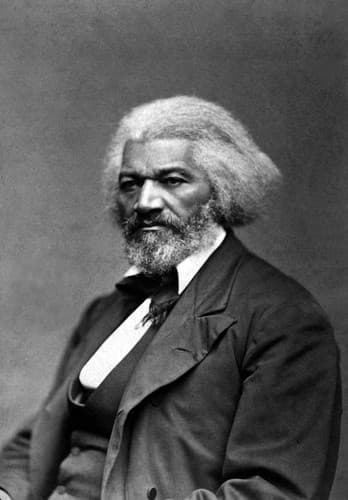
Frederick Douglass was an American social reformer, abolitionist, and writer in the 19th century. He is known for his powerful autobiographical works, including "My Bondage and My Freedom" and "Life and Times of Frederick Douglass," which detail his experiences as a former enslaved person and advocate for civil rights. His writings have had a lasting impact on discussions of race and equality in the United States.
Similar books
- Twelve Years a Slave
Solomon Northup
4.2 (95k) average on GoodreadsBiographyA vivid and harrowing account of a free man kidnapped and sold into slavery, offering a different perspective on the institution's reach.
- The Diary of a Young Girl
Anne Frank
4.2 (2.7M) average on GoodreadsBiographyDuring the Nazi occupation, a teenage girl's diary, written from a secret annex, shares observations on humanity, hope, and the wait for freedom.
- Eat, Pray, Love
Elizabeth Gilbert
3.6 (1.5M) average on GoodreadsLifestyleA heartbroken writer leaves her conventional life for a year-long global search for pleasure in Italy, spiritual devotion in India, and unexpected love and balance in Bali.
- Night
Elie Wiesel
4.3 (970k) average on GoodreadsBiographyIn the darkness of Auschwitz and Buchenwald, a teenage Elie Wiesel faces the extermination of his family, the loss of his faith, and the lasting scars of humanity's deepest cruelty.
- Steve Jobs
Walter Isaacson
4.1 (957k) average on GoodreadsBusinessSteve Jobs was a visionary who fused creativity and technology to revolutionize six industries and shape our digital world.
- The Glass Castle
Jeannette Walls
4.3 (903k) average on GoodreadsBiographyJeannette Walls's memoir describes her unusual childhood with brilliant, free-spirited parents whose poverty-stricken life shaped her independence and love despite family problems.





Enjoyed the summary?
A summary gives you the shape of the book. The book itself has the detail, the examples and the voice.
Find Life and Times of Frederick Douglass on AmazonAs an Amazon Associate, BookBrief earns from qualifying purchases. How we're funded