
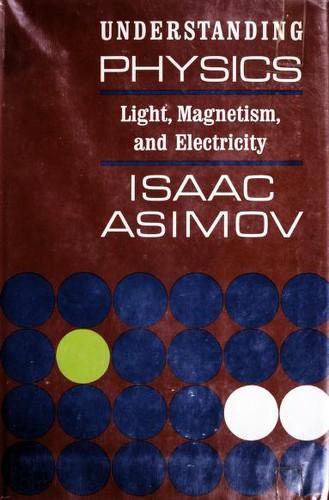
Core Idea
- Difficulty
- Easy
- Read it if
- You want a clear, engaging, and historically rich introduction to the foundational concepts of light, magnetism, and electricity, explained by a master of popular science.
- Skip it if
- You are looking for a textbook with advanced mathematical derivations or a deep dive into quantum electrodynamics.
Key Takeaways from Light, Magnetism, and Electricity
The Unified Field of Electromagnetism
Maxwell's equations revealed light as an electromagnetic wave, unifying seemingly disparate phenomena.
Asimov traces the history from early observations of static electricity and magnetic attraction to James Clerk Maxwell's discoveries. Before Maxwell, scientists like Coulomb, Oersted, Ampere, and Faraday each added to the understanding, showing links between electric currents and magnetic fields and how changing magnetic fields create electric currents. Maxwell, with his four equations, predicted electromagnetic waves moving at the speed of light. This was a major step, changing light from a mystery into a result of electric and magnetic fields moving. This unification is the book's best insight, showing how theoretical physics can combine observations into a complete, predictive system.
“Maxwell's equations, synthesizing the work of Faraday, Ampere, and others, demonstrated that electricity, magnetism, and light were all manifestations of the same fundamental force: electromagnetism.”
In the book: Maxwell's equations, derived in the 1860s, which predicted electromagnetic waves and their speed, matching the known speed of light.
Try this: Understanding this foundational unification is crucial for comprehending all modern technologies reliant on radio waves, microwaves, X-rays, and even visible light, from communication systems to medical imaging.
Related ideas: maxwell-equations, electromagnetic-spectrum, faraday-induction
The Invisible Spectrum
Beyond visible light, a vast array of electromagnetic waves exists, each with unique properties and applications.
Asimov describes how different parts of the electromagnetic spectrum were discovered and what they are like. He explains how Herschel found infrared radiation by its heat and Ritter found ultraviolet by its effect on silver chloride. Later, Hertz's radio wave experiments confirmed Maxwell's ideas, opening up the radio and microwave fields. Röntgen's accidental discovery of X-rays changed medicine. This history shows that what we call 'light' is a small part of a larger, continuous event. The book explains that these different types of radiation are not truly different, but are electromagnetic waves with various wavelengths and frequencies, each acting with matter in its own way. Expanding our perception with scientific tools is a repeated idea.
“The human eye perceives only a tiny sliver of the electromagnetic spectrum; stretching far beyond are radio waves, microwaves, infrared, ultraviolet, X-rays, and gamma rays.”
In the book: Herschel's infrared experiment (1800), Ritter's ultraviolet experiment (1801), Hertz's radio wave experiments (1887), Röntgen's X-ray discovery (1895).
Try this: Appreciating the full spectrum allows us to understand technologies ranging from broadcast radio and microwave ovens to remote controls, tanning beds, medical diagnostics, and astrophysics.
Related ideas: electromagnetic-spectrum, wavelength-frequency, hertz-radio-waves
The Nature of Light: Wave or Particle?
The historical debate over light's true nature highlights the evolving understanding of quantum phenomena.
Asimov gives a history of wave-particle duality, an idea older than quantum mechanics that began in early talks about light. He outlines Newton's support for a particle theory, backed by things like sharp shadows, and Huygens' wave theory, which better explained diffraction and interference. Young's double-slit experiment seemed to prove light's wave nature. But the photoelectric effect, explained by Einstein using Planck's quantum idea, brought back the particle side (photons). Asimov, writing before quantum field theory was fully accepted, presents this as an interesting historical conflict, ending with the understanding that light acts as both a wave and a particle depending on the experiment. This dual nature hints at the deeper complexities of quantum mechanics, showing how science often moves forward through seeming contradictions.
“The debate between Newton's corpuscular theory and Huygens' wave theory of light was a long and vigorous one, ultimately unresolved until the advent of quantum mechanics.”
In the book: Newton's corpuscular theory, Huygens' wave theory, Young's double-slit experiment (1801), Einstein's explanation of the photoelectric effect (1905).
Try this: Understanding wave-particle duality is fundamental to quantum mechanics and informs technologies like lasers, solar cells, and advanced optics, which exploit specific aspects of light's behavior.
Related ideas: wave-particle-duality, photoelectric-effect, double-slit-experiment
The Role of Experimentation and Observation
Scientific progress in electromagnetism was driven by careful observation and ingenious experimental design.
Asimov consistently highlights how important experiments were in building our understanding of light, magnetism, and electricity. He tells how William Gilbert carefully studied magnetism, separating it from static electricity. He details Oersted's accidental discovery of magnetism from electric currents and Ampere's later measurements. Faraday, often called the greatest experimenter, did many experiments that led to electromagnetic induction, which led to generators and transformers. The book stresses that theoretical breakthroughs, like Maxwell's, were built on many observations. This view sometimes undersells pure theoretical insight, but it shows how science moves back and forth, where theory guides experiment and experiment refines theory. The detailed descriptions of old experiments are especially interesting.
“From Gilbert's early observations of magnetism to Faraday's meticulous experiments with induction, the story of electromagnetism is one of constant inquiry and empirical verification.”
In the book: Gilbert's 'De Magnete' (1600), Oersted's discovery (1820), Faraday's induction experiments (1831).
Try this: This reinforces the importance of empirical evidence and iterative testing in any problem-solving or innovation process, whether in science, engineering, or business.
Related ideas: scientific-method, empirical-evidence, faraday-cage
The Invisible Force Fields
The concept of fields, pioneered by Faraday, transformed our understanding of how forces act at a distance.
Asimov presents Michael Faraday's idea of 'fields' as a key shift in thinking. Before Faraday, forces like gravity or magnetism were often explained as 'action at a distance'—a mysterious influence without anything in between. Faraday, through his experiments, imagined invisible lines of force coming from sources, filling space, and causing interactions. This idea, at first doubted, was later put into math by Maxwell. It allowed scientists to see and calculate the effects of electric and magnetic forces in any area without looking directly at the source. This is the book's best insight about the physics, showing how a new way of thinking can lead to theoretical progress and set up a unified theory. It moved physics away from only mechanical models.
“Faraday's revolutionary idea of 'lines of force' filling space, rather than action at a distance, provided a crucial conceptual framework for understanding electricity and magnetism.”
In the book: Faraday's conceptualization of 'lines of force' and his experiments demonstrating their effects, later mathematically formalized by Maxwell.
Try this: The field concept is fundamental to modern physics, from electromagnetism to quantum field theory, and is essential for understanding antenna design, motor operation, and particle interactions.
Related ideas: faraday-lines-of-force, electromagnetic-field, action-at-a-distance
The Interconnectedness of Phenomena
The journey of discovery reveals that seemingly distinct phenomena are often deeply intertwined.
Throughout the book, Asimov shows how discoveries in one area often helped others. For example, Galvani's accidental discovery of 'animal electricity' led Volta to invent the battery, which gave Oersted a steady current for discovering electromagnetism. This then spurred Faraday's work on induction, which then informed Maxwell's unification of light. The story shows how science progresses together, where observations that seemed separate eventually come together into a larger, more unified understanding. This connection reminds us that scientific fields are not separate but part of a larger, connected body of knowledge. It shows how basic discoveries often affect many fields.
“The history of light, magnetism, and electricity is not a tale of three separate sciences, but of a gradual realization of their profound and intricate interconnections.”
In the book: The chain of discoveries from Galvani's frog legs to Volta's battery, Oersted's electromagnetism, Faraday's induction, and Maxwell's equations.
Try this: This encourages a holistic approach to problem-solving, recognizing that solutions in one domain might be found by drawing analogies or insights from seemingly unrelated areas.
Related ideas: scientific-synthesis, interdisciplinary-science, voltaic-pile
The Gradual Nature of Scientific Revolution
Major scientific breakthroughs are often the culmination of many smaller, incremental steps.
Asimov disproves the idea of the 'lone genius' by detailing the contributions of many scientists, often unknown, whose work prepared the way for more famous people. He shows how understanding static electricity began with Thales, went through Gilbert, Dufay (positive and negative charges), and Franklin (single-fluid theory). Each scientist added a piece, fixed errors, or improved ideas. Even Maxwell's great achievement was a combination of decades of experimental and theoretical work by others. This view counters simple historical stories and shows that scientific changes are rarely sudden, but rather a result of combined, shared effort over generations. This view has limits if it focuses too much on small steps over big changes, but Asimov balances this by showing how small steps can lead to big conclusions.
“No single genius arises from a vacuum; every great discovery stands upon the shoulders of countless predecessors, building brick by brick towards a grander edifice.”
In the book: The progression of understanding static electricity from Thales to Franklin, and the collective work leading to Maxwell's equations.
Try this: This fosters patience and persistence in research and development, recognizing that significant progress often requires sustained effort and collaboration over time, rather than waiting for a singular 'eureka' moment.
Related ideas: scientific-progress, cumulative-knowledge, paradigm-shift
The Practical Impact of Abstract Science
Pure scientific inquiry, often without immediate practical goals, ultimately underpins all modern technology.
Asimov repeatedly points out the surprising practical results of theoretical and experimental work first done for purely intellectual reasons. Faraday's experiments on electromagnetic induction, for example, were not meant to create power plants, but they directly led to generators and electric motors. Maxwell's equations, developed to describe existing events, unexpectedly predicted radio waves, which later became the basis of global communication. This is an important lesson, showing that investing in basic, curiosity-driven research, even without immediate commercial use, is vital for long-term societal progress. The book argues for the value of basic science. This argument is especially relevant today, when there is often a focus on applied research and quick results.
“Many of the most profound discoveries were made by individuals driven purely by curiosity, with no inkling of the world-changing technologies their work would eventually enable.”
In the book: Faraday's discovery of induction leading to electric motors/generators; Maxwell's prediction of radio waves leading to wireless communication.
Try this: Advocates for continued investment in basic scientific research, emphasizing that the most transformative technologies often emerge from unforeseen applications of fundamental discoveries.
Related ideas: basic-research, applied-science, technological-innovation
The Enduring Mysteries of the Universe
Despite grand unifications, fundamental questions about the nature of reality persist.
While celebrating electromagnetism, Asimov quietly reminds the reader that scientific progress is a journey, not an end. He hints at other basic forces (gravity, strong, weak nuclear forces) that were separate from electromagnetism when he wrote the book. The book, published in 1966, came before the Standard Model's electroweak unification, leaving readers to look forward to future discoveries. This view keeps the story from feeling complete or final, instead creating wonder and encouraging more questions. It is a humble acknowledgment that even the most complete theories have limits, and there is always more to find. This is a valuable insight, as it presents science not as a set of answers, but as a continuous process of questioning and discovery.
“Even with electromagnetism unified, the universe still holds deeper secrets, hinting at forces and phenomena yet to be fully understood.”
In the book: The book's implicit acknowledgment of gravity as a separate force and the lack of a grand unified theory at the time of publication.
Try this: Cultivates intellectual humility and a lifelong curiosity, recognizing that even in well-understood fields, new questions and deeper insights can always emerge.
Related ideas: grand-unified-theory, fundamental-forces, scientific-inquiry
The Power of Analogy and Visualization
Scientists often use familiar concepts and mental models to grasp abstract phenomena.
Asimov often shows how scientists, when dealing with new and invisible events, used comparisons and pictures to build ideas. Franklin's single-fluid theory of electricity, while not completely accurate, gave a useful comparison for understanding charge transfer. Faraday's 'lines of force' gave a visual and intuitive way to think about fields before Maxwell formalized them with math. These mental ideas, even if later improved or replaced, were important steps in scientific understanding. Asimov's own writing often uses clear comparisons to explain complex topics, similar to the scientists he describes. This highlights the human side of scientific discovery, where imagination and conceptual tools are as important as observations. The book itself is an example of using clear language and comparisons to make complex science understandable.
“From Franklin's 'fluid' of electricity to Faraday's 'lines of force,' analogies have been indispensable tools for understanding the unseen mechanisms of nature.”
In the book: Franklin's single-fluid model of electricity; Faraday's 'lines of force' concept.
Try this: Encourages the use of analogy, metaphor, and visual thinking as powerful tools for learning, teaching, and problem-solving in any complex domain.
Related ideas: scientific-models, conceptual-frameworks, analogy-in-science
Light, Magnetism, and Electricity Quotes
“It is the nature of science that it progresses by the refutation of old theories.”
“The universe is not only stranger than we imagine, it is stranger than we *can* imagine.”
“It is the function of science to replace the most fantastic speculations by the most probable explanations.”
“The most exciting phrase to hear in science, the one that heralds new discoveries, is not 'Eureka!' but 'That's funny...'”
“There is no reason to believe that the universe is not as strange and wonderful as it appears.”
“Electricity is the most fundamental of all forces, and its understanding has led to the greatest technological advances.”
“Light, after all, is an electromagnetic wave.”
“Magnetism is but one face of the electric coin.”
“The laws of physics are not a matter of opinion, but of observation and experiment.”
“We are surrounded by forces we cannot see, but which shape our world profoundly.”
“The history of science is a history of the human mind grappling with the unknown.”
“To understand the universe, we must first understand its fundamental components and interactions.”
“Every great scientific revolution begins with a disagreement.”
“The beauty of science lies in its ability to reveal order in apparent chaos.”
Quiz
10 questions on the main ideas. Each answer comes with a short explanation.
Question 1
What fundamental force does Asimov discuss that governs the interaction between charged particles?
- Gravity
- Strong Nuclear Force
- Electromagnetic Force
- Weak Nuclear Force
Show answer
C. Electromagnetic Force The electromagnetic force is responsible for interactions between electrically charged particles, encompassing both electric and magnetic phenomena.
Question 2
According to the book, what is light composed of?
- Tiny particles called photons
- Waves of sound
- Streams of water molecules
- Invisible gases
Show answer
A. Tiny particles called photons Asimov explains that light can be understood as both a wave and a stream of particles called photons, exhibiting wave-particle duality.
Question 3
What phenomenon occurs when light bends as it passes from one medium to another, such as from air to water?
- Reflection
- Diffraction
- Refraction
- Absorption
Show answer
C. Refraction Refraction is the bending of light as it passes through different mediums due to a change in its speed.
Question 4
Which scientist is credited with unifying electricity and magnetism into a single theory of electromagnetism?
- Isaac Newton
- Albert Einstein
- Michael Faraday
- James Clerk Maxwell
Show answer
D. James Clerk Maxwell James Clerk Maxwell's equations mathematically unified electricity and magnetism, predicting the existence of electromagnetic waves like light.
Question 5
What is the term for a material that allows electric charge to flow through it easily?
- Insulator
- Conductor
- Semiconductor
- Resistor
Show answer
B. Conductor Conductors are materials that permit the free movement of electric charge, such as metals.
Question 6
Asimov discusses the concept of magnetic fields. What is a property of magnetic fields?
- They only exist around non-metallic objects.
- They have no poles.
- They always have a north and a south pole.
- They are only visible under a microscope.
Show answer
C. They always have a north and a south pole. Magnetic fields are characterized by having both a north and a south pole; isolated poles have not been observed.
Question 7
What is the phenomenon where a changing magnetic field can induce an electric current in a nearby conductor?
- Ohm's Law
- Electromagnetic Induction
- Photoelectric Effect
- Capacitance
Show answer
B. Electromagnetic Induction Electromagnetic induction, discovered by Michael Faraday, is the production of an electromotive force across an electrical conductor in a changing magnetic field.
Question 8
Asimov explains that the spectrum of electromagnetic radiation includes visible light. What part of the spectrum has longer wavelengths than visible light?
- Ultraviolet
- X-rays
- Infrared
- Gamma Rays
Show answer
C. Infrared The electromagnetic spectrum, from longest to shortest wavelength, includes radio waves, microwaves, infrared radiation, visible light, ultraviolet radiation, X-rays, and gamma rays. Infrared has longer wavelengths than visible light.
Question 9
What fundamental constant is central to Maxwell's equations and relates the speed of light to the electric and magnetic properties of a vacuum?
- Planck's Constant
- Gravitational Constant
- Speed of Light (c)
- Boltzmann Constant
Show answer
C. Speed of Light (c) The speed of light (c) is a fundamental constant derived from Maxwell's equations, relating the permittivity and permeability of free space (ε₀ and μ₀) by c = 1/√(ε₀μ₀).
Question 10
The photoelectric effect, which Asimov might touch upon, demonstrates the particle nature of light. Which scientist received the Nobel Prize for his explanation of this effect?
- Niels Bohr
- Max Planck
- Albert Einstein
- Werner Heisenberg
Show answer
C. Albert Einstein Albert Einstein was awarded the Nobel Prize in Physics in 1921 for his explanation of the photoelectric effect, which provided key evidence for the quantum nature of light.
Light, Magnetism, and Electricity FAQ
What is the main focus of Isaac Asimov's 'Light, Magnetism, and Electricity'?
This book explores the fundamental principles of light, magnetism, and electricity, tracing their historical development and scientific understanding. Asimov breaks down complex concepts into accessible explanations, making them understandable for a general audience.
Is 'Light, Magnetism, and Electricity' a good introduction to these topics?
Yes, it's widely regarded as an excellent introductory text. Asimov's clear writing style and logical progression of ideas make it ideal for readers new to physics or those looking to refresh their understanding of these core scientific areas.
What historical figures are discussed in the book?
Asimov delves into the contributions of many pioneering scientists. You'll encounter figures like Michael Faraday, James Clerk Maxwell, Benjamin Franklin, and others who laid the groundwork for our modern understanding of electromagnetism and light.
How does Asimov explain the relationship between light and electromagnetism?
The book explains how light is a form of electromagnetic radiation. Asimov details Maxwell's groundbreaking work in unifying electricity, magnetism, and light into a single theory, demonstrating that light travels as waves of electric and magnetic fields.
Does the book cover practical applications of electricity and magnetism?
While primarily focused on the fundamental science, Asimov often touches upon the practical implications and technologies that arose from these discoveries. He connects the theoretical concepts to everyday phenomena and inventions.
Is this book suitable for high school students?
Absolutely. The book's clarity and engaging narrative make it highly suitable for high school students studying physics. It can serve as a valuable supplement to classroom learning or as a standalone resource for curious minds.
What is the difference between electricity and magnetism according to Asimov?
Asimov explains that electricity deals with electric charges and their behavior, while magnetism is concerned with magnetic fields and forces, often arising from moving electric charges. Crucially, he shows how these two forces are intrinsically linked and can be described by a single set of laws.
How does 'Light, Magnetism, and Electricity' compare to other popular science books on these topics?
Asimov's strength lies in his ability to distill complex physics into understandable prose without oversimplification. Compared to more mathematically rigorous texts, this book excels in conceptual clarity and historical context, making it a more approachable read for a broader audience.
Are there any complex mathematical formulas in the book?
While Asimov discusses the scientific principles that are often described by complex equations, he generally avoids presenting them directly in the text. The focus is on conceptual understanding rather than mathematical derivation, making it accessible even to those who are not mathematically inclined.
What are the key takeaways from reading this book?
Readers will gain a solid grasp of the interconnectedness of light, magnetism, and electricity, appreciate the scientific journey that led to our current understanding, and develop a greater appreciation for the fundamental forces that shape our universe.
About the author
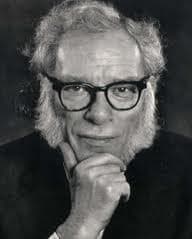
Isaac Asimov was an American writer and professor of biochemistry at Boston University. During his lifetime, Asimov was considered one of the "Big Three" science fiction writers, along with Robert A. Heinlein and Arthur C. Clarke. A prolific writer, he wrote or edited more than 500 books. He also wrote an estimated 90,000 letters and postcards. Best known for his hard science fiction, Asimov also wrote mysteries and fantasy, as well as much non-fiction.
Similar books
- A Short History of Nearly Everything
Bill Bryson
4.2 (298k) average on GoodreadsHistoryBroad, accessible historical overview of scientific discovery.
- A Brief History of Time
Stephen Hawking
4.2 (303k) average on GoodreadsHistoryBoth Asimov and Hawking aim to popularize science for a general audience, but their scopes and styles differ. Hawking's 'A Brief History of Time' delves into cosmology and quantum gravity, areas far beyond Asimov's focus on classical electromagnetism. While both authors excel at making complex ideas accessible, Hawking often uses more abstract thought experiments and delves into the philosophical implications of physics more deeply. Asimov sticks closer to the historical development and practical applications of the phenomena, making his book feel more grounded in established experimental science, whereas Hawking ventures into the frontiers of theoretical physics.
- The Diary of a Young Girl
Anne Frank
4.2 (2.7M) average on GoodreadsBiographyDuring the Nazi occupation, a teenage girl's diary, written from a secret annex, shares observations on humanity, hope, and the wait for freedom.
- Twisted 1. Twisted love
Ana Huang
3.7 (1.7M) average on GoodreadsA quiet billionaire with a difficult past finds his guarded heart opening to the woman he must protect, but their growing passion uncovers dangerous secrets and a shared, traumatic history.
- Eat, Pray, Love
Elizabeth Gilbert
3.6 (1.5M) average on GoodreadsLifestyleA heartbroken writer leaves her conventional life for a year-long global search for pleasure in Italy, spiritual devotion in India, and unexpected love and balance in Bali.
- Night
Elie Wiesel
4.3 (970k) average on GoodreadsBiographyIn the darkness of Auschwitz and Buchenwald, a teenage Elie Wiesel faces the extermination of his family, the loss of his faith, and the lasting scars of humanity's deepest cruelty.



Enjoyed the summary?
A summary gives you the shape of the book. The book itself has the detail, the examples and the voice.
Find Light, Magnetism, and Electricity on AmazonAs an Amazon Associate, BookBrief earns from qualifying purchases. How we're funded