

Synopsis
Covers the whole plot, including the ending.
- Difficulty
- Medium
- Pacing
- Slow
- Mood
- Introspective, Melancholy, Profound, Reflective
- Read it if
- You appreciate deep character studies, introspective narratives, and explorations of faith, poverty, and belonging.
- Skip it if
- You prefer fast-paced plots, clear-cut resolutions, or narratives with minimal internal monologue.
Lila Plot Summary
Covers the whole plot, including the ending.
A Shelter from the Rain
One rainy afternoon, Lila, a young woman who has long drifted, enters a small Congregationalist church in Gilead, Iowa, for shelter. She finds the minister, John Ames, inside. Despite her initial caution and his quiet surprise, they begin to talk. Lila is wary, used to a life of moving and suspicion, but Ames's gentle manner and genuine interest disarm her. Their meeting creates an immediate, though hesitant, connection. For the first time in a long while, Lila finds herself in a place that offers not just physical refuge but also a strange sense of belonging, which brings both comfort and deep unease.
The Proposal
Their conversations continue for several weeks, showing the vast differences in their lives and views. Lila, uneducated and with a history of hardship and rootlessness, contrasts sharply with the scholarly, deeply religious Reverend Ames. Despite his age and her youth, Ames is drawn to Lila's fierce independence, honesty, and vulnerability. To Lila's surprise, and against the community's expectations, John Ames proposes marriage. This unexpected offer forces Lila to confront her deep-seated distrust of stability and her fear of being known, as she grapples with such a commitment to a man and a life so different from anything she has ever known.
Recollections of Doll
As Lila considers Ames's proposal, her mind often returns to her past, especially her early childhood with Doll. She remembers being a neglected toddler, left alone and starving on a porch. Doll, a young, resourceful drifter, found her and, out of compassion and perhaps a need for companionship, took Lila with her. This act formed the main relationship of Lila's life. Doll became her protector, teacher, and only family, giving Lila a strong sense of loyalty and a practical, often harsh, understanding of survival outside conventional society. Their bond grew through hardship and a shared life on the margins.
Life on the Road
Lila's memories continue to show her life with Doll and their small, changing group of drifters. They lived hand-to-mouth, working odd jobs, stealing when needed, and constantly moving to avoid detection or trouble. Lila recalls the harsh realities: hunger, cold, constant vigilance, and occasional violence, often involving men who threatened their safety. Doll's resourcefulness and fierce protection were essential in these years, teaching Lila to be self-reliant and suspicious of outsiders. Despite the difficulties, there were also moments of simple joy, shared meals, and the deep, unspoken love between Lila and Doll.
The Stabbing Incident
A difficult memory for Lila involves Doll stabbing a man to protect Lila. This act of desperate violence, though it saved Lila, forced Doll to flee, separating her from Lila forever. The memory is sharp, showing Doll's unwavering loyalty and the brutal measures she would take. Lila was left alone, though a kind, elderly woman named Sylvie later took her in for a time. This event deeply shaped Lila's understanding of love, sacrifice, and the dangerous world she lived in, solidifying her fear of attachment and loss.
Marriage and New Beginnings
Despite her deep reservations and the vast difference in their pasts, Lila accepts John Ames's proposal. They marry, and Lila moves into Ames's parsonage, a stark change from her nomadic life. The transition is difficult; Lila struggles with domestic routines, community expectations, and the unfamiliar comforts of a stable home. She grapples with being a minister's wife and the inherent goodness Ames sees in the world, which often conflicts with her own cynical, hard-earned view. Ames, for his part, is patient and loving, but their discussions often highlight their different understandings of God, morality, and human nature.
Theological Debates
Lila and John Ames's marriage includes deep, often challenging, theological conversations. Lila, having seen much suffering and moral ambiguity, struggles to reconcile Ames's gentle, grace-filled Christianity with the harsh realities she knows. She questions concepts like eternal damnation, fearing for the souls of Doll and others who lived outside societal norms. Ames patiently explains his understanding of God's love and mercy, but Lila's experiences often lead her to challenge his faith's foundations, forcing Ames to articulate his beliefs with greater depth and empathy, and to confront the limits of his own sheltered life. These debates are central to their growing understanding of each other.
The Pregnancy
Lila discovers she is pregnant, which brings a complex mix of emotions. For Ames, it is a source of great joy and a miracle in his old age. For Lila, it increases her worries about her past and her ability to be a mother. She fears her own capacity for love, haunted by her abandonment and the harsh lessons of her upbringing. The thought of bringing a child into the world forces her to further confront her identity and the legacy of her transient, often violent, past, making her question if she can truly provide a stable, loving home, or if she will repeat the patterns of neglect she experienced.
Confronting the Past
As her pregnancy progresses, Lila's internal struggle between her past life with Doll and her present with Ames grows. She deeply loves Doll and feels strong loyalty to her memory, struggling to reconcile Doll's actions and their unconventional life with the moral framework of Ames's world. She fears that embracing Ames's faith would mean betraying Doll, or condemning her. This conflict is a central tension in her new life, as she tries to integrate the two different parts of herself without sacrificing the love she holds for either. Ames, sensing her struggle, tries to offer comfort and understanding, emphasizing God's boundless grace.
The Birth of a Son
Lila gives birth to a healthy baby boy, whom she and Ames name Robby. The birth of her son marks a significant turning point for Lila. Holding her child, she experiences a new depth of love and responsibility, which begins to calm her long-held fears and anxieties. The baby becomes a tangible link between her past and present, anchoring her more firmly in her new life. Ames, now a father again in his old age, is overjoyed, and their shared love for Robby deepens their bond, providing a new focus for their family and a tangible example of the hope and grace Ames has always preached.
Reconciliation and Hope
With Robby's birth, Lila slowly begins to find peace and reconciliation. She starts to understand that embracing her new life with Ames and her son does not require her to abandon or condemn her past with Doll. Instead, she finds a way to hold both truths, recognizing the love and protection Doll provided while also opening herself to the gentle, unconditional love offered by Ames and his faith. Her journey is one of gradual acceptance, finding a place where her past hardships inform her understanding of grace, rather than negating it. She begins to see a path forward where love, rather than fear, guides her.
Principal Figures
Lila
Protagonist
A young, rootless woman who marries a much older minister.
Lila is a fiercely independent and guarded young woman who has lived a transient, often harsh life on the fringes of society. Abandoned as a toddler, she was raised by Doll, a resourceful drifter, and learned to survive through pragmatism, vigilance, and occasional petty theft. She is uneducated in a formal sense but possesses a keen intellect, a deep capacity for observation, and an unyielding moral compass shaped by her experiences. Her past has instilled in her a profound mistrust of stability, institutions, and conventional morality, making her wary of attachment and the judgment of others. She is driven by a deep loyalty to her past and a struggle to understand her place in the world.
Relationships: John Ames (Husband, intellectual and spiritual confidant); Doll (Adoptive mother, protector, and the central figure of her past); Robby (Son, a symbol of her new life and hope)
John Ames
Supporting
An elderly Congregationalist minister who marries Lila.
John Ames is a gentle, compassionate, and deeply intellectual Congregationalist minister in the small town of Gilead, Iowa. He is a widower, having lost his first wife and child many years ago, and lives a quiet, contemplative life centered on his faith and his sermons. Ames is characterized by his profound capacity for empathy, his unwavering belief in God's grace, and his intellectual curiosity. He sees the inherent goodness in people and the world, often in contrast to Lila's more cynical view. He is driven by his love for God and humanity, and a desire to understand and minister to others.
Relationships: Lila (Wife, spiritual student, and teacher); Robby (Son, a miracle in his old age)
Doll
Supporting
Lila's adoptive mother and fierce protector.
Doll is a young, resourceful drifter who rescues Lila as a neglected toddler and raises her on the road. She is fiercely protective, pragmatic, and possesses a strong, albeit unconventional, moral code. Doll lives outside the law, often resorting to petty theft or violence when necessary to survive and protect Lila. She is not formally educated but is cunning and resilient, teaching Lila the skills needed for their nomadic existence. Doll's love for Lila is profound and unconditional, and her actions, though sometimes violent, are always motivated by her desire to keep Lila safe. She represents Lila's past, her origins, and her understanding of raw, unvarnished love.
Relationships: Lila (Adoptive daughter, the sole object of her fierce devotion)
Robby
Supporting
Lila and John Ames's son.
Robby is the infant son of Lila and John Ames. His birth is a profound event for both parents, especially for Lila, as he represents a tangible connection to her new life and a future she once thought impossible. Robby symbolizes hope, innocence, and the continuity of life. For Ames, he is a miraculous gift in his old age. For Lila, Robby forces her to confront her fears about motherhood and attachment, ultimately helping her to reconcile her past with her present. He is a catalyst for Lila's emotional and spiritual growth, representing the possibility of a stable, loving family.
Relationships: Lila (Mother, catalyst for her growth); John Ames (Father, a source of profound joy)
Sylvie
Mentioned
An elderly woman who briefly takes Lila in after Doll's departure.
Sylvie is an elderly, kind woman who provides temporary shelter and care for Lila after Doll is forced to flee. Though her time with Lila is brief, Sylvie offers a glimpse of conventional domesticity and gentle kindness, contrasting with Lila's previous experiences. She represents a fleeting moment of stability and a different kind of care than Doll's fierce protection. Her presence in Lila's memory highlights the varied forms of human connection Lila experienced.
Relationships: Lila (Temporary guardian/caretaker)
Themes & Insights
The Nature of Grace and Redemption
The novel explores grace, particularly how individuals with very different lives understand and experience it. John Ames, from traditional theology, believes in boundless, unconditional grace. Lila, having lived a difficult life, struggles to reconcile this with the injustices and suffering she has seen. She questions how grace applies to people like Doll, who acted violently out of love, or to herself, who feels undeserving. The novel suggests that grace is not just a theological idea but a lived experience, found in unexpected connections and in accepting one's complex past. Lila's journey is one of slowly accepting that grace can include even the darkest parts of her history, allowing for redemption without condemnation.
“There are two kinds of grace. The common and the particular. The common grace is that God loves everybody. The particular grace is that He loves us. That's a mystery. And I guess that's the only one you really have to believe.”
Love and Loyalty
Love and loyalty are central to Lila's identity and her struggle to combine her past and present. Her fierce, unconditional love for Doll, who saved and protected her, forms the foundation of her understanding of human connection. This loyalty makes it hard for her to fully embrace Ames's world, fearing it would betray Doll or condemn their shared life. The novel explores different forms of love—Doll's protective love, Ames's gentle love, and Lila's new maternal love for her son. Ultimately, Lila learns that loyalty to her past does not prevent new love, and that different forms of love can exist together and enrich each other.
“I think about Doll. She saved me. She did everything for me. And now she's gone. And I'm here. And I'm supposed to be happy. I am happy. But I think about her.”
The Search for Home and Belonging
Lila's entire life has been defined by moving and lacking a permanent home. Her arrival in Gilead and marriage to John Ames are her first real encounters with stability and the idea of 'home.' However, home is not just a physical place for Lila; it is also a state of belonging and psychological wholeness. She struggles to feel at home in her new life, haunted by memories of her transient existence and feeling like an outsider. Her journey is about finding a spiritual and emotional home, reconciling her different identities, and understanding that belonging can be found in human connection and acceptance, even when one's past is unconventional. Her son's birth further roots her in this new sense of home.
“She had never really thought of herself as having a home. Or a past, in the way people meant it. Just a lot of places she'd been, and things that had happened.”
Faith and Doubt
The novel explores faith and doubt, especially through Lila's perspective. While John Ames has unwavering faith, Lila's experiences on the edges of society have given her deep skepticism and a tendency to question God's goodness and the world's justice. She struggles with the idea of an all-loving God in the face of suffering and evil, and her questions often challenge Ames's theological assumptions. Her journey is not simply about adopting Ames's faith but about forming her own understanding, one that combines her lived experiences with the possibility of spiritual truth. Her doubt is presented not as a weakness but as a path to a deeper and more authentic faith.
“How can you believe in a God that lets things like that happen? How can you believe in a God that lets people just suffer and suffer and suffer?”
Memory and Identity
Memory is a main narrative tool, with Lila's fragmented recollections shaping her identity and her present interactions. Her past with Doll, the hardships, and the acts of violence are not just backstory; they are active forces that shape her worldview, her fears, and her capacity for love. The novel shows how memory is not static but constantly reinterpreted through new experiences and relationships. Lila's struggle is to integrate these powerful, often traumatic, memories into her new identity as Ames's wife and a mother, finding a way for her past to inform, rather than define or limit, her present and future. Her memories are a constant dialogue between who she was and who she is becoming.
“She knew what it was to be alone. She had been alone, really, since she left Doll. And before that, too, in a different way.”
Plot Devices & Literary Techniques
Flashbacks/Memory
Lila's past is revealed through non-linear, vivid recollections.
The narrative frequently shifts between Lila's present life in Gilead and her past memories, often triggered by conversations or mundane events. These flashbacks are not chronological but emerge as Lila grapples with her new reality, allowing the reader to gradually piece together her traumatic and unconventional upbringing with Doll. This device effectively illustrates how Lila's past actively informs her present thoughts, fears, and understandings, making her character deeply complex and her internal struggles palpable. It also highlights the theme of memory's enduring influence on identity.
Dialogue as Exploration
Conversations between Lila and Ames serve as a primary means of character and thematic development.
Much of the novel's philosophical and thematic depth is revealed through the extended, often challenging, dialogues between Lila and John Ames. These conversations are not merely exposition; they are dynamic exchanges where both characters' worldviews are tested, refined, and sometimes transformed. Lila's direct, unvarnished questions and observations force Ames to articulate his faith in more profound ways, while Ames's gentle explanations gradually open Lila to new possibilities. This device allows for a nuanced exploration of faith, morality, and human experience, showing how understanding is built through patient, empathetic engagement.
Setting as Contrast
The quiet, settled town of Gilead contrasts sharply with Lila's transient past.
The physical setting of Gilead, a small, stable, and deeply religious Iowa town, serves as a powerful contrast to Lila's nomadic, often harsh, past. This juxtaposition highlights Lila's sense of being an outsider and underscores her struggle to adapt to a settled life. The parsonage, with its books and domestic routines, stands in stark opposition to the open road and makeshift shelters she once knew. This device effectively externalizes Lila's internal conflict between her past and present identities, and between the wildness of her origins and the ordered world she now inhabinants.
Lila Quotes
“It was a beautiful thing, the world, but not if you were looking for home.”
“She had never thought of herself as a person before. A body, maybe. A pair of hands. But not a person.”
“What if you were just, you know, a human soul, and you got a body and you lived a life, and then you just went back to being a human soul?”
“She never thought it was a sin to steal. She just thought it was something you did to live.”
“He thought she was like a little bird that had fallen out of its nest and landed in his yard, and he had to take care of it.”
“Sometimes she thought God was just another name for the wind, or the rain, or the sun, or the stars.”
“She didn't know what love was, but she knew it wasn't supposed to hurt like this.”
“It was a terrible thing, to be so alone in the world that you didn't even have a name for yourself.”
“He said the world was full of grace. She said she hadn't seen much of it.”
“She thought about how everything in the world was always moving, always changing, and how you could never really hold on to anything.”
“He loved the way she listened, as if she were hearing the words for the very first time, and they were changing her.”
“Sometimes she thought it was a miracle, that she was still alive, that she had found a place to be.”
“She understood that he was trying to save her soul, and she didn't know if she had one to save.”
“She thought about how a story could make things real, even if they weren't.”
Quiz
10 questions on the plot and the characters. Each answer comes with a short explanation.
Question 1
What is Lila doing when she first encounters John Ames's church?
- Seeking shelter from a storm
- Looking for work
- Attending a community event
- Meeting a friend
Show answer
A. Seeking shelter from a storm Lila enters the church primarily to escape the rain, which leads to her first meeting with John Ames.
Question 2
Who rescued Lila when she was a neglected toddler and raised her?
- John Ames
- Doll
- A kind neighbor
- Her biological mother
Show answer
B. Doll Lila was rescued by Doll, a young drifter, who became her primary caregiver and protector throughout her childhood.
Question 3
What object is frequently mentioned as a symbol of protection and their hardscrabble life for Lila and Doll?
- A worn Bible
- A ragged blade
- A small locket
- A faded photograph
Show answer
B. A ragged blade The ragged blade is a recurring detail, representing the constant need for self-preservation and the harsh realities of their life on the run.
Question 4
What primary internal conflict does Lila experience after marrying John Ames?
- Her desire to leave Gilead and return to her old life
- Struggling to reconcile her past with John Ames's Christian worldview
- Her inability to connect with the other townspeople
- A fear that Doll will come back for her
Show answer
B. Struggling to reconcile her past with John Ames's Christian worldview A central theme is Lila's struggle to bridge the gap between her difficult, often amoral past with Doll and the gentle, faith-based life offered by John Ames, especially as his beliefs seem to judge those she loved.
Question 5
What is the name of the town where John Ames is a minister and where Lila settles?
- Burdock
- Fargo
- Gilead
- Omaha
Show answer
C. Gilead The novel is set in Gilead, Iowa, a familiar setting from Marilynne Robinson's other works.
Question 6
Why does Lila feel a profound sense of loyalty towards Doll, despite the hardships they faced?
- Doll frequently gave Lila money and gifts.
- Doll taught Lila how to read and write.
- Doll was her rescuer and provided her only family.
- Doll helped Lila escape from the law on several occasions.
Show answer
C. Doll was her rescuer and provided her only family. Lila's bond with Doll is foundational; Doll saved her from neglect and provided her with the only family and protection she ever knew, creating an unbreakable loyalty.
Question 7
What is the primary spiritual question that Lila grapples with regarding her past and her new life with Ames?
- Whether she can ever truly believe in God after her difficult life.
- How a loving God could allow the suffering she experienced and inflicted.
- If her marriage to a minister is a betrayal of her past self.
- If she is worthy of the peace and security she now has.
Show answer
B. How a loving God could allow the suffering she experienced and inflicted. Lila's struggle often centers on the theological implications of her past actions and the suffering she witnessed, questioning how a benevolent God fits into such a harsh reality, and how her former life can be reconciled with Christian doctrine.
Question 8
What specific detail reveals the extreme poverty Lila experienced during her childhood with Doll?
- They often slept in abandoned farmhouses and relied on stealing food.
- They were frequently ill due to lack of medical care.
- They were forced to beg for money in large cities.
- They were never able to stay in one place for more than a few days.
Show answer
A. They often slept in abandoned farmhouses and relied on stealing food. The narrative explicitly details their hand-to-mouth existence, including sleeping in abandoned structures and resorting to petty theft for survival, highlighting their profound destitution.
Question 9
Lila often feels like an outsider in Gilead because of her lack of formal education and her unique experiences. How does John Ames generally respond to this perceived gap?
- He tries to ignore it, hoping she will adapt.
- He attempts to gently educate her and understand her perspective.
- He encourages her to seek friendship with other women in the church.
- He becomes frustrated by her inability to grasp theological concepts.
Show answer
B. He attempts to gently educate her and understand her perspective. Ames is characterized by his profound patience and desire to understand Lila's unique worldview, engaging with her questions and attempting to bridge their disparate experiences through gentle conversation and theological reflection.
Question 10
What broader theme does Lila's story explore regarding the nature of salvation and grace?
- That salvation is primarily achieved through adherence to strict religious dogma.
- That grace can be found in unexpected places and through unconventional relationships.
- That only those who have lived a morally upright life are deserving of God's love.
- That human love is ultimately insufficient without divine intervention.
Show answer
B. That grace can be found in unexpected places and through unconventional relationships. The novel powerfully suggests that grace and redemption are not confined to traditional religious paths but can emerge from the most unlikely circumstances and relationships, like Lila's bond with Doll and her eventual love for Ames.
Lila FAQ
What is the central premise of 'Lila'?
The novel centers on Lila, a young woman with a traumatic past of homelessness and wandering, who seeks shelter in a church in Gilead, Iowa. She unexpectedly falls in love with and marries the much older minister, John Ames, and struggles to reconcile her harsh, transient upbringing with his gentle, Christian worldview.
Who is Doll and what is her significance to Lila?
Doll is the young drifter who rescued Lila as a neglected toddler and raised her on the run, becoming her surrogate mother and protector. Their bond is the foundational relationship of Lila's life, shaping her understanding of loyalty, love, and survival, and Doll's memory profoundly influences Lila's present choices and anxieties.
How does Lila's past life contrast with her new life in Gilead?
Lila's past was characterized by extreme poverty, constant movement, and the fear of discovery, often involving petty theft and a pragmatic approach to survival outside societal norms. Her new life in Gilead with John Ames offers stability, safety, and a spiritual framework, but she struggles with the judgment and perceived limitations of this settled existence.
What internal conflict does Lila face regarding her marriage to John Ames?
Lila grapples with the profound love she feels for John Ames alongside her deep-seated fear of abandonment and the perceived judgment his Christian faith places on her past and the people she loved. She worries about the 'rightness' of her existence and whether she truly belongs in his world, constantly questioning her worthiness.
How does the setting of Gilead contribute to Lila's journey?
Gilead, a small, settled town, represents the antithesis of Lila's itinerant past, offering a sense of community and rootedness she's never known. Its religious atmosphere, particularly through John Ames's sermons and daily life, forces Lila to confront spiritual questions and the concept of grace in contrast to her experience of a harsh, unforgiving world.
What is the significance of the 'ragged blade' mentioned in the description?
The ragged blade symbolizes the constant threat and necessity of self-preservation in Lila and Doll's past life. It represents their vulnerability and their readiness to defend themselves against a perceived hostile world, a stark contrast to the peace and security Lila finds with John Ames.
How does Lila's illiteracy or limited education impact her perspective?
Lila's lack of formal education means she processes the world primarily through direct experience and intuition, rather than intellectual frameworks. She struggles with abstract concepts like theology but possesses a profound, earthy wisdom derived from her survival, often finding John Ames's sermons puzzling yet compelling.
What role does memory play in Lila's narrative?
Memory is central to Lila's narrative, as she constantly revisits and reinterprets her past experiences with Doll and other figures from her transient life. These memories are not linear but resurface in fragmented, vivid ways, shaping her understanding of her present identity and future possibilities.
How does Lila's pregnancy affect her relationship with John Ames and her view of her past?
Lila's pregnancy deepens her bond with John Ames, offering a tangible future and a sense of belonging she's never known. It also forces her to confront her own mother's abandonment and consider what kind of mother she will be, making her reflect on her past with Doll in a new light of responsibility and love.
Is there a connection between 'Lila' and Marilynne Robinson's other Gilead novels?
Yes, 'Lila' is a companion novel to 'Gilead' and 'Home,' offering a different perspective on the events and characters. It tells the origin story of John Ames's second wife, Lila, a character briefly mentioned in 'Gilead,' filling in the gaps of her mysterious past and her relationship with the beloved pastor.
How does Lila's understanding of 'home' evolve throughout the book?
Initially, 'home' for Lila was simply where she was with Doll, a transient state of being on the run. In Gilead, she gradually learns that home can be a fixed place, a community, and a spiritual state, but it remains a complex concept intertwined with belonging, safety, and the acceptance of her past.
What is the significance of the act of bathing in the novel?
Bathing is a recurring motif that symbolizes purification, vulnerability, and the shedding of her past. For Lila, it's often associated with her desire to cleanse herself of the perceived 'dirtiness' of her former life, but also with moments of intimacy and self-reflection.
How does the novel explore themes of grace and redemption?
The novel explores grace through John Ames's unconditional love and acceptance of Lila, despite her past, which challenges her understanding of a judgmental God. Lila's journey is one of gradual redemption, not through formal religious conversion, but through finding love and belonging that allows her to forgive herself and others.
Does Lila ever fully reconcile her past with her present?
Lila never fully 'reconciles' in the sense of neatly integrating her past, but rather learns to live with its complexities and shadows. She finds a way to hold both her love for Doll and her love for John Ames simultaneously, accepting that her identity is forged from both worlds without having to entirely abandon one for the other.
What is the role of nature and the outdoors in Lila's character development?
Nature, particularly the open road and the elements, was Lila's primary environment for much of her life, making her keenly attuned to its rhythms and dangers. As she settles in Gilead, her connection to the natural world provides a sense of continuity and comfort, even as she adapts to indoor domesticity.
How does the novel address the concept of 'chosen family' versus 'biological family'?
The novel profoundly explores 'chosen family' through Lila's relationship with Doll, which is stronger and more formative than any biological ties. It highlights the deep loyalty and love that can exist outside conventional family structures, and how these bonds can be both a source of strength and complex emotional baggage.
What challenges does Lila face in understanding Christian doctrine?
Lila struggles with the abstract nature of Christian doctrine, particularly concepts like original sin, forgiveness, and the afterlife, as they often clash with her concrete, survival-based understanding of the world. She finds John Ames's interpretations more accessible, but still grapples with reconciling them with her lived experiences.
How does Lila's perspective enrich the established world of Gilead?
Lila's outsider perspective brings a fresh, often challenging, lens to the familiar world of Gilead, revealing the assumptions and gentle prejudices within its seemingly idyllic Christian community. Her untamed past and raw honesty force both John Ames and the reader to re-examine themes of grace, judgment, and belonging.
About the author

Marilynne Summers Robinson is an American novelist and essayist. Across her writing career, Robinson has received numerous awards, including the Pulitzer Prize for Fiction in 2005, National Humanities Medal in 2012, and the 2016 Library of Congress Prize for American Fiction. In 2016, Robinson was named in Time magazine's list of 100 most influential people. Robinson began teaching at the Iowa Writers' Workshop in 1991 and retired in the spring of 2016.
Similar books
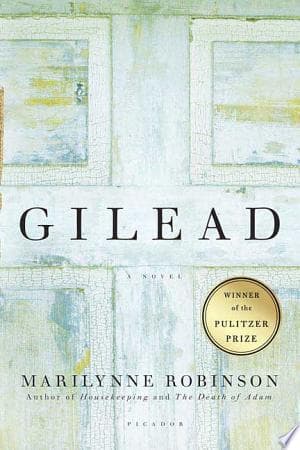
- Gilead (Oprah's Book Club)
Marilynne Robinson
3.9 (126k) average on GoodreadsFictionConnects directly to the same universe and characters, exploring similar themes of faith and memory.
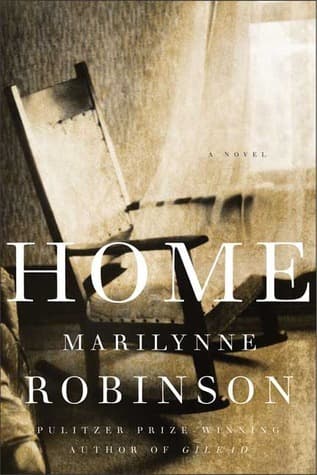
- Home
Marilynne Robinson
3.1 (83) average on GoodreadsFantasyAnother companion novel in the Gilead series, offering a different perspective on the same events and characters.
- Housekeeping
Marilynne Robinson
3.8 (44k) average on GoodreadsLiterary FictionExplores themes of unconventional family, loneliness, and the struggle for belonging with a similar literary style.
- The Old Man and the Sea
Ernest Hemingway
3.8 (831k) average on GoodreadsLiterary FictionA Cuban fisherman's long struggle with a giant marlin becomes a story of endurance and dignity, now retold for young adults with illustrations, phonetic guides, and writing prompts in Traditional Chinese.
- One Hundred Years of Solitude
Gabriel García Márquez
4.1 (753k) average on GoodreadsLiterary FictionThrough the multi-generational story of the Buendía family, a mythical town deals with the repeating patterns of time, love, and solitude, as the extraordinary mixes with the ordinary.
- The Goldfinch
Donna Tartt
3.9 (720k) average on GoodreadsLiterary FictionHaunted by a tragic explosion and clutching a stolen Dutch masterpiece, a young orphan navigates the opulent drawing rooms of New York and the gritty underbelly of the art world, desperately seeking connection and redemption amidst a life spiraling into crime and obsession.




Enjoyed the summary?
A summary gives you the shape of the book. The book itself has the detail, the examples and the voice.
Find Lila on AmazonAs an Amazon Associate, BookBrief earns from qualifying purchases. How we're funded