
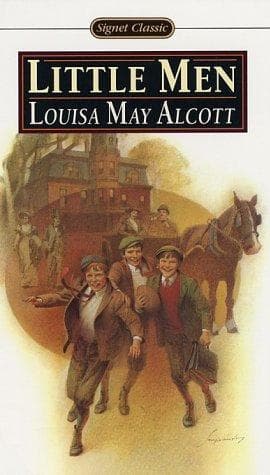
Synopsis
Covers the whole plot, including the ending.
- Difficulty
- Easy
- Pacing
- Slow
- Mood
- Heartwarming, Wholesome, Nostalgic, Gentle
- Read it if
- You enjoy heartwarming stories about childhood, moral development, and the power of a loving, unconventional family and school environment. Perfect for fans of classic children's literature with a focus on character growth and gentle life lessons.
- Skip it if
- You prefer fast-paced plots, high-stakes adventure, or stories with complex adult relationships. This book is episodic and primarily focuses on the everyday lives and minor misadventures of children.
Little Men Plot Summary
Covers the whole plot, including the ending.
New Beginnings at Plumfield
The story opens with Nat Blake, a timid orphan boy with a violin, arriving at Plumfield. This experimental school is run by Jo Bhaer (formerly Jo March) and her husband, Professor Friedrich Bhaer. Nat is immediately welcomed into the bustling, unconventional household. It already includes Jo and Fritz's two young sons, Rob and Teddy, and a diverse group of orphaned and disadvantaged boys. Jo, with her lively spirit, and Fritz, with his gentle wisdom, aim to educate the boys academically and morally. They encourage self-governance and kindness. Nat quickly forms a bond with Dan, a wilder, more independent boy, and struggles to adjust to the structured yet loving environment after a life on the streets. He observes the unique rules, like the 'castle' for quiet reflection and the 'black hole' for serious transgressions, and begins to feel a sense of belonging.
Daily Life and Mischief at Plumfield
Life at Plumfield is a lively mix of lessons, chores, games, and occasional mischief. The boys, each with distinct personalities, learn through practical experience and moral guidance. Tommy Bangs is boisterous and prone to accidents, while Demi and Daisy (Meg's children) are gentle and studious. Emil is adventurous, and Stuffy is a good-natured glutton. Jo and Fritz encourage outdoor play, animal care, and self-expression, often allowing the boys to resolve their own minor disputes. This section details various escapades, such as the boys' attempts to make money, their theatrical performances, and the general chaos that happens when a group of energetic boys lives together. Despite the occasional squabbles and broken rules, a strong sense of camaraderie and family fills the school.
Dan's Arrival and Influence
Nat, remembering his old friend, convinces Jo to take in Dan, a rough-around-the-edges, independent boy with a troubled past. Dan’s arrival initially causes friction. He is defiant, prone to fighting, and struggles to adapt to the gentle discipline of Plumfield. He influences some of the other boys, particularly Tommy, towards more rebellious behavior. Jo and Fritz, however, see potential in Dan and are determined to help him. They understand his background and try to reach him through kindness and understanding, rather than strict punishment. Dan, despite his resistance, slowly begins to respond to their unwavering patience and the positive influence of the other boys, especially Nat, who looks up to him.
Challenges and Disciplinary Lessons
Dan's wild nature leads to several incidents, testing Jo and Fritz's educational philosophy. He gets into fights, defies rules, and brings a dangerous dog to the school, causing a minor panic. One significant event involves Dan leading a group of boys in a mischievous, destructive raid on a neighbor's watermelon patch, resulting in serious consequences. Instead of expulsion, Fritz uses a unique form of discipline, appealing to Dan's sense of honor and responsibility. This incident, along with others, forces Dan to confront the consequences of his actions and slowly begin to understand the value of self-control and respect for others. The Bhaers consistently emphasize making amends and learning from mistakes.
The Introduction of Daisy and Demi
Meg's twins, Daisy and Demi, often visit Plumfield and eventually become temporary residents. They offer a gentle, more refined contrast to the boisterous boys. Daisy is sweet, domestic, and enjoys playing with dolls and helping Jo, while Demi is studious, philosophical, and a bit of a dreamer. Their presence highlights the different approaches to child-rearing and personality types. They participate in the school's activities, adding a touch of innocence and order. Daisy's kindness often soothes tensions, and Demi's thoughtful nature sometimes inspires the other boys to consider deeper questions. This shows the diverse influences that shape the Plumfield environment.
Nat's Temptation and Fall
Nat, who has been steadily improving, faces a significant moral test. Tempted by a desire for money to buy a present, he secretly takes money from Tommy's pocket. When the theft is discovered, Nat, out of fear and shame, denies it. The accusation falls on Dan, who, with his reputation, is immediately suspected. The truth eventually comes out, and Nat confesses his guilt, deeply regretting his lie and the injustice done to Dan. This incident is a turning point for Nat, as he experiences remorse and learns the painful consequences of dishonesty. Jo and Fritz handle the situation with understanding, emphasizing forgiveness and the importance of honesty.
Dan's Departure and Return
Following a particularly bad fight with another boy, and feeling misunderstood and unfairly targeted, Dan runs away from Plumfield. His absence deeply affects the other boys, especially Nat, who feels responsible. Jo and Fritz are saddened but hope for his return. After a period of wandering and experiencing the harsh realities of life outside Plumfield, Dan realizes the value of the home and family he left behind. He eventually returns, humbled and ready to try harder. His return is a sign of the Bhaers' lasting influence and his own desire for a better life. It is a significant step in his character development and acceptance of the Plumfield values.
Amy and Laurie's Contribution
Amy and Laurie, now married, visit Plumfield, bringing a touch of sophistication and cultural enrichment. Amy, with her artistic background, introduces the boys to art and beauty, while Laurie, ever generous, provides entertainment and often financial support for the school's various projects and treats. Their visits are always a source of excitement and joy for the boys. They represent the extended March family's support for Jo's unconventional educational endeavors, showing that Plumfield is a community effort. Their interactions with the boys often highlight the contrast between the boys' rough-and-tumble lives and the more refined world of their aunts and uncles, yet they embrace the spirit of Plumfield wholeheartedly.
Rob and Teddy's Childhood
Jo and Fritz's two young sons, Rob and Teddy, grow up at Plumfield, as the youngest members of the diverse family. Rob is lively and adventurous, often leading the younger boys in games, while Teddy is sweet-natured and a bit more delicate. Their childhood is unique, surrounded by a constant stream of older boys, learning alongside them and absorbing the Bhaers' values from their earliest days. Their presence shows the personal investment Jo and Fritz have in their educational experiment. They illustrate the loving and stimulating environment they have created through their own development.
Growth and Departures
As the years pass, the boys at Plumfield mature and begin to leave, ready to embark on their own paths. Jo and Fritz take pride in seeing their students grow into responsible, kind young men. Emil, with his adventurous spirit, decides to go to sea. Others pursue trades or further education, equipped with the moral compass and practical skills learned at Plumfield. The departures are bittersweet, but they show the success of Jo and Fritz's mission: to prepare these 'little men' for useful and honorable lives. The school continues to thrive, welcoming new boys, as the Bhaers remain dedicated to their unique vision of education and family.
Principal Figures
Jo Bhaer (Jo March)
Protagonist
Lively and unconventional co-founder of Plumfield, nurturing mother figure.
Jo Bhaer, formerly Jo March, is the heart and soul of Plumfield. She is energetic, compassionate, and passionate about her unconventional educational philosophy. Jo treats each boy as an individual, understanding their quirks and struggles, and uses her quick wit and deep empathy to guide them. She often acts as a mother figure, confidante, and playmate, balancing strictness with immense love and understanding. Her past experiences, particularly her own wild spirit, allow her to connect with the more challenging boys like Dan. She is fiercely protective of her 'little men' and dedicated to helping them become good people.
Relationships: Professor Friedrich Bhaer (Husband and co-founder); Rob Bhaer (Son); Teddy Bhaer (Son); Nat Blake (Student, surrogate son); Dan Kean (Student, surrogate son)
Professor Friedrich Bhaer
Protagonist/Supporting
Gentle, wise, and patient co-founder of Plumfield.
Professor Friedrich Bhaer is Jo's husband and the co-founder of Plumfield. He is a calm, intellectual, and deeply moral man who provides a steadying influence to Jo's more impetuous nature. Fritz is patient and understanding, often using gentle reasoning and quiet strength to resolve conflicts and guide the boys. He emphasizes honesty, self-reliance, and intellectual curiosity. His German background and scholarly demeanor bring a unique perspective to the school, complementing Jo's American practicality. He believes in the inherent goodness of children and works tirelessly to cultivate it.
Relationships: Jo Bhaer (Wife and co-founder); Rob Bhaer (Son); Teddy Bhaer (Son); Dan Kean (Student, surrogate son)
Nat Blake
Supporting
Timid, musical orphan boy who finds a home at Plumfield.
Nat is the first new boy introduced in the story, a shy and gentle orphan who plays the violin. He is initially timid and easily influenced, having lived a hard life on the streets. Nat is kind-hearted and eager to please but struggles with honesty and courage, leading to a significant incident where he takes money and blames Dan. His journey at Plumfield is one of learning to trust, developing self-worth, and overcoming his past habits. He forms a close friendship with Dan and deeply appreciates the love and stability offered by the Bhaers.
Relationships: Jo Bhaer (Mother figure); Professor Friedrich Bhaer (Father figure); Dan Kean (Close friend)
Dan Kean
Supporting
Wild, independent street boy who finds redemption at Plumfield.
Dan is a rough, independent, and strong-willed boy brought to Plumfield by Nat. He has a history of street fighting and a deep distrust of authority. Dan is initially rebellious and prone to mischief, often clashing with the school's rules and even running away. Despite his tough exterior, he possesses a strong sense of loyalty, courage, and a love for nature and animals. Jo and Fritz see the good in him and patiently work to channel his energy into positive outlets. His struggle to conform and his eventual growth make him one of the most dynamic characters.
Relationships: Jo Bhaer (Mother figure); Professor Friedrich Bhaer (Father figure); Nat Blake (Close friend)
Tommy Bangs
Supporting
Boisterous, good-natured boy prone to accidents and mischief.
Tommy is one of the more boisterous and lively boys at Plumfield. He is known for his energy, his love of pranks, and his tendency to get into scrapes and accidents. Tommy is good-hearted but often thoughtless, easily led into mischief, particularly by Dan. He embodies the typical energetic boy, full of life and sometimes a little too reckless. His antics often provide comic relief, but he also learns important lessons about responsibility and the consequences of his actions. He is a loyal friend and an integral part of the Plumfield chaos.
Relationships: Dan Kean (Friend, occasional partner in mischief); Nat Blake (Friend)
Demi Brooke (John Brooke Jr.)
Supporting
Meg's gentle, studious, and imaginative son.
Demi is Meg's son and Daisy's twin. He is a thoughtful, sensitive, and somewhat philosophical boy, often lost in his own imaginative world. Demi is studious and well-behaved, representing a more traditional ideal of a 'good boy' compared to some of the rougher Plumfield residents. He has a vivid imagination and a gentle nature, often observing the world with a quiet wisdom beyond his years. His presence at Plumfield highlights the diverse personalities and learning styles that Jo and Fritz accommodate.
Relationships: Daisy Brooke (Twin sister); Meg Brooke (Mother); Jo Bhaer (Aunt)
Daisy Brooke (Margaret Brooke Jr.)
Supporting
Meg's sweet, domestic, and nurturing daughter.
Daisy is Meg's daughter and Demi's twin. She is a sweet, gentle, and domestically inclined girl who enjoys playing with dolls and helping Jo with household tasks. Daisy brings a feminine, nurturing presence to the predominantly male environment of Plumfield. She is kind, well-behaved, and often acts as a peacemaker among the boys. Her innocence and gentle nature serve as a contrast to the boys' boisterousness, emphasizing the harmonious blend of different personalities and genders that Jo and Fritz cultivate.
Relationships: Demi Brooke (Twin brother); Meg Brooke (Mother); Jo Bhaer (Aunt)
Rob Bhaer
Supporting
Jo and Fritz's lively and adventurous elder son.
Rob is Jo and Fritz's elder son, a lively and energetic boy who grows up at Plumfield. He is full of spirit, often leading the younger boys in games and adventures. Rob embodies the best of Plumfield's ideals, being kind, adventurous, and well-adjusted. His development showcases the success of his parents' educational philosophy. He is a natural leader among the youngest children and a beloved member of the Plumfield family.
Relationships: Jo Bhaer (Mother); Professor Friedrich Bhaer (Father); Teddy Bhaer (Younger brother)
Teddy Bhaer
Supporting
Jo and Fritz's sweet-natured and delicate younger son.
Teddy is Jo and Fritz's younger son. He is described as sweet, gentle, and a bit more delicate than his older brother, Rob. Teddy's presence adds to the loving family atmosphere of Plumfield. He is adored by the other boys and often protected by them. His innocence and good nature reflect the positive influences of his parents and the environment they have created.
Relationships: Jo Bhaer (Mother); Professor Friedrich Bhaer (Father); Rob Bhaer (Older brother)
Amy Laurence
Supporting
Jo's artistic sister, now married to Laurie, who visits Plumfield.
Amy is Jo's younger sister, now married to Laurie. She is a refined and artistic woman who occasionally visits Plumfield. Her visits bring a touch of elegance and cultural appreciation to the lively school. She often shares her artistic talents and offers support, both emotional and sometimes financial, to Jo and Fritz's endeavors. Amy represents the more conventional, yet still loving, side of the March family, and her interactions with the boys often highlight the contrast between their rustic lives and her polished world.
Relationships: Jo Bhaer (Sister); Laurie Laurence (Husband); Meg Brooke (Sister)
Laurie Laurence
Supporting
Jo's brother-in-law, generous and fun-loving patron of Plumfield.
Laurie is Jo's brother-in-law, married to Amy. He is a wealthy, generous, and fun-loving man who frequently visits Plumfield. Laurie acts as a sort of benevolent uncle to the boys, often bringing gifts, organizing games, and providing entertainment. He is a strong supporter of Jo and Fritz's unconventional school, often contributing financially and enthusiastically participating in their activities. His presence adds an element of joy and adventure to the boys' lives, and he is deeply loved by them all.
Relationships: Jo Bhaer (Sister-in-law); Amy Laurence (Wife); Professor Friedrich Bhaer (Brother-in-law)
Themes & Insights
Unconventional Education and Nurturing
The central theme is Jo and Fritz Bhaer's experimental approach to education at Plumfield. Unlike traditional boarding schools, Plumfield prioritizes moral development, self-governance, and learning through experience over memorization. The Bhaers treat each boy as an individual, nurturing their unique talents and addressing their specific challenges with patience and understanding. This is evident in their 'castle' for quiet reflection and the 'black hole' for serious transgressions, as well as their emphasis on outdoor play, practical skills, and self-expression. The school acts as a large, loving family, showing that emotional well-being and character building are as important as academic knowledge.
“This is a school where boys are to be taught to be men, not monkeys; to be good, not great; to be kind, not clever.”
Redemption and Second Chances
Many of the boys at Plumfield, particularly Nat and Dan, come from difficult backgrounds and have made mistakes. The Bhaers consistently offer them second chances, believing in their inherent goodness and capacity for change. Dan's journey from a defiant street boy to a more responsible young man, and Nat's struggle with dishonesty and subsequent remorse, highlight this theme. Jo and Fritz refuse to give up on their students, even when they misbehave. Instead, they use disciplinary actions as opportunities for growth and moral instruction. The school is a sanctuary where boys can overcome their pasts and build better futures, emphasizing forgiveness and the power of love to transform lives.
“Every day is a fresh start, my dears, and every morning we begin anew.”
Family and Belonging
Plumfield is not just a school; it is a family. Many of the boys are orphans or come from broken homes, finding a sense of belonging and unconditional love with the Bhaers and each other. The daily routines, shared meals, collaborative projects, and even squabbles create a strong familial bond. Jo and Fritz act as surrogate parents, providing the stability and affection many of the boys have never known. The extended March family, including Meg, Amy, and Laurie, also contribute to this sense of community, reinforcing the idea that love and support extend beyond biological ties. This theme shows the importance of a nurturing environment for a child's development.
“Love is the best schoolmaster, and the boys learned more from that than from all their books.”
Childhood Innocence and Mischief
The book portrays the joys, challenges, and mischief of childhood. The boys' various antics, from watermelon raids to theatrical performances and playground squabbles, are central to the narrative. Alcott captures the energy, curiosity, and sometimes thoughtlessness that characterize young boys. While not avoiding depictions of their flaws and disciplinary moments, the narrative largely celebrates the innocence and good-heartedness of children. The Bhaers' approach acknowledges this natural exuberance, aiming to guide it constructively rather than suppress it, allowing the boys to be 'little men' as healthy, developing individuals.
“Boys will be boys, and the best way to manage them is to let them be boys with a hand to guide them, not a rod to break them.”
Nature and Outdoor Life
Plumfield is deeply connected to nature, with the boys spending a significant amount of time outdoors. They engage in gardening, caring for animals, playing in the woods, and exploring the surrounding countryside. This focus on outdoor life is part of the Bhaers' educational philosophy, promoting physical health, practical skills, and an appreciation for the natural world. It also gives an outlet for the boys' energy and is a setting for many of their adventures and lessons. Dan, in particular, finds solace and purpose in his connection to animals and the outdoors, showing how nature can be a powerful teacher and healer.
“The children were never happier than when out of doors, and the good professor believed in giving them plenty of fresh air and exercise.”
Plot Devices & Literary Techniques
Episodic Structure
A series of interconnected short stories and vignettes illustrating daily life and lessons.
The novel is structured as a series of loosely connected episodes or vignettes, each focusing on a specific incident, character, or moral lesson at Plumfield. While there are overarching character arcs (like Nat's and Dan's), the plot doesn't follow a single, continuous narrative conflict. Instead, it presents a mosaic of daily life, showcasing the various challenges, joys, and educational moments that occur within the school. This episodic style allows Alcott to explore different facets of childhood and the Bhaers' teaching methods without relying on a strong central plot, making it feel like a series of interconnected short stories.
Moral Didacticism
The explicit teaching of moral lessons and virtues through character actions and consequences.
Alcott uses the Plumfield setting as a vehicle for explicit moral instruction. Each episode, especially those involving misbehavior, invariably leads to a clear lesson about honesty, kindness, self-control, forgiveness, or responsibility. The Bhaers' conversations with the boys, and the boys' own experiences, are designed to illustrate virtues and vices. For instance, Nat's theft and subsequent remorse, or Dan's wildness leading to consequences, directly teach moral principles. This didactic approach is characteristic of much 19th-century children's literature, aiming to both entertain and educate young readers on proper conduct.
Character Archetypes
Representing various types of boys and their paths to growth.
Alcott employs character archetypes to populate Plumfield, representing different facets of childhood and human nature. Nat embodies the timid, easily influenced but good-hearted child; Dan represents the wild, independent, and troubled boy who needs guidance; Tommy is the boisterous and mischievous but ultimately good-natured boy; Demi is the studious and imaginative one; Daisy is the gentle and domestic girl. These archetypes allow Alcott to explore a range of behaviors and demonstrate how the Bhaers' individualized approach to education caters to diverse personalities, showing different journeys of growth and moral development within the same nurturing environment.
Plumfield as a Microcosm
The school represents an idealized society where children learn to navigate the world.
Plumfield functions as a microcosm of society, albeit an idealized one. Within its bounds, the children learn to interact with diverse personalities, resolve conflicts, understand social norms, practice self-governance, and develop a moral compass. The Bhaers' system of rules, consequences, and rewards, along with the emphasis on mutual respect and kindness, prepares the 'little men' for the wider world. The challenges they face (like theft, fighting, or disobedience) are miniature versions of adult problems, and their resolutions provide models for ethical living. It's a controlled environment designed to equip them with the tools for a virtuous life outside its protective walls.
Symbolism of Music and Nature
Music (Nat's violin) and nature symbolize beauty, solace, and intrinsic goodness.
Nat's violin serves as a recurring symbol of beauty, solace, and his inherent gentle nature, often calming his own anxieties and those around him. It represents the artistic and emotional side of life that the Bhaers encourage. Similarly, nature, through the Plumfield grounds, the animals, and outdoor activities, symbolizes freedom, growth, and a connection to something pure and wild. The boys' interactions with nature, particularly Dan's affinity for animals, highlight a primitive goodness and a space for uninhibited expression. Both music and nature offer outlets for emotional release and contribute to the holistic development of the children.
Little Men Quotes
“Love is a flower that grows in any soil, works its sweet miracles undaunted by autumn frost or winter snow, blooming fair and fragrant all the year, and blessing those who give and those who receive.”
“I'd rather see a houseful of happy, healthy children than the finest palace in the world.”
“Now, I'm going to teach you to play fair, for that's a thing which every boy should learn.”
“The small duties and tasks of life are the best discipline for the soul.”
“I want my boys to be honest, brave, and kind, and to grow up to be good men.”
“A little kingdom I possess, where thoughts and feelings dwell; And very hard the task I find of governing it well.”
“Work is wholesome, and there is plenty for everyone; it keeps us from mischief and makes us strong.”
“The love of money is the root of all evil, but the want of it is sometimes the root of a great deal of unhappiness.”
“Let us be elegant or die!”
“Every child has a right to a happy childhood, and we must help them to it if we can.”
“Nature is a gentle teacher, and her lessons are often the sweetest.”
“It takes so little to make a child happy, that it is a pity we so often neglect to do it.”
“I am not afraid of storms, for I am learning how to sail my ship.”
“The best way to cure selfishness is to give until it hurts.”
Quiz
10 questions on the plot and the characters. Each answer comes with a short explanation.
Question 1
What is the name of the informal school run by Jo Bhaer in 'Little Men'?
- March Academy
- Plumfield
- Orchard House
- Laurel Cottage
Show answer
B. Plumfield Plumfield is the name of the school and home where Jo Bhaer (formerly Jo March) and her husband Professor Bhaer educate and care for their own sons and rescued orphan boys, as described in the book's premise.
Question 2
How many rescued orphan boys are mentioned as filling Plumfield alongside Jo's two sons?
- Ten
- Twelve
- Eight
- Fifteen
Show answer
B. Twelve The book description specifies that there are twelve rescued orphan boys at Plumfield, along with Jo's two sons, making a total of fourteen boys under her care.
Question 3
What is Jo March's married name in 'Little Men'?
- Jo March
- Jo Brooke
- Jo Bhaer
- Jo Laurence
Show answer
C. Jo Bhaer Jo March marries Professor Friedrich Bhaer in 'Little Women,' and in 'Little Men,' she is known as Jo Bhaer, running Plumfield with him.
Question 4
According to the book description, what habit do the boys at Plumfield have that leads to troubles and adventures?
- Studying too hard
- Getting into scrapes
- Avoiding chores
- Making too much noise
Show answer
B. Getting into scrapes The description notes that 'boys have a habit of getting into scrapes,' meaning they often find themselves in troublesome or mischievous situations, which drives much of the plot's adventures.
Question 5
Which family provides 'warm and affectionate help' to Jo and the boys at Plumfield, as mentioned in the description?
- The Bhaer family
- The March family
- The Laurence family
- The Brooke family
Show answer
B. The March family The description states that 'the whole March family' offers help, referring to Jo's original family from 'Little Women,' including her sisters and parents, who support her efforts at Plumfield.
Question 6
What type of institution is Plumfield primarily described as in 'Little Men'?
- A strict boarding school
- A formal orphanage
- An informal school
- A military academy
Show answer
C. An informal school The description calls Plumfield an 'informal school,' emphasizing its relaxed, home-like atmosphere where education is blended with care and moral guidance, rather than rigid structure.
Question 7
Based on the description, what is a central theme suggested by Jo's work with orphan boys at Plumfield?
- The importance of wealth and status
- The challenges of formal education
- Nurturing and redemption through family
- The pursuit of artistic fame
Show answer
C. Nurturing and redemption through family Jo's happiness in caring for her own and rescued boys, with help from her family, highlights themes of nurturing, creating a loving home, and redeeming troubled youths through affection and guidance.
Question 8
Why might the book's setting at Plumfield be considered historical, as per its genre?
- It is based on a real school from the 19th century
- It depicts educational practices and social norms of the late 1800s
- It includes famous historical events
- It is set during a war
Show answer
B. It depicts educational practices and social norms of the late 1800s As historical fiction, 'Little Men' reflects the time period of the late 19th century, showing informal schooling, orphan care, and family dynamics typical of that era, without necessarily being based on real events.
Question 9
How does the description imply Jo's role evolves from 'Little Women' to 'Little Men'?
- From a writer to a teacher and caregiver
- From a nurse to a businesswoman
- From a musician to a politician
- From a student to a scientist
Show answer
A. From a writer to a teacher and caregiver In 'Little Women,' Jo is known for her writing aspirations, but in 'Little Men,' she focuses on running Plumfield, teaching, and mothering boys, showing her growth into a nurturing educator and matriarch.
Question 10
What does the phrase 'plenty of troubles and adventures in store' suggest about the plot of 'Little Men'?
- The story is primarily a tragedy
- It involves predictable, uneventful daily life
- It balances challenges with engaging incidents
- It focuses solely on academic lessons
Show answer
C. It balances challenges with engaging incidents This phrase indicates that the boys' mischiefs ('scrapes') lead to both difficulties ('troubles') and exciting events ('adventures'), creating a dynamic plot that mixes conflict with fun and growth.
Little Men FAQ
What is 'Little Men' about?
'Little Men' follows Jo March (now Jo Bhaer) and her husband Professor Bhaer as they run Plumfield, an informal school and home for their two sons and twelve rescued orphan boys. The story chronicles the boys' scrapes, adventures, and personal growth under the guidance of the Bhaers and the extended March family, emphasizing themes of kindness, education, and character development.
Why should I read 'Little Men'?
Readers should explore 'Little Men' for its heartwarming portrayal of found family, moral lessons, and the continuation of the beloved March family saga from 'Little Women.' It offers a charming look at 19th-century education and childhood, filled with relatable adventures and emotional depth that resonate with both young and adult audiences.
What is the background/setting of 'Little Men'?
Set in post-Civil War New England, the story takes place at Plumfield, a rural estate turned school run by Jo and Professor Bhaer. The setting reflects the era's emphasis on progressive education and domesticity, with the school serving as a nurturing environment where boys from diverse backgrounds learn and grow together.
What are the most memorable quotes from 'Little Men'?
Notable quotes include Jo's advice, 'Love is a flower that grows in any soil, works its sweet miracles undaunted by autumn frost or winter snow, and blooms fair and strong all the year round in the quiet garden of the heart,' and Professor Bhaer's reminder, 'The small duties become great when done for love.' These lines encapsulate the book's themes of affection and responsibility.
What writing style does Louisa May Alcott use in 'Little Men'?
Alcott employs a warm, conversational narrative style with moral undertones, blending episodic adventures with character-driven storytelling. Her prose is accessible yet rich in detail, often using dialogue and descriptive scenes to impart lessons on ethics and personal growth, characteristic of her children's literature.
What minor details add significant meaning to 'Little Men'?
Small details like the 'Pilgrim's Progress' map in the schoolroom symbolize the boys' moral journeys, and the garden plots assigned to each child represent their individual growth and care. These elements subtly reinforce the book's themes of self-improvement and nurturing through everyday activities.
What are some subtle foreshadowing moments in 'Little Men'?
Early mentions of Dan's rebellious nature foreshadow his later struggles and redemption arc, while Nan's curiosity about medicine hints at her future aspirations. The gentle guidance Jo provides to troubled boys like Tommy Bangs subtly predicts their eventual maturation and integration into the Plumfield community.
What unexpected character connections exist in 'Little Men'?
Unexpected connections include the bond between Nat, a shy orphan with a talent for music, and Dan, a rough street boy, who become close friends despite their differences. Additionally, the involvement of older March family members, like Amy and Laurie, ties the story back to 'Little Women,' enriching the narrative continuity.
What are unspoken character motivations in 'Little Men'?
Jo's deep-seated desire to create a loving home stems from her own childhood experiences and loss of Beth, driving her to rescue orphans. Dan's initial defiance masks a longing for acceptance and stability, while Professor Bhaer's quiet support reflects his belief in education as a tool for social reform and personal redemption.
What psychological complexities do characters exhibit in 'Little Men'?
Characters show nuanced psychology: Jo balances her maternal instincts with her independent spirit, grappling with the challenges of leadership. Dan embodies the conflict between a tough exterior and vulnerability, and Nat's anxiety highlights the effects of past trauma, all explored through their interactions and growth at Plumfield.
What are the major emotional turning points in 'Little Men'?
Key emotional moments include Dan's confession and redemption after a serious mistake, which strengthens his bond with the Bhaers, and Nat's first successful violin performance, boosting his confidence. The arrival of new orphans and their integration into the family also marks significant shifts in the community's dynamics and empathy.
How do relationship dynamics evolve in 'Little Men'?
Relationships deepen over time: Jo and Professor Bhaer's partnership grows as they navigate parenting challenges, while the boys form a brotherly camaraderie, learning to support each other through conflicts like Tommy's pranks or Dan's rebellions. These evolutions highlight themes of forgiveness, loyalty, and collective growth.
Which parts of 'Little Men' remain ambiguous or open-ended?
The book leaves some futures ambiguous, such as the specific career paths for boys like Nat or Dan beyond Plumfield, and the long-term outcomes for newer orphans. This openness invites readers to imagine their continued journeys, reflecting the ongoing nature of personal development and the story's focus on present growth.
What are controversial scenes or decisions in 'Little Men'?
Some readers debate Jo's decision to take in a boy as troubled as Dan, questioning the risks involved. Additionally, the emphasis on traditional gender roles, with girls like Nan encouraged in domestic arts, can be seen as limiting by modern standards, sparking discussions on the book's historical context versus progressive ideals.
'Little Men' ending explained: how it ends & what it means
The story concludes with Plumfield thriving, the boys maturing, and Dan finding redemption through hard work and acceptance. This ending symbolizes the success of Jo's educational philosophy, emphasizing that love and guidance can transform lives. It leaves a hopeful note on the enduring impact of family and community, setting the stage for the sequel 'Jo's Boys.'
About the author
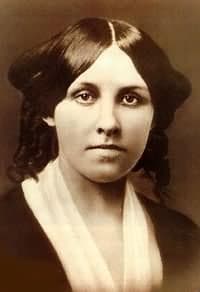
Louisa May Alcott was an American novelist best known for her works exploring themes of family and personal growth. Among her notable books are "Little Men," "Good Wives," "Rose in Bloom," "A Long Fatal Love Chase," and "A Modern Cinderella," which reflect her interest in the lives of women and children in the 19th century.
Similar books
- A Little Princess
Frances Hodgson Burnett
4.2 (4k) average on GoodreadsFantasyFocuses on the resilience and inner goodness of children facing adversity, set within a school context.
- Harry Potter and the Sorcerer's Stone
J.K. Rowling
4.5 (7M) average on GoodreadsFantasyRescued from a miserable life under the stairs, an orphaned boy discovers he's a wizard destined for a magical school, where he uncovers a dangerous secret tied to the dark wizard who murdered his parents.
- The Hobbit, or There and Back Again
J.R.R. Tolkien
4.3 (2.9M) average on GoodreadsFantasyA comfort-loving hobbit named Bilbo Baggins is whisked away by a mischievous wizard and a band of dwarves on an unexpected journey to reclaim stolen treasure from a fearsome dragon, discovering courage and a magical ring along the way.
- Harry Potter and the Goblet of Fire
J.K. Rowling
4.6 (2.6M) average on GoodreadsFantasyA bewildered Harry Potter, underage and thrust into a deadly Triwizard Tournament, must brave dragons, mermaids, and a resurgent dark magic to survive a year that will forever alter the wizarding world.
- Harry Potter and the Order of the Phoenix
J.K. Rowling
4.5 (2.5M) average on GoodreadsFantasyIn a year of oppressive secrets and the threat of Voldemort, Harry Potter and Dumbledore's Army secretly train for war, shown through Jim Kay and Neil Packer's dark illustrations.
- The Lightning Thief
Rick Riordan
4.3 (2M) average on GoodreadsFantasyThrust into a world of mythological monsters and divine treachery, an ordinary boy discovers he's the son of Poseidon and must embark on a perilous quest across modern America to prevent an Olympian war.





Enjoyed the summary?
A summary gives you the shape of the book. The book itself has the detail, the examples and the voice.
Find Little Men on AmazonAs an Amazon Associate, BookBrief earns from qualifying purchases. How we're funded