

Core Idea
- Difficulty
- Medium
- Read it if
- You are a fan of Gabriel García Márquez and want to understand the origins of his literary world, or if you are interested in the creative process of a major author and the influences that shape a unique narrative voice.
- Skip it if
- You are looking for a fast-paced plot-driven narrative, or if you prefer objective biography over a subjective, reflective memoir that sometimes meanders.
Key Takeaways from Living to Tell the Tale
The Genesis of Magic Realism
Childhood experiences and family narratives formed the bedrock of Márquez's unique literary style.
Márquez's memoir shows that the fantastical elements in his fiction came from his childhood reality. Growing up in Aracataca, with his grandparents and many relatives, he learned a worldview where the supernatural was part of daily life. His grandmother, Tranquilina Iguarán Cotes, a blind woman who told stories of ghosts and premonitions with certainty, greatly influenced his narrative voice. This early exposure to a world where the extraordinary was normal gave him the foundation for the magic realism that would define his writing, showing how personal experience shapes artistic vision.
“My grandmother, by contrast, spoke only of the dead, as if they were still alive.”
In the book: Márquez recounts his grandmother's stories of the dead, her premonitions, and the way she treated the supernatural as an undeniable part of reality, which directly informed the atmosphere and characterizations in his later works like 'One Hundred Years of Solitude.'
Try this: Aspiring writers should mine their own childhoods and family histories for unique perspectives and narrative voices. The 'unbelievable' stories told by relatives or the peculiar customs of one's upbringing can be fertile ground for distinctive artistic expression.
Related ideas: magic-realism, childhood-influence, narrative-voice
The Journalist as Storyteller
Márquez's early career in journalism was a crucible for developing his observational skills and narrative discipline.
Before becoming a famous novelist, Márquez improved his writing skills as a journalist, a period he says was very important to his development. Working for newspapers like El Universal and El Espectador, he learned to observe the world carefully, simplify complex information, and write compelling stories quickly. This strict training taught him discipline for accuracy, vivid description, and concise prose, skills clear in the precise yet evocative language of his novels. His journalism assignments, often covering social problems and political unrest, also deepened his understanding of human nature and society, providing rich material for his later fiction. This shows that skill in one area can greatly improve another.
“Journalism was for me a school of life.”
In the book: He details his experiences reporting on crime, political events, and human interest stories, and how these assignments forced him to develop a concise, impactful writing style and an acute sense of detail.
Try this: Embrace diverse experiences and seemingly unrelated fields. The skills acquired in one profession, like the discipline and observation of journalism, can be foundational for success in another, like fiction writing. View every experience as a learning opportunity for your core craft.
Related ideas: journalism, literary-craft, observational-skills
The Power of Oral Tradition
Márquez's storytelling prowess was deeply influenced by the rich oral tradition of his Colombian upbringing.
The memoir vividly describes a world where stories were not just read but lived and passed down. Márquez's main education in storytelling came not from school but from the constant flow of anecdotes, myths, and family histories shared among his relatives and community. This oral tradition, full of exaggeration, emotion, and detail, taught him the basic rhythm and persuasive power of narrative. It gave him an understanding of how to capture an audience, build suspense, and make even ordinary events seem grand. This focus on spoken word explains the conversational, almost folkloric quality in much of his celebrated prose, highlighting that listening is as important as reading for a writer.
“I realized that the stories my grandmother told me were the real stories, and that the ones in books were often just imitations.”
In the book: His descriptions of his grandparents' storytelling, particularly his grandmother's vivid narratives and his grandfather's historical accounts, demonstrate the profound impact of spoken word on his developing artistic sensibility.
Try this: Engage with oral storytelling, whether by listening to family histories, attending spoken word events, or even recording conversations. Understanding the cadence and impact of spoken narratives can enrich written prose, making it more immediate and engaging for the reader.
Related ideas: oral-tradition, storytelling, colombian-culture
The Artist's Poverty and Perseverance
Márquez's early life was marked by extreme poverty, yet it fueled his determination to write.
The memoir paints a clear picture of Márquez's financial struggles during his early years as a writer and journalist. He often lived in poor boarding houses, searched for meals, and faced constant money problems. This difficult period, however, was not a barrier but a driving force. It forced him to make sacrifices, prioritize his passion for writing above all else, and develop a strong commitment to his craft. His experiences with poverty also gave him deep empathy for the marginalized and insight into the human condition under stress, themes that appear throughout his fiction. It is a reminder that genuine artistic drive can succeed even in the hardest circumstances, turning hardship into material and resilience.
“I learned to live without money, but not without books.”
In the book: Márquez recounts numerous instances of living in near destitution, sharing rooms, and struggling to afford food while tirelessly pursuing his writing and journalistic endeavors.
Try this: Don't let financial constraints be an excuse for not pursuing your creative passions. Find ways to minimize expenses, prioritize your craft, and view periods of struggle as opportunities for growth and deeper understanding of the human experience.
Related ideas: artistic-struggle, perseverance, poverty-experience
The Role of Literature in Shaping a Writer
Márquez's voracious reading habits and literary discoveries were crucial to his development.
Márquez's memoir highlights how much his reading affected his development as a writer. He was a wide reader from a young age, consuming everything from classic Spanish literature to contemporary American and European authors. His discovery of Kafka, Faulkner, and Virginia Woolf was particularly important, opening his eyes to new storytelling possibilities and challenging traditional narrative styles. These literary encounters gave him a diverse set of styles, structures, and philosophical insights, allowing him to absorb, adapt, and eventually go beyond influences to create his unique voice. This shows that a writer's education involves both wide and deep reading as much as writing itself, emphasizing the importance of literary immersion.
“I began to read everything I could get my hands on, from the classics to the most obscure pamphlets.”
In the book: He details his discovery of *The Metamorphosis* by Kafka, which profoundly altered his perception of what literature could be, and his subsequent immersion in the works of American Southern Gothic writers and European modernists.
Try this: Be a relentless and eclectic reader. Don't limit yourself to one genre or period. Actively seek out authors who challenge your perceptions and expand your understanding of narrative, language, and human experience. Analyze *how* they achieve their effects.
Related ideas: literary-influence, reading-habits, writer's-education
Memory's Selective Reconstruction
The memoir itself is an act of creative memory, revealing the subjective nature of autobiography.
This famous line from the memoir is not just a philosophical statement but a guiding principle for the book itself. Márquez does not present a strictly chronological or objective account of his life; instead, he offers a rich narrative shaped by his memory, imagination, and the act of storytelling. Events are recalled with the vividness of fiction, characters are given almost mythical qualities, and the past is filtered through the eyes of a master storyteller. This approach shows that autobiography, especially from a writer like Márquez, is a creative act—a reconstruction rather than a simple retelling. It highlights that even 'truth' in memoir is a carefully crafted narrative, subject to the artist's interpretation and purpose.
“Life is not what one lived, but what one remembers and how one remembers it in order to recount it.”
In the book: Throughout the book, Márquez frequently expresses uncertainty about exact dates or sequences, admitting to filling in gaps with what 'must have happened' or what feels narratively true, blurring the lines between memory and invention.
Try this: When crafting personal narratives, understand that memory is fallible and subjective. Embrace this rather than fight it. Focus on the emotional truth and thematic coherence of your story, allowing your unique perspective to shape the retelling of events.
Related ideas: memory, autobiography, narrative-truth
The Writer's Discipline and Obsession
Márquez's journey reveals an unwavering, almost obsessive dedication to the act of writing.
Despite poverty, political unrest, and family expectations, Márquez's commitment to writing remained absolute. The memoir shows many instances of him giving up comfort, social life, and financial stability for his writing. He describes long hours at the typewriter, often alone, carefully crafting sentences and working through ideas. This constant discipline was not just a habit but a deep obsession, a fundamental need to express himself through words. His story shows that true artistic success often comes from an unwavering, almost single-minded focus on one's chosen medium, regardless of immediate reward or recognition. It is a reminder that passion alone is not enough; it must be combined with persistent, disciplined effort.
“I had no other choice but to write, even if I starved.”
In the book: He details working tirelessly on his early short stories and journalistic pieces, often late into the night, even when facing eviction or hunger, driven by an internal compulsion to write.
Try this: Cultivate unwavering discipline in your creative pursuits. Set aside dedicated time for your craft, even when motivation wanes or external pressures mount. Treat your creative work as a non-negotiable priority, understanding that consistency is key to mastery.
Related ideas: writing-discipline, artistic-obsession, creative-process
The Interconnectedness of Life and Art
Every person, place, and event in Márquez's life found its way, transmuted, into his fiction.
One of the most interesting parts of 'Living to Tell the Tale' is how Márquez carefully connects the origins of his fictional worlds back to his real-life experiences. Characters are combinations of relatives and acquaintances, settings are inspired by his hometown of Aracataca, and plotlines often reflect historical events or personal stories. The memoir acts as a key to his literary universe, showing how ordinary moments, chance encounters, and personal tragedies were absorbed and transformed through his imagination into the rich world of his novels. This demonstrates that a writer's life is their most powerful source material, and nothing is wasted if observed and processed with artistic intent.
“Many years later, as he faced the firing squad, Colonel Aureliano Buendía was to remember that distant afternoon when his father took him to discover ice.”
In the book: Márquez frequently points out direct connections between specific incidents in his life (e.g., his grandfather's stories, the banana massacre, his parents' courtship) and iconic scenes or characters in 'One Hundred Years of Solitude' and other works.
Try this: Maintain a keen awareness of your surroundings and experiences. Keep a journal to capture observations, conversations, and personal reflections. View every interaction and event as potential material for your creative work, developing the skill of 'seeing' the story within the everyday.
Related ideas: autofiction, inspiration, creative-transformation
The Search for a Unique Voice
Márquez's early career was a struggle to find his authentic literary voice amidst various influences.
The memoir honestly portrays Márquez's early struggles with imitation and the hard process of finding his unique narrative style. He experimented with different forms, copied admired authors, and wrestled with the conventions of contemporary literature. It was not an instant revelation but a gradual, often frustrating journey of trial and error. This period of artistic searching, marked by self-doubt and persistent experimentation, ultimately led him to combine his diverse influences with his personal experiences and the rich oral traditions of his homeland, resulting in the distinct voice of magic realism. This takeaway offers comfort and guidance to new artists: finding one's authentic voice is a process, not an event, and it requires both deep study and brave self-exploration.
“I was looking for a voice that was mine alone, and I hadn't found it yet.”
In the book: He discusses his early stories and novels, often critiquing them for being too derivative or not fully capturing the essence of what he wanted to express, detailing his conscious efforts to break away from established literary norms.
Try this: Embrace experimentation in your creative work. Don't be afraid to try different styles, genres, or approaches. Understand that finding your unique voice is an iterative process that involves both learning from others and bravely forging your own path, even if it feels uncomfortable at first.
Related ideas: literary-voice, artistic-development, creative-journey
Living to Tell the Tale Quotes
“The problem with reality is that it is too real.”
“Life is not what one lived, but what one remembers and how one remembers it in order to recount it.”
“My mother asked me to accompany her to sell the house. I had just finished high school, and I was studying law, and I was very lazy. But I went because I was very fond of my mother.”
“It was then that I realized that the past was not a dead weight, but a living force.”
“Every line I write is an act of love.”
“I discovered that the secret of a good story is to tell it the way your grandmother told it to you.”
“The world had changed, but not enough for me to stop being myself.”
“There is always something left to love.”
“I only wanted to be a writer, and I was willing to pay any price.”
“The greatest danger for a writer is to lose touch with reality.”
“Imagination is not a gift, but a discipline.”
“One writes not to be understood, but to understand.”
“My destiny was not in the stars, but in my own hands.”
Quiz
10 questions on the main ideas. Each answer comes with a short explanation.
Question 1
What was the name of the town where Gabriel García Márquez was born?
- Macondo
- Aracataca
- Barranquilla
- Cartagena
Show answer
B. Aracataca García Márquez was born in Aracataca, a small town in Colombia, which heavily influenced his literary landscapes.
Question 2
Gabriel García Márquez recounts his early life living with his maternal grandparents. What significant influence did his grandmother, Tranquilina Iguarán Cotes, have on his future writing style?
- She taught him about political theory and social justice.
- She introduced him to classic European literature and poetry.
- She told him fantastical stories and superstitions as if they were everyday occurrences.
- She encouraged him to pursue a career in law, emphasizing logical reasoning.
Show answer
C. She told him fantastical stories and superstitions as if they were everyday occurrences. His grandmother's storytelling, which blended the mundane with the marvelous, was a foundational influence on his magical realism style.
Question 3
Which profession did Gabriel García Márquez initially pursue, as detailed in the memoir, before fully committing to writing?
- Medicine
- Law
- Teaching
- Journalism
Show answer
B. Law He initially studied law at the National University of Colombia, though he later abandoned it for his true passion, writing.
Question 4
The memoir extensively covers García Márquez's early experiences in journalism. In which city did he begin his professional journalism career?
- Bogotá
- Cartagena
- Barranquilla
- Medellín
Show answer
B. Cartagena He began his journalism career at the newspaper El Universal in Cartagena, which provided him with crucial early writing experience.
Question 5
What significant political event, experienced by García Márquez in his youth, is detailed in the memoir and profoundly shaped his worldview and later fiction?
- The Cuban Revolution
- La Violencia, particularly the Bogotazo
- The Banana Massacre
- World War II
Show answer
B. La Violencia, particularly the Bogotazo The Bogotazo, the massive riots that erupted after the assassination of Liberal leader Jorge Eliécer Gaitán, deeply impacted him and is recounted as a pivotal experience.
Question 6
Who was the woman Gabriel García Márquez proposed to at the end of the first volume of 'Living to Tell the Tale'?
- Remedios Moscote
- Mercedes Barcha Pardo
- Úrsula Iguarán
- Fermina Daza
Show answer
B. Mercedes Barcha Pardo The memoir concludes with his proposal to Mercedes Barcha Pardo, who would become his wife and a significant figure in his life.
Question 7
García Márquez frequently mentions his literary influences in the memoir. Which author's work, particularly 'The Metamorphosis', deeply impressed him and showed him new possibilities for fiction?
- William Faulkner
- Ernest Hemingway
- Franz Kafka
- Virginia Woolf
Show answer
C. Franz Kafka He recounts reading Kafka's 'The Metamorphosis' and realizing that stories didn't have to follow traditional narrative structures, which was a revelation for him.
Question 8
The memoir details García Márquez's move from his small hometown to larger cities for his education and early career. What key theme emerges from this transition regarding his identity and perspective?
- The desire to completely abandon his provincial roots for a cosmopolitan identity.
- The conflict between urban sophistication and rural simplicity, often leading to alienation.
- The constant interplay between memory and reality, and how his past continually informs his present observations.
- The struggle to adapt to technological advancements in the rapidly modernizing cities.
Show answer
C. The constant interplay between memory and reality, and how his past continually informs his present observations. García Márquez consistently filters his urban experiences through the lens of his childhood memories and the stories from Aracataca, highlighting the pervasive influence of his past on his perception and writing.
Question 9
Which group of writers and intellectuals, based in Barranquilla, played a crucial role in Gabriel García Márquez's literary development, introducing him to new authors and ideas?
- The 'Boom' Generation
- The 'Barranquilla Group' (Grupo de Barranquilla)
- The 'Generation of '27'
- The 'Lost Generation'
Show answer
B. The 'Barranquilla Group' (Grupo de Barranquilla) The Barranquilla Group, a circle of friends and intellectuals, was instrumental in shaping his literary tastes and introducing him to modernist literature.
Question 10
How does García Márquez portray the relationship between his lived experiences and the material for his fiction in 'Living to Tell the Tale'?
- He strictly separates his personal life from his fictional creations, viewing them as distinct domains.
- He reveals that his fiction is almost entirely based on direct, unaltered transcriptions of real events and people.
- He shows how seemingly mundane or fantastical events from his life are transmuted and transposed into his fiction, often in exaggerated or symbolic forms.
- He argues that a writer's life is largely irrelevant to understanding their work, focusing instead on universal themes.
Show answer
C. He shows how seemingly mundane or fantastical events from his life are transmuted and transposed into his fiction, often in exaggerated or symbolic forms. The memoir's central premise is to illustrate how his life's events, characters, and observations became the raw material, often transformed through his unique narrative lens, for his celebrated novels.
Living to Tell the Tale FAQ
What period of Gabriel García Márquez's life does "Living to Tell the Tale" cover?
"Living to Tell the Tale" is the first volume of Gabriel García Márquez's planned autobiography, covering his life from his birth in 1927 up to the early 1950s, specifically ending around the time he proposed to his future wife.
Does "Living to Tell the Tale" reveal the origins of characters or plots in García Márquez's fiction?
Yes, the memoir explicitly details many real-life incidents, people, and places from García Márquez's early life that were later transmuted and transposed into the magical realism of his acclaimed novels and short stories.
What is the focus of Gabriel García Márquez's writing in this memoir?
The memoir primarily focuses on the formation of García Márquez as a writer and as a man, exploring the influences of his family, education, early journalistic career, political environment, and the rich cultural tapestry of his native Colombia.
How does "Living to Tell the Tale" differ from a traditional biography?
As an autobiography, "Living to Tell the Tale" offers a deeply personal and subjective account of García Márquez's early life, written in his distinctive literary style, rather than an objective third-person narrative found in a traditional biography.
Is "Living to Tell the Tale" accessible to readers unfamiliar with García Márquez's fiction?
Yes, while fans will appreciate the connections to his fiction, the memoir stands alone as a captivating story of a young man's journey, offering insights into early 20th-century Colombian life and the universal struggles of artistic development.
Does "Living to Tell the Tale" work as an introduction to García Márquez's literary style?
Absolutely. Written in his own hand, the memoir showcases the lyrical prose, vivid descriptions, and storytelling prowess that define García Márquez's work, making it an excellent entry point to his unique voice.
What role does Colombia play in this memoir?
Colombia, particularly the Caribbean coast and its vibrant culture, plays a central and formative role in the memoir, shaping García Márquez's worldview, providing a backdrop for his experiences, and inspiring countless elements of his future fiction.
How different is this memoir from other literary autobiographies?
Unlike some more conventional autobiographies, García Márquez infuses "Living to Tell the Tale" with his characteristic literary flair, blending memory, reflection, and storytelling in a way that feels as rich and imaginative as his fiction, rather than a dry recounting of facts.
About the author
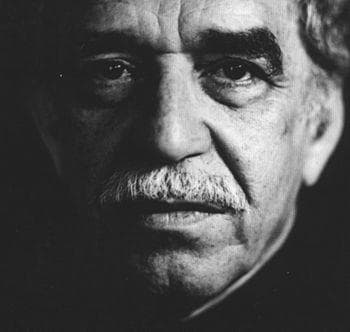
Gabriel José de la Concordia García Márquez was a Colombian novelist, short-story writer, screenwriter, and journalist, known affectionately as Gabo or Gabito throughout Latin America. Considered one of the most significant authors of the 20th century, particularly in the Spanish language, he was awarded the 1972 Neustadt International Prize for Literature and the 1982 Nobel Prize in Literature. He pursued a self-directed education that resulted in leaving law school for a career in journalism. From early on he showed no inhibitions in his criticism of Colombian and foreign politics. In 1958, he married Mercedes Barcha Pardo; they had two sons, Rodrigo and Gonzalo.
Similar books
- The Diary of a Young Girl
Anne Frank
4.2 (2.7M) average on GoodreadsBiographyDuring the Nazi occupation, a teenage girl's diary, written from a secret annex, shares observations on humanity, hope, and the wait for freedom.
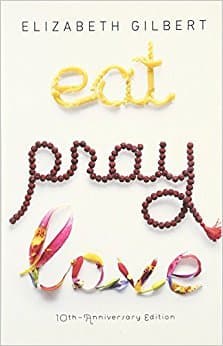
- Eat, Pray, Love
Elizabeth Gilbert
3.6 (1.5M) average on GoodreadsLifestyleA heartbroken writer leaves her conventional life for a year-long global search for pleasure in Italy, spiritual devotion in India, and unexpected love and balance in Bali.
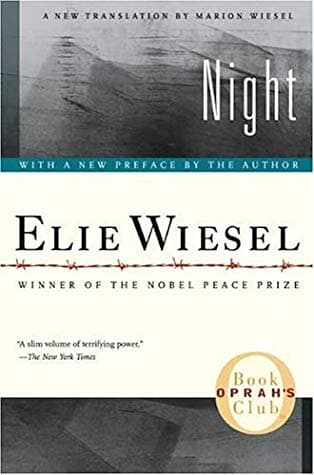
- Night
Elie Wiesel
4.3 (970k) average on GoodreadsBiographyIn the darkness of Auschwitz and Buchenwald, a teenage Elie Wiesel faces the extermination of his family, the loss of his faith, and the lasting scars of humanity's deepest cruelty.
- Steve Jobs
Walter Isaacson
4.1 (957k) average on GoodreadsBusinessSteve Jobs was a visionary who fused creativity and technology to revolutionize six industries and shape our digital world.
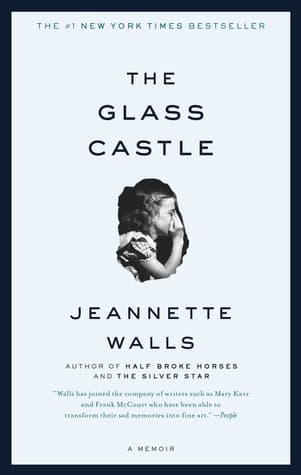
- The Glass Castle
Jeannette Walls
4.3 (903k) average on GoodreadsBiographyJeannette Walls's memoir describes her unusual childhood with brilliant, free-spirited parents whose poverty-stricken life shaped her independence and love despite family problems.
- Bossypants
Tina Fey
4.0 (848k) average on GoodreadsBiographyFrom a 'vicious nerd' with stress dreams to the comedic force behind Liz Lemon and 'Weekend Update,' Tina Fey chronicles her journey to proving that 'you're no one until someone calls you bossy.'



Enjoyed the summary?
A summary gives you the shape of the book. The book itself has the detail, the examples and the voice.
Find Living to Tell the Tale on AmazonAs an Amazon Associate, BookBrief earns from qualifying purchases. How we're funded