
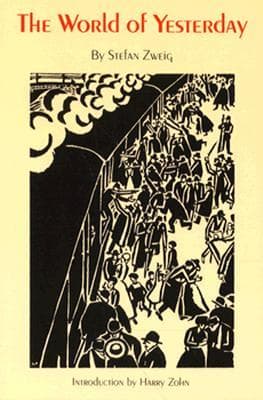
Core Idea
- Difficulty
- Medium
Key Takeaways from The World of Yesterday
The Golden Age of Security
Zweig's Vienna epitomized a pre-WWI European illusion of unshakeable stability and progress.
Zweig shows Vienna, the capital of the Austro-Hungarian Empire, as a place of comfort, culture, and a simple belief in progress. From about 1880 to 1914, people had many freedoms, economic growth, and a growing art scene. He describes a society where passports were rare, travel was open, and educated people felt a shared European identity, despite national feelings. This feeling of security, however, was weak. World War I destroyed it, an event Zweig saw as the end of an era and the start of deep disappointment. His story shows how strong this idea of lasting peace was, making the collapse even more shocking.
“Before 1914, the world believed in an uninterrupted ascent, a perpetual peace, and the triumph of reason. This was the golden age of security.”
In the book: Zweig's detailed descriptions of pre-WWI Viennese society, the lack of border controls, and the general optimistic sentiment among the populace.
Try this: Reflect on how modern societies might harbor similar illusions of stability, and how historical perspective can temper such optimism in the face of unforeseen global shifts.
The Cultural Ferment of Fin-de-Siècle Vienna
Vienna was a crucible of artistic and intellectual innovation, yet profoundly conservative beneath the surface.
Zweig, who lived through it, describes Vienna's active intellectual and artistic life around 1900. He recalls meeting people like Sigmund Freud, Rainer Maria Rilke, Arthur Schnitzler, and Gustav Mahler, showing how the city encouraged new forms of literature, music, and psychoanalysis. This was a time of much testing, challenging old ways and looking into the human mind. Yet, Zweig also notes Vienna's underlying conservative and hypocritical nature. Open sensuality and bold ideas were often kept to artistic groups, while public life followed strict moral rules and imperial manners. This conflict between new ideas and old ways, between outer show and inner trouble, is a main point in his memories of the era's culture.
“Vienna was a city of paradoxes, a hotbed of new ideas in art and psychology, yet deeply entrenched in its imperial traditions and social hierarchies.”
In the book: Zweig's personal anecdotes and descriptions of interactions with leading cultural figures and the specific artistic movements flourishing in Vienna.
Try this: Consider how environments that simultaneously foster innovation and maintain traditional structures can lead to unique cultural explosions and underlying societal tensions.
The Scars of World War I
The Great War irrevocably shattered Europe's sense of continuity and moral order.
Zweig writes much of his book about the huge impact of World War I, which he saw firsthand. He describes the initial joy that quickly turned into a hard, brutal reality, and the deep moral and mental harm done to European society. For Zweig, the war was not just a political fight but a spiritual one, destroying belief in human progress and showing a darker, less rational side of people. He talks about the end of internationalism, the rise of extreme patriotism, and the terrible economic and social effects that followed. This is perhaps the book's best insight, showing how one event could completely change not just borders and governments, but the very way Europeans thought, leading to an era of doubt and cynicism that prepared the way for future dictatorships.
“The First World War was not merely a war; it was the end of a world, the definitive break with all that was familiar and secure.”
In the book: Zweig's personal account of the war's onset, the societal shifts, and the subsequent widespread disillusionment across Europe.
Try this: Analyze how major global conflicts can fundamentally alter a society's values and future trajectory, and how peace efforts must address underlying psychological and ideological factors.
The Rise of Nationalism and Totalitarianism
Zweig witnessed the insidious growth of destructive ideologies that consumed Europe.
After World War I, Zweig carefully records the worrying rise of extreme nationalism, Fascism, and Nazism. He watches in horror as the economic problems, political divisions, and mental wounds of the post-war period created good conditions for leaders who stirred up crowds. He describes the slow loss of individual freedoms, the planned stopping of disagreement, and how effectively propaganda could control public opinion. His own exile and the burning of his books by the Nazis are clear examples of the dictator's cruel power. This part of the book is a strong warning, showing how easily democratic systems can fall apart under constant attack by ideas, and how intellectuals, at first too comfortable, often find themselves helpless against organized fanaticism. This part is good at describing the cultural and mental draw of fascism, though less so its economic causes.
“We lived through an age where nationalism became a religion, and reason was sacrificed at the altar of mass hysteria.”
In the book: Zweig's accounts of the political climate in Austria and Germany between the wars, the rise of Hitler, and his own experiences with censorship and exile.
Try this: Identify the early warning signs of rising authoritarianism in contemporary societies, such as the suppression of free speech, demonization of minorities, and manipulation of media.
The Tragedy of Exile
Exile is a loss of homeland, identity, and the very ground beneath one's feet.
Zweig's own journey as an exile, forced to leave Austria and then England, is a central, sad part of the book. He clearly expresses the deep mental effect of exile—losing language as a living thing, being cut off from cultural roots, and always feeling like an outsider. He shows exile not just as moving physically but as a deep spiritual wound, a constant longing for a world that is gone forever. His description of holding his passport as his only proof of existence, yet feeling completely stateless, is very moving. This strong personal story highlights the human cost of political upheaval and war, showing how identity is tied to place and culture, and how losing them can cause lasting sadness.
“To lose one's homeland is to lose everything, to become a stranger in every land, forever searching for a place that no longer exists.”
In the book: Zweig's personal narrative of fleeing Austria, living in England, and eventually moving to Brazil, and his reflections on the psychological toll of being a refugee.
Try this: Cultivate empathy for refugees and displaced populations by understanding the multifaceted losses they endure beyond just physical safety, including identity and cultural connection.
The Power and Peril of Intellectuals
Intellectuals shape culture but are often politically impotent against mass movements.
Zweig, as an intellectual and artist, thinks about the role and limits of his group. He shows how intellectuals helped create the lively culture of pre-war Europe, promoting global thinking and human values. However, he also regrets their political weakness in the face of growing nationalism and dictatorships. Despite their warnings, they were often ignored, silenced, or forced into exile. This is an important self-reflection, admitting that while ideas are strong, they are not always enough to fight organized hate and state violence. He expresses deep personal disappointment in the European intellectual community's failure to unite and stop the disaster, showing the gap between cultural influence and political power, especially when society breaks down.
“We writers and thinkers, who believed in the power of the word, found ourselves helpless against the roar of the mob and the might of the machine.”
In the book: Zweig's accounts of his interactions with other intellectuals and artists, and his observations of their collective inability to halt the rise of destructive ideologies.
Try this: Evaluate the contemporary role of intellectuals and artists in political discourse, recognizing both their potential for influence and their inherent limitations against well-funded and organized political movements.
The Illusion of Progress
Humanity's belief in linear progress was a comforting lie shattered by 20th-century barbarism.
One of Zweig's deepest disappointments is the end of the 19th-century belief in constant human progress. He describes how his generation grew up trusting in reason, education, and peace. The horrors of two World Wars, the rise of dictators, and the planned destruction of human values completely ended this belief. He argues that instead of a straight climb, history has repeating patterns of enlightenment and barbarism, and that human nature, though capable of great things, is still open to irrationality and cruelty. This realization runs through the book, giving a sad background to his personal story and showing how delicate civilization is. This idea contrasts with many Enlightenment beliefs, suggesting history is more circular.
“The belief in an inevitable progress, a steady ascent of humanity, was the greatest self-deception of our generation.”
In the book: Zweig's overarching narrative of European history from a period of perceived utopia to profound devastation, and his explicit reflections on the shattered illusion of progress.
Try this: Challenge contemporary assumptions about inevitable societal improvement, recognizing that progress is often fragile and requires constant vigilance and effort to maintain.
The Importance of Personal Freedom
Zweig cherished individual liberties, seeing their erosion as the ultimate tragedy.
Throughout his book, Zweig often stresses the importance of personal freedom. He remembers fondly a Europe before 1914 where intellectual exchange was free, travel was easy, and individual expression was largely unchecked. The later introduction of censorship, travel limits, and forced agreement with ideologies under dictatorships greatly pained him. For Zweig, the ability to think for oneself, to move freely across borders, and to talk openly were not just handy things but basic parts of a civilized society. His sadness over losing these freedoms highlights his humanistic ideals and shows how fragile civil liberties are when faced with political extremism. This is a sad reminder of what is lost when societies become authoritarian.
“The greatest treasure we possessed was our personal freedom, the right to think, travel, and express ourselves without fear. Its loss was unbearable.”
In the book: Zweig's nostalgic descriptions of pre-WWI freedoms contrasted with his later experiences under Nazi rule, including censorship and travel restrictions.
Try this: Actively advocate for and protect civil liberties, understanding their critical role in fostering individual well-being, cultural vibrancy, and democratic governance.
Memory as a Moral Imperative
Zweig's memoir is a desperate attempt to preserve a lost world and warn future generations.
Written in exile and shortly before his suicide, "The World of Yesterday" is more than just a personal history; it is an urgent act of remembering. Zweig purposefully presents his book as a moral duty, a record of a lost European culture, and a warning against the forces that destroyed it. He carefully rebuilds the atmosphere, people, and ideas of his youth, not just out of nostalgia, but to provide a historical account and a warning. This look back is filled with a deep sense of loss and a desperate hope that by understanding the past, future generations might avoid similar disasters. The book itself becomes a memorial to a destroyed world, a final, defiant act of cultural preservation against the tide of barbarism.
“I write not to glorify the past, but to bear witness to what was lost, so that others may understand the fragility of our world.”
In the book: The very act of writing the memoir in dire circumstances, its elegiac tone, and Zweig's explicit statements about his purpose in writing it.
Try this: Engage with historical narratives and personal testimonies to understand past mistakes and inform present actions, recognizing memory as a crucial tool for societal learning.
Quiz
10 questions on the main ideas. Each answer comes with a short explanation.
Question 1
What genre is "The World of Yesterday" by Stefan Zweig?
- Science Fiction
- Mystery
- Biography, Memoir, History
- Fantasy
Show answer
C. Biography, Memoir, History The provided text explicitly states the genres as Biography, Memoir, and History.
Question 2
According to the text, "The World of Yesterday" is considered one of the author's best and most important books. True or False?
- True
- False
Show answer
A. True The text states: 'Paměti světoznámého rakouského autora jsou jednou z jeho nejlepších a nejdůležitějších knih' which translates to 'The memoirs of the world-famous Austrian author are one of his best and most important books.'
Question 3
What does the book serve as a source for understanding in the context of European culture?
- Modern European culture
- Ancient European mythology
- Contemporary European politics
- Medieval European architecture
Show answer
A. Modern European culture The text mentions it is 'jedním z pramenů pro pochopení novodobé evropské kultury,' meaning 'one of the sources for understanding modern European culture.'
Question 4
What form does the book use to capture major events of European history?
- Fictional narratives
- Eyewitness testimony
- Academic research papers
- Statistical data analysis
Show answer
B. Eyewitness testimony The text states: 'V knize jsou zachyceny formou očitého svědectví všechny nejdůležitější události novodobé evropské historie,' which translates to 'In the book, all the most important events of modern European history are captured in the form of eyewitness testimony.'
Question 5
Besides historical events, what else does the book capture about European cities?
- Their economic growth rates
- Their geological formations
- Their atmosphere
- Their population demographics
Show answer
C. Their atmosphere The text mentions: 'atmosféru jejích měst,' meaning 'the atmosphere of its cities.'
Question 6
The book features encounters with notable figures. What is the approximate number of significant European personalities mentioned?
- A few dozen
- Hundreds
- Thousands
- Only one or two
Show answer
A. A few dozen The text says: 'setkání s desítkami nejvýznamnějších evropských osobností,' which means 'encounters with dozens of the most significant European personalities.'
Question 7
The description of the book implies it is a comprehensive account of a specific period. Which period is most strongly suggested?
- The Renaissance
- The Enlightenment
- The era leading up to and including World War I
- The Cold War
Show answer
C. The era leading up to and including World War I While not explicitly stated, the phrase 'novodobé evropské historie' (modern European history) and the mention of 'eyewitness testimony' of major events, combined with Zweig's known life span and focus on the cultural and political shifts of his time, strongly suggests the period leading up to and including the World Wars.
Question 8
The phrase 'novodobé evropské kultury' translated from the Czech can be understood as:
- Contemporary European culture
- Ancient European culture
- Future European culture
- Fictional European culture
Show answer
A. Contemporary European culture 'Novodobé' in Czech context generally refers to modern or contemporary times, especially in contrast to older historical periods.
Question 9
The book's value is highlighted not only for its personal narrative but also for its contribution to understanding a broader historical context. This suggests the author aimed to:
- Write a purely fictional adventure story
- Provide a personal diary with no historical significance
- Offer a personal perspective that illuminates historical forces
- Create a guide for future historical research
Show answer
C. Offer a personal perspective that illuminates historical forces The text emphasizes the book as both a personal memoir ('Paměti') and a source for understanding modern European culture and history ('pramenů pro pochopení novodobé evropské kultury'). This indicates a dual purpose: personal reflection intertwined with historical illumination.
Question 10
Considering Stefan Zweig's life and the era described, the 'most significant European personalities' encountered in the book likely represent figures from which fields?
- Primarily sports and entertainment
- Politics, arts, and intellectual life
- Exploration and scientific discovery only
- Religious and philosophical leaders exclusively
Show answer
B. Politics, arts, and intellectual life Stefan Zweig was a prominent intellectual and writer, and his circle and the era he describes (early 20th century Europe) were characterized by significant developments and figures in politics, literature, music, art, and philosophy. The term 'osobností' (personalities) in this context strongly implies influential figures across these domains.
The World of Yesterday FAQ
What is "The World of Yesterday" about?
"The World of Yesterday" is a memoir by Stefan Zweig reflecting on his life and the cultural landscape of Europe before World War I. It serves as a vivid eyewitness account of major historical events, the atmosphere of European cities, and encounters with prominent figures of the era.
Who was Stefan Zweig?
Stefan Zweig was a renowned Austrian novelist, playwright, journalist, and biographer, celebrated for his psychological depth and elegant prose. He was a prominent figure in 20th-century European literature, whose works often explored themes of identity, passion, and the human condition.
What historical period does "The World of Yesterday" cover?
The book primarily covers the period of Stefan Zweig's life from his childhood in the late 19th century up to the outbreak of World War II. It focuses particularly on the Belle Époque and the turbulent years leading up to and during the First World War.
What makes "The World of Yesterday" an important book?
It's considered one of Zweig's most significant works, offering profound insights into the cultural and intellectual life of pre-war Europe. The memoir provides a deeply personal yet historically rich perspective on a pivotal era of European history.
Does the book focus on Zweig's personal life or historical events?
The book skillfully blends both. Zweig uses his personal experiences and observations as a lens through which to view and understand the broader historical and cultural shifts occurring in Europe during his lifetime.
What kind of European personalities does Zweig mention?
Zweig recounts meetings and interactions with numerous influential figures of his time, including artists, writers, musicians, scientists, and politicians, painting a rich tapestry of the European intellectual elite.
What is the tone of "The World of Yesterday"?
The tone is often elegiac and nostalgic, reflecting Zweig's profound sense of loss for the lost world of European culture and stability. However, it is also analytical and deeply humane.
Is "The World of Yesterday" a factual history book?
While "The World of Yesterday" is an invaluable historical document due to Zweig's eyewitness accounts and reflections, it is fundamentally a memoir. It offers a subjective, personal interpretation of history rather than a purely objective, academic historical account.
About the author
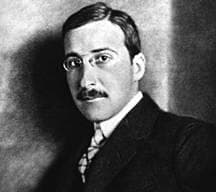
Stefan Zweig was an Austrian writer. At the height of his literary career, in the 1920s and 1930s, he was one of the most widely translated and popular writers in the world.
Similar books
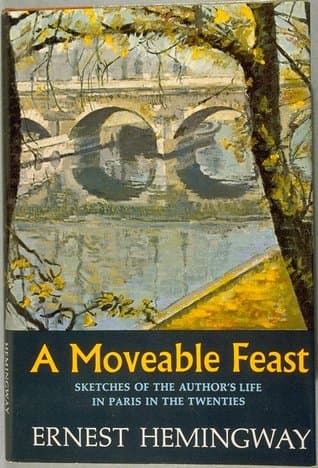
- A Moveable Feast
Ernest Hemingway
4.0 (118k) average on GoodreadsLifestyleBoth books describe vibrant intellectual and artistic communities in interwar Europe, specifically Paris for Hemingway and Vienna/Europe more broadly for Zweig. However, Hemingway's memoir is characterized by its sparse, direct prose and focuses on the struggles and camaraderie of young artists, often with a detached, almost journalistic quality. Zweig's work is far more expansive, deeply emotional, and reflective, chronicling the collapse of an entire civilization rather than the blossoming of an artistic scene. Hemingway's Paris is a place of creative struggle and discovery; Zweig's Europe is a world in terminal decline, observed with profound sorrow and intellectual depth.
- The Diary of a Young Girl
Anne Frank
4.2 (2.7M) average on GoodreadsBiographyDuring the Nazi occupation, a teenage girl's diary, written from a secret annex, shares observations on humanity, hope, and the wait for freedom.
- Eat, Pray, Love
Elizabeth Gilbert
3.6 (1.5M) average on GoodreadsLifestyleA heartbroken writer leaves her conventional life for a year-long global search for pleasure in Italy, spiritual devotion in India, and unexpected love and balance in Bali.
- Night
Elie Wiesel
4.3 (970k) average on GoodreadsBiographyIn the darkness of Auschwitz and Buchenwald, a teenage Elie Wiesel faces the extermination of his family, the loss of his faith, and the lasting scars of humanity's deepest cruelty.
- Steve Jobs
Walter Isaacson
4.1 (957k) average on GoodreadsBusinessSteve Jobs was a visionary who fused creativity and technology to revolutionize six industries and shape our digital world.
- The Glass Castle
Jeannette Walls
4.3 (903k) average on GoodreadsBiographyJeannette Walls's memoir describes her unusual childhood with brilliant, free-spirited parents whose poverty-stricken life shaped her independence and love despite family problems.





Enjoyed the summary?
A summary gives you the shape of the book. The book itself has the detail, the examples and the voice.
Find The World of Yesterday on AmazonAs an Amazon Associate, BookBrief earns from qualifying purchases. How we're funded