

Core Idea
- Difficulty
- Hard
- Read it if
- You want an unparalleled, deeply personal, and politically insightful account of World War II from one of its most central figures, offering a detailed understanding of strategic decisions and diplomatic complexities.
- Skip it if
- You are looking for a concise overview of WWII, prefer a purely objective historical analysis without personal bias, or are daunted by a multi-volume, exhaustive narrative.
Key Takeaways from The Second World War
The Gathering Storm: Folly of Appeasement
Churchill argues that appeasement only emboldens aggressors, making war inevitable and more devastating.
Churchill's work begins by condemning the pre-war policy of appeasement toward Nazi Germany. He details how Western democracies' hesitation to confront Hitler's ambitions—from the Rhineland's remilitarization to the annexation of Austria and the Munich agreement over Czechoslovakia—did not prevent war but ensured it. This inaction, caused by war-weariness, economic depression, and a misunderstanding of totalitarian ideas, allowed Germany to rearm, gain power, and achieve strategic advantages. Churchill argues that an earlier, united stand could have deterred Hitler or faced him when he was weaker, saving millions of lives and preventing global disaster. His unique position as a prophet in the wilderness adds weight to this early analysis.
“There was a belief that by giving way on one point after another, the German appetite would be sated. Instead, it grew with feeding.”
In the book: The Munich Agreement of 1938, where Britain and France ceded the Sudetenland to Germany, is presented as the quintessential failure of appeasement, proving to Churchill that Hitler's ambitions were insatiable.
Try this: Leaders and citizens should be wary of negotiating with those who demonstrate a clear intent to dominate and disregard international norms. Early, decisive action against aggressive expansionism can prevent larger conflicts.
Related ideas: appeasement, munich-agreement, totalitarianism
Their Finest Hour: The Power of Rhetoric and Resolve
Churchill's leadership and powerful oratory galvanized a nation on the brink of defeat, demonstrating the critical role of morale.
After the Fall of France and the Dunkirk evacuation, Britain faced its darkest hour, with invasion seeming likely. Churchill's account shows the immense pressure on the British government and the deep despair that could have overcome the nation. Instead, his leadership, marked by firm resolve and a gift for rhetoric, turned fear into defiance. His speeches, recorded in the book, were not just words; they were strategic tools that rallied the British people, strengthened their will to resist, and projected an image of strength to allies and enemies. This volume shows how moral courage and the ability to give a clear, inspiring vision can be as important as military power in wartime.
“I have nothing to offer but blood, toil, tears, and sweat.”
In the book: The 'We shall fight on the beaches' speech (June 4, 1940) and the 'Finest Hour' speech (June 18, 1940) are presented as pivotal moments that solidified national resolve and communicated Britain's unyielding stance to the world.
Try this: In times of crisis, effective leadership requires not only strategic thinking but also the ability to communicate a compelling vision, inspire hope, and foster collective resilience. Leaders must be able to articulate the stakes and the path forward with clarity and courage.
Related ideas: wartime-leadership, rhetoric, national-morale, battle-of-britain
The Grand Alliance: The Imperative of Coalition Warfare
Victory against a common enemy necessitates complex, often difficult, alliances between disparate powers.
Churchill's account of 'The Grand Alliance' shows the major challenge of creating and keeping unity among Britain, the United States, and the Soviet Union, powers that were diverse and often ideologically opposed. He details the constant diplomatic efforts, personality clashes (Stalin, Roosevelt, Churchill), and different strategic priorities that defined this partnership. Despite these tensions, the shared threat of the Axis powers forced these nations to work together on an unprecedented scale. Churchill reveals the delicate balance needed to manage such a coalition, stressing the need for compromise, clear communication, and a focus on defeating the enemy, even when major disagreements existed. This volume is a lesson in the complexities of international relations during wartime.
“No one can say that the Soviet Union was not fighting for its life, or that the United States was not fighting for its ideals. The combination of these two mighty forces, with Britain, was the only hope for the world.”
In the book: The Tehran Conference (1943) and the early discussions regarding a Second Front in Europe are prime examples of the strategic and political tensions that needed to be navigated within the Grand Alliance, particularly between the Western Allies and the Soviet Union.
Try this: Successful large-scale endeavors, whether military or otherwise, often require building and sustaining coalitions with diverse stakeholders. This demands skilled diplomacy, a focus on common objectives, and a willingness to overcome ideological or strategic differences for mutual benefit.
Related ideas: coalition-warfare, grand-alliance, diplomacy, international-relations
The Hinge of Fate: Global Reach and Turning Points
The war's outcome was determined by critical battles across multiple, seemingly disparate theaters.
This volume captures the global nature of World War II, showing how battles in North Africa, the Eastern Front, and the Pacific were connected and decided the 'hinge of fate.' Churchill details the desperate struggles and strategic importance of battles like El Alamein, Stalingrad, and Midway, showing how the tide turned against the Axis powers. He demonstrates that no single front was isolated; successes or failures in one area directly affected resources and strategies for others. This view highlights the interconnectedness of modern warfare and the huge logistical challenges of fighting a war on multiple continents, showing the strategic skill needed to coordinate such a vast global effort.
“Before Alamein we never had a victory. After Alamein we never had a defeat.”
In the book: The simultaneous victories at El Alamein (North Africa), Stalingrad (Eastern Front), and the Allied landings in North Africa (Operation Torch) in late 1942 are presented as the crucial turning points that collectively shifted the momentum of the war.
Try this: Complex, multi-faceted problems rarely have a single solution or a single point of failure. Understanding the interconnectedness of various components and identifying critical leverage points across a system is essential for effective strategic planning and intervention.
Related ideas: global-warfare, turning-points, logistics, strategy
Closing the Ring: The Inevitability of Attrition
The final victory was achieved through relentless, coordinated pressure, grinding down the enemy's will and resources.
As the war continued, Churchill details the systematic and coordinated Allied efforts to 'close the ring' around Nazi Germany. This phase of the war involved constant strategic bombing, the advance on the Eastern Front, and careful planning for the invasion of Europe. It shows the brutal reality of attrition warfare, where victory comes not from one decisive blow, but from continuous pressure, resource depletion, and the gradual weakening of the enemy's ability and will to fight. Churchill stresses the immense human and material cost of this final push, highlighting the courage of the combatants and the strategic need to maintain offensive momentum on all fronts until unconditional surrender.
“The ring was closing, slowly but surely, around the heart of the enemy. Every battle, every advance, however small, contributed to the final strangulation.”
In the book: The Allied bombing campaigns over Germany, the relentless Soviet offensive on the Eastern Front, and the preparations for D-Day (Operation Overlord) are key examples of the coordinated, attritional strategy employed to defeat Germany.
Try this: Achieving a significant long-term goal often requires sustained, disciplined effort across multiple fronts, even when progress seems slow or costly. It means understanding that many small victories contribute to the ultimate success, and that persistence is key.
Related ideas: attrition-warfare, strategic-bombing, unconditional-surrender, d-day
Triumph and Tragedy: The Bittersweet Aftermath
Victory brought not only relief but also the seeds of new conflicts and profound moral dilemmas.
The final volume reflects on the immediate aftermath of victory, especially the collapse of the Grand Alliance and the start of the Cold War. Churchill, always a realist, knew that defeating Nazi Germany would not bring lasting peace, but a new geopolitical struggle. He details the growing tensions with the Soviet Union, the moral issues of post-war decisions (like the atomic bombings), and the huge task of rebuilding a shattered world. This section has a sense of melancholic foresight, as Churchill sees the alliances that won the war unravel, replaced by an ideological divide that shaped the late 20th century. It is a reminder that triumph often brings its own tragedies and challenges.
“The end of the German war was not the end of our troubles. We had defeated one tyranny, only to see another rise in its place.”
In the book: The Yalta and Potsdam Conferences, where the seeds of post-war divisions and the Cold War were sown, are central to Churchill's account of the 'tragedy' following the 'triumph' over Germany.
Try this: Significant achievements often create new challenges and require continued vigilance. Leaders must anticipate unintended consequences and be prepared to address the next set of problems that arise from a 'victory,' rather than assuming peace will automatically follow.
Related ideas: cold-war, post-war-order, geopolitics, yaltapotsdam
The Indispensable Role of the United States
American industrial might and manpower were ultimately decisive in securing Allied victory.
Churchill, despite his British patriotism, acknowledges the critical and essential role of the United States in the Allied victory. He details the huge impact of American industry, the 'Arsenal of Democracy,' which supplied vast amounts of material to the Allies, and the eventual deployment of millions of American troops. While he highlights Britain's stand and the Soviet Union's sacrifice, Churchill makes it clear that without the economic and military power of the U.S., defeating the Axis powers would have been much longer, if not impossible. This perspective offers an honest assessment of shifting global power and the vital contribution of a nation that initially sought neutrality.
“The entry of the United States into the war was like a giant flywheel beginning to turn. Once it gathered momentum, nothing could stop it.”
In the book: The Lend-Lease Act, which provided crucial supplies to Britain and the Soviet Union before direct U.S. entry into the war, and the scale of American troop deployments in Europe and the Pacific, are repeatedly cited as evidence of U.S. impact.
Try this: In any major global undertaking, understanding and leveraging the strengths of key partners is paramount. Recognizing the unique contributions of each ally, even if they join later, is crucial for collective success.
Related ideas: arsenal-of-democracy, lend-lease, american-intervention, industrial-capacity
The Human Cost and Moral Imperatives
Beneath the strategy and politics, the war was a story of immense suffering and profound moral choices.
While Churchill's history is largely a high-level account of strategy, diplomacy, and leadership, it consistently shows awareness of the immense human cost. He often reflects on the suffering of civilians, the sacrifices of soldiers, and the moral dilemmas leaders faced. From the Blitz's impact on Londoners to the horrors of the Eastern Front, the tragedy of millions of lives lost is always present in his story. Churchill deals with the ethical issues of total war, including the bombing of cities and difficult choices made under extreme pressure. This is a reminder that behind every strategic decision, countless individual lives were affected, and that even in victory, humanity pays a terrible price for conflict.
“The tale of the Second World War is a tale of human courage and human suffering on a scale never before witnessed.”
In the book: Descriptions of the Blitz and the resilience of the British people, the immense casualties on the Eastern Front, and his own internal reflections on the necessity of certain brutal wartime measures (e.g., bombing campaigns) underscore the human and moral dimensions.
Try this: When making decisions with far-reaching consequences, especially in leadership roles, it is crucial to balance strategic objectives with an understanding of the human impact. Empathy and ethical considerations must remain part of the decision-making process, even in the most challenging circumstances.
Related ideas: human-cost, moral-dilemmas, total-war, wartime-ethics
The Power of Historical Documentation
Churchill's unique access and meticulous record-keeping provide an unparalleled primary source.
One of the most notable aspects of Churchill's history is his access to primary source material, much of which he created himself. As Prime Minister, he was at the center of decision-making, sending and receiving countless telegrams, memos, and directives. He famously dictated many of his thoughts and decisions, ensuring a detailed record. This personal involvement, combined with his later access to official archives, allows him to present a highly authoritative, though subjective, account. The sheer volume of direct quotes from official communications, meeting minutes, and personal letters gives credibility and immediacy to his story, making it not just a history but a vital historical document. It shows the value of careful record-keeping in understanding complex events.
“I was at the centre of affairs, and I had the power to obtain all the information I wanted.”
In the book: The frequent inclusion of verbatim telegrams, orders, and personal correspondence between Churchill and other world leaders (e.g., Roosevelt, Stalin) directly within the text, often with his own annotations or context.
Try this: For any significant endeavor, thorough documentation and transparent record-keeping are invaluable. They provide clarity, accountability, and an essential resource for future analysis, learning, and historical understanding. Leaders should prioritize clear, accessible communication and record-keeping.
Related ideas: primary-sources, historical-methodology, record-keeping, documentary-evidence
The Unpredictability of Future Threats
The book serves as a cautionary tale against complacency and the underestimation of nascent dangers.
Churchill's entire six-volume series is a warning. It details how economic hardship, political division, and a failure of imagination allowed an aggressive, totalitarian idea to become a global disaster. He stresses that the warning signs were present, but often ignored or misunderstood until it was almost too late. The story acts as a strong argument against complacency and the tendency to underestimate new threats, whether ideological, military, or geopolitical. It suggests that vigilance, clear assessment of reality, and a willingness to act decisively, even when unpopular, are essential for protecting peace and freedom in an uncertain world. The lessons of the 1930s, as told by Churchill, remain very relevant.
“The past is not a guide to the future, but it is a light by which we may discern the dangers that lie ahead.”
In the book: His repeated warnings about Hitler's intentions in the 1930s, which were largely dismissed by the British political establishment, serve as the primary evidence for the dangers of ignoring nascent threats.
Try this: Individuals and societies must remain critically aware of emerging threats and not be lulled into complacency by periods of peace or prosperity. Proactive engagement and a willingness to confront difficult realities, rather than hoping they will dissipate, are crucial for long-term security.
Related ideas: historical-lessons, geopolitical-threats, complacency, preventive-action
The Second World War Quotes
“I have nothing to offer but blood, toil, tears, and sweat.”
“Never in the field of human conflict was so much owed by so many to so few.”
“This is not the end. It is not even the beginning of the end. But it is, perhaps, the end of the beginning.”
“Victory at all costs, victory in spite of all terror, victory however long and hard the road may be; for without victory, there is no survival.”
“We shall fight on the beaches, we shall fight on the landing grounds, we shall fight in the fields and in the streets, we shall fight in the hills; we shall never surrender.”
“An appeaser is one who feeds a crocodile—hoping it will eat him last.”
“The price of greatness is responsibility.”
“If you are going through hell, keep going.”
“It is a mistake to try to look too far ahead. The chain of destiny can only be grasped one link at a time.”
“In war, resolution; in defeat, defiance; in victory, magnanimity; in peace, goodwill.”
“History with its flickering lamp stumbles along the trail of the past, trying to reconstruct its scenes, to revive its echoes, and kindle with pale gleams the passions of former days.”
“The Hun is always either at your throat or at your feet.”
“For my part, I consider that it will be found much better by all parties to leave the past to history, especially as I propose to write that history myself.”
“We shape our dwellings, and afterwards our dwellings shape us.”
Quiz
10 questions on the main ideas. Each answer comes with a short explanation.
Question 1
Which of the following events did Churchill identify as a critical miscalculation by Hitler that significantly altered the course of the war?
- The invasion of Poland in September 1939.
- The decision to invade the Soviet Union (Operation Barbarossa) in June 1941.
- The Battle of Britain in the summer and autumn of 1940.
- The declaration of war on the United States after Pearl Harbor.
Show answer
B. The decision to invade the Soviet Union (Operation Barbarossa) in June 1941. Churchill consistently highlights Hitler's invasion of the Soviet Union as a monumental strategic error, forcing Germany into a two-front war and ultimately sealing its fate by engaging the vast resources and manpower of the USSR.
Question 2
In 'Their Finest Hour,' what was the primary threat Churchill described facing Britain immediately after the fall of France?
- The collapse of the British economy due to wartime expenses.
- A direct German invasion of the British Isles.
- Widespread civil unrest and opposition to the war effort.
- The defection of Commonwealth nations from the British Empire.
Show answer
B. A direct German invasion of the British Isles. 'Their Finest Hour' vividly details the immediate danger of a German cross-Channel invasion (Operation Sea Lion) and Britain's desperate efforts to prepare for it after the evacuation of Dunkirk.
Question 3
Which of the following terms did Churchill frequently use to describe the alliance between Britain, the United States, and the Soviet Union?
- The Western Bloc
- The Democratic Front
- The Grand Alliance
- The Allied Powers
Show answer
C. The Grand Alliance The title of the third volume, 'The Grand Alliance,' directly reflects Churchill's term for the crucial wartime partnership between the major powers fighting the Axis.
Question 4
Churchill's account of the 'Phoney War' period (1939-1940) primarily emphasizes which of the following?
- The intense aerial bombardment of British cities.
- The lack of significant ground combat on the Western Front.
- The rapid expansion of the Royal Navy.
- The immediate deployment of British expeditionary forces to North Africa.
Show answer
B. The lack of significant ground combat on the Western Front. The 'Phoney War' refers to the period after the invasion of Poland but before the Battle of France, characterized by relative calm and a lack of major military operations on the Western Front, a situation Churchill often viewed with a mix of apprehension and preparations.
Question 5
In 'The Gathering Storm,' Churchill extensively details his pre-war warnings against which policy towards Nazi Germany?
- Isolationism
- Appeasement
- Containment
- Preventive War
Show answer
B. Appeasement The first volume, 'The Gathering Storm,' is largely dedicated to Churchill's prophetic and largely unheeded warnings against the policy of appeasement adopted by successive British governments towards Hitler's Germany.
Question 6
Churchill's perspective on the strategic importance of the Mediterranean and North Africa campaigns, particularly in volumes like 'The Hinge of Fate,' primarily focused on:
- Securing oil fields for the British Empire.
- Opening a 'Second Front' to relieve pressure on the Soviet Union.
- Protecting vital sea lanes to India and the Far East via the Suez Canal.
- Establishing air bases for bombing raids on Germany.
Show answer
C. Protecting vital sea lanes to India and the Far East via the Suez Canal. Churchill consistently emphasized the crucial role of the Mediterranean and North Africa in protecting the British Empire's lines of communication, especially the Suez Canal, which was vital for access to its colonies and oil supplies.
Question 7
Which of the following best describes Churchill's portrayal of his relationship with General Charles de Gaulle throughout the war?
- One of unwavering mutual respect and seamless cooperation.
- Marked by frequent disagreements, mutual exasperation, but underlying strategic necessity.
- Largely indifferent, with de Gaulle playing a minor role in Allied strategy.
- A close personal friendship that transcended political differences.
Show answer
B. Marked by frequent disagreements, mutual exasperation, but underlying strategic necessity. Churchill's memoirs frequently recount his often stormy and difficult relationship with de Gaulle, characterized by clashes over French sovereignty and de Gaulle's perceived intransigence, despite Churchill's recognition of his importance to the Free French cause.
Question 8
In 'Triumph and Tragedy,' what primary concern does Churchill express regarding the post-war order, particularly concerning the Soviet Union?
- The economic recovery of Germany.
- The potential for renewed Japanese aggression.
- The expansion of Soviet influence and the division of Europe.
- The decline of the British Empire.
Show answer
C. The expansion of Soviet influence and the division of Europe. The final volume, 'Triumph and Tragedy,' captures Churchill's growing apprehension about Soviet post-war intentions and the emerging Iron Curtain, foreshadowing the Cold War and the division of Europe.
Question 9
Churchill's detailed accounts of the conferences at Tehran, Yalta, and Potsdam reveal his efforts to navigate the complex dynamics between the 'Big Three.' What was a recurring challenge he faced at these summits?
- Securing American commitment to the war in the Pacific.
- Mediating between Roosevelt's idealism and Stalin's pragmatic, often aggressive, territorial demands.
- Convincing both leaders to prioritize the liberation of France.
- Forming a consensus on the post-war role of the United Nations.
Show answer
B. Mediating between Roosevelt's idealism and Stalin's pragmatic, often aggressive, territorial demands. Churchill often found himself in the difficult position of trying to reconcile Roosevelt's sometimes naive trust in Stalin and his focus on global ideals with Stalin's clear and often brutal pursuit of Soviet geopolitical interests, particularly in Eastern Europe.
Question 10
Beyond military strategy, Churchill's history frequently emphasizes the importance of which domestic factor for Britain's survival during the war?
- The strength of the pre-war pacifist movement.
- The unwavering morale and resilience of the British people.
- The neutrality of key industrial unions.
- The rapid expansion of the British colonial empire.
Show answer
B. The unwavering morale and resilience of the British people. Throughout his volumes, particularly 'Their Finest Hour,' Churchill repeatedly pays tribute to the indomitable spirit, courage, and perseverance of the British public as a crucial element in defying Nazi aggression and enduring the Blitz.
The Second World War FAQ
What makes Winston Churchill's 'The Second World War' a definitive history?
Churchill's work is considered definitive due to his unique position as a wartime leader, offering an unparalleled insider's perspective combined with extensive historical research. It's also praised for its literary quality, earning him a Nobel Prize in Literature.
Does Churchill's personal involvement impact the objectivity of 'The Second World War'?
While Churchill's personal involvement provides unique insights and a compelling narrative, readers should be aware that the perspective is inherently his own. He masterfully blends personal experience with historical analysis, but it remains a subjective account from a key participant.
What is the 'gathering storm' that Churchill refers to in the first volume?
The 'gathering storm' refers to the period leading up to World War II, detailing the political failures, appeasement policies, and aggressive actions by Nazi Germany and other Axis powers that set the stage for the global conflict.
How does Churchill's 'The Second World War' differ from other histories written by academics?
Churchill's history stands apart due to his direct participation in the events, offering firsthand accounts and strategic insights that academic historians typically cannot provide. While academics often prioritize detached analysis, Churchill delivers a more personal and politically charged narrative.
Is 'The Second World War' a good starting point for someone new to the history of WWII?
Yes, despite its length and detail, Churchill's work provides a comprehensive and engaging narrative of World War II from a crucial perspective. Its clear prose and compelling storytelling make it accessible, though its sheer scope requires dedication.
What is the significance of 'Their Finest Hour' in Churchill's history?
'Their Finest Hour' covers the critical period of 1940 when Britain stood alone against Nazi Germany after the fall of France. It details the Battle of Britain, the Blitz, and Churchill's inspiring leadership that rallied the nation.
Does 'The Second World War' cover the Pacific Theater extensively?
While Churchill's history primarily focuses on the European and North African theaters where Britain played a direct role, it does address the Pacific War, particularly as the Grand Alliance developed and American involvement grew. However, the depth of coverage for the Pacific is less than for the European front.
How long does it typically take to read all six volumes of 'The Second World War'?
Given the considerable length and detail of Churchill's six-volume work, reading time can vary greatly. For an average reader, it could take several months to a year, depending on their reading pace and dedication to the extensive material.
About the author
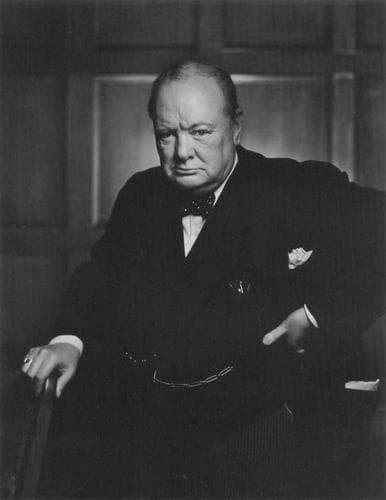
Winston S. Churchill was a British statesman, military leader, and writer, best known for his leadership during World War II. His notable work, "The Second World War," is a comprehensive account of the conflict from his perspective. Churchill's contributions to history and literature earned him the Nobel Prize in Literature in 1953.
Similar books
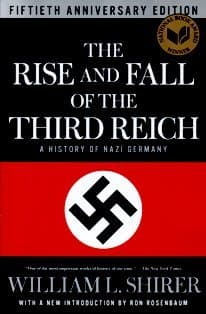
- The Rise and Fall of the Third Reich: A History of Nazi Germany
William L. Shirer
4.2 (101k) average on GoodreadsPoliticsAnother extensive, classic account of the war, focusing on Germany, written by a journalist who lived through the era.
- 1984
George Orwell
4.2 (3.1M) average on GoodreadsPoliticsIn a future where surveillance and thought control are absolute, a man's search for truth clashes with the Party, showing that hope can be a form of rebellion.
- Animal Farm
George Orwell
4.0 (2.7M) average on GoodreadsPoliticsA farm animals' rebellion against humans turns into a pig-led dictatorship, showing how power corrupts and revolutionary ideals are betrayed.
- Freakonomics: A Rogue Economist Explores the Hidden Side of Everything
Steven D. Levitt
4.0 (709k) average on GoodreadsBusinessThis book uses economic principles to reveal the surprising incentives behind everything from drug dealing and real estate to cheating teachers and the decline of crime.
- I Am Malala: The Story of the Girl Who Stood Up for Education and Was Shot by the Taliban
Malala Yousafzai
4.1 (419k) average on GoodreadsPoliticsA teenage girl from a Taliban-controlled valley refuses to give up her books, becoming a global voice for education even after an assassination attempt.
- Atlas Shrugged
Ayn Rand
3.7 (354k) average on GoodreadsPoliticsIn a dystopian America where innovators vanish, a brilliant heiress races to uncover the truth behind the disappearing industrialists and the enigmatic John Galt, who vows to stop the world's progress.





Enjoyed the summary?
A summary gives you the shape of the book. The book itself has the detail, the examples and the voice.
Find The Second World War on AmazonAs an Amazon Associate, BookBrief earns from qualifying purchases. How we're funded