

Synopsis
Covers the whole plot, including the ending.
- Difficulty
- Medium
- Pacing
- Moderate
- Mood
- Gritty, Raw, Observational, Darkly Humorous, Social Commentary
- Read it if
- You're interested in a gritty, authentic portrayal of British Asian youth culture, slang, and identity struggles in contemporary London.
- Skip it if
- You prefer traditional narrative structures or are put off by heavy use of phonetic slang and a morally ambiguous protagonist.
Londonstani Plot Summary
Covers the whole plot, including the ending.
Introduction to the Crew and Londonstani Slang
The novel opens with Jas, an eighteen-year-old British Asian, introducing his friends: Ravi, Hardjit, and the dominant leader, Randeep. They are 'Londonstani' – British-born South Asians in West London, navigating an identity shaped by heritage, urban culture, and a distinct patois mixing Punjabi, Hindi, and English slang. Jas, though part of the crew, often feels a slight distance, observing their interactions and social rules. Randeep dictates much of their behavior and worldview, stressing 'Paki-power' and racial unity against perceived outsiders, especially white people. Their daily routine involves hanging out, discussing cars, girls, and money, all while strengthening their group identity through language and shared experiences.
The 'Paki-power' Philosophy and Racial Dynamics
Randeep often explains his 'Paki-power' philosophy, a complex and contradictory idea that claims South Asians in London are superior and resilient, especially in outsmarting white people. He believes white people are weaker and less intelligent, using stereotypes and past grievances to support his claims. This view influences Jas and the others, shaping how they interact with the wider world. They often engage in petty scams and boast about their possessions – expensive cars, phones, designer clothes – as symbols of success and defiance. This display of bravado and racial pride is key to their identity, hiding deeper insecurities and a sense of being different.
The Encounter with Samira
Jas meets Samira, a Muslim girl, at a club and is immediately attracted to her. Their initial interactions show mutual interest, but Samira represents a major departure from the gang's unspoken rules about who they should associate with. Randeep and the others often make derogatory comments about Muslim girls, seeing them as 'different' and often off-limits due to religious and cultural divides. Jas's attraction to Samira creates an internal conflict, as he struggles to balance his feelings with his friends' prejudices. He tries to keep their relationship secret, fearing Randeep's disapproval and being cut off from the group, which is his main source of identity.
The Mobile Phone Scam
The gang's main income comes from a sophisticated mobile phone scam. They get high-end phones, often through questionable means, then unlock, reprogram, and resell them for a large profit. This operation combines street smarts and technical knowledge, showing their entrepreneurial, though illegal, spirit. Randeep is the leader, assigning tasks and ensuring the operation runs smoothly. This scam is not just about money; it is also a way for them to show their dominance and cleverness, proving they can succeed outside conventional systems. Jas, while involved, often feels morally uneasy, but the appeal of easy money and pressure to conform keep him in the group.
Rising Tensions and Randeep's Control
As the mobile phone scam becomes more profitable, Randeep's control over the group tightens. He becomes more dictatorial, demanding loyalty and adherence to his 'Paki-power' ideology. Any independent thought is met with scorn or thinly veiled threats. Jas feels increasingly stifled by Randeep's dominance, especially as his feelings for Samira grow. The other members, Ravi and Hardjit, mostly follow Randeep, reinforcing his authority. This creates a suffocating atmosphere within the group, where individual desires are suppressed for group unity and Randeep's agenda. The pressure on Jas to conform becomes immense, forcing him to make difficult choices.
Jas's Secret Relationship with Samira
Despite the risks, Jas continues to see Samira in secret. Their meetings are discreet, often away from the gang's usual spots. Samira, intelligent and independent, offers Jas a different view on life, challenging some of the narrow-minded ideas he has adopted from Randeep. Their relationship gives Jas a sense of individuality and emotional connection missing from his interactions with the gang. However, the constant fear of discovery hangs over them. Jas knows the potential consequences if Randeep were to find out, not only for himself but also for Samira, given Randeep's possessive and often violent nature.
The Confrontation and Discovery
Randeep discovers Jas's secret relationship with Samira. The revelation sparks a furious confrontation. Randeep feels betrayed, seeing Jas's actions as a direct challenge to his authority and the group's 'Paki-power' principles. He lashes out, accusing Jas of disloyalty and breaking their rules. The confrontation quickly becomes violent. Jas is left bruised and emotionally shattered, realizing the full extent of Randeep's possessiveness and the fragile nature of his place within the gang. This event marks a turning point, forcing Jas to face the reality of his situation and the destructive nature of Randeep's influence.
Jas's Isolation and Realization
Following the confrontation, Jas is cut off by Randeep and the rest of the gang. He is isolated from his main social group and feels lost. This solitude forces him to think about his life, his choices, and the identity he has adopted. He begins to see the flaws in Randeep's 'Paki-power' ideology and the superficiality of their criminal lifestyle. He questions what it means to be 'Londonstani' and whether he can form an identity separate from the gang's narrow definitions. This introspection is painful but necessary, as Jas starts to understand the limitations and dangers of his past path.
The Aftermath of the Scam and Police Involvement
The mobile phone scam, the gang's profitable business, begins to fall apart. Increased police attention, possibly due to internal conflicts or expanded operations, puts pressure on the group. Details emerge about the risks involved, and the thrill of the illegal gains is overshadowed by the real threat of legal consequences. This adds more stress and fear to Jas's already troubled life. He realizes that his involvement in the scam has put him in a dangerous position, strengthening his desire to escape the criminal underworld and Randeep's destructive influence.
Jas's Attempt at a New Path
Determined to break free, Jas tries to distance himself completely from Randeep and the gang. He seeks legitimate work and tries to reconnect with Samira, hoping to build a life away from the street. This is a difficult path, as he lacks formal qualifications and faces the stigma of his past associations. He struggles with Randeep's lingering influence and the ingrained habits of his former life. His efforts show his growing maturity and his desire for a more meaningful existence, even as he navigates the challenges of forming an independent identity in a city that often feels exclusive.
The Lingering Shadow of Randeep
Even as Jas tries to move on, Randeep's shadow remains. The fear of retaliation or Randeep's psychological hold is hard to shake. Jas occasionally sees members of his old crew, reminding him of the life he is trying to leave behind. The novel shows how difficult it is to truly escape such a powerful and ingrained social structure. Randeep, despite his flaws, represented a form of belonging and protection, though a destructive one. Jas's journey is not a clean break but a gradual process of disentanglement, with the constant threat of being pulled back into the 'Londonstani' world.
Jas's Uncertain Future
By the end of the novel, Jas's future is uncertain. He has not achieved a clear triumph or resolution, but he has changed significantly. He understands himself better, the complex interplay of race and identity in London, and the corrosive nature of the gang's ideology. While he is no longer defined by Randeep's 'Paki-power' philosophy, the challenges of navigating a multicultural, often prejudiced city as a young British Asian persist. He is left to forge his own path, with newfound self-awareness and a determination to define his own 'Londonstani' identity, free from his past constraints.
Principal Figures
Jas
Protagonist
An eighteen-year-old British Asian struggling with identity and loyalty.
Jas is the narrator and central character, an eighteen-year-old of South Asian descent growing up in West London. He is intelligent and observant, but also impressionable and easily drawn into the street culture and criminal activities of his friends. Jas often feels a slight detachment from the group, observing Randeep's aggressive 'Paki-power' ideology with a mix of fascination and unease. He yearns for acceptance and belonging but also craves individuality and a more meaningful existence, particularly after meeting Samira. His internal conflict between loyalty to his friends and his developing sense of self drives much of the narrative.
Relationships: Randeep (Subordinate and friend, later adversarial); Samira (Love interest and catalyst for change); Ravi (Gang member and friend); Hardjit (Gang member and friend)
Randeep
Antagonist/Supporting
The charismatic and domineering leader of the 'Londonstani' gang.
Randeep is the charismatic, intelligent, and fiercely dominant leader of the gang. He is the architect of the 'Paki-power' philosophy, which he uses to justify their criminal activities and assert a sense of racial superiority. Randeep is manipulative, controlling, and prone to violence, demanding absolute loyalty from his friends. He is deeply insecure beneath his bravado, projecting his own anxieties onto others and enforcing a rigid code of conduct. His influence is pervasive, shaping the language, beliefs, and actions of the entire group, especially Jas.
Relationships: Jas (Leader and enforcer of loyalty); Ravi (Subordinate and loyal follower); Hardjit (Subordinate and loyal follower)
Samira
Supporting
An intelligent and independent Muslim girl who challenges Jas's worldview.
Samira is a Muslim girl whom Jas falls in love with. She is intelligent, independent, and possesses a perspective on life that is broader and more nuanced than the gang's insular worldview. Samira represents an alternative to the 'Londonstani' lifestyle, offering Jas a glimpse of a different future and a more authentic connection. Her presence acts as a catalyst for Jas's self-reflection and his eventual desire to break free from Randeep's influence. She is a symbol of hope and individuality for Jas, despite the cultural and social barriers between them.
Relationships: Jas (Love interest and source of inspiration)
Ravi
Supporting
A loyal and less assertive member of Randeep's gang.
Ravi is one of Jas's closest friends and a loyal member of Randeep's gang. He is generally less vocal and assertive than Randeep or even Jas, tending to follow Randeep's lead without much question. Ravi is deeply embedded in the 'Londonstani' lifestyle, participating in the scams and adhering to the group's codes. He represents the typical follower, content with the status quo and the security of belonging to the crew. While not malicious, his unquestioning loyalty to Randeep inadvertently reinforces the oppressive atmosphere within the group.
Relationships: Jas (Friend and fellow gang member); Randeep (Subordinate and loyal follower); Hardjit (Friend and fellow gang member)
Hardjit
Supporting
Another loyal and often aggressive member of the 'Londonstani' crew.
Hardjit is another member of Randeep's gang, characterized by his loyalty to Randeep and his sometimes aggressive demeanor. He is quick to adopt Randeep's 'Paki-power' rhetoric and participates enthusiastically in the gang's activities, including the mobile phone scams. Hardjit embodies the more overtly aggressive aspects of the 'Londonstani' identity, often using derogatory language and displaying a confrontational attitude towards perceived outsiders. He, like Ravi, reinforces Randeep's authority and contributes to the pressure on Jas to conform.
Relationships: Jas (Friend and fellow gang member); Randeep (Subordinate and loyal follower); Ravi (Friend and fellow gang member)
Themes & Insights
Identity and Belonging
The novel explores identity, especially for young British Asians navigating their heritage, urban culture, and assimilation pressures. Jas struggles to define himself within his 'Londonstani' gang, which offers belonging but limits his individuality. Randeep's 'Paki-power' ideology provides a rigid, racially charged identity, but Jas finds it suffocating. His relationship with Samira and his rebellion highlight his search for an authentic self beyond simple ethnic or gang affiliations, showing the internal conflict of being 'Indostani' in a city that often creates divisions.
“'Londonstani' init. We ain't white, we ain't Asian, we ain't Black, we're somethin' else.”
Race and Racism
Race is a central and often uncomfortable theme, shown not just as an external force but as an internalized idea within the 'Londonstani' community. Randeep's 'Paki-power' philosophy, born from racism, ironically creates its own racial prejudice against white people and even other Asian groups, like Muslims. The novel challenges simple views of multiculturalism, showing how racial and religious divisions can persist and even grow in a diverse city. Jas's journey forces him to confront the hypocrisy and destructiveness of these prejudices, showing how race can become a tool for asserting power.
“'Paki-power' is about bein' smarter, innit? Outsmartin' the gora, always.”
Masculinity and Power
The novel examines how masculinity is performed among the young men. Randeep embodies a hyper-masculine, aggressive persona, asserting power through dominance, verbal abuse, and violence. Flash cars, designer clothes, and success in crime are symbols of their perceived masculinity and status. Jas, initially drawn to this display of power, eventually questions its value and cost. The gang's constant need to prove their 'manliness' against internal and external threats reveals deep insecurities and a struggle for identity in a society that offers them limited conventional paths to success.
“You gotta be hard, bruv. Otherwise, they'll walk all over you.”
Social Mobility and Economic Struggle
The characters, especially Jas, face significant barriers to traditional social mobility. Lacking formal education and opportunities, they turn to illegal means like the mobile phone scam to achieve economic success and status. The novel portrays a part of society where traditional paths to advancement are unavailable, leading young men to create their own, often criminal, economies. The appeal of 'money, flash cars, cell phones' is not just materialism but a desperate attempt to assert worth and escape the feeling of being left behind in a demanding city. This struggle highlights the gap between the promise of a 'melting pot' and the reality of limited opportunities for many.
“Ain't no jobs for us out there, man. Gotta make your own way.”
Plot Devices & Literary Techniques
First-Person Narrative (Jas's Voice)
The story is told entirely from Jas's perspective, using his unique language.
The novel is narrated in the first person by Jas, providing an intimate and unfiltered look into his thoughts, feelings, and experiences. This perspective allows the reader to directly engage with the complex 'Londonstani' dialect and slang, immersing them in the world of the characters. Jas's voice, initially uncritical and admiring of Randeep, gradually shifts to one of questioning and disillusionment, mirroring his internal arc. This device is crucial for understanding his internal conflicts and the gradual erosion of his loyalty to the gang, as we witness his evolving perceptions firsthand.
Londonstani Slang and Dialect
A unique, authentic blend of English, Punjabi, and Hindi slang.
The novel is heavily characterized by its use of a distinctive 'Londonstani' slang and dialect, a vibrant fusion of English, Punjabi, and Hindi terms. This language serves multiple functions: it creates an authentic sense of place and character, reinforces the gang's exclusive identity, and acts as a barrier to outsiders. The glossary provided in the novel is essential for understanding the nuances of communication and the specific cultural codes embedded within their speech. It's a powerful tool for world-building and emphasizing the unique cultural landscape the characters inhabit, making the reader an active participant in deciphering their world.
The Mobile Phone Scam
The central criminal enterprise that fuels the gang's activities and defines their status.
The mobile phone scam is not merely a plot device for criminal activity; it's a microcosm of the gang's entire ethos. It represents their entrepreneurial spirit, their ingenuity in navigating the margins of legality, and their desire for quick money and status. The scam provides the financial means for their flashy lifestyle and reinforces Randeep's leadership. Its eventual unraveling also serves as a catalyst for the plot, increasing pressure on the characters and contributing to Jas's decision to seek a different path, highlighting the inherent risks and ultimate unsustainability of their chosen lifestyle.
'Paki-power' Ideology
Randeep's aggressive, racially charged philosophy that defines the gang's worldview.
Randeep's 'Paki-power' ideology functions as both a unifying force and a destructive dogma within the group. It provides a framework for understanding their place in London, asserting a sense of pride and superiority in response to perceived racism. However, it also dictates their behavior, fuels internal prejudices, and justifies their criminal activities. This ideology is a powerful tool for Randeep to maintain control over the gang, particularly Jas. Its rigid and often contradictory nature ultimately becomes something Jas must dismantle within himself to achieve true independence.
Londonstani Quotes
“The thing about London is, it's not really London anymore. It's just a collection of little countries, all pretending to be part of one big one.”
“You can take the boy out of Southall, but you can't take Southall out of the boy.”
“Every Asian kid in London knows the score. You either make it big, or you end up working in your uncle's shop.”
“Money talks, and for us, it screams.”
“We're not English, we're not Indian. We're something else. We're Londonstani.”
“The greatest trick the devil ever pulled was convincing the world he didn't exist. The greatest trick we ever pulled was convincing them we were just harmless shopkeepers.”
“Respect is earned, not given. And you earn it by showing you're willing to do what others aren't.”
“Fear is a powerful motivator. But greed? Greed is a whole other beast.”
“You learn to play the game, or the game plays you.”
“The streets have eyes, and ears. And if you're not careful, they'll have your tongue too.”
“Sometimes the biggest loyalty is to yourself, even if it means betraying everyone else.”
“We live in the shadows, but we dream in neon.”
“Home isn't where you're born, it's where you find your hustle.”
“The past is never really past. It's just waiting for the right moment to catch up.”
Quiz
10 questions on the plot and the characters. Each answer comes with a short explanation.
Question 1
What is Jas's primary ethnic background, as described in the book's synopsis?
- African
- European
- Asian / Indostani
- Caribbean
Show answer
C. Asian / Indostani The synopsis explicitly states Jas is an 'eighteen-year-old Asian' and later refers to him as 'Indostani'.
Question 2
What is the main problem Jas faces, according to the synopsis?
- He is struggling to find a job in a difficult economy.
- He is in trouble because of who he is and his own inability to make sense of his identity and situation.
- He is being actively pursued by law enforcement for serious crimes.
- He is trying to escape an arranged marriage.
Show answer
B. He is in trouble because of who he is and his own inability to make sense of his identity and situation. The synopsis states, 'Jas's main trouble is Jas himself, and he doesn't even know the trouble he's in, and try as hard as he does, he's failing to make sense of what it is to be young, male and what you might say is Indostani'.
Question 3
Which of the following describes the London depicted in 'Londonstani'?
- A genuine melting pot where all cultures seamlessly integrate.
- A city of racial and religious exclusion zones, despite professing to be a melting pot.
- A city where ethnic background is entirely irrelevant to social interaction.
- A utopian society free of prejudice and discrimination.
Show answer
B. A city of racial and religious exclusion zones, despite professing to be a melting pot. The synopsis describes London as 'a city that professes to be a melting pot but is a city of racial and religious exclusion zones'.
Question 4
Why is Jas's attraction to Samira problematic, according to his friends?
- She is already in a relationship with one of his gang members.
- She is from a rival gang.
- She is not considered 'one of his own' ethnically or religiously.
- She has a much higher social status than Jas.
Show answer
C. She is not considered 'one of his own' ethnically or religiously. The synopsis states, 'Samira, who Jas shouldn't have taken a shining to because she is, as his pals point out, not one of his own'. This implies a cultural or ethnic barrier.
Question 5
What is the typical portrayal of the 'ethnically charged enclave' of London that Malkani's novel challenges?
- A vibrant hub for technological innovation.
- A breeding ground for Islamic militants.
- An area solely focused on academic achievement.
- A quiet, suburban retreat.
Show answer
B. A breeding ground for Islamic militants. The synopsis states, 'A world usually-but wrongly-portrayed as the breeding ground for Islamic militants is, in actuality, a world of money (sometimes), flash cars (usually), cell phones (all the time), rap music and MTV'.
Question 6
How does Jas compare to his parents and academically accomplished contemporaries?
- He shares his parents' aspirations to assimilate and is equally gifted academically.
- He surpasses both his parents and peers in academic and social achievement.
- He lacks his parents' aspirations to assimilate and the academic gifts of his contemporaries.
- He has a strong survival plan, unlike his parents and peers.
Show answer
C. He lacks his parents' aspirations to assimilate and the academic gifts of his contemporaries. The synopsis mentions, 'Without his parents' aspirations to assimilate, without the gifts of his more academically accomplished contemporaries, Jas is a young man without a survival plan'.
Question 7
According to the synopsis, what does race primarily serve as a 'proxy' for in Malkani's depiction of multiculturalism?
- Economic status and wealth accumulation.
- Education level and career success.
- Masculinity, or lack thereof, among young men.
- Religious devotion and spiritual purity.
Show answer
C. Masculinity, or lack thereof, among young men. The synopsis states, 'In Malkani's hilarious depiction of multiculturalism, race is no more than a proxy for masculinity, or lack of masculinity, among young men struggling to get by in a remorseless city.'
Question 8
What specific aspects of contemporary youth culture are highlighted as being present in the 'Londonstani' world, contrary to typical portrayals?
- Traditional folk music and classical literature.
- Money, flash cars, cell phones, rap music, and MTV.
- Strict adherence to religious law and community elders.
- Agricultural practices and rural community living.
Show answer
B. Money, flash cars, cell phones, rap music, and MTV. The synopsis explicitly lists 'a world of money (sometimes), flash cars (usually), cell phones (all the time), rap music and MTV' as the reality, contrasting it with the 'breeding ground for Islamic militants' stereotype.
Question 9
The synopsis describes Jas as 'an anachronism posing as young man who's up-to-date, living free-style, making things up as he goes along'. What does this suggest about his approach to life?
- He has a well-thought-out plan and is highly organized.
- He is genuinely modern and seamlessly adapts to new trends.
- He lacks a coherent strategy for survival and is out of touch, despite trying to appear contemporary.
- He is a leader who sets new trends for his peers.
Show answer
C. He lacks a coherent strategy for survival and is out of touch, despite trying to appear contemporary. The phrase 'an anachronism posing as young man who's up-to-date' combined with 'making things up as he goes along' and 'without a survival plan' indicates a lack of genuine understanding or adaptation to his environment, despite outward appearances.
Question 10
Gautam Malkani is compared to Martin Amis and Irving Welsh for what reason?
- Their shared focus on historical fiction.
- Their ability to capture the mood and ethos of a specific era.
- Their similar use of highly formal and academic language.
- Their common theme of utopian societies.
Show answer
B. Their ability to capture the mood and ethos of a specific era. The synopsis states, 'Just as Martin Amis and Irving Welsh captured the mood and the ethos of the eighties and nighties, twenty-nine-year-old Gautam Malkani brilliantly evokes the life of immigrants who are not immigrants in Londonstani'.
Londonstani FAQ
What is the central conflict Jas faces in 'Londonstani'?
Jas struggles with his identity as an eighteen-year-old British Asian in West London, caught between the expectations of his community, the allure of his gang, and his personal feelings for Samira. He grapples with a lack of direction and a failure to understand his place in a city that claims multiculturalism but operates on racial and religious exclusion.
Who are Jas's main companions and how do they influence him?
Jas hangs out with a gang of young Asian men, including characters like Ravi and Hardjit, who are deeply entrenched in street culture. They constantly reinforce prejudices, encourage materialistic pursuits like flash cars and cell phones, and exert pressure on Jas to conform to their view of masculinity and racial loyalty, particularly regarding his interest in Samira.
Why is Samira a problematic love interest for Jas according to his friends?
Samira is considered 'not one of his own' by Jas's friends, implying she belongs to a different ethnic or religious group, or perhaps a different social standing, that they deem unsuitable for him. This creates a significant source of tension and conflict, as his friends' prejudices clash with Jas's personal attraction.
How does 'Londonstani' challenge typical portrayals of young British Asian men?
The novel subverts the stereotype of young British Asian men as potential Islamic militants, instead depicting a world driven by consumerism, rap music, feuds, and small-time criminality. It focuses on their struggles with masculinity and identity within a vibrant, yet exclusionary, urban landscape.
What does the term 'Londonstani' signify within the context of the book?
The term 'Londonstani' highlights the paradoxical existence of young British Asians who are 'not immigrants' but live in a culturally distinct, often segregated, 'enclave' within London. It points to a unique hybrid identity shaped by both British urban life and South Asian heritage, often marked by internal conflicts and external prejudices.
How does the novel use language to reflect the characters' world?
The novel employs a distinctive, often unpunctuated and phonetic, street vernacular that immerses the reader directly into Jas's mindset and the rapid-fire, informal communication style of his peer group. This stylistic choice emphasizes authenticity and the characters' unique cultural linguistic blend.
Are there subtle hints about Jas's underlying insecurity despite his outward bravado?
Yes, despite presenting himself as 'up-to-date' and 'living free-style,' Jas's internal monologue reveals a deep lack of a 'survival plan' and a struggle to 'make sense' of his identity. His constant reliance on his friends' validation and his inability to forge his own path betray his underlying insecurity and confusion.
How do the 'schemes, games and prejudices' of his friends impact Jas's decisions?
Jas is heavily influenced by his friends' machinations, often participating in small-time criminal activities or adopting their prejudiced views without critical thought. This constant exposure to their narrow worldview prevents him from developing independent judgment and often leads him into deeper trouble.
What is the significance of the 'flash cars' and 'cell phones' in the characters' lives?
Flash cars and cell phones are not just status symbols; they represent a superficial measure of success and masculinity within the characters' subculture. They are tools for displaying wealth and power, often acquired through illicit means, and serve as distractions from the deeper issues of identity and lack of genuine opportunity.
How does Jas's relationship with his parents differ from his friends' relationships with their families?
The novel suggests Jas lacks his 'parents' aspirations to assimilate,' implying a generational disconnect where his parents might have sought integration into British society, while Jas rejects or is indifferent to such goals. This contrast highlights his drifting nature compared to potentially more grounded family dynamics among his peers, or perhaps a shared generational disillusionment.
In what ways does Jas exhibit arrested development or a lack of maturity?
Jas consistently avoids responsibility, lacks a clear career or educational path, and struggles with self-awareness, failing to recognize 'the trouble he's in' or the consequences of his actions. His reliance on his gang for identity and his inability to articulate his own desires for Samira exemplify his emotional immaturity.
How does the concept of 'masculinity' drive the characters' interactions?
Masculinity in 'Londonstani' is often equated with material possessions, aggression, and adherence to gang codes, becoming a 'proxy' for status and power among the young men. Their rivalries and feuds are largely performative displays of dominance, masking underlying insecurities and a struggle for identity in a society that offers them limited avenues for conventional success.
What psychological impact do the 'racial and religious exclusion zones' have on Jas?
These exclusion zones contribute to Jas's sense of alienation and confusion, reinforcing his perception of being 'othered' despite being born in London. This external prejudice likely fuels his internal struggles with identity, pushing him further into the insular world of his gang where he feels a sense of belonging, albeit a destructive one.
Is Jas a sympathetic character, despite his flaws and poor choices?
Yes, many readers find Jas sympathetic because his flaws stem largely from a lack of guidance, opportunity, and self-understanding rather than inherent malice. His internal confusion and struggle to define himself in a complex, often hostile, environment make his predicament relatable, even if his actions are misguided.
How does Malkani use humor to address serious social issues in the novel?
Malkani employs a 'hilarious depiction' and 'comic novel' style to satirize the superficiality of multiculturalism and the performative aspects of masculinity among the youth. This humor serves as a device to make the serious underlying issues of racial tension, identity crisis, and economic struggle more accessible and thought-provoking.
Does the novel offer any hope for Jas's future or a resolution to his struggles?
The synopsis suggests Jas is 'failing to make sense' of his situation and is 'without a survival plan,' implying a lack of immediate resolution. The novel likely leaves his future ambiguous, reflecting the ongoing, unresolved nature of identity struggles and social challenges faced by young men in similar circumstances.
How does 'Londonstani' contribute to the broader conversation about multiculturalism?
The novel offers a critical and nuanced perspective on multiculturalism, portraying London not as a seamless 'melting pot' but as a city of 'exclusion zones.' It highlights the complexities and failures of integration, showing how diverse communities can coexist yet remain deeply segregated, often leading to internal conflict and identity crises.
What is the significance of the novel being set in West London suburbs?
Setting the novel in the suburbs of West London emphasizes that these issues are not confined to inner-city areas but permeate various parts of the metropolis. It highlights the widespread nature of racial and social exclusion, and how such environments can become incubators for specific subcultures and their associated challenges.
Similar books
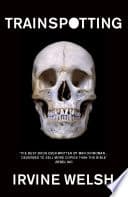
- Trainspotting
Irvine Welsh
4.1 (153k) average on GoodreadsThrillerExplores a distinct subculture with its own language, moral ambiguity, and harsh realities.
- White Teeth
Zadie Smith
3.8 (124k) average on GoodreadsLiterary FictionDeals with multiculturalism, identity, and generational clashes in London, albeit with a broader scope.
- The Buddha of Suburbia
Hanif Kureishi
3.7 (15k) average on GoodreadsFictionExamines identity, race, and coming-of-age for a young South Asian man in suburban London.
- Brick Lane
Monica Ali
3.4 (28k) average on GoodreadsLiterary Fiction"Brick Lane" focuses more on the domestic lives, gender roles, and first-generation immigrant experiences of Bangladeshi women in London. "Londonstani" offers a more masculine, street-level, and often aggressive perspective on second-generation identity formation, particularly regarding illicit activities and youth subculture. Ali's narrative is generally more introspective and less concerned with the criminal underworld.
- Nineteen Eighty-Four
George Orwell
4.2 (5.5M) average on GoodreadsFictionWinston Smith dreams of truth and rebellion in a world where Big Brother watches all, but he confronts the terrifying power of a regime that controls not just actions, but thoughts.
- The Frozen River
Ariel Lawhon
4.4 (600k) average on GoodreadsFictionIn 1789 Maine, a heroic midwife's diary helps her expose a murder and get justice in a town that wants to silence her.




Enjoyed the summary?
A summary gives you the shape of the book. The book itself has the detail, the examples and the voice.
Find Londonstani on AmazonAs an Amazon Associate, BookBrief earns from qualifying purchases. How we're funded