
Core Idea
- Difficulty
- Medium
Quiz
10 questions on the main ideas. Each answer comes with a short explanation.
Question 1
What major political system was Nelson Mandela fighting against in South Africa?
- Communism
- Apartheid
- Monarchy
- Fascism
Show answer
B. Apartheid Apartheid was a system of institutionalised racial segregation and discrimination that existed in South Africa from 1948 until the early 1990s.
Question 2
What award did Nelson Mandela win for his dedication to fighting racial oppression?
- The Nobel Prize in Literature
- The Pulitzer Prize
- The Nobel Peace Prize
- The Presidential Medal of Freedom
Show answer
C. The Nobel Peace Prize Nelson Mandela was awarded the Nobel Peace Prize in 1993 for his work in ending apartheid.
Question 3
How long was Nelson Mandela imprisoned before his release in 1990?
- Over 10 years
- Over 15 years
- Over 20 years
- More than a quarter-century
Show answer
D. More than a quarter-century The text states he was imprisoned for 'more than a quarter-century', which is more than 25 years.
Question 4
What political organization was Nelson Mandela a leader of in South Africa's anti-apartheid movement?
- The Pan Africanist Congress (PAC)
- The Inkatha Freedom Party (IFP)
- The African National Congress (ANC)
- The United Democratic Front (UDF)
Show answer
C. The African National Congress (ANC) Nelson Mandela was president of the African National Congress (ANC) and a key figure in its anti-apartheid movement.
Question 5
In what decade did Nelson Mandela play a pivotal role in the formation of the ANC's Youth League?
- 1930s
- 1940s
- 1950s
- 1960s
Show answer
C. 1950s The text mentions his pivotal role in the rebirth of the ANC and the formation of its Youth League in the 1950s.
Question 6
What was the name of the trial in 1964 where Mandela was sentenced to life imprisonment?
- The Sharpeville Trial
- The Treason Trial
- The Rivonia Trial
- The Soweto Trial
Show answer
C. The Rivonia Trial The book recounts the notorious Rivonia Trial of 1964, at which Mandela was sentenced to life imprisonment.
Question 7
What is mentioned as a significant personal challenge Mandela faced due to his political activity?
- His inability to travel abroad
- The struggle to reconcile political activity with family devotion
- His constant surveillance by the government
- The loss of his ancestral lands
Show answer
B. The struggle to reconcile political activity with family devotion The text specifically mentions 'the struggle to reconcile his political activity with his devotion to his family, the anguished breakup of his first marriage, and the painful separations from his children.'
Question 8
What was the nature of Mandela's early education and upbringing as described in the text?
- He was educated in a privileged boarding school in Europe.
- He was raised in the traditional, tribal culture of his ancestors.
- He was homeschooled by his parents in a modern city.
- He attended a Quaker school known for its progressive ideals.
Show answer
B. He was raised in the traditional, tribal culture of his ancestors. The text states, 'The foster son of a Thembu chief, Mandela was raised in the traditional, tribal culture of his ancestors.'
Question 9
What does the text imply about the system of apartheid in terms of its effectiveness?
- It was largely ineffective and easily circumvented.
- It was one of the most powerful and effective systems of oppression ever conceived.
- It was a democratic system that failed to gain international support.
- It was a temporary measure that was quickly dismantled.
Show answer
B. It was one of the most powerful and effective systems of oppression ever conceived. The text describes apartheid as 'one of the most powerful and effective systems of oppression ever conceived,' highlighting its severity.
Question 10
What was Mandela's profession when he first moved to Johannesburg, as mentioned in the book?
- A journalist reporting on political events.
- A lawyer working in a Jewish firm.
- A teacher at a local secondary school.
- A trade union organizer.
Show answer
B. A lawyer working in a Jewish firm. The text states he tells of his early years 'as an impoverished student and law clerk in a Jewish firm in Johannesburg.'
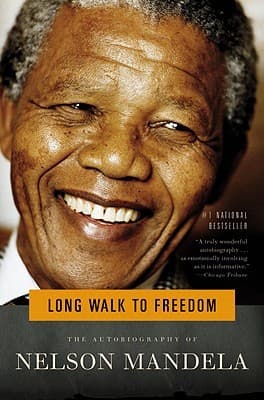
Long Walk to Freedom FAQ
What is Nelson Mandela's 'Long Walk to Freedom' about?
'Long Walk to Freedom' is the autobiography of Nelson Mandela, detailing his life from his childhood in a Thembu village to his role as a leader in the anti-apartheid movement, his imprisonment, and his eventual release and presidency of South Africa.
When was Nelson Mandela imprisoned and for how long?
Nelson Mandela was imprisoned for more than 27 years, from 1964 until his release in 1990, following the Rivonia Trial where he was sentenced to life imprisonment.
What was the Rivonia Trial?
The Rivonia Trial was a court case in 1964 where Nelson Mandela and several other anti-apartheid leaders were accused of sabotage and other charges. Mandela was sentenced to life imprisonment as a result.
What is apartheid?
Apartheid was a system of institutionalized racial segregation and discrimination enforced in South Africa from 1948 until the early 1990s. It enforced racial hierarchy and denied basic rights to non-white citizens.
What role did Mandela play in the African National Congress (ANC)?
Mandela was a pivotal figure in the ANC, instrumental in its rebirth and the formation of its Youth League in the 1950s. He later became president of the ANC and led the anti-apartheid movement.
Did Mandela win a Nobel Peace Prize?
Yes, Nelson Mandela was awarded the Nobel Peace Prize in 1993 for his work in ending apartheid and establishing a multiracial democracy in South Africa.
How does 'Long Walk to Freedom' portray Mandela's personal life?
The book touches upon Mandela's personal struggles, including his efforts to balance political activism with family life, the dissolution of his first marriage, and the painful separations from his children.
What is the significance of the 'long walk' in the book's title?
The title 'Long Walk to Freedom' symbolizes the arduous and lengthy struggle for racial equality and liberation in South Africa, highlighting the immense sacrifices and perseverance required to achieve freedom.
What is the historical context of 'Long Walk to Freedom'?
The book is set against the backdrop of South Africa's history of racial segregation and oppression, particularly the era of apartheid, and details the fight for majority rule and multiracial democracy.
Is 'Long Walk to Freedom' a factual account?
Yes, 'Long Walk to Freedom' is an autobiography, meaning it is Nelson Mandela's own firsthand account of his life, experiences, and the events he was involved in.
About the author

Nelson Mandela was a South African anti-apartheid revolutionary and political leader who served as President of South Africa from 1994 to 1999. He is best known for his autobiography, Long Walk to Freedom, which details his early life, activism, and 27 years of imprisonment. Mandela's efforts in promoting peace and reconciliation earned him the Nobel Peace Prize in 1993.
Similar books
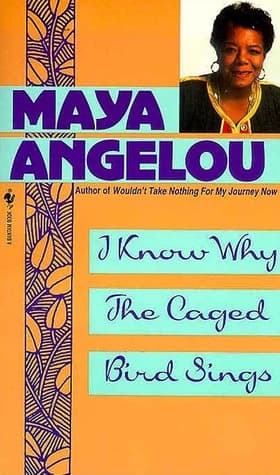
- I Know Why the Caged Bird Sings
Maya Angelou
4.2 (409k) average on GoodreadsBiographyBoth "Long Walk to Freedom" and "I Know Why the Caged Bird Sings" are seminal memoirs detailing struggles against systemic oppression, though in different contexts. Angelou's work focuses on racial discrimination and personal trauma in the American South, employing a more poetic and introspective narrative style. Mandela's memoir, while deeply personal, is more explicitly a political and historical account of a national liberation struggle. Angelou's strength is in her lyrical prose and exploration of identity and healing, whereas Mandela's lies in the grand sweep of political history and the strategic challenges of revolutionary leadership.
- Dreams from My Father: A Story of Race and Inheritance
Barack Obama
3.9 (193k) average on GoodreadsPoliticsObama's "Dreams from My Father" is another powerful memoir by a political leader, exploring themes of race, identity, and the search for belonging. While both books delve into the impact of racial injustice, Obama's narrative is more focused on his personal journey of self-discovery and reconciling his mixed heritage, rather than leading a national political movement. Mandela's book is a direct chronicle of a life dedicated to overthrowing an oppressive regime, whereas Obama's is a more reflective and introspective exploration of the forces that shaped his early life and political consciousness. Mandela offers a blueprint for revolutionary change; Obama offers a meditation on identity in a post-colonial world.
- 1984
George Orwell
4.2 (3.1M) average on GoodreadsPoliticsIn a future where surveillance and thought control are absolute, a man's search for truth clashes with the Party, showing that hope can be a form of rebellion.
- Animal Farm
George Orwell
4.0 (2.7M) average on GoodreadsPoliticsA farm animals' rebellion against humans turns into a pig-led dictatorship, showing how power corrupts and revolutionary ideals are betrayed.
- Freakonomics: A Rogue Economist Explores the Hidden Side of Everything
Steven D. Levitt
4.0 (709k) average on GoodreadsBusinessThis book uses economic principles to reveal the surprising incentives behind everything from drug dealing and real estate to cheating teachers and the decline of crime.
- I Am Malala: The Story of the Girl Who Stood Up for Education and Was Shot by the Taliban
Malala Yousafzai
4.1 (419k) average on GoodreadsPoliticsA teenage girl from a Taliban-controlled valley refuses to give up her books, becoming a global voice for education even after an assassination attempt.





Enjoyed the summary?
A summary gives you the shape of the book. The book itself has the detail, the examples and the voice.
Find Long Walk to Freedom on AmazonAs an Amazon Associate, BookBrief earns from qualifying purchases. How we're funded