
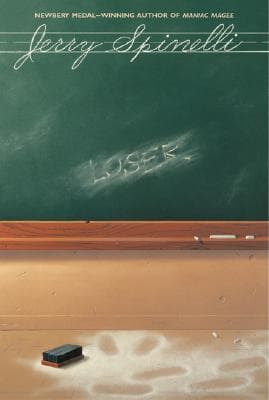
Synopsis
Covers the whole plot, including the ending.
- Difficulty
- Easy
- Pacing
- Moderate
- Mood
- Heartwarming, Uplifting, Reflective, Gentle
- Read it if
- You enjoy heartwarming stories about unique characters who march to the beat of their own drum, appreciate books that celebrate individuality and resilience, and are looking for a gentle yet profound story about growing up and finding your place.
- Skip it if
- You prefer fast-paced plots with high stakes and clear-cut resolutions, or if you dislike stories where the main character faces constant social challenges without a dramatic turn of events.
Loser Plot Summary
Covers the whole plot, including the ending.
Zinkoff's Unique Start in First Grade
Donald Zinkoff starts first grade very excited about school, unlike most other kids. He likes everything about it, from the classroom smell to the bell. However, his excitement often shows in unusual ways. He often raises his hand with wrong answers, trips, and finds things funny that others don't, like the word 'Jabip.' His teacher, Miss Meeks, sees his unique spirit but also his difficulties. Zinkoff's first-grade year shows his genuine joy and a growing sense that he is different from other children, though he doesn't fully understand it. He sees every day as an adventure, not noticing the subtle social signals and judgments forming around him.
The Soap Incident and Early Friendships
In second grade, Zinkoff's lack of social awareness becomes clearer when he brings a bar of soap to school and eats it, thinking it will help him spell 'soap.' This strange act makes him stand out more. Despite this, he briefly connects with Andrew, a boy he admires for being smart and quiet. Zinkoff also becomes friends with Hector Binns, a boy who collects earwax. Their shared unusual traits create a bond for a while. During this time, the children around Zinkoff start calling him a 'loser,' a word he hears but doesn't fully grasp. His innocence protects him from the full effect of their meanness, and he continues to approach life openly and with optimism.
The Field Day Disaster
Field Day in third grade is an important event for Zinkoff, where his physical awkwardness and lack of competitive spirit are on full display. During the four-hundred-meter relay race, Zinkoff is the last runner for his team. He tries his best, but he trips, falls, and struggles to finish, coming in long after everyone else. His team loses badly, and he becomes the target of jokes and chants of 'loser!' from the other children. This public embarrassment doesn't completely break his spirit. He still finds joy in small things, like the taste of the dirt he fell on, showing his resilience and unique perspective, even when many people scorn him.
The Arrival of Claudia and the Balloon Mission
In fourth grade, a new student named Claudia arrives, and Zinkoff immediately connects with her. Claudia, like Zinkoff, is somewhat of an outsider, but for different reasons. She is shy at first, but Zinkoff's genuine kindness and lack of judgment help her open up. Wanting to send a message to the world, Zinkoff decides to tie a message to a balloon and release it, hoping it will travel far. He carefully writes his message and, with Claudia's help, launches the balloon. This act shows his lasting hope and his belief in grand, though impractical, gestures, further making him seem odd to his peers.
The Annual 'Waiting for Snow' Ritual
Every year, Zinkoff starts a personal tradition of waiting for the first snow of winter. He focuses on this anticipation, believing that if he waits carefully enough, the snow will come. He sits by the window, watches the sky, and mentally wishes for snowflakes to fall. This yearly tradition shows his deep hope and his ability to find meaning in simple, everyday things. While other children might wish for snow days, Zinkoff's approach is almost spiritual, showing his innocent wonder that continues even as he gets older and faces more social rejection. His father, a mailman, understands and quietly supports his son's unique view.
The 'Loser' Label Takes Hold
As Zinkoff goes through fifth and sixth grade, the 'loser' label stays with him. His classmates avoid him, make fun of his clothes, his clumsiness, and his unusual behaviors. They invent games about his misfortunes and openly mock him. Despite the increasing meanness, Zinkoff's inner world mostly stays the same. He still sees good in people and finds joy in his unique interests. He doesn't take the negative labels to heart, often not even noticing the bad intentions behind them. His resilience comes from an almost happy ignorance and a real inability to see himself as anything other than a person trying his best.
The Search for the Missing Girl
One winter night, a young neighborhood girl named Polly, about four years old, goes missing in a bad snowstorm. The whole community searches for her. Zinkoff, hearing the news, feels a strong sense of urgency and empathy. He joins the search without hesitation, despite the dangerous weather and the fact that most other children are inside. He walks through the blizzard, calling Polly's name, wanting only to help. This selfless act shows his goodness and his willingness to step up when others need help, even if his methods are unusual and adults coordinating the search largely don't notice him.
Zinkoff's Persistent Search and Near Collapse
Zinkoff continues his search for Polly through the night, long after many adults have given up or gone inside because of exhaustion and the worsening storm. He looks in alleys, empty lots, and snowdrifts, calling the girl's name with steady determination. The severe cold and physical effort begin to wear him down. He gets confused, his body numb, and he eventually collapses in the snow, close to hypothermia. His single-minded focus on finding Polly outweighs any thought of his own safety, showing his deep compassion and his unique, almost heroic, stubbornness in a difficult situation. A search party eventually finds him, barely conscious.
The Aftermath and Unacknowledged Heroism
Polly is eventually found safe by another searcher, huddled in a shed. The community is happy, but Zinkoff's long and dangerous efforts are mostly unnoticed. The adults involved in the search don't know how long or how far he went into the blizzard. The focus is on Polly's safe return and the organized efforts of the rescue teams. Zinkoff, being himself, doesn't look for recognition. He is simply relieved that Polly is safe, finding his reward in the outcome itself. This event slightly changes how some adults see Zinkoff, though his 'loser' label among his peers remains.
Continuing Uniquely into Middle School
As Zinkoff moves to middle school, he is still the same unique person. He continues to raise his hand with 'wrong' answers, trip, and find joy in everyday things. The 'loser' label, though perhaps less openly said, still follows him. However, the experience of searching for Polly, while not making him a hero to his classmates, has subtly changed something in him and for a few others. He continues to write his name on his shoes, a symbol of his identity. The book ends with Zinkoff still following his own path, suggesting that his genuine self, despite problems, is ultimately his greatest strength, and perhaps, his way to a good life.
Principal Figures
Donald Zinkoff
Protagonist
An eternally optimistic and unconventional boy who struggles to fit in but finds joy in his unique world.
Donald Zinkoff is a boy with an unwavering sense of wonder and an almost defiant optimism. From first grade, he stands out due to his boundless enthusiasm, his tendency to give incorrect answers with confidence, and his general clumsiness. He is largely oblivious to social cues and the cruelty of his peers, who label him a 'loser.' Zinkoff finds joy in unusual things, like the word 'Jabip,' the smell of his father's mailbag, and the anticipation of snow. He is driven by a pure heart and a desire to connect, as seen in his friendship with Claudia and his selfless search for Polly. His innocence and resilience are his defining traits, allowing him to navigate a world that often misunderstands him without losing his authentic self.
Relationships: Mr. and Mrs. Zinkoff (Supportive and understanding parents); Claudia (Friend, fellow outsider); Hector Binns (Brief, eccentric friend); Polly (Missing girl he searches for)
Mr. Zinkoff
Supporting
Donald's father, a mailman who quietly understands and supports his son's unique nature.
Mr. Zinkoff is Donald's father, a mailman by profession. He is a quiet, observant man who, unlike many adults, doesn't try to change Donald or force him to conform. He shares a special, unspoken bond with his son, understanding Donald's unique way of seeing the world. He sometimes accompanies Donald on his walks, allowing Zinkoff to experience the world through his own lens. He is a source of subtle encouragement and stability for Donald, providing a safe space for his son's individuality to flourish. His job as a mailman, connecting him to the community and the outdoors, parallels Donald's own wanderings and observations.
Relationships: Donald Zinkoff (Loving father-son bond, quiet understanding); Mrs. Zinkoff (Husband)
Mrs. Zinkoff
Supporting
Donald's mother, who loves her son deeply but sometimes worries about his differences.
Mrs. Zinkoff is Donald's mother. She loves her son fiercely and is protective of him. While she supports Donald, she also experiences the natural parental anxieties about his inability to fit in and the social ostracism he faces. She tries to help him in practical ways, like encouraging him to study, but ultimately accepts and cherishes him for who he is. Her concern for Donald's well-being is evident, particularly during the search for Polly, when her worry for both children is palpable. She represents the parental struggle between wanting their child to be happy and wanting them to be accepted by society.
Relationships: Donald Zinkoff (Loving mother-son bond, sometimes worried); Mr. Zinkoff (Wife)
Claudia
Supporting
A new student who becomes Zinkoff's friend, sharing an outsider perspective.
Claudia arrives in Zinkoff's class in fourth grade. Initially shy and withdrawn, she is also an outsider, though her reasons for not fitting in are different from Zinkoff's. Zinkoff's genuine kindness and lack of judgment immediately draw her out of her shell. She becomes his closest friend, understanding his quirks and supporting his unique ideas, such as the balloon message. Claudia provides Zinkoff with a rare connection, a peer who doesn't mock him but rather appreciates his genuine spirit. Her presence highlights Zinkoff's capacity for friendship and offers a brief respite from his usual isolation.
Relationships: Donald Zinkoff (Close friend, fellow outsider)
Hector Binns
Supporting
A quirky classmate who briefly shares a unique bond with Zinkoff.
Hector Binns is a classmate of Zinkoff's who, for a time, shares a peculiar bond with him. Hector is known for his unusual hobby of collecting earwax. This eccentricity makes him somewhat of an outcast himself, allowing him to connect with Zinkoff over their shared 'differentness.' Their friendship is based on a mutual acceptance of each other's quirks, providing Zinkoff with a temporary sense of belonging. However, as they grow older, Hector eventually succumbs to peer pressure and distances himself from Zinkoff, illustrating the fragility of such bonds in the face of social norms.
Relationships: Donald Zinkoff (Brief, eccentric friend)
Miss Meeks
Supporting
Zinkoff's first-grade teacher who recognizes his unique spirit.
Miss Meeks is Zinkoff's first-grade teacher. She is one of the first adults to observe Zinkoff's unique personality. While she acknowledges his struggles with conventional learning and social norms, she also sees his genuine enthusiasm and kind heart. She is a compassionate and understanding figure who tries to guide Zinkoff without stifling his spirit. Her early observations set the stage for how adults, in contrast to children, sometimes perceive Zinkoff's differences with more empathy.
Relationships: Donald Zinkoff (Teacher-student, empathetic observer)
Gary Hobin
Antagonist/Supporting
A classmate who embodies the harsh judgment and cruelty Zinkoff faces.
Gary Hobin is one of Zinkoff's classmates who consistently bullies and ridicules him. He is often the ringleader in chanting 'loser' and making Zinkoff's life difficult, particularly during events like Field Day. Gary represents the social pressures and the cruelty that children can inflict on those who are different. He acts as a foil to Zinkoff's innocence, highlighting the stark contrast between Zinkoff's pure heart and the judgments of his peers. His actions contribute significantly to Zinkoff's 'loser' label in the eyes of the school.
Relationships: Donald Zinkoff (Bully, antagonist)
Polly
Mentioned
A young neighborhood girl whose disappearance prompts Zinkoff's heroic search.
Polly is a young, four-year-old neighborhood girl who goes missing during a severe winter storm. Her disappearance triggers a community-wide search, and it is her plight that brings out Zinkoff's most selfless and determined qualities. Though she is not a speaking character, her role is crucial as the catalyst for Zinkoff's most significant act of compassion and bravery. Her safe return is the ultimate reward for Zinkoff's harrowing search.
Relationships: Donald Zinkoff (Missing child Zinkoff searches for)
Themes & Insights
Individuality vs. Conformity
The main idea of 'Loser' explores the struggle between being yourself and the pressure to fit in. Zinkoff shows strong individuality, always doing things his own way even though his peers call him a 'loser.' His inability or refusal to conform, whether by giving wrong answers, eating soap, or his unique way of waiting for snow, makes him different. The book compares Zinkoff's real joy and unique perspective with the often shallow judgments and desire for acceptance that drive his classmates. In the end, it celebrates the power of being different.
“He didn't know he was not like everyone else. He didn't know he was a loser.”
The Nature of Success and Failure
Spinelli questions common ideas of success and failure through Zinkoff's experiences. Zinkoff often 'fails' by usual standards: he does poorly in school, is bad at sports, and lacks social skills. Yet, he finds joy and meaning in life. His 'failures' often come from his genuine excitement or unique view, not from a lack of effort. The book suggests that true success is not about outside approval or achievement, but about keeping one's honesty, compassion, and unique spirit, even when facing ridicule. His 'failure' at Field Day, for example, is contrasted with his selfless act during the search for Polly.
“He knew it. He was a loser. But the word did not sting. It was just a word. He was still Zinkoff.”
Empathy and Compassion
Even though he is bullied, Zinkoff has a great capacity for empathy and compassion. His most important moment, searching tirelessly for the missing girl Polly in a blizzard, shows his selfless concern for others. Even when he is an outcast, Zinkoff often sees the good in people and wants to help. This idea shows that real heroism and human connection often come from an open heart, not from social popularity or common strengths. The book encourages readers to look past superficial judgments and see the worth and kindness in every person.
“He was just a boy, small and ordinary, lost in a blizzard, but he was a boy with a purpose: to find Polly, to save her.”
Childhood Innocence and Perception
The novel shows the world through Zinkoff's innocent and often naive view. He often misunderstands social cues, doesn't grasp the meanness behind his classmates' taunts, and finds wonder in things others see as ordinary or silly. This innocence acts as both a shield, protecting him from rejection, and a lens, letting him experience life with pure joy. The book compares Zinkoff's unspoiled view with the more cynical, conforming views of his peers, suggesting that there is beauty and truth in keeping a childlike wonder and an open heart, even as one gets older.
“He loved school. He loved the smell of the classroom, the sound of the bell, the sight of his teacher.”
Plot Devices & Literary Techniques
The 'Loser' Label
A recurring epithet that defines Zinkoff's social standing.
The repeated use of the word 'loser' by Zinkoff's classmates functions as a central plot device. It highlights the social ostracism and bullying he faces, acting as a constant external pressure. However, it also serves to underscore Zinkoff's resilience and unique internal world, as he rarely internalizes the label. The word, initially meant to diminish him, ultimately emphasizes his individuality and the book's message about self-acceptance. Its persistence throughout his early school years showcases the enduring nature of childhood labels and their impact on social dynamics.
Zinkoff's Yellow Hat
A symbolic item representing Zinkoff's individuality and comfort.
Zinkoff's distinctive yellow hat is a recurring symbol throughout the book. It's a personal item that he wears frequently, often out of season, and it sets him apart visually. The hat represents his comfort in his own eccentricities and his disregard for social norms. It becomes a visual marker of his individuality, a small, consistent detail that reinforces his unique character. In the climactic search for Polly, the hat serves as a practical item of warmth but also a symbolic beacon of his persistent, if unconventional, presence.
The Balloon Message
A symbolic act of communication and hope.
Zinkoff's decision to send a message attached to a balloon into the sky is a symbolic act. It represents his desire to connect with the world, to share his thoughts and hopes, even if the recipient is unknown. It's a grand, optimistic gesture that, like many of Zinkoff's actions, is both naive and deeply heartfelt. This device emphasizes his imaginative spirit and his belief in the power of simple acts, contrasting with the cynicism of his peers. It reinforces the theme of hope and the individual's attempt to make a mark on the world.
The Annual Snow Vigil
A recurring ritual symbolizing Zinkoff's unwavering hope and wonder.
Zinkoff's annual ritual of waiting for the first snow of winter is a powerful recurring motif. It symbolizes his capacity for sustained hope, his connection to the natural world, and his ability to find profound meaning in simple, everyday occurrences. This personal tradition highlights his unique inner life and his unshakeable optimism, even as he grows older. It serves as a reminder that Zinkoff's happiness is self-generated, not dependent on external approval or conventional successes, and underscores his enduring childlike wonder.
The Missing Child Search
A plot catalyst that reveals Zinkoff's inherent heroism.
The disappearance of the young girl, Polly, serves as a critical plot catalyst. This event provides the ultimate test of Zinkoff's character, moving him from a 'loser' in the eyes of his peers to an unacknowledged hero. It allows his compassion, perseverance, and selflessness to shine through in a tangible, impactful way. This device challenges the superficial judgments of the community and demonstrates that true worth can emerge in unexpected circumstances, forcing a re-evaluation of Zinkoff's perceived 'failures' against his genuine human qualities.
Loser Quotes
“Loser is just a word. It's not who you are.”
“Zinkoff is not like other kids. He's different, and that's okay.”
“Sometimes the biggest winners are the ones who don't care about winning.”
“He doesn't see the world the way everyone else does, and that's his superpower.”
“Labels stick, but they don't have to define you.”
“In a race to be the best, Zinkoff is just happy to be part of the run.”
“The world tries to squeeze you into a box, but Zinkoff refuses to fit.”
“Kindness doesn't need a reason; it just is.”
“Being called a loser says more about the caller than the called.”
“Zinkoff's laughter is a language all its own, understood by those who listen.”
“In the game of life, Zinkoff plays by his own rules, and he's winning at being himself.”
“The measure of a person isn't in trophies, but in the hearts they touch.”
“Zinkoff doesn't just see people; he sees possibilities.”
“Sometimes, the quietest voices have the loudest truths.”
Quiz
10 questions on the plot and the characters. Each answer comes with a short explanation.
Question 1
What is the main character's last name in 'Loser'?
- Zimmer
- Zinkoff
- Zabinski
- Zelman
Show answer
B. Zinkoff The protagonist's full name is Donald Zinkoff, though he's primarily referred to by his last name 'Zinkoff' throughout the book. This establishes his identity as someone who becomes defined by how others perceive him.
Question 2
What word does Zinkoff find hilariously funny in the book?
- Giggle
- Jabip
- Zany
- Bloop
Show answer
B. Jabip Zinkoff falls down laughing when he hears the word 'Jabip,' demonstrating his unique perspective and innocent joy in simple things that others don't understand.
Question 3
What grade levels does the book follow Zinkoff through?
- Kindergarten through fifth grade
- First through sixth grade
- Second through seventh grade
- Third through eighth grade
Show answer
B. First through sixth grade The story chronicles Zinkoff's experiences from first grade through sixth grade, showing his development and how perceptions of him change over these formative school years.
Question 4
What does Zinkoff hope to be when he grows up?
- A teacher
- A mail carrier like his dad
- A professional athlete
- A scientist
Show answer
B. A mail carrier like his dad Zinkoff admires his father who works as a mail carrier and wants to follow in his footsteps, showing his simple aspirations and family connection despite his social challenges.
Question 5
What significant event happens one winter night that changes how others see Zinkoff?
- He wins a school competition
- He helps find a lost child
- He stands up to a bully
- He performs in a school play
Show answer
B. He helps find a lost child Zinkoff helps search for and find a lost young girl in his neighborhood during a cold winter night, demonstrating his persistence and genuine concern for others when it matters most.
Question 6
What is the primary theme explored in 'Loser'?
- The importance of academic success
- Individuality surpassing the need to fit in
- The value of team sports
- Overcoming physical disabilities
Show answer
B. Individuality surpassing the need to fit in The book centers on how Zinkoff's unique personality and perspective, though initially causing him to be labeled a 'loser,' ultimately prove more valuable than conforming to social norms.
Question 7
How do other children typically respond to Zinkoff in school?
- They admire his intelligence
- They include him in all activities
- They mock and exclude him
- They are indifferent toward him
Show answer
C. They mock and exclude him Other students frequently laugh at Zinkoff, call him names, and exclude him from games and activities because he doesn't fit their expectations of normal behavior.
Question 8
What literary device does Spinelli use extensively to show Zinkoff's perspective?
- Flashbacks
- Free indirect discourse
- Epistolary format
- Multiple narrators
Show answer
B. Free indirect discourse Spinelli uses free indirect discourse to blend the narrator's voice with Zinkoff's thoughts and perceptions, allowing readers to experience the world through Zinkoff's unique, often misunderstood perspective.
Question 9
What does Zinkoff's experience with the 'Gray' game reveal about his character?
- He is highly competitive
- He doesn't understand social rules but follows instructions literally
- He cheats to win
- He refuses to participate in games
Show answer
B. He doesn't understand social rules but follows instructions literally When playing the 'Gray' game (where students pretend to be statues), Zinkoff takes the instructions so literally that he remains perfectly still long after others have stopped, showing his literal thinking and inability to read social cues.
Question 10
How does the book's structure contribute to its message about labels and identity?
- It uses alternating timelines to show cause and effect
- It presents Zinkoff's story chronologically to show how perceptions solidify over time
- It begins with the climax and uses flashbacks
- It uses a non-linear, fragmented narrative
Show answer
B. It presents Zinkoff's story chronologically to show how perceptions solidify over time The chronological progression from first through sixth grade demonstrates how the 'loser' label becomes increasingly fixed in others' minds over years, making Zinkoff's eventual heroic act more powerful as it challenges these entrenched perceptions.
Loser FAQ
What is 'Loser' by Jerry Spinelli about?
'Loser' follows Donald Zinkoff from first through sixth grade as he navigates childhood with boundless enthusiasm but poor coordination and academic struggles. While other kids mock him as a 'loser,' Zinkoff remains blissfully unaware, finding joy in simple things like the word 'Jabip.' The story culminates when his persistence during a winter snowstorm leads to an unexpected act of heroism.
Why should I read 'Loser'?
This book offers a poignant, humorous exploration of individuality and resilience through a character who defies social labels. Spinelli's witty writing makes Zinkoff's journey from outcast to hero both heartwarming and thought-provoking, emphasizing that failure and difference can lead to unexpected strength. It's particularly impactful for young readers grappling with self-acceptance.
What is the background/setting of 'Loser'?
The story is set in a typical American suburban neighborhood and school system, spanning Zinkoff's elementary years from first to sixth grade. Key settings include his home, classrooms, playgrounds, and the wintry streets where his heroic act occurs, reflecting ordinary childhood environments where social hierarchies form.
What are the most memorable quotes from 'Loser'?
Notable quotes include Zinkoff's joyful repetition of 'Jabip' as a nonsense word that makes him laugh uncontrollably, and the closing realization that 'any name can someday become 'hero.'' These lines capture the book's themes of finding happiness in simplicity and redefining labels.
What writing style does Jerry Spinelli use in 'Loser'?
Spinelli employs a humorous, accessible third-person narrative with vivid descriptions of Zinkoff's antics and inner world. His prose balances wit with emotional depth, using repetitive motifs like Zinkoff's raised hand and clumsy falls to build character while engaging young readers with relatable school scenarios.
What minor details add significant meaning in 'Loser'?
Small details like Zinkoff always raising his hand in class despite wrong answers highlight his unwavering optimism. His fascination with his father's mail carrier job symbolizes his desire for purpose, and his repeated trips over his own feet physically manifest his social stumbling, enriching the theme of perseverance.
What are some subtle foreshadowing moments in 'Loser'?
Early scenes of Zinkoff's persistence, such as his determined bike rides or hope for snow days, foreshadow his later heroic search in the snowstorm. His obliviousness to insults ('loser') hints that his inner resilience will ultimately redefine that label, as seen when he becomes a 'hero.'
What unexpected character connections exist in 'Loser'?
Zinkoff's connection with his father, a mail carrier, subtly parallels his own journey—both involve steadfast routines despite challenges. Additionally, minor characters like classmates who mock him later witness his heroism, creating a shift in perception that underscores the book's message about hidden strengths.
What are unspoken character motivations in 'Loser'?
Zinkoff is subconsciously motivated by a deep need for belonging and approval, driving his enthusiastic participation in school despite failures. Other kids mock him to reinforce their own social standing, while adults like his parents quietly support him, reflecting a desire to protect his innocence.
What psychological complexities do characters exhibit in 'Loser'?
Zinkoff displays a unique blend of naivety and resilience, remaining psychologically insulated from criticism yet emotionally engaged with the world. His peers exhibit groupthink, using ridicule to mask insecurities, while teachers and parents show conflicted feelings—balancing encouragement with concerns about his social integration.
What are the major emotional turning points in 'Loser'?
Key moments include Zinkoff's first realization of being different when he fails a school race, his joyful discovery of the word 'Jabip' that isolates him further, and the climactic winter night where his persistent search for a missing child transforms his 'loser' label into one of heroism, altering others' perceptions.
How do relationship dynamics evolve in 'Loser'?
Zinkoff's relationships shift from early childhood innocence, where he engages freely, to increasing isolation as peers label him. His bond with his family remains a constant support, and by the end, his heroic act prompts a tentative reconciliation with classmates, suggesting growing mutual respect despite past tensions.
Which parts of 'Loser' remain ambiguous or open-ended?
The book leaves ambiguous whether Zinkoff ever fully understands his social status or the insult 'loser.' His future beyond sixth grade is unresolved, and it's unclear if his peers' changed perception will lead to lasting friendships, inviting readers to ponder the long-term impact of his heroism.
What are controversial scenes or decisions in 'Loser'?
Some readers debate whether Zinkoff's obliviousness is portrayed as endearing or problematic, as it shields him from pain but also from self-awareness. Additionally, the climax where he risks himself in a snowstorm raises questions about the ethics of child endangerment versus heroic impulse.
'Loser' ending explained: how it ends & what it means
The book ends with Zinkoff hailed as a hero after finding a lost child in a snowstorm, symbolically reclaiming the 'loser' label. This suggests that societal judgments are fluid and that individuality, even when perceived as failure, can lead to meaningful contributions. It emphasizes resilience and the potential for redemption through action.
About the author

Jerry Spinelli is an American author known for his contributions to children's and young adult literature. His notable works include "Stargirl," "Maniac Magee," "Milkweed," "Loser," "Smiles to Go," and "The Library Card," which often explore themes of individuality and resilience. Spinelli's writing has earned him various awards, including the Newbery Medal for "Maniac Magee."
Similar books
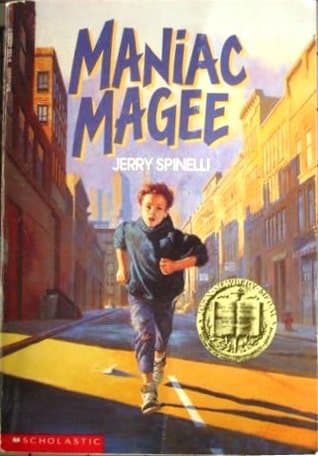
- Maniac Magee
Jerry Spinelli
3.9 (117k) average on GoodreadsChildren'sFeatures a unique, outcast protagonist who impacts a community, sharing themes of identity and belonging.
- Wonder
R.J. Palacio
4.4 (733k) average on GoodreadsChildren'sExplores themes of individuality, acceptance, and navigating school as a child who stands out, from a child's perspective.
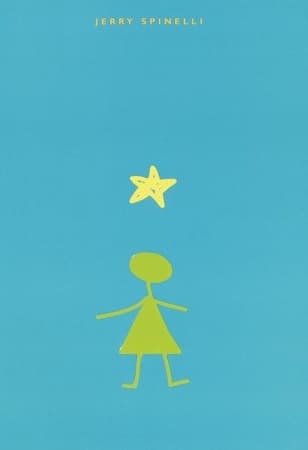
- Stargirl
Jerry Spinelli
3.8 (296k) average on GoodreadsChildren'sFocuses on a highly individualistic character who challenges social norms and the perceptions of others.
- Bridge to Terabithia
Katherine Paterson
4.0 (445k) average on GoodreadsFantasyBoth Loser and Bridge to Terabithia (1977) feature protagonists who are outsiders and find solace in unique friendships. Jesse Aarons and Leslie Burke, like Donald Zink, initially struggle with social acceptance. However, Bridge to Terabithia delves deeper into themes of imagination, grief, and the fragility of life, using a more literary and emotionally intense narrative. Loser maintains a generally lighter tone and a more direct focus on the social mechanisms of labeling and self-worth, making Bridge to Terabithia a more emotionally complex and less overtly instructional read.
- Harry Potter and the Sorcerer's Stone
J.K. Rowling
4.5 (7M) average on GoodreadsFantasyRescued from a miserable life under the stairs, an orphaned boy discovers he's a wizard destined for a magical school, where he uncovers a dangerous secret tied to the dark wizard who murdered his parents.
- The Hobbit, or There and Back Again
J.R.R. Tolkien
4.3 (2.9M) average on GoodreadsFantasyA comfort-loving hobbit named Bilbo Baggins is whisked away by a mischievous wizard and a band of dwarves on an unexpected journey to reclaim stolen treasure from a fearsome dragon, discovering courage and a magical ring along the way.




Enjoyed the summary?
A summary gives you the shape of the book. The book itself has the detail, the examples and the voice.
Find Loser on AmazonAs an Amazon Associate, BookBrief earns from qualifying purchases. How we're funded