
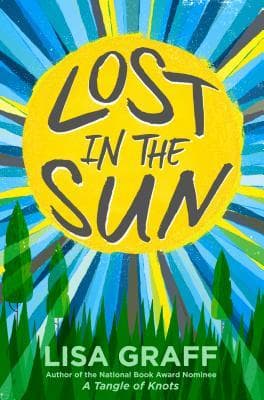
Synopsis
Covers the whole plot, including the ending.
- Difficulty
- Easy
- Pacing
- Moderate
- Mood
- Thought-provoking, Hopeful, Emotional, Realistic
- Read it if
- You enjoy heartfelt stories about overcoming trauma, the power of friendship, and finding forgiveness, particularly for middle-grade readers.
- Skip it if
- You prefer fast-paced action or stories without significant emotional depth and character introspection.
Lost in the Sun Plot Summary
Covers the whole plot, including the ending.
A Troubled Start to Middle School
Trent Zelazny begins sixth grade at Northwood Middle School, still upset by an accident that happened the spring before. During a fifth-grade field trip to Cedar Lake, Trent hit a baseball that accidentally killed a younger boy named Jared. The event has left Trent feeling very guilty and anxious. This has caused problems with his family and a strong belief that he is a bad person. On his first day, he has trouble connecting with classmates, feels like an outsider, and keeps replaying the accident in his mind. He avoids looking at people and tries to be invisible, hoping to escape the judgment he thinks everyone has for him, even as his parents try to help him move on.
The Enigma of Fallon Little
Trent's attempts to be invisible are stopped by Fallon Little, a new student who stands out right away. She has a clear scar on her face, which she talks about openly and sometimes makes up stories about. Fallon is unusual, confident, and not afraid to speak her mind, often making Trent uncomfortable with her directness and odd observations. Even with his first hesitation and discomfort, Trent finds Fallon interesting. She seems to see him differently than others, not as 'the kid who killed someone,' but as someone worth her attention. Her presence slowly starts to break down Trent's self-imposed isolation, even though he is careful about getting too close to anyone.
A Shared Secret and Growing Friendship
Fallon, seeing Trent's inner struggle, eventually tells him the real story of her scar. She says it was from a car accident when she was younger, not the made-up stories she sometimes tells. This act of openness matters to Trent, as it reflects his own hidden problem. This shared secret makes their connection stronger, and Trent starts to feel a trust and understanding with Fallon that he has not felt with anyone else since the accident. Their friendship grows through shared lunches and after-school walks, during which Fallon's unique way of looking at things often challenges Trent's negative view of himself, even when he resists it.
Baseball and Burdens
Trent has always loved baseball, but after the accident, the sport became a painful reminder of Jared's death. He avoids playing, even though his dad, who used to coach him, tries to encourage him. Fallon, however, sees his talent and passion. She urges him to rejoin the school team, thinking that playing might help him heal. Trent is unsure, fearing another accident or that he will just fail. The idea of stepping onto a baseball field again brings back a wave of anxiety, but Fallon's steady encouragement, along with his own desire to play, slowly starts to make him consider it, despite his deep fear.
The School Play and Unexpected Roles
Fallon decides to try out for the school play, 'Peter Pan,' and, as expected, gets Trent involved. She thinks doing something new will be good for them. Trent, who at first wants nothing to do with it, finds himself becoming the stage manager, a job that keeps him backstage but still part of it. This experience helps him get more involved in school life and shows him a different side of Fallon – her creativity and strong will. The play provides a new setting for their interactions and makes Trent engage with others, even if only to oversee things, pushing him to be more open.
A Confrontation with Jared's Brother
Trent has a tense meeting with Kyle, Jared's older brother, who is now in high school. Kyle's presence brings back all of Trent's guilt and shame, as he knows Kyle blames him for Jared's death. The talk is short but full of emotion, with Kyle's anger clear. This meeting strengthens Trent's belief that he is unforgivable and that he deserves the blame. The meeting leaves Trent feeling even more alone and confirms his fear that he can never truly escape the past, making him wonder if he can ever move on or be forgiven by those most affected by the tragedy.
The Trial and Its Aftermath
Trent must testify in court about Jared's death, an experience that makes him relive the entire traumatic event in detail. The legal process is hard, and Trent feels a lot of pressure and guilt during questioning. He understands that he was not legally at fault, as the event was ruled an accident, but this does little to ease his deep personal guilt. The trial, instead of bringing things to an end, makes his inner struggle worse, making him question what blame and responsibility mean. He struggles to accept the legal outcome when he feels so strongly that he is responsible.
A Confession and a Breakthrough
Overwhelmed by his guilt and the pressure of the trial, Trent finally breaks down and tells Fallon his deepest fears and self-blame. He explains in detail how he feels responsible for Jared's death, believing his actions directly led to the tragedy. Fallon listens patiently and, with her mix of understanding and directness, helps Trent see the situation from a new view. She does not dismiss his feelings but challenges his complete self-blame, encouraging him to understand the difference between responsibility and blame, and that the event was an accident. This moment is a big turning point in Trent's healing.
The Baseball Game and a Moment of Clarity
Trent, encouraged by Fallon and his own desire, finally plays in a baseball game. During a key moment, a fly ball is hit high into the sky, for a moment 'lost in the sun.' For a scary second, Trent freezes, remembering the past accident. However, he remembers Fallon's earlier advice about moving and finding the ball again. He pushes past his fear, moves, and makes an important catch, winning the game for his team. This action shows his ability to face his past trauma, adjust, and move forward, finding clarity and success despite his lingering guilt.
Forgiveness and a New Beginning
After the baseball game and his talk with Fallon, Trent starts to truly believe he can move past his guilt. He sees that while the accident was sad, it was an accident, and he was not the only one to blame. His friendship with Fallon helped him a lot in this change, as she helped him see things differently. He starts to reconnect with his family, especially his father, and begins to let go of the heavy burden he has carried for so long. Trent looks forward to the future with a new sense of hope and self-acceptance, realizing that healing is a process, but one that is possible.
Lost in the Sun Characters
Trent Zelazny
Protagonist
A sixth-grader consumed by guilt over an accidental death.
Trent is a thoughtful, sensitive sixth-grader haunted by the accidental death of a younger boy, Jared, whom he inadvertently hit with a baseball. He believes he is solely responsible and struggles with profound guilt, anxiety, and self-blame, leading him to withdraw from friends and family. He internalizes his pain, making him quiet and reserved, constantly replaying the incident in his mind. His love for baseball is complicated by his trauma. He is initially resistant to help but slowly opens up to Fallon, who helps him process his emotions and begin to heal.
Relationships: Fallon Little (Close friend, confidante, catalyst for healing); Jared (Victim of the accident, source of Trent's guilt); Kyle (Jared's older brother, holds resentment towards Trent); Mr. Zelazny (Dad) (Father, tries to help Trent cope, shares a love for baseball); Mrs. Zelazny (Mom) (Mother, concerned for Trent's well-being)
Fallon Little
Supporting
A new, eccentric student with a mysterious scar who befriends Trent.
Fallon is a new sixth-grader with a distinctive scar on her face, which she uses as a storytelling device, often fabricating elaborate tales about its origin. She is an outgoing, confident, and direct individual who isn't afraid to speak her mind or challenge social norms. Fallon is exceptionally perceptive, quickly understanding Trent's hidden pain and becoming his most significant source of support and friendship. She has a unique way of looking at the world, using metaphors and unconventional wisdom to help Trent process his trauma. Her straightforwardness and empathy are crucial to Trent's healing process.
Relationships: Trent Zelazny (Close friend, confidante, helps him heal)
Jared
Mentioned
The younger boy who died in the accidental baseball incident.
Jared is the younger boy who was accidentally killed by a baseball hit by Trent during a fifth-grade field trip. Though he is never physically present in the story, his death is the central catalyst for Trent's profound guilt and the entire emotional conflict of the novel. He represents the tragic consequences of the accident and the heavy burden Trent carries. Jared's memory is a constant presence in Trent's thoughts, driving his self-blame and isolation, and his death is the focal point of the legal proceedings.
Relationships: Trent Zelazny (Accidental cause of his death); Kyle (Younger brother)
Kyle
Supporting
Jared's older brother, who blames Trent for his sibling's death.
Kyle is Jared's older brother, a high school student who harbors deep resentment and anger towards Trent for his brother's death. He embodies the external blame and judgment that Trent fears, acting as a tangible reminder of the pain Trent has caused. His brief but impactful encounters with Trent highlight the lingering grief and anger within Jared's family, intensifying Trent's guilt. Kyle's inability to forgive Trent reflects the difficult reality of the accident's aftermath and the long-lasting impact on those left behind.
Relationships: Jared (Younger brother); Trent Zelazny (Blames him for Jared's death)
Mr. Zelazny (Dad)
Supporting
Trent's father, who tries to help him cope and reconnect with baseball.
Trent's father is a loving and concerned parent who struggles to help his son navigate his profound guilt. He shares a love for baseball with Trent and tries to encourage him to play again, believing it might be a path to healing. He often feels helpless in the face of Trent's deep-seated sadness and withdrawal, leading to moments of frustration and strained communication. Despite his own grief and the difficulty of the situation, he remains a supportive figure, wanting nothing more than for Trent to find peace and move forward.
Relationships: Trent Zelazny (Father, tries to help him heal); Mrs. Zelazny (Mom) (Wife)
Mrs. Zelazny (Mom)
Supporting
Trent's mother, who is deeply worried about his emotional state.
Trent's mother is deeply concerned about her son's emotional well-being after the accident. She observes his withdrawal and anxiety with immense worry, trying to find ways to help him cope and move on. She often attempts to create a sense of normalcy and comfort for Trent, but her efforts are sometimes met with his resistance. Her primary focus is on Trent's emotional health, and she provides a nurturing presence, though she also struggles with her own feelings of helplessness in the face of his profound grief.
Relationships: Trent Zelazny (Mother, worried about his well-being); Mr. Zelazny (Dad) (Husband)
Coach
Supporting
Trent's baseball coach, who encourages him to play despite his past.
The baseball coach at Northwood Middle School recognizes Trent's talent and potential, despite Trent's reluctance to play after the accident. He is a supportive figure who encourages Trent to rejoin the team, offering him a chance to rediscover his passion for the sport. The coach's belief in Trent, even when Trent doubts himself, is a subtle but important factor in Trent's eventual decision to step back onto the field. He represents an opportunity for Trent to rebuild his confidence and find normalcy.
Relationships: Trent Zelazny (Baseball coach, encourages him to play)
Mr. Henderson
Supporting
Trent's understanding and patient teacher.
Mr. Henderson is Trent's sixth-grade teacher, who is aware of Trent's past and approaches him with patience and understanding. He creates a supportive classroom environment and gently encourages Trent's participation without pushing him too hard. His presence offers Trent a sense of stability and a safe space within the school, which is crucial for Trent's gradual reintegration into social life. He represents a compassionate adult figure who sees Trent beyond his past trauma.
Relationships: Trent Zelazny (Teacher)
Lost in the Sun Themes
Guilt and Self-Blame
The main theme is Trent's strong guilt and self-blame for Jared's accidental death. He takes the tragedy to heart, thinking he is a 'bad person' and deserves punishment. This shows in his withdrawal, anxiety, and inability to enjoy things he once loved, like baseball. The story explores how unaddressed guilt can hurt and isolate someone, as seen when Trent avoids eye contact and has trouble talking to his family. His journey is about learning to tell the difference between being responsible for an accident and meaning to cause harm, and finally, forgiving himself.
“What if you accidentally kill someone? What if you accidentally kill someone and everybody knows it was your fault? It would be impossible to ever feel good again.”
Healing and Forgiveness
The book shows the hard, uneven process of healing from trauma and finding forgiveness, both from others and, more importantly, from oneself. Fallon's friendship is important, as she gives Trent a safe place to talk about his pain and offers new ways to look at the accident. Trent's return to baseball, ending with the 'lost in the sun' catch, shows his ability to face his fears and move forward. The story suggests that healing is not about forgetting the past, but about making it part of who you are and finding a way to live with it.
“Sometimes you just have to shift your position to find what was lost in the sun.”
Friendship and Connection
The strong effect of an unusual friendship is a main theme. Trent's loneliness is slowly broken down by Fallon Little's steady and understanding presence. Fallon's willingness to be open about her own scar, and her ability to see Trent beyond his guilt, creates a special bond. Their connection gives Trent the outside help and different view he needs to start healing. The friendship shows how real connection can fight loneliness and give the courage to face hard truths.
“Maybe it was okay to talk about the things that hurt. Maybe it was even good.”
Perception vs. Reality
The novel looks at how Trent's view of himself and how others see him is greatly changed by his guilt. He believes everyone sees him as a 'killer' or a 'failure,' when in fact, many around him, like his parents and Mr. Henderson, are worried and sympathetic. Fallon's scar and her different stories about it also fit this theme, showing how outward appearances or stories can be misleading, and how people choose to present themselves. This theme challenges Trent to look past his own biased inner thoughts and see the true facts of the accident and his own character.
“It was just an accident. No one blamed me. But in my head, I knew it was different. I knew it was my fault.”
The Nature of Accidents
The book directly addresses the hard idea of accidents, especially when they lead to tragedy. While legally Jared's death is an accident, Trent's emotional struggle is about his inability to accept this, believing he is fully responsible. The story gently explores the line between intention and outcome, and how an event can be truly accidental yet still have terrible effects. It encourages readers to think about the complexities of blame, especially when no bad intention was there, and the challenge of accepting that sometimes bad things just happen without a clear bad guy.
“Accidents happen. That's what people kept saying. But when you were the one who caused it, it didn't feel like an accident.”
Plot Devices & Literary Techniques
The Baseball Accident
The inciting incident that triggers Trent's profound guilt and the story's central conflict.
The accidental death of Jared, caused by Trent's baseball, serves as the primary inciting incident and the core of Trent's internal conflict. It's a past event that constantly haunts Trent in the present, driving his withdrawal, anxiety, and self-blame. This device establishes the stakes and provides the emotional landscape for Trent's journey, making his eventual healing a powerful resolution. The accident isn't just a plot point; it's a symbolic weight that Trent carries throughout the narrative, influencing every decision and interaction.
Fallon's Scar
A physical symbol of past trauma and a catalyst for connection and vulnerability.
Fallon's prominent facial scar acts as a powerful symbol. Initially, it's a source of mystery and intrigue for Trent, mirroring his own hidden pain. Fallon's willingness to openly discuss her scar, and even embellish its origin, contrasts sharply with Trent's secrecy about his trauma. When she eventually reveals the true, accidental cause of her scar, it becomes a bridge between them, fostering trust and showing Trent that others carry their own burdens. The scar represents the visible and invisible scars people carry from past events.
'Lost in the Sun' Metaphor
A recurring metaphor for confusion, obscured truth, and finding clarity.
The phrase 'lost in the sun,' initially a baseball term for a fly ball momentarily obscured by the sun, becomes a central metaphor for Trent's emotional state. His guilt and anxiety cause him to lose sight of the truth about the accident and his own worth, much like a ball lost in the blinding light. Fallon introduces the idea of 'shifting your position' to find the ball again, which becomes a direct piece of advice for Trent to change his perspective and overcome his emotional blindness. Its literal manifestation in the climactic baseball game provides a powerful moment of resolution for Trent.
Baseball
A symbolic activity representing joy, trauma, and eventual healing.
Baseball is more than just a sport in the novel; it's a powerful symbol. Initially, it represents Trent's joy and connection with his father, but after Jared's death, it becomes a painful reminder of the accident and a source of deep anxiety. His avoidance of baseball symbolizes his avoidance of confronting his trauma. His eventual return to the game, and particularly the 'lost in the sun' catch, signifies his willingness to face his fears, process his guilt, and reclaim a part of himself that was lost, marking a significant step in his healing journey.
Lost in the Sun Quotes
“Sometimes you have to let people be mad at you. That's just how it is.”
“It's like I'm carrying around this backpack full of rocks, and I can't ever put it down.”
“You can't change what happened, but you can change what happens next.”
“I think maybe we're all a little bit lost in the sun sometimes.”
“It's not about being perfect. It's about being okay with not being perfect.”
“Friends are the people who see the cracks in you and don't look away.”
“The sun doesn't shine to make you feel bad. It just shines.”
“Sometimes the hardest person to forgive is yourself.”
“You don't have to have all the answers. You just have to keep asking the questions.”
“It's okay to be sad. It's okay to be angry. It's okay to feel whatever you feel.”
“The world keeps spinning, even when you feel like you've stopped.”
“You can't always fix things, but you can try to make them better.”
“Sometimes the bravest thing you can do is just show up.”
“We're all just trying to find our way out of the dark.”
Quiz
10 questions on the plot and the characters. Each answer comes with a short explanation.
Question 1
What tragic event occurred during Trent's fifth grade year that haunts him throughout the book?
- His family moved away from all his friends
- He failed all his classes and had to repeat the grade
- A freak accident on Cedar Lake left one kid dead
- He was bullied relentlessly and developed anxiety
Show answer
C. A freak accident on Cedar Lake left one kid dead The central trauma of the book is the accidental death of a boy during a hockey game on Cedar Lake when Trent was in fifth grade. Trent blames himself for this tragedy, which shapes his entire middle school experience.
Question 2
What sport metaphor does the book's title reference to explain Trent's situation?
- When a quarterback fumbles the ball in the end zone
- When a basketball player misses a free throw
- When a soccer goalie lets in an easy shot
- When a fly ball gets lost in the sun in baseball
Show answer
D. When a fly ball gets lost in the sun in baseball The title comes from a baseball metaphor Trent's father shares: 'Even in baseball, when a fly ball gets lost in the sun, you have to remember to shift your position to find it.' This represents Trent's need to change perspective to move forward.
Question 3
What physical feature makes Fallon Little stand out when Trent first meets her?
- She has bright purple hair
- She's much taller than other kids her age
- She has a mysterious scar across her face
- She always wears mismatched socks
Show answer
C. She has a mysterious scar across her face Fallon Little is introduced as 'the girl with the mysterious scar across her face.' This scar becomes symbolic of both characters carrying visible and invisible marks from past traumas.
Question 4
Why does Trent believe the Cedar Lake accident was his fault?
- He organized the hockey game that day
- He was the one who hit the puck that struck the boy
- He suggested playing on the thin ice
- He didn't call for help quickly enough
Show answer
B. He was the one who hit the puck that struck the boy Trent carries immense guilt because he was the one who shot the hockey puck that accidentally struck and killed another boy during the game on Cedar Lake. This moment defines his self-perception throughout the story.
Question 5
What activity do Trent and Fallon bond over that becomes important to their friendship?
- Playing chess in the library
- Creating a comic book together
- Practicing for the school play
- Training for a marathon
Show answer
B. Creating a comic book together Trent and Fallon connect through creating a comic book together. This creative project allows them to process their respective traumas and build trust in their developing friendship.
Question 6
What does Trent's 'brain full of terrible thoughts' primarily consist of?
- Angry fantasies about getting revenge on bullies
- Graphic images of violent accidents happening to people
- Worries about failing all his classes
- Memorized lists of every mistake he's ever made
Show answer
B. Graphic images of violent accidents happening to people After the accident, Trent experiences intrusive thoughts - vivid, disturbing mental images of accidents and harm coming to people around him. These represent his trauma and anxiety about causing further harm.
Question 7
How does Trent's relationship with his father evolve throughout the story?
- They become completely estranged when his father moves out
- His father becomes his baseball coach and they bond through sports
- They learn to communicate better about grief and forgiveness
- His father pressures him to be perfect to make up for the accident
Show answer
C. They learn to communicate better about grief and forgiveness Trent and his father struggle with communication after the accident, but through the story they gradually learn to talk about their grief, with Trent's father offering the baseball metaphor about shifting perspective to find what's lost.
Question 8
What significant revelation does Fallon share with Trent about her own past?
- She was adopted and doesn't know her biological parents
- She caused a car accident that injured her family
- Her scar came from a dog attack when she was younger
- She was in a fire that killed her mother
Show answer
D. She was in a fire that killed her mother Fallon eventually reveals that her facial scar came from a house fire that killed her mother. This shared experience of trauma and loss creates deeper understanding between her and Trent.
Question 9
What does the baseball glove Trent carries symbolize in the story?
- His abandoned dream of becoming a professional athlete
- A connection to the boy who died in the accident
- A gift from his grandfather who recently passed away
- A reminder of his failure to make the school team
Show answer
B. A connection to the boy who died in the accident Trent carries a baseball glove that belonged to the boy who died in the Cedar Lake accident. This object represents his guilt, his connection to the tragedy, and eventually becomes part of his healing process.
Question 10
How does Trent ultimately begin to move forward from his guilt by the story's end?
- He moves to a new town where nobody knows about the accident
- He receives a formal apology from the dead boy's family
- He learns to accept the accident as just that - an accident
- He discovers someone else was actually responsible
Show answer
C. He learns to accept the accident as just that - an accident Through his friendship with Fallon and difficult conversations with his family, Trent gradually comes to understand that the Cedar Lake incident was a tragic accident rather than something he could have controlled, allowing him to begin healing.
Lost in the Sun FAQ
What is 'Lost in the Sun' about?
The book follows Trent, a middle schooler haunted by guilt after a fatal accident during a fifth-grade hockey game on Cedar Lake, which he believes was his fault. As he struggles with intrusive thoughts and a tarnished reputation, he meets Fallon Little, a girl with a facial scar, whose friendship helps him confront his past and seek redemption.
Why should I read 'Lost in the Sun'?
It's a poignant exploration of guilt, forgiveness, and resilience, blending relatable middle-school challenges with deep emotional themes. The authentic portrayal of Trent's internal struggles and his evolving friendship with Fallon offers both heartache and hope, making it impactful for readers dealing with similar feelings of blame or isolation.
What is the background/setting of 'Lost in the Sun'?
Set in a contemporary suburban town, the story unfolds primarily at Trent's middle school and around Cedar Lake, where the tragic hockey accident occurred. The lake serves as a symbolic reminder of Trent's past, while school settings highlight his social struggles and attempts at a fresh start.
What are the most memorable quotes?
Key quotes include Trent's reflection, 'Everyone says that middle school is awful, but Trent knows nothing could be worse than the year he had in fifth grade,' and the metaphorical line, 'Even in baseball, when a fly ball gets lost in the sun, you have to remember to shift your position to find it,' which underscores the theme of perspective and change.
What writing style does the author use?
Lisa Graff employs a first-person narrative from Trent's perspective, using straightforward, accessible language suitable for young adults. The style blends introspective moments with realistic dialogue, capturing Trent's raw emotions and the complexities of middle-school life without sentimentality.
What minor details add significant meaning?
Fallon's scar is a subtle symbol of her own hidden trauma, mirroring Trent's internal scars from the accident. Trent's repeated focus on baseball metaphors, like the 'lost in the sun' analogy, reinforces his struggle to see past his guilt and find a new perspective.
What are some subtle foreshadowing moments?
Early mentions of Trent's 'brain full of terrible thoughts' hint at his ongoing psychological turmoil, while his avoidance of Cedar Lake foreshadows the eventual confrontation with his past. Fallon's mysterious demeanor subtly suggests she has her own burdens, which later deepen their bond.
What unexpected character connections exist?
Trent and Fallon's connection is rooted in shared, unspoken pain—Trent's guilt over the accident and Fallon's implied trauma related to her scar. This mutual understanding allows them to support each other in ways their families and peers cannot, highlighting themes of empathy and hidden struggles.
What are unspoken character motivations?
Trent is driven by a deep-seated need for absolution and to prove he's not a 'screw-up,' though he rarely voices this directly. Fallon seeks companionship and acceptance, using her bold personality to mask her own vulnerabilities, which are hinted at but not fully revealed until later.
What psychological complexities do characters exhibit?
Trent grapples with PTSD-like symptoms, including intrusive thoughts and social withdrawal, stemming from the accident. Fallon displays resilience mixed with guardedness, using humor and defiance to cope with her scar and past, showing how trauma manifests differently in each character.
What are the major emotional turning points?
Key moments include Trent's initial meeting with Fallon, which sparks hope; his confession of guilt to her, breaking his isolation; and the climax where he revisits Cedar Lake, symbolically facing his past. These events mark shifts from despair to gradual healing.
How do relationship dynamics evolve?
Trent and Fallon's friendship starts tentatively, with Trent wary of connection and Fallon challenging his isolation. As they share their struggles, their bond deepens into mutual support, helping Trent open up to his family and peers, illustrating how trust can foster personal growth.
Which parts remain ambiguous or open-ended?
The exact details of Fallon's scar and her full backstory are left ambiguous, allowing readers to infer her trauma. The book's ending doesn't fully resolve Trent's guilt but shows him beginning to heal, leaving his long-term recovery open to interpretation.
What are controversial scenes or decisions?
Trent's initial avoidance of responsibility and his internal blame for the accident may spark debate about childhood accountability. Some readers might question the realism of his psychological recovery or the pacing of his friendship with Fallon, given the heavy themes involved.
'Lost in the Sun' ending explained: how it ends & what it means
The story concludes with Trent taking steps toward forgiveness, symbolized by his return to Cedar Lake and improved relationships. It suggests that healing is a process, not a quick fix, and emphasizes the importance of support and self-acceptance in overcoming guilt.
Similar books
- Wonder
R.J. Palacio
4.4 (733k) average on GoodreadsChildren'sExplores themes of fitting in, friendship, and overcoming challenges in middle school, with a focus on a character's unique appearance.
- Bridge to Terabithia
Katherine Paterson
4.0 (445k) average on GoodreadsFantasyFeatures a deep friendship between two children and deals with themes of loss, imagination, and finding strength in unexpected places.
- Counting by 7s
Holly Goldberg Sloan
4.2 (61k) average on GoodreadsChildren'sFollows a quirky protagonist dealing with loss and finding a new family, emphasizing resilience and the importance of human connection.
- A Monster Calls
Patrick Ness
4.3 (208k) average on GoodreadsFantasyWhile both Lost in the Sun and A Monster Calls tackle childhood grief and the struggle with difficult emotions, Ness's book employs magical realism and allegory to explore its themes, making the emotional landscape more symbolic and fantastical. Lost in the Sun remains firmly grounded in realistic fiction, focusing on the internal psychological journey and social interactions. A Monster Calls delves into the raw, destructive anger associated with grief, whereas Lost in the Sun emphasizes guilt and the path to forgiveness. Both are critically acclaimed, but Lost in the Sun offers a more direct, relatable narrative for younger readers who might be grappling with similar real-world experiences without the layer of fantasy.
- Harry Potter and the Sorcerer's Stone
J.K. Rowling
4.5 (7M) average on GoodreadsFantasyRescued from a miserable life under the stairs, an orphaned boy discovers he's a wizard destined for a magical school, where he uncovers a dangerous secret tied to the dark wizard who murdered his parents.
- The Hobbit, or There and Back Again
J.R.R. Tolkien
4.3 (2.9M) average on GoodreadsFantasyA comfort-loving hobbit named Bilbo Baggins is whisked away by a mischievous wizard and a band of dwarves on an unexpected journey to reclaim stolen treasure from a fearsome dragon, discovering courage and a magical ring along the way.





Enjoyed the summary?
A summary gives you the shape of the book. The book itself has the detail, the examples and the voice.
Find Lost in the Sun on AmazonAs an Amazon Associate, BookBrief earns from qualifying purchases. How we're funded