
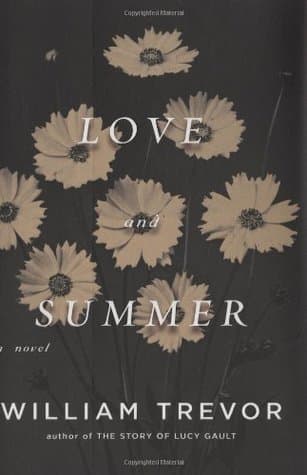
Synopsis
Covers the whole plot, including the ending.
- Difficulty
- Medium
- Pacing
- Slow
- Mood
- Melancholy, Reflective, Atmospheric, Poignant
- Read it if
- You enjoy quiet, character-driven literary fiction with a focus on internal emotional conflict and atmospheric settings.
- Skip it if
- You prefer fast-paced plots, clear-cut resolutions, or stories with overt dramatic action.
Love and Summer Plot Summary
Covers the whole plot, including the ending.
The Arrival of the Photographer
The summer of 1950 in the quiet Irish town of Rathmoye is changed by the arrival of Florian Kilderry, a young man with a camera. He first goes to the burnt-out cinema, planning to photograph its ruins. However, his attention turns to a funeral procession for Mrs. Connulty, a notable local. Florian, an outsider, begins to photograph the mourners, unaware of the social rules or the Connulty family's influence. His presence is noticed by several townspeople, including Father Gogarty and the observant Miss Clancy, who quickly realize he is not from Rathmoye and wonder about his purpose.
Ellie's Routine and Dillahan's Kindness
A few miles outside Rathmoye, Ellie lives a quiet, often lonely life as the young wife of Dillahan, an older, kind farmer. She was a former convent girl who came to work for him after his first wife died and later married him. Her days are filled with household tasks, and she often finds herself alone while Dillahan works on the farm. Despite Dillahan's gentle nature and the security he provides, Ellie feels isolated and longs for something more, a feeling she struggles to name. Her past in the convent and her sudden move to married life on the farm have left her with unfulfilled emotions.
A Chance Encounter
Ellie goes into Rathmoye for supplies, a rare break from her farm routine. While there, she meets Florian Kilderry, who is still in town. Their meeting is short but important; there is an immediate sense of mutual curiosity and attraction. Florian is drawn to Ellie's quiet beauty and reserved manner. Ellie, in turn, finds herself intrigued by the handsome, mysterious stranger, a sharp contrast to her predictable life. This first interaction plants the seed of a forbidden connection, disturbing her peaceful existence and Florian's plans to soon leave Ireland.
The Beginning of the Affair
After their first meeting, Florian actively seeks out Ellie. He learns her routine and finds ways to meet her secretly, away from Rathmoye's watchful eyes. Their hidden encounters quickly become a passionate affair. They meet in secluded places, often in the woods or by the river, where they can avoid the community's gaze. Ellie, despite her guilt and knowing she is betraying Dillahan, feels drawn to Florian's intensity and the excitement he brings to her life, which had lacked such passion. Florian, for his part, becomes deeply involved in the affair, putting off his plans to leave Ireland.
Dillahan's Unawareness and Kindness
Dillahan, dedicated to his farm and his young wife, remains completely unaware of Ellie's secret relationship with Florian. He continues to treat her with unwavering kindness and affection, giving her a stable and comfortable home. His gentle nature and trust in Ellie highlight the painful irony of her betrayal. Dillahan's thoughts often focus on farm tasks and his hopes for their future together, including the possibility of children. His innocence and good heart make Ellie's guilt and internal conflict even stronger, making her secret meetings with Florian feel more wrong.
Town Gossip and Observation
The small, close-knit community of Rathmoye, especially figures like Miss Clancy and Father Gogarty, closely observe any unusual behavior. Florian's continued presence in town, long after he supposedly finished photographing the cinema, begins to raise suspicions. While they do not immediately connect him to Ellie, his lingering and his unusual habits become a topic of quiet conversation and speculation. The townspeople's collective watchfulness creates an atmosphere of impending discovery, adding tension to Ellie and Florian's secret meetings and showing the difficulty of keeping an affair hidden in such an environment.
Florian's Past and Future Plans
During their secret meetings, Florian tells Ellie about his past. He reveals a difficult upbringing, a feeling of aimlessness, and a desire to escape Ireland and start over, perhaps in England or further away. He sees photography as a way to achieve this independence. His plans to leave are initially firm, but his growing attachment to Ellie complicates his resolve. He struggles between his desire for a fresh start and the strong, unexpected connection he has formed with her, creating an internal conflict that mirrors Ellie's own divided loyalties.
Ellie's Internal Conflict
Ellie is torn between her genuine affection and gratitude for Dillahan, who has given her security and kindness, and the intense passion and excitement she experiences with Florian. She feels immense guilt for betraying her husband, yet she cannot bring herself to end the affair. Her past, marked by the strictness of the convent and the sudden move into marriage, has left her unprepared to handle such complex emotions. She longs for the intensity Florian offers but dreads the inevitable results of her choices, feeling trapped between two very different lives and desires.
The Inevitable Decision
As summer nears its end, Florian's departure becomes certain. He urges Ellie to leave her life with Dillahan and run away with him to England, promising her a new beginning and a life of passion and freedom. This proposal forces Ellie to face the reality of her situation and make an impossible choice. The weight of her decision—leaving the good, kind man who offered her a home for an uncertain future with a temporary lover—becomes too much. The pressure from Florian, combined with her own conflicted desires, pushes her to her limit.
The Farewell and its Aftermath
In a powerful, emotional encounter, Ellie ultimately decides not to leave with Florian. Despite her deep feelings for him, her sense of duty, guilt, and the practicalities of abandoning her life with Dillahan win. Florian, heartbroken but accepting, leaves Rathmoye as he had originally planned, leaving Ellie behind. The summer ends, and with it, the intense, fleeting affair. Ellie returns to her life with Dillahan, but she is forever changed by the experience. The quiet town of Rathmoye returns to its rhythm, but the summer's events leave a subtle, lasting mark on everyone involved, especially Ellie.
Principal Figures
Ellie Dillahan
Protagonist
A young, innocent woman married to an older farmer, who yearns for passion.
Ellie is a young woman who was raised in a convent before marrying Dillahan, an older, kind farmer, after his first wife's death. She is initially naive and somewhat unworldly, leading a quiet, isolated life on the farm. While she appreciates Dillahan's goodness and the security he provides, she feels a deep sense of unfulfillment and a longing for emotional intensity. Her affair with Florian awakens a passionate side of her that she never knew existed, plunging her into a profound internal conflict between duty, guilt, and desire.
Relationships: Dillahan (Husband; a kind, older farmer who provides security and love, but not passion.); Florian Kilderry (Lover; a passionate, transient photographer who awakens her suppressed desires.)
Florian Kilderry
Supporting/Love Interest
A restless, enigmatic photographer who disrupts the quiet lives of Rathmoye.
Florian is a young, rootless photographer who arrives in Rathmoye with plans to photograph a burnt-out cinema before leaving Ireland for good. He is charming, intense, and carries a sense of melancholy and a desire for a fresh start. His encounter with Ellie sparks an unexpected and powerful passion, causing him to delay his departure and pursue a dangerous affair. He is driven by a romantic idealism and a longing for connection, but ultimately, his transient nature and ambition for a new life abroad conflict with the demands of a settled relationship.
Relationships: Ellie Dillahan (Lover; an intense, passionate, and ultimately heartbreaking connection.)
Dillahan
Supporting
A kind, older farmer and Ellie's devoted husband, oblivious to her affair.
Dillahan is a good-hearted, hardworking farmer who provides a stable and loving home for his young wife, Ellie. He is significantly older than Ellie and married her after his first wife's death, bringing her from the convent to his farm. He is portrayed as a decent, trusting man, deeply devoted to his land and to Ellie, whom he treats with unwavering kindness and affection. His unawareness of Ellie's affair highlights his trusting nature and underscores the tragic irony of her betrayal, making him a figure of quiet pathos.
Relationships: Ellie Dillahan (Wife; he is devoted and kind, though their relationship lacks the passion Ellie seeks.)
Miss Clancy
Supporting/Observer
A sharp-eyed, gossiping townswoman who observes everything.
Miss Clancy is a quintessential small-town figure, known for her keen observation skills and her love of gossip. She is one of the first to notice Florian's arrival and his unusual habits. Her presence represents the watchful, judgmental eyes of the Rathmoye community. She is not malicious but simply an embodiment of the social fabric of a close-knit village where secrets are hard to keep. Her commentary and observations often serve to foreshadow impending revelations or to reflect the general sentiment of the town.
Relationships: Rathmoye community (Observer and disseminator of local news and gossip.)
Father Gogarty
Supporting/Observer
The local priest, a moral compass and another observer of town life.
Father Gogarty is the local parish priest in Rathmoye, representing the moral and spiritual authority within the community. Like Miss Clancy, he is an astute observer of human nature and the events unfolding in the town. He is a thoughtful and somewhat melancholic figure, aware of the complexities and hidden sorrows beneath the surface of village life. While he doesn't actively intervene in Ellie's affair, his presence and occasional reflections on human frailty and sin contribute to the novel's themes of morality, judgment, and the consequences of actions.
Relationships: Rathmoye community (Spiritual guide and observer of parishioners' lives.)
Themes & Insights
Love, Desire, and Betrayal
The novel explores different kinds of love, contrasting Dillahan's quiet, reliable affection with the intense, forbidden passion Ellie feels with Florian. It looks at the complexities of desire, showing how Ellie, despite her gratitude for her husband, longs for a different kind of emotional fulfillment. Betrayal is a central theme, examining Ellie's guilt and the moral impact of her choices, especially in a conservative rural Irish setting. The affair highlights the destructive power of uncontrolled desire and its deep effect on individuals and their relationships, as seen in Ellie's internal struggle and Dillahan's unknowing suffering.
“She was Dillahan's wife, and had chosen to be so. The fact of that choice, the act of love she had made, had been obliterated by what had come into being since. The love that was Dillahan's was a different kind of love.”
Isolation and Belonging
Both Ellie and Florian experience deep feelings of isolation, though for different reasons. Ellie, despite being married, feels isolated on Dillahan's farm, a former convent girl new to a different life. Florian is an outsider, a temporary figure with no deep roots in Rathmoye. The affair, for a time, gives them a sense of belonging to each other, a shared secret world away from the town's prying eyes. However, this belonging is ultimately temporary, showing the fleeting nature of their connection and the lasting isolation that awaits them once summer ends. The town itself, while close-knit, also creates a sense of isolation for those who do not follow its norms.
“He was a stranger, and she was lonely.”
The Weight of the Past and the Search for a Future
The past greatly shapes the characters' present and future. Ellie's convent upbringing and sudden marriage influence her innocence and her longing for an unknown experience. Florian's difficult background and his desire to escape Ireland drive his transient lifestyle and his search for a new beginning. The burnt-out cinema in Rathmoye, a reminder of a past tragedy, represents memory and decay. The novel suggests that while characters may wish for a fresh start or to escape their pasts, these histories inevitably influence their choices and experiences, often leading to a repetition of patterns or a return to their original circumstances, though changed.
“He wanted to be rid of the past, to begin again, to be a different person in a different place.”
Small Town Life and Social Observation
Rathmoye itself acts almost as a character, with its watchful residents, gossip, and established social norms. The small, isolated nature of the town means that any deviation from the usual, especially the arrival of a stranger like Florian, is immediately noticed and scrutinized. Figures like Miss Clancy and Father Gogarty represent the community's collective gaze and moral standards. This constant observation creates tension and makes Ellie and Florian's affair even more risky, showing the difficulty of keeping privacy and secrets in such an environment. The town's quiet rhythm serves as a background for the intense, hidden drama.
“In a town like Rathmoye, little went unnoticed.”
Plot Devices & Literary Techniques
Foreshadowing
Hints and clues that suggest future events or outcomes.
Foreshadowing is subtly employed throughout the novel to build tension and hint at the fleeting nature of the affair. Florian's initial intention to leave Ireland, the symbolism of the burnt-out cinema, and the watchful eyes of the townspeople all suggest that the affair cannot last. The very title, 'Love and Summer,' implies a seasonal, temporary romance. These hints create a sense of impending doom and make Ellie's eventual decision feel both inevitable and tragic, rather than a sudden surprise.
Symbolism of the Burnt-Out Cinema
The ruined cinema represents lost dreams, past events, and the transient nature of life.
The burnt-out cinema in Rathmoye serves as a powerful symbol. It represents a past event, a dramatic loss, and perhaps the faded glamour of dreams unfulfilled. For Florian, it's an object of photographic interest, a subject for his art that reflects his own sense of being somewhat broken and in transition. For the town, it's a permanent scar, a reminder of what once was. Its decay contrasts with the vibrant, but equally transient, passion of Ellie and Florian's summer affair, hinting that even intense emotions can leave behind only ruins or memories.
Third-Person Omniscient Narration
A narrative perspective that allows insight into multiple characters' thoughts and feelings.
William Trevor employs a third-person omniscient narrator, which provides deep insight into the inner lives of Ellie, Florian, and even Dillahan, as well as the observations of secondary characters like Miss Clancy and Father Gogarty. This perspective allows the reader to understand the conflicting emotions that drive Ellie, the motivations behind Florian's actions, and Dillahan's unwitting kindness. It also provides a broader view of the Rathmoye community and its unspoken rules, enriching the themes of isolation, betrayal, and the complexities of human relationships.
Love and Summer Quotes
“When you have a secret it is a part of you, and you are not whole without it.”
“The past was always there, a kind of shadow, sometimes faint, sometimes dark.”
“People loved each other, and then they didn't. It was as simple and as complicated as that.”
“There was a loneliness that came with knowing too much, and a loneliness that came with knowing too little.”
“Summer was a time for things to happen, for beginnings and sometimes for endings.”
“What was lost could never truly be found, only remembered.”
“The truth was a peculiar thing, often unwelcome, always persistent.”
“Life went on, even when it shouldn't, even when it felt wrong to do so.”
“There were moments when silence said more than any words ever could.”
“Memory was a kind of betrayal, always altering, always shaping what had been.”
“The weight of unspoken words could be heavier than any spoken ones.”
“Every life had its shadows, and some were longer than others.”
“Love, when it came, was a disruption, a rearrangement of all that was known.”
“The future was a landscape of possibilities, both thrilling and terrifying.”
Quiz
10 questions on the plot and the characters. Each answer comes with a short explanation.
Question 1
What is Florian Kilderry's initial reason for coming to Rathmoye?
- To attend Mrs. Connulty's funeral
- To photograph the burnt-out cinema
- To meet Ellie Dillahan
- To visit the Connulty family
Show answer
B. To photograph the burnt-out cinema Florian comes to Rathmoye specifically to photograph the remains of the burnt-out cinema, not knowing about the Connulty family or their funeral.
Question 2
How did Ellie come to marry Dillahan?
- She was a childhood friend of his
- She inherited land next to his farm
- She was a young convent girl who came to work for him after he was widowed
- They met at a town dance in Rathmoye
Show answer
C. She was a young convent girl who came to work for him after he was widowed Ellie, a young convent girl, began working for Dillahan after his first wife died, eventually leading to their marriage.
Question 3
What is the general atmosphere of Rathmoye at the beginning of the story?
- Bustling and full of tourists
- Quiet and uneventful
- Tense and conflict-ridden
- Celebratory due to a local festival
Show answer
B. Quiet and uneventful The text states, 'It’s summer and nothing much is happening in Rathmoye,' indicating a quiet and uneventful atmosphere.
Question 4
What is Florian's ultimate plan for his future before meeting Ellie?
- To settle down in Rathmoye
- To open a photography studio in Ireland
- To leave Ireland and start over elsewhere
- To become a farmer like Dillahan
Show answer
C. To leave Ireland and start over elsewhere The text explicitly states that 'Florian is planning to leave Ireland and start over,' indicating his intention to depart the country.
Question 5
How do the townspeople react to Florian's presence at Mrs. Connulty's funeral?
- They welcome him warmly as a new resident.
- His presence does not go unnoticed, particularly as he photographs mourners.
- They mistake him for a distant relative of the Connultys.
- They are completely indifferent to his arrival.
Show answer
B. His presence does not go unnoticed, particularly as he photographs mourners. The text notes that 'it doesn’t go unnoticed when a dark-haired stranger appears on his bicycle and begins photographing the mourners,' highlighting the town's awareness of him.
Question 6
What phrase best describes Ellie's life after marrying Dillahan, before Florian's arrival?
- Adventurous and unpredictable
- Quiet and routine
- Socially bustling and engaged
- Filled with farm work alongside her husband
Show answer
B. Quiet and routine Ellie 'leads a quiet, routine life, often alone while Dillahan runs the farm,' indicating a settled and somewhat isolated existence.
Question 7
What does the phrase 'a dangerously reckless attachment begins' imply about the relationship between Ellie and Florian?
- It is a casual friendship that will soon end.
- It is a passionate connection that carries significant risks or consequences.
- It is a business partnership for their mutual benefit.
- It is a public display of affection that the town approves of.
Show answer
B. It is a passionate connection that carries significant risks or consequences. The phrase 'dangerously reckless' suggests that their attachment is intense and will lead to potentially harmful or disruptive outcomes, given Ellie's married status and the small-town setting.
Question 8
What is the significance of the Connultys owning 'half the town' in the context of Florian's arrival?
- It explains why Florian chose Rathmoye as his new home.
- It highlights Florian's ignorance of local power dynamics and social structures.
- It provides a reason for the town's economic prosperity.
- It suggests the Connultys were responsible for burning the cinema.
Show answer
B. It highlights Florian's ignorance of local power dynamics and social structures. Florian 'couldn’t know that the Connultys are said to own half the town,' which emphasizes his outsider status and lack of awareness regarding the significant local influence of the family whose funeral he is photographing.
Question 9
How does William Trevor's 'characteristically masterly way' manifest in this narrative, based on the description?
- Through fast-paced action and dramatic plot twists.
- By focusing on the stark political conflicts of the era.
- By subtly evoking the 'passions and frustrations' of individuals within a small Irish town.
- Through extensive use of fantastical elements and magical realism.
Show answer
C. By subtly evoking the 'passions and frustrations' of individuals within a small Irish town. The description states, 'In his characteristically masterly way, Trevor evokes the passions and frustrations of the people of a small Irish town during one long summer,' pointing to his skill in subtle character and emotional portrayal.
Question 10
What literary element is strongly suggested by the title 'Love and Summer' and the story's setting in 'one long summer'?
- A sense of urgency and impending disaster.
- The transient nature of passion and the heightened emotions associated with a specific, often idyllic, season.
- The stability and unchanging routines of rural life.
- A focus on agricultural themes and the harvest season.
Show answer
B. The transient nature of passion and the heightened emotions associated with a specific, often idyllic, season. Summer in literature often symbolizes a time of heightened emotion, growth, and sometimes fleeting romance or change, contrasting with the settled lives of characters like Ellie and the quiet town.
Love and Summer FAQ
What is the central conflict that drives the narrative in 'Love and Summer'?
The central conflict revolves around the burgeoning, illicit affair between Ellie, a young woman recently married to the kind farmer Dillahan, and Florian Kilderry, a transient photographer visiting Rathmoye. Their dangerous attachment challenges Ellie's quiet, settled life and threatens the stability of her marriage, creating intense emotional turmoil.
Who are the main protagonists, and what are their initial circumstances?
Ellie is a young former convent girl who has married the widowed farmer Dillahan, settling into a quiet, somewhat isolated life in the countryside. Florian Kilderry is a dark-haired stranger, a photographer who arrives in Rathmoye to document the burnt-out cinema, carrying his own unspoken past and a desire to leave Ireland.
How does Florian Kilderry's arrival in Rathmoye initially attract attention?
Florian's arrival is immediately noticed because he is a stranger photographing the mourners at Mrs. Connulty's funeral, an unusual act in the small, observant town. He is actually there to photograph the remains of the burnt cinema, unaware of the local significance of the Connulty family.
What is the significance of the burnt-out cinema in Rathmoye?
The burnt-out cinema serves as a catalyst for Florian's presence in Rathmoye, as he comes specifically to photograph its ruins. While its direct symbolic meaning isn't explicitly stated, it represents decay, loss, and perhaps a past that has been dramatically altered, mirroring the emotional destruction that might follow Florian and Ellie's affair.
What kind of life does Ellie lead with Dillahan before Florian's appearance?
Ellie leads a quiet, routine, and often solitary life as Dillahan's wife on their farm. She is a decent, if somewhat naive, young woman who has adapted to her new role, but her existence lacks the passion and spontaneity that Florian later awakens within her.
Are there any subtle indications of Ellie's underlying dissatisfaction or longing before she meets Florian?
While Ellie appears settled, her quiet, often isolated routine and the significant age difference with Dillahan subtly hint at a potential for unfulfilled desires. Her past as a convent girl might also suggest a sheltered existence, making her more susceptible to the allure of a passionate, outside presence like Florian.
What is the implied backstory or reason for Florian's desire to leave Ireland and 'start over'?
The novel hints at Florian's past being marked by some form of personal failure or unhappiness, though specific details are kept vague. His transient nature and his intention to 'start over' suggest a desire to escape previous disappointments or perhaps a complicated personal history that he wishes to shed.
How does the town of Rathmoye function as a character or observer in the story?
Rathmoye acts as a subtle, omnipresent observer. The townspeople's keen notice of Florian's initial actions and their general awareness of local happenings create an atmosphere of close scrutiny. This societal gaze adds pressure and potential consequences to Ellie and Florian's clandestine relationship, emphasizing the small-town environment.
What is the significance of the title 'Love and Summer' beyond the obvious romantic context?
Beyond the literal 'love' between Ellie and Florian and the 'summer' setting, the title evokes a sense of fleeting passion and intense, yet temporary, emotional heat. Summer often symbolizes growth and vibrancy, but also transience, suggesting that the passionate affair might be as ephemeral as the season itself.
Analyze Ellie's psychological state during her affair with Florian. Is it love, infatuation, or an escape?
Ellie's psychological state is complex, likely a blend of infatuation, awakening, and an escape from her routine. She experiences a powerful emotional and sensual awakening with Florian that she hasn't known with Dillahan. It's a dangerous passion, perhaps more about discovering a part of herself than a sustainable, enduring love.
How does Dillahan's character, despite his kindness, contribute to Ellie's vulnerability or longing?
Dillahan is a decent, kind man, but his practical, routine-driven life and potentially significant age difference with Ellie may leave her feeling unfulfilled emotionally or sensually. His goodness, while admirable, doesn't address the deeper, unacknowledged longings that Florian's presence ignites in her, making her vulnerable.
What psychological motivations drive Florian's pursuit of Ellie, given his stated desire to leave Ireland?
Florian's pursuit of Ellie seems driven by a mix of genuine attraction and perhaps a desire for a final, intense experience before he attempts to 'start over.' It could be a last grasp at passion or connection, a way to feel alive before embarking on a solitary new chapter, or even a self-destructive impulse.
How does Trevor use the 'long summer' setting to reflect the emotional intensity and eventual decay of the affair?
The 'long summer' setting mirrors the intense, burgeoning heat and passion of Ellie and Florian's affair. The prolonged, languid days amplify the emotional tension and the sense of time standing still. As summer inevitably wanes, it foreshadows the affair's likely transience and the cooling, perhaps melancholic, aftermath.
Is Ellie's choice at the end of the novel a sign of strength or resignation?
Ellie's final choice is open to interpretation. It could be seen as a strength, a mature decision to honor her commitment to Dillahan and choose stability over fleeting passion, or a resignation, a reluctant acceptance of her fate and the limitations of her circumstances, sacrificing personal desire for duty.
Does the novel condemn or sympathize with Ellie's transgression?
Trevor's narrative style typically evokes deep sympathy rather than condemnation. While Ellie's actions are a transgression, the novel delves into her emotional landscape, showing the forces that draw her to Florian. It allows readers to understand her motivations and internal conflicts, fostering empathy rather than judgment.
What is the ultimate message about love or human relationships that 'Love and Summer' conveys?
The novel suggests that love is multifaceted, often messy, and not always neat or conventional. It explores the complexities of desire, duty, and the choices people make, implying that passion can be both intoxicating and destructive, and that contentment may not always align with intense romantic love. It highlights the quiet sacrifices made in relationships.
How does the ending reflect Trevor's characteristic style of bittersweet realism?
The ending exemplifies Trevor's bittersweet realism by avoiding a simplistic happy or tragic resolution. It leaves Ellie in a state of quiet acceptance, having experienced profound passion but ultimately returning to her stable life. There's a lingering sense of what could have been, balanced by the recognition of practical realities and duty, which is a hallmark of his work.
Could Florian be seen as a catalyst for Ellie's self-discovery, regardless of the affair's outcome?
Yes, Florian undeniably acts as a catalyst for Ellie's self-discovery. His presence awakens her to a depth of feeling and passion she hadn't known existed within herself, forcing her to confront her desires and make a conscious choice about her life, even if that choice is to return to her previous path.
Similar books
- A Month in the Country
J.L. Carr
4.1 (8k) average on GoodreadsLiterary FictionExplores quiet, profound human connection and reflection in a rural setting.
- Brooklyn
Colm Tóibín
Features a young Irish woman navigating new relationships and internal struggles in a restrained, elegant style.
- The Remains of the Day
Kazuo Ishiguro
4.1 (200k) average on GoodreadsLiterary FictionFocuses on unspoken emotions, duty, and quiet tragedy within a meticulously crafted narrative.
- The Old Man and the Sea
Ernest Hemingway
3.8 (831k) average on GoodreadsLiterary FictionA Cuban fisherman's long struggle with a giant marlin becomes a story of endurance and dignity, now retold for young adults with illustrations, phonetic guides, and writing prompts in Traditional Chinese.
- One Hundred Years of Solitude
Gabriel García Márquez
4.1 (753k) average on GoodreadsLiterary FictionThrough the multi-generational story of the Buendía family, a mythical town deals with the repeating patterns of time, love, and solitude, as the extraordinary mixes with the ordinary.
- The Goldfinch
Donna Tartt
3.9 (720k) average on GoodreadsLiterary FictionHaunted by a tragic explosion and clutching a stolen Dutch masterpiece, a young orphan navigates the opulent drawing rooms of New York and the gritty underbelly of the art world, desperately seeking connection and redemption amidst a life spiraling into crime and obsession.





Enjoyed the summary?
A summary gives you the shape of the book. The book itself has the detail, the examples and the voice.
Find Love and Summer on AmazonAs an Amazon Associate, BookBrief earns from qualifying purchases. How we're funded