

Core Idea
- Difficulty
- Medium
- Read it if
- You want a seminal, first-person account of mid-20th century Harlem life, the systemic challenges faced by Black communities during the Great Migration, and the psychological toll of poverty and racial discrimination. It's essential reading for understanding the roots of urban social issues and the power of personal narrative.
- Skip it if
- You are looking for a light or uplifting read; this book is often bleak, violent, and deals explicitly with drug use, crime, and systemic despair. It's not for those sensitive to graphic descriptions of urban hardship and moral ambiguity.
Key Takeaways from Manchild in the Promised Land
The Northern Migration's Unfulfilled Promise
Harlem as a 'Promised Land' that delivered a different kind of struggle.
Claude Brown's memoir clearly shows how the Great Migration, while escaping open Southern racism, led to new, hidden forms of systemic oppression in Northern cities like Harlem. The 'Promised Land' became a place of poverty, crime, and disappointment for many Black families. Brown illustrates how a lack of jobs, unfair housing, and underfunded social services pushed a generation into a cycle of survival and illegal activity. This point highlights the book's historical contribution: it challenges the idea of Northern freedom, showing the difficult realities faced by those who sought a better life but met different, tough challenges, forcing them to adapt or fail in a new urban environment.
“They had come from the South, full of hope, only to find a different kind of bondage in the North. Harlem was no promised land.”
In the book: Brown's parents' migration from the South and their subsequent struggles to find stable employment and decent housing in Harlem, leading to the family's constant precarity despite their hard work.
Try this: When examining historical narratives of migration or social progress, critically assess the 'promise' versus the 'reality' for different groups, looking beyond initial improvements to uncover persistent systemic barriers.
Related ideas: great-migration, urban-poverty, systemic-oppression
The Street as a School
For young Claude, the streets of Harlem were the primary educator, shaping his survival and worldview.
Brown's story clearly shows that for children in Harlem during the 1940s and 1950s, formal education often did not offer useful or protective lessons. Instead, the street was the most powerful and practical school. Here, Brown learned social rules, how to hustle, the need for violence to protect oneself, and the details of illegal economies. This 'education' was harsh but effective in its setting, providing skills needed for daily survival in a tough environment. It points to a sad irony: while society condemned his actions, it also failed to provide good alternatives, making the street's lessons a logical, though dangerous, choice for action and survival.
“The streets taught you everything you needed to know to survive. They taught you how to hustle, how to fight, how to live.”
In the book: Brown's detailed accounts of learning to pickpocket, run numbers, and navigate gang dynamics from a very young age, often in lieu of or during truancy from school.
Try this: Consider how environments, not just institutions, shape individual development and skill sets. For interventions, understand the 'informal curricula' that youth in challenging environments are already mastering and seek to leverage or redirect those skills positively.
Related ideas: street-culture, informal-education, youth-development
The Cycle of Violence and Incarceration
Violence and the penal system were inescapable realities, often fueling rather than deterring crime.
Brown's life story is a clear example of the constant movement between the streets and the justice system. From reform schools to prisons, jail is shown not as a deterrent or a way to improve, but as advanced training for crime. He details how these places, instead of breaking the cycle, often strengthened criminal identities, built networks, and created deeper resentment. The constant violence, both on the streets and in correctional facilities, made aggression normal and reinforced a 'survival of the fittest' mindset. This point criticizes how well punitive justice systems work, suggesting they often worsen the problems they try to solve, especially for young people from disadvantaged backgrounds.
“Once you were in, it was hard to get out. The prisons were just another school, teaching you how to be a better criminal.”
In the book: Brown's multiple stints in various juvenile detention centers and prisons, where he learned new criminal techniques and solidified his identity within the criminal underworld, rather than being reformed.
Try this: Advocate for and explore restorative justice practices and community-based rehabilitation programs that address root causes of crime, rather than relying solely on punitive incarceration, which Brown shows can be counterproductive.
Related ideas: mass-incarceration, recidivism, juvenile-justice
Complexities of Family and Community
Despite its harshness, Harlem fostered fierce loyalties and dysfunctional love.
Though often shown as a brutal place, Brown's Harlem also has deep, if complicated, human connections. His story reveals the contradictions of family life and community bonds amidst poverty and crime. Parents, despite their struggles and sometimes poor attempts at discipline, often tried to teach values and protect their children. Siblings formed strong, often dependent, alliances. The community, though having dangers, also had people who offered support and shared resilience. This complexity challenges simple descriptions of urban ghettos, showing the deep loyalties, protective instincts, and unique kinds of love that came from shared hardship, even when those bonds were strained by the very conditions they faced.
“We were a family, in our own fucked-up way. We looked out for each other, even when we were destroying each other.”
In the book: The relationship between Claude and his brother Butch, their mutual protectiveness and rivalry, and the consistent, though sometimes violent, efforts of their parents to guide them despite their own limitations.
Try this: When working with communities facing adversity, recognize and build upon existing social capital and familial bonds, understanding that support networks may look different from conventional norms but are vital for resilience.
Related ideas: family-dynamics, community-resilience, social-capital
The Allure and Peril of the Hustle
The 'hustle' was a rational economic choice in an irrational system, offering both opportunity and ruin.
Brown gives a direct look at the 'hustle' – from numbers running to drug dealing – not just as a moral failing, but as a practical, though dangerous, economic choice in a place with no legal opportunities. He shows the appeal of quick money and the sense of independence it offered, especially to young Black men denied access to regular jobs. The hustle was a direct response to systemic economic disadvantage, a way to gain status, resources, and a sense of control. However, Brown also carefully details the constant dangers: violence, addiction, betrayal, and eventual jail. This point highlights the sensible choices made within illogical systems, showing the terrible trade-offs people were forced to make to survive.
“You either hustled or you starved. It wasn't about right or wrong; it was about eating.”
In the book: Claude's early involvement in various illicit activities, his observations of successful hustlers in Harlem, and the constant threat of violence or arrest that accompanied these ventures.
Try this: When addressing issues of crime and poverty, focus on creating viable, legitimate economic opportunities and pathways to success, understanding that 'illegal' activities often fill a void left by systemic failures.
Related ideas: informal-economy, economic-disparity, entrepreneurship-in-adversity
The Burden of 'Making It Out'
Escaping Harlem meant navigating guilt, identity shifts, and the challenge of bridging two worlds.
Brown's 'escape' from Harlem's criminal life to pursue education and a different future is not presented as a simple win, but as a complex and emotionally difficult journey. He deals with guilt for surviving, feeling cut off from his past self and community, and the difficulty of fitting into a new world while keeping his core identity. 'Making it' is shown to be less about moving physically and more about a deep inner change, requiring a constant balance between his street-hardened past and his hopeful future. This point highlights the mental cost of moving up socially for those from disadvantaged backgrounds, stressing that success often comes with its own unique burdens and identity struggles.
“You could leave Harlem, but Harlem never really left you. It was in your blood, in your bones.”
In the book: Brown's later struggles in college, his feelings of being an outsider, and his reflection on the lives of his friends who remained in Harlem, contrasting his path with theirs.
Try this: Support individuals transitioning from challenging environments with not just educational or economic resources, but also psychological and social support to navigate identity shifts and potential feelings of alienation.
Related ideas: upward-mobility, identity-crisis, survivor-guilt
Addiction as a Pervasive Shadow
Heroin's devastating grip on Harlem underscored the despair and systemic failures.
Brown's memoir provides a powerful, firsthand account of the heroin epidemic that affected Harlem in the mid-20th century. He shows addiction not as just a moral failing, but as a systemic result of deep despair, lack of opportunity, and easy access to drugs. The drug trade became tied to the very fabric of street life, trapping individuals and entire families in a cycle of dependence and crime. Brown's story reveals the terrible human cost, the weakening of community, and the false promise of escape that heroin offered. This point is an important historical document, showing how addiction became a symptom of deeper societal problems and a further barrier to progress in the 'Promised Land.'
“Heroin came like a plague, taking hold of everybody and everything. It was a slow death, but it was death all the same.”
In the book: Numerous personal anecdotes and observations of friends and acquaintances succumbing to heroin addiction, the impact on their lives, and the pervasive presence of drug dealing throughout Harlem.
Try this: Approach drug addiction as a public health crisis rooted in social and economic conditions, advocating for comprehensive treatment, harm reduction, and addressing the underlying causes of despair rather than solely punitive measures.
Related ideas: heroin-epidemic, drug-addiction, public-health
Resilience and the Human Spirit
Despite overwhelming odds, the human capacity for survival and self-improvement shines through.
Finally, 'Manchild in the Promised Land' is a testament to the remarkable strength of the human spirit. Despite growing up in a place meant to crush hope, Claude Brown consistently showed a strong will to survive, adapt, and eventually overcome his circumstances. His ability to learn from mistakes, to see small chances for change, and to have a deep desire for something more than street life speaks volumes. This point emphasizes that even in the toughest situations, people can have an innate drive for self-preservation and improvement. Brown's journey serves as a strong reminder that human effort, when combined with a spark of hope and opportunity, can overcome what seem like impossible obstacles.
“No matter how many times I fell, I always found a way to get back up. That's all there was to it.”
In the book: Brown's repeated attempts to change his life, his eventual enrollment in college, and his ultimate success as a writer and activist, defying the statistics of his upbringing.
Try this: Foster resilience in individuals and communities by providing pathways for agency, education, and positive mentorship, recognizing that innate strength can be nurtured and directed towards constructive outcomes.
Related ideas: resilience, human-agency, self-determination
The Power of Narrative and Voice
Brown's raw, authentic voice gave agency to an often-silenced experience.
Claude Brown's choice to write 'Manchild in the Promised Land' was an act of great courage and historical importance. His honest, direct voice brought the lived experience of a Black 'manchild' in Harlem to a wider audience, challenging common stereotypes and providing an invaluable firsthand account of a marginalized community. The book's impact comes not just from its content, but from its very existence as a powerful opposing story. It gave a voice to those who were often talked about but rarely heard directly, making readers confront uncomfortable truths about American society. This point emphasizes the transformative power of personal narratives in shaping public understanding and empathy.
“I wrote this book so people would know what it was like, really know, from the inside.”
In the book: The direct, colloquial language Brown uses throughout the book, his detailed descriptions of daily life, and the critical reception that praised its realism and authenticity upon publication.
Try this: Actively seek out and amplify diverse voices and personal narratives, especially from marginalized communities, as essential tools for fostering empathy, understanding, and informed social change.
Related ideas: memoir, counter-narrative, social-commentary
Manchild in the Promised Land Quotes
“I was a manchild, and I had come to the promised land, but I was still in the wilderness.”
“The only thing that kept me from being a complete savage was the fact that I could read and write.”
“In Harlem, you weren't anybody unless you had a record.”
“We were all products of the same environment, and we all had the same dreams, the same fears, the same frustrations.”
“It was a constant struggle to stay alive, to stay out of jail, to stay out of the hospital.”
“Love was something you heard about in songs, or saw in movies, but it wasn't real life.”
“The streets taught you more than any school ever could.”
“We were trapped, like rats in a maze, and there was no way out.”
“Nobody cared what happened to you as long as you didn't bother them.”
“I learned to hate white people, not because they were white, but because they were the oppressors.”
“The only way to get out of the ghetto was to die, or to become a junkie, or to go to jail.”
“We were always looking for something, something to make us feel alive, something to make us forget.”
“I had to learn how to survive in two worlds: the white world and the black world.”
“The past was always there, lurking in the shadows, waiting to catch up with you.”
Quiz
10 questions on the main ideas. Each answer comes with a short explanation.
Question 1
What was Claude Brown's initial perception of Harlem upon his family's arrival from the South?
- A land of opportunity and easy prosperity.
- A dangerous but exciting place where he quickly found his footing.
- A chaotic environment that contrasted sharply with his parents' idealized view of the North.
- A welcoming community that embraced newcomers.
Show answer
C. A chaotic environment that contrasted sharply with his parents' idealized view of the North. Claude's parents idealized the North as the 'Promised Land,' but Claude quickly experienced the harsh realities and chaos of Harlem, which starkly differed from their expectations.
Question 2
Which of the following activities was Claude Brown NOT regularly involved in during his early teenage years in Harlem?
- Shoplifting and petty theft.
- Selling drugs.
- Running numbers.
- Organizing community youth programs.
Show answer
D. Organizing community youth programs. Claude's early life was deeply entrenched in street crime, including theft, drug dealing, and numbers running. Organizing community youth programs was not part of his criminal lifestyle.
Question 3
What role did institutions like Wiltwyck School for Boys play in Claude Brown's development?
- They provided strict punishment without any rehabilitative efforts.
- They offered a structured environment and mentorship that began to steer him away from street life.
- They were essentially training grounds for more sophisticated criminal activities.
- They had no lasting impact on his behavior or future choices.
Show answer
B. They offered a structured environment and mentorship that began to steer him away from street life. Wiltwyck School was pivotal for Claude, providing him with positive role models and a more structured environment that helped him begin to re-evaluate his life choices and consider a different path.
Question 4
How did Claude Brown's relationship with his younger brother, Pimp, evolve throughout the book?
- Pimp consistently looked up to Claude and followed his footsteps into a successful career.
- Claude initially tried to protect Pimp, but Pimp eventually became more deeply involved in street life than Claude.
- They grew apart entirely, having no significant interactions after childhood.
- Pimp became a mentor to Claude, guiding him away from crime.
Show answer
B. Claude initially tried to protect Pimp, but Pimp eventually became more deeply involved in street life than Claude. Claude often tried to shield Pimp, but Pimp became even more deeply entrenched in the dangerous aspects of Harlem street life, showcasing the pervasive nature of the environment.
Question 5
What is a central theme explored through the experiences of Claude Brown and his peers regarding the 'Promised Land'?
- The successful integration of Southern African Americans into the Northern economic system.
- The stark contrast between the idealized vision of the North and the harsh realities of urban ghetto life.
- The ease with which individuals could escape poverty and violence through education alone.
- The consistent support and resources provided by city governments to new migrants.
Show answer
B. The stark contrast between the idealized vision of the North and the harsh realities of urban ghetto life. The title itself is ironic, highlighting the gap between the hopes of migrants coming North and the grim, challenging conditions they found in the Harlem ghettos.
Question 6
How did Claude Brown's perception of education change over time?
- He always valued formal education as the only path to success.
- He initially rejected it, viewing street knowledge as superior, but later embraced it as a means of escape and self-improvement.
- He saw education as a tool for manipulating the system and furthering his criminal enterprises.
- He found education to be irrelevant to the realities of his life in Harlem.
Show answer
B. He initially rejected it, viewing street knowledge as superior, but later embraced it as a means of escape and self-improvement. Claude's journey shows a significant shift from prioritizing street smarts to recognizing the transformative power of formal education, particularly during his time at institutions like Wiltwyck and later when pursuing higher education.
Question 7
Which of the following best describes the role of violence in Claude Brown's early life?
- It was an infrequent occurrence, mostly limited to gang conflicts.
- It was a pervasive and normalized aspect of daily life, both on the streets and sometimes within families.
- It was primarily a tool used by the police to control the community.
- It was a spectacle observed from a distance, not directly experienced.
Show answer
B. It was a pervasive and normalized aspect of daily life, both on the streets and sometimes within families. Brown vividly portrays violence as an ever-present reality in Harlem, impacting nearly every aspect of life, from childhood fights to serious crimes, shaping the survival instincts of its residents.
Question 8
The book is described as 'thinly fictionalized.' What does this imply about its narrative style and content?
- It means the entire story is fabricated with no basis in reality.
- It suggests that while based on true events, some names, details, or sequences might be altered for narrative flow or protection.
- It indicates that the book is primarily a work of speculative fiction.
- It refers to the simple language used throughout the text.
Show answer
B. It suggests that while based on true events, some names, details, or sequences might be altered for narrative flow or protection. A 'thinly fictionalized account' implies that the core events and experiences are authentic to the author's life, but minor embellishments or alterations might have been made for storytelling purposes or to protect identities, while remaining true to the spirit of the memoir.
Question 9
How does Claude Brown ultimately escape the cycle of crime and poverty he was born into?
- By joining the military and leaving Harlem permanently.
- Through sheer luck and the help of a wealthy benefactor.
- By pursuing education, self-reflection, and making a conscious effort to change his environment and associations.
- By becoming a successful drug lord and then retiring.
Show answer
C. By pursuing education, self-reflection, and making a conscious effort to change his environment and associations. Claude's triumph is depicted as a result of his own determination, his engagement with educational opportunities, and his deliberate choices to distance himself from the destructive patterns of his youth, rather than a single external factor.
Question 10
The book is heralded as the 'definitive account of everyday life for the first generation of African Americans raised in the Northern ghettos.' What specific aspects contribute to this claim?
- Its focus solely on the economic struggles of Black families in the North.
- Its detailed and unflinching portrayal of street culture, family dynamics, crime, and the psychological impact of the urban environment on youth.
- Its comprehensive analysis of the political movements in Harlem during the 1940s and 50s.
- Its fictionalized characters that represent archetypes rather than real people.
Show answer
B. Its detailed and unflinching portrayal of street culture, family dynamics, crime, and the psychological impact of the urban environment on youth. The book's strength lies in its raw, authentic, and comprehensive depiction of the multifaceted reality of growing up in Harlem, including both its dangers and moments of humanity, offering a vital historical record.
Manchild in the Promised Land FAQ
What is 'Manchild in the Promised Land' about?
'Manchild in the Promised Land' is a powerful memoir by Claude Brown, chronicling his challenging childhood and adolescence growing up in the Harlem ghettos of the 1940s and 1950s. It offers a raw and realistic portrayal of street life, crime, family struggles, and the journey of a young Black man trying to survive and ultimately thrive amidst adversity.
Who is Claude Brown?
Claude Brown was an American author best known for his influential autobiography 'Manchild in the Promised Land'. Born in New York City, his book detailed his experiences with poverty, crime, and racism in Harlem, eventually leading him to pursue education and become a significant voice in American literature.
Does 'Manchild in the Promised Land' accurately depict Harlem life in the mid-20th century?
Yes, 'Manchild in the Promised Land' is widely praised for its authentic and unflinching portrayal of Harlem's streets, its inhabitants—from hardworking parents to hustlers—and the pervasive social issues of the 1940s and 1950s. It's considered a definitive account of that era for the first generation of African Americans raised in Northern ghettos.
What are the main themes explored in the book?
The book explores themes of survival, poverty, systemic racism, crime, family dynamics, the search for identity, and the possibility of redemption and upward mobility despite dire circumstances. It highlights the resilience of the human spirit in overcoming profound social and personal challenges.
How does 'Manchild in the Promised Land' differ from other memoirs of the Civil Rights era?
While many Civil Rights era memoirs focus on the broader political movement, Brown's book offers an intimate, street-level perspective of the daily struggles and internal lives of individuals in the urban North. It provides a unique lens on the social conditions that fueled discontent and the personal battles for dignity and survival outside of organized activism.
Is 'Manchild in the Promised Land' still relevant today?
Absolutely. The struggles of urban youth, issues of poverty, systemic inequality, and the search for identity and opportunity remain deeply relevant. The book's themes resonate with contemporary discussions about social justice, urban development, and the enduring challenges faced by marginalized communities.
What impact did 'Manchild in the Promised Land' have when it was first published?
Upon its publication in 1965, the book received widespread acclaim for its groundbreaking realism and powerful insight into Harlem. It offered a crucial, often overlooked, perspective on urban Black life and quickly became a significant cultural and literary work, sparking important conversations about race and poverty in America.
Is 'Manchild in the Promised Land' a true story?
Yes, it is an autobiography, based entirely on Claude Brown's own life experiences. While the narrative is crafted with literary skill, the events, characters, and emotions depicted are drawn directly from his firsthand journey through the challenging landscape of Harlem.
Why is the book considered 'affirmative and inspiring' despite its harsh subject matter?
Despite its candid depiction of violence and hardship, the book is ultimately affirmative because it tells the story of someone who 'made it out.' Claude Brown's journey from a streetwise criminal to an educated man who found his voice offers a powerful message of resilience, perseverance, and the possibility of transforming one's life against overwhelming odds.
Similar books
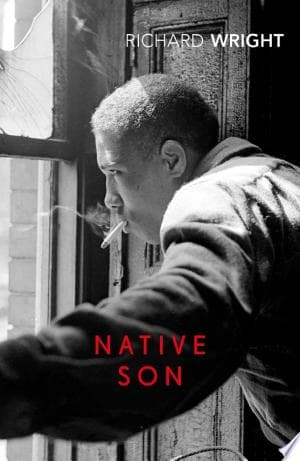
- Native Son
Richard Wright
4.0 (89k) average on GoodreadsHistorical FictionExplores the harsh realities of racism and poverty's impact on Black individuals in Northern cities, leading to tragic outcomes.
- The Diary of a Young Girl
Anne Frank
4.2 (2.7M) average on GoodreadsBiographyDuring the Nazi occupation, a teenage girl's diary, written from a secret annex, shares observations on humanity, hope, and the wait for freedom.
- Eat, Pray, Love
Elizabeth Gilbert
3.6 (1.5M) average on GoodreadsLifestyleA heartbroken writer leaves her conventional life for a year-long global search for pleasure in Italy, spiritual devotion in India, and unexpected love and balance in Bali.
- Night
Elie Wiesel
4.3 (970k) average on GoodreadsBiographyIn the darkness of Auschwitz and Buchenwald, a teenage Elie Wiesel faces the extermination of his family, the loss of his faith, and the lasting scars of humanity's deepest cruelty.
- Steve Jobs
Walter Isaacson
4.1 (957k) average on GoodreadsBusinessSteve Jobs was a visionary who fused creativity and technology to revolutionize six industries and shape our digital world.
- The Glass Castle
Jeannette Walls
4.3 (903k) average on GoodreadsBiographyJeannette Walls's memoir describes her unusual childhood with brilliant, free-spirited parents whose poverty-stricken life shaped her independence and love despite family problems.





Enjoyed the summary?
A summary gives you the shape of the book. The book itself has the detail, the examples and the voice.
Find Manchild in the Promised Land on AmazonAs an Amazon Associate, BookBrief earns from qualifying purchases. How we're funded