
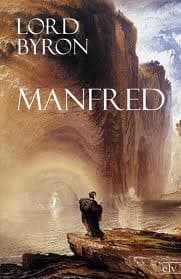
Synopsis
Covers the whole plot, including the ending.
- Difficulty
- Hard
- Pacing
- Slow
- Mood
- Dark, Brooding, Melancholy, Intense, Supernatural
- Read it if
- You enjoy classic Romantic poetry and dramas, tales of Byronic heroes, or explorations of guilt, defiance, and the supernatural.
- Skip it if
- You prefer fast-paced plots, clear resolutions, or easily digestible narratives without archaic language.
Manfred Plot Summary
Covers the whole plot, including the ending.
Manfred's Torment and Summoning of Spirits
In his Alpine gallery at midnight, the noble Manfred paces, troubled by an unspecified, deep guilt he cannot escape. He hates life but cannot die, haunted by memories. He calls upon the Spirits of the Universe for oblivion or forgetfulness. Seven spirits appear, each representing an element or celestial body. They offer him power, knowledge, and control, but Manfred rejects these, wanting only forgetfulness. The spirits, unable to grant this, leave. One spirit, however, appears as a beautiful female figure, reminding Manfred of a lost love, which deepens his despair.
Encounter with the Chamois Hunter
Manfred climbs a dangerous cliff in the Jungfrau mountains, planning to jump. He thinks about nature's beauty, which only makes his inner trouble worse. Just as he is about to leap, a chamois hunter, Manuel, appears and pulls him back. Manuel is concerned by Manfred's wild look and suicidal intent. He offers to lead Manfred to safety and offers simple human company, which Manfred first resists, finding peace only in his solitude and suffering. Manuel, however, insists on helping him down the mountain.
Manfred's Retreat and Manuel's Observations
Manuel brings Manfred back to his castle. Manfred dismisses him but not before Manuel expresses his concern about Manfred's isolation and the rumors about him. Alone again, Manfred thinks about his past, haunted by the memory of Astarte, a woman he loved and lost, and their mysterious, destructive relationship. He admits his suffering is self-inflicted punishment for an unspeakable sin tied to her. He feels a great sense of loss and lasting damage, believing himself permanently stained.
The Incantation of the Witch of the Alps
Manfred travels to a waterfall in the Alps and calls forth the Witch of the Alps. He tells her his life story, describing himself as one who sought knowledge and power beyond human limits, but found only disappointment. He confesses his love for Astarte, suggesting an incestuous or forbidden nature to their bond, and the ruin it brought them both. He blames himself for her death and his torment. He begs the Witch for forgetfulness, but she says it is beyond her power, offering instead power over others, which he rejects.
The Abbot's Visit
The Abbot of St. Maurice visits Manfred at his castle, having heard of his suffering and despair. The Abbot, a man of faith, tries to offer spiritual guidance, urging Manfred to repent and seek redemption through God. Manfred, however, strongly rejects the Abbot's advice, stating that his guilt is too deep for human or divine forgiveness. He declares that his penance is self-imposed and eternal, and that he cannot find peace in common religion, further separating himself from society and spiritual comfort.
Summoning of Arimanes and the Spirit of Astarte
Driven by his constant torment, Manfred journeys to the Hall of Arimanes, the Prince of Darkness, with Nemesis and other infernal spirits. He demands to see Astarte's spirit. The spirits are at first unwilling, but Manfred's strong will forces them. Astarte's ghost appears, silent and sad. Manfred pleads with her to speak, to forgive him, and to say if they will ever reunite. She finally speaks, telling him he will die tomorrow and that they will meet again, but refuses to forgive him, leaving him with a mix of hope and dread.
The Abbot's Second Attempt
The Abbot returns to Manfred's castle, sensing his coming death and wanting to offer last rites. He finds Manfred weak but still defiant. Manfred repeats his refusal of absolution, insisting on facing his fate alone. As they speak, strange sounds and shadows begin to appear around the castle. The Abbot sees these as demonic beings trying to claim Manfred's soul. He tries to shield Manfred with holy symbols and prayers, while Manfred remains calm, ready to face whatever comes.
Manfred's Final Confrontation and Death
As the demonic spirits gather around him, trying to drag his soul to hell, Manfred stands firm. He confronts them with his unyielding will, saying he is master of his own destiny and has never bowed to any power, human or supernatural. He declares that his sins and his redemption are his own, and that he will not be commanded by them. The spirits pull back, unable to use their power over his defiant spirit. Manfred then collapses and dies peacefully, having faced his end on his own terms, leaving the Abbot confused and amazed by his deep independence.
Manfred Characters
Manfred
Protagonist
A noble and solitary lord tormented by an unspeakable past sin.
Manfred is a Byronic hero – a proud, intelligent, and deeply melancholic nobleman haunted by a mysterious, profound guilt, widely believed to be incestuous. He possesses vast knowledge of the supernatural and a powerful, defiant will. He is alienated from humanity, seeking solace in the wild beauty of the Alps and in communion with spirits, yet he finds no true peace. His suffering is self-imposed and he rejects all conventional forms of comfort or redemption, choosing to face his torment and death on his own terms.
Relationships: Astarte (Forbidden and destructive love, possibly incestuous, leading to her death and his torment.); Manuel (Chamois Hunter) (Brief, compassionate encounter; Manuel offers human kindness, which Manfred largely rejects.); Abbot of St. Maurice (Spiritual antagonist; the Abbot offers religious redemption, which Manfred defiantly refuses.); Spirits of the Universe (Entities he summons and commands, but who cannot grant his ultimate wish.); Witch of the Alps (Supernatural being he seeks for aid, but who also cannot grant forgetfulness.)
Astarte
Supporting/Mentioned
Manfred's deceased beloved, whose memory fuels his guilt and torment.
Astarte is a spectral figure, the object of Manfred's forbidden love and the catalyst for his profound guilt. She is only seen as a phantom, summoned by Manfred, and her brief appearance and cryptic words are central to his journey. Her exact relationship with Manfred is ambiguous but heavily implied to be incestuous, leading to her death and his subsequent suffering. She represents the irreversible consequences of his past actions and the enduring nature of his love and regret.
Relationships: Manfred (Forbidden and destructive love, possibly incestuous.)
Manuel (Chamois Hunter)
Supporting
A simple, compassionate mountaineer who saves Manfred from suicide.
Manuel is a practical, kind-hearted chamois hunter who embodies simple human goodness and concern. He encounters Manfred contemplating suicide and intervenes, offering practical help and companionship. He is a foil to Manfred's complex, tormented nature, representing the grounded, empathetic world that Manfred has rejected. His brief interaction with Manfred highlights the hero's profound isolation and his inability to accept conventional human solace, despite Manuel's genuine efforts.
Relationships: Manfred (Brief, compassionate encounter; offers human kindness.)
Abbot of St. Maurice
Supporting
A devout religious figure who attempts to offer Manfred spiritual redemption.
The Abbot of St. Maurice is a traditional man of God, representing conventional morality and religious salvation. He visits Manfred twice, attempting to persuade him to repent, seek absolution, and find peace through faith. He genuinely cares for Manfred's soul but fails to comprehend the depth and nature of Manfred's guilt and his defiant rejection of external authority, whether divine or human. He is ultimately an observer of Manfred's unique and solitary end, left bewildered by his unyielding spirit.
Relationships: Manfred (Spiritual antagonist; offers religious redemption, which Manfred defiantly refuses.)
Witch of the Alps
Supporting
A powerful elemental spirit whom Manfred consults for forgetfulness.
The Witch of the Alps is a formidable elemental spirit, a mistress of nature's secrets, whom Manfred summons from a waterfall. She listens to Manfred's confession of his past and his plea for oblivion. While powerful, she ultimately cannot grant Manfred's specific desire for forgetfulness, as it is a matter of the soul. She offers him other forms of power, which he rejects, highlighting the singular nature of his torment and his quest.
Relationships: Manfred (Supernatural being he seeks for aid, but who also cannot grant forgetfulness.)
Spirits of the Universe
Mentioned
Supernatural entities summoned by Manfred, representing elemental and celestial forces.
These are the first supernatural beings Manfred summons. They represent various aspects of the cosmos – earth, air, water, fire, night, stars, and mountains. They appear in different forms and offer Manfred power and knowledge in their respective domains. However, they are unable to grant him the one thing he truly desires: forgetfulness of his past. Their inability to help him underscores the unique and internal nature of his suffering, which transcends even their vast supernatural capabilities.
Relationships: Manfred (Entities he summons and commands, but who cannot grant his ultimate wish.)
Arimanes
Mentioned
The Prince of Darkness, whom Manfred confronts to see Astarte.
Arimanes is presented as the supreme infernal spirit, the Prince of Darkness, presiding over a court of other demons and furies. Manfred, in his desperate quest, ventures to Arimanes's hall to demand the appearance of Astarte's spirit. Though a powerful and fearsome entity, Arimanes is still subject to Manfred's indomitable will, highlighting Manfred's extraordinary spiritual strength and defiance even against the forces of hell.
Relationships: Manfred (The ultimate infernal power Manfred confronts and compels.)
Manfred Themes
Guilt and Atonement
Manfred is consumed by an unspeakable guilt, often seen as incestuous, that drives his every action. He seeks forgetfulness or oblivion, not traditional forgiveness or atonement through religion. His suffering is his self-imposed penance, and he strongly rejects the Abbot's offers of Christian redemption. This theme explores the limits of human and divine forgiveness when faced with a deep, self-perceived wrong, and the idea that some sins may need an internal, solitary form of atonement, as seen in Manfred's defiance against the demons at his death.
“My embrace was fatal: but my kiss / Slew not thy life, nor cursed thee with my living.”
Defiance and Individualism
Manfred is the prime example of the Byronic hero. He is fiercely independent and defies all authority – human, divine, and supernatural. He refuses to bow to the spirits he summons, rejects the Abbot's religious comfort, and stands firm against the demons trying to claim his soul. This theme highlights the power of individual will and the romantic ideal of self-mastery, even in great suffering and death. His final act of defiance is his ultimate victory, asserting his control until his last breath.
“I will not bow to any spirit less than the Highest, nor to him were he to be found.”
The Sublime in Nature
The grand and often frightening Alpine landscapes are a constant background to Manfred's inner trouble. The towering peaks, glaciers, and waterfalls mirror the grandeur and chaos of his soul. Manfred finds a strange comfort and reflection of his own isolation and power in these natural settings, which often inspire awe and terror. His thoughts of suicide on a cliff edge, or his summoning of the Witch of the Alps by a waterfall, show how nature is not just scenery but an active part, reflecting and increasing his emotions, and offering a refuge from human society.
“Ye mountains, whose bald, eminence / Casts its long shadow o'er the ruined world!”
The Supernatural and Forbidden Knowledge
The play is full of supernatural elements, from Manfred's summoning of spirits and his talks with the Witch of the Alps to his journey to the Hall of Arimanes. This theme explores humanity's fascination with and dangerous search for knowledge beyond human limits. Manfred has explored forbidden arts, giving him power over spirits but not peace. The supernatural beings are powerful but cannot ease his deepest, internal suffering, suggesting that some torments are beyond even their reach and that such knowledge comes at a great personal cost.
“I have been from my youth a seeker, and had known / The magic of the mind, and the might of spells.”
Plot Devices & Literary Techniques
Byronic Hero
A proud, tormented, and defiant protagonist alienated from society.
Manfred embodies the classic Byronic hero archetype. He is a man of intense passion, profound intellect, and deep melancholy, haunted by a mysterious, unspeakable past. His alienation from conventional society, his pursuit of forbidden knowledge, and his ultimate defiance against all external authority (human, divine, and supernatural) are defining characteristics. This device allows for the exploration of themes like individualism, guilt, and the limits of human endurance, as the audience is drawn to his magnetism despite his moral ambiguity and suffering.
Closet Drama
A play intended to be read rather than performed on stage.
Manfred is structured as a play but was primarily intended for reading. This device allows for extensive soliloquies, detailed descriptions of internal states, and elaborate supernatural scenes that might be difficult or impossible to stage effectively. The focus shifts from theatrical spectacle to profound psychological and philosophical exploration. The reader is invited to delve into Manfred's mind through his lengthy monologues, which reveal his complex thoughts and emotions without the constraints of stage realism.
Unspecified Guilt
A central, unnamed transgression that drives the protagonist's suffering.
Manfred's profound guilt is never explicitly named, though it is strongly implied to be incestuous and related to Astarte. This narrative device creates an aura of mystery and allows the audience to project their own understanding onto Manfred's torment. By keeping the exact nature of the sin ambiguous, Byron heightens the sense of universal suffering and the idea that some transgressions are so profound they defy articulation. This ambiguity also contributes to the psychological depth of the character, making his internal struggle more compelling and relatable on an existential level.
The Sublime Landscape
The use of awe-inspiring and terrifying natural settings to reflect psychological states.
The dramatic Alpine scenery—towering peaks, deep chasms, raging waterfalls—is not merely a backdrop but a crucial plot device. It mirrors Manfred's internal turmoil, his grandeur, his isolation, and his despair. The sublime quality of these landscapes evokes both awe and terror, reflecting the extremes of Manfred's emotional state and his defiance of conventional human scale. His communion with nature, rather than with humanity, underscores his alienation and provides a visual metaphor for his untamed spirit and profound suffering.
Manfred Quotes
“The spirit who now stirs within me.”
“Sorrow is knowledge: they who know the most Must mourn the deepest o'er the fatal truth, The Tree of Knowledge is not that of Life.”
“My slumbers—if I slumber—are not rest, But a continuance of enduring thought.”
“I can call spirits from the vasty deep.”
“We are the fools of Time and Fate and Chance.”
“There is a power upon me which withholds And makes it not a thing of choice but strong Necessity to be so.”
“Old man! 'tis not so difficult to die.”
“The mind which is immortal makes itself Requital for its good or evil thoughts— Is its own origin of ill and end— And its own hell and heaven.”
“I have no dread, and feel no shame To meet the omens of a future flame.”
“But a most living life, and burning thought, And quivering heart, and a most sleepless eye.”
“Away! away! there's blood upon the brim! Will it not wash off?”
“Peace! I have said it—and I feel it now. I have no power upon me, but myself.”
“I am not of your order, nor your tribe.”
“The fiends who have tormented me have fled.”
Quiz
10 questions on the plot and the characters. Each answer comes with a short explanation.
Question 1
What is the primary motivation behind Manfred's desire to forget his past, particularly his relationship with Astarte?
- He wishes to pursue a new romantic interest without the burden of his past.
- He seeks relief from the immense guilt and suffering caused by an unmentionable offense.
- He wants to gain ultimate power over the spirits by shedding his human attachments.
- He believes forgetting will allow him to reconcile with society and return to a normal life.
Show answer
B. He seeks relief from the immense guilt and suffering caused by an unmentionable offense. Manfred is relentlessly tortured by his sense of guilt for a past offense, specifically his forbidden relationship with Astarte. His quest throughout the drama is for oblivion or forgetfulness to escape this suffering.
Question 2
Which supernatural being does Manfred initially summon in Act I, Scene I, in an attempt to gain knowledge and power over his own mind?
- The Witch of the Alps
- The Arimanes
- The Seven Spirits of the Earth, Air, Ocean, and other elements
- The Phantom of Astarte
Show answer
C. The Seven Spirits of the Earth, Air, Ocean, and other elements In his initial soliloquy, Manfred summons the 'Spirits of the unbounded Universe' and specifically the 'Seven Spirits' to aid him in his quest for forgetfulness, though they cannot grant his true desire.
Question 3
What is the nature of the relationship between Manfred and Astarte, as implied throughout the play and by critical interpretations?
- They were childhood sweethearts separated by circumstance.
- They had a forbidden and possibly incestuous relationship.
- Astarte was Manfred's devoted wife who died tragically.
- Astarte was a powerful sorceress who cursed Manfred.
Show answer
B. They had a forbidden and possibly incestuous relationship. The relationship between Manfred and Astarte is consistently described as a forbidden, 'unmentionable offense' which causes Manfred immense guilt. Critics often link this to Byron's own controversial relationship with his half-sister, Augusta Leigh.
Question 4
When Manfred attempts to leap from the cliff in Act I, Scene II, who prevents him from committing suicide?
- The Abbot of St. Maurice
- A Chamois Hunter
- One of the summoned spirits
- Astarte's phantom
Show answer
B. A Chamois Hunter As Manfred is about to throw himself from the cliff, a Chamois Hunter appears and intervenes, saving Manfred's life and taking him back to his hut.
Question 5
What is the key difference between Manfred's pursuit of knowledge and power, and that of a traditional Faustian character?
- Manfred seeks power to rule the world, while Faust seeks knowledge for self-improvement.
- Manfred seeks forgetfulness and relief from inner torment, not external power or worldly pleasures.
- Manfred makes a pact with a benevolent spirit, while Faust deals with a malevolent demon.
- Manfred is content with his human limitations, whereas Faust constantly strives for the divine.
Show answer
B. Manfred seeks forgetfulness and relief from inner torment, not external power or worldly pleasures. While Manfred possesses immense knowledge and power, his ultimate goal is not more power or worldly gain, but rather oblivion and escape from his overwhelming guilt and suffering. This internal focus differentiates him from traditional Faustian figures.
Question 6
What does the Phantom of Astarte, when summoned by the Incantation of the Witch of the Alps, tell Manfred regarding his fate?
- She tells him he will find peace in a new love.
- She states that they will be reunited in the afterlife.
- She declares that he will die the next day, and they will meet in another world.
- She offers him a way to forget his past through dark magic.
Show answer
C. She declares that he will die the next day, and they will meet in another world. When Astarte's phantom finally appears, she tells Manfred, 'Tomorrow ends thine earthly ills. Farewell! When thou hast join'd thy kindred worms, And the trail of the earth-worms, then wilt thou be at peace.' and that they shall 'meet again'.
Question 7
How does Manfred ultimately confront and reject the attempts of the spirits and demons to claim his soul at the end of the play?
- He uses a powerful magical spell learned from the Witch of the Alps.
- He accepts the Abbot's prayers and finds redemption in faith.
- He asserts his own will and inner strength, denying their power over him.
- He sacrifices himself to save another character, thus redeeming his soul.
Show answer
C. He asserts his own will and inner strength, denying their power over him. In his final moments, Manfred steadfastly refuses to submit to the demons, stating that he is his 'own destroyer, and but mine own'. He dies defying their power, asserting his independent will even in death.
Question 8
What is the significance of the setting of the play, primarily the Alps, to Manfred's character and themes?
- The Alps represent a place of social ostracization and forced exile for Manfred.
- The sublime and untamed nature of the Alps mirrors Manfred's wild, tormented spirit and his isolation from humanity.
- The mountains symbolize a spiritual pilgrimage, where Manfred seeks divine forgiveness.
- The harsh environment of the Alps is meant to punish Manfred for his past sins.
Show answer
B. The sublime and untamed nature of the Alps mirrors Manfred's wild, tormented spirit and his isolation from humanity. The dramatic, awe-inspiring, and solitary landscape of the Alps perfectly reflects Manfred's Byronic hero persona: his immense intellectual and emotional power, his isolation from mankind, and his internal turmoil.
Question 9
Which of the following figures represents an attempt by conventional religious authority to offer Manfred solace and salvation?
- The Witch of the Alps
- The Chamois Hunter
- The Abbot of St. Maurice
- The Spirit of the Air
Show answer
C. The Abbot of St. Maurice The Abbot of St. Maurice repeatedly visits Manfred, offering him absolution, prayer, and the solace of the church, which Manfred consistently rejects.
Question 10
How does Manfred's character embody the Romantic theme of individualism and defiance against societal and supernatural constraints?
- He ultimately conforms to the expectations of the Abbot and seeks redemption through traditional means.
- He embraces the power of the spirits and uses it to dominate humanity.
- He consistently rejects external authority, whether human or supernatural, asserting his own will and suffering alone.
- He forms an alliance with the spirits to escape his guilt, rather than confront it.
Show answer
C. He consistently rejects external authority, whether human or supernatural, asserting his own will and suffering alone. Manfred is the quintessential Byronic hero, defined by his profound individualism. He refuses to be swayed by the Abbot's religious counsel or coerced by the demons, choosing his own path of suffering and ultimately, his own death, on his own terms.
Manfred FAQ
What is the central conflict driving Manfred's torment throughout the play?
Manfred is consumed by a profound sense of guilt and despair stemming from an unmentionable offense, which is strongly implied to be an incestuous relationship with his beloved Astarte. This guilt prevents him from finding peace, driving his quest for oblivion or forgetfulness.
Who is Astarte, and what is her significance to Manfred's past and present suffering?
Astarte is Manfred's deceased beloved, strongly suggested to be his sister, and her death is the direct consequence or catalyst of his 'unmentionable sin.' Her spectral appearance in Act II, Scene IV, is the only time Manfred achieves a moment of release, as she forgives him but cannot undo his fate.
What kind of supernatural beings does Manfred encounter, and what is his relationship with them?
Manfred summons and interacts with various spirits, including the Spirits of the Earth, Air, Mountains, Waters, Winds, and the Star. He commands them due to his own powerful intellect and magical knowledge, but they cannot grant him the oblivion or forgetfulness he truly seeks, only worldly power or knowledge.
How does Manfred ultimately face his fate, and does he find redemption?
Manfred rejects the Abbot of St. Maurice's attempts at spiritual redemption and defies the demons who come to claim his soul, dying on his own terms. He finds a form of peace in his defiance and self-reliance, not through conventional salvation, but through an assertion of his own will.
What is a 'closet drama,' and why is Manfred considered one?
A closet drama is a play meant to be read rather than performed on stage, often due to complex themes, extensive soliloquies, or impractical staging requirements. Manfred's introspective nature, long philosophical monologues, and supernatural elements make it more suited for private contemplation than theatrical production.
How does the 'ghost-story sessions' in Switzerland connect to the creation of Manfred?
Byron commenced Manfred in late 1816, only months after the famous ghost-story sessions at Villa Diodati, which also inspired Mary Shelley's Frankenstein. This shared context highlights the prevalent fascination with the supernatural and the darker aspects of human nature that infused Romantic literature of the period.
What is the significance of Manfred's claim of having 'travelled through time' or 'astral projected' to Caesar's palace?
In Act III, Scene IV, Manfred recounts these experiences, indicating his profound mastery of esoteric knowledge and supernatural abilities beyond mortal comprehension. This detail underscores his 'super-human' nature and intellectual prowess, which impresses figures like Nietzsche.
How does the 'unnamed but forbidden nature' of Manfred's relationship with Astarte mirror Byron's personal life?
Critics widely interpret Manfred's guilt over an unspeakable sin with Astarte as a direct allegorical representation of Lord Byron's own scandal involving his alleged incestuous affair with his half-sister, Augusta Leigh. This connection makes the play deeply autobiographical and confessional.
What role does the natural world, particularly the Alps, play in Manfred's psychological state?
The majestic and sublime landscapes of the Alps provide a backdrop for Manfred's tormented soul, reflecting his internal grandeur and isolation. He finds a temporary solace and a sense of belonging in their wildness, yet they cannot alleviate his fundamental guilt or desire for oblivion.
How does Manfred's refusal of external authority, both spiritual and demonic, reflect his character's psychology?
Manfred's rejection of the Abbot's Christian solace and his defiance of the infernal spirits demonstrate his fierce individualism and pride. He is determined to face his fate and guilt on his own terms, highlighting a profound psychological need for self-sovereignty even in suffering.
In what ways does Manfred exhibit characteristics of a Byronic hero?
Manfred embodies the Byronic hero through his intense passion, profound melancholy, mysterious past, isolation, defiance of societal norms, and a deep, unshakeable guilt over a secret sin. His intellectual superiority and magnetic aura further solidify this archetype.
How does Manfred's pursuit of knowledge and power relate to his underlying psychological torment?
Manfred's extensive learning and command over spirits are ultimately futile attempts to escape or overcome his internal suffering. His intellect, while vast, cannot grant him peace, illustrating that some psychological burdens cannot be solved by external means or worldly power.
Is Manfred's death a victory or a defeat, given his defiance of the spirits?
This is open to interpretation. While he dies without conventional redemption or peace, his final act of defiance against the demons is often seen as a moral victory, asserting his human will and independence even in the face of damnation. He chooses his own end.
What is the significance of Astarte's forgiveness, yet her inability to alleviate Manfred's suffering?
Astarte's spectral forgiveness offers Manfred a fleeting moment of solace, confirming that he is not entirely unforgiven by the one he wronged. However, her inability to change his fate suggests that some sins carry an inherent, inescapable consequence that even divine or spiritual intervention cannot fully erase.
How do the musical adaptations by Schumann and Tchaikovsky interpret Manfred's character and themes?
Schumann's 'Dramatic Poem with music' and Tchaikovsky's 'Manfred Symphony' both capture the dramatic intensity, psychological torment, and sublime beauty of Byron's work. They use orchestral color and thematic development to convey Manfred's internal struggles, his encounters with the supernatural, and the grandeur of the Alpine setting.
Does Manfred's 'metaphysical drama' suggest a critique of traditional religious or moral frameworks?
Manfred's rejection of the Abbot's Christian counsel and his defiance of infernal powers can be interpreted as a critique of conventional religious solace and dogmatic morality. The play suggests that a 'super-human' being might forge their own moral path and find a unique form of peace or dignity outside established frameworks.
How does Friedrich Nietzsche's appreciation of Manfred's 'super-human being' align with the play's themes?
Nietzsche admired Manfred's relentless self-assertion, intellectual power, and defiance of both human and supernatural constraints, seeing in him a proto-Übermensch. Manfred's refusal to succumb to conventional morality or external authority resonated with Nietzsche's philosophy of individual will and the creation of one's own values.
About the author
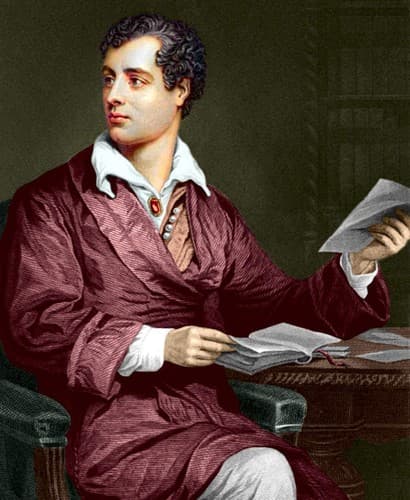
George Gordon Byron, 6th Baron Byron was an English romantic poet and peer. He was one of the leading figures of the Romantic movement, and has been regarded as among the greatest of English poets. Among his best-known works are the lengthy narratives Don Juan and Childe Harold's Pilgrimage; many of his shorter lyrics in Hebrew Melodies also became popular.
Similar books
- Frankenstein: The 1818 Text
Mary Shelley
3.8 (1.2M) average on GoodreadsFantasyFeatures Romantic themes, a tormented protagonist, and elements of the supernatural and gothic.
- The Rime of the Ancient Mariner
Samuel Taylor Coleridge
4.0 (54k) average on GoodreadsFantasyBoth poems feature protagonists haunted by past transgressions and supernatural encounters. The Ancient Mariner's journey is a tale of penance and ultimately, a moral lesson for humanity, with a clear cause (killing the albatross) and effect. Manfred's torment is more existential and his 'crime' remains ambiguous; he dies unrepentant, asserting his autonomy even in death, offering no universal moral message, only the spectacle of an unyielding individual spirit.
- Harry Potter and the Sorcerer's Stone
J.K. Rowling
4.5 (7M) average on GoodreadsFantasyRescued from a miserable life under the stairs, an orphaned boy discovers he's a wizard destined for a magical school, where he uncovers a dangerous secret tied to the dark wizard who murdered his parents.
- The Hunger Games
Suzanne Collins
4.3 (6.4M) average on GoodreadsFantasyIn a future where children fight to the death on live television, Katniss Everdeen volunteers for the arena, turning a death sentence into a fight for survival and a spark of rebellion.
- 1984
George Orwell
4.2 (3.1M) average on GoodreadsPoliticsIn a future where surveillance and thought control are absolute, a man's search for truth clashes with the Party, showing that hope can be a form of rebellion.
- Divergent
Veronica Roth
4.2 (2.9M) average on GoodreadsFantasyIn a society divided by virtues, a sixteen-year-old's difference from the norm starts a rebellion that threatens her world.






Enjoyed the summary?
A summary gives you the shape of the book. The book itself has the detail, the examples and the voice.
Find Manfred on AmazonAs an Amazon Associate, BookBrief earns from qualifying purchases. How we're funded