

Core Idea
- Difficulty
- Easy
- Read it if
- You're a dog lover, have ever experienced the chaos and joy of pet ownership, appreciate heartwarming memoirs, or are looking for a story about unconditional love and family life.
- Skip it if
- You dislike animal stories, prefer highly structured narratives without digressions into daily life, or are not in the mood for an emotional journey that includes pet loss.
Key Takeaways from Marley and Me
Embrace the Glorious Chaos
Life's most profound lessons often arrive in the messiest packages.
John and Jenny's life with Marley shows that great joy and personal growth come from imperfect situations. Marley, the 'world's worst dog,' constantly tested their patience, destroyed their home, and resisted training. Yet, his wild spirit and the constant challenges he presented made the Grogans stronger, deepened their understanding of love, and helped them find humor in frustration. This takeaway suggests that true happiness is not in a perfectly ordered life, but in embracing the unpredictable, often chaotic, journey that life and loved ones bring, turning problems into chances for growth and connection.
“A dog doesn't care if you're rich or poor, clever or dull, smart or dumb. Give him your heart and he'll give you his. How many people can you say that about? How many people can make you feel rare and pure and special? How many people can make you feel extraordinary?”
In the book: Marley's numerous destructive escapades, such as eating couches, crashing through screen doors, and being expelled from obedience school, initially brought frustration but ultimately became endearing anecdotes and markers of the family's shared history and resilience.
Try this: Instead of striving for an idealized, problem-free life, consciously seek out and appreciate the lessons learned from unexpected difficulties. When faced with a 'Marley-like' challenge, pause to find the humor, the hidden strength it demands, or the unique bond it fosters, rather than solely focusing on the inconvenience.
Related ideas: resilience, unconditional-love, embracing-imperfection
The Unbreakable Bond of Unconditional Love
Love triumphs over even the most exasperating behavior.
The main idea of 'Marley & Me' is the strong and steady nature of unconditional love. Despite Marley's constant destruction, his anxiety, and his inability to follow rules, the Grogan family always loved him. This was not just passive acceptance, but an active choice to look past the chaos and see the pure, loyal, and joyful heart beneath. Their love for Marley grew through shared experiences, both good and bad. This highlights that real affection does not depend on perfect behavior or convenience. It is a reminder that the strongest connections often form when facing challenges, where patience, forgiveness, and lasting affection are most important.
“He was a ninety-seven-pound streamroller of a Labrador retriever, a dog like no other.”
In the book: Despite Marley's expulsion from obedience school, the constant replacement of destroyed household items, and the public embarrassment he often caused, the Grogans consistently chose to keep him, care for him, and express their deep affection.
Try this: Reflect on relationships in your own life where behavior might be challenging. Practice active empathy and forgiveness, focusing on the intrinsic value of the individual rather than their flaws. Choose to love through difficulties, understanding that true connection often requires enduring patience.
Related ideas: loyalty, patience, forgiveness
Dogs as Life's Unfiltered Mirror
Pets reflect our journey, our joys, and our sorrows with unfiltered honesty.
Marley shows the Grogan family's journey through life. From John and Jenny's early days as a couple, through their struggles with pregnancy, the arrival of their children, and various moves and life stages, Marley was always there. He reflected their joy, absorbed their stress, and celebrated their successes, all while staying true to himself. His presence highlights how pets become quiet witnesses and key parts of our personal stories, offering companionship and emotional support without judgment. They give a unique view of time passing and life's milestones, reminding us to live in the moment and value simple affections.
“A dog has no use for fancy cars or big homes or designer clothes. Status means nothing to him. A waterlogged stick will do just fine. A dog doesn't care if you're rich or poor, clever or dull, smart or dumb. Give him your heart and he'll give you his.”
In the book: Marley was present for the couple's joy at their first pregnancy, their heartbreak over the miscarriage, and the eventual arrival and growth of their children, becoming an undeniable part of every significant family event.
Try this: Recognize the role pets play in your own life as emotional anchors and companions. Pay attention to how their presence marks the passage of time and the different phases of your life. Cherish the simple, non-judgmental companionship they offer.
Related ideas: companionship, emotional-support, life-stages
The Impermanence of Life and Love
Learning to cope with loss is an inevitable part of loving deeply.
The book, while full of humor and joy, ultimately faces the pain of loss that comes with loving a pet. Marley's decline and death are shown with honesty, highlighting the deep grief that comes with saying goodbye to a beloved animal. This takeaway emphasizes that the journey of love, especially with pets, means accepting that things end. It teaches us about the cycle of life, the certainty of endings, and the importance of valuing every moment. The Grogans' experience with Marley's death is a reminder that while grief is painful, it also shows the depth of love shared and is a necessary part of being human.
“A person who has never owned a dog has missed a wonderful part of life.”
In the book: The detailed account of Marley's aging, his physical ailments like bloat and arthritis, and the family's agonizing decision to euthanize him, followed by their deep and prolonged grief.
Try this: Confront the reality of impermanence in your relationships, both human and animal. Practice gratitude for the present moments with loved ones. When faced with loss, allow yourself to grieve fully, understanding that it is a natural response to deep love.
Related ideas: grief, loss, mortality
Parenthood: A Crash Course in Selflessness
Pets often prepare us for the relentless demands and profound rewards of raising children.
Before having children, John and Jenny's life with Marley was a chaotic, but effective, training ground for parenthood. Marley’s constant needs, unpredictable behavior, and endless messes forced the Grogans to develop patience, selflessness, and a capacity for care that would be very useful once their children arrived. The constant watchfulness, interrupted sleep, and endless cleanup with Marley were similar to many challenges of raising infants and toddlers. This takeaway suggests that pets, especially demanding ones, can prepare people for the relentless, yet rewarding, journey of becoming parents, teaching important lessons in responsibility and lasting devotion.
“We had a dog. We had a baby. We had a life.”
In the book: The Grogans frequently compare the demands and anxieties of caring for Marley to those of having children, noting how Marley's destructive energy required constant attention, similar to a toddler.
Try this: If you have pets, reflect on how the responsibilities of their care (feeding, walks, vet visits, cleaning up messes) have prepared you for other significant life commitments, especially parenthood. Appreciate the foundational lessons in nurturing and patience they provide.
Related ideas: parenting-preparation, responsibility, nurturing
Finding Humor in the Absurd
Laughter is the essential coping mechanism for life's most frustrating moments.
A key part of the Grogans' ability to handle Marley's antics was their skill at finding humor in frustrating situations. From Marley's expulsion from obedience school to his public mischief, John Grogan's story often presents these events with a lighthearted, self-deprecating tone. This takeaway highlights humor's role as a coping mechanism, turning potential despair into shared laughter and strengthening family bonds. It suggests that embracing life's absurdities, rather than fighting them, can lead to greater strength and a more joyful life, even when things are not perfect.
“He was a dog with a screw loose, a canine calamity, a furry force of nature.”
In the book: Numerous anecdotes, like Marley stealing a woman's bikini at the beach, his dramatic attempts to escape the car, or his 'performance' in the movie, are recounted with an emphasis on their comedic elements, even if frustrating at the time.
Try this: When faced with a frustrating or chaotic situation, consciously try to find the humor in it. Share the absurdities with others to foster connection and lighten the mood. Cultivate a mindset that allows for laughter even in challenging circumstances.
Related ideas: coping-mechanisms, resilience, optimism
The Simple Joys are the Deepest
Despite grand adventures, true happiness lies in everyday connections.
While Marley had many dramatic adventures, like starring in a movie or causing a beach evacuation, the book consistently brings the reader back to the importance of everyday moments. Marley greeting them at the door, his comforting presence during sad times, or his steady loyalty were the real sources of joy and meaning for the Grogans. This takeaway shows that while extraordinary events are memorable, the consistent, quiet moments of connection, companionship, and love form the foundation of a fulfilling life. Marley, in his unfiltered dog way, taught them to appreciate the simple, reliable affections that are often overlooked.
“Marley was more than a dog. He was a member of our family, a furry, four-footed, ninety-seven-pound family member.”
In the book: Beyond the dramatic stories, Grogan often reflects on the comfort Marley provided during personal struggles, his constant companionship, and the simple joy of his presence in the family home.
Try this: Make a conscious effort to notice and appreciate the small, routine joys in your daily life and relationships. Don't wait for grand gestures or events to find happiness; cultivate gratitude for consistent acts of love and companionship.
Related ideas: gratitude, mindfulness, daily-life
The Power of a Pet's Presence
Pets offer a unique form of non-verbal support and emotional grounding.
Marley's presence, despite often causing disruption, provided constant comfort and emotional stability for the Grogan family. He was there during their heartbreaks, their moments of fear (like the stabbing victim outside their home), and their quiet joys. His non-judgmental companionship and steady enthusiasm served as a calming force amidst life's uncertainties. This takeaway highlights how pets can offer non-verbal emotional support, acting as quiet friends and sources of unconditional affection. Their presence can reduce stress, ease loneliness, and provide stability and belonging, often more effectively than human interaction during certain emotional states.
“He was a dog with a screw loose, a canine calamity, a furry force of nature, but he was our dog.”
In the book: Marley was a source of comfort during Jenny's miscarriage, and his presence was noted during the terrifying incident of a stabbing victim outside their home, where he instinctively barked and provided a sense of alert and protection.
Try this: Recognize and value the unique emotional support that pets provide. Spend quality, mindful time with your pets, allowing their simple, present nature to bring you comfort and grounding, especially during stressful periods.
Related ideas: emotional-support-animals, comfort, non-verbal-communication
Letting Go of Control
Some things in life cannot be tamed, only loved.
From the moment Marley arrived, it was clear he would not fit typical dog training or social expectations. His expulsion from obedience school was just the first of many times the Grogans learned that some parts of life, and some beloved beings, simply cannot be controlled or shaped into a perfect ideal. This takeaway highlights the importance of letting go of the need for perfect order and accepting the natural wildness or individuality of certain situations or personalities. It is a lesson in acceptance, recognizing that true love often means embracing a being for who they are, flaws and all, rather than trying to change them.
“He was incorrigible. He was irrepressible. He was Marley.”
In the book: Marley's expulsion from obedience school, his inability to be tranquilized effectively, and his consistent destructive behavior despite all efforts at training demonstrate his untamable nature.
Try this: Identify areas in your life where you might be trying too hard to control outcomes or change others. Practice acceptance and surrender, focusing on loving and appreciating individuals and situations for what they are, rather than what you wish them to be.
Related ideas: acceptance, individuality, letting-go
The Enduring Legacy of Love
Even after loss, the impact of profound love continues to shape us.
Marley's death, though devastating, did not erase his effect on the Grogan family. His memory continued to shape their lives, influencing their views, deepening their bonds, and serving as a reminder of their shared history. This takeaway emphasizes that true love creates a lasting legacy, going beyond physical presence. The lessons learned, the laughter shared, and the unconditional affection received continue to resonate, reminding us that while endings are certain, the influence of those we love remains a permanent part of who we become. Marley's spirit, even in absence, continued to enrich their lives and, through the book, the lives of many readers.
“A dog's life is too short. Their only fault, really.”
In the book: Even after Marley's passing, the family frequently reminisces about his antics, and his memory is a constant presence in their lives, underscoring his lasting impact.
Try this: After experiencing loss, consciously reflect on the positive legacy left by the loved one. Acknowledge how their presence shaped your character, your relationships, and your outlook on life, allowing their memory to continue to inspire and enrich you.
Related ideas: legacy, memory, enduring-love
Marley and Me Quotes
“A dog doesn't care if you're rich or poor, educated or illiterate, clever or dull. Give him your heart and he will give you his. How many people can you say that about? How many people can make you feel rare and pure and special? How many people can make you feel extraordinary?”
“Marley came into our lives like a furry, four-legged hurricane.”
“I had no idea that this would be the beginning of a magnificent, frustrating, hilarious, and ultimately heartbreaking adventure.”
“He was a dog who taught me about living each day with unbridled exuberance and joy, about seizing the moment and following your heart.”
“There's no such thing as a bad dog, just a bad owner.”
“For all his faults, he was a dog who loved with every fiber of his being.”
“The thing about being a parent is that you're always trying to do the right thing, and you're always second-guessing yourself.”
“He made us laugh, he made us cry, he made us pull our hair out, but most of all, he made us a family.”
“He was a walking, drooling, barking, uncoordinated, counter-surfing, thunder-phobic, leash-pulling, furniture-chewing, hole-digging, food-stealing, house-wrecking, attention-demanding, love-dispensing, eighty-pound blonde Labrador retriever.”
“When the time came, I was ready to let him go, but I wasn't ready to say goodbye.”
“A dog's life is too short. Their only fault, really.”
“He taught me that love is not about perfection, but about acceptance.”
“We were not just his owners; we were his world.”
“The greatest gift you can give a dog is your time and your heart.”
Quiz
10 questions on the main ideas. Each answer comes with a short explanation.
Question 1
What kind of dog was Marley?
- Golden Retriever
- Beagle
- Labrador Retriever
- German Shepherd
Show answer
C. Labrador Retriever The book explicitly states Marley was a 'ninety-seven-pound streamroller of a Labrador retriever.'
Question 2
What significant event did Marley share with John and Jenny, demonstrating his boundless love and loyalty?
- Their decision to move to a new city.
- Their joy at their first pregnancy and heartbreak over a miscarriage.
- The purchase of a new car.
- A major home renovation project.
Show answer
B. Their joy at their first pregnancy and heartbreak over a miscarriage. The summary highlights that 'Marley shared the couple's joy at their first pregnancy, and their heartbreak over the miscarriage,' showcasing his emotional connection.
Question 3
What was one of Marley's most notorious destructive habits mentioned in the summary?
- Chewing through electrical wires.
- Digging up the entire backyard.
- Eating nearly everything he could get his mouth around, including couches and fine jewelry.
- Breaking all the windows in the house.
Show answer
C. Eating nearly everything he could get his mouth around, including couches and fine jewelry. The summary lists several of Marley's destructive acts, specifically noting he 'ate nearly everything he could get his mouth around, including couches and fine jewelry.'
Question 4
What was the outcome of Marley's attendance at obedience school?
- He became a perfectly behaved dog.
- He graduated with honors.
- He was expelled because it 'did no good'.
- He taught the other dogs new tricks.
Show answer
C. He was expelled because it 'did no good'. The text explicitly states, 'Obedience school did no good—Marley was expelled,' emphasizing his untrainable nature.
Question 5
Despite his chaotic behavior, what core quality did Marley possess that endeared him to his family?
- His ability to perform complex tricks.
- His pure heart and boundless love and loyalty.
- His quiet and calm demeanor.
- His impressive hunting skills.
Show answer
B. His pure heart and boundless love and loyalty. The summary contrasts his 'barreling' behavior with the statement, 'And yet Marley's heart was pure. Just as he joyfully refused any limits on his behavior, his love and loyalty were boundless, too.'
Question 6
What unconventional role did Marley manage to land, despite (or perhaps because of) his disruptive nature?
- A therapy dog for children.
- A police dog.
- A role in a feature-length movie.
- A champion show dog.
Show answer
C. A role in a feature-length movie. The text mentions Marley 'managed to land a role in a feature-length movie,' highlighting his unexpected path to fame.
Question 7
What was the veterinarian's specific advice regarding the tranquilizers prescribed for Marley?
- Use them only in extreme emergencies.
- Administer them daily for consistent behavior.
- Don't hesitate to use these.
- Give them only if he becomes aggressive.
Show answer
C. Don't hesitate to use these. The summary directly quotes the veterinarian's unusual admonishment: 'Don't hesitate to use these,' underscoring Marley's extreme behavior.
Question 8
How did Marley react to the family's experience with the screams of a seventeen-year-old stabbing victim?
- He ignored the screams, continuing his usual antics.
- He became agitated and ran away.
- He was there, implying his presence and perhaps protective instincts during a traumatic event.
- He barked uncontrollably, exacerbating the situation.
Show answer
C. He was there, implying his presence and perhaps protective instincts during a traumatic event. The text states, 'He was there when babies finally arrived and when the screams of a seventeen-year-old stabbing victim pierced the night,' implying his steadfast presence during both joyful and traumatic family events.
Question 9
The book concludes by highlighting a key lesson learned by John and Jenny about love. What is it?
- Love is only possible with a perfectly behaved pet.
- Unconditional love comes in many forms.
- Love requires strict discipline and control.
- Love diminishes with age and responsibility.
Show answer
B. Unconditional love comes in many forms. The final sentence of the summary directly states, 'Unconditional love, they would learn, comes in many forms,' encapsulating the book's central theme.
Question 10
Beyond destroying household items, what other specific public disturbance did Marley cause, as mentioned in the summary?
- He caused a major traffic jam in the city.
- He disrupted a wedding ceremony.
- He shut down a public beach.
- He escaped from a pet store and caused chaos.
Show answer
C. He shut down a public beach. The summary explicitly lists, 'Marley shut down a public beach,' among his many public exploits.
Marley and Me FAQ
What is 'Marley & Me' about?
'Marley & Me' is a memoir by John Grogan chronicling his family's life with Marley, a mischievous but lovable Labrador retriever. It's a heartwarming and often humorous account of the joys and challenges of owning an exceptionally boisterous dog.
Is 'Marley & Me' a true story?
Yes, 'Marley & Me' is a non-fiction memoir based on the real-life experiences of author John Grogan and his family with their dog, Marley. The events and anecdotes shared in the book genuinely occurred.
Does obedience training work for all dogs, as seen with Marley?
While obedience training is generally highly effective for most dogs, Marley's unique and extreme personality proved challenging, leading to his expulsion from obedience school. The book highlights that some dogs, despite best efforts, may not conform to traditional training methods.
What kind of dog was Marley?
Marley was a yellow Labrador retriever. The book vividly describes his breed's characteristic energy, loyalty, and often boisterous nature, amplified to an extraordinary degree in Marley's case.
How is 'Marley & Me' different from other dog-themed memoirs?
'Marley & Me' stands out due to Marley's unparalleled level of naughtiness and the candid, often self-deprecating humor with which Grogan recounts the chaos. While many dog memoirs focus on perfect companions, this book celebrates the unconditional love found even in the most imperfect pets.
What is 'unconditional love' in the context of the book?
In 'Marley & Me,' unconditional love refers to the deep affection and unwavering loyalty Marley showed his family, despite his destructive tendencies, and the enduring love the Grogans felt for Marley, accepting him with all his flaws and celebrating the joy he brought into their lives.
Does the book have a sad ending?
As a memoir about a dog's life, the book naturally addresses the full lifespan of Marley. While it concludes with a poignant and emotional farewell, it also emphasizes the lasting impact and cherished memories Marley left behind, making it a powerful testament to the human-animal bond.
Is 'Marley & Me' suitable for children?
The book explores themes of family, love, and loss that can resonate with older children and teenagers. While there are some mature themes and emotional moments, many families read and enjoy the book together, particularly those who have experienced life with a beloved pet.
Did Marley really appear in a movie?
Yes, the book mentions that Marley, despite his unruly nature, managed to land a role in a feature-length movie. This anecdote is one of many illustrating his unique and often unpredictable impact on the Grogan family's life.
About the author

John Grogan is an American author and journalist known for his non-fiction work. He gained widespread recognition with "Marley and Me: Life and Love With the World's Worst Dog," a memoir that chronicles his experiences with his mischievous Labrador Retriever. Grogan's writing often reflects themes of family and the bond between humans and pets.
Similar books
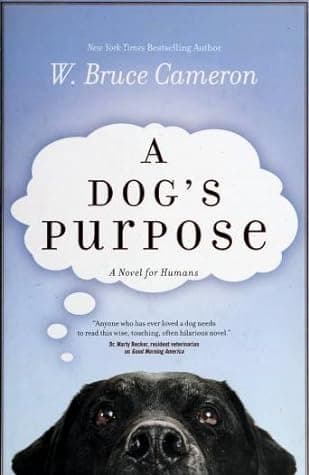
- A Dog's Purpose
W. Bruce Cameron
4.3 (114k) average on GoodreadsFantasyExplores the deep bond between humans and dogs and the impact pets have on our lives, with a focus on a dog's perspective.
- The Art of Racing in the Rain
Garth Stein
4.2 (452k) average on GoodreadsFictionNarrated by a dog, this book explores life lessons, love, and loss through the eyes of a loyal canine companion.
- The Diary of a Young Girl
Anne Frank
4.2 (2.7M) average on GoodreadsBiographyDuring the Nazi occupation, a teenage girl's diary, written from a secret annex, shares observations on humanity, hope, and the wait for freedom.
- Eat, Pray, Love
Elizabeth Gilbert
3.6 (1.5M) average on GoodreadsLifestyleA heartbroken writer leaves her conventional life for a year-long global search for pleasure in Italy, spiritual devotion in India, and unexpected love and balance in Bali.
- Night
Elie Wiesel
4.3 (970k) average on GoodreadsBiographyIn the darkness of Auschwitz and Buchenwald, a teenage Elie Wiesel faces the extermination of his family, the loss of his faith, and the lasting scars of humanity's deepest cruelty.
- Steve Jobs
Walter Isaacson
4.1 (957k) average on GoodreadsBusinessSteve Jobs was a visionary who fused creativity and technology to revolutionize six industries and shape our digital world.





Enjoyed the summary?
A summary gives you the shape of the book. The book itself has the detail, the examples and the voice.
Find Marley and Me on AmazonAs an Amazon Associate, BookBrief earns from qualifying purchases. How we're funded