
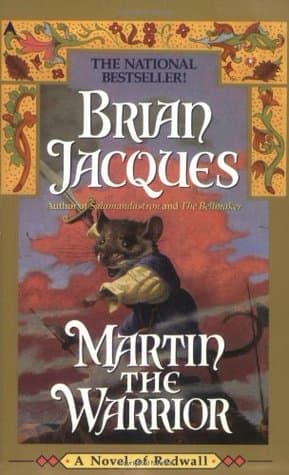
Synopsis
Covers the whole plot, including the ending.
- Difficulty
- Easy
- Pacing
- Moderate
- Mood
- Heroic, Adventurous, Heartwarming, Tragic
- Read it if
- You enjoy classic animal fantasy adventures with themes of heroism, justice, and the struggle against tyranny, suitable for young readers.
- Skip it if
- You prefer complex character morality, grimdark fantasy, or stories without anthropomorphic animals.
Martin the Warrior Plot Summary
Covers the whole plot, including the ending.
The Arrival at Marshank
The story begins with the young mouse, Martin, captured by the stoat warlord Badrang the Tyrant and his ferret lieutenant, Clogg. Martin is taken to Badrang's coastal fortress, Marshank, where he is enslaved. Badrang takes Martin's father's sword, a weapon with great sentimental value and a symbol of his family, and hangs it in his feasting hall. Despite his youth and the harsh conditions, Martin refuses to be broken, staying defiant even as he is forced into hard labor alongside other captives like the squirrel, Rose, and the mole, Grumm. His stubbornness quickly draws Badrang's attention and anger.
A Glimmer of Hope and First Escape Attempt
Inside Marshank, Martin forms a bond with Rose, a kind and intelligent squirrel, and Grumm, a strong but simple mole. They share stories of their lives before enslavement and their wish for freedom. Rose, in particular, inspires Martin with her gentle strength and hope. Together, they begin to secretly plan an escape. Their first attempt involves trying to climb the fortress walls, but guards stop them. Though unsuccessful, this attempt strengthens their resolve and shows them the challenge they face against Badrang's forces and Marshank's defenses.
The Journey to the Northlands
After a more successful escape, Martin, Rose, and Grumm flee Marshank. Their journey takes them through unfamiliar and dangerous lands, including the Northlands. They meet a community of peaceful voles who offer them shelter and food, providing a brief rest from their flight. However, they also face threats from wild animals and Badrang's pursuing forces. During this time, Martin's leadership skills appear, as he protects his companions and handles the wilderness challenges, proving himself resourceful and brave, much to Rose's admiration.
The Tribe of the Hares and Badrang's Pursuit
Our heroes find temporary refuge with a boisterous tribe of hares led by the eccentric but kind Lord Harespit. The hares, known for their love of feasting and their fighting skills, offer Martin and his friends protection and a place to rest. However, their peace is short-lived as Badrang, furious at their escape, sends his ruthless lieutenants, Clogg and the searat, Bultip, to track them down. The hares, despite their bravery, are not eager to fight a full war with Badrang, causing tension and forcing Martin to think carefully about their next move. He realizes that staying in one place too long is dangerous.
The Search for the Lost Tribes
Martin learns of ancient, scattered tribes who once lived in harmony and were known for their strength and wisdom. He believes that by uniting these tribes, they might stand a chance against Badrang. Rose, with her sharp mind, helps him understand old legends and maps, guiding their path. Their quest leads them through dangerous landscapes, including a dark forest and mountains. They find cryptic clues and overcome various natural obstacles, strengthening their bond and Martin's resolve to free not just himself, but all enslaved creatures from Badrang's rule. This journey marks a shift in Martin's motivations.
The Badger Lord and the Hidden Caverns
Deep within the mountains, Martin, Rose, and Grumm discover the lair of an ancient and powerful Badger Lord, a reclusive but wise figure known for his knowledge of the land and its history. The Badger Lord, initially cautious, recognizes Martin's good heart and his noble cause. He shares ancient stories and speaks of Badrang's growing power, revealing hidden caverns and passages that could be key for an attack on Marshank. He also gives Martin a powerful, ancient war axe to aid him, showing a transfer of leadership.
The Siege of Marshank Begins
Having gathered an army of squirrels, moles, hares, and other forest creatures, Martin leads them towards Marshank. The combined forces, though smaller than Badrang's, are driven by a shared wish for freedom. The siege begins with a daring assault, using the secret passages the Badger Lord revealed. The battle is fierce, with both sides suffering losses. Martin, wielding the badger lord's axe and his father's sword (which he reclaims during the initial fights), shows great bravery and tactical skill, inspiring his allies and scaring Badrang's lieutenants. The enslaved creatures inside Marshank sense the change and begin to act.
Tragedy and Sacrifice
During the chaotic and brutal fighting within Marshank, tragedy occurs. Rose, who had been a beacon of hope and a constant companion to Martin, is caught in a skirmish and fatally wounded by one of Badrang's lieutenants. Her death devastates Martin, fueling his rage and hardening his resolve to defeat Badrang at any cost. Grumm, too, is heartbroken but stands by Martin, offering silent support. Rose's sacrifice becomes a rallying cry for the freedom fighters, reminding them of the high stakes and the innocent lives that depend on their success. Her loss leaves a lasting mark on Martin's heart and future path.
The Final Confrontation
Driven by grief and a desire for justice, Martin confronts Badrang the Tyrant in a showdown within Marshank's main hall. The duel is intense and brutal, with Badrang, a formidable and ruthless fighter, wielding Martin's father's sword. Martin, though smaller, fights with the strength of his beliefs and the memory of his fallen friend. He reclaims his father's sword and uses his agility and the power of the badger lord's axe. The fate of all enslaved creatures is at stake as the two warriors clash, their battle a symbol of freedom against tyranny.
Victory and the Fall of Marshank
Martin, through determination and skill, defeats Badrang the Tyrant, ending his rule. With Badrang's death, his remaining forces scatter or surrender. Marshank is liberated, and the enslaved creatures are freed, cheering Martin as their hero. However, the victory is bittersweet for Martin due to Rose's loss. He decides that Marshank, a symbol of oppression, must be destroyed. After ensuring the safety of the freed creatures and appointing new leaders, Martin, accompanied by Grumm and a few loyal companions, departs from the ruined fortress, starting a new journey, seeking a peaceful future and perhaps a new home for himself and his friends.
A New Path and the Seeds of Redwall
After Marshank's destruction, Martin, Grumm, and other survivors travel across the land, searching for a place where they can live in peace, free from tyranny. Their journey is long and hard, but filled with hope. They meet various communities and learn about different ways of life. Martin, still grieving Rose, finds comfort in the idea of building a sanctuary, a place where no creature would ever again suffer what he endured. Eventually, they discover a fertile, secluded valley. Martin feels this is the place, a haven where a great abbey could be built, laying the foundation for what will become Redwall Abbey, a symbol of peace and hospitality for all goodbeasts.
Martin the Warrior Characters
Martin the Warrior
Protagonist
A young, defiant mouse warrior who fights for freedom.
Martin is initially a young, strong-willed mouse, captured and enslaved by Badrang. He possesses an unyielding spirit, refusing to be broken by tyranny. His father's sword is a powerful symbol to him, representing his heritage and the justice he seeks. While brave and skilled in combat, he is also capable of great compassion, especially towards his friends Rose and Grumm. His journey transforms him from a vengeful individual into a leader who fights for the freedom of all oppressed creatures. He is driven by a deep sense of justice and a desire to create a world free from fear.
Relationships: Rose (Close friend and love interest, her death deeply impacts him.); Grumm (Loyal companion and friend.); Badrang the Tyrant (Arch-nemesis and enslaver.); Lord Harespit (Temporary ally and host.); Badger Lord (Mentor and provider of aid.)
Rose of Noonvale
Supporting
A kind and intelligent squirrel who inspires Martin.
Rose is a gentle and compassionate squirrel, also enslaved at Marshank. Despite her captivity, she maintains an optimistic and hopeful spirit, often comforting and encouraging Martin. She is intelligent and resourceful, helping Martin plan escapes and navigate their journey. Rose represents purity, innocence, and unwavering hope. Her presence brings out Martin's softer side and provides him with a strong moral compass. She is a beacon of light in the dark world of Marshank and a constant source of inspiration for Martin.
Relationships: Martin the Warrior (Close friend and love interest.); Grumm (Fellow captive and friend.)
Badrang the Tyrant
Antagonist
The cruel stoat warlord who enslaves Martin and rules Marshank.
Badrang is a ruthless and power-hungry stoat warlord. He is the tyrannical ruler of Marshank, a formidable fortress built on the suffering of his enslaved workforce. Badrang is cunning, cruel, and takes pleasure in asserting his dominance. He is obsessed with power and wealth, constantly seeking to expand his territory and influence. His confiscation of Martin's father's sword is a deliberate act of psychological torment. He represents pure evil and oppression, embodying everything Martin fights against. His reign is characterized by fear, brutality, and a complete disregard for life.
Relationships: Martin the Warrior (Arch-nemesis and enslaver.); Clogg (Loyal but often incompetent lieutenant.); Bultip (Searat ally and ruthless tracker.)
Grumm
Supporting
A strong but simple-minded mole, loyal to Martin and Rose.
Grumm is a large, strong mole with a kind heart, though he is not particularly clever. He is initially a fellow captive at Marshank, forced into labor. Grumm becomes a loyal and steadfast companion to Martin and Rose, providing physical strength and unwavering support. He is deeply devoted to his friends and will follow them through any danger. His simple nature often provides moments of comic relief, but his loyalty is absolute. Grumm represents the steadfastness and enduring spirit of the common folk who suffer under tyranny.
Relationships: Martin the Warrior (Close friend and companion.); Rose (Close friend and companion.)
Clogg
Supporting
Badrang's ferret lieutenant, often tasked with hunting down escapees.
Clogg is Badrang's ferret lieutenant, a cunning and cruel subordinate who serves his master with a mix of fear and ambition. He is often put in charge of tracking down escapees and enforcing Badrang's will. Clogg is not as formidable as Badrang, often displaying moments of cowardice or incompetence when faced with true opposition. He is driven by a desire to impress Badrang and gain power, but ultimately lacks the true leadership qualities of his master. He represents the petty cruelty and opportunism found within tyrannical regimes.
Relationships: Badrang the Tyrant (Master and commander.); Martin the Warrior (Opponent and escapee he hunts.)
Lord Harespit
Supporting
The eccentric but valiant leader of a hare tribe.
Lord Harespit is the boisterous and somewhat eccentric leader of a tribe of hares. He is known for his love of grand feasts, loud declarations, and a generally jovial demeanor, but beneath his bluster lies a brave and honorable warrior. He offers refuge to Martin, Rose, and Grumm, though he is initially reluctant to directly confront Badrang. Lord Harespit represents the lighter, more carefree side of the goodbeasts, but also their underlying courage when faced with true evil. His character adds humor and a different perspective to the struggle against tyranny.
Relationships: Martin the Warrior (Ally and temporary guest.); Badrang the Tyrant (Reluctant enemy.)
Badger Lord
Supporting
An ancient, wise badger who aids Martin with knowledge and a weapon.
The Badger Lord is an ancient, reclusive, and immensely wise badger who lives deep within the mountains. He possesses vast knowledge of the land, its history, and the hidden passages within. Though initially wary of outsiders, he recognizes Martin's noble spirit and the importance of his quest. He provides Martin with crucial strategic information, including a secret way into Marshank, and bestows upon him a powerful war axe. The Badger Lord symbolizes ancient wisdom, strength, and the enduring spirit of good in the world, acting as a mentor figure for Martin.
Relationships: Martin the Warrior (Mentee and recipient of aid.)
Bultip
Supporting
A ruthless searat and Badrang's ally.
Bultip is a fierce and cunning searat, allied with Badrang. He is known for his tracking skills and his brutal effectiveness in battle. Bultip leads the pursuit of Martin and his friends after their escape from Marshank, proving to be a relentless and dangerous adversary. He embodies the predatory nature and cruelty of the searat species, serving as a significant threat to the protagonists. His loyalty to Badrang is based on shared villainy and the promise of plunder.
Relationships: Badrang the Tyrant (Ally and commander.); Martin the Warrior (Opponent and target of his hunt.)
Martin the Warrior Themes
The Fight for Freedom Against Tyranny
This is the novel's main theme. Martin's entire journey is about the spirit's struggle against oppression. From his initial enslavement at Marshank to his gathering of tribes, every action Martin takes aims to overthrow Badrang's rule and free the captives. The harsh conditions at Marshank, the constant fear, and Badrang's cruelty show the evils of tyranny, while Martin's defiance, when he refuses to break under Badrang's hand, shows the desire for freedom. The final battle for Marshank is the ultimate example of this struggle.
“No creature is born to be a slave, and no tyrant can hold a free spirit captive forever.”
Hope and Despair
The novel balances despair with glimmers of hope. Despair is clear in the suffering of the enslaved creatures at Marshank, the constant threat of Badrang's forces, and especially in Rose's tragic death. However, hope is a recurring idea, shown by characters like Rose herself, whose optimism never fades despite her circumstances, and by Martin's belief that freedom is possible. The alliances formed, the discovery of ancient wisdom, and the eventual victory over Badrang all show hope triumphing over despair, suggesting that even in the darkest times, hope can guide the way.
“Even in the deepest dungeon, a small flame of hope can light the way to freedom.”
The Power of Friendship and Loyalty
Friendship and loyalty are vital forces that sustain the protagonists throughout their dangerous journey. The bond between Martin, Rose, and Grumm is central to their survival and success. Grumm's loyalty provides physical support and emotional steadfastness, while Rose's companionship offers intellectual guidance and emotional comfort. These relationships provide strength in adversity, proving that even the strongest enemy can be overcome when individuals unite. The willingness of the various tribes to join Martin's cause against a common foe further highlights the power of collective loyalty.
“A friend's paw, though small, can lift the heaviest burden.”
Loss and Sacrifice
The story acknowledges the high cost of fighting for freedom, particularly through loss and sacrifice. The most poignant example is Rose's death, a beloved character whose sacrifice deeply impacts Martin and strengthens his resolve. This event shows the brutal realities of war and the personal toll it takes. Other characters also make sacrifices, whether it's the hares risking their safety or the Badger Lord giving up his ancient weapon. These losses, while painful, are shown as necessary for the greater good, highlighting that freedom often comes at a significant price.
“Some battles are won not by strength alone, but by the hearts that are willing to break for freedom.”
Leadership and Responsibility
Martin's journey explores leadership and its responsibilities. Initially, he is driven by personal revenge, but as he gathers allies and experiences others' suffering, his motivation shifts to a broader sense of responsibility for all oppressed creatures. He learns to inspire, strategize, and make difficult decisions for his followers' good. The Badger Lord's guidance and the trust placed in him by the various tribes solidify his role as a true leader, showing that effective leadership needs courage, compassion, and a willingness to put others' needs before one's own.
“A true leader does not seek power, but accepts the burden of guiding those who follow.”
Plot Devices & Literary Techniques
The Father's Sword
A symbolic weapon representing Martin's heritage and quest for justice.
Martin's father's sword is more than just a weapon; it is a powerful symbol of his lineage, his identity, and the justice he seeks. When Badrang confiscates it, it's a deliberate act of psychological torment, stripping Martin of his heritage. Its recovery during the final confrontation is a crucial moment, representing Martin reclaiming his past and fulfilling his destiny. The sword serves as a constant reminder of his purpose and fuels his determination to defeat Badrang and restore honor to his family and all oppressed creatures.
The Hidden Passages of Marshank
Secret routes used for escape and strategic advantage.
The hidden passages and secret routes within and around Marshank serve as a crucial plot device. Initially, they represent the slim hope of escape for Martin and his friends. Later, the Badger Lord's knowledge of these passages becomes a key strategic advantage for the attacking forces, allowing them to bypass strong defenses and launch a surprise assault. This device highlights the importance of intelligence and unconventional tactics in overcoming a superior enemy, demonstrating that brute force isn't always the only way to achieve victory.
The Ancient Badger Lord
A wise mentor figure who provides crucial aid and wisdom.
The Ancient Badger Lord functions as a wise mentor figure, a common archetype in heroic narratives. He represents ancient knowledge, strength, and a connection to the land's history. His role is to provide Martin with critical information (the hidden passages), a powerful tool (the war axe), and moral guidance, empowering the young warrior to fulfill his destiny. The Badger Lord's presence elevates Martin's quest from a personal vendetta to a struggle of epic proportions, connecting him to a larger tradition of goodbeasts fighting against evil.
The Prophecy/Legend of the Warrior
Subtle hints of a destined hero to free the land.
While not an overt, explicit prophecy, there are subtle allusions and legends throughout the story, particularly in the conversations with the Badger Lord and the older creatures, that hint at a destined warrior rising to free the land from tyranny. This device adds an element of myth and destiny to Martin's journey, suggesting that his actions are part of a larger, fated narrative. It reinforces his heroic status and gives a sense of inevitability to his eventual triumph over Badrang, inspiring hope among the oppressed and fear among the villains.
Martin the Warrior Quotes
“A warrior's heart is not measured by the number of battles he fights, but by the love and courage he carries within.”
“For the love of all that's holy, stop bickering and start digging!”
“The past is a road, not a prison. You can choose to walk on it, or you can choose to build a new path.”
“There are some things in life you fight for, and some things you just let be. Knowing the difference is true wisdom.”
“A good meal shared with friends is a feast for the heart as well as the belly.”
“Even the smallest creature can cast a great shadow when the sun is low.”
“Justice is a fire that must be kept burning, even in the darkest of times.”
“Never underestimate the power of a good song and a warm hearth.”
“Fear is a cold companion, but courage will always warm your paws.”
“The greatest treasures are not gold or jewels, but loyalty and true friendship.”
“Sometimes, the hardest battles are fought within one's own heart.”
“A true leader inspires others to be strong, not to rely on their strength alone.”
“The seasons change, and so do lives. But the spirit of good will always find a way to bloom.”
“One tiny spark can ignite a roaring blaze, if the conditions are right.”
Quiz
10 questions on the plot and the characters. Each answer comes with a short explanation.
Question 1
What is the name of the tyrant who enslaved Martin and stole his father's sword?
- Slagar the Cruel
- Badrang the Tyrant
- Cluny the Scourge
- Gabool the Wild
Show answer
B. Badrang the Tyrant The book description explicitly states that Martin was brought to the stronghold of Badrang the Tyrant.
Question 2
What kind of animal is Martin, the protagonist of the story?
- A badger
- An otter
- A mouse
- A squirrel
Show answer
C. A mouse The book description refers to 'Martin, the Warrior mouse of Redwall', clearly identifying his species.
Question 3
What is Martin's primary motivation for not merely escaping Badrang's stronghold?
- He wants to free all the other slaves.
- He seeks revenge for his family's capture.
- He desires to reclaim his father's sword.
- He plans to overthrow Badrang's entire regime.
Show answer
C. He desires to reclaim his father's sword. The description states, 'mere escape was not his plan as long as his father’s sword rested in Badrang’s ruthless fist…' indicating the sword is his key objective.
Question 4
Which of the following describes the setting where Martin was enslaved?
- A hidden cave system
- A sprawling forest camp
- A stronghold with massive walls
- A small, isolated island
Show answer
C. A stronghold with massive walls The text mentions Martin 'was brought to the stronghold of Badrang the Tyrant, forced into enslavement behind its massive walls.'
Question 5
What core characteristic is highlighted about Martin even during his enslavement?
- His cunning
- His strength and bravery
- His humility
- His patience
Show answer
B. His strength and bravery The description states, 'But he was strong. He was brave.' directly attributing these qualities to him.
Question 6
What significant item belonging to Martin's father is in Badrang's possession?
- His shield
- His armor
- His sword
- His family crest
Show answer
C. His sword The text explicitly mentions 'his father’s sword rested in Badrang’s ruthless fist…'
Question 7
Which of the following themes is most strongly suggested by Martin's refusal to simply escape without his father's sword?
- The importance of community
- Reverence for heritage and justice
- The futility of resistance
- The power of friendship
Show answer
B. Reverence for heritage and justice His determination to reclaim his father's sword, rather than just saving himself, highlights a deep respect for his lineage and a desire to right a wrong, embodying themes of heritage and justice.
Question 8
Given the description, what can be inferred about the nature of Badrang the Tyrant?
- He is a benevolent ruler who mistakenly enslaved Martin.
- He is a powerful and ruthless oppressor.
- He is a weak leader easily manipulated by others.
- He is a fair judge, despite being a tyrant.
Show answer
B. He is a powerful and ruthless oppressor. He is called 'Badrang the Tyrant' and holds Martin's father's sword in his 'ruthless fist,' strongly indicating a powerful and oppressive nature.
Question 9
The phrase 'Warrior mouse of Redwall' suggests a connection to which larger literary universe?
- The Chronicles of Narnia
- Watership Down
- The Redwall series by Brian Jacques
- The Tales of Beatrix Potter
Show answer
C. The Redwall series by Brian Jacques The title 'Martin the Warrior' and the phrase 'Warrior mouse of Redwall' directly link it to Brian Jacques's famous 'Redwall' fantasy series, which is known for its animal characters and warrior mice.
Question 10
What does Martin's internal conflict—between mere escape and reclaiming the sword—reveal about the nature of heroism in this narrative?
- Heroism is solely about personal survival.
- True heroism involves facing personal danger for a greater, principled cause.
- Heroism is defined by the ability to avoid conflict.
- Heroism is only possible with a large army.
Show answer
B. True heroism involves facing personal danger for a greater, principled cause. Martin's refusal to just escape, opting instead to confront Badrang for his father's sword, elevates his actions beyond self-preservation to a quest for justice and honor, which is a common theme in heroic narratives.
Martin the Warrior FAQ
What is the central conflict that drives Martin's initial actions in the story?
Martin's primary motivation at the beginning of the book is not just to escape the stronghold of Marshank, but to reclaim his father's sword, which was stolen by Badrang the Tyrant. This sword symbolizes his heritage and a promise to his father, Luke, to never let it fall into unworthy paws.
Who are some of the key allies Martin makes during his time enslaved in Marshank?
While enslaved, Martin befriends several characters crucial to his survival and eventual escape. These include Rose of the Guosim shrews, who shares his desire for freedom, and Grumm the mole, who provides practical assistance and loyalty. Later, he also finds an ally in Barkjon, a young otter.
What role does Badrang the Tyrant play in Martin's backstory and the overarching plot?
Badrang is the primary antagonist, responsible for enslaving Martin and stealing his father's sword after attacking his peaceful village. His tyrannical rule over Marshank and his cruel treatment of his captives are the direct cause of Martin's quest for justice and freedom, setting the stage for the entire narrative.
How does the location of Marshank influence the challenges Martin faces?
Marshank's formidable walls and its coastal location present significant challenges. Its high, unscalable defenses make direct escape nearly impossible, forcing Martin and his allies to devise clever and often dangerous plans. The sea also serves as a barrier and, later, a means of travel, but also introduces dangers like sea rats.
What eventually happens to Badrang the Tyrant?
Badrang the Tyrant meets his end during the final confrontation at Marshank. He is ultimately defeated by Martin, who reclaims his father's sword in the process. His death marks the liberation of Marshank and the end of his oppressive reign.
What is the significance of Martin's father's sword, beyond being a weapon?
The sword is not merely a weapon; it is a powerful symbol of Luke the Warrior's legacy and the spirit of freedom. For Martin, reclaiming it is an act of honor, a connection to his lost family, and a tangible representation of his commitment to fighting tyranny, mirroring his father's own struggles.
Are there any subtle foreshadowing elements regarding Martin's future as the Redwall Warrior?
Yes, several elements subtly hint at Martin's destiny. His unwavering courage, his natural leadership among the enslaved, and his profound sense of justice, even as a young mouse, all point towards the qualities that will define him as the legendary Redwall Warrior. His refusal to accept injustice is a key indicator.
How does the character of Rose influence Martin's development, beyond their shared goal of escape?
Rose's optimism, kindness, and unwavering belief in good provide a crucial emotional anchor for Martin. She helps temper his often-grim determination, reminding him of the joy of life and the importance of compassion, which are vital components of his eventual leadership style and legendary status.
What becomes of the other enslaved creatures after Badrang's defeat?
After Badrang's defeat, the enslaved creatures of Marshank are freed. Many choose to leave the stronghold, seeking new lives and homes, while some may remain to rebuild or establish a new community. The specific fates of all individuals are not detailed, but their liberation is complete.
How does Martin's experience of enslavement shape his understanding of freedom and justice?
Martin's direct experience of enslavement instills in him a deep, visceral understanding of the value of freedom and the horrors of injustice. This firsthand knowledge fuels his relentless fight against oppressors and informs his later role as a protector of the innocent, making him fiercely compassionate yet uncompromising against evil.
Analyze the psychological impact of Badrang's tyranny on the inhabitants of Marshank.
Badrang's tyranny creates a pervasive atmosphere of fear, hopelessness, and psychological subjugation among the inhabitants. Many are broken in spirit, resigned to their fate, while others, like Martin, develop a deep-seated resentment and an unyielding will to resist. The constant threat of violence erodes trust and fosters despair.
How does Martin cope with the loss and trauma he experiences throughout his journey?
Martin copes with loss and trauma by channeling his grief and anger into purposeful action. His determination to honor his father's memory and to free others from tyranny becomes a driving force, preventing him from succumbing to despair. He also finds solace and strength in the companionship of his loyal friends.
What is the psychological journey of Martin from a captive to a warrior leader?
Martin's journey is one of profound transformation. Initially a defiant captive driven by personal vengeance, he gradually embraces the responsibility of leadership, learning to inspire hope and strategize for the collective good. His experiences forge his moral compass, solidifying his identity as a selfless warrior dedicated to justice for all.
To what extent is Martin's quest for his father's sword an act of personal vengeance versus a fight for broader justice?
While Martin's quest initially stems from a personal desire to reclaim his heritage and avenge his family, it quickly evolves. His compassion for fellow captives transforms his mission into a fight for broader justice, making him a symbol of hope for all oppressed creatures. The sword becomes a tool for liberation, not just personal retribution.
Does the book suggest that violence is a necessary evil in the fight against tyranny, or are there alternatives presented?
The book largely portrays violence as a necessary evil when confronting absolute tyranny like Badrang's. While Martin and his allies prefer peaceful solutions, they are ultimately forced to use force to overthrow their oppressor. However, the narrative also emphasizes courage, ingenuity, and unity as equally vital tools in the struggle.
How does 'Martin the Warrior' set the thematic stage for the larger Redwall series?
'Martin the Warrior' establishes core Redwall themes: the struggle between good and evil, the importance of courage and friendship, the value of freedom, and the enduring legacy of heroes. It also introduces the idea of a legendary warrior whose spirit guides future generations, directly linking to the founding of Redwall Abbey.
Discuss the ethical implications of Martin leading others into dangerous battles.
Martin's leadership in dangerous battles presents ethical dilemmas. While he inspires and leads by example, he also places his allies at risk. The narrative frames this as a necessary choice in the face of absolute evil, where inaction would lead to continued suffering. His actions are justified by the greater good of liberation, not selfish gain.
Is Badrang purely evil, or are there any nuances to his character?
Badrang is largely depicted as purely evil, a archetypal tyrant driven by greed, cruelty, and a lust for power, with little to no redeeming qualities or internal conflict shown. His character serves primarily as a stark contrast to Martin's heroism, emphasizing the clear moral divide central to the Redwall series.
About the author
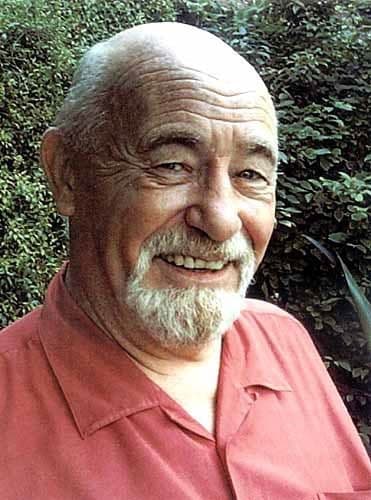
Brian Jacques was a celebrated author of fantasy novels, best known for his Redwall series. His works, including "Mattimeo," "Salamandastron," and "Martin the Warrior," captivated readers with their tales of woodland creatures and epic battles. Jacques's vivid storytelling and unique world-building established him as a beloved figure in children's and young adult literature.
Similar books
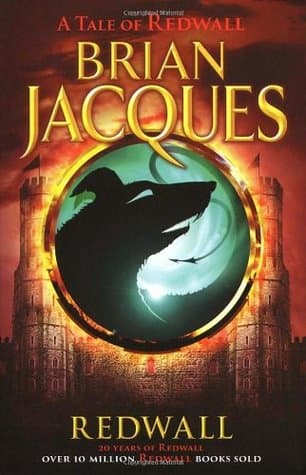
- Redwall
Brian Jacques
4.1 (105k) average on GoodreadsFantasyPrequel to the main Redwall series, featuring similar animal characters and themes.
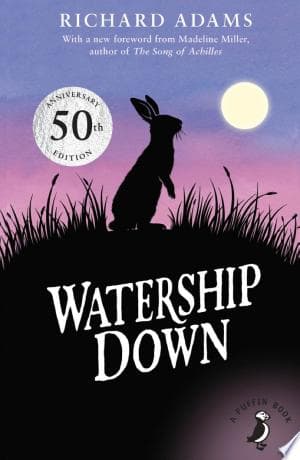
- Watership Down
Richard Adams
4.1 (434k) average on GoodreadsFantasyEpic journey of anthropomorphic animals seeking a new home and fighting for survival.
- The Hobbit, or There and Back Again
J.R.R. Tolkien
4.3 (2.9M) average on GoodreadsFantasy'The Hobbit' shares with 'Martin the Warrior' a classic quest structure and the journey of an unlikely hero confronting evil. Both protagonists, Bilbo and Martin, are drawn into adventures beyond their comfort zones and grow significantly through their experiences. However, Tolkien's world-building in Middle-earth is vastly more intricate and steeped in deep mythology and linguistic invention, offering a more epic fantasy experience. 'Martin the Warrior' is more confined to a specific woodland setting and a simpler, though still engaging, magical system. Tolkien's prose is also generally more dense and descriptive, while Jacques employs a more direct and action-oriented style, particularly appealing to younger readers with its clear moral compass and less ambiguous characters.
- Harry Potter and the Sorcerer's Stone
J.K. Rowling
4.5 (7M) average on GoodreadsFantasyRescued from a miserable life under the stairs, an orphaned boy discovers he's a wizard destined for a magical school, where he uncovers a dangerous secret tied to the dark wizard who murdered his parents.
- The Hunger Games
Suzanne Collins
4.3 (6.4M) average on GoodreadsFantasyIn a future where children fight to the death on live television, Katniss Everdeen volunteers for the arena, turning a death sentence into a fight for survival and a spark of rebellion.
- 1984
George Orwell
4.2 (3.1M) average on GoodreadsPoliticsIn a future where surveillance and thought control are absolute, a man's search for truth clashes with the Party, showing that hope can be a form of rebellion.




Enjoyed the summary?
A summary gives you the shape of the book. The book itself has the detail, the examples and the voice.
Find Martin the Warrior on AmazonAs an Amazon Associate, BookBrief earns from qualifying purchases. How we're funded