
Synopsis
Covers the whole plot, including the ending.
- Difficulty
- Easy
- Read it if
- You enjoy stories about friendship, first crushes, and navigating growing pains within a group of friends. Also, if you're a fan of graphic novels and the Baby-Sitters Club series.
- Skip it if
- You prefer complex adult narratives or stories without a focus on pre-teen friendships and romance.
Mary Anne Saves the Day Plot Summary
Covers the whole plot, including the ending.
A New Club Member and Growing Pains
The Baby-Sitters Club welcomes a new member, Dawn Schafer, a free-spirited girl from California. Dawn's arrival quickly shakes up the established dynamics of the club, especially for Mary Anne Spier. Mary Anne, known for her shyness and traditional nature, feels increasingly overshadowed by Dawn's outgoing personality and progressive ideas. This new friendship, particularly between Dawn and Kristy Thomas, leaves Mary Anne feeling left out and insecure about her place within the group and her friendship with Kristy, who is her oldest friend and the club's president.
Mary Anne's Strict Upbringing
Mary Anne lives under the strict supervision of her widowed father, Richard Spier, who imposes numerous rules and curfews. He insists on Mary Anne wearing pigtails and dressing in a particular way, treating her almost like a much younger child. This overprotective behavior is a constant source of frustration for Mary Anne, who yearns for more independence and to be treated like the thirteen-year-old she is. Her father's rigidness often makes her feel isolated and unable to express her true self, a stark contrast to Dawn's more lenient home life.
A Misunderstanding and Growing Distance
Mary Anne's quiet nature and her tendency to internalize her feelings lead to a significant misunderstanding with Kristy. When Mary Anne is upset about various things, including her father's rules and feeling excluded, she becomes withdrawn. Kristy misinterprets this silence as Mary Anne being moody or uncommunicative, leading to increased tension between them. Kristy's frustration with Mary Anne's perceived lack of openness further widens the gap in their friendship, making Mary Anne feel even more alone and misunderstood within the club.
The Fight at the Meeting
The simmering tensions finally erupt during a Baby-Sitters Club meeting. Kristy, fed up with Mary Anne's quiet demeanor and what she perceives as sulking, confronts her directly. The argument quickly escalates, leading to harsh words exchanged between the two best friends. This public fight shocks the other club members and creates a palpable divide within the group. The club, which prides itself on its unity and support, is now fractured, leaving everyone uncertain about its future and the girls' friendships.
Mary Anne's Emotional Break Down
Following the fight, Mary Anne reaches her breaking point. Overwhelmed by her father's strictness, her feelings of loneliness, and the rift with Kristy, she breaks down in tears during a babysitting job for the Pikes. Mrs. Pike, noticing Mary Anne's distress, gently encourages her to open up about what's bothering her. This act of kindness and understanding from an adult outside her immediate family provides Mary Anne with a much-needed outlet to express her pent-up emotions and anxieties, setting the stage for a potential resolution.
Confronting Richard Spier
Inspired by Mrs. Pike's advice and her own growing desire for independence, Mary Anne gathers the courage to confront her father, Richard Spier. She tearfully explains how his strict rules make her feel like a child and how she yearns for more freedom and trust. This emotional conversation is a turning point for Mary Anne, as she stands up for herself and articulates her needs to her often-intimidating father. It's a significant step in her personal growth and her quest for autonomy.
Richard's Reflection and Change
Mary Anne's heartfelt plea deeply affects Richard Spier. He realizes the extent of his overprotectiveness and the negative impact it's having on his daughter. Remembering his late wife, Mary Anne's mother, and her wishes for their daughter, he begins to soften his stance. He agrees to compromise, allowing Mary Anne to cut her hair, choose her own clothes, and have more freedom. This pivotal moment signifies a shift in their relationship, moving towards greater understanding and mutual respect.
Reconciliation with Kristy
With her newfound confidence and a more understanding father, Mary Anne feels ready to mend her friendship with Kristy. She approaches Kristy, apologizes for her quietness, and explains her struggles. Kristy, realizing she had misjudged Mary Anne, also apologizes for her harsh words and insensitivity. Their honest conversation leads to a heartfelt reconciliation, strengthening their bond and reaffirming their long-standing friendship. The Baby-Sitters Club's unity is restored, and the girls learn valuable lessons about communication.
Mary Anne's Transformation
Following her conversation with her father, Mary Anne gets a new haircut, shedding her childhood pigtails for a more mature style. This physical change symbolizes her internal transformation and newfound confidence. She also starts choosing her own clothes, further expressing her individuality. These changes are noticed and celebrated by her friends, who appreciate her growing assertiveness and self-assurance. Mary Anne truly comes into her own, embracing her identity and speaking up for herself.
A Stronger Club and Friendships
The challenges faced by Mary Anne and the club ultimately lead to stronger friendships and a more cohesive group. The girls learn the importance of open communication, empathy, and understanding each other's personal struggles. The experience helps them appreciate Mary Anne's quieter strengths and allows Dawn to integrate more smoothly into the club without causing further friction. The Baby-Sitters Club emerges from this conflict more united and resilient, ready to face future babysitting adventures together.
Mary Anne Saves the Day Characters
Mary Anne Spier
Main Protagonist, Secretary of the BSC
The Shy, Overprotected Girl Who Finds Her Voice
Mary Anne is initially portrayed as the quietest and most sensitive member of the Baby-Sitters Club. She is known for her shyness, her tendency to cry easily, and her deep loyalty to her friends. Living under the strict rules of her widowed father, Richard, she often feels infantilized and longs for more independence. Throughout the story, she struggles with feeling overshadowed by new club member Dawn and misunderstood by her best friend, Kristy. Her internal conflict and eventual assertiveness are central to the narrative, as she learns to advocate for herself.
Relationships: Richard Spier (Father) (Initially strained due to his overprotective nature; evolves into a more understanding and respectful relationship.); Kristy Thomas (Best friends since childhood; experiences a major conflict and reconciliation, ultimately strengthening their bond.); Dawn Schafer (Initially feels overshadowed and insecure due to Dawn's arrival; eventually accepts her as a friend and club member.); Stacey McGill (Supportive friend and fellow club member.); Claudia Kishi (Supportive friend and fellow club member.)
Kristy Thomas
President of the BSC
The Bossy but Loyal Best Friend
Kristy is the energetic, often bossy, and fiercely loyal president of the Baby-Sitters Club. She is known for her strong leadership, her innovative ideas for the club, and her occasional bluntness. While she deeply cares for Mary Anne, her impatience with Mary Anne's quietness and her inability to express her feelings leads to a significant fight between them. Kristy learns the importance of empathy and understanding that not everyone communicates in the same direct way she does, ultimately strengthening her friendship with Mary Anne.
Relationships: Mary Anne Spier (Best friends; their relationship is tested but ultimately grows stronger through conflict and reconciliation.); Dawn Schafer (Quickly befriends Dawn, which initially contributes to Mary Anne feeling left out.)
Richard Spier
Mary Anne's Father
The Overprotective Widower Who Learns to Trust
Richard Spier is Mary Anne's widowed father, an attorney who is extremely protective of his only daughter. His strict rules, particularly regarding her appearance and social life, stem from his grief over losing his wife and his desire to keep Mary Anne safe. He struggles to see Mary Anne as a maturing teenager, often treating her like a much younger child. His character arc involves realizing the negative impact of his overprotectiveness and learning to trust Mary Anne with more independence, honoring his late wife's wishes for their daughter.
Relationships: Mary Anne Spier (Daughter) (Initially strained due to his strictness; evolves into a more open and trusting father-daughter bond.); Mrs. Spier (Late Wife) (His memories of her influence his eventual decision to give Mary Anne more freedom.)
Dawn Schafer
New Member of the BSC
The Free-Spirited Californian
Dawn Schafer is a new student at Stoneybrook Middle School, having recently moved from California with her mother. She is portrayed as laid-back, free-spirited, and independent, with a more progressive outlook than many of the Stoneybrook girls. Her easygoing nature and quick friendship with Kristy inadvertently contribute to Mary Anne's feelings of insecurity and displacement within the club. Dawn's presence highlights Mary Anne's struggles but also offers a contrasting perspective on independence and self-expression.
Relationships: Kristy Thomas (Forms a quick and easy friendship, which indirectly creates tension with Mary Anne.); Mary Anne Spier (Initially a source of insecurity for Mary Anne; later develops into a friendly club relationship.)
Mrs. Pike
Client, Confidante
The Empathetic Adult Who Offers Guidance
Mrs. Pike is a regular client of the Baby-Sitters Club and the mother of many children, including the quadruplets. She is characterized by her warmth, understanding, and perceptive nature. When Mary Anne breaks down during a babysitting job, Mrs. Pike acts as a compassionate listener and offers wise advice, encouraging Mary Anne to communicate her feelings to her father. She serves as a crucial catalyst for Mary Anne's decision to confront Richard, demonstrating the positive impact of an empathetic adult's support.
Relationships: Mary Anne Spier (Provides empathetic support and crucial advice during Mary Anne's emotional crisis.); The Pike Children (Mother to several children, a frequent client of the BSC.)
Mary Anne Saves the Day Themes
The Importance of Communication
This theme is central to the entire narrative, highlighting how unspoken feelings and misunderstandings can strain even the strongest friendships and family bonds. Mary Anne's struggle to voice her frustrations with her father and her feelings of being left out by Kristy leads to significant conflict. The resolution only comes when she learns to articulate her needs and emotions, and when Kristy learns to listen and empathize. The book powerfully demonstrates that open and honest dialogue is essential for resolving conflict and maintaining healthy relationships.
“It was a lot easier to cry than to talk, but I knew I had to try. If I didn't say anything, nothing would ever change.”
Coming of Age and Independence
Mary Anne's journey is a classic coming-of-age story, focusing on her transition from childhood dependency to adolescent autonomy. Her struggle against her father's overprotectiveness symbolizes the universal teenage desire for independence and to be treated as an individual. By standing up for herself, making her own choices (like cutting her hair), and asserting her identity, Mary Anne takes significant steps towards becoming a self-reliant young woman. The book explores the challenges and triumphs of growing up and finding one's voice.
“I'm thirteen years old, Dad! I'm not a little kid anymore! I want to choose my own clothes! I want to cut my hair!”
Friendship and Loyalty
The novel deeply explores the complexities of adolescent friendships, particularly the bond between Mary Anne and Kristy. It examines how external factors (like Dawn's arrival) and internal struggles (Mary Anne's shyness, Kristy's bluntness) can test even lifelong friendships. Despite the conflict, the underlying loyalty and love between the friends ultimately prevail. The story emphasizes that true friendship involves understanding, forgiveness, and the willingness to work through disagreements, ultimately strengthening the bond between individuals within a supportive group like the Baby-Sitters Club.
“Even though we fought, I knew Kristy still cared about me. We were best friends, after all. Nothing could really break that.”
Parental Love and Overprotection
This theme delves into the dynamics of a parent-child relationship, specifically the fine line between loving protection and stifling overcontrol. Richard Spier's strictness stems from his grief and desire to shield Mary Anne, but it inadvertently harms her emotional development and sense of self. The story illustrates that while parental love is vital, children also need space to grow, make their own choices, and develop independence. Richard's eventual realization and willingness to compromise highlight the importance of evolving parental roles as children mature.
“I just wanted to keep you safe, Mary Anne. After your mother... I didn't want to lose you too.”
Plot Devices & Literary Techniques
The Babysitting Job at the Pikes' House
Catalyst for Emotional Breakthrough
This specific babysitting assignment serves as a crucial turning point for Mary Anne. Overwhelmed by her problems, she breaks down in tears while caring for the Pike children. Mrs. Pike's empathetic response and gentle encouragement for Mary Anne to talk about her feelings act as a direct catalyst. Without this safe space and Mrs. Pike's intervention, Mary Anne might not have found the courage or clarity to confront her father or reconcile with Kristy. It's the moment where Mary Anne's internal turmoil becomes externalized and addressed.
Mary Anne's Pigtails
Symbol of Childhood and Lack of Autonomy
Mary Anne's pigtails are a powerful visual symbol throughout the story. They represent her father's control over her appearance and, by extension, her life, keeping her in a state of perpetual childhood. Her desire to cut them is a clear manifestation of her yearning for independence and to be seen as a maturing teenager. The act of finally cutting her hair at the end of the book is a triumphant symbolic gesture, signifying her newfound confidence and autonomy, and her father's acceptance of her growth.
Dawn Schafer's Arrival
External Catalyst for Internal Conflict
Dawn's introduction to the Baby-Sitters Club is a key plot device that triggers Mary Anne's internal conflict and accelerates the existing tensions. Dawn's outgoing personality and immediate connection with Kristy make Mary Anne feel insecure and left out, intensifying her feelings of being misunderstood. While Dawn herself isn't malicious, her presence forces Mary Anne to confront her own shyness and her place within her friendships, ultimately pushing her towards self-assertion and demanding to be heard.
Mary Anne Saves the Day Quotes
“Mary Anne, you can't let them walk all over you. You have to speak up for yourself!”
“I just wish I wasn't so shy all the time. It makes everything harder.”
“Being a baby-sitter isn't just about watching kids. It's about being responsible and making good decisions.”
“Sometimes you have to break the rules a little to do what's right.”
“My dad is super strict. He has a rule for everything!”
“A good friend will always be there for you, no matter what.”
“I just want to be myself, but it feels like everyone wants me to be someone else.”
“We're the Baby-Sitters Club! We can handle anything!”
“It's okay to be scared, but you can't let fear stop you from doing what you need to do.”
“Sometimes, the quietest people have the most important things to say.”
“You have to trust your instincts, Mary Anne. They won't let you down.”
“Being different isn't a bad thing. It's what makes you special.”
“We're a team, and we always stick together.”
Quiz
10 questions on the plot and the characters. Each answer comes with a short explanation.
Question 1
What is the name of the club Mary Anne is a part of?
- The Babysitters Club
- The Book Club
- The Adventure Club
- The Craft Club
Show answer
A. The Babysitters Club Mary Anne is a founding member of The Babysitters Club.
Question 2
Who is Mary Anne's best friend in the club?
- Claudia Kishi
- Kristy Thomas
- Dawn Schafer
- Stacey McGill
Show answer
C. Dawn Schafer Dawn Schafer moves to Stoneybrook and quickly becomes Mary Anne's best friend.
Question 3
What is Mary Anne's role in the Babysitters Club?
- President
- Treasurer
- Secretary
- Vice-President
Show answer
C. Secretary Mary Anne is the club's secretary, responsible for the record book and scheduling.
Question 4
What significant change happens to Mary Anne's appearance in this book?
- She gets glasses.
- She gets a new haircut.
- She starts wearing contacts.
- She dyes her hair a different color.
Show answer
B. She gets a new haircut. Mary Anne finally convinces her father to let her get a more modern haircut, cutting off her braids.
Question 5
Why does Mary Anne feel left out or different from the other club members at times?
- She is the only one who doesn't like to read.
- Her father is very strict and doesn't allow her much freedom.
- She is the newest member of the club.
- She doesn't enjoy babysitting as much as the others.
Show answer
B. Her father is very strict and doesn't allow her much freedom. Mary Anne's father, Richard, is quite strict, which often makes her feel different from her friends who have more freedom.
Question 6
What event causes a major disagreement and tension among the club members in this story?
- A misunderstanding about a babysitting job.
- Kristy's bossiness and the other members' frustration with it.
- A secret someone in the club is keeping.
- Competition with another babysitting service.
Show answer
B. Kristy's bossiness and the other members' frustration with it. The other club members become fed up with Kristy's domineering attitude and constant orders, leading to a big fight.
Question 7
Who helps Mary Anne stand up to her father about her appearance and other rules?
- Kristy Thomas
- Dawn Schafer
- Claudia Kishi
- Stacey McGill
Show answer
B. Dawn Schafer Dawn, being more independent and having a different family dynamic, encourages and supports Mary Anne in talking to her dad.
Question 8
What does Mary Anne do to 'save the day' in the context of the club's conflict?
- She organizes a surprise party to cheer everyone up.
- She mediates the argument between the club members and helps them reconcile.
- She finds a new, lucrative babysitting job for the club.
- She writes an apology letter on behalf of Kristy.
Show answer
B. She mediates the argument between the club members and helps them reconcile. Mary Anne, usually quiet, steps up to facilitate a discussion between the warring club members, helping them resolve their differences.
Question 9
What is the main theme explored through Mary Anne's personal journey in this graphic novel?
- The importance of academic success.
- Learning to cook and bake for herself.
- Finding her voice and becoming more independent.
- Overcoming shyness to make new friends.
Show answer
C. Finding her voice and becoming more independent. Mary Anne's story in this book is largely about her personal growth, gaining confidence, and asserting herself more.
Question 10
What does Mary Anne's father eventually agree to regarding her personal life?
- To let her go on a trip with her friends.
- To allow her more freedom with her appearance and social life.
- To buy her a new pet.
- To let her quit the Babysitters Club.
Show answer
B. To allow her more freedom with her appearance and social life. After Mary Anne's heartfelt discussion, her father realizes he needs to give her more independence and allows her to make more of her own choices.
Mary Anne Saves the Day FAQ
What is 'Mary Anne Saves the Day: A Graphic Novel' about?
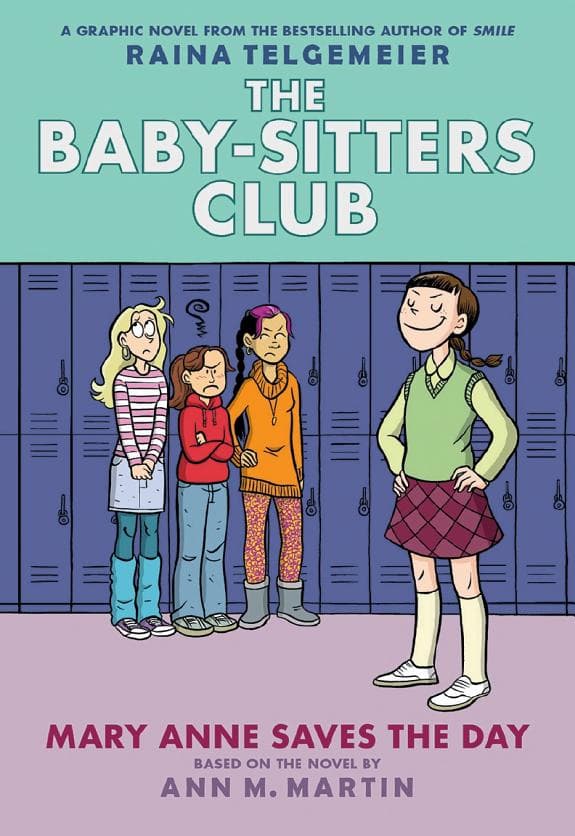
This graphic novel adaptation follows Mary Anne Spier, a shy and sensitive member of the Baby-Sitters Club, as she navigates personal challenges and club dynamics. It focuses on her journey to assert herself, stand up for what she believes in, and ultimately prove her capability and importance to her friends and family.
Is this book suitable for all ages?
While targeted primarily at middle-grade readers (ages 8-12), the themes of friendship, self-discovery, and responsibility make it enjoyable for a slightly younger audience as well as nostalgic older readers. It's a wholesome story with relatable characters and situations.
Who is Mary Anne Spier?
Mary Anne Spier is one of the founding members of the Baby-Sitters Club. Known for her shyness, sensitivity, and often conservative attire chosen by her strict father, she is also incredibly organized, empathetic, and a loyal friend, often acting as the club's secretary.
Is this a new story or an adaptation?
This is a graphic novel adaptation of the original 'Mary Anne Saves the Day' novel, which is the third book in Ann M. Martin's 'The Baby-Sitters Club' series. It reimagines the classic story with vibrant illustrations and a modern comic book format.
Do I need to read the previous books in the series to understand this one?
While each graphic novel in 'The Baby-Sitters Club' series can generally be read as a standalone, reading them in order provides a richer understanding of the characters' development and established relationships. This particular book builds on dynamics introduced in the first two volumes.
What are the main themes explored in this graphic novel?
Key themes include standing up for yourself, the importance of communication in friendships, navigating family rules and independence, and the value of each individual's unique strengths. Mary Anne's journey is central to these explorations.
How does the graphic novel format enhance the original story?
The graphic novel format brings the beloved characters and their world to life through expressive illustrations, making the story more accessible and engaging for visual learners and younger readers. It adds a dynamic visual layer to the emotional narratives and character interactions.
Who is the illustrator for this graphic novel?
The graphic novel adaptations of 'The Baby-Sitters Club' series, including 'Mary Anne Saves the Day,' are famously illustrated by Raina Telgemeier. Her distinctive art style is a major draw for many readers.
What kind of challenges does Mary Anne face in this story?
Mary Anne faces challenges related to her strict father's rules, disagreements within the Baby-Sitters Club, and her own struggle to find her voice and assert her opinions. She also deals with a difficult baby-sitting charge and learns to trust her instincts.
Is there a movie or TV show adaptation related to this book?
The Baby-Sitters Club series has seen several adaptations, including a 1995 film and a 2020 Netflix series. While 'Mary Anne Saves the Day' is a specific book, its plot elements and character arcs are often incorporated into these broader adaptations of the series.
How does Mary Anne 'save the day' in this book?
Mary Anne saves the day by bravely standing up to her strict father to advocate for herself and her friends, mediating a major conflict within the Baby-Sitters Club, and demonstrating exceptional care and problem-solving during a difficult babysitting job. Her quiet strength proves invaluable.
What is the reading level for this graphic novel?
The reading level is generally suited for middle-grade readers, typically ages 8-12, with a Lexile measure often around 400L-600L. The graphic novel format with its visual cues can also make it accessible for slightly younger or reluctant readers.
Are there more graphic novels in 'The Baby-Sitters Club' series?
Yes, there is an extensive series of graphic novel adaptations for 'The Baby-Sitters Club,' continuing to bring more of Ann M. Martin's original books to life in comic format. Readers can follow the club's adventures through many more volumes.
Similar books
- Smile
Raina Telgemeier
4.3 (183k) average on GoodreadsChildren'sA popular graphic novel by the same adapter, focusing on relatable experiences of growing up, friendship, and self-discovery.
- Awkward
Svetlana Chmakova
3.9 (5k) average on GoodreadsYoung AdultA graphic novel about middle school, fitting in, and the challenges of making and keeping friends.
- Harry Potter and the Sorcerer's Stone
J.K. Rowling
4.5 (7M) average on GoodreadsFantasyRescued from a miserable life under the stairs, an orphaned boy discovers he's a wizard destined for a magical school, where he uncovers a dangerous secret tied to the dark wizard who murdered his parents.
- The Hunger Games
Suzanne Collins
4.3 (6.4M) average on GoodreadsFantasyIn a future where children fight to the death on live television, Katniss Everdeen volunteers for the arena, turning a death sentence into a fight for survival and a spark of rebellion.
- Nineteen Eighty-Four
George Orwell
4.2 (5.5M) average on GoodreadsFictionWinston Smith dreams of truth and rebellion in a world where Big Brother watches all, but he confronts the terrifying power of a regime that controls not just actions, but thoughts.
- Pride & Prejudice
Jane Austen
4.3 (4.9M) average on GoodreadsElizabeth Bennet and Mr. Darcy navigate love and misunderstanding, learning that first impressions can be wrong.






Enjoyed the summary?
A summary gives you the shape of the book. The book itself has the detail, the examples and the voice.
Find Mary Anne Saves the Day on AmazonAs an Amazon Associate, BookBrief earns from qualifying purchases. How we're funded