
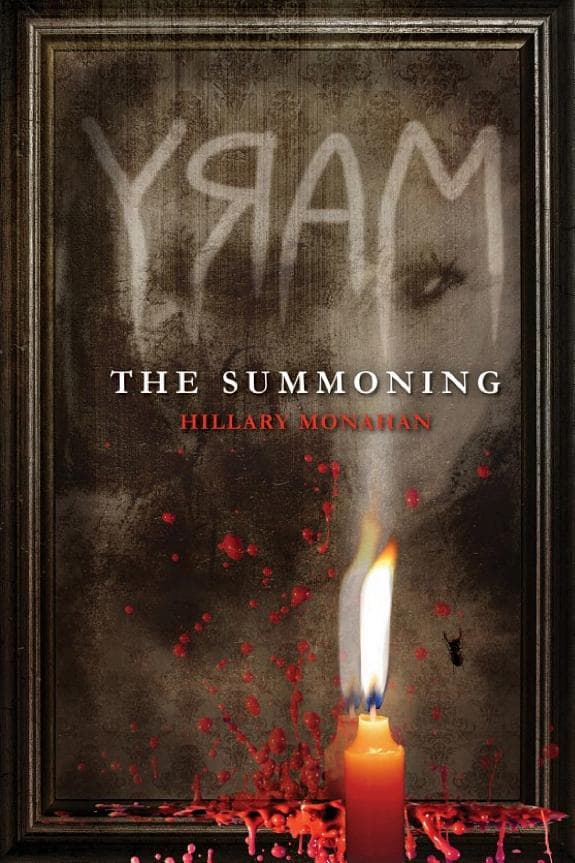
Synopsis
Covers the whole plot, including the ending.
- Difficulty
- Easy
- Pacing
- Fast
- Mood
- Terrifying, Suspenseful, Dark, Intense
- Read it if
- you enjoy a modern take on classic urban legends, psychological horror mixed with supernatural thrills, and stories where teenage friendships are tested under extreme duress. Also, if you like a mystery woven into a horror plot.
- Skip it if
- you prefer your horror to be purely psychological with no supernatural elements, or if you dislike stories featuring vengeful spirits and themes of betrayal among friends.
Mary Plot Summary
Covers the whole plot, including the ending.
The First Summoning
Jess, who is obsessed with urban legends, convinces her friends Shauna, Kitty, and Anna to summon Bloody Mary. They meet in a dark bathroom with a mirror, a candle, and salt, holding hands. Jess confidently leads the chant, repeating "Bloody Mary" three times. At first, nothing happens, which brings a mix of relief and disappointment. But then, a faint mist forms in the mirror, and a shadowy figure appears, seemingly trapped behind the glass. The girls are terrified but also excited by what seems to be a successful ritual, believing they have safely contained the entity. They break the circle, thrilled by their shared, dangerous experience.
Escalating Encounters
Despite the initial fear, Jess is not satisfied. She repeatedly pushes her friends into more summonings, each time becoming bolder and more careless. The presence in the mirror grows clearer and more threatening. The girls experience increasingly unsettling things outside the rituals: cold spots, flickering lights, and the feeling of being watched. Shauna, Kitty, and Anna become deeply disturbed; their fear turns into anger at Jess, who seems to enjoy the growing danger. Jess, however, ignores their worries, sure that she is in control and that Mary cannot harm them as long as the rules are followed. Her interest becomes an obsession, isolating her from her friends.
The Broken Circle
During one intense summoning, the girls are overwhelmed by fear. Kitty, unable to stand the increasing terror, screams and breaks the linked hands of the circle, shattering the protective barrier. At that moment, the shadowy figure in the mirror becomes solid and lunges out, no longer confined to the reflection. Bloody Mary is free. Panic spreads as the girls scatter, realizing their grave mistake. Mary's presence is immediately felt as a chilling, evil force. The once-thrilling game has become a terrifying reality, and the girls are now hunted, facing the full, unrestrained fury of the entity they called forth.
Mary's Revenge Begins
Mary's revenge is quick and brutal. She torments the girls individually, preying on their deepest fears and insecurities. Anna, the most timid, is the first to suffer severe psychological distress, experiencing vivid hallucinations and nightmares that blur the line between reality and the supernatural. Objects move on their own, whispers fill empty rooms, and the girls constantly feel Mary's chilling presence. The attacks are not just physical but also deeply psychological, designed to isolate and terrify them. Their once-strong friendships begin to fall apart under the immense pressure and the suspicion that one of them might be a target or even a way for Mary to act.
Kitty's Fate
The torment gets worse, ending in Kitty's tragic death. Mary targets her constantly, exploiting her guilt over breaking the circle. Kitty is found dead under mysterious and gruesome circumstances, leaving Shauna, Jess, and Anna devastated and terrified. Her death confirms Mary's power and the irreversible results of their actions. The police investigate, but with no logical explanation, Kitty's death is called an accident or suicide, deepening the girls' isolation and fear. They realize that Mary is not just a legend but a real, murderous entity, and they are next.
Shauna's Investigation
Distraught and desperate after Kitty's death, Shauna refuses to wait for Mary's next move. She researches the legend of Bloody Mary, looking for information that might help them understand or defeat the entity. Her investigation leads her to old local archives, newspaper clippings, and forgotten town histories. She uncovers the true, tragic story of Mary Worth. She learns about Mary's life, her unjust death, and the circumstances that fueled her vengeful spirit. This history provides insights into Mary's motivations and weaknesses, giving Shauna a glimmer of hope that there might be a way to stop her.
Jess's Betrayal and Obsession
As Shauna uncovers more about Mary, she also realizes the extent of Jess's manipulation and obsession. It becomes clear that Jess was not just curious; she actively sought to unleash Mary, driven by a dark interest in power and the supernatural. Jess's actions become increasingly erratic and self-serving. She appears to be trying to control Mary or even align with her, rather than defeat her. Her loyalty to her friends is completely overshadowed by her dangerous ambition, creating a deep rift and sense of betrayal among the remaining girls. Shauna suspects Jess has a deeper, more sinister connection to Mary than previously imagined.
Anna's Descent
Anna, already fragile, descends further into madness under Mary's constant psychological attacks. She becomes a pawn in Jess's twisted games, increasingly isolated and vulnerable. Jess, seeing Anna's weakened state, manipulates her, twisting her fears and desperate hope for safety. Anna's perception of reality breaks down, making her an unreliable and dangerous ally. Her deteriorating mental state shows the devastating impact of Mary's psychological warfare and Jess's willingness to exploit her friends for her own ends. Shauna realizes she cannot rely on Anna and must confront both Mary and Jess mostly on her own.
The Confrontation
Armed with knowledge of Mary Worth's past, Shauna prepares for a final confrontation. She seeks out Jess, who has become increasingly unstable and seems to be embracing Mary's power. The climactic encounter takes place in a location important to Mary's history, where Shauna tries to use her new understanding to either banish Mary or break her hold. During this confrontation, Jess reveals the full extent of her dark intentions, showing a disturbing willingness to sacrifice her friends to harness Mary's power. Shauna is forced to fight not only for her life against Mary but also against the friend who betrayed them all.
The Aftermath and Lingering Shadows
The confrontation has a devastating impact. While Mary's immediate threat is seemingly neutralized, the resolution is not clean. The girls' lives are permanently changed, and the trauma of their experiences will forever haunt them. The fate of Jess and Anna is unclear, leaving Shauna as the sole survivor who fully understands the horrific events. The story ends with unresolved tension, suggesting that while Mary may be gone, the darkness she brought forth, and the human capacity for obsession and betrayal, continue to linger. Shauna carries the heavy burden of her friends' fates and the secret of what truly happened.
Mary Characters
Jess
Antagonist
The initiator of the summoning, driven by dark curiosity and ambition.
Jess is the instigator of the Bloody Mary ritual, characterized by her intense curiosity bordering on obsession with the supernatural. Initially, she appears as a thrill-seeker, but her fascination quickly devolves into a dangerous desire for control and power. She is manipulative, willing to endanger her friends for her own gratification and to prove her theories about the occult. Jess lacks empathy, viewing her friends as tools for her experiments, and her ambition blinds her to the horrific consequences of her actions. Her character arc reveals a disturbing descent into madness and betrayal.
Relationships: Shauna (friend (strained), rival); Kitty (friend (manipulated)); Anna (friend (manipulated), victim); Bloody Mary (object of obsession, attempted controller)
Shauna
Protagonist
The rational and resilient friend who seeks to uncover the truth.
Shauna is the most grounded and rational of the group, initially participating in the ritual out of loyalty to her friends but quickly growing wary of the escalating danger. She possesses a strong sense of responsibility and a protective instinct, especially after the first death. Shauna is intelligent and resourceful, becoming the primary investigator into Mary's past, driven by a desperate need to save her friends and stop the entity. She represents courage and resilience in the face of overwhelming terror, ultimately taking on the burden of understanding and confronting the supernatural threat.
Relationships: Jess (friend (strained), adversary); Kitty (friend (close)); Anna (friend (protective)); Bloody Mary (adversary)
Kitty
Supporting
The first victim, whose fear leads to Mary's release.
Kitty is a loyal friend, initially enthusiastic about the thrill of the summoning but quickly overcome by fear as the encounters escalate. She is depicted as sensitive and easily frightened, making her particularly vulnerable to Mary's psychological torment. Her breaking of the summoning circle, though accidental and driven by sheer terror, is the pivotal moment that unleashes Mary into the real world. Kitty's death serves as a stark and horrifying demonstration of Mary's power and the irreversible consequences of the girls' actions, fueling the other girls' desperation.
Relationships: Jess (friend); Shauna (friend (close)); Anna (friend); Bloody Mary (victim)
Anna
Supporting
The timid and fragile friend, psychologically tormented by Mary.
Anna is the most timid and emotionally vulnerable of the group. Her initial participation in the summoning is driven by a desire to fit in and not be left out, rather than genuine curiosity. She is easily frightened and quickly succumbs to the psychological pressure exerted by Mary. Anna's mental state deteriorates significantly throughout the story, making her an easy target for Mary's torment and Jess's manipulation. Her descent into madness highlights the devastating effects of the supernatural encounter on a fragile psyche, underscoring the true horror of their situation.
Relationships: Jess (friend (manipulated)); Shauna (friend (protective)); Kitty (friend); Bloody Mary (victim)
Bloody Mary (Mary Worth)
Antagonist
A vengeful spirit unleashed from a mirror, seeking retribution.
Bloody Mary, or Mary Worth, is the primary antagonist, a malevolent and powerful spectral entity. She is depicted as a vengeful spirit, unjustly wronged in her past life, whose anger has festered over centuries, making her a formidable force once unleashed. Mary preys on the girls' fears, insecurities, and guilt, using both physical manifestations and psychological torment. Her motivation is rooted in a desire for retribution against those who wronged her and anyone who dares to summon and then disrespect her. She represents the ultimate consequence of meddling with forces beyond human understanding.
Relationships: Jess (summoner, object of manipulation); Shauna (adversary); Kitty (victim); Anna (victim)
Mary Themes
The Perils of Curiosity and Obsession
The novel explores how innocent curiosity can become dangerous obsession, particularly through Jess's character. Her initial interest in urban legends and the supernatural quickly turns into a reckless pursuit of power and control, disregarding her friends' safety. The theme highlights the fine line between healthy interest and destructive fixation, showing the catastrophic results when boundaries are crossed and respect for unknown forces is abandoned. Jess's descent into obsession causes all the horror that unfolds.
“Once is not enough, though--at least not for Jess. Mary is called again. And again.”
Friendship and Betrayal
The dynamics of friendship are central to the narrative, showing how bonds can be tested, strained, and ultimately broken under extreme pressure. Initially, the girls are united by their shared thrill, but as Mary's terror grows, loyalties are questioned. Jess's calculated manipulation and eventual betrayal of her friends for her own dark ambitions form a core conflict. This theme examines the fragility of trust and how fear and self-preservation can corrupt even the strongest relationships, leaving lasting emotional scars on the survivors.
“As the girls struggle to escape Mary's wrath, loyalties are questioned, friendships are torn apart, and lives are forever altered.”
Consequences of Recklessness
A major theme is the severe and irreversible consequences of reckless actions and disrespect for the unknown. The girls' casual summoning of Bloody Mary, initially treated as a game, quickly turns into a deadly reality. The narrative emphasizes that supernatural forces are not to be trifled with, and breaking established rules, even by accident, can lead to dire and tragic outcomes. Kitty's death, directly resulting from the broken circle, is the clearest example of how one moment of fear-driven recklessness can unleash an unstoppable horror.
“But when their summoning circle is broken, Bloody Mary slips through the glass with a taste for revenge on her lips.”
The Power of Fear and Guilt
The novel explores how fear and guilt can be potent weapons, both for the antagonist and within the characters themselves. Mary exploits the girls' deepest anxieties and their individual guilts (like Kitty's guilt over breaking the circle) to torment and break them psychologically. The girls' fear, in turn, drives their actions, leading to rash decisions and further fracturing their group. This theme highlights how internal struggles and psychological vulnerabilities can be as destructive as external threats, making them susceptible to manipulation and despair.
“A thrilling fear spins around the room the first time Jess calls her name... A ripple of terror follows when a shadowy silhouette emerges.”
Plot Devices & Literary Techniques
The Summoning Ritual
The catalyst for the entire plot, a forbidden act.
The summoning ritual, involving a dark room, mirror, candle, salt, and linking hands, serves as the central plot device. It is the initial act that sets all subsequent events into motion, transforming a childhood game into a terrifying reality. The specific rules and their violation (breaking the circle) are crucial to the plot's progression, directly leading to Mary's release. This device creates immediate tension and establishes the supernatural threat, highlighting the danger of dabbling with the unknown and the irreversible consequences of breaking sacred boundaries.
The Mirror
A portal and prison for the vengeful spirit.
The mirror acts as both a prison and a portal for Bloody Mary. It is the conduit through which she is initially contained and then, upon the circle's breaking, released. Symbolically, mirrors often represent reflections, truth, and the unseen, making it an ideal object for a vengeful spirit to inhabit. Its reflective surface allows the girls to see Mary's growing presence, heightening their fear, and its shattering or breaking of the barrier signifies the loss of control and the unleashing of the supernatural into their world, literally and figuratively blurring the lines between reality and reflection.
Urban Legend
The foundational myth that becomes terrifyingly real.
The urban legend of Bloody Mary is the foundational plot device, taking a familiar campfire story and transforming it into a tangible, horrifying reality. By making the legend real, the story immediately taps into a common cultural fear, making the horror more relatable and visceral. This device allows the narrative to explore themes of belief, the power of stories, and the consequences of underestimating folkloric warnings. The gradual unveiling of the 'true' history behind the legend (Mary Worth) provides both context for Mary's vengeance and crucial clues for the protagonist.
Psychological Torment
Mary's method of inflicting terror and breaking her victims.
Beyond physical manifestations, Mary employs psychological torment as a primary plot device to break the girls. This includes vivid hallucinations, whispering voices, manipulating their deepest fears, and fostering paranoia among them. This method of attack highlights the vulnerability of the human mind and allows the horror to be deeply internal and personal for each character. It effectively ratchets up the tension and demonstrates Mary's malevolence, showing she aims to destroy her victims' sanity before, or even instead of, their bodies, leading to fractured friendships and mental breakdowns.
Mary Quotes
“She was a force of nature, a storm of fury and vengeance, and she was coming for them.”
“They thought they could bury her, silence her, but they were wrong. She would rise.”
“Her anger was a living thing, a coiled serpent ready to strike.”
“The veil between worlds was thin, and Mary was determined to tear it down.”
“They had wronged her, and now, they would pay the price.”
“She was the darkness they had created, and she was coming to consume them.”
“The whispers of the dead followed her, a chorus of the wronged and forgotten.”
“Fear was a weapon, and Mary wielded it with deadly precision.”
“She was more than a ghost; she was a reckoning.”
“The innocent would be spared, but the guilty would face her judgment.”
“Her story was a warning, a testament to the enduring power of a mother's love and a woman's rage.”
“They had taken everything from her, and now she would take it all back, and more.”
“The summoning was not an invitation; it was a declaration of war.”
“Even in death, Mary's spirit burned brighter than any flame.”
Quiz
10 questions on the plot and the characters. Each answer comes with a short explanation.
Question 1
What is the title of the book?
- Mary: The Summoning
- Bloody Mary's Revenge
- The Summoning Circle
- Four Girls and a Ghost
Show answer
A. Mary: The Summoning The title of the book is explicitly stated in the first sentence as 'Mary: The Summoning'.
Question 2
Who is the author of the book?
- Mary Worth
- Hillary Monahan
- Jess
- Shauna
Show answer
B. Hillary Monahan The author is identified in the first sentence as 'Hillary Monahan'.
Question 3
Which of the following is NOT listed as a requirement for the summoning ritual?
- A dark room
- A mirror
- A candle
- A Ouija board
Show answer
D. A Ouija board The text lists a dark room, a mirror, a candle, salt, and four teenage girls as requirements. A Ouija board is not mentioned.
Question 4
What is the name of the character who performs the research for the summoning?
- Shauna
- Kitty
- Jess
- Anna
Show answer
C. Jess The text states, 'Jess had done the research.'
Question 5
What happens when the summoning circle is broken?
- Bloody Mary disappears
- The girls are transported to another dimension
- Bloody Mary slips through the glass
- The candle goes out
Show answer
C. Bloody Mary slips through the glass The passage clearly states, 'But when their summoning circle is broken, Bloody Mary slips through the glass with a taste for revenge on her lips.'
Question 6
Who is on a desperate search to uncover the legacy of Mary Worth?
- Jess
- Kitty
- Anna
- Shauna
Show answer
D. Shauna The text says, 'A haunting trail of clues leads Shauna on a desperate search to uncover the legacy of Mary Worth.'
Question 7
What is Bloody Mary's motivation once she escapes?
- To find the girls who summoned her
- To seek revenge
- To return to the mirror world
- To break the summoning circle
Show answer
B. To seek revenge The text mentions that Bloody Mary slips through the glass 'with a taste for revenge on her lips.'
Question 8
What is the primary theme explored as the girls struggle to escape Mary's wrath?
- The importance of academic research
- The consequences of reckless actions
- The power of forgiveness
- The joy of supernatural encounters
Show answer
B. The consequences of reckless actions The story focuses on the negative consequences of the summoning ritual, leading to fear, broken friendships, and altered lives, highlighting the theme of reckless actions and their repercussions.
Question 9
What is implied about Jess's character and her role in the events?
- She is a reluctant participant who is easily scared.
- She is the responsible one who tries to fix everything.
- She is the driving force behind the summoning, potentially with a darker motive.
- She is a victim of circumstances, manipulated by others.
Show answer
C. She is the driving force behind the summoning, potentially with a darker motive. Jess is described as the one who 'had done the research' and calls Mary's name 'again. And again.' The question 'will it be enough to stop Mary--and Jess--before it's too late?' implies Jess might be a significant part of the problem or have her own agenda.
Question 10
The narrative suggests that the legacy of Mary Worth is significant enough to potentially impact the current events. What does this imply about the nature of the threat?
- Mary Worth is a newly created entity.
- The current summoning is an isolated incident with no historical context.
- The threat posed by Bloody Mary is rooted in past events and may have a complex history.
- Mary Worth's legacy is only relevant to Shauna's personal journey.
Show answer
C. The threat posed by Bloody Mary is rooted in past events and may have a complex history. The mention of Shauna uncovering Mary Worth's 'legacy' and that 'it will change everything' suggests that Bloody Mary's existence and actions are not random but are tied to a historical context or a past trauma that fuels her current wrath. This implies a deeper, more complex threat than a simple ghost.
Mary FAQ
What is the plot of Mary: The Summoning?
Mary: The Summoning is a horror novel where four teenage girls attempt to summon Bloody Mary. While their initial attempts are successful, they break the rules of the summoning ritual, allowing Bloody Mary to escape into their world with a desire for revenge.
Who are the main characters in Mary: The Summoning?
The main characters are Jess, Shauna, Kitty, and Anna, the four girls who perform the summoning ritual. Shauna takes a central role in trying to uncover the truth about Mary Worth to stop the entity.
What are the requirements for summoning Bloody Mary in the book?
According to Jess's research, summoning Bloody Mary requires specific elements: a dark room, a mirror, a candle, salt, and four teenage girls who must link hands and follow precise rules without letting go.
What happens when the summoning ritual goes wrong?
When the girls break the summoning circle, Bloody Mary is able to escape the mirror and enter their world. She becomes a vengeful entity targeting the girls.
What is the role of Mary Worth in the story?
Mary Worth is a figure from the past whose legacy Shauna investigates. Uncovering her story is crucial to understanding Bloody Mary's motives and finding a way to stop her.
What themes are explored in Mary: The Summoning?
The book explores themes of friendship, loyalty, the consequences of reckless actions, and the dark side of seeking power or revenge. It delves into the breakdown of relationships under extreme pressure.
Is Mary: The Summoning a standalone novel?
Yes, Mary: The Summoning is a standalone novel. It tells a complete story about the summoning of Bloody Mary and its aftermath.
What makes Jess's actions dangerous in the book?
Jess's actions become dangerous because she repeatedly summons Bloody Mary, pushing the boundaries of the ritual. Her obsession leads to the entity breaking free, putting everyone at risk.
How does the book compare to other Bloody Mary myths?
The book takes the traditional Bloody Mary folklore and adds a specific, ritualistic summoning process and a deeper backstory for the entity, Mary Worth, giving her a more defined motivation for revenge.
What is the overall tone of Mary: The Summoning?
The overall tone of Mary: The Summoning is suspenseful, terrifying, and emotionally charged. It focuses on the horror of the supernatural entity and the psychological impact on the teenage protagonists.
Similar books
- Harry Potter and the Sorcerer's Stone
J.K. Rowling
4.5 (7M) average on GoodreadsFantasyRescued from a miserable life under the stairs, an orphaned boy discovers he's a wizard destined for a magical school, where he uncovers a dangerous secret tied to the dark wizard who murdered his parents.
- The Hunger Games
Suzanne Collins
4.3 (6.4M) average on GoodreadsFantasyIn a future where children fight to the death on live television, Katniss Everdeen volunteers for the arena, turning a death sentence into a fight for survival and a spark of rebellion.
- Nineteen Eighty-Four
George Orwell
4.2 (5.5M) average on GoodreadsFictionWinston Smith dreams of truth and rebellion in a world where Big Brother watches all, but he confronts the terrifying power of a regime that controls not just actions, but thoughts.
- Pride & Prejudice
Jane Austen
4.3 (4.9M) average on GoodreadsElizabeth Bennet and Mr. Darcy navigate love and misunderstanding, learning that first impressions can be wrong.
- To Kill a Mockingbird
Harper Lee
4.3 (4.5M) average on GoodreadsHistorical FictionIn the 1930s Jim Crow South, Harper Lee writes about racial injustice, moral growth, and the quiet courage of a lawyer father, Atticus Finch, as seen through his young daughter's eyes.
- The Great Gatsby
F. Scott Fitzgerald
3.9 (3.8M) average on GoodreadsHistorical FictionIn the opulent Roaring Twenties, a mysterious millionaire's lavish parties hide his desperate, tragic pursuit of a lost love, exposing the emptiness within the American Dream.



Enjoyed the summary?
A summary gives you the shape of the book. The book itself has the detail, the examples and the voice.
Find Mary on AmazonAs an Amazon Associate, BookBrief earns from qualifying purchases. How we're funded