
Core Idea
- Difficulty
- Easy
- Read it if
- you are looking for practical, spiritual-based techniques to improve self-confidence, overcome limiting beliefs, and understand the power of your mind in shaping your reality.
- Skip it if
- you prefer purely secular, evidence-based psychological approaches or are not open to concepts involving the subconscious mind's spiritual or metaphysical influence.
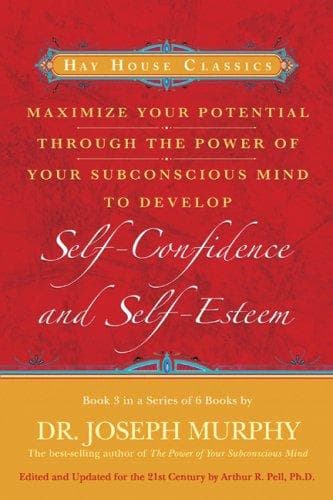
Key Takeaways from Maximize Your Potential Through the Power of Your Subconscious Mind to Develop Self-Confidence and Self-Esteem
The Subconscious: Your Personal Genie
Your subconscious mind is a powerful, non-reasoning servant that manifests your dominant thoughts and beliefs.
Murphy's main idea, repeated throughout the book, is that the subconscious mind acts like a servant that does not question orders. It carries out any command or belief the conscious mind gives it. It does not judge or think for itself; it simply accepts and makes things happen. This basic idea means that whether we have positive or negative beliefs, the subconscious will work to make them real. This explains why people succeed or fail, or feel confident or insecure, as direct results of their deep mental patterns. The book says that understanding this process is the first step to taking charge of your life, moving from just receiving experiences to actively creating them.
“Your subconscious mind accepts whatever you impress upon it. It does not argue with you. It acts on the beliefs and thoughts you hold consciously.”
In the book: Murphy provides numerous anecdotes of individuals who achieved health, wealth, or success by consistently impressing positive affirmations and visualizations onto their subconscious, often after conventional methods failed. While not scientific studies, these serve as illustrative examples of his theory in practice.
Try this: To develop self-confidence, consciously feed your subconscious with affirmations like 'I am capable,' 'I am worthy,' and 'I am confident' daily, especially before sleep and upon waking. Visualize yourself confidently achieving your goals.
Related ideas: subconscious-programming, affirmations, visualization
The Law of Belief: Seeds of Reality
What you believe to be true, your subconscious mind will accept and manifest as your reality.
This is perhaps the book's best point, directly connecting our inner beliefs to what happens in our lives. Murphy says that 'belief' is not just a quick thought, but a deep mental acceptance of something as true, even if it's not objectively true. Once the subconscious accepts a belief, it uses all its power to make that belief real. This is why two people in similar situations can have very different outcomes; their basic beliefs about themselves and what they can do shape their experiences. The book states that real self-confidence comes not from outside approval, but from building a strong inner belief in your own abilities and worth. This then naturally brings about matching external results.
“The law of your mind is the law of belief. A belief is a thought in your mind that has been accepted as true.”
In the book: Murphy recounts stories of people overcoming chronic illness or financial hardship by fundamentally changing their belief systems about their health or wealth, often through prayer and affirmation, demonstrating the power of 'accepted truth'.
Try this: Identify limiting beliefs (e.g., 'I'm not good enough'). Challenge them by seeking evidence to the contrary and replace them with empowering beliefs through conscious repetition and emotional conviction. Feel the truth of the new belief.
Related ideas: limiting-beliefs, self-fulfilling-prophecy, mental-models
The Power of Imagination and Visualization
Use vivid mental imagery to impress desired outcomes onto your subconscious mind.
Murphy strongly suggests using imagination and visualization as effective ways to program the subconscious. He believes the subconscious does not know the difference between a vividly imagined experience and a real one. By regularly and emotionally picturing your desired future—whether it's reaching a goal, feeling confident, or overcoming a problem—you effectively 'pre-program' your subconscious to work towards that reality. This is not just daydreaming; it is active, focused mental practice that puts a new plan into the subconscious. This prompts it to align your thoughts, feelings, and actions with the imagined outcome. This method is important for building self-confidence by repeatedly seeing yourself as the confident person you want to be.
“Whatever you imagine and feel to be true, your subconscious mind will accept and bring to pass.”
In the book: Murphy illustrates with examples of individuals who visualized themselves as successful speakers or athletes, and then found themselves naturally performing at that level, attributing their success to their consistent mental practice.
Try this: Before important events or daily challenges, close your eyes and vividly imagine yourself performing confidently and successfully. Feel the emotions of achievement and self-assurance. Do this for 5-10 minutes daily.
Related ideas: mental-rehearsal, creative-visualization, affirmative-prayer
The Role of Prayer and Affirmation
Conscious, faith-filled prayer and affirmation are direct communication channels to your subconscious.
For Murphy, prayer is more than a religious act; it is a focused way of impressing the mind. He defines it as 'the movement of the human mind to God,' which, in his psychological view, refers to universal intelligence or the subconscious mind itself. He says that effective prayer involves deep emotional conviction and a firm belief that what you are asking for is already yours in principle. This is not about begging, but about declaring and accepting. Affirmations work similarly: they are short, positive statements repeated with feeling to replace old, negative programs in the subconscious. Both methods are key to getting rid of self-doubt and building strong self-confidence by consistently feeding the mind positive, empowering 'truths'.
“The only thing necessary is that you feel the truth of what you affirm and pray for, and your subconscious mind will accept it.”
In the book: Murphy shares numerous testimonies of people who used specific prayer techniques, often involving 'scientific prayer' or 'meditative prayer,' to heal illnesses, find solutions to problems, or achieve personal goals.
Try this: Formulate positive affirmations (e.g., 'I am becoming more confident every day'). Repeat them aloud or silently with deep feeling and conviction, especially at night before sleep and first thing in the morning. Combine with gratitude.
Related ideas: affirmative-prayer, mantra, positive-self-talk
Overcoming Inner Conflict and Negative Suggestions
Guard your mind against negative thoughts and external influences that undermine your self-confidence.
Murphy strongly emphasizes the importance of protecting your conscious mind from negative influences, both inside and out. He warns against the harmful effects of negative self-talk, critical feedback from others, and societal influences that can reduce self-confidence. The conscious mind acts as a 'gatekeeper,' and if it allows negative suggestions to pass through, the subconscious will accept and make them real. This point shows that we must actively manage our mental environment. Building self-confidence is not just about adding positive thoughts, but also actively getting rid of and avoiding destructive ones, carefully watching what we allow to take root in our minds.
“You must refuse to give power to negative suggestions, whether from others or from yourself. Your conscious mind is the gatekeeper.”
In the book: Murphy discusses how children are particularly susceptible to negative suggestions from authority figures, which can lead to lifelong insecurities unless consciously reprogrammed in adulthood.
Try this: When a negative thought or external criticism arises, consciously reject it. Say 'No, I do not accept that' or 'I am immune to negativity.' Replace it immediately with an empowering affirmation.
Related ideas: mental-hygiene, cognitive-reframing, self-talk
Sleep and the Subconscious Gateway
The period just before sleep is a prime opportunity to impress positive suggestions on your subconscious.
Murphy points out that the subconscious mind is especially open to suggestion during the time between being awake and falling asleep. At this time, the conscious mind's critical thinking is less active, making it easier for suggestions to bypass resistance and sink deeply into the subconscious. This is why he strongly recommends using the moments before sleep for positive affirmations, visualizations, and prayers about self-confidence and desired outcomes. By 'planting' positive thoughts in the subconscious just before sleep, you allow it to work on these suggestions through the night, making them a deeper part of you and helping you wake up with a more confident and positive mindset. This is a practical, effective method for consistent mental reprogramming.
“The last thought you impress on your subconscious mind before sleep is often the first thought to be actualized upon waking.”
In the book: Murphy cites cases where individuals struggled with problems during the day but found solutions or clarity after 'sleeping on it,' having consciously impressed the problem (and a desire for solution) on their subconscious before bed.
Try this: Every night before falling asleep, spend 5-10 minutes visualizing your ideal confident self, repeating affirmations about your worth and capabilities, and feeling the peace of already possessing these qualities.
Related ideas: hypnagogic-state, subconscious-reprogramming, sleep-programming
The Principle of Action and Reaction
Your thoughts are actions, and your experiences are the reactions of your subconscious mind.
This idea highlights a key part of Murphy's philosophy: your inner world directly creates your outer world. He says that every thought you have is an 'action' started by your conscious mind, and your subconscious mind then provides the 'reaction' by making corresponding situations, feelings, and events appear in your life. This is not a passive process; it means that if you want different reactions (experiences), you must change your initial actions (thoughts and beliefs). For self-confidence, this means that doubts and fears are actions that create insecurity, while beliefs in competence and worth are actions that create confidence and success. This argument empowers individuals by putting the responsibility for their experiences directly on their mental habits.
“Every thought is a cause, and every condition is an effect. Your subconscious mind is a law of action and reaction.”
In the book: Murphy illustrates this with examples of individuals who constantly thought of poverty and experienced it, versus those who thought of abundance and attracted it, directly linking their dominant thought patterns to their financial realities.
Try this: Regularly monitor your thoughts. When you catch yourself thinking negatively, consciously pivot to a positive, empowering thought. Understand that your consistent mental diet dictates your life's outcomes.
Related ideas: karma-of-thought, cause-and-effect, mental-causation
Confidence Through Forgiveness and Release
Releasing resentment and guilt frees your subconscious to manifest positive outcomes.
While often overlooked in self-help, Murphy places importance on forgiveness—both of yourself and others—in building true self-confidence and realizing potential. He argues that holding onto resentment, anger, or guilt creates a harmful mental environment that stops the subconscious mind from making positive desires real. These negative emotions are strong subconscious programs that keep people stuck in patterns of self-sabotage and low self-esteem. By actively practicing forgiveness, one clears away mental clutter, allowing positive energy and self-acceptance to flow again. This is an important, though difficult, step towards true self-confidence, as it deals with the underlying emotional burdens that often cause insecurity.
“Forgiveness is the key to mental freedom and peace of mind. Without it, you cannot truly be free to achieve your potential.”
In the book: Murphy recounts stories of individuals who experienced profound healing and success only after consciously forgiving those who had wronged them, or forgiving themselves for past mistakes, releasing a mental burden.
Try this: Consciously forgive anyone you hold resentment towards. Forgive yourself for past errors. Visualize a radiant light washing away all negative feelings, replacing them with peace and self-acceptance.
Related ideas: emotional-release, self-compassion, inner-peace
Embrace the Feeling of Confidence Now
To truly develop self-confidence, you must embody the feeling of confidence in the present moment.
Murphy’s focus on 'feeling' is an important detail often missed in simple interpretations of the Law of Attraction. It's not enough to just think or say affirmations; you must emotionally feel the desired state. To build self-confidence, you must not just imagine being confident, but actively feel the emotions linked to it—the sense of assurance, capability, and inner peace—as if it were already real. This emotional belief gives power to your thoughts and deeply impresses them onto the subconscious. The book states that this present-moment feeling bypasses conscious resistance and directly programs the subconscious, making the desired future not just a hope, but an upcoming reality. This is a difficult but powerful part of his teaching.
“Feel yourself to be the person you want to be now. The feeling is the secret.”
In the book: Murphy provides examples of people who 'felt' themselves into health or prosperity, describing how the emotional conviction transformed their physical and financial states, not just their mental ones.
Try this: Throughout your day, consciously recall and generate the feeling of confidence. When facing a challenge, take a moment to breathe deeply and embody the feeling of success and capability, even if you don't 'feel' it initially.
Related ideas: emotional-resonance, state-management, as-if-principle
Consistency and Persistence Are Key
Consistent application of these principles is essential for deep-seated change and lasting self-confidence.
This final point, while seemingly obvious, is important for understanding how to use Murphy's teachings. He makes it clear that changing deep-seated beliefs and building strong self-confidence is not a one-time event but a continuous process. The subconscious mind responds to consistent, repeated impressions. Just as a river carves a canyon over time, persistent positive affirmations, visualizations, and emotional embodiment gradually change the mental landscape. This argument might simplify the effort needed, but it correctly emphasizes that inconsistent effort leads to inconsistent results. Real control over your subconscious, and thus your self-confidence, comes from steady dedication and daily practice, not from a single moment of inspiration.
“What you constantly impress upon your subconscious mind, it will bring to pass. Persistence is the key to mastery.”
In the book: Murphy often stresses that instantaneous results are rare; most successes he describes came from individuals who 'persisted in their faith' despite initial setbacks or lack of immediate evidence.
Try this: Commit to a daily practice of affirmations, visualization, and positive self-talk. Don't get discouraged by setbacks; view them as opportunities to reinforce your commitment and impress your desired state even more strongly.
Related ideas: habit-formation, mental-discipline, daily-practice
Maximize Your Potential Through the Power of Your Subconscious Mind to Develop Self-Confidence and Self-Esteem Quotes
“Your subconscious mind is a treasure chest of infinite intelligence, infinite wisdom, and infinite power.”
“Believe in yourself and all that you are. Know that something inside you is stronger than any obstacle.”
“The subconscious mind is like a fertile field. Whatever you plant in it, whether good or bad, will grow.”
“The greatest need in the world today is the need for self-confidence.”
“You are the captain of your soul, the master of your fate, and the commander of your destiny.”
“Visualize your success, feel the joy of achievement, and your subconscious mind will bring it into reality.”
“The habit of thinking positively will not only change your life but also the lives of those around you.”
“Your subconscious mind is always listening. Speak to it with conviction and faith.”
“The only way to get rid of a bad habit is to replace it with a good one.”
“The law of belief is the law of your mind. Believe in the good, and the good will come.”
“Success is not a matter of chance; it is a matter of choice. You choose to be a success.”
“When you change your thinking, you change your life.”
“The power to heal yourself lies within your subconscious mind.”
“Don't try to force things. Cooperate with the power of your subconscious mind.”
Quiz
10 questions on the main ideas. Each answer comes with a short explanation.
Question 1
According to Joseph Murphy, what is the primary role of the subconscious mind?
- To analyze logical problems.
- To store memories and control automatic bodily functions.
- To act as a receiver of thoughts and beliefs, and to manifest them into reality.
- To make conscious decisions based on external information.
Show answer
C. To act as a receiver of thoughts and beliefs, and to manifest them into reality. Murphy emphasizes that the subconscious mind is a powerful force that accepts whatever is impressed upon it by the conscious mind and then works to bring it into being.
Question 2
What is the key to developing self-confidence according to Murphy's philosophy?
- Seeking constant external validation.
- Repeatedly affirming positive beliefs about oneself to the subconscious mind.
- Focusing on past failures to learn from them.
- Comparing oneself to others who seem more confident.
Show answer
B. Repeatedly affirming positive beliefs about oneself to the subconscious mind. Murphy's method involves consciously feeding the subconscious mind with positive affirmations and visualizations until they become deeply ingrained beliefs, leading to genuine self-confidence.
Question 3
Murphy suggests that the subconscious mind operates on the principle of:
- Random chance.
- External control.
- Faith and belief.
- Logical deduction.
Show answer
C. Faith and belief. The core principle is that the subconscious mind responds to the nature of the thoughts and beliefs it receives, acting as if they are true.
Question 4
What is a common technique advocated by Joseph Murphy for influencing the subconscious mind?
- Engaging in complex logical debates.
- Practicing meditation and visualization.
- Reading news articles about success stories.
- Writing down lists of problems.
Show answer
B. Practicing meditation and visualization. Meditation and visualization are powerful tools to impress positive ideas and desired outcomes onto the subconscious mind.
Question 5
According to Murphy, why is it important to control one's thoughts?
- To avoid censorship from external authorities.
- Because thoughts are the seeds that the subconscious mind cultivates and manifests.
- To impress others with one's intellectual capacity.
- To ensure one always has something interesting to think about.
Show answer
B. Because thoughts are the seeds that the subconscious mind cultivates and manifests. Murphy teaches that our thoughts are the primary influence on our subconscious mind, and therefore directly shape our reality.
Question 6
How does Murphy suggest one should deal with negative thoughts or fears that arise?
- Ignore them completely and hope they disappear.
- Confront them with logical arguments.
- Replace them with positive affirmations and visualizations of desired outcomes.
- Analyze their root causes in childhood experiences.
Show answer
C. Replace them with positive affirmations and visualizations of desired outcomes. The recommended approach is to counter negative thoughts with a deliberate focus on positive mental imagery and affirmations, thereby reprogramming the subconscious.
Question 7
What does Murphy mean by 'the law of belief'?
- The belief that one must always follow societal laws.
- The belief that external circumstances dictate one's fate.
- The principle that whatever one believes to be true, the subconscious mind will work to make true.
- The belief in the power of scientific evidence over faith.
Show answer
C. The principle that whatever one believes to be true, the subconscious mind will work to make true. This law states that the subconscious mind acts upon the belief impressed upon it, regardless of whether that belief is factual or not, and brings about corresponding experiences.
Question 8
To achieve a desired outcome, Murphy advises that one should:
- Constantly worry about the possibility of failure.
- Focus on the lack of the desired outcome.
- Believe wholeheartedly that the outcome is already achieved and feel the corresponding emotions.
- Wait passively for the outcome to manifest without effort.
Show answer
C. Believe wholeheartedly that the outcome is already achieved and feel the corresponding emotions. The key is to embody the feeling and belief of already having what you desire, allowing the subconscious mind to align circumstances accordingly.
Question 9
Murphy uses the analogy of a gardener and seeds to explain the relationship between the conscious and subconscious mind. What does the gardener represent?
- The subconscious mind, which does the growing.
- The external environment, which provides nourishment.
- The conscious mind, which plants the seeds (thoughts and beliefs).
- The desired outcome, which is the fruit of the labor.
Show answer
C. The conscious mind, which plants the seeds (thoughts and beliefs). The conscious mind is the gardener who chooses the seeds (thoughts) to plant in the fertile soil of the subconscious mind.
Question 10
What is the ultimate goal of applying the principles from Joseph Murphy's book regarding the subconscious mind?
- To gain control over other people's minds.
- To manipulate circumstances for personal gain without ethical consideration.
- To achieve inner peace, self-mastery, and the realization of one's highest potential.
- To become immune to all forms of negative experiences.
Show answer
C. To achieve inner peace, self-mastery, and the realization of one's highest potential. The overarching aim is to empower individuals to consciously direct their inner world to create a more fulfilling and successful outer life, aligned with their true desires and potential.
Maximize Your Potential Through the Power of Your Subconscious Mind to Develop Self-Confidence and Self-Esteem FAQ
How can I use my subconscious mind to build self-confidence?
Your subconscious mind is a powerful tool for building self-confidence. By regularly affirming positive beliefs about yourself and visualizing success, you can reprogram your subconscious to overcome self-doubt and foster a stronger sense of self-worth.
What is the subconscious mind and how does it work?
The subconscious mind is the part of your mind that operates below conscious awareness, influencing your thoughts, feelings, and behaviors. It acts like a vast storage of memories, beliefs, and habits, and it works tirelessly to manifest what you consistently focus on, whether positive or negative.
What is the difference between self-confidence and self-esteem?
Self-confidence is your belief in your ability to succeed in specific tasks or situations. Self-esteem is a broader, deeper sense of your own worth and value as a person. While related, you can be confident in certain skills but still struggle with overall self-worth.
Can affirmations really change my self-esteem?
Yes, affirmations are a powerful technique to reprogram your subconscious mind. By consistently repeating positive statements about your worth and capabilities, you can gradually shift your underlying beliefs and improve your self-esteem.
How often should I practice techniques from the book?
Consistency is key when working with the subconscious mind. Aim to practice the techniques, such as affirmations and visualization, daily for at least 5-10 minutes to see the most significant and lasting results.
What are some common limiting beliefs that hold people back?
Common limiting beliefs include 'I'm not good enough,' 'I always fail,' 'I don't deserve success,' or 'People don't like me.' These subconscious beliefs often stem from past experiences and can significantly hinder your progress and self-esteem.
How does visualization help develop self-confidence?
Visualization allows you to mentally rehearse successful outcomes and experience the feelings associated with them. By vividly imagining yourself achieving your goals with confidence, your subconscious mind begins to accept these scenarios as reality, preparing you to act accordingly.
Is this book suitable for beginners?
Yes, this book is highly suitable for beginners. Joseph Murphy explains complex concepts in an accessible way and provides practical, easy-to-follow techniques that anyone can implement to start transforming their mindset.
What is the role of sleep in subconscious mind development?
Sleep is a crucial time when your subconscious mind is highly receptive to suggestions. By falling asleep with positive affirmations or visualizations in mind, you can effectively 'program' your subconscious throughout the night for personal growth.
How can I overcome negative self-talk using this book's principles?
The book teaches you to challenge and replace negative self-talk with positive affirmations. By consciously identifying negative thoughts and countering them with empowering statements that resonate with your desired reality, you can retrain your mind.
About the author

Joseph Murphy was an author known for his work in the field of self-help and personal development. His most notable book, The Power of Your Subconscious Mind, explores the influence of the subconscious on personal success and well-being. Murphy's writings focus on the intersection of psychology and spirituality, providing practical guidance for harnessing the mind's potential.
Similar books
- The Power of Your Subconscious Mind
Joseph Murphy
4.1 (45k) average on GoodreadsBusinessThis is the foundational text by the same author, covering similar principles in greater depth.
- Think and Grow Rich
Napoleon Hill
4.2 (218k) average on GoodreadsBusinessEmphasizes the power of thought and belief in achieving success and personal goals, much like Murphy's focus on the subconscious.
- The Diary of a Young Girl
Anne Frank
4.2 (2.7M) average on GoodreadsBiographyDuring the Nazi occupation, a teenage girl's diary, written from a secret annex, shares observations on humanity, hope, and the wait for freedom.
- Twisted 1. Twisted love
Ana Huang
3.7 (1.7M) average on GoodreadsA quiet billionaire with a difficult past finds his guarded heart opening to the woman he must protect, but their growing passion uncovers dangerous secrets and a shared, traumatic history.
- Eat, Pray, Love
Elizabeth Gilbert
3.6 (1.5M) average on GoodreadsLifestyleA heartbroken writer leaves her conventional life for a year-long global search for pleasure in Italy, spiritual devotion in India, and unexpected love and balance in Bali.
- Night
Elie Wiesel
4.3 (970k) average on GoodreadsBiographyIn the darkness of Auschwitz and Buchenwald, a teenage Elie Wiesel faces the extermination of his family, the loss of his faith, and the lasting scars of humanity's deepest cruelty.





Enjoyed the summary?
A summary gives you the shape of the book. The book itself has the detail, the examples and the voice.
Find Maximize Your Potential Through the Power of Your Subconscious Mind to Develop Self-Confidence and Self-Esteem on AmazonAs an Amazon Associate, BookBrief earns from qualifying purchases. How we're funded