

Core Idea
- Difficulty
- Medium
- Read it if
- You appreciate memoirs that are raw, unconventional, and use dark humor to confront serious topics like sexual assault, cultural identity, and intergenerational trauma. You're looking for a book that challenges traditional narrative structures and offers a unique, defiant voice.
- Skip it if
- You prefer linear narratives, are sensitive to explicit discussions of sexual violence, or are put off by a confrontational and often 'mean' authorial voice. This book does not shy away from discomfort.
Key Takeaways from Mean
The Art of Mean
How 'meanness' becomes a radical act of self-preservation and social critique for marginalized individuals.
Gurba redefines 'meanness' not as simple cruelty, but as a complex, necessary defense and a strong form of resistance. For a queer, mixed-race Chicana navigating a world full of racism, misogyny, and homophobia, traditional 'niceness' is often a weakness, a way to fit in that erases identity and allows abuse. Instead, meanness, used with wit and care, becomes a weapon—a shield against forces that try to silence, diminish, or harm. It is a refusal to be agreeable, a deliberate break from polite society's expectations, and a way to assert control and protect one's inner self and community. This redefinition elevates 'meanness' to an art form, a strategic act for survival and justice.
“We act mean to defend ourselves from boredom and from those who would cut off our breasts. We act mean to defend our clubs and institutions. We act mean because we like to laugh. Being mean to boys is fun and a second-wave feminist duty. Being mean to men who deserve it is a holy mission. Sisterhood is powerful, but being mean is more exhilarating.”
In the book: The author's repeated framing of 'being mean' as a 'holy mission' and an 'art form,' particularly for 'queers,' directly challenges conventional morality and empowers the marginalized.
Try this: Reflect on situations where 'niceness' has disempowered you. Consider if a carefully deployed, strategic 'meanness' (e.g., setting firm boundaries, using sharp wit to deflect unwanted advances, refusing to engage with microaggressions) could be a more effective and self-preserving response. Practice asserting your boundaries with a playful, yet firm, refusal to compromise.
Related ideas: radical-resistance, subversive-humor, self-preservation
Humor as a Healing Weapon
Caustic humor and formal fluidity transform personal tragedy into piercing, revealing comedy.
Gurba uses humor to dissect and expose the absurdity and cruelty of her experiences with sexual assault, racism, misogyny, and homophobia, rather than making them seem less serious. Her 'caustic humor' and 'radical formal fluidity' are not just style choices; they are central to her coping and storytelling. By adding wit and unexpected turns to traumatic stories, she challenges the reader to face uncomfortable truths without falling into despair. This approach allows her to process pain, regain control, and turn what might otherwise be purely tragic into a powerful, insightful comment on societal failures. The humor acts as both a shield and a tool, protecting the author and cutting through pretense.
“This is a confident, funny, brassy book that takes the cost of sexual assault, racism, misogyny, and homophobia deadly seriously.”
In the book: The book's description explicitly highlights how it 'turns what might be tragic into piercing, revealing comedy,' indicating Gurba's deliberate use of humor to confront serious topics.
Try this: When facing difficult or uncomfortable truths, try to find the absurd, the ironic, or the darkly humorous elements. This isn't about trivializing pain, but about finding a new lens through which to process and communicate it, potentially making it more accessible and impactful for others, and more manageable for yourself.
Related ideas: dark-humor, trauma-narrative, comedic-relief
Chicana Identity and the 'Mean' Gaze
Navigating the complexities of being a queer, mixed-race Chicana through a defiant, critical lens.
Gurba's identity as a queer, mixed-race Chicana is not just a background but the core of her story. Her 'mean' perspective is especially strong when focused on race, gender, and sexuality. She examines the stereotypes, small slights, and systemic oppressions faced by women of color, particularly within the Chicana experience. This viewpoint is important because it offers an insider's criticism, challenging both outside prejudices and internal community dynamics. Her meanness becomes a way to define herself, rejecting the 'model minority' myth or the expectation to be a silent victim. Instead, she asserts a complex identity that refuses to be neatly categorized or subdued, offering a powerful voice for those often overlooked in multiple communities.
“Myriam Gurba's debut is the bold and hilarious tale of her coming of age as a queer, mixed-race Chicana.”
In the book: The book's entire premise revolves around Gurba's experience as a 'queer, mixed-race Chicana,' making her identity central to the narrative and the application of her 'meanness.'
Try this: For those with intersecting marginalized identities, embrace the power of your unique perspective. Don't feel pressured to conform to external expectations of 'niceness' or 'palatability.' Use your voice, even if it's considered 'mean' or disruptive by the dominant culture, to articulate your truth and advocate for your community.
Related ideas: intersectionality, chicana-feminism, identity-politics
Reclaiming the Narrative of Trauma
Using unconventional storytelling to dismantle conventional victimhood narratives and assert agency.
Gurba refuses to present her experiences with sexual assault in a way that seeks pity or follows typical victim narratives. Instead, through 'radical formal fluidity' and 'caustic humor,' she reclaims the power of her story. She does not just recount trauma; she examines it, makes fun of its perpetrators, and uses it as a starting point for broader social commentary. This approach empowers the survivor by showing that their story is not only defined by the violence, but by their resilience, wit, and ability to turn pain into a powerful, defiant statement. It shifts the focus from the victim's suffering to the systemic issues that allow such violence and the survivor's active role in challenging them.
“Blending radical formal fluidity and caustic humor, Mean turns what might be tragic into piercing, revealing comedy.”
In the book: The description explicitly states the book 'takes the cost of sexual assault... deadly seriously' while simultaneously transforming it into 'piercing, revealing comedy,' highlighting the re-framing of trauma.
Try this: If you are a survivor of trauma, consider how you might tell your story in a way that feels empowering and authentic to you, even if it defies conventional expectations. This might involve humor, non-linear storytelling, or focusing on your strength and defiance rather than solely on the pain. Find your unique voice to reclaim your narrative.
Related ideas: survivor-narrative, trauma-informed, agency-reclamation
Sisterhood and its Limits
Exploring the complexities of female solidarity and the sometimes-more-exhilarating power of 'meanness.'
While recognizing the power of 'sisterhood,' Gurba suggests that 'being mean is more exhilarating.' This is not a rejection of female solidarity, but a nuanced look at its limits and the need for individual control. Sometimes, the demands of sisterhood can lead to complicity, silence, or suppressing individual anger for the sake of group harmony. Gurba argues that strategic meanness, especially towards deserving men, can be a more direct, freeing, and effective form of resistance. It allows for an unfiltered expression of rage and a refusal to be limited by expectations of 'feminine' behavior, even within feminist spaces. This perspective encourages women to prioritize their own righteous anger and self-preservation, even if it means challenging conventional expressions of solidarity.
“Sisterhood is powerful, but being mean is more exhilarating.”
In the book: The direct quote 'Sisterhood is powerful, but being mean is more exhilarating' is a core tenet Gurba uses to challenge traditional feminist ideals.
Try this: Examine your own experiences with 'sisterhood' or group solidarity. Are there times when maintaining harmony has come at the cost of your own voice or boundaries? Consider if there's a place for assertive, even 'mean,' communication to protect yourself or advocate for justice, even if it disrupts traditional notions of solidarity.
Related ideas: feminist-critique, female-solidarity, anger-as-resistance
The Divine in Defiance
Connecting the act of 'being mean' to a higher, almost spiritual understanding for certain individuals.
Gurba makes a deep claim: that 'virtuosos' of meanness, specifically 'queers,' 'live closer to the divine than the rest of humanity.' This is not an exaggeration; it suggests that those who live outside social norms, who must develop unique survival strategies and see the world from a marginalized perspective, have a deeper understanding of truth and justice. Their 'meanness' is not petty; it is a refined art form born from necessity and a clearer view of inequality. It implies that conformity often hides truth, while defiance, especially when based on a fight for dignity, can align one with a more authentic, even sacred, understanding of existence. This elevates the act of 'being mean' beyond mere human interaction to a form of spiritual insight for the oppressed.
“These virtuosos live closer to the divine than the rest of humanity. They're queers.”
In the book: The explicit statement linking 'virtuosos' of meanness, identified as 'queers,' to living 'closer to the divine' is a direct expression of this concept.
Try this: If you identify as queer or marginalized, reflect on how your unique perspective and experiences have given you a heightened awareness of societal injustices or hypocrisies. Embrace this insight as a strength and a form of wisdom, allowing it to inform your actions and voice, even if those actions are perceived as 'mean' by the dominant culture.
Related ideas: queer-theory, spiritual-defiance, marginalized-wisdom
Challenging Boredom with Brazenness
Using 'meanness' as an antidote to the dullness and complacency of oppressive systems.
Gurba links 'meanness' to defending against 'boredom,' showing how oppressive systems often appear not just as clear violence but also as soul-crushing sameness and the removal of vibrant individuality. The expectation for marginalized people to be compliant, quiet, or always 'nice' is inherently boring and helps keep things as they are. By being 'mean' — through wit, defiance, and refusal to conform — Gurba brings life and disruption into this dulling situation. This is not just about entertainment; it is about keeping one's spirit and intellectual engagement alive in the face of forces that try to drain it. It is a refusal to be a passive part of one's own oppression, choosing instead to be an active, often provocative, agent of change.
“We act mean to defend ourselves from boredom and from those who would cut off our breasts.”
In the book: The phrase 'We act mean to defend ourselves from boredom' directly supports the idea of meanness as an antidote to dullness and oppression.
Try this: When faced with situations that feel disempowering or mind-numbingly conformist, consider how you can introduce an element of 'brazenness' or 'meanness' (e.g., a pointed question, a witty retort, a refusal to comply with an unreasonable request) to challenge the complacency and assert your presence.
Related ideas: conformity-critique, boredom-as-oppression, individual-expression
The Performativity of Identity
Gurba's background as a spoken-word performer influences her fluid, performative approach to identity and narrative.
Gurba's identity as a 'spoken-word performer' is key to understanding the 'radical formal fluidity' of 'Mean.' Her story is not just written; it feels performed, with changes in tone, voice, and structure that mimic the dynamic energy of live performance. This performativity allows her to inhabit different parts of her identity — queer, Chicana, survivor, comedian — with a fluidity that resists fixed categories. The book itself becomes a stage where she experiments with persona, challenges expectations, and directly engages the reader, much like a performer engages an audience. This approach highlights that identity is not fixed but a dynamic, ongoing performance, and that storytelling can be a powerful act of self-creation and assertion.
“Myriam Gurba is a queer spoken-word performer, visual artist, and writer from Santa Maria, California.”
In the book: The author's profession as a 'spoken-word performer' is explicitly stated, connecting her craft to the book's 'radical formal fluidity.'
Try this: Consider how you 'perform' your identity in different contexts. How can you intentionally use elements of performance (e.g., storytelling, humor, assertive communication) to express different facets of yourself or to challenge societal expectations in your daily life?
Related ideas: identity-performance, narrative-structure, spoken-word
The Weight of the Unsaid
The book's brevity and potent conciseness amplify the impact of its themes.
Despite its short length of 175 pages, 'Mean' delivers a dense and impactful story. Gurba's conciseness is a strength, forcing the reader to confront deep themes without unnecessary details. Every word, every style choice, carries significant weight, increasing the 'cost of sexual assault, racism, misogyny, and homophobia.' This brevity keeps the reader from becoming numb to the difficult subject matter and instead creates a concentrated emotional and intellectual experience. It shows Gurba’s skill that she can pack so much power into a compact form, making what is unsaid as powerful as what is said, and leaving a lasting impression that goes beyond its page count.
“Pages: 175.”
In the book: The book's page count (175) is explicitly mentioned, contrasting with the depth and breadth of the themes discussed in the description.
Try this: When communicating complex or sensitive ideas, consider the power of conciseness. Instead of overwhelming with detail, focus on distilling your message to its most potent form, allowing the inherent weight of the topic to resonate more deeply.
Related ideas: concise-writing, narrative-impact, literary-economy
Mean Quotes
“The greatest trick the patriarchy ever pulled was convincing women that they were not a class.”
“I often think about how much of my life has been spent trying to make myself small, trying to be palatable, trying to be less.”
“Monsters are not born. They are made. And sometimes, they are made by people who love them.”
“The truth is a wild animal. You can cage it, but it will always try to break free.”
“Being a woman is like being a perpetually open wound. Everyone wants to pick at it.”
“Grief is not a linear process. It's a spiral. You keep coming back to the same points, but from a different height each time.”
“Silence is not neutral. Silence is a choice, and it often serves the oppressor.”
“My body remembers things my mind tries to forget.”
“There's a particular kind of rage that only women know, a rage born of constant violation and disbelief.”
“Sometimes, the only way to survive is to become a monster yourself. Or at least, to project the image of one.”
“The stories we tell about ourselves, and the stories others tell about us, are rarely the same.”
“Language is a weapon. And I learned to wield it.”
“To be a woman in this world is to constantly negotiate your own existence, to constantly justify your space.”
“Forgiveness is not for the person who hurt you. It's for you. But it's not mandatory.”
Quiz
10 questions on the main ideas. Each answer comes with a short explanation.
Question 1
Which of the following best describes Myriam Gurba's background as presented in 'Mean'?
- An affluent, white woman from a major metropolis.
- A queer, mixed-race Chicana from Santa Maria, California.
- A straight, Latina immigrant from Mexico City.
- A non-binary, Black American from the rural South.
Show answer
B. A queer, mixed-race Chicana from Santa Maria, California. The book description explicitly states Gurba's coming of age as a 'queer, mixed-race Chicana' and her biography mentions she is 'from Santa Maria, California.'
Question 2
What literary style does 'Mean' blend, according to the description, to turn tragic events into comedy?
- Strict adherence to traditional memoir structure and gentle wit.
- Radical formal fluidity and caustic humor.
- Journalistic objectivity and subtle irony.
- Poetic verse and melancholic reflection.
Show answer
B. Radical formal fluidity and caustic humor. The description highlights 'blending radical formal fluidity and caustic humor' as the method for transforming tragedy into 'piercing, revealing comedy.'
Question 3
According to the provided text, what topics does 'Mean' address with seriousness, despite its comedic tone?
- The joys of sisterhood and the benefits of humor.
- Sexual assault, racism, misogyny, and homophobia.
- The challenges of teaching and being a visual artist.
- The history of Santa Maria, California.
Show answer
B. Sexual assault, racism, misogyny, and homophobia. The description states the book 'takes the cost of sexual assault, racism, misogyny, and homophobia deadly seriously.'
Question 4
The text suggests that 'being mean' is 'best practiced by those who understand it as an art form.' Who are identified as these 'virtuosos'?
- Second-wave feminists who prioritize sisterhood.
- Men who deserve it, as a holy mission.
- Queers, who live closer to the divine.
- Anyone defending their clubs and institutions.
Show answer
C. Queers, who live closer to the divine. The text explicitly states: 'Being mean is best practiced by those who understand it as an art form. These virtuosos live closer to the divine than the rest of humanity. They're queers.'
Question 5
What is presented as a 'second-wave feminist duty' in the context of 'being mean'?
- Defending oneself from boredom.
- Being mean to boys.
- Living closer to the divine.
- Practicing meanness as an art form.
Show answer
B. Being mean to boys. The text states, 'Being mean to boys is fun and a second-wave feminist duty.'
Question 6
Myriam Gurba has authored other books. Which of the following is NOT listed as one of her previous works?
- Dahlia Season
- Wish You Were Me
- The Mean Girls Club
- Painting Their Portraits in Winter
Show answer
C. The Mean Girls Club The biography lists 'Dahlia Season', 'Wish You Were Me', and 'Painting Their Portraits in Winter' as her previous works. 'The Mean Girls Club' is not mentioned.
Question 7
Beyond writing, what other artistic endeavors is Myriam Gurba known for, according to her biography?
- Classical music composition and ballet.
- Spoken-word performance and visual art.
- Film directing and theatrical acting.
- Sculpture and interpretive dance.
Show answer
B. Spoken-word performance and visual art. Her biography states she is a 'queer spoken-word performer, visual artist, and writer.'
Question 8
The text explicitly states multiple reasons for acting mean. Which of the following is NOT given as a reason?
- To defend ourselves from boredom.
- To gain social acceptance and popularity.
- Because we like to laugh.
- To defend our clubs and institutions.
Show answer
B. To gain social acceptance and popularity. The text lists defending from boredom, defending from those who would cut off breasts, defending clubs, liking to laugh, being a second-wave feminist duty, and a holy mission as reasons for acting mean. Gaining social acceptance is not listed.
Question 9
How does the author characterize the relationship between 'sisterhood' and 'being mean'?
- Sisterhood is the foundation, and meanness is a secondary tool.
- They are mutually exclusive and cannot coexist.
- Sisterhood is powerful, but being mean is more exhilarating.
- Being mean is a prerequisite for true sisterhood.
Show answer
C. Sisterhood is powerful, but being mean is more exhilarating. The text states, 'Sisterhood is powerful, but being mean is more exhilarating,' suggesting a comparative, rather than foundational or exclusive, relationship.
Question 10
Given the description, what is the most likely tone a reader would encounter in 'Mean'?
- Somber and reflective, focusing on the gravity of trauma.
- Academically detached and formally structured.
- Bold, hilarious, and caustic, despite serious subject matter.
- Gentle, uplifting, and primarily focused on healing.
Show answer
C. Bold, hilarious, and caustic, despite serious subject matter. The description uses terms like 'bold and hilarious,' 'caustic humor,' and 'confident, funny, brassy book' while also noting it takes serious topics 'deadly seriously,' indicating a unique blend of humor and gravity.
Mean FAQ
What is 'Mean' by Myriam Gurba about?
'Mean' is a memoir by Myriam Gurba that chronicles her coming of age as a queer, mixed-race Chicana. It explores themes of sexual assault, racism, misogyny, and homophobia through a unique blend of humor and formal experimentation.
Does 'Mean' address the topic of sexual assault?
Yes, 'Mean' directly confronts the cost and impact of sexual assault, treating it with serious gravity while simultaneously employing a distinctive comedic and formally fluid approach to the narrative.
What does Myriam Gurba mean by 'being mean' in the context of the book?
In 'Mean,' 'being mean' is presented as a multifaceted act of self-defense, a response to boredom, a tool for protecting institutions, and a source of exhilaration and laughter. It's particularly framed as a feminist duty and a holy mission against deserving men.
How does 'Mean' differ from typical memoirs about trauma?
'Mean' distinguishes itself through its radical formal fluidity and caustic humor, transforming potentially tragic experiences into piercing, revealing comedy. It avoids a conventional narrative structure, offering a more experimental and often hilarious take on difficult subjects.
Is 'Mean' suitable for all readers?
'Mean' contains mature themes including sexual assault, racism, misogyny, and homophobia, along with explicit language and a provocative tone. Readers should be aware of these elements when deciding if the book is suitable for them.
What is the author's background and how does it influence the book?
Myriam Gurba is a queer, mixed-race Chicana spoken-word performer, visual artist, and writer. Her identity and experiences deeply inform the memoir, shaping its unique perspective on race, gender, sexuality, and trauma.
Does 'Mean' incorporate elements of humor despite its serious themes?
Yes, humor is a central and defining characteristic of 'Mean.' Gurba masterfully blends caustic humor with serious subject matter, using comedy as a tool for piercing insight and revealing truths.
What kind of formal experimentation can readers expect in 'Mean'?
Readers can expect 'Mean' to exhibit radical formal fluidity, meaning the narrative may shift in style, structure, and voice. This experimental approach contributes to the book's unique and often surprising reading experience.
Where does Myriam Gurba live and teach?
Myriam Gurba lives in Long Beach, California, where she also teaches social studies to eighth-graders. Her local experiences and observations may subtly influence aspects of her writing.
About the author

Myriam Gurba is an author known for her non-fiction work, particularly her book "Mean," which explores themes of identity and trauma. She writes about her experiences as a queer woman of color, often blending personal narrative with social commentary. Gurba's writing has garnered attention for its candid and incisive examination of contemporary issues.
Similar books
- The Beautyful Ones are Not Yet Born
Ayi Kwei Armah
3.9 (3k) average on GoodreadsLiterary FictionBoth books use a fragmented, non-linear style to explore societal decay and personal disillusionment, with a focus on blunt, often uncomfortable truths.
- Bluets
Maggie Nelson
4.3 (19k) average on GoodreadsBiographyExplores trauma, obsession, and identity through a series of poetic, philosophical fragments, similar to Gurba's non-traditional approach to memoir.
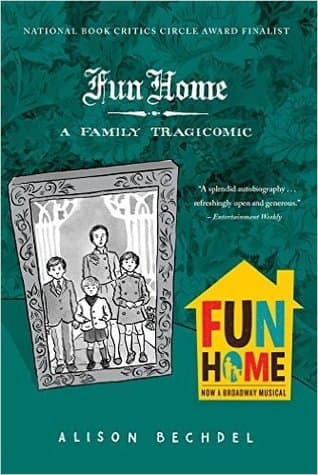
- Fun Home: A Family Tragicomic
Alison Bechdel
4.1 (130k) average on GoodreadsBiographyA graphic memoir that masterfully blends personal trauma, family secrets, and cultural commentary with a sharp, intellectual wit, much like Gurba's blend of humor and pain.
- Educated
Tara Westover
4.5 (796k) average on GoodreadsBiographyBoth Mean and Educated are powerful memoirs of overcoming trauma. However, Westover's narrative focuses on escaping a fundamentalist upbringing and pursuing education as a path to self-discovery and freedom, maintaining a more traditional narrative arc of triumph over adversity. Gurba, conversely, uses 'meanness' not just for personal liberation but as a broader critique of systemic violence and racial injustice, often refusing easy resolutions. Westover's tone is largely reflective and earnest, while Gurba's is deliberately provocative, satirical, and darkly humorous, challenging the reader's comfort more directly.
- The Diary of a Young Girl
Anne Frank
4.2 (2.7M) average on GoodreadsBiographyDuring the Nazi occupation, a teenage girl's diary, written from a secret annex, shares observations on humanity, hope, and the wait for freedom.
- Eat, Pray, Love
Elizabeth Gilbert
3.6 (1.5M) average on GoodreadsLifestyleA heartbroken writer leaves her conventional life for a year-long global search for pleasure in Italy, spiritual devotion in India, and unexpected love and balance in Bali.





Enjoyed the summary?
A summary gives you the shape of the book. The book itself has the detail, the examples and the voice.
Find Mean on AmazonAs an Amazon Associate, BookBrief earns from qualifying purchases. How we're funded