
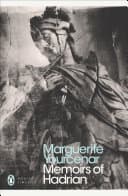
Synopsis
Covers the whole plot, including the ending.
- Difficulty
- Medium
- Pacing
- Slow
- Mood
- Reflective, Philosophical, Melancholy, Grand
- Read it if
- You are fascinated by Roman history, philosophical introspection, and the inner life of a complex historical figure.
- Skip it if
- You prefer fast-paced plots with strong external conflict and dialogue-driven narratives.
Memoirs of Hadrian Plot Summary
Covers the whole plot, including the ending.
The Letter to Marcus
The novel begins with Hadrian, an old and sick emperor, writing to his adopted grandson and successor, Marcus Aurelius. He thinks about his failing health and coming death, which leads him to write down his life's experiences and philosophies. He describes his early life, military training, and the vast Roman Empire he inherited. Hadrian wants to understand himself and his actions, not to praise them, but to give an honest account of his reign, his loves, and his intellectual pursuits. This opening reflection sets the thoughtful tone for the entire memoir, as he addresses the challenges and successes of power.
Youth and Early Ambition
Hadrian discusses his youth, which was privileged but sometimes lonely after his parents died. He describes his education in Greek and Latin literature, philosophy, and rhetoric, which shaped his mind. His early military career under Emperor Trajan is detailed, including his part in various campaigns and his growing political influence. He recounts his marriage to Sabina, a political match rather than a love match, and his complex relationship with Trajan and Plotina, Trajan's wife, who supported him. These early experiences formed his character, ambition, and deep appreciation for Greek culture.
Accession to Power
Hadrian details Trajan's final illness and death, and his own difficult succession. He addresses rumors of a fake adoption document, acknowledging the political maneuvering involved. He recounts the immediate challenges of securing power, including the execution of four important senators seen as threats. Hadrian explains why he made these difficult choices, stating his commitment to stability and the Empire's welfare. He immediately began to change imperial policy away from aggressive expansion, focusing instead on strengthening and internal reform, a clear change from Trajan's military goals.
Consolidation and Travel
After securing his position, Hadrian committed to personally inspecting every province of the Roman Empire. He describes his constant travels, covering Britain, Gaul, Hispania, North Africa, and the Eastern provinces. During these journeys, he focused on strengthening borders, notably with the building of Hadrian's Wall in Britannia. He oversaw improvements to infrastructure, including roads, aqueducts, and public buildings, and worked directly with local people and military groups. These travels were not just administrative; they were also philosophical, allowing him to understand the diverse cultures and peoples under Roman rule and to carry out policies that brought unity and stability.
The Love for Antinous
Hadrian describes meeting Antinous, a handsome young Bithynian, and the deep love that grew between them. He portrays Antinous as a symbol of youth, beauty, and the Greek ideal, and their relationship as the most important emotional connection of his life. He recounts their travels together, sharing private moments and intellectual talks. The story builds to Antinous's tragic drowning in the Nile River, an event that devastates Hadrian. He grapples with the mystery of Antinous's death, considering both accident and ritual sacrifice. In his grief, Hadrian made Antinous a god, creating a cult and founding cities in his name, preserving his memory across the Empire.
Architect of Rome
Hadrian reflects on his love for architecture and his many building projects across the Empire, but especially in Rome and at his private villa in Tivoli. He describes his personal involvement in the design and construction of the Pantheon, seeing it as a symbol of cosmic harmony and the unity of all gods. His Hadrian's Villa at Tivoli is shown as a small version of his travels and intellectual pursuits, bringing together elements from various cultures he admired. These building projects were not just displays of power but expressions of his philosophical ideas, his love for beauty, and his vision for a stable and lasting Roman civilization. He saw building as a way to leave a mark on the world.
The Jewish Revolt
Hadrian reflects on one of the most painful and violent times of his reign: the Bar Kokhba revolt in Judea. He explains his initial plans to make the province more Greek and build Aelia Capitolina on the ruins of Jerusalem, which started the large Jewish uprising. He details the brutal three-year war, the many Roman and Jewish lives lost, and the eventual, harsh suppression of the revolt. Hadrian describes his despair and anger, acknowledging the deep cultural clash and the tragic results of his policies. This event contrasts sharply with his usual preference for peace and cultural integration, leaving a lasting mark on his conscience and his legacy.
Succession and Final Years
As his health declines, Hadrian thinks more about who will succeed him. He recounts the difficult process of choosing an heir, first picking Lucius Ceionius Commodus Verus, who sadly dies. This forces him to adopt Antoninus Pius, on the condition that Antoninus in turn adopt Marcus Aurelius and Lucius Verus. Hadrian reflects on the wisdom needed for such decisions, aiming to secure the Empire's future stability. His final years are marked by severe physical pain from dropsy, leading to deep thoughts about death, the nature of the soul, and the legacy he will leave. He prepares for the inevitable end, finding some peace.
Philosophical Reflections on Power
Throughout his memoirs, and especially in his later thoughts, Hadrian explores the philosophical nature of power. He describes the great burden and loneliness of being emperor, the constant need for watchfulness, and the difficult choices that often have no perfect answer. He thinks about how short human achievements are compared to eternity and the vastness of the cosmos. He questions the true meaning of glory and immortality, finding comfort in the pursuit of knowledge, beauty, and the Empire's welfare. His reflections show a ruler who was well aware of his limits and the contradictions of his absolute authority.
Acceptance of Death
In his final thoughts, Hadrian accepts his approaching death with a calm mind. He reflects on his life's journey, recognizing both his successes and his failures, and feels a sense of completion. He writes his famous poem, 'Animula vagula blandula,' a tender address to his soul, thinking about its journey beyond the body. He describes his final arrangements and his peaceful surrender to the inevitable, seeing death as a natural part of existence. His last words convey a deep sense of serenity and acceptance, having lived a life dedicated to reason, beauty, and the lasting legacy of Rome.
Principal Figures
Hadrian
Protagonist
The Roman Emperor, philosopher, and architect of an empire.
Hadrian is the introspective and highly cultured Roman Emperor who narrates his own life story. He is a man of immense intellect, a lover of Greek culture, philosophy, and architecture. Pragmatic and often ruthless in politics, he prioritizes the stability and welfare of the Empire above personal glory or aggressive expansion. He is deeply empathetic and sensitive, especially regarding his love for Antinous, yet capable of immense cruelty, as seen in the suppression of the Jewish revolt. His driving force is a desire for order, beauty, and lasting legacy, tempered by a profound awareness of human mortality and the complexities of power.
Relationships: Antinous (Deep, passionate, and tragic love affair.); Sabina (Politically expedient, loveless marriage, strained and distant.); Trajan (Complex relationship of mentorship, ambition, and eventual succession.); Plotina (Key patron and confidante, instrumental in his succession.); Marcus Aurelius (Adopted grandson and intellectual heir, recipient of his memoirs.)
Antinous
Supporting
Hadrian's beloved young Bithynian companion.
Antinous is a beautiful young man from Bithynia who becomes the great love of Hadrian's life. He is portrayed as a figure of youthful innocence, physical beauty, and a quiet, almost melancholic presence. His significance lies less in his spoken words and more in his symbolic role as an embodiment of Hellenic ideals and a source of profound emotional fulfillment for Hadrian. His tragic death by drowning in the Nile devastates Hadrian and leads to his deification, becoming a lasting symbol of Hadrian's capacity for intense love and grief. He represents a fleeting perfection that Hadrian strives to immortalize.
Relationships: Hadrian (Deep, passionate, and tragic love affair.)
Sabina
Supporting
Hadrian's estranged and politically ambitious wife.
Sabina is Hadrian's wife, a woman of noble birth and strong character, but their marriage is one of political convenience rather than affection. She is often portrayed as cold, resentful, and ambitious, feeling overshadowed by Hadrian's intellectual pursuits and his love for Antinous. Her relationship with Hadrian is strained and marked by mutual indifference, sometimes open hostility. She represents the constraints and political necessities of imperial life, a contrast to Hadrian's more personal and philosophical desires. Her inability to bear children adds to the dynastic pressures on Hadrian.
Relationships: Hadrian (Politically expedient, loveless marriage, strained and distant.)
Trajan
Supporting
Hadrian's predecessor and adoptive father.
Trajan is the previous emperor, a renowned military conqueror and Hadrian's adoptive father. He is depicted as a man of action, focused on military expansion and conquest, a stark contrast to Hadrian's more consolidation-oriented approach. While Hadrian admires Trajan's achievements, he also critiques his predecessor's expansionist policies, which he believes overextended the Empire. Trajan's death and the circumstances of Hadrian's controversial adoption and succession form a crucial early part of Hadrian's narrative, shaping his initial political decisions and his efforts to establish his own distinct imperial vision.
Relationships: Hadrian (Mentor and adoptive father, complex relationship of respect and strategic divergence.)
Plotina
Supporting
Trajan's wife and Hadrian's key patron.
Plotina is Emperor Trajan's wife and a crucial figure in Hadrian's early career and his eventual succession. She is portrayed as intelligent, influential, and deeply supportive of Hadrian, acting as his advocate and confidante. Her intervention during Trajan's final illness is instrumental in securing Hadrian's adoption and ascension to the throne, leading to rumors of a forged adoption. Plotina represents the powerful, often unseen, influence of women in Roman politics and is a testament to Hadrian's ability to forge strong alliances and gain crucial patronage.
Relationships: Hadrian (Crucial patron and confidante, instrumental in his succession.); Trajan (His wife, wielded significant influence over him.)
Marcus Aurelius
Mentioned
Hadrian's adopted grandson and future emperor.
Marcus Aurelius is Hadrian's adopted grandson and the future emperor, to whom the memoirs are ostensibly addressed. Though he doesn't actively participate in the narrative, his presence is felt as the intended recipient of Hadrian's wisdom and reflections. He represents the future of the Empire and the continuity of the imperial line. Hadrian sees in Marcus a potential philosophical ruler, hoping that his own experiences and insights will guide his successor in the complex task of governing. Marcus embodies the hope for a future enlightened reign.
Relationships: Hadrian (Adopted grandson and intellectual heir, recipient of his memoirs.)
Antoninus Pius
Supporting
Hadrian's chosen direct successor.
Antoninus Pius is the man Hadrian ultimately chooses as his direct successor, on the condition that Antoninus in turn adopt Marcus Aurelius and Lucius Verus. He is depicted as a capable, stable, and respected senator, chosen for his administrative skills and his ability to ensure a smooth transition of power. Hadrian's selection of Antoninus reflects his strategic thinking about the future of the Empire, prioritizing stability and a clear line of succession over personal affection. Antoninus represents the practical and political aspects of imperial succession.
Relationships: Hadrian (Adopted son and chosen direct successor.); Marcus Aurelius (Adopted father, charged with adopting him.)
Apollodorus of Damascus
Supporting
The renowned architect who clashes with Hadrian.
Apollodorus of Damascus is a brilliant Greek architect, famous for his work under Trajan, including Trajan's Forum and Column. He is portrayed as a proud and opinionated master craftsman who clashes with Hadrian over architectural designs. Their disagreements, particularly regarding the size and scope of projects like the Pantheon, highlight Hadrian's own deep knowledge and strong opinions in architecture. Apollodorus eventually falls out of favor and is exiled or executed, symbolizing Hadrian's absolute authority and his willingness to remove those who challenge his vision, even if they are talented.
Relationships: Hadrian (Professional rivalry and eventual conflict over architectural designs.)
Themes & Insights
The Burden of Power and Leadership
Hadrian often thinks about the great responsibilities and loneliness of being an emperor. He deals with the weight of making decisions that affect millions, the need for firmness, and the compromises required to keep things stable. He describes the isolation of his position, where true friends are rare and the final responsibility is his alone. This theme appears in his constant travels to personally check on the Empire, his careful attention to administration, and his philosophical thoughts on governance, as seen in his reasons for executing the four senators or his sadness over the Jewish Revolt.
“I was both the ship and the storm.”
The Search for Immortality and Legacy
Hadrian is deeply concerned with leaving a lasting mark, not through conquest but through culture, architecture, and stable political systems. His many building projects, especially the Pantheon and Hadrian's Villa, are physical signs of this wish. His making Antinous a god and founding cities in his name are attempts to make beauty and love immortal. Even writing these memoirs is an effort to understand and preserve his own life and thoughts for future generations, especially for Marcus Aurelius, ensuring a philosophical legacy beyond his physical life.
“I had always been astonished that men could build so little when they could dream so much.”
Love, Loss, and Grief
The novel deeply explores Hadrian's love for Antinous and the crushing grief he feels after his death. This relationship is shown as the most intense and important emotional experience of his life, a sharp contrast to his politically arranged marriage with Sabina. Hadrian's efforts to immortalize Antinous through deification and monuments show the depth of his sorrow and his struggle to cope with such a great loss. This theme highlights the human vulnerability beneath the imperial role, showing how even an emperor experiences the universal feelings of love and sadness.
“I had lost the companion of my life, the one creature who knew me as I was.”
Hellenism vs. Romanitas
A main conflict in Hadrian's character and reign is the interplay between his deep love for Greek culture (Hellenism) and his duties as a Roman emperor (Romanitas). He greatly admires Greek philosophy, art, and literature, often preferring Greece's intellectual and aesthetic values. However, he is also a practical Roman ruler, committed to the Empire's stability, law, and order. This theme is clear in his architectural choices, his personal intellectual pursuits, and his attempts to bring Greek culture into the Roman world, sometimes leading to conflict, as seen in the Jewish revolt caused by his Greek-influenced policies in Judea.
“Greece became my homeland, and its spirit, the very air I breathed.”
The Nature of Time and Mortality
As Hadrian writes his memoirs in his declining health, the short nature of life and the certainty of death are always present. He constantly thinks about the passing of time, the rise and fall of empires, and the ultimate fate of individuals. His thoughts on his own death lead to deep philosophical insights about the meaning of existence and the value of human experience. This theme ends with his calm acceptance of death at the novel's close, seeing it as a natural part of the cosmic order, and his famous poem 'Animula vagula blandula,' a tender farewell to his soul.
“My soul, my darling, my little wanderer, must now depart.”
Plot Devices & Literary Techniques
Epistolary Memoir
The entire novel is presented as Hadrian's personal letter/memoir to Marcus Aurelius.
This device allows for deep introspection and a first-person perspective on historical events. It grants the reader direct access to Hadrian's thoughts, philosophies, and emotional states, creating an intimate and subjective account of his reign. The 'letter' structure justifies the reflective tone and the non-linear exploration of themes, as Hadrian moves between past events and present meditations. It also serves as a pedagogical tool, as Hadrian explicitly aims to pass on his wisdom to his successor, Marcus Aurelius.
Anachronistic Foreshadowing (Philosophical)
Hadrian often hints at future events or his later understanding while recounting earlier periods.
While narrating his youth or early reign, Hadrian frequently interjects with reflections from his older, wiser self, subtly foreshadowing the consequences of his actions or his eventual philosophical conclusions. For example, he might describe a youthful ambition and then immediately follow with a comment about its ultimate futility or the unexpected lessons learned years later. This device enriches the narrative by providing a layered perspective, allowing the reader to understand the 'why' behind his actions through the lens of accumulated experience and the wisdom of old age.
Symbolism of Architecture
Hadrian's building projects symbolize his philosophical ideals, legacy, and personal journey.
Architecture in the novel is more than just construction; it is a profound symbolic language. The Pantheon represents cosmic harmony and the unity of diverse beliefs. Hadrian's Wall symbolizes the limits of empire and the desire for peace and consolidation. Hadrian's Villa at Tivoli is a microcosm of his travels, intellectual interests, and personal world, a physical manifestation of his soul. These structures are not merely backdrops but active symbols that reflect Hadrian's vision for Rome, his personal aspirations, and his attempts to create order and beauty in a chaotic world.
The Motif of the Journey
Hadrian's extensive travels serve as both a literal and metaphorical journey of self-discovery.
Hadrian's relentless physical travels across the Roman Empire are a central motif. These journeys are not only for administrative purposes but also represent his intellectual and spiritual quest for understanding the world and himself. Each province, culture, and landscape he encounters contributes to his evolving philosophy and sense of identity. The motif extends to his internal journey of self-reflection in the memoirs, moving through different periods of his life, examining his decisions, and ultimately preparing for his final journey into death.
Memoirs of Hadrian Quotes
“The true travelers are those who leave for leaving.”
“I was born in a world that was already old.”
“To build is to collaborate with the earth.”
“My mind, I must confess, was never quite at peace except when I was building.”
“I realized that the world is a book, and that those who do not travel read only one page.”
“I had long ceased to believe in the gods, but I had never ceased to believe in the sacred.”
“The world is not to be remade, but understood.”
“What is important is not to live, but to live well.”
“I have sometimes thought that the most precious possessions of man are his memories.”
“Every man has a right to be wrong in his own way.”
“One must learn to love one's destiny.”
“The greatest empires are built not on swords but on ideas.”
“I began to understand that a man's life is not only his own; it belongs to his time.”
“To live is to burn with a hard, gem-like flame.”
“I am a man who has lived and loved and suffered.”
Quiz
10 questions on the plot and the characters. Each answer comes with a short explanation.
Question 1
To whom does Hadrian primarily address his 'memoirs' throughout the book?
- Marcus Aurelius
- Antoninus Pius
- His successor, young Marcus
- His deceased love, Antinous
Show answer
C. His successor, young Marcus Hadrian addresses his letters and reflections to his adopted grandson and future emperor, Marcus Aurelius, whom he refers to as 'my dear Marcus'.
Question 2
What significant architectural project is most closely associated with Hadrian's reign and discussed in the book?
- The Colosseum
- The Pantheon
- The Arch of Titus
- The Circus Maximus
Show answer
B. The Pantheon Hadrian was a patron of architecture and extensively rebuilt the Pantheon, which is a recurring subject of his contemplation on eternity and perfection.
Question 3
What is the primary reason for Hadrian's extensive travels throughout the Roman Empire?
- To conquer new territories and expand the empire
- To suppress rebellions and punish defiant provinces
- To personally inspect and strengthen the empire's borders and administration
- To escape the political intrigues of Rome
Show answer
C. To personally inspect and strengthen the empire's borders and administration Hadrian's travels were largely motivated by a desire to consolidate the empire, inspect its defenses (like Hadrian's Wall), and personally oversee provincial administration, rather than aggressive expansion.
Question 4
What philosophical school of thought most profoundly influences Hadrian's worldview and personal conduct as depicted in the memoirs?
- Epicureanism
- Platonism
- Stoicism
- Cynicism
Show answer
C. Stoicism Hadrian frequently reflects on duty, self-control, the acceptance of fate, and the pursuit of virtue, all hallmarks of Stoic philosophy.
Question 5
What is the name of Hadrian's young Greek companion whose death deeply affects him and leads to his deification?
- Panaetius
- Antinous
- Apollodorus
- Favorinus
Show answer
B. Antinous Antinous was Hadrian's beloved companion who drowned in the Nile. His death plunged Hadrian into deep grief and led to Antinous's deification and the founding of cities in his name.
Question 6
How does Hadrian view the role of 'barbarians' and the empire's borders?
- As enemies to be aggressively conquered and assimilated
- As potential allies to be integrated through diplomacy
- As a constant threat requiring strong, defensible borders rather than endless expansion
- As a source of cheap labor and resources for Rome
Show answer
C. As a constant threat requiring strong, defensible borders rather than endless expansion Hadrian believed in consolidating and defending the existing empire rather than ceaseless expansion. He saw the barbarians as a persistent force outside the empire that needed to be contained by strong, well-maintained borders like Hadrian's Wall.
Question 7
What is Hadrian's primary concern regarding the future of the Roman Empire, as expressed towards the end of his life?
- The military strength of rival empires like Parthia
- The moral decay and internal divisions within Rome itself
- The economic collapse due to overspending on public works
- The lack of suitable heirs to succeed him
Show answer
B. The moral decay and internal divisions within Rome itself While he considers many threats, Hadrian's deepest anxieties revolve around the internal health of the empire, fearing its eventual decline due to moral lassitude, political corruption, and the loss of civic virtue.
Question 8
Hadrian's relationship with Apollodorus, the architect, is characterized by what primary dynamic?
- Mutual respect and collaboration on all projects
- A master-apprentice relationship with Hadrian as the mentor
- Initial professional rivalry leading to Hadrian's eventual dismissal and exile of Apollodorus
- A close personal friendship that transcended their professional roles
Show answer
C. Initial professional rivalry leading to Hadrian's eventual dismissal and exile of Apollodorus Hadrian, a keen amateur architect, famously clashed with the professional architect Apollodorus over design choices, particularly regarding the Temple of Venus and Roma. This ultimately led to Hadrian banishing and possibly executing Apollodorus, a detail Yourcenar explores to show Hadrian's complex and sometimes tyrannical nature.
Question 9
What is the significance of the 'villa' (Villa Adriana) in Hadrian's life and the narrative?
- It was a military headquarters from which he commanded his legions.
- It served as a luxurious retreat for his annual vacations.
- It was a physical manifestation of his intellectual and aesthetic journey, incorporating elements from his travels.
- It was the site of the most significant political conspiracies against his rule.
Show answer
C. It was a physical manifestation of his intellectual and aesthetic journey, incorporating elements from his travels. Hadrian's Villa at Tivoli was more than a residence; it was a vast complex reflecting his travels, his love for art and architecture, and his philosophical outlook, a miniature world designed to encapsulate his life's experiences and intellectual pursuits.
Question 10
How does Hadrian reconcile his belief in reason and order with the chaotic and often brutal realities of imperial power?
- He attempts to eliminate all forms of chaos through strict authoritarian rule.
- He acknowledges the inherent contradictions and seeks to impose a humane order within the limits of his power.
- He retreats into philosophical contemplation, abandoning practical governance.
- He adopts a fatalistic view, believing human actions have no real impact on the course of events.
Show answer
B. He acknowledges the inherent contradictions and seeks to impose a humane order within the limits of his power. Hadrian constantly grapples with the tension between his philosophical ideals and the harsh necessities of governing. He strives to bring order and justice, even while acknowledging the inherent brutalities and limitations of human nature and imperial power, often viewing his role as a necessary burden.
Memoirs of Hadrian FAQ
What is the central premise of 'Memoirs of Hadrian'?
'Memoirs of Hadrian' is an imagined autobiography of the Roman Emperor Hadrian, written as a lengthy letter to his successor, Marcus Aurelius. It delves into his reflections on his life, reign, philosophies, loves, and the burdens of power as he approaches death, offering a profound meditation on history and human existence.
Who is Antinous and what is his significance in Hadrian's life?
Antinous was a beautiful Bithynian youth who became Hadrian's beloved companion. His accidental drowning in the Nile profoundly impacted Hadrian, leading the emperor to deify him, found cities in his name (Antinoöpolis), and commission numerous statues, immortalizing their intense, if tragic, relationship.
What kind of emperor was Hadrian, according to his own recounting?
Hadrian portrays himself as a pragmatic and intellectual emperor who prioritized peace, internal consolidation, and cultural development over military expansion. He spent significant time traveling the empire, overseeing infrastructure projects like Hadrian's Wall, and fostering a Hellenic revival, aiming for a stable and prosperous Rome.
What role does philosophy play in Hadrian's reflections?
Philosophy is central to Hadrian's worldview, guiding his decisions and shaping his understanding of life and death. He grapples with Stoic principles, Epicurean desires, and Greek ideals of beauty and moderation, constantly seeking wisdom and a coherent system to navigate the complexities of his existence and the vastness of the empire.
How does Hadrian view his relationship with his wife, Sabina?
Hadrian's relationship with Sabina is depicted as largely devoid of passion, marked by mutual respect but also significant emotional distance and occasional friction. He acknowledges her imperial status and role but reveals a profound lack of intimacy, contrasting sharply with the intensity of his other affections.
What is the significance of the opening line, 'My dear Marcus, I have just received the physician Hermogenes' visit'?
This opening immediately establishes the epistolary format and Hadrian's impending mortality, setting a somber, reflective tone. Hermogenes' visit underscores Hadrian's physical decline, providing the impetus for his autobiographical meditation and the urgency of conveying his accumulated wisdom to his successor.
How does Yourcenar subtly weave historical anachronisms into the narrative to serve a thematic purpose?
Yourcenar occasionally incorporates ideas or psychological insights that feel anachronistic for the 2nd century A.D., such as modern psychological introspection or existential angst. These are not errors but deliberate choices to make Hadrian's reflections resonate more deeply with contemporary readers, bridging the historical gap and highlighting universal human experiences.
Are there any subtle allusions to future Roman emperors or historical events beyond Hadrian's reign?
Yes, the letter is addressed to Marcus Aurelius, who would become a philosopher-emperor, implying a lineage of thoughtful rulers. Hadrian's anxieties about the empire's future and the challenges of succession subtly foreshadow the later turbulent periods of Roman history, suggesting the cyclical nature of power and decline.
What does Hadrian's constant pursuit of beauty, particularly in Antinous, reveal about his inner world?
Hadrian's intense aesthetic sensibility and his devotion to Antinous reflect a profound desire for perfection, order, and transcendence in a world he often perceives as chaotic and fleeting. This pursuit is not merely sensual but a spiritual quest to capture and immortalize an ideal, providing a counterpoint to the pragmatic demands of his emperorship.
How does Hadrian's contemplation of death influence his perspective on life and governance?
His impending death acts as a powerful catalyst for introspection, sharpening his appreciation for life's fleeting beauty and the transient nature of power. This awareness imbues his reflections on governance with a sense of urgency and a desire to leave a lasting, beneficial legacy, focusing on peace and stability over ephemeral glory.
What psychological conflict does Hadrian experience regarding his public duty versus his private desires?
Hadrian constantly grapples with the tension between the immense responsibilities of the emperor, demanding rationality and self-control, and his deep personal desires for love, beauty, and intellectual pursuits. This internal conflict often leads to a sense of isolation and a yearning for a life unburdened by imperial expectations, yet he ultimately embraces his role.
How does Hadrian's early military experiences shape his later pacifist policies?
His early experiences in the Dacian Wars under Trajan exposed him to the brutality and futility of endless conquest. Witnessing the immense human cost and the logistical challenges of maintaining vast territories instilled in him a deep conviction that consolidation and defense were more beneficial to Rome than further expansion, leading to his peace-oriented policies.
To what extent is 'Memoirs of Hadrian' a historical biography versus a philosophical novel?
While meticulously researched and historically accurate in its broad strokes, 'Memoirs of Hadrian' transcends mere biography by using Hadrian's life as a vehicle for profound philosophical inquiry. It delves into universal themes of power, love, death, duty, and the human condition, making it more a philosophical meditation on existence than a straightforward historical account.
What is the significance of the circular structure of the narrative, starting and ending with Hadrian's reflections on his body and impending death?
The circular structure emphasizes the cyclical nature of life, the inevitability of death, and the continuous process of self-reflection. By returning to his physical decline, Hadrian underscores the transient nature of even the most powerful existence, framing his entire life story within the context of its finite conclusion and the legacy he hopes to leave.
How does Yourcenar's choice of the first-person perspective, as Hadrian himself, impact the reader's understanding of history?
The first-person perspective allows for an intimate, subjective, and deeply psychological portrayal of history, moving beyond mere facts to explore the motivations, doubts, and inner world of a historical figure. It challenges the reader to consider history not just as a sequence of events, but as a complex interplay of individual choices, emotions, and philosophical outlooks, fostering empathy and critical engagement.
Is Hadrian's portrayal ultimately sympathetic or critical, and how does Yourcenar achieve this balance?
Yourcenar achieves a nuanced balance, presenting Hadrian as both sympathetic and, at times, critically self-aware of his flaws and contradictions. His profound intellect, genuine desire for peace, and capacity for love evoke sympathy, while his occasional arrogance, emotional distance, and the tragic consequences of his actions (like Antinous's death) invite a more critical perspective. This complexity makes him a deeply human figure.
How does the book explore the concept of legacy and the desire for immortality?
Hadrian's extensive building projects, his deification of Antinous, and his meticulous efforts to choose a worthy successor all reflect a deep preoccupation with leaving a lasting mark on the world. He seeks immortality not through conquest, but through cultural achievements, stable governance, and the perpetuation of his ideals, wrestling with the ephemeral nature of human endeavor.
What is the role of memory in Hadrian's narrative, and how reliable is his self-assessment?
Memory is the very foundation of the narrative, as Hadrian reconstructs his life from his deathbed. While he strives for honesty, his self-assessment is inherently subjective, filtered through his own biases, regrets, and desire to present a coherent self. The reader is implicitly invited to question the reliability of memory and the way individuals shape their own histories, even as they attempt to be truthful.
About the author
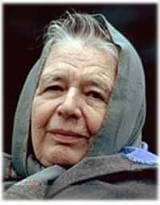
Marguerite Yourcenar was a Belgian-born French novelist and essayist, who became a US citizen in 1947. Winner of the Prix Femina and the Erasmus Prize, she was the first woman elected to the Académie Française, in 1980, as well as the seventeenth person to occupy seat 3.
Similar books
- Augustus
John Williams
4.2 (10k) average on GoodreadsHistorical FictionPresents a nuanced, multi-perspective look at the life and legacy of another pivotal Roman emperor.
- Meditations
Marcus Aurelius
4.2 (124k) average on GoodreadsLeadershipProvides the actual philosophical reflections of Hadrian's successor, offering a real-world counterpart to the book's themes.
- To Kill a Mockingbird
Harper Lee
4.3 (4.5M) average on GoodreadsHistorical FictionIn the 1930s Jim Crow South, Harper Lee writes about racial injustice, moral growth, and the quiet courage of a lawyer father, Atticus Finch, as seen through his young daughter's eyes.
- The Great Gatsby
F. Scott Fitzgerald
3.9 (3.8M) average on GoodreadsHistorical FictionIn the opulent Roaring Twenties, a mysterious millionaire's lavish parties hide his desperate, tragic pursuit of a lost love, exposing the emptiness within the American Dream.
- Pride and Prejudice
Jane Austen
4.3 (3M) average on GoodreadsHistorical FictionIn a society focused on status and money, Elizabeth Bennet navigates love and pride, challenging Mr. Darcy and social expectations to find true affection.
- Angels & Demons
Dan Brown
3.9 (2.7M) average on GoodreadsThrillerA Harvard symbologist races through Rome's ancient sites, deciphering cryptic clues to unmask the Illuminati and stop a vengeful plot to destroy the Vatican with a stolen antimatter weapon.




Enjoyed the summary?
A summary gives you the shape of the book. The book itself has the detail, the examples and the voice.
Find Memoirs of Hadrian on AmazonAs an Amazon Associate, BookBrief earns from qualifying purchases. How we're funded