
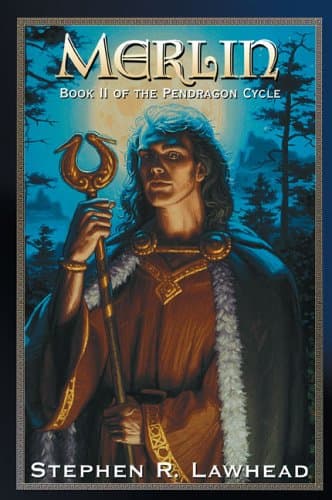
Synopsis
Covers the whole plot, including the ending.
- Difficulty
- Medium
- Pacing
- Moderate
- Mood
- Epic, Mythic, Atmospheric, Reflective, Grand
- Read it if
- You enjoy epic retellings of classic myths with a blend of historical fiction and fantasy, focusing on the origins of a legendary figure.
- Skip it if
- You prefer a purely historical narrative without magical elements, or a fast-paced, action-focused fantasy.
Merlin Plot Summary
Covers the whole plot, including the ending.
The Bard's Son
Merlin, born Myrddin, is the son of the great Bard Taliesin and Charis, a faery woman. He is raised in the mystical Summer Country, a hidden land of ancient magic and tradition, distinct from Romanized Britain. From a young age, Myrddin shows extraordinary gifts, particularly a deep connection to the land and an uncanny ability to perceive the true nature of things. Taliesin begins his rigorous training, teaching him the lore of the Bards, the history of Britain, the Old Ways, and the art of prophecy. Myrddin learns the power of words, music, and the subtle energies of the earth, preparing him for a destiny he does not yet fully understand. His childhood is filled with wonder and intensive study, shaping him into a powerful seer and future advisor.
A Journey to the Wider World
As Myrddin grows into young manhood, Taliesin deems it necessary for him to experience the wider world beyond the Summer Country. He travels to the Romanized parts of Britain, a land in decline as Roman legions withdraw and various tribal factions vie for power. During his travels, Myrddin sees firsthand the chaos, the fading influence of Rome, and the rise of petty kings and warlords. He encounters both the beauty and brutality of humanity, observing the struggles of the common people and the ambition of the powerful. This period is important for Myrddin, as it broadens his understanding of the political situation and the human heart, further honing his insights and preparing him for his future role in shaping Britain's destiny.
The First Prophecy and the Coming Darkness
Through his visions and connection to the land, Myrddin begins to perceive a great darkness gathering on the horizon: the impending invasion of the Saxons. He understands that this threat will overwhelm Britain unless a strong, unified leader emerges. He shares these ominous prophecies with Taliesin, who confirms their gravity and reveals more about Myrddin's destined role. Taliesin explains that Myrddin is meant to find and guide the true King of Britain, the Pendragon, who will unite the disparate kingdoms and stand against the encroaching darkness. This revelation solidifies Myrddin's purpose and intensifies his training, as the weight of Britain's future begins to settle upon his shoulders.
The Search for the Pendragon
Armed with his prophecies and Taliesin's guidance, Myrddin begins his quest to find the Pendragon. His journey takes him across the fragmented lands of Britain, where he meets many warlords and self-proclaimed kings. He assesses their character, their strength, and their potential for true leadership. Many are found wanting, driven by greed, ambition, or short-sightedness. Myrddin often uses his wisdom and subtle magical abilities to test these men, seeking one with a pure heart and a genuine desire to serve Britain. This period is one of extensive travel and observation, where Myrddin's understanding of human nature and political maneuvering deepens, preparing him for the complex role of royal advisor.
Meeting Uther Pendragon
Myrddin eventually meets Uther, a powerful and ambitious warlord. While Uther possesses many admirable qualities – strength, courage, and a strategic mind – he is also prone to passion and impulsiveness. Myrddin recognizes that Uther is not the ultimate Pendragon of his prophecies, but rather a necessary precursor, a king who can begin the process of unification. He decides to serve Uther, believing that this path is necessary to lay the groundwork for the true king's eventual reign. Myrddin becomes Uther's advisor, using his wisdom and foresight to guide Uther's campaigns, helping him to consolidate power and establish a semblance of order amidst the chaos of Britain. Their relationship is complex, marked by both respect and tension.
The Battle for Britain
Under Myrddin's guidance, Uther Pendragon begins to make significant strides in uniting the various British kingdoms. Myrddin advises Uther on military strategy, diplomacy, and governance. He helps Uther forge alliances and overcome rival warlords, slowly but surely building a stronger, more cohesive Britain. Myrddin's unique insights often prove decisive in battles, allowing Uther's forces to gain advantages. He also works to re-establish some of the ancient traditions and values that have been lost or forgotten, hoping to inspire a sense of shared heritage among the British people. This period is characterized by constant struggle against internal divisions and external threats, primarily the burgeoning Saxon incursions.
The Tragedy of Gorlois and Igraine
Uther becomes infatuated with Igraine, the beautiful wife of Duke Gorlois of Cornwall. Driven by lust, Uther demands Igraine, leading to a bitter conflict with Gorlois. Recognizing that Uther's passion could destabilize the nascent kingdom and that the true Pendragon must be born, Myrddin reluctantly agrees to help Uther, but at a terrible price. He uses his magic to transform Uther into the likeness of Gorlois, allowing him to enter Tintagel Castle and lie with Igraine. Gorlois is killed in battle the same night, and Igraine conceives Arthur. This act, while ensuring the birth of the prophesied king, creates deep personal sorrow for Myrddin, as it involves manipulation and tragedy, highlighting the difficult moral compromises inherent in his destiny.
The Birth and Hiding of Arthur
Following the tragic events at Tintagel, Arthur is born. As part of the arrangement with Uther, and to protect the infant from political enemies and the dangers of the tumultuous court, Myrddin takes the newborn Arthur away to be raised in secret. He entrusts the child to Sir Ector, a loyal and honorable knight, ensuring Arthur grows up in a stable and loving environment, unaware of his royal lineage. Myrddin knows that Arthur must be raised as a common boy, learning humility and the practicalities of life, before he can fulfill his destiny as the Pendragon. This act shows Myrddin's long-term vision and his commitment to the prophecy, even if it means personal sacrifice and a period of separation from the future king.
The Years of Waiting and Guiding
For many years, Myrddin remains a silent guardian, watching over Arthur from a distance. He occasionally visits Ector's household in various disguises, subtly influencing Arthur's education and character development. Myrddin ensures Arthur learns the skills necessary for a king: horsemanship, swordsmanship, strategy, and most importantly, justice and compassion. He observes Arthur's innate goodness, his courage, and his natural leadership qualities developing. During this time, Myrddin also continues to advise Uther, navigating the political intrigues of Britain and preparing the ground for Arthur's eventual revelation. He patiently waits for the opportune moment, the true sign, that will signal Arthur's time to claim his birthright and destiny.
The Death of Uther and the Interregnum
Uther Pendragon, having achieved a measure of stability for Britain, eventually succumbs to illness or battle wounds. His death plunges the land back into chaos, as rival factions and ambitious warlords once again vie for power. The fragile unity Uther had forged begins to unravel, and the Saxon threat looms larger than ever. This period of interregnum is a dangerous and uncertain time for Britain, a vacuum of leadership that Myrddin had anticipated. It is precisely this desperate situation that creates the perfect conditions for the emergence of the true king. Myrddin understands that only a leader of undeniable legitimacy and strength can reunite the fractured land and face the coming darkness.
The Sword in the Stone
With Britain in disarray after Uther's death, Myrddin orchestrates the legendary test of the Sword in the Stone. He arranges for a magnificent sword, imbued with powerful magic, to appear embedded in an anvil atop a stone in London, bearing an inscription that declares whoever can pull it forth is the rightful King of Britain. Many powerful lords and knights attempt the feat, but none succeed. Young Arthur, accompanying Sir Kay to a tournament, inadvertently pulls the sword from the stone to provide a weapon for his foster brother. This miraculous act reveals Arthur's true identity and destiny, shocking the assembled lords and confirming Myrddin's long-held prophecy. It marks the beginning of Arthur's reign as Pendragon.
Arthur's Coronation and Merlin's Role
Despite initial skepticism and resistance from some of the older, more established lords, Myrddin uses his wisdom, influence, and subtle magic to convince them of Arthur's legitimacy. He reveals Arthur's true parentage and explains the prophecy, gradually winning over the doubters. Arthur is crowned King of Britain, and Myrddin becomes his trusted advisor, counselor, and mentor. Together, they begin the monumental task of uniting the land, establishing a new order, and building the foundations of what will become the legendary Kingdom of Summer. Myrddin's lifelong mission is now fully realized, as he stands by the young king, guiding him toward a golden age for Britain.
Principal Figures
Merlin (Myrddin)
Protagonist
The powerful bard, seer, and advisor destined to guide the Pendragon.
Myrddin is the son of Taliesin and a faery mother, possessing an innate connection to magic and prophecy. He is wise, patient, and deeply committed to the destiny of Britain. Though he wields immense power, he is often burdened by the difficult choices and sacrifices his role demands. He has golden eyes that see beyond the mundane, and his life is a constant dance between the mystical Summer Country and the chaotic, human world. He is driven by a profound sense of duty to bring forth the prophesied King and establish a lasting peace.
Relationships: Taliesin (Father and mentor, guiding his magical and spiritual development.); Charis (Faery mother, connecting him to the mystical realms.); Uther Pendragon (King he advises, a complex relationship of respect and manipulation.); Arthur Pendragon (His chosen king, mentee, and the focus of his life's work.)
Taliesin
Supporting
Merlin's father and a legendary bard and seer.
Taliesin is a wise and powerful bard, deeply connected to the ancient ways and the mystical traditions of Britain. He is Myrddin's father and primary mentor, guiding him through his early magical and spiritual development. Taliesin possesses profound knowledge of prophecies, history, and the subtle energies of the land. He is a serene and insightful figure, whose guidance is instrumental in shaping Myrddin into the powerful seer he becomes. He represents the ancient wisdom and the enduring spirit of the Summer Country.
Relationships: Merlin (Son and apprentice, whom he trains and prepares for his destiny.); Charis (Wife and mother of Merlin.)
Charis
Supporting
Merlin's faery mother.
Charis is Myrddin's mother, a beautiful and ethereal faery woman from the Summer Country. Her presence instills in Myrddin his unique connection to the magical realms and his distinctive golden eyes. While her role is less prominent in direct action, her heritage is a constant influence on Myrddin's nature and abilities. She embodies the mystical origins of the Summer Country and the ancient, non-human elements that flow through Myrddin's blood, linking him to a world beyond mortal comprehension.
Relationships: Merlin (Son, to whom she imparts his magical heritage.); Taliesin (Husband.)
Uther Pendragon
Supporting
A powerful British warlord and father of Arthur.
Uther is a strong, charismatic, but often impulsive warlord who Myrddin recognizes as a necessary precursor to the true Pendragon. He is a formidable warrior and a skilled leader, capable of inspiring loyalty and achieving significant military victories. However, his passions and desires, particularly his lust for Igraine, lead to tragic consequences. Myrddin guides Uther, using his ambition to unite Britain, but also maneuvering him to ensure Arthur's eventual birth and ascension. Uther represents the raw, untamed power that Merlin must channel and refine for Britain's sake.
Relationships: Merlin (Advisor and manipulator, guiding his reign.); Igraine (Object of his desire, leading to the conception of Arthur.); Gorlois (Rival duke, whose death is orchestrated by Uther and Merlin.)
Igraine
Supporting
Duchess of Cornwall, mother of Arthur.
Igraine is the beautiful and noble wife of Duke Gorlois of Cornwall. She is a woman of integrity and grace, caught in the tragic machinations of Uther's desire and Myrddin's prophecy. Her beauty and noble lineage make her a pivotal figure in the story, as her union with Uther, albeit through deception, results in the birth of Arthur. She is a symbol of the innocent caught in political and magical schemes, and her suffering underscores the difficult moral compromises Myrddin must make for the greater good of Britain.
Relationships: Uther Pendragon (The king who desires her and fathers Arthur through deception.); Gorlois (Her husband, whose death is intertwined with Arthur's conception.); Arthur Pendragon (Her son.)
Gorlois
Supporting
Duke of Cornwall, Igraine's husband.
Gorlois is the Duke of Cornwall, a loyal and honorable warrior who is fiercely protective of his wife, Igraine, and his lands. He represents the independent spirit of the British lords who resist Uther's consolidation of power. His refusal to surrender Igraine to Uther leads to a tragic conflict that results in his death. Gorlois is a victim of both Uther's lust and Myrddin's manipulation, serving as a poignant reminder of the sacrifices made for the sake of the prophecy and the future King Arthur.
Relationships: Igraine (His wife, whom he fiercely protects.); Uther Pendragon (His rival and the cause of his death.)
Arthur Pendragon
Protagonist
The prophesied King of Britain, raised in secret.
Arthur is the son of Uther Pendragon and Igraine, conceived through Myrddin's magic and deception. He is raised in obscurity by Sir Ector, unaware of his royal heritage. From a young age, Arthur displays innate qualities of leadership, justice, and compassion. He is brave, honorable, and possesses a natural charisma that draws people to him. He is the ultimate focus of Myrddin's life's work, destined to unite Britain and establish the legendary Kingdom of Summer. His journey from an unknown boy to the rightful king is the central driving force of the narrative.
Relationships: Merlin (His mentor, guide, and trusted advisor.); Uther Pendragon (His biological father, whose legacy he inherits.); Igraine (His biological mother.); Sir Ector (His foster father, who raises him.)
Sir Ector
Supporting
Arthur's foster father.
Sir Ector is a loyal and honorable knight, entrusted by Myrddin with the responsibility of raising the infant Arthur in secret. He provides Arthur with a stable and loving home, teaching him the values of chivalry, honor, and practical skills. Ector is a steadfast and trustworthy figure, representing the grounded, ethical side of knighthood. His dedication ensures Arthur's safe upbringing, allowing him to develop into the just and capable leader he is destined to be, far from the intrigues of the court.
Relationships: Arthur Pendragon (His foster son, whom he raises and loves.); Merlin (The one who entrusts Arthur to him.)
Themes & Insights
Destiny vs. Free Will
The novel constantly explores the tension between a predetermined destiny, particularly Myrddin's prophetic visions and his role in bringing forth Arthur, and the choices characters make. While Myrddin's life is guided by prophecy, he often struggles with the moral implications of his actions, such as the deception surrounding Arthur's conception. The characters, especially Uther, make choices driven by their desires, which Myrddin must navigate and manipulate to align with the greater destiny of Britain. This theme questions whether fate is an unyielding force or if individual actions can alter its course, and what sacrifices are justified for a prophesied future. For example, Myrddin's deep sorrow over Gorlois's death, despite its necessity for Arthur's birth, highlights this conflict.
“The path is laid before us, Myrddin, but it is our feet that must walk it, and our hearts that must bear the cost.”
The Decline of an Old Order and the Birth of a New
The story is set during the twilight of Roman rule in Britain, a period of chaos and fragmentation. The withdrawal of Roman legions leaves a power vacuum, leading to warring factions and the threat of Saxon invasion. This backdrop emphasizes the decay of an old, established order and the desperate need for a new one. Myrddin's entire purpose is to facilitate this transition, to lay the groundwork for a unified Britain under Arthur – the 'Kingdom of Summer.' The narrative details the struggles to overcome tribalism, superstition, and ambition to forge a cohesive nation, highlighting the pain and promise inherent in such a societal shift. The crumbling Roman roads and abandoned villas serve as constant reminders of this fading era.
“The old gods sleep, and the new ones have not yet found their voice. It is a time of shadows, Myrddin, but shadows precede the dawn.”
The Nature of Power and Leadership
The novel explores different forms of power: military might (Uther, Gorlois), political influence, and mystical foresight (Merlin). It contrasts the raw, often destructive power of warlords with the envisioned just and unifying power of Arthur. True leadership, as demonstrated by Arthur, is not merely about strength but about wisdom, compassion, and the ability to inspire loyalty and unity. Myrddin's role is to guide leaders towards this ideal, often having to compromise with lesser forms of power to achieve the ultimate goal. The challenges Arthur faces in gaining acceptance after the Sword in the Stone illustrate that power is not just taken, but must be earned through legitimacy and character.
“A king is not merely a warrior, Myrddin. A king is a shepherd to his people, a guardian of the land, and a beacon of justice.”
Magic, Nature, and the Spiritual Realm
Magic in Lawhead's 'Merlin' is deeply intertwined with nature, ancient Celtic traditions, and a spiritual connection to the land (the Summer Country). Myrddin's powers are not flashy spells but a deep understanding of the earth's energies, foresight, and the ability to perceive the 'true' nature of things. The faery heritage of Charis and Myrddin links them to a world beyond human comprehension, emphasizing a spiritual dimension often lost in the Romanized parts of Britain. The decline of the old gods and the rise of Christianity, while not central, subtly mark the changing spiritual landscape, but Myrddin's magic represents an enduring, primal force that predates and transcends these shifts.
“The land remembers. The stones whisper. If you listen with your heart, Myrddin, you will hear the song of ages.”
Plot Devices & Literary Techniques
Prophecy
Foresight that guides Merlin's actions and shapes the narrative.
Prophecy is the driving force behind Myrddin's entire existence and actions. His visions of the Saxon invasion and the coming of the Pendragon compel him to leave the Summer Country and actively shape events. The prophecies provide a clear, albeit often difficult, roadmap for the future, giving the narrative a sense of inevitability while also allowing for character agency within those bounds. It functions as a powerful form of dramatic irony, as the reader (and Myrddin) often knows what must happen, even if the characters involved do not, intensifying the emotional impact of the unfolding events, such as the tragedy of Gorlois.
The Summer Country
A hidden, mystical realm representing ancient Celtic magic and tradition.
The Summer Country serves as both Myrddin's origin and a spiritual anchor. It is a place untouched by Roman influence, steeped in ancient magic, wisdom, and the Old Ways. It represents a source of power, knowledge, and a connection to nature that is largely lost in the 'civilized' world. As a plot device, it provides Myrddin with his unique abilities and perspective, setting him apart from ordinary mortals. It also offers a contrast to the chaotic, declining Britain, serving as a beacon of what could be restored through Arthur's reign – the 'Kingdom of Summer' – a harmonious balance of human and natural worlds.
The Sword in the Stone
A magical artifact used to reveal the rightful king.
The Sword in the Stone is the ultimate test and revelation device for Arthur's kingship. It is a tangible symbol of destiny and divine right, imbued with powerful magic orchestrated by Myrddin. Its appearance and the inscription serve to legitimize Arthur's claim in a land fractured by warring lords, providing an undeniable sign of his true lineage and destined role. As a plot device, it creates a powerful dramatic climax for Arthur's introduction to the world as king, overcoming skepticism through a miraculous act that none but the rightful heir could achieve.
Disguise and Illusion
Merlin's use of magic to alter appearances and influence events.
Myrddin frequently employs various forms of disguise and illusion, most notably in transforming Uther into the likeness of Gorlois. This device allows him to manipulate events from the shadows, ensuring that crucial prophecies are fulfilled, even if it means resorting to deception. It highlights Myrddin's magical prowess but also underscores the moral ambiguity of his role, as such acts often involve tragic consequences for others. It adds an element of intrigue and demonstrates the subtle, powerful nature of his magic, distinct from overt spellcasting, allowing him to operate within the human world while serving a higher, mystical purpose.
Merlin Quotes
“There are things in this world, child, that are not meant for mortal eyes. Things that whisper from the shadows, and things that sing from the light. And there are those who can hear both.”
“The past is never truly dead. It merely sleeps, waiting for the right voice to awaken it.”
“A man's worth is not measured by the size of his sword, but by the strength of his spirit.”
“Hope is a fragile thing, easily shattered, but without it, we are lost.”
“The greatest battles are not fought with steel, but within the heart.”
“Knowledge is a fire. It can warm you, or it can burn you.”
“There are no accidents, only patterns we are too blind to see.”
“The future is not fixed, but a river that can be guided by the will of those who dare to dream.”
“Even in the deepest darkness, a single spark of light can ignite a new dawn.”
“To truly see, you must look with more than your eyes.”
“Power is a dangerous mistress, promising much, but often delivering only sorrow.”
“The greatest stories are not written with ink, but with the lives of men.”
“Sometimes, the hardest path is the only one that leads to true greatness.”
“Fear is a cage, but courage is the key.”
Quiz
10 questions on the plot and the characters. Each answer comes with a short explanation.
Question 1
What is the name of Merlin's father, who is described as a 'great bard'?
- Myrddin
- Taliesin
- Ambrosius
- Arthur
Show answer
B. Taliesin Merlin's father is explicitly stated as Taliesin in the book description.
Question 2
Merlin is described as being born from a union between which two types of beings?
- Human and Elf
- Druid and Faery
- Warrior and Sorceress
- King and Queen
Show answer
B. Druid and Faery The description states Merlin was 'born of a union between druid and faery.'
Question 3
What is the ultimate goal Merlin aims to establish with Arthur?
- The Roman Empire's resurgence
- A new order called the Kingdom of Summer
- A unified Celtic chieftain alliance
- An independent Faery realm
Show answer
B. A new order called the Kingdom of Summer Merlin's mission is to 'lay the foundations of a new order -- the Kingdom of Summer . . . and Arthur, Pendragon of Britain.'
Question 4
In what historical period is the story primarily set, regarding Rome's influence?
- The height of Rome's power
- The dawn of Rome's expansion
- The twilight of Rome's power and rule
- A period entirely separate from Roman influence
Show answer
C. The twilight of Rome's power and rule The book is set 'in the twilight of Rome's power' and 'in the twilight of Tome's rule over the Island of the Mighty.'
Question 5
How does Merlin's personal sovereignty relate to his service to Arthur?
- He uses his sovereignty to control Arthur
- He lays aside his own sovereignty to serve a king of his choosing
- He shares sovereignty equally with Arthur
- He gains sovereignty only after Arthur becomes king
Show answer
B. He lays aside his own sovereignty to serve a king of his choosing The description states, 'And though sovereignty was his, he would lay it aside to serve a king of his own choosing.'
Question 6
What specific skills or roles was Merlin trained in?
- Only magical arts and prophecy
- As a bard and schooled in the ways of battle
- As a Roman senator and military strategist
- As a healer and diplomat
Show answer
B. As a bard and schooled in the ways of battle Merlin 'was trained as a bard and schooled in the ways of battle.'
Question 7
What is the primary threat the Celtic chieftains face that Merlin intends to help them combat?
- Internal strife among themselves
- An onrushing darkness threatening their land
- Economic collapse after Roman withdrawal
- Natural disasters and famine
Show answer
B. An onrushing darkness threatening their land The Celtic chieftains 'battle to save their land from an onrushing darkness.'
Question 8
How are Merlin's powers and trials described in comparison to those of mortal men?
- They are similar, but he is more skilled
- They are less significant, as he is protected by magic
- His powers, trials, and griefs transcend those of mortal men
- He has no trials, only immense power
Show answer
C. His powers, trials, and griefs transcend those of mortal men The text states, 'As his powers transcended those of mortal men, so, too, would his trials, his griefs . . . and the dark might of his most fearsome enemy.'
Question 9
What specific characteristic is attributed to Merlin's eyes?
- They were dark and piercing
- They were golden and saw the shape of a world yet to be
- They were blue and filled with sorrow
- They were green and held ancient secrets
Show answer
B. They were golden and saw the shape of a world yet to be Merlin's 'golden eyes saw the shape of a world yet to be.'
Question 10
Despite his training as a bard and warrior, what is stated to be greater about Merlin?
- His physical strength
- His lineage and family connections
- His heart and calling
- His magical prowess alone
Show answer
C. His heart and calling The description highlights that 'his heart and calling were greater than a warrior's,' indicating a deeper purpose beyond his training.
Merlin FAQ
What is the central premise of 'Merlin' by Stephen R. Lawhead, and where does it fit within 'The Pendragon Cycle'?
'Merlin' is the second book in 'The Pendragon Cycle' and focuses on the life of Myrddin (Merlin) from his birth and early training to his eventual role in shaping the future of Britain. It details his parentage, his education in bardic arts and warfare, and his profound connection to the land and its ancient magic, all set against the backdrop of post-Roman Britain.
Who are Myrddin's parents, and how does their heritage influence his unique abilities and destiny?
Myrddin is the son of Taliesin, a renowned bard and Druid, and Charis, a Faery princess. This union grants him a dual heritage, blending the wisdom and connection to the land of the Druids with the ancient, potent magic of the Faery folk, manifesting in his golden eyes, prophetic visions, and extraordinary powers that transcend mortal understanding.
How does Myrddin's early training differ from a typical warrior or bard, and what significant mentors shape his development?
Myrddin's training is exceptionally comprehensive, encompassing both the traditional bardic arts under his father, Taliesin, and rigorous martial skills. He is also tutored in the deeper mysteries of the land and its magical currents, guided by ancient wisdom figures and his own innate connection to the spiritual realm, preparing him for a destiny far beyond any single profession.
What is the 'Kingdom of Summer' that Myrddin envisions, and how does it relate to his ultimate goal for Britain?
The 'Kingdom of Summer' is Myrddin's vision of a unified, peaceful, and just Britain, where the old ways and the new can coexist in harmony, free from external threats and internal strife. It represents a golden age, a time of prosperity and spiritual enlightenment, which he believes can be realized through the leadership of a chosen king, Arthur Pendragon.
What significant personal sacrifices does Myrddin make throughout the book, particularly concerning his own sovereignty?
Myrddin makes profound personal sacrifices, most notably laying aside his own potential claim to sovereignty or a life of personal power to serve a greater cause. He endures immense grief and trials, including the loss of loved ones and the burden of his unique destiny, all in service of establishing the Kingdom of Summer and guiding Arthur.
How do Myrddin's 'golden eyes' serve as both a physical trait and a symbolic representation of his abilities?
Myrddin's 'golden eyes' are a direct physical inheritance from his Faery mother, Charis, signifying his otherworldy lineage and unique magical potency. Symbolically, they represent his extraordinary perception, allowing him to see beyond the mundane, glimpse the future, and perceive the deeper truths and magical currents of the world.
What is the significance of Myrddin being the 'Son of the great Taliesin,' beyond simple lineage, and how does his father's 'song' course through his soul?
Being the 'Son of the great Taliesin' means Myrddin inherits not just a name, but a legacy of profound bardic wisdom, a deep connection to the land, and a spiritual understanding of Britain's destiny. His father's 'song' symbolizes the ancient knowledge, the poetic spirit, and the prophetic insight that guides Myrddin's own path and empowers his magical abilities.
Who is Myrddin's 'most fearsome enemy,' and what specific challenges does this adversary pose to his mission?
Myrddin's most fearsome enemy is often not a single individual but the encroaching darkness of chaos, despair, and the forces seeking to prevent the rise of the Kingdom of Summer. This can manifest as the invading Saxons, rival British chieftains, or even the subtle corruption that threatens to undermine his vision, posing challenges of both physical and spiritual warfare.
How does the 'twilight of Rome's rule' specifically impact the political and social landscape of Britain, setting the stage for Myrddin's actions?
The 'twilight of Rome's rule' creates a power vacuum in Britain, leading to fragmentation, internecine warfare among Celtic chieftains, and increased vulnerability to external threats like the Saxons. This chaotic environment is precisely why Myrddin's vision of a unified 'Kingdom of Summer' and the emergence of a strong leader like Arthur become so critically necessary.
How does Myrddin's acceptance of his unique powers and destiny evolve throughout the story, moving from potential resistance to full embrace?
Initially, Myrddin might struggle with the immense weight and isolation that come with his extraordinary powers and prophetic destiny. However, through trials, mentorship, and a deepening understanding of his purpose, he gradually moves from a more passive acceptance to a full, conscious embrace of his role as the architect of Britain's future, wielding his powers with wisdom and responsibility.
What psychological burdens does Myrddin carry due to his foresight and connection to the magical realm, particularly regarding loss and grief?
Myrddin carries significant psychological burdens from his foresight, as he often perceives future tragedies or the inevitable loss of loved ones before they occur, creating a profound sense of anticipatory grief and helplessness. His deep connection to the magical realm also means he feels the suffering of the land and its people acutely, adding to his emotional weight.
In what ways does Myrddin demonstrate selflessness and humility, despite possessing powers that 'transcended those of mortal men'?
Despite his immense powers, Myrddin consistently demonstrates selflessness and humility by choosing service over personal gain or glory. He lays aside his own potential sovereignty, dedicates his life to guiding Arthur, and endures personal hardships without complaint, always prioritizing the greater good of Britain and the establishment of the Kingdom of Summer.
How does Myrddin's character arc reflect the theme of choosing destiny versus being merely a pawn of fate?
Myrddin's arc strongly emphasizes choosing destiny. While born with inherent gifts and a preordained path, he actively makes choices—to train, to serve, to sacrifice—that shape his destiny rather than passively accepting it. He is not merely a pawn but a conscious agent, using his free will to manifest the future he envisions for Britain.
Is Myrddin's 'love and loss' primarily romantic, or does it encompass a broader spectrum of relationships and personal connections?
Myrddin's 'love and loss' encompasses a broader spectrum. While romantic elements may exist, it primarily refers to his deep affection for his family, mentors, friends, and the very land of Britain itself. His losses are often profound, including the passing of loved ones and the grief for a fading era, shaping his emotional landscape and driving his mission.
How does Lawhead's portrayal of Myrddin challenge or align with traditional depictions of Merlin in Arthurian legend?
Lawhead's portrayal grounds Myrddin more firmly in a historical, Celtic context, emphasizing his Druidic and Faery heritage and his role as a spiritual leader and bard, rather than solely a wizard. While retaining his wisdom and magical prowess, Lawhead focuses on his human struggles, sacrifices, and the political realities of post-Roman Britain, offering a more nuanced and less overtly fantastical origin story.
What is the philosophical significance of Myrddin choosing to serve 'a king of his own choosing,' rather than seeking power for himself?
This choice highlights a core philosophical theme: true power lies not in personal dominion, but in selfless service to a greater ideal. By choosing to serve Arthur, Myrddin embodies the wisdom that leadership requires guiding principles and a vision for the collective good, rather than mere individual ambition, thus laying the moral foundation for the Kingdom of Summer.
How does the concept of 'sovereignty' in the book extend beyond mere political rule to include spiritual or magical dominion?
In 'Merlin,' sovereignty extends beyond political rule to encompass spiritual and magical dominion over the land and its energies. Myrddin, with his Faery and Druidic heritage, possesses a deep, innate connection to the very spirit of Britain, granting him a form of 'sovereignty' over its ancient magic and destiny, which he chooses to wield for the land's benefit rather than personal power.
What is the ultimate message or theme Lawhead conveys through Myrddin's journey regarding leadership and the birth of a new era?
Lawhead conveys that true leadership requires profound wisdom, selfless sacrifice, and a clear vision, especially during times of transition and chaos. Myrddin's journey illustrates that the birth of a new era, like the 'Kingdom of Summer,' demands individuals willing to lay aside personal ambition to guide and empower others, fostering unity and hope amidst encroaching darkness.
Similar books
- The Mists of Avalon
Marion Zimmer Bradley
4.1 (192k) average on GoodreadsFantasyExplores Arthurian legend from a different perspective with a focus on magic and character depth.
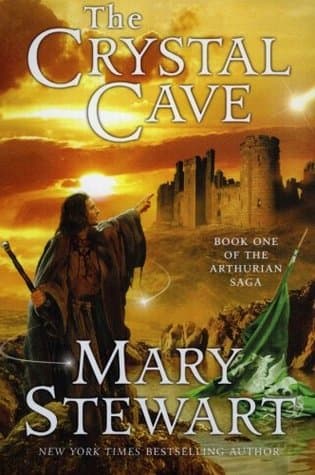
- The Crystal Cave
Mary Stewart
4.1 (42k) average on GoodreadsFantasyMary Stewart's "The Crystal Cave" shares Lawhead's commitment to historical realism and a grounded portrayal of Merlin's early life. Both authors present Merlin as a rational figure whose 'magic' often stems from keen observation, knowledge of natural phenomena, and political acumen, rather than pure supernatural power. However, Stewart's prose is often considered more elegant and introspective, with a greater emphasis on Merlin's internal monologue and philosophical musings. Lawhead's "Merlin" tends to be more action-oriented and broader in its scope of societal conflict, while Stewart's narrative, though epic, feels more intimate, focusing intently on Merlin's personal development and his relationship with the land and its secrets. Stewart's work, often praised for its psychological depth, as noted by critics in Mythlore, provides a more subtle unfolding of Merlin's prophetic abilities.
- Harry Potter and the Sorcerer's Stone
J.K. Rowling
4.5 (7M) average on GoodreadsFantasyRescued from a miserable life under the stairs, an orphaned boy discovers he's a wizard destined for a magical school, where he uncovers a dangerous secret tied to the dark wizard who murdered his parents.
- The Hunger Games
Suzanne Collins
4.3 (6.4M) average on GoodreadsFantasyIn a future where children fight to the death on live television, Katniss Everdeen volunteers for the arena, turning a death sentence into a fight for survival and a spark of rebellion.
- 1984
George Orwell
4.2 (3.1M) average on GoodreadsPoliticsIn a future where surveillance and thought control are absolute, a man's search for truth clashes with the Party, showing that hope can be a form of rebellion.
- Divergent
Veronica Roth
4.2 (2.9M) average on GoodreadsFantasyIn a society divided by virtues, a sixteen-year-old's difference from the norm starts a rebellion that threatens her world.





Enjoyed the summary?
A summary gives you the shape of the book. The book itself has the detail, the examples and the voice.
Find Merlin on AmazonAs an Amazon Associate, BookBrief earns from qualifying purchases. How we're funded