
Core Idea
- Difficulty
- Easy
- Read it if
- You are a basketball fan, interested in sports psychology, or want to understand the mindset of an elite performer.
- Skip it if
- You are looking for a deep dive into basketball tactics or a critical analysis of Jordan's off-court life.
Key Takeaways from Michael Jordan
The Cut That Fueled Greatness
Rejection can be the most powerful motivator for success.
Michael Jordan's famous competitive spirit was not fully present from birth. It started with a moment he saw as failure: being cut from the varsity basketball team in his sophomore year. This small setback, often misremembered as a full exclusion from basketball, was a key moment. He played for the junior varsity, but the sting of not making the top team created a strong dedication to getting better. He turned this embarrassment into a tireless work ethic, practicing for many hours, often before school. This early experience taught him the value of constant effort and the pain of being overlooked. It gave him a deep desire to prove himself, which defined his entire career. It shows that sometimes, the biggest reasons for greatness are not successes, but the pain of rejection.
“Jordan's perceived failure to make the varsity basketball team in his sophomore year at Laney High School wasn't a setback, but the crucible that forged his unparalleled drive.”
In the book: The specific story of Jordan being cut from the Laney High School varsity team in his sophomore year, and his subsequent dedication to practicing before and after school.
Try this: Embrace setbacks as opportunities for growth. Instead of letting rejections define you negatively, use them as fuel to work harder, identify weaknesses, and develop a more resilient mindset. Channel that frustration into focused, deliberate practice and self-improvement.
Related ideas: resilience, motivation, overcoming-adversity
The Relentless Pursuit of Perfection
Jordan's greatness stemmed from an insatiable desire to master every facet of his game.
Michael Jordan did not just want to be good; he constantly sought perfection in all parts of his game. This included not only scoring but also defense, passing, and even the mental side of basketball. His famous work ethic meant countless hours in the gym, practicing shots, improving his footwork, and conditioning his body. He notably worked on his post-up game later in his career when defenders began to anticipate his drives. This careful attention to detail meant he was always changing, adapting, and adding new skills, staying ahead of his competition. His commitment to mastery was ongoing, not just occasional. It shows that true greatness means constant improvement.
“Even after achieving unparalleled success, Jordan remained his harshest critic, constantly seeking to refine his skills and eliminate any perceived weaknesses.”
In the book: Jordan's dedication to improving his post-up game in the latter half of his career, and his consistent presence in the gym even after winning championships.
Try this: Identify specific areas for improvement in your own craft or profession. Don't rest on past successes; instead, proactively seek out opportunities to learn new skills, refine existing ones, and adapt to changing circumstances. Embrace a growth mindset over a fixed one.
Related ideas: mastery, work-ethic, continuous-improvement
Leadership Through Uncompromising Expectation
Jordan's leadership style was demanding, pushing teammates to reach their highest potential.
Michael Jordan's leadership was not always gentle or outwardly encouraging. It was often demanding, strict, and sometimes harsh. He pushed his teammates with the same intensity he had, holding them to the same high standards he set for himself. This was not about being liked, but about winning. He challenged players in practice, criticized their mistakes, and expected their best effort. While some found it hard, this constant pressure eventually created a championship team. Jordan understood that true leadership sometimes requires making people uncomfortable, pushing them beyond what they thought they could do to reach their full potential. His method showed that a leader's main job is to improve the whole group, even if it means causing some friction.
“Jordan's teammates often described his intensity as both inspiring and intimidating, but it was his unwavering expectation of excellence that elevated the entire Bulls organization.”
In the book: Accounts from former Bulls teammates (e.g., Steve Kerr, Scottie Pippen) describing Jordan's demanding practices, trash talk, and high expectations for everyone on the team.
Try this: As a leader, be clear about your expectations for performance and effort. Don't shy away from constructive criticism or holding others accountable to high standards, especially if it's in service of a shared goal. Balance firm expectations with support for development.
Related ideas: leadership, high-standards, team-dynamics
The Power of Mental Toughness
Jordan's ability to perform under immense pressure was a hallmark of his psychological fortitude.
Beyond his physical ability, Michael Jordan had remarkable mental toughness. This allowed him to perform his best when the stakes were highest. He thrived under pressure, famously making many game-winning shots and delivering memorable performances in key moments. This was more than just confidence; it was a deep belief in his preparation and ability to perform, along with a great capacity to ignore distractions and focus intensely on the task. His calm in difficult situations, his ability to recover from missed shots, and his psychological tactics against opponents all pointed to a mind as sharp as his body. This mental strength was arguably as important to his success as any physical trait.
“In the clutch, Jordan's mind was as sharp and unyielding as his physical game, allowing him to execute under the most extreme pressure.”
In the book: Numerous examples of Jordan's clutch shots (e.g., 'The Shot' against Cleveland, the final shot against Utah in '98), and his ability to perform exceptionally in high-stakes playoff games.
Try this: Develop strategies to manage pressure and maintain focus in high-stress situations. This could include visualization, deep breathing, or focusing on process over outcome. Build confidence through consistent preparation and practice, trusting your ability to perform when it matters most.
Related ideas: mental-fortitude, pressure-performance, clutch-player
Beyond the Scorecard: The Art of Impact
Jordan's influence transcended statistics, fundamentally changing the game and its global appeal.
Michael Jordan's influence on basketball and global sports culture went far beyond his impressive statistics. While his scoring titles and championships are clear, his real legacy is how he improved the game itself. He brought an unmatched level of athleticism, artistry, and competitive drama to the court, making basketball a spectacle that drew audiences worldwide. His iconic dunks, gravity-defying moves, and strong will to win made him a cultural icon, inspiring many people to play basketball. He was key in making the NBA global, turning it into a marketable entity that crossed national borders. His influence showed that true greatness is not just about personal achievement, but about the lasting effect one can have on an entire field or industry.
“Jordan didn't just score points; he created moments, inspired generations, and transformed basketball into a global phenomenon.”
In the book: The global explosion of NBA popularity during Jordan's era, the iconic status of his 'Air Jordan' brand, and the widespread imitation of his playing style by younger generations.
Try this: Consider the broader impact of your work or passion. How can you not just achieve personal goals, but also contribute to the growth and elevation of your community, industry, or field? Strive to create something that resonates beyond your immediate output.
Related ideas: legacy, global-impact, cultural-icon
The Evolution of a Champion
Jordan's career was marked by continuous adaptation and strategic reinvention.
While often remembered for his incredible athleticism and aerial moves, Michael Jordan's continued dominance also came from his changing strategy. As he got older and opponents adjusted to his initial style, Jordan did not rely only on his fading physical gifts. Instead, he carefully developed new parts of his game. He improved his jump shot, mastered the post-up, and became an even smarter defender and passer. This ability to change himself, moving from a mainly slashing, high-flying guard to a more versatile, mid-range and post-up threat, allowed him to stay effective and lead the Bulls to three more championships after his first retirement. It shows that even the most naturally talented individuals must keep learning and adapting to stay ahead and continue their success.
“From an athletic marvel to a cerebral assassin, Jordan consistently evolved his game to counter opponents and extend his dominance.”
In the book: The distinct phases of Jordan's career, particularly the shift in his offensive game from his early years (dominating with drives and dunks) to his later years (mastering the fadeaway jump shot and post-up game).
Try this: In your own career, actively seek out ways to evolve your skillset. Anticipate changes in your industry or role and proactively acquire new knowledge or abilities. Don't be afraid to pivot or refine your approach as circumstances change.
Related ideas: adaptation, reinvention, strategic-thinking
The All-Consuming Nature of Greatness
Achieving unparalleled success often requires an almost obsessive dedication.
Michael Jordan's journey to becoming the best basketball player ever was not a casual effort; it was a total commitment. His dedication was almost an obsession, affecting his diet, sleep, social life, and every waking moment. He lived and breathed basketball, constantly thinking about the game, his opponents, and how to improve. This level of focus is often necessary to reach the very top of any field. While it may involve personal sacrifices and an intense focus that some find hard to maintain, it shows that truly great achievements often require an extraordinary, single-minded devotion. It proves that to be the best, you often need to commit more than anyone else.
“For Jordan, basketball wasn't just a game; it was a consuming passion that dictated much of his life's focus and energy.”
In the book: Stories of Jordan's intense practice routines, his competitive gambling, and his unwavering focus on basketball even off the court, often at the expense of other aspects of his life.
Try this: Reflect on your own passions. Are you willing to make the necessary sacrifices and dedicate the intense focus required to achieve your highest aspirations? Understand that true mastery often demands an all-in approach, not a half-hearted one.
Related ideas: obsession, dedication, sacrifice
The Unbreakable Will to Win
Jordan's ultimate differentiator was his unyielding desire to emerge victorious at all costs.
At the heart of Michael Jordan's greatness was an almost extreme will to win. This was not just a preference; it was an absolute necessity. He hated losing more than he loved winning, and this dislike of defeat pushed him to great heights. This competitive fire showed up in every part of his life, from practice drills to card games, and most famously, on the basketball court. He would do whatever it took—outwork, outsmart, out-compete—to ensure victory. This strong spirit allowed him to overcome injuries, exceed expectations, and consistently perform under pressure. It is an important lesson that while talent opens doors, a strong will to succeed is often the main key to sustained, championship-level performance.
“More than talent or skill, it was Jordan's ferocious will to win that separated him from his peers and fueled his legendary career.”
In the book: Numerous anecdotes about Jordan's competitiveness in everything from practice scrimmages to golf, and his relentless drive in playoff series, even when injured (e.g., 'The Flu Game').
Try this: Cultivate a strong internal drive to succeed. Identify what winning means to you in your context and commit fully to achieving it. Don't let setbacks extinguish your desire to compete and overcome challenges.
Related ideas: competitiveness, willpower, grit
Michael Jordan Quotes
“I can accept failure, everyone fails at something. But I can't accept not trying.”
“Some people want it to happen, some wish it would happen, others make it happen.”
“I've missed more than 9000 shots in my career. I've lost almost 300 games. 26 times, I've been trusted to take the game winning shot and missed. I've failed over and over and over again in my life. And that is why I succeed.”
“Talent wins games, but teamwork and intelligence win championships.”
“To learn to succeed, you must first learn to fail.”
“The game has its ups and downs, but you can never lose focus on your goals.”
“I play to win, whether during practice or a real game. And I will not let anything get in the way of me and my competitive enthusiasm to win.”
“My father used to say that it's never too late to do anything you wanted to do. And you never know what you can accomplish until you try.”
“You have to expect things of yourself before you can do them.”
“Always turn a negative situation into a positive situation.”
“If you push yourself to the maximum, you'll find that there are no limits to what you can achieve.”
“I want to be perceived as a guy who played as hard as he could, as a guy who was passionate about the game.”
“I'm not out there to be a role model, I'm out there to play basketball.”
Quiz
10 questions on the main ideas. Each answer comes with a short explanation.
Question 1
Which university did Michael Jordan attend before being drafted into the NBA?
- Duke University
- University of North Carolina at Chapel Hill
- Georgetown University
- Syracuse University
Show answer
B. University of North Carolina at Chapel Hill The biography covers Jordan's NCAA years, and he famously played for the University of North Carolina at Chapel Hill, where he hit the game-winning shot in the 1982 NCAA Championship.
Question 2
According to the biography, what major career event marked the end of the period covered by the 1999 revised edition?
- His first NBA championship with the Chicago Bulls
- His return to the NBA with the Washington Wizards
- His 1999 retirement from the game
- Winning an Olympic gold medal with the 'Dream Team'
Show answer
C. His 1999 retirement from the game The book description explicitly states that the biography covers his career 'to his 1999 retirement from the game,' indicating this as the concluding event for that edition.
Question 3
The biography details Jordan's 'boyhood.' Which aspect of his early life is often highlighted as foundational to his competitive drive?
- His early success in baseball, his first sport
- His rivalry with his older brother, Larry
- His family's relocation to a new state
- His academic achievements in high school
Show answer
B. His rivalry with his older brother, Larry Biographies of Michael Jordan frequently emphasize the intense sibling rivalry with his older brother, Larry, as a significant factor in shaping his competitive spirit and work ethic from a young age.
Question 4
What common theme in sports biographies, likely explored in Lovitt's work, is exemplified by Jordan's transition from a college star to an NBA rookie?
- The challenges of managing personal wealth at a young age
- The pressure to live up to high expectations and adapt to a professional environment
- The difficulty of balancing athletic and academic pursuits
- The importance of choosing the right endorsement deals
Show answer
B. The pressure to live up to high expectations and adapt to a professional environment The transition from college to professional sports, especially for a highly touted player like Jordan, invariably involves immense pressure and the need to adapt to a much higher level of competition and scrutiny, a common theme in such biographies.
Question 5
The biography describes Jordan's 'amazing career.' What was a key element of his playing style that made him stand out from many of his contemporaries?
- His dominant post-up game and rebounding prowess
- His exceptional passing vision and court generalship
- His unparalleled athleticism, aerial creativity, and clutch scoring ability
- His consistent three-point shooting and floor spacing
Show answer
C. His unparalleled athleticism, aerial creativity, and clutch scoring ability Michael Jordan was renowned for his incredible athleticism, acrobatic moves in the air, and his ability to perform at his best in critical moments, often hitting game-winning shots.
Question 6
Given the 'inspiring' nature of the biography, what practical lesson might readers glean from Jordan's career trajectory, especially concerning setbacks?
- That natural talent alone is sufficient for ultimate success
- The importance of perseverance, hard work, and learning from failures (e.g., being cut from his high school varsity team)
- That individual performance is always more critical than team cohesion
- The necessity of changing teams to find the right fit for championship aspirations
Show answer
B. The importance of perseverance, hard work, and learning from failures (e.g., being cut from his high school varsity team) An 'inspiring biography' of Jordan would almost certainly highlight his famous dedication to improvement, his work ethic, and how he overcame early setbacks, like being cut from his high school varsity team, through sheer determination.
Question 7
The book is described as 'completely revised and updated' up to Jordan's 1999 retirement. What significant phase of his career would therefore NOT be extensively covered in this specific edition?
- His initial three NBA championships with the Bulls
- His brief foray into professional baseball
- His second retirement in 1998 and subsequent return to play for the Washington Wizards
- His time playing for the University of North Carolina
Show answer
C. His second retirement in 1998 and subsequent return to play for the Washington Wizards The book explicitly states it covers his career 'to his 1999 retirement.' His return to play for the Washington Wizards occurred after this period, from 2001-2003, and would not be included in a book updated only to 1999.
Question 8
A key argument often made about Jordan's impact, likely discussed in this biography, is how he transcended the sport. What aspect best illustrates this transcendence?
- His consistent scoring titles throughout his career
- His ability to elevate the global appeal of the NBA and become a worldwide cultural icon
- His defensive prowess, earning him multiple Defensive Player of the Year awards
- His record for most triple-doubles by a shooting guard
Show answer
B. His ability to elevate the global appeal of the NBA and become a worldwide cultural icon Jordan's impact went far beyond just his on-court statistics; he became a global phenomenon, a marketing titan, and arguably the most recognizable athlete in the world, significantly boosting the NBA's international profile.
Question 9
The biography covers Jordan's 'amazing career.' What specific challenge did Jordan and the Chicago Bulls face and overcome to achieve their first NBA championship, a narrative likely emphasized in the book?
- Consistently losing to the Boston Celtics in the Eastern Conference Finals
- Overcoming the dominant Detroit Pistons, known as the 'Bad Boys,' who had eliminated them multiple times
- Struggling with team chemistry issues despite individual talent
- A series of significant injuries to key players leading up to the playoffs
Show answer
B. Overcoming the dominant Detroit Pistons, known as the 'Bad Boys,' who had eliminated them multiple times A central part of the Bulls' championship narrative, and Jordan's early career struggle, was their repeated defeats to the physical and veteran Detroit Pistons before finally breaking through in 1991.
Question 10
Considering the 'inspiring' aspect of the biography, what broader message does Jordan's journey from a young boy to a global legend convey about achieving greatness?
- That early recognition of talent guarantees a smooth path to success
- That sustained excellence requires a combination of immense talent, relentless dedication, mental toughness, and the ability to elevate those around you
- That changing environments frequently is essential for continuous growth
- That focusing solely on individual statistics is the ultimate measure of impact
Show answer
B. That sustained excellence requires a combination of immense talent, relentless dedication, mental toughness, and the ability to elevate those around you An inspiring biography of Jordan would likely weave together themes of his natural gifts, his legendary work ethic, his competitive fire, and his role in team success to illustrate a comprehensive picture of what it takes to achieve and maintain greatness at the highest level.
Michael Jordan FAQ
What key periods of Michael Jordan's life does the book cover?
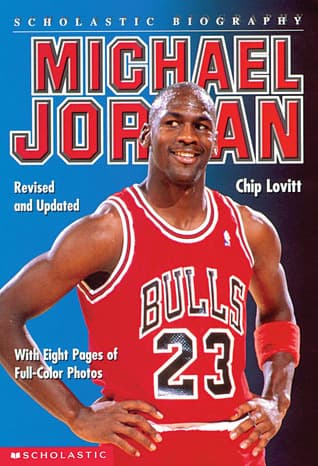
This biography provides an in-depth look at Michael Jordan's entire career, tracing his journey from his early boyhood and formative NCAA years all the way through to his retirement from professional basketball in 1999.
Does the book include details about Jordan's college basketball career?
Yes, the book dedicates significant attention to Michael Jordan's time playing for the North Carolina Tar Heels, highlighting his development as a player and key moments during his NCAA championship-winning season.
What is 'The Flu Game' in the context of Michael Jordan's career?
'The Flu Game' refers to Game 5 of the 1997 NBA Finals where Michael Jordan played an incredible game despite being severely ill with what was reported as the flu. His performance is widely considered one of the most iconic and heroic in NBA history.
How does this biography differ from other books about Michael Jordan?
This particular biography by Coleen Lovitt is completely revised and updated, offering a fresh perspective and incorporating information up to his 1999 retirement, ensuring a comprehensive and contemporary account of his career.
Does the book delve into Michael Jordan's personal life off the court?
While the primary focus is on his basketball career, the biography touches upon aspects of Jordan's personal life that influenced or were influenced by his professional journey, providing context to his public persona.
What impact did Michael Jordan have on basketball and popular culture?
Michael Jordan's impact was monumental, transforming basketball into a global phenomenon and transcending sports to become a cultural icon. He influenced fashion, marketing, and inspired a generation of athletes worldwide.
Does the book cover Jordan's first retirement and return to the NBA?
Yes, the biography details Jordan's surprising first retirement in 1993 to play baseball and his highly anticipated return to the Chicago Bulls in 1995, capturing the drama and significance of these events.
Is this book suitable for young readers interested in Michael Jordan?
As an inspiring biography covering his entire career, it is well-suited for a broad audience, including younger readers who want to learn about the life and achievements of one of the greatest athletes of all time.
About the author

Coleen Lovitt is a non-fiction author recognized for her insightful biographies. Her acclaimed work on basketball legend Michael Jordan offers a comprehensive look at the athlete's life and career. Lovitt's writing style is known for its meticulous research and engaging narrative, making complex subjects accessible to a wide audience.
Similar books
- Shoe Dog: A Memoir by the Creator of NIKE
Phil Knight
4.5 (147k) average on GoodreadsBusinessExplores the relentless pursuit of a vision and the mindset of a driven individual in the sports world.
- The Diary of a Young Girl
Anne Frank
4.2 (2.7M) average on GoodreadsBiographyDuring the Nazi occupation, a teenage girl's diary, written from a secret annex, shares observations on humanity, hope, and the wait for freedom.
- Eat, Pray, Love
Elizabeth Gilbert
3.6 (1.5M) average on GoodreadsLifestyleA heartbroken writer leaves her conventional life for a year-long global search for pleasure in Italy, spiritual devotion in India, and unexpected love and balance in Bali.
- Night
Elie Wiesel
4.3 (970k) average on GoodreadsBiographyIn the darkness of Auschwitz and Buchenwald, a teenage Elie Wiesel faces the extermination of his family, the loss of his faith, and the lasting scars of humanity's deepest cruelty.
- Steve Jobs
Walter Isaacson
4.1 (957k) average on GoodreadsBusinessSteve Jobs was a visionary who fused creativity and technology to revolutionize six industries and shape our digital world.
- The Glass Castle
Jeannette Walls
4.3 (903k) average on GoodreadsBiographyJeannette Walls's memoir describes her unusual childhood with brilliant, free-spirited parents whose poverty-stricken life shaped her independence and love despite family problems.






Enjoyed the summary?
A summary gives you the shape of the book. The book itself has the detail, the examples and the voice.
Find Michael Jordan on AmazonAs an Amazon Associate, BookBrief earns from qualifying purchases. How we're funded