
Synopsis
Covers the whole plot, including the ending.
- Difficulty
- Easy
- Pacing
- Slow
- Mood
- Whimsical, Gentle, Adventurous, Heartwarming
- Read it if
- You enjoy classic children's fantasies featuring anthropomorphic characters and themes of resilience and belonging.
- Skip it if
- You prefer fast-paced plots or stories without a strong sense of gentle whimsy.
Miss Hickory Plot Summary
Covers the whole plot, including the ending.
Ann's Departure and Miss Hickory's Abandonment
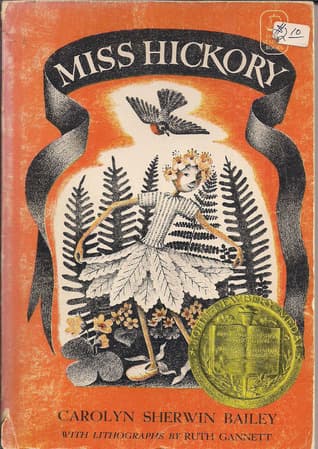
The story begins at Ann's New Hampshire home, where Miss Hickory, a doll with a hickory nut head and an apple-wood twig body, lives a comfortable life. Ann is preparing to leave for Boston for school, and in the rush of packing, Miss Hickory is accidentally left on the windowsill. Ann's grandmother, who made Miss Hickory, is also moving out for the winter. Miss Hickory watches as the house is boarded up and Ann leaves, making her feel abandoned and vulnerable as winter approaches. Her initial shock turns into a growing sense of fear and loneliness, as she realizes she must now survive on her own in the wild.
Seeking Shelter and Meeting Crow
As winter begins, Miss Hickory, realizing she cannot stay on the windowsill, tries to find a safer place. Her twig body makes moving hard, but she eventually tumbles into the yard. There, she meets Crow, a large, opinionated, and somewhat cynical bird. Crow, at first dismissive of Miss Hickory's situation, reluctantly offers her shelter in his nest in a nearby apple tree. He grumbles about her being a 'house doll' and not understanding the wild, but his actions show a grudging sense of responsibility, giving her temporary refuge and a harsh introduction to outdoor life.
Life in the Apple Tree and Squirrel's Antics
Miss Hickory settles into Crow's nest, finding it a rough but secure home. She watches the changing seasons and the activities of the forest creatures. Her biggest challenge comes from Squirrel, who is always looking for hickory nuts to store for winter. Squirrel sees Miss Hickory's head as a good food source and repeatedly tries to steal it, to Miss Hickory's terror and Crow's annoyance. Crow often steps in, scolding Squirrel and protecting Miss Hickory, though he sometimes complains about the trouble she brings, showing the constant threat she faces in the wild.
The Winter's Approach and the Need for a Permanent Home
As winter deepens and snow falls heavily, the apple tree becomes a less hospitable place. Crow, a migratory bird, will soon need to leave for warmer climates. Miss Hickory understands that Crow's nest is only a temporary solution and that she needs a more permanent, secure shelter to survive the New Hampshire winter. Her concern shifts from just surviving daily to finding a long-term solution, prompting her to consider other options and ask advice from her animal companions, especially the wise, old Groundhog.
Meeting Groundhog and the Plan for the Barn
Seeking guidance, Miss Hickory consults Groundhog, a wise, old creature known for his knowledge of the land and its secrets. Groundhog, after much thought, suggests that Miss Hickory should try to find shelter in the barn, a sturdy building that protects from the weather and predators. He explains that the barn is a traditional winter home for many small creatures. This advice gives Miss Hickory a new goal and direction, but also presents the challenge of traveling to the barn through the increasingly cold and snowy landscape.
The Journey to the Barn
With Groundhog's advice, Miss Hickory, helped by Crow and other creatures like the Blue Jay, begins her difficult journey to the barn. The journey is dangerous; she must go through deep snow, brave freezing temperatures, and avoid predators. Her small size and fragile twig body make every step a huge effort. The other animals, despite their initial doubt or indifference, offer encouragement and practical help, showing a growing sense of community and care for the vulnerable doll. This journey tests Miss Hickory's resilience and determination.
Arrival at the Barn and New Friends
After a challenging journey, Miss Hickory finally reaches the barn. She finds it a busy, if somewhat messy, environment, filled with various farm animals and wild creatures seeking refuge from the cold. She quickly makes new friends, including Field Mouse, a practical and kind creature, and the Cow, who offers her a warm, safe spot within her stall. The barn provides not only physical shelter but also a sense of belonging and community that Miss Hickory had lacked since Ann's departure. She learns to adapt to barn life, finding a new purpose in her interactions with the animals.
The Threat of Squirrel and the Barn Cat
Even within the barn's relative safety, Miss Hickory's hickory nut head remains a tempting target for Squirrel, who manages to follow her. Squirrel's constant attempts to steal her head continue to worry Miss Hickory. However, the barn also introduces her to the Barn Cat, a sleek and watchful predator who, surprisingly, takes an interest in protecting Miss Hickory. The Barn Cat's presence deters Squirrel and other potential threats, giving Miss Hickory a powerful, if somewhat distant, guardian. This alliance shows the complex relationships in the wild.
The Winter Passes and the Coming of Spring
As the New Hampshire winter slowly passes, Miss Hickory endures the cold and the challenges of barn life. She observes the subtle signs of spring's approach — melting snow, the return of migratory birds, and the awakening of dormant life. Her experiences have changed her from a delicate house doll into a resilient survivor. She has learned the ways of the wild and formed deep bonds with her animal companions. Spring brings renewal and hope, but also a growing awareness that her time in the barn might be ending, and she must decide about her future.
The Offer of a New Home
With spring fully arrived, Miss Hickory faces a new problem. While she has found a community in the barn, it is not her original home. However, Field Mouse and his family, having grown fond of her, offer her a permanent place in their cozy nest. They propose she become their 'house doll' within the barn, a respected member of their family. This offer represents a choice between returning to her old life, if possible, or embracing a new identity and purpose within the wild. Miss Hickory is touched by their kindness and considers the offer seriously, feeling a deep connection to her new friends.
Ann's Return and Miss Hickory's Choice
As summer approaches, Ann returns to her New Hampshire home for the holidays, and to Miss Hickory's surprise, she remembers and begins searching for her lost doll. Ann's return gives Miss Hickory her ultimate choice: to return to her former life as a cherished doll in a human home, or to remain in the wild with her animal friends who have become her family. This moment of decision is poignant, as Miss Hickory has grown and changed so much during her time away. She must weigh the comfort of her past against the love and belonging she has found in her new, wild existence.
The Resolution and Miss Hickory's Transformation
In a key moment, Miss Hickory makes her choice. She decides not to return to Ann, understanding that she has outgrown her old life and found her true place in the wild. She has become a vital part of the animal community, her experiences having changed her from a passive doll into an active, resilient member of nature. She symbolically lets go of her desire for her old life, embracing her identity as a creature of the wild. Her decision shows her full integration into the natural world, having found a unique purpose and a loving, if unconventional, family among the animals, living a life of quiet contentment.
Principal Figures
Miss Hickory
Protagonist
A doll with a hickory nut head and an apple-wood twig body.
Miss Hickory is a small, delicate doll, initially accustomed to a sheltered life as a child's toy. Her head is a real hickory nut, making her vulnerable to nature's creatures, particularly squirrels. She is observant, thoughtful, and initially quite fearful and helpless when abandoned. Throughout her ordeal, she demonstrates remarkable resilience, adaptability, and a growing understanding of the natural world. She values friendship and belonging, eventually finding her own unique place.
Relationships: Ann (Her human owner; she feels abandoned by Ann but still holds affection.); Crow (Her first protector and guide in the wild, a gruff but caring friend.); Squirrel (Her persistent adversary, always trying to steal her head.); Groundhog (A wise mentor who offers crucial advice.); Field Mouse (A kind and practical friend who offers her a home.); Barn Cat (An unexpected protector in the barn.)
Crow
Supporting
A cynical but ultimately kind bird who provides Miss Hickory's first shelter.
Crow is a large, intelligent, and often grumpy bird. He presents himself as a cynical realist, frequently complaining about the 'trouble' Miss Hickory brings and the foolishness of 'house dolls.' Despite his gruff exterior, he possesses a strong sense of responsibility and a hidden kindness, consistently protecting Miss Hickory and offering her guidance on surviving in the wild. He embodies the harsh but ultimately supportive aspects of nature.
Relationships: Miss Hickory (Her first protector and guide in the wild, a gruff but caring friend.)
Squirrel
Antagonist
A persistent, food-driven creature obsessed with Miss Hickory's hickory nut head.
Squirrel is driven by instinct, primarily the need to gather and store food for winter. He views Miss Hickory's head as a valuable resource – a perfect hickory nut. He is persistent, cunning, and relentless in his attempts to steal it, creating constant peril for Miss Hickory. While not malicious in a human sense, his natural drives make him a significant antagonist, representing the inherent dangers of the natural world for the vulnerable.
Relationships: Miss Hickory (His target for a food source.)
Groundhog
Supporting
An ancient and wise animal, a source of crucial advice for Miss Hickory.
Groundhog is portrayed as an old, respected, and wise creature of the earth. He is slow to speak but his words carry great weight and insight. He understands the cycles of nature and the best ways for creatures to survive. His advice to Miss Hickory to seek shelter in the barn is pivotal to her survival, demonstrating his role as a mentor figure who helps Miss Hickory navigate her new world.
Relationships: Miss Hickory (A wise mentor who offers crucial advice.)
Ann
Mentioned
Miss Hickory's human owner who accidentally leaves her behind.
Ann is the young girl who owns Miss Hickory. She is presented as a typical child, loving her doll but also somewhat forgetful and preoccupied with her own life events. Her departure for school in Boston is the catalyst for Miss Hickory's adventure. Ann's eventual return signifies the possibility of Miss Hickory's old life, but also highlights how much Miss Hickory has changed.
Relationships: Miss Hickory (Her human owner; she feels abandoned by Miss Hickory but still holds affection.)
Field Mouse
Supporting
A kind and practical mouse who befriends Miss Hickory in the barn.
Field Mouse is a friendly, resourceful, and compassionate creature who welcomes Miss Hickory into the barn community. He represents the warmth and generosity found within the animal world. He and his family offer Miss Hickory a permanent home, demonstrating a deep sense of loyalty and a desire to care for others. Field Mouse helps Miss Hickory feel truly accepted and valued in her new environment.
Relationships: Miss Hickory (A kind and practical friend who offers her a home.)
Barn Cat
Supporting
A sleek and formidable cat who unexpectedly protects Miss Hickory.
The Barn Cat is a natural predator, initially perceived as a potential threat. However, she develops a curious and unexpected protective instinct towards Miss Hickory. Her presence in the barn deters Squirrel and other dangers, providing Miss Hickory with a powerful guardian. The Barn Cat embodies the complex and sometimes surprising relationships that can form in the wild, where even predators can show a form of care.
Relationships: Miss Hickory (An unexpected protector in the barn.)
Blue Jay
Supporting
A helpful bird who aids Miss Hickory during her journey to the barn.
Blue Jay is a lively and helpful bird who, despite his sometimes boisterous nature, assists Miss Hickory on her perilous journey to the barn. He represents the broader network of support that Miss Hickory finds among the forest creatures. His assistance highlights the growing camaraderie and willingness of the animals to help a vulnerable member of their new community.
Relationships: Miss Hickory (A helpful companion during her journey.)
Themes & Insights
Finding Belonging and Identity
Miss Hickory's journey is about finding where she belongs and who she truly is. Initially, her identity is tied to being Ann's doll. When abandoned, she struggles with her place in the wild. Through her interactions with Crow, Groundhog, and the barn animals, she slowly sheds her 'house doll' persona. The climax of this theme is her choice to remain in the wild, rejecting her old identity to embrace a new one as an integrated member of the natural world, symbolized by Field Mouse's offer of a permanent home in the barn.
“She was Miss Hickory, a creature of the wild, and she had found her own place in it.”
Resilience and Adaptation
The New Hampshire winter and the dangers of the wild force Miss Hickory to become resilient. Her twig body and nut head make her vulnerable, but she learns to adapt to her surroundings, moving from Crow's nest to the barn. She endures hunger, cold, and the constant threat of Squirrel. Her ability to survive and even thrive in an environment so alien to her original existence shows the power of adaptation and the strength found in overcoming adversity, demonstrating that even the smallest and most fragile can endure.
“A hickory nut head and an apple-wood twig body were not made for winter, but Miss Hickory was learning to manage.”
The Interconnectedness of Nature
The book shows the web of life in the New Hampshire wilderness. Miss Hickory's survival depends on the help and interactions with various animals — Crow provides shelter, Groundhog offers wisdom, Field Mouse gives companionship, and even the Barn Cat offers protection. Predators like Squirrel and the Barn Cat are not evil but act according to their nature, part of the larger ecological balance. This theme emphasizes that all creatures, regardless of size or perceived importance, play a role in the ecosystem and are interdependent.
“In the wild, everything depended on everything else, and even a small doll could find her place.”
The Transition from Childhood to Independence
Miss Hickory's story is an allegory for a child's transition from dependence to independence. Her abandonment by Ann symbolizes leaving the sheltered world of childhood. Her journey through the wild, facing dangers and making her own decisions, mirrors the challenges of growing up. Her choice to remain in the wild, rather than returning to her 'owner,' signifies a coming-of-age, embracing self-reliance and forging her own path, much like a young adult stepping out into the world.
“She was no longer just Ann's doll; she was Miss Hickory, and she had a life of her own.”
Plot Devices & Literary Techniques
Anthropomorphism
Giving human qualities and speech to animals.
The most prominent plot device is the anthropomorphism of the animals. Crow, Groundhog, Squirrel, and all other creatures speak, reason, and display distinct personalities, allowing them to interact directly with Miss Hickory. This device enables the story to explore complex themes like friendship, responsibility, and community through animal characters, making the wild accessible and understandable to young readers while providing Miss Hickory with companions and mentors.
Symbolism of the Hickory Nut Head
Miss Hickory's head represents her vulnerability and a coveted resource.
Miss Hickory's hickory nut head is a central symbol. It represents her most vulnerable point – a delicious food source for squirrels – constantly reminding her of the dangers of the wild. However, it also symbolizes her innate connection to nature; she is literally made of natural elements. Its value to Squirrel drives much of the conflict, making it a constant reminder of her precarious existence and the need for protection, ultimately highlighting her unique blend of fragility and natural essence.
The Journey Motif
Miss Hickory's physical and metaphorical journey of self-discovery.
The story employs a classic journey motif. Miss Hickory's physical journey from the windowsill to Crow's nest, and then to the barn, is a literal quest for survival and shelter. This physical movement mirrors her internal, metaphorical journey of self-discovery and transformation. Each stage of her journey introduces new challenges, characters, and lessons, pushing her to grow and adapt, ultimately leading her to a deeper understanding of herself and her place in the world.
The Changing Seasons as a Narrative Structure
The progression of seasons mirrors Miss Hickory's emotional and physical journey.
The narrative uses the progression of the New Hampshire seasons – from autumn to deep winter and then to spring – as a structural device. The onset of winter symbolizes Miss Hickory's initial despair and vulnerability, while the harshness of the season represents her struggles. The arrival of spring signifies renewal, hope, and her eventual decision to embrace her new life. This natural cycle not only grounds the story in a realistic setting but also mirrors Miss Hickory's emotional arc, moving from abandonment and fear to resilience and belonging.
Miss Hickory Quotes
“Miss Hickory was a country mouse, for she had a hickory nut for a head and a body made of applewood.”
“It was her nature to be practical and not to waste time on tears.”
“But a house is not a home without someone to live in it.”
“The wind was a great storyteller, and it told Miss Hickory many tales of the world beyond her yard.”
“She had to think, and thinking was hard work when one was only a doll.”
“Even the smallest of us can do great things if we put our minds to it.”
“Winter was not just a time of cold, but a time of waiting and dreaming.”
“She was learning that even sorrow had its own kind of beauty, if one looked for it carefully.”
“To be truly alive, one must be willing to change.”
“The wild creatures were her neighbors, and she understood their language.”
“Sometimes the best way to find what you've lost is to stop looking for it.”
“She might be small, but her heart was as big as the whole wide world.”
“A journey is not just about where you go, but who you become along the way.”
Quiz
10 questions on the plot and the characters. Each answer comes with a short explanation.
Question 1
What is Miss Hickory's head made of?
- An acorn
- A pebble
- A hickory nut
- A walnut
Show answer
C. A hickory nut Miss Hickory's name directly reflects her head, which is made from a hickory nut.
Question 2
Why does Miss Hickory find herself alone for the winter?
- Her owner, Ann, goes on a long vacation.
- Her owner, Ann, moves to Boston to attend school.
- She runs away from home.
- She is accidentally left behind during a picnic.
Show answer
B. Her owner, Ann, moves to Boston to attend school. The story begins with Ann moving to Boston for school, leaving Miss Hickory behind in New Hampshire.
Question 3
What is Miss Hickory's body made of?
- A willow branch
- An apple-wood twig
- A piece of wire
- A corn cob
Show answer
B. An apple-wood twig Miss Hickory's body is described as an apple-wood twig, complementing her hickory nut head.
Question 4
Which animal is Miss Hickory's primary companion and helper throughout the winter?
- Mr. Toad
- Crow
- Squirrel
- Rabbit
Show answer
B. Crow Crow becomes Miss Hickory's main companion and provides much-needed assistance and friendship during her solitary winter.
Question 5
Where does Miss Hickory initially try to find shelter after being left behind?
- In a bird's nest
- Under a fallen log
- In a mouse hole
- Under a lilac bush near the house
Show answer
D. Under a lilac bush near the house After Ann leaves, Miss Hickory finds herself under a lilac bush, a familiar spot near her old home, as she tries to figure out her next steps.
Question 6
What significant personal sacrifice does Miss Hickory consider making to survive the winter?
- Giving up her clothes for warmth
- Trading her hickory nut head for food
- Allowing herself to be buried in the snow for insulation
- Losing her apple-wood twig body to be used as firewood
Show answer
B. Trading her hickory nut head for food At one point, driven by desperation, Miss Hickory considers giving up her own head, the hickory nut, as food for Squirrel, highlighting her immense struggle for survival.
Question 7
What does Miss Hickory ultimately learn about belonging and home by the end of her winter ordeal?
- That her only true home is with Ann, the human girl.
- That she prefers the company of other dolls over animals.
- That home is not just a physical place, but where she feels purpose and connection, even with nature.
- That she is too fragile to survive outside and must always be indoors.
Show answer
C. That home is not just a physical place, but where she feels purpose and connection, even with nature. Through her adventures and relationships with the wild animals, Miss Hickory discovers a deeper sense of home and belonging within nature itself, beyond her previous dependence on Ann's house.
Question 8
What unique challenge does Miss Hickory face due to her physical composition as winter progresses?
- Her wooden body attracts termites.
- Her hickory nut head could sprout if buried in the ground.
- Her twig body might grow leaves and roots.
- She becomes a target for birds looking for nesting material.
Show answer
B. Her hickory nut head could sprout if buried in the ground. One of the most fantastical and perilous aspects of her existence is the risk of her hickory nut head sprouting if it remains in contact with the earth and moisture, which would transform her.
Question 9
Which specific event causes Miss Hickory to be separated from the safety of the house and begin her outdoor ordeal?
- A strong gust of wind blows her out an open window.
- She is accidentally dropped by Ann's mother while cleaning.
- She falls from a shelf while trying to retrieve something.
- A curious cat carries her outside.
Show answer
C. She falls from a shelf while trying to retrieve something. Miss Hickory falls from a shelf inside the house after Ann leaves, leading her to be stuck outside and begin her winter adventure.
Question 10
What is the overarching theme represented by Miss Hickory's journey from a house doll to a resilient member of the wild?
- The superiority of human ingenuity over nature.
- The inevitability of loss and loneliness.
- The power of adaptation, self-reliance, and finding one's place within the natural world.
- The danger of venturing outside of one's comfort zone.
Show answer
C. The power of adaptation, self-reliance, and finding one's place within the natural world. Miss Hickory's story is a profound exploration of adaptation and self-reliance, as she learns to survive and thrive in a harsh environment, ultimately finding her true place and purpose within the natural world.
Miss Hickory FAQ
What is the basic premise of 'Miss Hickory'?
Miss Hickory is a doll whose body is an apple-wood twig and head is a hickory nut. Her owner, Ann, moves to Boston, leaving Miss Hickory behind in rural New Hampshire, forcing the doll to survive the harsh winter alone and find a new purpose among the local wildlife.
Who are the primary animal characters Miss Hickory interacts with?
Miss Hickory primarily interacts with Mr. T. Willard Brown, a crow who initially offers her shelter, and Squirrel, who becomes a significant companion. Other animals like the Groundhog, Skunk, and Woodchuck also play roles in her winter adventures.
What is the central conflict Miss Hickory faces throughout the book?
Miss Hickory's central conflict is her struggle for survival and belonging after being left behind by Ann. She must adapt to the wild, find shelter, and overcome her initial rigid, human-centric worldview to connect with the animals and understand their ways of life.
How does Miss Hickory's physical composition influence her experiences?
Her body, an apple-wood twig, and head, a hickory nut, make her vulnerable to the elements and limit her mobility. This composition also makes her a 'natural' part of the environment, allowing her to be perceived differently by the animals than a traditional doll, and it foreshadows her eventual integration with nature.
What is the significance of Miss Hickory's head being a hickory nut?
The hickory nut head is significant because it is a natural, edible part of the forest, directly linking her to the animal world and especially to Squirrel. It becomes a point of contention and a symbol of her belonging or lack thereof, particularly when Squirrel covets it for his winter stores.
Are there any subtle indications of Ann's growth or changing interests before she leaves Miss Hickory?
The text subtly suggests Ann is growing up and moving beyond her childhood toys by her departure for school in Boston. While not explicitly detailed, Ann's progression implies a natural distancing from the world of dolls, leaving Miss Hickory in a transitional state.
What is the deeper meaning behind Miss Hickory's lost head?
Miss Hickory losing her head to Squirrel symbolizes a profound transformation and a letting go of her old identity. It forces her to shed her 'doll-ness' and embrace a more natural, less human-dependent existence, ultimately leading to her spiritual rebirth and integration with the plant world.
How does the author use the changing seasons to reflect Miss Hickory's journey?
The progression from autumn, when she is abandoned, through the harsh New Hampshire winter, and into spring, mirrors Miss Hickory's emotional and physical journey. Winter represents her period of struggle, isolation, and transformation, while spring symbolizes her rebirth and new beginning.
How does Miss Hickory's initial pride and stubbornness manifest, and how does it change?
Initially, Miss Hickory exhibits human-like pride, believing herself superior to the animals and clinging to her 'proper' ways. Her stubbornness is evident in her reluctance to accept help or adapt. Through hardship, she gradually sheds this rigidity, learning humility and interdependence from the creatures around her.
What psychological journey does Miss Hickory undergo regarding her sense of identity?
Miss Hickory begins with a fixed identity as Ann's doll, tied to human society. Left alone, she experiences an identity crisis, struggling with abandonment and her place in the natural world. Her ultimate transformation involves shedding her doll identity and embracing a new, more organic existence connected to the earth.
How do the animal characters represent different aspects of survival and community?
The animals represent various survival strategies and community dynamics: Mr. T. Willard Brown embodies practical resourcefulness, Squirrel represents instinct and preparation, and the Groundhog symbolizes a more introspective, solitary wisdom. Together, they form a complex ecosystem that teaches Miss Hickory about different ways of life.
What is the psychological impact of abandonment on Miss Hickory?
Miss Hickory experiences profound feelings of abandonment, leading to fear, loneliness, and a struggle for self-preservation. This initial trauma forces her to confront her vulnerabilities and ultimately drives her transformation from a passive doll to an active participant in her own survival.
Is Miss Hickory's transformation into a tree literal or metaphorical?
The transformation is left open to interpretation, blending literal and metaphorical elements. While she physically integrates with the apple tree, becoming part of its growth, it also serves as a powerful metaphor for her complete acceptance of nature, shedding her artificial doll existence for an organic one.
What is the book's message about humanity's relationship with nature?
The book suggests that humanity often views nature as separate or subordinate, but true harmony comes from integration and respect. Miss Hickory's journey teaches that humans (or human-like figures) can find belonging and purpose by understanding and becoming a part of the natural world, rather than dominating it.
How does the ending challenge traditional notions of a 'happy ending' for a doll?
The ending, where Miss Hickory becomes part of an apple tree rather than returning to Ann or finding a new human owner, subverts typical doll narratives. It suggests that her ultimate 'happiness' isn't found in human companionship but in a profound, spiritual connection and integration with nature, redefining what it means to belong.
Could Miss Hickory's story be seen as an allegory for growing up and leaving childhood behind?
Yes, Miss Hickory's story can be interpreted as an allegory for the transition from childhood to maturity. Ann's departure signifies leaving childhood behind, and Miss Hickory's journey mirrors the challenges of independence, adapting to a new world, and finding a new identity beyond the comforts of youth.
What role does imagination play in the narrative, both for Miss Hickory and the reader?
Imagination is central, as the entire premise relies on anthropomorphizing a doll and animals. For Miss Hickory, imagination helps her cope and interpret her new world. For the reader, it invites a deeper engagement with the themes of nature, survival, and transformation, blurring the lines between reality and fantasy.
Similar books
- The Mouse and the Motorcycle
Beverly Cleary
3.9 (77k) average on GoodreadsFantasyAnthropomorphic characters and a small creature's journey for independence.
- Harry Potter and the Sorcerer's Stone
J.K. Rowling
4.5 (7M) average on GoodreadsFantasyRescued from a miserable life under the stairs, an orphaned boy discovers he's a wizard destined for a magical school, where he uncovers a dangerous secret tied to the dark wizard who murdered his parents.
- The Hunger Games
Suzanne Collins
4.3 (6.4M) average on GoodreadsFantasyIn a future where children fight to the death on live television, Katniss Everdeen volunteers for the arena, turning a death sentence into a fight for survival and a spark of rebellion.
- 1984
George Orwell
4.2 (3.1M) average on GoodreadsPoliticsIn a future where surveillance and thought control are absolute, a man's search for truth clashes with the Party, showing that hope can be a form of rebellion.
- Divergent
Veronica Roth
4.2 (2.9M) average on GoodreadsFantasyIn a society divided by virtues, a sixteen-year-old's difference from the norm starts a rebellion that threatens her world.
- The Hobbit, or There and Back Again
J.R.R. Tolkien
4.3 (2.9M) average on GoodreadsFantasyA comfort-loving hobbit named Bilbo Baggins is whisked away by a mischievous wizard and a band of dwarves on an unexpected journey to reclaim stolen treasure from a fearsome dragon, discovering courage and a magical ring along the way.






Enjoyed the summary?
A summary gives you the shape of the book. The book itself has the detail, the examples and the voice.
Find Miss Hickory on AmazonAs an Amazon Associate, BookBrief earns from qualifying purchases. How we're funded