

Synopsis
Covers the whole plot, including the ending.
- Difficulty
- Medium
- Pacing
- Moderate
- Mood
- Atmospheric, Reflective, Poignant, Hopeful, Dark
- Read it if
- You appreciate literary fiction that explores the transformative power of storytelling and imagination in the face of adversity and war.
- Skip it if
- You prefer fast-paced action or find stories of war and its impact on children too distressing.
Mister Pip Plot Summary
Covers the whole plot, including the ending.
The Arrival of Mr. Watts
On the war-torn island of Bougainville, most white residents have evacuated due to the blockade and civil unrest. The only white man who remains is Mr. Watts, an eccentric expatriate who lives with his much younger native wife, Grace. Matilda Lomas, a thirteen-year-old girl, observes Mr. Watts with a mix of curiosity and suspicion, like the rest of the villagers. One day, Mr. Watts, a former teacher, decides to reopen the ruined village school. Despite the lack of proper supplies and the prevailing fear, he invites the local children to attend, offering a semblance of normalcy and education in a world turned upside down by conflict.
Great Expectations
With no textbooks available, Mr. Watts announces that he will read a story to the children. He brings a worn copy of Charles Dickens's 'Great Expectations' and begins to read aloud. Matilda and the other children are initially bewildered by the unfamiliar language, setting, and customs described in the book, especially the character of Pip. However, Mr. Watts's compelling narration and his insistence on the story's importance gradually draw them in. The tales of Pip, Miss Havisham, and Magwitch become a powerful escape from the harsh realities of their war-torn island, fostering a vivid imaginary world.
Pip's London
As Mr. Watts continues to read 'Great Expectations,' the children become deeply engrossed in Pip's story. Matilda, in particular, finds herself imagining Pip's world with incredible vividness, often superimposing elements of London onto her own village of Tooley. The characters become real to her, and the narrative provides a framework for understanding human nature and ambition. Mr. Watts encourages their engagement, even having them write down the word 'Pip' in the sand, as paper is scarce. This act of writing, simple as it is, becomes a profound connection to the story and a source of wonder for the children.
Matilda's Connection
Matilda develops a deep connection to 'Great Expectations' and to Mr. Watts himself. She sees him not just as a teacher but as a conduit to another world. Her mother, Dolores, however, views Mr. Watts and his storytelling with deep suspicion, fearing that he is indoctrinating the children with foreign ideas that will distance them from their cultural heritage and God. Dolores's disapproval creates tension at home, as Matilda struggles to reconcile her mother's devout beliefs with the intellectual freedom and imaginative joy she finds in Mr. Watts's lessons.
The Redskin Incursion
The fragile peace of Tooley village is shattered by the arrival of the 'Redskins,' a group of rebel soldiers who are fighting for the independence of Bougainville. These soldiers are suspicious of any foreign influence and immediately question Mr. Watts's presence and his activities. They are particularly wary of the children's fascination with 'Pip,' mistaking it for a real person or a code name for a rebel leader. The soldiers' arrival instills fear and disrupts the community, putting everyone on edge and threatening to expose the innocent world Mr. Watts has created.
The Search for Pip
Misunderstanding the children's references to 'Pip,' the rebel soldiers become convinced that Pip is a person, perhaps a spy or a rival leader. They demand that Mr. Watts produce 'Pip.' Despite Mr. Watts's attempts to explain that Pip is merely a character from a book, the soldiers refuse to believe him. They intimidate the children, trying to force them to reveal Pip's whereabouts. Matilda and the other children are terrified, caught between their loyalty to Mr. Watts and the immediate danger posed by the armed soldiers.
Mr. Watts's Sacrifice
To protect the children and prevent further violence, Mr. Watts takes responsibility for 'Pip.' He bravely tells the soldiers that he is Pip, sacrificing himself to appease their anger and misunderstanding. The soldiers, still suspicious but seemingly satisfied with a 'confession,' brutalize Mr. Watts in front of the villagers. This act of self-sacrifice highlights Mr. Watts's deep commitment to his students and the power of the story he shared, even in the face of extreme danger. Matilda witnesses this harrowing event, which leaves a deep and lasting impression on her.
The Arrival of the Army
Shortly after the Redskins depart, government soldiers arrive in Tooley. These soldiers, also suspicious and violent, are looking for rebels. They find Mr. Watts's copy of 'Great Expectations' and, like the Redskins, misunderstand its significance. They interrogate the villagers, particularly Dolores, who uses the opportunity to voice her long-held suspicions about Mr. Watts and his 'foreign' influence. This further complicates the situation, as the book, once a source of comfort, now becomes a dangerous object, drawing more unwanted attention and leading to further destruction.
Dolores's Accusation and Its Consequences
During the government soldiers' interrogation, Dolores, driven by religious zeal and deep-seated suspicion of Mr. Watts, mistakenly believes she is protecting her community by denouncing Mr. Watts's influence and the 'Pip' story. She tells the soldiers that Mr. Watts had written 'Pip' in the sand and that he was a 'devil' leading the children astray. Her words, though perhaps well-intentioned from her perspective, are misinterpreted by the soldiers, who see them as further proof of subversion. This leads to the tragic destruction of the village, including the burning of houses and the schoolhouse, and the ultimate execution of Mr. Watts.
Matilda's Escape and Journey
After the complete destruction of Tooley and the brutal death of Mr. Watts and many others, Matilda is forced to flee her home. She endures a perilous journey, facing hunger, fear, and the constant threat of violence. She encounters other displaced people and learns to rely on her wits for survival. During this arduous period, the stories and characters from 'Great Expectations' become an internal refuge for her. Pip's resilience and journey mirror her own, providing a source of strength and a mental escape from the horrors surrounding her.
Life in the Refugee Camp
Matilda eventually makes her way to a refugee camp, where life is difficult but offers a degree of safety. She finds a new teacher, a kind woman who encourages her intelligence and her love for learning. Matilda continues to read and write, using her memories of 'Great Expectations' as a foundation for her own understanding of the world. The camp provides her with an opportunity to process her trauma and to further develop her intellectual capabilities, preparing her for an uncertain future beyond the war.
Grace's Revelation
Years later, Matilda, now a young woman, travels to Australia. She seeks out Grace, Mr. Watts's widow, hoping to find answers about the man who so deeply influenced her life. Grace reveals the complex truth about Mr. Watts: he was a deeply flawed man, a failed actor, and a recluse who had struggled with his own identity and purpose. She explains that his decision to read 'Great Expectations' was not just a teaching method but also a way for him to find solace and a role for himself. This revelation provides Matilda with a more nuanced understanding of her mentor, accepting both his brilliance and his humanity.
Matilda's Legacy
Matilda, now an adult, reflects on her experiences and the enduring power of Mr. Watts's lessons. She recognizes that the story of Pip, and the act of storytelling itself, not only saved her imagination but also provided her with the tools to navigate a broken world. She understands that while the physical village was destroyed, the stories and the knowledge imparted by Mr. Watts live on within her. She embraces her role as a keeper of memory and a storyteller, ensuring that the legacy of Mr. Watts and the imaginative world he opened for her will continue.
Principal Figures
Matilda Lomas
Protagonist
A thirteen-year-old girl whose imagination is ignited by 'Great Expectations.'
Matilda is an intelligent and observant young girl living in war-torn Bougainville. She possesses a keen imagination and a thirst for knowledge, making her an ideal student for Mr. Watts. Initially wary of Mr. Watts, she quickly becomes his most devoted pupil, finding solace and escape in the world of Pip. Her perspective as the narrator shapes the entire story, detailing her experiences of war, loss, and the transformative power of literature. She is deeply affected by the violence and destruction around her but finds resilience through the stories she internalizes.
Relationships: Mr. Watts (Student-teacher, mentor-mentee); Dolores Lomas (Mother) (Daughter-mother, often strained by differing worldviews); Grace (Later, a source of truth about Mr. Watts)
Mr. Watts
Supporting/Mentor
The eccentric white man who teaches the children of Tooley using 'Great Expectations.'
Mr. Watts is the last white man in Tooley, an enigmatic figure who reopens the village school. He is a former actor and a man of many secrets, carrying the weight of his own past failures. Despite his flaws, he dedicates himself to educating the children, using Charles Dickens's 'Great Expectations' as his sole teaching material. He is patient, passionate about literature, and deeply committed to fostering imagination in his students. His courage and ultimate sacrifice make him a heroic figure in Matilda's eyes, though his true nature is more complex.
Relationships: Matilda Lomas (Teacher-student, mentor); Grace (Husband-wife, a complex and enduring bond); Dolores Lomas (Viewed with suspicion and antagonism)
Dolores Lomas
Antagonist/Supporting
Matilda's devout mother, who views Mr. Watts and his book with suspicion.
Dolores is Matilda's mother, a deeply religious woman who adheres strictly to her Christian faith. She is fiercely protective of her family and her community's cultural integrity, viewing any foreign influence, especially Mr. Watts's storytelling, with suspicion and fear. She believes Mr. Watts is distracting the children from God and their own traditions. Her rigid beliefs and fear of the unknown ultimately lead her to make accusations that contribute to tragic consequences for Mr. Watts and the village. She represents the clash between traditional beliefs and external influences.
Relationships: Matilda Lomas (Mother-daughter, often strained by ideological differences); Mr. Watts (Antagonistic, mistrustful)
Grace
Supporting
Mr. Watts's young, quiet Bougainvillean wife.
Grace is Mr. Watts's much younger wife, a native of Bougainville. She is a quiet and observant woman who deeply loves her husband, despite his eccentricities and troubled past. She provides a domestic anchor for Mr. Watts and subtly supports his teaching endeavors. Later in the story, she becomes a crucial figure for Matilda, revealing the full, complex truth about Mr. Watts's life and motivations, offering a more humanized portrait of the man Matilda idolized. Her revelations help Matilda understand the nuances of human character.
Relationships: Mr. Watts (Wife-husband, a loving but complex relationship); Matilda Lomas (Later, a confidante and source of information)
The Redskins (Rebel Soldiers)
Antagonist
Bougainvillean rebel fighters causing fear and instability.
The 'Redskins' are a group of rebel soldiers fighting for Bougainville's independence. They are characterized by their aggression, suspicion of outsiders, and readiness to resort to violence. Their arrival in Tooley disrupts the fragile peace and leads to the initial confrontation over 'Pip.' They represent the immediate, tangible threat of the civil war and the chaos it brings to civilian lives. Their misunderstanding of 'Pip' as a real person drives much of the initial conflict, highlighting the dangers of miscommunication in a volatile environment.
Relationships: Mr. Watts (Antagonistic, persecutors); Villagers (Oppressors, source of fear)
The Government Soldiers
Antagonist
The opposing military force, equally destructive and suspicious.
The government soldiers are the military force representing the Papua New Guinea government, fighting against the Bougainvillean rebels. Like the Redskins, they are portrayed as brutal, suspicious, and destructive. Their arrival in Tooley after the rebels leads to further interrogation, violence, and ultimately the destruction of the village and the execution of Mr. Watts. They represent the other side of the war's coin, showing that both factions bring devastation to the civilian population. Their actions are influenced by Dolores's misinformed accusations.
Relationships: Mr. Watts (Antagonistic, executioners); Dolores Lomas (Interrogators, influenced by her testimony)
Pip
Mentioned/Symbolic
The fictional protagonist of 'Great Expectations,' who becomes a real figure in the children's minds.
Pip is the central character of Charles Dickens's 'Great Expectations.' In 'Mister Pip,' he is a literary figure who transcends the pages of the book to become a powerful symbol of hope, aspiration, and resilience for Matilda and the other children. His journey from orphan to gentleman, his struggles with class and identity, and his moral dilemmas resonate deeply with the children, offering an escape and a framework for understanding their own world. The misunderstanding of Pip's identity by the soldiers directly leads to the tragic events in the story.
Relationships: Matilda Lomas (An inspiring literary figure); Mr. Watts (The subject of their shared literary experience)
Joe Gargery
Mentioned/Symbolic
Pip's kind and simple brother-in-law, representing loyalty and goodness.
Joe Gargery is a character from 'Great Expectations,' Pip's kind-hearted and loyal brother-in-law. Although not a direct character in 'Mister Pip,' Joe's qualities of unwavering loyalty, simple goodness, and moral integrity are highlighted by Mr. Watts as important lessons for the children. He represents the inherent goodness of humanity and the value of genuine relationships, contrasting with the more superficial ambitions of Pip's 'great expectations.' He serves as a moral compass within the story's literary framework.
Relationships: Matilda Lomas (A literary figure representing goodness and loyalty); Mr. Watts (A character whose virtues are emphasized in lessons)
Themes & Insights
The Power of Imagination and Storytelling
The novel explores how imagination and stories can serve as a refuge, a tool for understanding, and a source of resilience in the face of brutal reality. Mr. Watts's reading of 'Great Expectations' transports the children of Tooley, particularly Matilda, out of their war-torn environment into a vivid, internal world. This imaginative escape not only provides comfort but also fosters critical thinking and empathy. The story of Pip becomes more real than their blighted landscape, enabling the children to process their experiences and find hope. Even after the village is destroyed, Matilda carries the stories within her, demonstrating their enduring power to shape identity and offer solace.
“A person entranced by a book simply forgets to breathe.”
The Loss of Innocence and the Impact of War
The civil war on Bougainville is a pervasive and destructive force that directly shapes the lives of Matilda and her community. The novel portrays the loss of innocence as children are exposed to violence, fear, and the constant threat of death. The war strips away normalcy, education, and safety, forcing young people like Matilda to mature rapidly and develop survival instincts. The arrival of both rebel and government soldiers brings chaos, leading to the destruction of the village and the tragic deaths of loved ones. This theme shows the devastating and far-reaching consequences of conflict on civilian populations, particularly the most vulnerable.
“The world was no longer in the hands of God. It was in the hands of the soldiers.”
Identity and Belonging
The struggle for identity is central to many characters. Matilda grapples with her identity as a Bougainvillean girl exposed to a Western classic, navigating the tension between her mother's traditional beliefs and Mr. Watts's intellectual influence. Mr. Watts himself, a failed actor, finds a new sense of purpose and identity as 'Pip's' conduit. The villagers' identity as a community is constantly threatened by the warring factions and external influences. The novel suggests that identity is not fixed but is shaped by experience, culture, and the stories one embraces, highlighting the complexities of belonging in a fractured world.
“What was a man without a story? Just a man in the dark.”
Cultural Clash and Misunderstanding
A significant theme is the clash between traditional Bougainvillean culture and Western influences, particularly through the lens of 'Great Expectations.' Dolores represents the fear of foreign ideas eroding local customs and faith, leading to her intense suspicion of Mr. Watts. The rebel and government soldiers' inability to comprehend that 'Pip' is a fictional character, not a real person, tragically escalates the conflict. This misunderstanding shows the dangers of cultural barriers and the failure to communicate, resulting in violence and destruction. The novel explores how different worldviews can lead to devastating consequences when empathy and understanding are absent.
“My mother believed that the world was God's, and the world of Pip belonged to the devil.”
Memory and Legacy
The novel emphasizes the importance of memory in preserving history and the legacy of those lost. Matilda's act of narrating her experiences years later is an attempt to reconstruct and understand the past. She carries the memory of Mr. Watts, his lessons, and the story of Pip as a sacred trust. The physical world of Tooley may be destroyed, but the stories and the intellectual awakening Mr. Watts provided live on within Matilda. This theme suggests that while war can obliterate physical structures and lives, the human spirit, through memory and storytelling, can ensure that certain truths and influences endure.
“I had carried Pip, and Mr. Watts, and the island, and the war, inside me for all those years.”
Plot Devices & Literary Techniques
Framing Device (First-Person Narration)
The entire story is told from Matilda Lomas's adult perspective, reflecting on her past.
The novel employs a first-person retrospective narration, with an adult Matilda Lomas recounting her childhood experiences in war-torn Bougainville. This allows for a mature voice to reflect on the events, providing both immediacy to the childhood perspective and the wisdom of hindsight. The framing device enables Matilda to analyze the complex motivations of characters like Mr. Watts and her mother, and to understand the profound impact of 'Great Expectations' on her life. It also emphasizes the theme of memory and the lasting legacy of past events.
Allusion (Great Expectations)
Charles Dickens's 'Great Expectations' is central to the plot and serves as a parallel narrative.
The extensive use of 'Great Expectations' as a central plot device is crucial. Mr. Watts reads the novel to the children, and its characters and themes directly influence their understanding of the world. Pip's journey, his struggles with social class, and his moral development mirror Matilda's own experiences of loss, ambition, and self-discovery. The misunderstanding of 'Pip' by the soldiers drives much of the conflict, demonstrating how literature can be misinterpreted with devastating consequences, but also how it can provide a powerful framework for meaning and resilience.
Symbolism (The Word 'Pip' Written in Sand)
The act of writing 'Pip' in the sand symbolizes the fragility and power of knowledge.
When Mr. Watts has the children write the word 'Pip' in the sand, it becomes a potent symbol. It represents the nascent spark of literacy and imagination in a place devoid of traditional learning materials. The impermanence of the sand highlights the fragility of knowledge and culture in a war zone, easily erased by the tides or by violence. Yet, the act itself is powerful, a shared secret and a tangible connection to the story. It foreshadows how the 'idea' of Pip, though invisible, will endure in Matilda's mind long after the physical word is gone.
Dramatic Irony
The reader understands 'Pip' is a book character, while the soldiers believe he is a real person.
Dramatic irony is heavily employed, particularly surrounding the character of 'Pip.' The reader, along with Matilda and the children, knows that Pip is a fictional character from a book. However, the rebel and government soldiers, in their ignorance and suspicion, believe Pip to be a real person—a leader, a spy, or a threat. This creates immense tension and drives the tragic events, as the soldiers' violent pursuit of a non-existent individual leads to Mr. Watts's torture and execution and the destruction of the village. The irony highlights the dangers of misunderstanding and the power of narrative to be misinterpreted.
Mister Pip Quotes
“When you have a story, you can do anything. It's yours to make what you want of it.”
“A person needs a story more than anything else. It's how we make sense of our lives.”
“You can go anywhere, be anyone, if you just have a book.”
“The world is not what it is. The world is what you make of it.”
“DICKENS. The name alone was like a spell, a key, a secret language.”
“To read is to fly. It is to soar to a point of vantage which gives a view over wide landscapes of thought, of imagination, of history, of life.”
“Ignorance is not bliss. Ignorance is a choice.”
“Sometimes the greatest courage is not to fight, but to imagine.”
“The truth is a terrible thing. But it's all we have.”
“We are all made of stories. Some we tell, some we keep secret.”
“A book holds a house of gold.”
“Memory is a kind of story, too. And like all stories, it changes with the telling.”
“The greatest gift you can give another is to see them, truly see them, for who they are.”
“There are no ordinary lives, only ordinary ways of looking at them.”
Quiz
10 questions on the plot and the characters. Each answer comes with a short explanation.
Question 1
What is the name of the classic novel that Mr. Watts reads to the children?
- Oliver Twist
- A Tale of Two Cities
- Great Expectations
- David Copperfield
Show answer
C. Great Expectations Mr. Watts reads Charles Dickens's 'Great Expectations' to the children, which becomes central to their understanding of the world.
Question 2
What is the name of the thirteen-year-old girl who is one of the main characters and is captivated by the story of Pip?
- Grace
- Matilda
- Estella
- Clara
Show answer
B. Matilda Thirteen-year-old Matilda is the central character through whose eyes the story unfolds, and she is deeply affected by 'Great Expectations'.
Question 3
What is the primary reason most of the teachers and other inhabitants have left the island?
- Economic opportunities elsewhere
- A natural disaster
- War and conflict
- A widespread illness
Show answer
C. War and conflict The novel is set on a tropical island 'shattered by war,' which is why most people, including teachers, have fled.
Question 4
How does Mr. Watts initially maintain the schoolhouse after everyone else has left?
- He hires local villagers to help him.
- He sweeps it out himself.
- He leaves it in disrepair.
- The children clean it as part of their lessons.
Show answer
B. He sweeps it out himself. The text states Mr. Watts 'sweeps out the ruined schoolhouse' himself, showing his dedication.
Question 5
What effect does the story of Pip have on Matilda and the other children regarding their perception of their own blighted landscape?
- It makes them resent their island even more.
- It inspires them to try and leave the island.
- The city of London becomes more real than their own surroundings.
- It causes them to lose interest in their own local stories.
Show answer
C. The city of London becomes more real than their own surroundings. The description highlights that 'a city called London, a city whose contours soon become more real than their own blighted landscape,' showing the power of imagination.
Question 6
What is the initial reaction of the other villagers to Mr. Watts's reading sessions?
- They are immediately inspired and join in.
- They are indifferent and ignore him.
- They are initially threatened but later inspired.
- They actively try to stop him from reading.
Show answer
C. They are initially threatened but later inspired. The text states, 'Soon come the rest of the villagers, initially threatened, finally inspired to share tales of their own.'
Question 7
What does Mr. Watts mean by his quote, 'A person entranced by a book simply forgets to breathe'?
- Reading too much can be physically dangerous.
- Books are so captivating they can make one lose track of physical needs.
- It's a literal instruction for how to read a book properly.
- Books are often difficult and require intense concentration.
Show answer
B. Books are so captivating they can make one lose track of physical needs. This quote emphasizes the immersive and engrossing nature of reading, where one becomes so absorbed that the outside world, and even basic physiological functions, are temporarily forgotten.
Question 8
The novel suggests that imagination, ignited by stories, can be a 'dangerous thing' in a ravaged place. What does this imply?
- Imagination can lead to physical harm if not controlled.
- It can create desires or realities that conflict with the harshness of daily survival.
- People with imagination are often targeted by warring factions.
- Imagination distracts from the practical skills needed to survive.
Show answer
B. It can create desires or realities that conflict with the harshness of daily survival. In a place where 'daily survival is the only objective,' imagination can be dangerous because it can foster hopes, dreams, and perspectives that conflict with the brutal realities, potentially making the harshness even more unbearable or leading to actions based on those imaginative ideas.
Question 9
How does the description of the island as 'copper-rich' contribute to the potential conflict or interest in the setting?
- It suggests the island is a place of great natural beauty.
- It implies a valuable resource that could be a cause or target of war.
- It highlights a key industry that provides employment for the villagers.
- It is a metaphor for the resilience of the human spirit.
Show answer
B. It implies a valuable resource that could be a cause or target of war. The mention of 'copper-rich' suggests a valuable natural resource, which in a war-torn region, often becomes a point of contention and a reason for conflict, adding depth to the historical fiction aspect.
Question 10
The novel is described as 'at once intense, beautiful, and fablelike.' What characteristic does 'fablelike' suggest about its narrative style or themes?
- It contains talking animals and magical elements.
- It uses simple language and is aimed at very young children.
- It conveys moral lessons or universal truths through symbolic storytelling.
- It is a work of pure fantasy with no grounding in reality.
Show answer
C. It conveys moral lessons or universal truths through symbolic storytelling. A 'fablelike' quality implies that the story, while perhaps fictional, aims to impart deeper moral or philosophical lessons, often through symbolic characters or situations, transcending a literal plot to convey universal truths.
Mister Pip FAQ
What is the central premise of 'Mister Pip' and where is it set?
'Mister Pip' is set on a fictional, copper-rich tropical island, likely Bougainville, during a civil war. The story centers on the eccentric white man, Mr. Watts, who becomes the children's teacher and introduces them to Charles Dickens's 'Great Expectations' amidst the conflict.
Who is Matilda and what is her role in the story?
Matilda Laimo is the thirteen-year-old protagonist and narrator of the novel. She is deeply captivated by 'Great Expectations' and Pip's story, which becomes a powerful escape and source of identity for her, shaping her understanding of the world and her future aspirations.
How does Mr. Watts come to be the children's teacher?
After the island's conflict escalates and most adults, including the original teachers, flee, Mr. Watts, the only remaining white man, takes it upon himself to reopen the ruined school. He then begins teaching the children using his copy of 'Great Expectations' as the sole textbook.
What is the significance of 'Great Expectations' in the novel?
Charles Dickens's 'Great Expectations' is central to the narrative, serving as both a literal story read to the children and a metaphorical framework. It provides an imaginative escape from the war, sparks the children's imaginations, and ultimately influences their perceptions of identity, ambition, and the external world.
What ultimately happens to Mr. Watts?
Mr. Watts is tragically killed by the 'Reds' (rebel soldiers) who believe he is hiding 'Pip' and other secrets. His death is a brutal consequence of the villagers' misinterpretation of his literary lessons and the dangerous power of imagination in a war-torn environment.
What is the 'Pip' that the soldiers are looking for?
The soldiers are looking for a physical person named 'Pip,' believing him to be an informant or a real individual Mr. Watts is hiding. They are unable to comprehend that 'Pip' is a fictional character from a book, leading to tragic misunderstandings and violence.
How does Matilda's mother, Dolores, initially react to Mr. Watts's lessons?
Dolores is deeply suspicious and wary of Mr. Watts and his teachings, particularly the story of Pip. She views the book as a dangerous distraction and a threat to her children's traditional upbringing and safety, fearing it will alienate them from their culture.
What is the significance of the 'red door' that Matilda imagines?
The 'red door' is a recurring image that Matilda associates with Pip and the world of 'Great Expectations.' It symbolizes a portal to another reality, a place of escape and possibility, but also a barrier between her war-torn existence and the imagined world.
How does the island's civil war impact the children's understanding of 'Great Expectations'?
The war-torn environment profoundly shapes the children's interpretation, making the fictional world of 'Great Expectations' feel more real and desirable than their own reality. They project their experiences of loss, fear, and longing onto Pip's story, finding both solace and confusion in the parallels.
What psychological effect does the story of Pip have on Matilda?
The story of Pip deeply influences Matilda's sense of self and her aspirations. She internalizes Pip's journey of self-discovery and social mobility, leading her to question her own identity and imagine a future beyond the island, ultimately motivating her to seek education and a new life.
How does the novel explore the concept of identity through Matilda?
Matilda's identity is constantly shifting between her island heritage and the influence of Pip. She grapples with who she is in relation to her family, her culture, and the imagined world, ultimately forging a unique identity that blends aspects of both.
What is the psychological role of memory and storytelling for the islanders?
Memory and storytelling become crucial coping mechanisms for the islanders, offering a way to preserve their cultural heritage and maintain a sense of community amidst the chaos. Sharing personal tales and traditional myths helps them reclaim agency and identity.
Is Mr. Watts a hero or a tragic figure, and why?
Mr. Watts is arguably both. He is heroic for bringing education and hope through literature, but tragic because his well-intentioned actions, misunderstood by the villagers and soldiers, ultimately lead to his demise. His idealism clashes fatally with the brutal reality of war.
What is the novel's stance on the power and dangers of imagination?
The novel portrays imagination as a double-edged sword: it offers escape, hope, and intellectual growth, but can also be dangerously misinterpreted in a literal-minded, war-torn society, leading to confusion, conflict, and even death, as seen with the search for 'Pip.'
How does 'Mister Pip' comment on colonialism and cultural imposition?
The novel subtly explores themes of colonialism through Mr. Watts's introduction of Western literature to an indigenous community during a time of conflict. It raises questions about the impact of external narratives on local culture and the potential for both enrichment and disruption.
What is the ultimate message about the resilience of the human spirit?
Despite profound loss, violence, and displacement, the human spirit, particularly through Matilda, demonstrates remarkable resilience. The ability to find solace, meaning, and a path forward through imagination and storytelling, even in the darkest times, underscores this enduring theme.
How does the ending of the novel reflect Matilda's journey and the lasting impact of Mr. Watts?
The ending shows Matilda pursuing education and a new life abroad, demonstrating the profound and lasting impact of Mr. Watts's lessons. She carries the legacy of 'Great Expectations' and her island home, embodying the transformative power of narrative and the search for one's own 'great expectations.'
About the author

Lloyd Jones is a New Zealand author known for his fiction. His notable works include "Mister Pip," which explores themes of storytelling and colonialism, and "The Bone Houses," a tale that intertwines folklore and family. Jones's writing often reflects his interest in cultural identity and the human experience.
Similar books
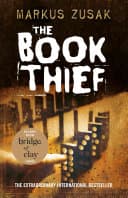
- The Book Thief
Markus Zusak
4.4 (1.8M) average on GoodreadsHistorical FictionExplores the power of books and storytelling during wartime from a child's perspective.
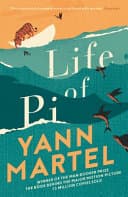
- Life of Pi
Yann Martel
3.9 (1.3M) average on GoodreadsFantasyFeatures a captivating narrative voice and the role of imagination and story in survival.
- A Thousand Splendid Suns
Khaled Hosseini
4.4 (1.2M) average on GoodreadsHistorical FictionDepicts life under conflict and the resilience of characters, particularly women, in a war-torn region.
- Half of a Yellow Sun
Chimamanda Ngozi Adichie
4.3 (103k) average on GoodreadsLiterary FictionWhile both novels depict the devastating impact of civil war on young protagonists, Adichie's work focuses more directly on political upheaval and personal trauma in Nigeria. Jones's 'Mister Pip' uniquely adds a layer of intertextuality, using 'Great Expectations' as a central mechanism for resilience and escape, making the act of reading a revolutionary one, a theme less central in Adichie's narrative.
- Persepolis: The Story of a Childhood
Marjane Satrapi
4.3 (158k) average on GoodreadsBiographyBoth 'Mister Pip' and 'Persepolis' offer a child's perspective on political turmoil and displacement. However, Satrapi's graphic novel primarily documents the personal experience of the Iranian Revolution and its aftermath. Jones's novel delves deeper into the mechanism by which literature provides resilience and identity, showing how stories actively shape understanding and survival, rather than merely documenting the experience of conflict.
- The Old Man and the Sea
Ernest Hemingway
3.8 (831k) average on GoodreadsLiterary FictionA Cuban fisherman's long struggle with a giant marlin becomes a story of endurance and dignity, now retold for young adults with illustrations, phonetic guides, and writing prompts in Traditional Chinese.


Enjoyed the summary?
A summary gives you the shape of the book. The book itself has the detail, the examples and the voice.
Find Mister Pip on AmazonAs an Amazon Associate, BookBrief earns from qualifying purchases. How we're funded