
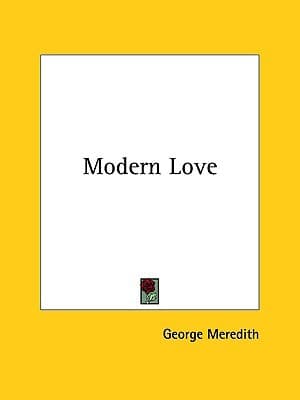
Synopsis
Covers the whole plot, including the ending.
- Difficulty
- Hard
- Pacing
- Slow
- Mood
- Melancholy, introspective, poignant, tragic
Modern Love Plot Summary
Covers the whole plot, including the ending.
In the Porch
The poem begins late at night, as the unnamed husband and wife return home from a party. They stand on the porch, a space between inside and out. The silence between them is heavy with unspoken thoughts and resentments. The wife, called 'Lady,' feels a 'coldness' from her husband, who seems distant and lost in his own mind. He, in turn, is keenly aware of the 'false smiles' and 'hollow words' they used in public, a show of marital bliss that hides their decaying relationship. They both recognize their love is 'spectral,' a ghost of what it once was, and that rekindling their dead passion is impossible. This scene sets the sad and thoughtful tone for the entire sequence, immediately establishing the central conflict of a marriage in decline.
A Plea for Honesty
The wife confronts her husband, not about a specific act, but about the emotional distance and the 'shadow' of another woman she senses in his thoughts. She asks for honesty, even if it hurts, rather than the polite but destructive silence and pretense that has become their marital norm. She questions why they continue to live together when love has clearly vanished, suggesting their outward show of affection mocks themselves and the world. Her words reveal a desperate desire for truth, even if it confirms her worst fears, believing it better than the suffocating deceit they now endure. This scene challenges the superficiality of their relationship.
The Husband's Confession
Responding to his wife's plea, the husband, without naming another woman, admits to a past affair. He frames it as a desperate attempt to escape their loveless marriage. He describes feeling trapped by societal expectations for their union and how the affair offered a brief sense of freedom and passion he no longer found with his wife. However, he also expresses a deep tiredness, not only with his past mistake but also with the emotional exhaustion of their current situation. He acknowledges the pain he caused but cannot offer a path to reconciliation. Instead, he points to their shared responsibility for their marital breakdown and the permanent damage done.
A Glimpse of the Past
In a shared moment, both the husband and wife remember the passionate early days of their relationship. They recall the intensity of their first love, its 'golden glow,' and the dreams they once shared for a future together. This memory contrasts sharply with their current sadness, showing how far they have fallen from their original ideal. The memory of happiness, however, also brings a new wave of pain, as it emphasizes the extent of what they have lost. It highlights the sad irony that the very qualities that drew them together now seem extinguished, leaving only the ashes of a once-burning fire.
The Dinner Party
The scene moves to a dinner party, where the husband and wife must act like a happy couple, maintaining a facade of domestic peace for their guests. They observe other couples, some genuinely happy, others also pretending. The husband is particularly cynical, noting the 'painted smiles' and 'empty laughter' that mark much social interaction. His wife, while equally aware of the charade, feels deeply isolated among the company. The dinner party becomes a small example of their societal trap, where appearances matter most and genuine emotion is suppressed. This further emphasizes the theme of societal pressures and the performance of marriage.
The Wife's Secret
While the husband has admitted his past infidelity, the wife subtly reveals her own emotional attachment, though not necessarily a physical affair. She speaks of a 'friend' or 'admirer' who offers her understanding and intellectual companionship, a comfort she no longer finds with her husband. Her words are veiled, hinting at a connection that gives her emotional support and makes her feel 'alive' in a way her marriage does not. This revelation adds another layer to their failing relationship, showing that the breakdown is not one-sided but a shared experience of disillusionment and seeking comfort elsewhere, even if only emotionally. It suggests a mutual erosion of fidelity, in different forms.
A Walk in the Garden
During a quiet walk in their garden, the couple shares a brief, fragile moment of understanding. The beauty of nature around them seems to soften their hardened hearts for a moment, and they speak with a tenderness long absent. They acknowledge their mutual pain and the impossibility of truly separating in a society that disapproves of divorce. However, this fleeting connection is quickly overshadowed by their ingrained patterns of resentment and distance. The understanding they achieve is intellectual rather than emotional, a recognition of their shared predicament rather than a rekindling of affection. The moment highlights the deep-seated nature of their marital wounds, too deep to be healed by a simple shared walk.
The Letter
The wife receives a letter from her admirer, which stirs a complex mix of emotions within her. The letter, though not explicitly revealing an affair, clearly expresses affection and intellectual rapport, offering her a glimpse of a different life and a different kind of love. It brings both comfort and renewed guilt, as she struggles with her feelings for another man while still bound by her marriage vows. The letter represents the emotional escape she has found and the temptation she faces, highlighting the internal conflict between duty and desire. It intensifies her longing for a connection her husband can no longer provide, pushing her further to think about her choices.
The Husband's Jealousy
The husband, aware of his wife's emotional attachment, observes her interacting with her admirer at a social gathering. A bitter wave of jealousy washes over him, a surprising return of feeling in a heart he thought had grown cold. This jealousy is not necessarily rooted in love for his wife, but perhaps in wounded pride, a sense of possession, or the realization of his own inadequacy. He sees the genuine smiles and animated conversation between them, a stark contrast to his strained interactions with his wife. This observation ignites a painful awareness of his loss, even if that loss is of something he himself helped to destroy. It reveals that beneath his indifference, some raw emotion still lingers.
A Final Conversation
In a final, somber conversation, the husband and wife directly address the future of their marriage. They both acknowledge that their love is irrevocably dead and that their continued cohabitation is a mere formality. There is a sense of resignation, a weariness that has replaced their earlier passion and resentment. They discuss the societal constraints that prevent them from openly separating, recognizing the 'world's eye' that judges such departures from convention. While there is no dramatic split, there is a quiet, deep acceptance of their fate—to live together in a state of emotional divorce, maintaining appearances while their hearts remain separate. This conversation marks the definitive end of any hope for reconciliation.
The Bitter End
The poem concludes with the couple accepting their tragic fate: to remain bound by marriage vows and societal expectations, despite the complete absence of love. They are trapped in a 'modern love' characterized by pretense, emotional distance, and a deep sense of loneliness within the marital bond. There is no traditional resolution, no dramatic separation or reconciliation, but rather a somber acknowledgment of their permanent, loveless union. The final verses emphasize the 'irony' and 'cruelty' of their situation, where outward respectability masks inner desolation. They are left to endure a life of quiet despair, a sad reflection on the destructive power of unfulfilled expectations and societal pressures on intimate relationships.
Principal Figures
The Husband
Protagonist
A man disillusioned with his marriage and prone to introspection.
The husband is depicted as a man of intellect and sensitivity, yet deeply embittered by the failure of his marriage. He is prone to introspection, often lost in cynical reflections on the superficiality of society and the demise of his love. He acknowledges his own infidelity but also feels trapped by societal conventions and the emotional exhaustion of his relationship. His love has turned to a cold detachment, though moments of jealousy suggest lingering, complex emotions. He is articulate in his despair, often using sophisticated language to express his disillusionment, but ultimately seems incapable of genuine connection or resolution.
Relationships: The Wife (estranged spouse); Society (oppressive force)
The Wife
Protagonist
A woman yearning for emotional connection amidst a failing marriage.
The wife is portrayed as equally intelligent and sensitive as her husband, but perhaps more overtly pained by the lack of love in her marriage. She yearns for honesty and emotional intimacy, directly confronting her husband about their shared pretense. While initially appearing as the aggrieved party, she later hints at her own emotional entanglement with another man, revealing her parallel search for solace and understanding. She struggles with the societal expectations placed upon her as a wife and feels a profound sense of isolation. Her despair is often expressed through a quiet longing and a desperate plea for truth.
Relationships: The Husband (estranged spouse); Her Admirer (emotional confidant/potential lover)
Her Admirer
Supporting
A man who offers the wife intellectual and emotional companionship.
Her admirer is not a fully developed character but serves as a catalyst for the wife's internal conflict and a stark contrast to her husband. He is presented as someone who offers her the intellectual stimulation and emotional understanding that her marriage lacks. His presence, though often indirect (through letters or observations), highlights the wife's yearning for connection and provides a tangible alternative to her marital desolation. He represents the possibility of a different kind of love or companionship, making her acceptance of her fate even more poignant.
Relationships: The Wife (emotional confidant/potential lover)
Society / The World
Antagonist
The oppressive force of Victorian social conventions.
While not a character in the traditional sense, 'Society' acts as a powerful antagonistic force throughout the poem. It represents the rigid Victorian social conventions that demand a facade of marital harmony, frown upon divorce, and trap the couple in their loveless union. The 'world's eye' is constantly invoked as a reason for their continued pretense and inability to separate. The pressure to maintain appearances, to perform 'modern love' for public consumption, is a significant source of their misery. This societal pressure prevents genuine resolution and forces them into a life of quiet despair, making it a crucial element in their tragic fate.
Relationships: The Husband (restraining force); The Wife (restraining force)
Themes & Insights
The Decay of Love and Marriage
The central theme is the gradual erosion of passion and affection within a marriage, turning it into an empty shell. The poem details the emotional distance, resentment, and eventual indifference that replace initial love. It questions whether marriage can last when its emotional foundation has crumbled, showing it as a 'modern love' built on pretense rather than genuine connection. The decay is not sudden but a slow, painful process, observed with precision, highlighting the quiet tragedy of two people growing irrevocably apart while still bound by vows and society.
“We are betrayed by what is false within.”
Societal Pressure and Pretense
The poem strongly emphasizes the oppressive weight of Victorian social conventions that force the couple to maintain a facade of marital harmony. They must perform their 'love' for the 'world's eye,' creating a public image that sharply contrasts with their private sadness. This theme explores the hypocrisy in such societal demands, where appearances are valued over genuine emotion or individual happiness. The fear of scandal and social ostracism traps them in a loveless union, making them prisoners of their carefully constructed lies and the expectations of their peers.
“The world has many masks, but none so fair / As that which hides a loveless pair.”
Communication Breakdown and Misunderstanding
A core element of the marital decay is the deep failure of communication between the husband and wife. They are often lost in their own thoughts, unable or unwilling to express their true feelings, leading to misunderstandings and deeper resentments. Even when they speak, their words are often guarded, sarcastic, or full of hidden meaning, preventing any real connection or resolution. The poem shows how unspoken grievances and half-truths contribute to the widening gap between them, making true intimacy impossible and sealing their fate in a cycle of emotional isolation.
“Ah, what a dusty answer gets the soul / When hot for certainties in this our life!”
The Nature of Infidelity (Emotional and Physical)
The theme of infidelity is explored in both its physical and emotional forms. The husband admits to a past physical affair, while the wife hints at a strong emotional connection with another man. This dual exploration suggests that infidelity is not only about physical transgression but also about the betrayal of emotional trust and seeking comfort outside the marriage. It complicates the blame, showing that both parties contribute to the breakdown by seeking fulfillment elsewhere, highlighting the reciprocal nature of their marital disillusionment and the various forms betrayal can take.
“No wonder if they fly to other fires.”
The Pain of Memory and Lost Love
Memory is a poignant and often painful theme, as both characters frequently recall the passionate early days of their love. These recollections of 'golden glow' and shared dreams contrast sharply with their present sadness, intensifying their sense of loss and despair. The memory of what was once beautiful becomes a source of fresh agony, emphasizing the irreversible nature of their marital decay. It highlights the tragedy of watching a deep love wither and die, leaving behind only the ghost of former happiness and the bitter awareness of what has been irrevocably lost.
“Our love was new, and then the world was new.”
Plot Devices & Literary Techniques
Sonnet Sequence
A series of 50 sixteen-line sonnets.
The entire poem is structured as a sequence of 50 sonnets, each consisting of sixteen lines (a 'Meredithian Sonnet'). This rigid form, traditionally associated with love poetry, is ironically employed to explore the *decay* of love. The consistent structure provides a framework for the intense, often fragmented emotional states of the characters, creating a sense of formal constraint that mirrors the societal constraints binding the couple. The individual sonnets allow for detailed, introspective snapshots of their deteriorating relationship, building a cumulative narrative of despair and disillusionment.
Dramatic Monologue/Dialogue
Alternating internal thoughts and direct confrontations.
Meredith frequently employs elements of dramatic monologue and dialogue. Many sonnets delve into the internal thoughts and reflections of either the husband or the wife, offering direct access to their private anguish and cynical observations. Other sonnets present direct, often strained, conversations between the couple, revealing their inability to truly connect or resolve their issues. This device allows for a dynamic portrayal of their inner lives and their external, often performative, interactions, highlighting the chasm between their private suffering and public facade.
Imagery of Light and Shadow
Symbolism of fading love and hidden truths.
Throughout the poem, Meredith uses vivid imagery of light and shadow to symbolize the state of the couple's love and their emotional landscape. 'Golden glow' and 'sunlight' represent their initial passion, while 'twilight,' 'shadows,' and 'darkness' signify the decay of their affection and the hidden truths within their marriage. This recurring imagery visually reinforces the theme of love's decline, moving from the bright promise of courtship to the dim, melancholic reality of their present, where secrets and unspoken resentments linger in the 'shadows' of their hearts.
Irony
The use of contrast between appearance and reality.
Irony is a pervasive plot device, particularly in the contrast between the title 'Modern Love' and the actual state of the relationship, which is anything but loving. The couple's public performance of marital harmony directly contradicts their private despair. The use of the sonnet form, traditionally for celebrating love, to lament its demise is also deeply ironic. This device highlights the hypocrisy of Victorian society and the painful disconnect between outward appearances and inner realities, emphasizing the tragic nature of their predicament and the 'mockery' of their continued union.
Quiz
10 questions on the plot and the characters. Each answer comes with a short explanation.
Question 1
What is the title of the book?
- Modern Love
- Antiquarian Love
- George Meredith's Love
- The Facsimile Reprint
Show answer
A. Modern Love The title of the book is explicitly stated as 'Modern Love'.
Question 2
Who is the author of the book?
- Unknown
- George Meredith
- The Publisher
- A Modern Author
Show answer
B. George Meredith The author is identified as 'George Meredith' in the provided text.
Question 3
What genre is the book?
- Poetry
- Non-fiction
- History
- Fiction
Show answer
D. Fiction The text states that the book is 'Fiction'.
Question 4
What does 'facsimile reprint' imply about this edition?
- It is a completely new translation.
- It is a faithful reproduction of the original.
- It has modern illustrations added.
- It is a condensed version.
Show answer
B. It is a faithful reproduction of the original. A 'facsimile reprint' means it is a copy that closely resembles the original in appearance.
Question 5
What kind of imperfections might this book have due to its age?
- Digital glitches
- Missing chapters
- Marks, notations, marginalia, and flawed pages
- Modern binding
Show answer
C. Marks, notations, marginalia, and flawed pages The description explicitly mentions 'marks, notations, marginalia and flawed pages' as potential imperfections.
Question 6
Why has the publisher made this work available?
- To capitalize on a new trend
- To fulfill a legal obligation
- As part of a commitment to preserving and promoting literature
- To compete with other publishers
Show answer
C. As part of a commitment to preserving and promoting literature The text states the publisher's commitment is 'for protecting, preserving, and promoting the world's literature'.
Question 7
What is the publisher's goal regarding the quality of the modern editions?
- To make them as cheap as possible, regardless of quality
- To be true to the original work in high quality
- To update the content with modern interpretations
- To create collector's items with unique features
Show answer
B. To be true to the original work in high quality The publisher aims for 'high quality, modern editions that are true to the original work'.
Question 8
The description implies that this specific edition is:
- Brand new and pristine
- A rare first edition
- Potentially imperfect due to age
- A summary or abridged version
Show answer
C. Potentially imperfect due to age The text states it's a 'scarce antiquarian book' and 'may contain imperfections such as marks, notations, marginalia and flawed pages'.
Question 9
The publisher's approach to making this book available suggests they prioritize:
- Exclusivity and rarity
- Accessibility and preservation of cultural heritage
- Modernization and adaptation for contemporary readers
- Minimal effort in reproduction
Show answer
B. Accessibility and preservation of cultural heritage The commitment to 'protecting, preserving, and promoting the world's literature in affordable, high quality, modern editions' points to prioritizing accessibility and preservation.
Question 10
What is the underlying tension described in the text regarding this book edition?
- The conflict between fiction and non-fiction genres
- The balance between maintaining the original's integrity and offering it in a modern, accessible format
- The debate over whether the author's intent is still relevant
- The difficulty in finding affordable copies of classic literature
Show answer
B. The balance between maintaining the original's integrity and offering it in a modern, accessible format The text highlights the challenge of creating 'modern editions that are true to the original work' while acknowledging that the original's age may lead to imperfections, thus balancing integrity with accessibility.
Modern Love FAQ
What is 'Modern Love' by George Meredith about?
'Modern Love' is a fictional work by George Meredith that explores the complexities and challenges of love and relationships in the Victorian era. It delves into themes of marriage, infidelity, and societal expectations.
Is 'Modern Love' a novel or poetry?
'Modern Love' by George Meredith is a sequence of sonnets, often considered a narrative poem, rather than a traditional novel. It tells a story through verse.
What are the main themes in 'Modern Love'?
The primary themes in 'Modern Love' include the disillusionment with marriage, the breakdown of communication between partners, the pain of betrayal, and the societal pressures faced by individuals in relationships.
Who are the main characters in 'Modern Love'?
The central figures are a married couple whose relationship is disintegrating. While not named explicitly in the way novel characters are, their internal struggles and interactions drive the narrative.
What is the historical context of 'Modern Love'?
Written in the 19th century, 'Modern Love' reflects the social and moral climate of Victorian England, a time when marriage was highly valued but often fraught with personal difficulties that were not openly discussed.
Why is this edition a 'facsimile reprint'?
This edition is a facsimile reprint, meaning it is a close reproduction of the original publication. This approach preserves the historical integrity of the work, including its original formatting and content.
What should I expect from a 'scarce antiquarian book' facsimile?
As a facsimile of an old book, you may encounter imperfections like marks, notations, or slightly flawed pages. These are characteristic of its age and are part of its historical authenticity.
Is this a good edition for academic study?
Yes, this edition is valuable for academic study because it aims to be a faithful reproduction of the original text, allowing scholars to examine Meredith's work as it was first presented.
How does 'Modern Love' differ from typical Victorian love stories?
'Modern Love' stands out by offering a more realistic and often bleak portrayal of marital discontent, contrasting with more idealized or sentimental depictions of love common in other Victorian literature.
What is the cultural significance of 'Modern Love'?
George Meredith's 'Modern Love' is culturally significant for its frank exploration of marital problems and its innovative poetic structure, influencing later works that tackled similar themes with psychological depth.
About the author
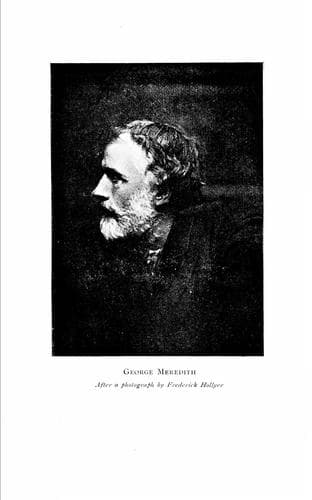
George Meredith was an English novelist and poet active in the 19th century, known for his exploration of complex human relationships and social issues. His notable work, "Modern Love," is a collection of poems that delve into the intricacies of love and marriage, reflecting the emotional struggles of his time. Meredith's writing is characterized by its psychological depth and innovative use of language.
Similar books
- Sonnets from the Portuguese
Elizabeth Barrett Browning
4.1 (11k) average on GoodreadsRomanceWhile both Meredith and Browning utilize sonnets to explore love, their approaches are fundamentally divergent. Browning's 'Sonnets from the Portuguese' (1850) is a celebration of burgeoning, idealized romantic love, expressing deep affection, devotion, and a journey from self-doubt to secure love. Her sonnets are intensely personal but ultimately uplifting and affirming. 'Modern Love,' in stark contrast, dissects the failure of love, focusing on disillusionment, infidelity, and the painful decline of a marriage. Meredith subverts the traditional romantic sonnet form to convey despair and psychological torment, whereas Browning elevates it to express transcendent affection. Meredith's work is far more experimental in its narrative and psychological realism than Browning's more conventional, albeit beautiful, expressions of devotion.
- Nineteen Eighty-Four
George Orwell
4.2 (5.5M) average on GoodreadsFictionWinston Smith dreams of truth and rebellion in a world where Big Brother watches all, but he confronts the terrifying power of a regime that controls not just actions, but thoughts.
- The Frozen River
Ariel Lawhon
4.4 (600k) average on GoodreadsFictionIn 1789 Maine, a heroic midwife's diary helps her expose a murder and get justice in a town that wants to silence her.
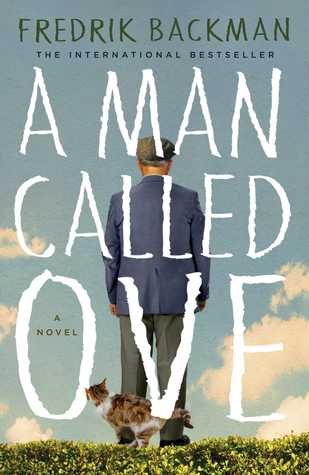
- A Man Called Ove
Fredrik Backman
4.4 (569k) average on GoodreadsFictionA stubborn widower, who lives by strict rules, finds his quiet world changed by a lively new family next door, making him face his past and find happiness in human connection.
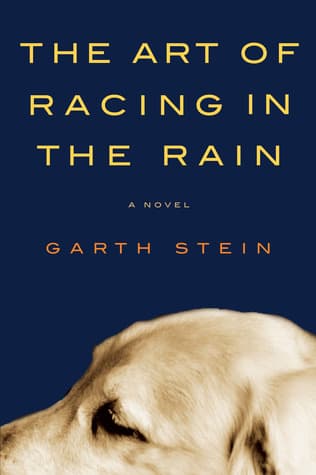
- The Art of Racing in the Rain
Garth Stein
4.2 (452k) average on GoodreadsFictionThrough the eyes of Enzo, a wise and observant dog, a race car driver's family navigates a journey of love, loss, and resilience, learning that life's most important lessons often come in the curves, not just on the straightaways.
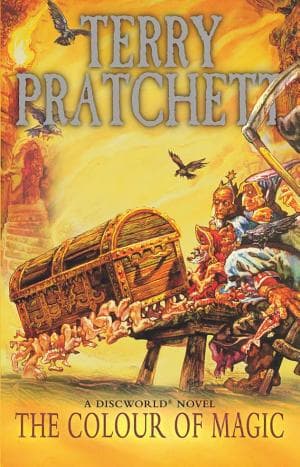
- The Colour of Magic
Terry Pratchett
4.0 (425k) average on GoodreadsFictionOn a discworld hurtling through space on the back of a giant turtle, an inept wizard and his naive, walking-luggage-toting tourist embark on a chaotic, belief-fueled journey to the very edge of their flat planet, encountering dragons that only exist if you believe in them.

Enjoyed the summary?
A summary gives you the shape of the book. The book itself has the detail, the examples and the voice.
Find Modern Love on AmazonAs an Amazon Associate, BookBrief earns from qualifying purchases. How we're funded