
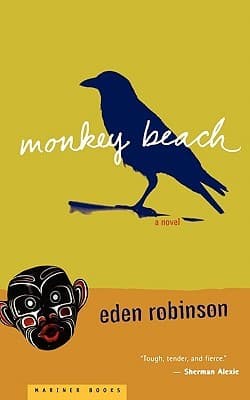
Synopsis
Covers the whole plot, including the ending.
- Difficulty
- Medium
- Pacing
- Moderate
- Mood
- Atmospheric, Melancholy, Spiritual, Resilient
- Read it if
- You enjoy indigenous storytelling, magical realism, and a deep exploration of grief, family, and cultural identity with a touch of mystery.
- Skip it if
- You prefer straightforward narratives without spiritual or supernatural elements, or find stories about intense grief challenging.
Monkey Beach Plot Summary
Covers the whole plot, including the ending.
The Search Begins: Lisamarie's Journey Up Douglas Channel
The novel begins with Lisamarie Hill on her speedboat, going up the Douglas Channel towards Monkey Beach, a place connected to the spirits of the dead. Her younger brother, Jimmy, a good baseball player, has been missing for days after his boat was found empty. Lisamarie hopes to find him, even though her family increasingly believes he has drowned. As she travels the cold waters, she thinks about her life in Kitamaat, a Haisla community, and the supernatural events that have always been part of her life. Her journey includes flashbacks, showing her complex family and the spiritual world she lives in, setting the scene for the tragedy and her search for understanding.
A Childhood of Spirits and Premonitions
From a young age, Lisamarie sees visions and meets spirits, including the Little Man and the b'gwus (Sasquatch), which others often dismiss. She sees the ghost of a drowning boy, and later, a recurring premonition of Jimmy's death by water. Her grandmother, Ma-ma-oo, who follows Haisla traditions, recognizes Lisamarie's spiritual sensitivity, teaching her about their beliefs and how the spirit world connects with the physical. These early experiences shape Lisamarie's view of reality and hint at the tragic events to come, making her feel both blessed and burdened by her connection to the unseen.
Family Life in Kitamaat: Love, Loss, and Cultural Clash
Lisamarie's family includes her practical father, Albert; her caring mother, Gladys; her activist Uncle Mick; and her traditionalist Ma-ma-oo. The family deals with the tension between Haisla customs and modern Canadian society. Early on, they lose Lisamarie's younger sister, Erica, to sudden infant death syndrome, a tragedy that deeply affects the family, especially her mother. This event introduces an early theme of grief and life's fragility. Despite their struggles, the family has strong bonds, with Ma-ma-oo and Uncle Mick linking them to their Haisla heritage and giving Lisamarie guidance.
Jimmy's Rise and Lisamarie's Struggles
As Jimmy gets older, he becomes a talented baseball player, a source of family pride and hope. Lisamarie, however, feels more isolated by her spiritual experiences and rebellious nature. She struggles to fit in at school and in the community, often feeling like an outsider. Her visions become more frequent and disturbing, especially those about water and death, which she tries to ignore. This time shows the siblings' different paths, with Jimmy pursuing a more conventional future and Lisamarie dealing with her spiritual burden and a growing sense of dread.
Adolescence and Recklessness
During her teenage years, Lisamarie joins a rebellious group, experimenting with alcohol and drugs, partly to cope with her visions and general unhappiness. She forms a close, complicated friendship with Frank, a boy from her community. Even during this reckless period, her connection to Ma-ma-oo and Uncle Mick stays strong, providing a grounding influence. She learns more about Haisla stories and traditions, even taking part in some rituals, which deepens her understanding of her spiritual heritage but also increases her awareness of the dangers in the spirit world and in her own premonitions.
The Foreshadowing of Death: Jimmy's Departure
Jimmy gets a baseball scholarship to a school in the United States, an important achievement that brings both joy and worry to the family. Lisamarie's premonitions of Jimmy drowning become more vivid, causing her great distress. She tries to warn him, but her warnings are mostly dismissed as her usual 'weirdness.' This departure is a turning point, as Jimmy leaves the protective environment of Kitamaat and his family, making him more open to the fate Lisamarie has foreseen. The story builds a strong sense of tragic inevitability around Jimmy's future, heavily influenced by Lisamarie's visions.
Tragedy Strikes: Jimmy's Drowning
The phone call comes, devastating the family: Jimmy's boat has been found empty, and he is presumed drowned. This event is the central tragedy of the story, starting Lisamarie's current journey. The news causes deep grief and disbelief in the family. For Lisamarie, it confirms her long-held premonitions, a terrifying validation of her spiritual connection and a heavy burden. The community supports the family, but the loss is immense, leaving a void and prompting Lisamarie's desperate search.
The Search Continues: Signs and Spiritual Guidance
Back in the present, Lisamarie's solitary journey up the Douglas Channel includes more spiritual encounters. She sees the ghost of the Little Man again, and other animal spirits, which sometimes offer cryptic messages or warnings. She feels drawn to Monkey Beach, a place where, according to Haisla belief, the spirits of the dead gather before moving on. Ma-ma-oo's teachings about respecting the spirit world and understanding the signs become more relevant. Lisamarie is not just looking for Jimmy's body; she seeks understanding, connection, and perhaps a final farewell in the spiritual realm.
Confronting the Past and Personal Demons
During her journey, Lisamarie often thinks about her complex relationship with Frank. She remembers their shared experiences, their intimacy, and moments of betrayal and hurt. She also reflects on her self-destructive tendencies and how she pushed people away, including Jimmy. Her grief for Jimmy connects with a broader look at her past choices and their impact on her life and relationships. This introspection is important for her emotional processing, as she tries to understand her brother's death and her own place in the world.
Arrival at Monkey Beach and a Spiritual Confrontation
Lisamarie eventually arrives at Monkey Beach. Here, she has a powerful, hallucinatory, and spiritual experience. She sees visions of her ancestors and has a final, moving interaction with Jimmy's spirit. This encounter is not a simple reunion but a complex, symbolic farewell, where she deals with his death and her role in his life and passing. It is a moment of both deep sadness and a strange peace, as she accepts his death and the reality of her spiritual gifts. The experience at Monkey Beach completes her journey, bringing her some closure.
The Aftermath: Grief, Acceptance, and Continuing Life
After her spiritual experience at Monkey Beach, Lisamarie returns to her family, changed by her journey and the intense spiritual confrontation. While Jimmy's body is never found, Lisamarie has reached a form of acceptance. The novel ends with her still dealing with her grief, but with a deeper understanding of her Haisla heritage and her spiritual connection. She learns to live with her gifts and the knowledge of the spirit world, finding a way to include them in her life. The story concludes not with a simple end to pain, but with Lisamarie's ongoing healing and her acceptance of her identity as a woman rooted in her culture and its spiritual world.
Principal Figures
Lisamarie Hill
Protagonist
A young Haisla woman with spiritual gifts, searching for her missing brother and her own identity.
Lisamarie is a complex and often rebellious protagonist, deeply connected to the spiritual world of her Haisla ancestors. From a young age, she sees ghosts and experiences premonitions, which both bless and burden her. She struggles with fitting into both Haisla and Western cultures, often feeling like an outsider. Her journey to find her missing brother, Jimmy, is also a journey of self-discovery and a reckoning with her past choices, her grief, and her unique spiritual heritage. She's tough, resilient, and fiercely loyal, but also prone to self-destructive tendencies and a deep sense of alienation.
Relationships: Jimmy Hill (Younger brother, deeply loved, subject of her search); Gladys Hill (Mother, caring but often overwhelmed by grief and Lisamarie's 'weirdness'); Albert Hill (Father, pragmatic, tries to protect his family); Ma-ma-oo (Paternal grandmother, spiritual guide and confidante); Uncle Mick (Paternal uncle, activist, protective, a source of unconventional wisdom); Frank (Childhood friend and romantic interest, complicated and volatile relationship)
Jimmy Hill
Supporting/Catalyst
Lisamarie's younger brother, a talented baseball player whose disappearance drives the plot.
Jimmy is Lisamarie's beloved younger brother, a bright and promising baseball player who represents hope and a connection to the outside world for the Hill family. He is portrayed as more grounded and less spiritually sensitive than Lisamarie, though he shares a deep bond with her. His ambition to pursue baseball takes him away from Kitamaat, ultimately leading to his presumed drowning. His death is the central tragedy of the novel, acting as a catalyst for Lisamarie's journey and her spiritual awakening, even though he is mostly present in flashbacks and as a spiritual entity.
Relationships: Lisamarie Hill (Older sister, close bond, subject of her premonitions and search); Gladys Hill (Mother, proud of his achievements); Albert Hill (Father, proud of his achievements); Ma-ma-oo (Grandmother, cares for him deeply)
Ma-ma-oo (Grandmother)
Supporting
Lisamarie's traditional Haisla grandmother and spiritual mentor.
Ma-ma-oo is Lisamarie's paternal grandmother and a pivotal figure in her life. She is a strong, wise woman deeply rooted in Haisla traditions and the spirit world. Unlike others, she recognizes and nurtures Lisamarie's spiritual gifts, teaching her about Haisla stories, rituals, and the importance of respecting the unseen. She provides Lisamarie with guidance, comfort, and a connection to her cultural heritage, serving as a beacon of traditional knowledge amidst the encroaching Western world. Her teachings are crucial for Lisamarie's understanding and acceptance of her own abilities.
Relationships: Lisamarie Hill (Granddaughter, spiritual mentee and confidante); Albert Hill (Son, often tries to bridge the gap between her traditions and modern life); Gladys Hill (Daughter-in-law, respectful but sometimes struggles to understand her beliefs)
Uncle Mick
Supporting
Lisamarie's eccentric, activist uncle and a devoted Elvis fan.
Uncle Mick is Lisamarie's paternal uncle, a charismatic and eccentric figure who is both a Native rights activist and an avid Elvis Presley fan. He is protective of Lisamarie and Jimmy, offering them unconventional advice and a sense of fun. Mick represents a blend of Haisla cultural pride and a more modern, rebellious spirit. He is a source of humor and comfort for Lisamarie, often understanding her struggles in ways others don't, despite his own personal demons and struggles with addiction. He embodies resilience and a fierce love for his family and community.
Relationships: Lisamarie Hill (Niece, protective and supportive uncle); Jimmy Hill (Nephew, protective and supportive uncle); Albert Hill (Brother, close family bond); Ma-ma-oo (Mother, respectful son)
Gladys Hill
Supporting
Lisamarie's mother, who struggles with grief and her daughter's unusual gifts.
Gladys is Lisamarie's mother, a loving but often overwhelmed woman. She carries the deep grief of losing her infant daughter, Erica, and later, her son, Jimmy. Gladys tries to provide a stable, conventional home for her children, often struggling to understand or accept Lisamarie's spiritual visions, which she sometimes dismisses or finds unsettling. She represents the struggle to cope with immense loss and the desire for normalcy in a world that is anything but. Her love for her children is profound, even as she grapples with her own pain and the challenges of their Haisla heritage.
Relationships: Lisamarie Hill (Daughter, loving but often perplexed by her); Jimmy Hill (Son, deeply loved and mourned); Albert Hill (Husband, partner in grief); Ma-ma-oo (Mother-in-law, respectful but sometimes culturally distant)
Albert Hill
Supporting
Lisamarie's pragmatic father, who works hard for his family.
Albert is Lisamarie's father, a pragmatic and hardworking man who provides for his family, often working in the fishing industry. He is less outwardly expressive than other family members and tends to be more grounded in the physical world, often struggling to understand the spiritual aspects of Haisla culture that his mother and daughter embrace. He loves his children deeply and tries to protect them, often feeling helpless in the face of tragedy. His grief over Jimmy's death is quiet but profound, and he represents the stoicism and resilience often found in men of his generation and background.
Relationships: Lisamarie Hill (Daughter, protective and loving); Jimmy Hill (Son, proud of his achievements); Gladys Hill (Wife, partner in life and grief); Ma-ma-oo (Mother, respects her traditions but often maintains a practical distance)
Frank
Supporting
Lisamarie's childhood friend and complicated romantic interest.
Frank is Lisamarie's childhood friend and, for a time, her romantic interest. He is a complex character, often reckless and troubled, but also capable of deep connection. Their relationship is intense and volatile, marked by shared experiences of growing up in Kitamaat, substance use, and moments of both intimacy and betrayal. Frank represents a path of rebellion and a struggle with identity within the community. His presence in Lisamarie's flashbacks highlights her own journey through adolescence and her attempts to find connection amidst her feelings of alienation.
Relationships: Lisamarie Hill (Childhood friend, romantic interest, complicated relationship)
The Little Man
Mentioned/Spiritual Guide
A recurring spirit figure who guides and haunts Lisamarie.
The Little Man is a mysterious and recurring spirit figure that Lisamarie sees from a young age. He is often described as a small, dark figure, sometimes menacing, sometimes offering cryptic guidance. He represents the presence of the spirit world in Lisamarie's life and is a manifestation of her unique spiritual gifts. His appearances often precede significant events or appear when Lisamarie is in distress, serving as a constant reminder of the thin veil between the living and the dead in her Haisla world. He is a key element of the magical realism in the novel.
Relationships: Lisamarie Hill (Spiritual guide/haunter, seen only by her)
Erica Hill
Mentioned
Lisamarie's infant sister, whose early death deeply impacts the family.
Erica is Lisamarie's younger sister, who dies as an infant from sudden infant death syndrome. Her death is an early tragedy in the family's history, deeply affecting Gladys and foreshadowing the later loss of Jimmy. Though she appears only briefly in flashbacks, her death establishes a theme of profound grief and the fragility of life that permeates the novel. Her memory contributes to the family's understanding of loss and their efforts to protect their remaining children.
Relationships: Gladys Hill (Mother, deeply mourned); Albert Hill (Father, deeply mourned); Lisamarie Hill (Older sister, a source of early childhood trauma)
Themes & Insights
Identity and Self-Discovery
Lisamarie's journey is about understanding who she is, as a Haisla woman and as an individual with spiritual gifts. She struggles with feeling like an outsider in both traditional Haisla society and the modern Western world. Her visions and connection to the spirit world are central to her identity, and searching for Jimmy makes her confront and accept these parts of herself. The novel explores how cultural heritage, family history, and personal experiences shape one's identity, especially when navigating conflicting worlds.
“Sometimes I hated the spirits, hated that I could see them, hated that I was different. But sometimes... sometimes it was like a secret language, just for me.”
Grief and Loss
The novel deals with themes of grief and loss, starting with the early death of Lisamarie's infant sister, Erica, and ending with the presumed drowning of her brother, Jimmy. The story explores the many sides of grief, from shock and denial to the long process of mourning and acceptance. Each family member processes loss differently, showing the individual and shared impact of tragedy. Lisamarie's journey up the Douglas Channel is a literal and metaphorical journey through her grief, seeking understanding and a final farewell.
“Grief doesn't go away. It just settles in, a quiet companion.”
The Supernatural and Spiritual Connection
A main theme is the strong presence of the supernatural and the spiritual connection to the land and Haisla traditions. Lisamarie's ability to see ghosts, animal spirits, and have premonitions is not just a plot device but a central part of the Haisla worldview in the book. The spirit world is not separate from reality but woven into it, influencing events and guiding characters. Ma-ma-oo's teachings emphasize respect for the spirits and the wisdom of their ancestors, showing spiritual sensitivity as both a gift and a burden.
“The spirits don't care if you believe in them or not. They're still there, waiting.”
Cultural Clash and Resilience
The novel explores the tensions of living between traditional Haisla culture and modern Western society. Characters like Lisamarie's parents try to balance these worlds, while Ma-ma-oo strongly protects Haisla traditions. The effects of colonialism, residential schools (implied through generational trauma), and the challenges of keeping cultural identity in a changing world are woven throughout the story. Despite these pressures, the resilience of the Haisla people, their stories, and their spiritual beliefs are clear, especially in Lisamarie's acceptance of her heritage.
“We were Haisla. We had our own ways, our own stories, even if the white world tried to bury them.”
Family Bonds and Intergenerational Relationships
The strength and complexities of family bonds are central to the story. The relationships between Lisamarie and Jimmy, her parents, Ma-ma-oo, and Uncle Mick are deeply explored, showing love, conflict, and support. The novel shows the importance of passing on knowledge between generations, especially through Ma-ma-oo's role in teaching Lisamarie about Haisla traditions and spirituality. Family is both a source of comfort and a place of shared trauma, with each member contributing to the collective experience of joy and sorrow.
“Family was a tangled knot, sometimes pulling you apart, sometimes holding you together.”
Plot Devices & Literary Techniques
Non-Linear Narrative / Flashbacks
The story constantly shifts between Lisamarie's present-day search and her past memories.
The novel employs a non-linear narrative structure, constantly interweaving Lisamarie's present-day journey up the Douglas Channel in search of Jimmy with extensive flashbacks to her childhood and adolescence. This device allows the reader to gradually piece together Lisamarie's history, her family dynamics, and the development of her spiritual gifts, creating a rich tapestry of her life leading up to the central tragedy. It builds suspense by revealing information incrementally and emphasizes how past experiences profoundly shape the present.
Magical Realism
Supernatural elements are seamlessly integrated into the everyday reality of the Haisla world.
Magical realism is a pervasive device in 'Monkey Beach,' where spirits, premonitions, and shapeshifters are not fantastical intrusions but a natural, accepted part of Lisamarie's Haisla reality. The Little Man, the b'gwus, and the ability to see ghosts are presented without explanation or sensationalism, reflecting a worldview where the spiritual and physical realms are intimately connected. This device grounds the supernatural in the mundane, making Lisamarie's experiences believable within the context of her cultural heritage and adding depth to the narrative's exploration of Haisla spirituality.
Foreshadowing and Premonitions
Lisamarie's visions and dreams constantly hint at future tragedies, particularly Jimmy's death.
Foreshadowing is heavily used through Lisamarie's recurring premonitions and visions, especially those concerning water and Jimmy's death. From an early age, she sees the ghost of a drowning boy and experiences vivid dreams that hint at future tragedies. This device creates a pervasive sense of dread and inevitability, drawing the reader into Lisamarie's internal struggle with her gifts and the helplessness she feels in trying to prevent what she foresees. It heightens the emotional impact of Jimmy's eventual drowning, making it both anticipated and devastating.
Symbolism of Water
Water represents both life and death, connection and separation, throughout the novel.
Water, particularly the Douglas Channel and the ocean around Kitamaat, is a powerful and multifaceted symbol. It represents life, sustenance, and the Haisla people's connection to their traditional way of life (fishing, travel). However, it also symbolizes death, danger, and the unknown, as it is the element that claims Erica, Jimmy, and haunts Lisamarie's premonitions. The channel becomes a liminal space, a boundary between the living and the dead, and the medium through which Lisamarie undertakes her spiritual quest, highlighting its dual nature as both a source of life and a bringer of sorrow.
Monkey Beach Quotes
“The ocean is a graveyard, and the land is a graveyard, and the sky is a graveyard.”
“You can't run away from who you are, but you can run toward who you want to be.”
“Ghosts are just memories with nowhere to go.”
“The past is a story we tell ourselves to make sense of the present.”
“In our family, silence is a language all its own.”
“Sometimes the only way to heal is to remember the wound.”
“The land remembers what people forget.”
“Fear is a ghost that haunts you until you turn and face it.”
“We are all just stories in the end.”
“The river doesn't care if you drown; it just keeps flowing.”
“Home is not a place, but a feeling you carry inside.”
“Magic is just another way of seeing the world.”
“Grief is a tide that pulls you under, then spits you back on shore.”
“The truth is a slippery fish; hard to catch, harder to hold.”
Quiz
10 questions on the plot and the characters. Each answer comes with a short explanation.
Question 1
What is the primary reason Lisamarie embarks on her journey up the Douglas Channel in her speedboat?
- To escape her haunting premonitions and ghosts
- To search for her brother, who is believed to have drowned
- To visit her grandmother Ma-ma-oo for traditional guidance
- To join Uncle Mick in Native rights activism
Show answer
B. To search for her brother, who is believed to have drowned The book centers on Lisamarie's journey to find her brother, Jimmy, after his tragic drowning, which drives the narrative as she reflects on her life and family.
Question 2
Which character is described as a Native rights activist and a devoted Elvis fan?
- Lisamarie's father
- Uncle Mick
- Jimmy, Lisamarie's brother
- A shapeshifter encountered by Lisamarie
Show answer
B. Uncle Mick Uncle Mick is a key family member who blends activism for Haisla rights with his quirky love for Elvis Presley, highlighting the mix of traditional and modern influences.
Question 3
What is the Haisla word for 'grandmother', as used for a significant character in the book?
- Ma-ma-oo
- Kitamaat
- Haisla
- Mick
Show answer
A. Ma-ma-oo Ma-ma-oo is the Haisla term for grandmother, and she serves as a guardian of tradition and a pivotal figure in Lisamarie's life.
Question 4
How does Lisamarie's upbringing in Kitamaat influence her character and abilities?
- It makes her a skilled swimmer and fisher, but she has no supernatural experiences
- It isolates her completely from Haisla traditions and family
- It shapes her into a tough tomboy with encounters of ghosts and premonitions
- It leads her to reject all Western influences and modern life
Show answer
C. It shapes her into a tough tomboy with encounters of ghosts and premonitions Growing up in the remote Haisla village, Lisamarie develops resilience and a connection to the supernatural, including visions and ghostly visitations, which define her journey.
Question 5
What major theme is highlighted by the blending of Haisla heritage with Western ways in Lisamarie's family?
- The inevitability of technology replacing tradition
- The conflict between urban and rural lifestyles
- Cultural identity and the challenges of assimilation
- The superiority of Western education over indigenous knowledge
Show answer
C. Cultural identity and the challenges of assimilation The book explores themes of cultural identity through characters like Lisamarie's parents and Uncle Mick, who navigate between Haisla traditions and Western influences, reflecting broader struggles of Indigenous communities.
Question 6
Which element of the setting is crucial to the book's atmosphere and plot development?
- The bustling city of Vancouver, where key events occur
- The Douglas Channel and the lush wilderness of Kitamaat
- A desert landscape symbolizing isolation and grief
- An urban school where Lisamarie learns about her heritage
Show answer
B. The Douglas Channel and the lush wilderness of Kitamaat The remote, natural setting of Kitamaat and the Douglas Channel is integral, providing a backdrop for the supernatural elements, family history, and Lisamarie's physical and emotional journey.
Question 7
What role do supernatural elements like ghosts and shapeshifters play in Lisamarie's story?
- They are purely metaphorical and never interact with her directly
- They serve as distractions from her real-world problems
- They are figments of her imagination due to grief
- They are real experiences that guide her and reflect Haisla spirituality
Show answer
D. They are real experiences that guide her and reflect Haisla spirituality In the book, supernatural encounters are treated as genuine aspects of Haisla belief and Lisamarie's psyche, influencing her decisions and deepening the mystery around her brother's death.
Question 8
Why is the book titled 'Monkey Beach', and what does it symbolize in the narrative?
- It is a literal beach where monkeys live, representing exotic escape
- It refers to a childhood memory of Lisamarie and Jimmy, symbolizing lost innocence and family bonds
- It is the location of Uncle Mick's activist meetings
- It is a metaphor for the dangers of the ocean in Haisla folklore
Show answer
B. It refers to a childhood memory of Lisamarie and Jimmy, symbolizing lost innocence and family bonds Monkey Beach is a specific place from Lisamarie's past, tied to memories with her brother Jimmy, evoking themes of childhood, loss, and the search for meaning amidst grief.
Question 9
How does the structure of the book, with Lisamarie recounting her life during her journey, affect the storytelling?
- It creates a linear, straightforward narrative without flashbacks
- It allows for a non-linear exploration of memory, blending past and present to unravel family secrets
- It focuses solely on action in the present, ignoring character backgrounds
- It is used to present multiple unrelated stories from different characters
Show answer
B. It allows for a non-linear exploration of memory, blending past and present to unravel family secrets The narrative weaves between Lisamarie's current journey and her past experiences, using memory and reflection to deepen character development and reveal the complexities of her family's history.
Question 10
In what way does the book address the theme of grief and redemption, particularly in relation to Jimmy's death?
- By showing how Lisamarie's family quickly moves on without emotional impact
- Through Lisamarie's journey, which becomes a process of confronting loss and finding healing through family and tradition
- By depicting Jimmy's death as a minor event overshadowed by comedy
- Through legal battles over the drowning incident
Show answer
B. Through Lisamarie's journey, which becomes a process of confronting loss and finding healing through family and tradition The book portrays grief as a central force, with Lisamarie's physical and emotional quest serving as a path toward understanding and redemption, intertwined with Haisla cultural resilience.
Monkey Beach FAQ
What is 'Monkey Beach' about?
'Monkey Beach' follows Lisamarie, a Haisla woman from Kitamaat, British Columbia, as she recounts her life growing up with supernatural visions and ghosts while searching for her brother Jimmy, who has drowned. The novel blends her journey up the Douglas Channel with flashbacks to her childhood, family struggles, and the intersection of Haisla traditions with modern life.
Why should I read 'Monkey Beach'?
You should read 'Monkey Beach' for its rich portrayal of Haisla culture, its blend of magical realism with gritty realism, and its exploration of grief and identity. Eden Robinson masterfully weaves humor, mystery, and the supernatural into a poignant story about family, loss, and resilience in a remote Indigenous community.
What is the background/setting of 'Monkey Beach'?
The novel is set primarily in Kitamaat, a Haisla reservation 500 miles north of Vancouver, British Columbia, where the land meets the Pacific Ocean. The setting includes the lush wilderness, the Douglas Channel waters, and the village life, all deeply influencing the characters' connection to tradition and the supernatural.
What are the most memorable quotes?
Memorable quotes include Lisamarie's reflection, 'I have always been different,' highlighting her supernatural gifts, and Ma-ma-oo's wisdom, 'The dead are always with us,' emphasizing Haisla beliefs. Another is Uncle Mick's line, 'You can't run from your past,' tying into themes of heritage and trauma.
What writing style does the author use?
Eden Robinson uses a first-person narrative from Lisamarie's perspective, blending vivid, lyrical descriptions of the natural world with raw, conversational prose. The style mixes magical realism, mystery, and dark comedy, shifting between present-day events and flashbacks to create a layered, emotional story.
What minor details add significant meaning?
Minor details like the recurring image of the sasquatch (B'gwus) symbolize the clash between tradition and modernity, while Lisamarie's speedboat represents her frantic search for answers. The Elvis memorabilia in Uncle Mick's home subtly comments on cultural assimilation and personal identity within the Haisla community.
What are some subtle foreshadowing moments?
Foreshadowing includes Lisamarie's childhood premonitions of drowning and visits from ghosts, which hint at Jimmy's death. Her visions of Monkey Beach itself, a place tied to Haisla legends and personal trauma, subtly predict the novel's climax and her journey toward confronting loss.
What unexpected character connections exist?
Unexpected connections include the link between Lisamarie's supernatural abilities and Ma-ma-oo's traditional knowledge, suggesting a hereditary gift. Also, Uncle Mick's activism ties to broader Indigenous rights movements, connecting personal family struggles to historical and political contexts in Canada.
What are unspoken character motivations?
Lisamarie is motivated by guilt and a desire to understand her visions, driving her search for Jimmy. Her parents' efforts to balance Haisla heritage with Western ways stem from a silent hope to protect their children from trauma, while Ma-ma-oo's strictness hides a deep fear of losing cultural traditions.
What psychological complexities do characters exhibit?
Lisamarie exhibits complexity through her trauma-induced visions and rebellious nature, masking vulnerability. Jimmy's cheerful exterior conceals inner turmoil about his place in the world. Uncle Mick's humor and activism cover unresolved grief from past injustices, showing how characters use coping mechanisms to navigate pain.
What are the major emotional turning points?
Major emotional turning points include Jimmy's disappearance and death, which shatter Lisamarie's family and trigger her journey. Her confrontation with ghosts at Monkey Beach forces her to accept loss, and flashbacks to Ma-ma-oo's death highlight the weight of tradition and personal grief in shaping her identity.
How do relationship dynamics evolve?
Lisamarie's relationship with her parents evolves from childhood rebellion to a strained but understanding bond as they grapple with Jimmy's death. Her connection with Ma-ma-oo deepens from resistance to reverence for Haisla wisdom, and her interactions with ghosts shift from fear to acceptance as she processes trauma.
Which parts remain ambiguous or open-ended?
Ambiguous elements include the exact nature of Lisamarie's supernatural abilities—whether they are psychological or spiritual—and the full circumstances of Jimmy's drowning. The ending leaves her future unresolved, focusing on her emotional journey rather than concrete answers, inviting interpretation about healing and redemption.
What are controversial scenes or decisions?
Controversial scenes include depictions of violence and substance abuse in the community, which some readers might find gritty. Lisamarie's decision to embark on a dangerous boat journey alone raises questions about recklessness versus necessity, and the blending of Haisla spirituality with modern issues can spark debate about cultural representation.
'Monkey Beach' ending explained: how it ends & what it means
The novel ends with Lisamarie at Monkey Beach, confronting ghosts and memories, but it doesn't provide closure on Jimmy's death or her future. This open-ended conclusion emphasizes themes of acceptance and the ongoing process of grief, suggesting that healing comes from embracing one's heritage and personal history rather than finding definitive answers.
About the author

Eden Robinson is a celebrated Indigenous Canadian author known for her visceral and darkly humorous explorations of identity and culture. Her critically acclaimed novels, including 'Monkey Beach' and the Trickster series ('Son of a Trickster,' 'Savage Conversations,' 'Return of the Trickster'), have earned her numerous accolades. Robinson's work often blends realism with elements of magical realism and Indigenous folklore.
Similar books
- Ceremony
Leslie Marmon Silko
3.8 (18k) average on GoodreadsLiterary FictionExplores indigenous identity, trauma, and spiritual healing through a non-linear narrative.
- The Round House
Louise Erdrich
3.9 (96k) average on GoodreadsLiterary FictionDeals with themes of justice, family, and the challenges faced by Indigenous communities on a reservation.
- The Marrow Thieves
Cherie Dimaline
4.1 (14k) average on GoodreadsFantasyBoth 'Monkey Beach' and 'The Marrow Thieves' feature young Indigenous protagonists navigating a challenging world rife with trauma and spiritual elements. However, Dimaline's novel is a dystopian speculative fiction, setting its narrative in a post-apocalyptic future where Indigenous people are hunted for their bone marrow, which holds the ability to dream. While both address themes of survival, cultural resilience, and the power of storytelling, 'Monkey Beach' is rooted in contemporary realism with a strong undercurrent of traditional Haisla spirituality, focusing on a personal mystery. Dimaline's work, as analyzed by [MacDonald, 2018, Studies in Canadian Literature], uses a futuristic setting to allegorically explore the ongoing impacts of colonialism and residential schools, making its spiritual elements more directly tied to collective survival in a dystopian landscape rather than an individual's spiritual inheritance within a known community.
- Harry Potter and the Sorcerer's Stone
J.K. Rowling
4.5 (7M) average on GoodreadsFantasyRescued from a miserable life under the stairs, an orphaned boy discovers he's a wizard destined for a magical school, where he uncovers a dangerous secret tied to the dark wizard who murdered his parents.
- The Hunger Games
Suzanne Collins
4.3 (6.4M) average on GoodreadsFantasyIn a future where children fight to the death on live television, Katniss Everdeen volunteers for the arena, turning a death sentence into a fight for survival and a spark of rebellion.
- 1984
George Orwell
4.2 (3.1M) average on GoodreadsPoliticsIn a future where surveillance and thought control are absolute, a man's search for truth clashes with the Party, showing that hope can be a form of rebellion.





Enjoyed the summary?
A summary gives you the shape of the book. The book itself has the detail, the examples and the voice.
Find Monkey Beach on AmazonAs an Amazon Associate, BookBrief earns from qualifying purchases. How we're funded