

Synopsis
Covers the whole plot, including the ending.
- Difficulty
- Medium
- Pacing
- Slow
- Mood
- Reflective, Poignant, Intimate, Elegant
- Read it if
- You enjoy introspective literary fiction that explores memory, class, and the making of an artist, with a focus on a single, life-altering day.
- Skip it if
- You prefer fast-paced plots with significant external conflict or extensive dialogue.
Mothering Sunday Plot Summary
Covers the whole plot, including the ending.
A Secret Rendezvous on Mothering Sunday
On Mothering Sunday, March 30, 1924, Jane Fairchild, a twenty-two-year-old orphan and housemaid for the Niven family at Beechwood, cycles to the Sheringham estate, Upleigh. This is her secret meeting with Paul Sheringham, the only surviving son of the wealthy Sheringham family, who is engaged to Emma Hobday. Their affair has lasted for seven years. The household staff at Beechwood are all out visiting their mothers or families, leaving Jane free. Paul is also alone, as his family, like the Nivens, is attending a picnic lunch by the river with the Hobdays. Jane arrives at Upleigh, enters Paul's room, and they make love. The story shows the intimacy of their long-standing secret relationship.
Aftermath and Departure
After their lovemaking, Paul Sheringham dresses and prepares to leave Upleigh to join his family and fiancée at the picnic lunch. He gives Jane a two-shilling piece, a usual gesture after their encounters. Jane watches him, noting his youthful appearance and the casualness of his departure. Once Paul has gone, Jane, instead of immediately leaving, decides to explore Upleigh, a house she knows intimately from her affair with Paul but has never truly seen in its entirety. She wanders through the empty rooms, touching objects and absorbing the atmosphere of the grand house, a stark contrast to her own life as a maid.
Naked in Upleigh
Jane Fairchild, after Paul's departure, continues her exploration of Upleigh. In a bold and personal act, she sheds her maid's uniform and walks naked through the Sheringham house. She moves from room to room, touching furniture, looking at books, and even eating a sandwich from the kitchen. This act is not about shame or exhibitionism, but about liberation and self-possession. It's a moment where she sheds her identity as a servant and exists purely as herself, experiencing the space and her own body in a way previously impossible. She reflects on the large social divide between her and Paul, and the temporary nature of their affair.
The News of Tragedy
After her solitary exploration, Jane dresses and cycles back to Beechwood. Upon her return, she finds the Niven family in a state of shock and grief. Mr. Niven delivers the devastating news: Paul Sheringham and his two sisters, engaged to other men, have all died in a car accident while returning from the picnic. The news is delivered with a brutal frankness that leaves Jane reeling. The world she knew, and the secret life she led with Paul, is irrevocably shattered. Her internal reaction is complex, a mix of sorrow and a strange sense of detachment, as she cannot openly mourn her lover.
The Funeral and Aftermath
Jane Fairchild attends the joint funeral for Paul Sheringham and his two sisters. She stands with the Niven family, observing the public display of grief from the Sheringhams and Hobdays. The experience is surreal for Jane; she is an outsider, unable to express her true feelings of loss for Paul. The tragedy marks the end of an era for the local gentry, with the Sheringham line effectively extinguished. For Jane, it means the abrupt end of her secret life and the beginning of a new, undefined future. The event solidifies her unique position as the last person to have seen Paul alive and intimately.
Life After Service
After Mothering Sunday, Jane Fairchild eventually leaves domestic service at Beechwood. The Nivens, particularly Mrs. Niven, show her kindness and understanding, recognizing her intelligence. Jane takes a job in a bookshop, a step towards intellectual independence. This transition marks an important moment in her life, allowing her to pursue her love of reading and learning, passions she previously indulged in secretly. This period of self-education sets the groundwork for her future career as a writer, a path she might never have considered had her life with Paul continued.
The Writer's Beginnings
Jane's time in the bookshop and her continued self-education lead her to begin writing. Her unique perspective as an orphan and a former maid, combined with the traumatic events of Mothering Sunday, provide rich material for her fiction. The memory of Paul, the empty Sheringham house, and her naked walk become central, though often changed, elements in her work. Her writing is known for its meticulous detail and an exploration of memory and loss, themes deeply rooted in her personal history. She eventually becomes a successful and respected author, known for her ability to capture human experience.
Marriage and Later Life
Many years after Mothering Sunday, Jane Fairchild marries a philosopher named Donald. Their relationship is one of intellectual companionship and mutual respect. Donald encourages her writing and appreciates her unique mind. This marriage represents another important chapter in Jane's life, showing her ability to form deep, meaningful connections outside of the clandestine and socially constrained affair with Paul. It signifies her complete transformation from an orphaned maid to an independent, celebrated author with a fulfilling personal life, further distancing her from the social limitations of her youth.
Reflections on Mothering Sunday
As an old woman, Jane Fairchild, now a renowned author, often revisits the events of Mothering Sunday, March 30, 1924, in her memories. The day remains vivid and central to her identity and her creative output. She often thinks about Paul, the feel of his skin, the emptiness of Upleigh, and her solitary, naked wanderings through the house. These memories are not just nostalgic; they are the source of her understanding of human nature, class, love, and loss. The story emphasizes how this single day, with its joy and tragedy, shaped her entire life and her literary voice.
The Last Memory
In her advanced age, Jane Fairchild often returns to the specific details of Paul Sheringham's departure from Upleigh on Mothering Sunday. She remembers him dressing, how he looked, the two-shilling piece, and the casual wave as he left for the picnic. She is acutely aware that she was the last person to see him alive, intimately. This private knowledge is a burden and a unique legacy. Her memories show the enduring power of a single, transformative event and the secret life she shared with Paul, which, despite its brevity, defined much of her existence and her artistic sensibility.
Principal Figures
Jane Fairchild
Protagonist
An orphaned housemaid who becomes a celebrated author.
Jane is an intelligent, observant, and deeply sensitive young woman, orphaned and working as a housemaid. Her secret affair with Paul Sheringham is a central part of her early life, providing both emotional connection and a stark awareness of social class. She possesses an innate curiosity and a strong inner life, which she nurtures through reading. After Paul's death, she channels her experiences and observations into writing, eventually becoming a highly respected novelist. She is driven by a need to understand and articulate the complexities of human experience, particularly those related to memory, loss, and social divides.
Relationships: Paul Sheringham (Secret lover, intense and formative, but socially unequal.); Mr. & Mrs. Niven (Employers, kind and somewhat paternalistic, but still within the master-servant dynamic.); Donald (Husband in later life, intellectual companion and supportive partner.)
Paul Sheringham
Supporting/Catalyst
The last surviving son of a wealthy family, Jane's secret lover.
Paul is a young, handsome, and privileged man, the last heir of the wealthy Sheringham family. He is engaged to Emma Hobday, a suitable match for his social standing. His affair with Jane Fairchild is a long-standing secret, offering him a different kind of intimacy outside the expectations of his class. He appears somewhat casual about their arrangement, unaware of the profound impact he has on Jane. His sudden death in a car accident is the central catalytic event of the novel, ending Jane's secret life and setting her on a new path. He represents the fading era of the English gentry.
Relationships: Jane Fairchild (Secret lover, intimate and passionate, but ultimately fleeting.); Emma Hobday (Fiancée, a socially appropriate but seemingly less passionate connection.); Sheringham family (His wealthy, upper-class family, whose legacy he is expected to carry on.)
Mr. Niven
Supporting
Jane's employer at Beechwood, a kind and somewhat distant gentleman.
Mr. Niven is the master of Beechwood, Jane's employer. He is depicted as a generally kind and well-meaning man, though largely absorbed in his own world of privilege. He is the one who delivers the news of Paul Sheringham's death to Jane, doing so with a degree of sensitivity. His interactions with Jane, though brief, reveal a paternalistic concern for her welfare, particularly after the tragedy. He represents the benevolent but ultimately detached nature of the upper class towards their domestic staff.
Relationships: Jane Fairchild (Employer-employee, with an underlying, distant benevolence.); Mrs. Niven (Wife, they share the social conventions and grief of their class.)
Mrs. Niven
Supporting
Jane's employer at Beechwood, a more observant and sympathetic figure.
Mrs. Niven is the mistress of Beechwood and Jane's employer. She is portrayed as more observant and perhaps more intuitive than her husband, sensing an unspoken depth in Jane. She is kind to Jane, particularly after the tragedy of Mothering Sunday, showing a subtle understanding and even a degree of respect for Jane's intelligence. Her quiet support and eventual encouragement for Jane to pursue her own path contribute to Jane's ability to leave domestic service and embrace a different future. She embodies a more nuanced aspect of the upper-class employer.
Relationships: Jane Fairchild (Employer-employee, with a more empathetic and observant dynamic.); Mr. Niven (Husband, they navigate their social world together.)
Donald
Supporting
Jane's future husband, a philosopher.
Donald is Jane's husband in her later life. He is a philosopher, representing the intellectual world that Jane comes to inhabit. Their relationship is characterized by mutual respect, intellectual companionship, and a shared appreciation for deep thought. He supports Jane's writing and understands her profound inner life, including her connection to the past. While he doesn't appear until much later in the narrative, his presence signifies Jane's successful transition into a fulfilling personal and professional life, far removed from her beginnings as a maid.
Relationships: Jane Fairchild (Husband, intellectual and life partner.)
Emma Hobday
Mentioned
Paul Sheringham's fiancée.
Emma Hobday is Paul Sheringham's fiancée, representing the socially approved match for Paul. She comes from a family of similar standing to the Sheringhams. She is not deeply characterized, serving primarily as a symbol of the societal expectations and class structures that Jane and Paul's affair transgresses. Her presence highlights the impossibility of Jane and Paul's relationship ever becoming public or sanctioned. Her grief at Paul's funeral is public and expected, contrasting with Jane's hidden sorrow.
Relationships: Paul Sheringham (Fiancée, a socially suitable but ultimately unfulfilled match.)
Themes & Insights
Social Class and Its Constraints
The novel explores the rigid social class system in early 20th-century England and its effect on individual lives. Jane, as an orphaned maid, is aware of her place, which contrasts with Paul's privileged world. Their affair is secret because of these boundaries. Jane's naked walk through Upleigh symbolizes her temporary shedding of her servant identity and a defiance of these constraints. Her journey from maid to acclaimed author shows her transcending these limitations, though the memories of her origins and Paul's death remain tied to her understanding of class. The 'Mothering Sunday' holiday itself highlights the class divide, as servants are given leave to visit their families, while the gentry engage in their own social rituals.
“She was an orphan. She had no mother to go to. She had no family, no one to go to. She had nowhere to go but to herself.”
Memory and Storytelling
Memory is central to the story, especially Jane's lifelong reflection on Mothering Sunday, 1924. The story unfolds non-linearly, constantly returning to that day from the perspective of an older, wiser Jane. Her memories are not just recollections; they are the material for her writing and her identity. Remembering, and how those memories are shaped over time, becomes the essence of storytelling within the novel. Jane's career as a writer is a direct result of her ability to turn her personal experiences and observations into universal narratives, with Mothering Sunday serving as her foundational text.
“What she could not forget was the way Paul Sheringham looked just before he left her, just before he drove away to his death. It was a look that would become, for her, the face of all memory, of all that was lost.”
Love, Loss, and Grief
The novel shows different facets of love and loss. Jane and Paul's love is passionate and illicit, a secret world built on stolen moments. Its abrupt and tragic end with Paul's death leaves Jane with a profound and unexpressed grief. Her inability to openly mourn him, due to her social position and the secrecy of their affair, shapes her emotional landscape for decades. The story explores the silent, internal processing of loss and how it can be both a burden and a powerful catalyst for personal growth and artistic expression. The shared public grief of the upper-class families contrasts sharply with Jane's private, enduring sorrow.
“Her grief was not the grief of the Sheringhams or the Nivens. Her grief was a thing she owned, a thing that owned her, and it was utterly private.”
Self-Discovery and Identity
Jane's journey is one of self-discovery. As an orphan, she initially defines herself by her role as a maid and her secret relationship. The events of Mothering Sunday, particularly Paul's death and her subsequent naked exploration of Upleigh, force her to confront her own identity outside of these external definitions. Her decision to leave service, pursue education, and become a writer is a deliberate act of forging her own path and creating a new self. The novel argues that identity is not fixed but is constantly shaped by experience, memory, and the choices one makes in the face of adversity, leading her to become 'Jane Fairchild, the writer.'
“She was Jane Fairchild, the maid, the orphan, the lover. But she was also, increasingly, Jane Fairchild, the woman who would write.”
Plot Devices & Literary Techniques
Framing Device: Elderly Jane's Recollections
The entire story is framed by the memories of an elderly, renowned author, Jane Fairchild.
The novel uses the recollections of an elderly Jane Fairchild as its primary narrative structure. The events of Mothering Sunday, 1924, are constantly revisited and re-examined from the perspective of her future self. This allows for a layered exploration of memory, meaning, and the enduring impact of a single day. The older Jane's reflections provide context, foreshadowing, and deeper insight into the younger Jane's experiences, highlighting how past events shape a life and become the wellspring of creative work. It also emphasizes the theme of storytelling itself, as Jane, the author, is literally telling her own foundational story.
Symbolism of Nakedness
Jane's act of walking naked through Upleigh after Paul's departure.
Jane's decision to walk naked through the Sheringham house after Paul has left is a powerful symbol. It represents her shedding not just her maid's uniform, but also the societal constraints and expectations of her class. It is an act of profound liberation, vulnerability, and self-possession. In this moment, she exists purely as herself, unadorned by social roles or expectations. It signifies a temporary defiance of the social order and a reclaiming of her own body and identity in a space that is not her own, yet which she has intimately shared.
The Two-Shilling Piece
The coin Paul gives Jane after their encounters.
The two-shilling piece Paul gives Jane after their sexual encounters is a recurring symbol of their transactional, though also loving, relationship. It highlights the class disparity between them; it is a payment, a small gratuity, underscoring Jane's position as a servant even in intimacy. For Jane, it becomes a tangible reminder of Paul and their secret world. After his death, the last two-shilling piece he gives her takes on immense symbolic weight, representing both the end of their affair and the enduring, yet unpayable, cost of her love and loss. It is a concrete detail that grounds their otherwise ethereal secret.
The Empty House (Upleigh)
Upleigh, the Sheringham estate, as a setting for discovery and reflection.
The Sheringham estate, Upleigh, particularly when empty on Mothering Sunday, serves as a significant plot device and symbolic space. It is the setting for Jane and Paul's clandestine meeting, but more importantly, it becomes a stage for Jane's profound self-discovery after Paul's departure. The empty house allows Jane to shed her identity as a maid and explore her own body and thoughts. It represents the world of privilege that is both intimately known to her and utterly separate from her. After Paul's death, the house stands as a monument to a lost world and a catalyst for Jane's eventual transformation.
Mothering Sunday Quotes
“She was not a servant. She was a person. She was a woman. She was a human being.”
“When you have nothing, you have nothing to lose.”
“And it was true, of course, that she had loved him. Not in a way anyone else would understand, but she had.”
“It was a day, she would always remember, when the world changed, though no one else knew it.”
“She was a writer. She would always be a writer. It was her way of being in the world.”
“The past, she knew, was a foreign country. But it wasn't always so far away.”
“She had seen him naked. That was something no one else had done. That was her secret.”
“All stories, she knew, began with a question. And ended with one too, perhaps.”
“The world was full of coincidences, if you were looking for them.”
“She was an orphan. She had no family. But perhaps that was a kind of freedom too.”
“And she knew then, with a certainty that was almost frightening, that she would never be poor again.”
“It was not a question of forgetting. It was a question of learning to live with it.”
“She had seen the world from the inside out. And that, she knew, was a writer's gift.”
“The words came, sometimes, as if from nowhere. But they came from somewhere, she knew.”
Quiz
10 questions on the plot and the characters. Each answer comes with a short explanation.
Question 1
On what specific day do Jane Fairchild and Paul Sheringham have their final clandestine meeting?
- Easter Sunday
- Mothering Sunday
- Whitsun
- Christmas Day
Show answer
B. Mothering Sunday Their final meeting, which marks a pivotal moment in Jane's life, takes place on Mothering Sunday in March 1924.
Question 2
What is Jane Fairchild's profession at the beginning of the novel?
- Governess
- Librarian
- Maid
- Shop assistant
Show answer
C. Maid Jane has worked as a maid at the Niven's house since she was sixteen years old.
Question 3
What tragic event occurs on the same day as Jane and Paul's final meeting, significantly impacting the Sheringham family?
- A house fire at the Sheringham estate
- Paul Sheringham dies in a car accident
- Paul elopes with another woman
- The Sheringham family loses their fortune
Show answer
B. Paul Sheringham dies in a car accident Paul Sheringham dies in a car accident on Mothering Sunday, after leaving Jane, a fact she learns later that day.
Question 4
What unique detail about Jane's experience immediately after Paul leaves his room on Mothering Sunday highlights her unusual sense of freedom?
- She immediately dresses and leaves to run errands.
- She reads a forbidden book from Paul's library.
- She wanders naked through the Sheringham house.
- She writes a letter to Paul's fiancée.
Show answer
C. She wanders naked through the Sheringham house. After Paul departs, Jane spends an extended period wandering naked through his family's grand house, a symbolic act of freedom and defiance.
Question 5
Who is the 'other woman' Paul Sheringham is expected to marry?
- Emma Hobday
- Mildred Niven
- Olivia Niven
- Emma Hobday (sister of Paul's friend)
Show answer
D. Emma Hobday (sister of Paul's friend) Paul is engaged to Emma Hobday, a detail that underscores the forbidden nature of his affair with Jane.
Question 6
What becomes of Jane Fairchild's career later in life, a stark contrast to her origins?
- She becomes a renowned chef.
- She becomes a successful actress.
- She becomes a celebrated writer.
- She inherits a fortune and becomes a socialite.
Show answer
C. She becomes a celebrated writer. The narrative reveals that Jane Fairchild eventually becomes a highly successful and acclaimed author, reflecting her journey of self-discovery and intellectual growth.
Question 7
What specific book does Jane pick up and begin to read while still naked in Paul's library?
- A volume of Shakespeare
- A history of the First World War
- A philosophical treatise
- A novel by Jane Austen
Show answer
A. A volume of Shakespeare While naked in Paul's library, Jane picks up and begins to read a volume of Shakespeare, specifically 'The Tempest,' symbolizing her burgeoning intellect and connection to literature.
Question 8
The novel frequently shifts in time. What is the approximate range of years covered in Jane Fairchild's life story?
- 1900s to 1950s
- 1920s to the end of the century
- 1930s to 1980s
- 1910s to 1960s
Show answer
B. 1920s to the end of the century The story begins in 1924 and then unfolds, moving back and forth, to cover Jane's life right up to the end of the 20th century.
Question 9
What overarching theme is most central to Jane Fairchild's journey throughout the novel?
- The struggle for class equality in post-war Britain.
- The pursuit of revenge after a betrayal.
- Profound self-discovery and the power of memory and storytelling.
- The futility of romantic love in a rigid society.
Show answer
C. Profound self-discovery and the power of memory and storytelling. The novel explicitly frames Jane's story as one of 'profound self-discovery,' exploring how her experiences, memories, and eventual career as a writer shape her identity.
Question 10
Why is Mothering Sunday a particularly poignant day for Jane Fairchild, even beyond her meeting with Paul?
- It is her birthday.
- She has no living mother to visit or be visited by.
- It is the day she plans to announce her engagement.
- It is the only day she is allowed off work.
Show answer
B. She has no living mother to visit or be visited by. Jane is an orphan, so Mothering Sunday, a day traditionally for visiting mothers, carries an additional layer of solitude and significance for her, amplifying her unique position.
Mothering Sunday FAQ
What is the central premise of 'Mothering Sunday' and when does the main action take place?
The central premise revolves around Jane Fairchild, a maid, and her secret assignation with Paul Sheringham, the heir of a neighboring estate, on Mothering Sunday in March 1924. This single day serves as a pivotal moment that irrevocably alters the trajectory of Jane's life, setting the stage for her future transformation.
Who is Jane Fairchild and what is her social standing at the beginning of the novel?
Jane Fairchild is a twenty-two-year-old maid who has been working in an English country house since she was sixteen. She is an orphan, which places her in a precarious social position, making her secret affair with Paul Sheringham, a member of the landed gentry, even more transgressive and significant.
Describe the relationship between Jane Fairchild and Paul Sheringham. What are its defining characteristics?
Jane and Paul's relationship is a clandestine affair, marked by passion and secrecy, but also by an underlying sense of their differing social stations. It is primarily physical, yet deeply impactful for Jane, representing a fleeting escape from her reality and a connection that shapes her emotional landscape, despite its inevitable end.
What significant event occurs on Mothering Sunday 1924 that profoundly impacts Jane?
On Mothering Sunday 1924, after their final tryst, Paul Sheringham leaves to meet his fiancée and her family, only to die in a car accident later that day. Jane is the last person to see him alive, and his sudden death leaves her alone in the empty house, facing a profound moment of grief and self-realization.
How does the narrative structure contribute to understanding Jane's life beyond 1924?
The narrative employs a non-linear structure, moving back and forth between the seminal day in 1924 and various points throughout Jane's long life, even into her old age as a renowned writer. This temporal fluidity allows the reader to witness the profound and lasting effects of that single day on her identity, choices, and artistic development.
What is the significance of Jane walking naked through the Sheringham house after Paul's departure?
Jane's naked walk through the Sheringham house is a powerful act of defiance, freedom, and vulnerability. It symbolizes her shedding of social constraints and expectations, experiencing a moment of profound self-possession and ownership of her body and desires, untainted by the judgment of others.
How does the 'Mothering Sunday' holiday itself carry symbolic weight in the story?
Mothering Sunday, traditionally a day for visiting one's mother or mother church, ironically finds Jane, an orphan, without a mother. It becomes a day of profound loss and an unexpected 'birth' of her true self, as she comes to terms with her identity and future path independently of familial or societal expectations.
What role do books and reading play in Jane's development, particularly in relation to her affair with Paul?
Books and reading are crucial to Jane's intellectual awakening and provide her with an escape from her circumstances. Her access to Paul's library and shared moments of reading with him hint at a deeper, intellectual connection beyond their physical relationship, foreshadowing her eventual career as a writer.
How does the recurring image of the 'empty house' evolve in meaning throughout Jane's life?
Initially, the empty Sheringham house represents the aftermath of Paul's death and Jane's solitude. Later, it becomes a metaphor for the spaces within herself she explored and filled, and perhaps even the blank page she would confront as a writer, transforming absence into potential and creation.
Analyze Jane's psychological state immediately following Paul's death. How does she process grief and shock?
Jane processes grief and shock with a remarkable, almost detached, clarity. Instead of immediate emotional breakdown, she exhibits a quiet introspection and an acute awareness of her surroundings. This allows her to internalize the event, making it a foundational element of her identity rather than an incapacitating trauma.
How does Jane's orphan status influence her relationships and her sense of self?
Her orphan status fosters a profound independence and a keen observational nature. Lacking traditional familial bonds, Jane develops a strong sense of self-reliance and an ability to navigate the world on her own terms, which is crucial for her later life as a solitary and successful writer.
What psychological journey does Jane undertake from a maid to a celebrated author?
Jane undertakes a journey of self-discovery and intellectual liberation. The trauma and unique experience of Mothering Sunday catalyze her artistic impulse, prompting her to observe, reflect, and eventually articulate her experiences through writing, transforming her personal history into universal art.
How does the novel explore themes of memory and its reliability through Jane's recollections?
The novel portrays memory not as a fixed record but as a fluid, subjective process, constantly re-evaluated and shaped by present understanding. Jane's vivid recall of Mothering Sunday, interspersed with later reflections, demonstrates how a single event can be endlessly reinterpreted, forming the bedrock of personal narrative.
Is Jane's affair with Paul primarily a romantic one, or does it serve a different purpose for her?
While there is a romantic and physical element, the affair also serves as a catalyst for Jane's self-discovery and intellectual awakening. It grants her access to a world beyond her social station and, crucially, provides the emotional and experiential material that will fuel her later artistic endeavors, making it more than mere romance.
How does Swift challenge traditional notions of class and gender through Jane's story?
Swift challenges these notions by showing an orphaned maid transcending her prescribed social and gender roles through intellect and artistry. Jane's ability to love a man of higher status and then forge a successful career as a writer defies the rigid class structures and limited opportunities typically afforded to women of her background in that era.
What is the ultimate message or 'moral' of 'Mothering Sunday' regarding life's pivotal moments?
The novel suggests that life's most pivotal moments, often unexpected and fraught with both joy and tragedy, are not merely events but profound shapers of identity. It emphasizes how a single, intense experience can provide the impetus for an entire life's journey, leading to self-realization and creative expression.
Could Jane have become the celebrated writer she was without the events of Mothering Sunday?
It is highly debatable. The unique confluence of her affair with Paul, his sudden death, and her solitary experience in the empty house appears to be the crucible that forged her artistic sensibility. Without this profound, solitary, and traumatic event, her path to becoming a writer might have been significantly different or never materialized.
How does the novel portray the transient nature of life and relationships?
The novel vividly portrays transience through Paul's sudden death and the eventual passing of the entire generation involved in the Mothering Sunday events. It underscores that even deeply impactful relationships and moments are fleeting, yet their echoes profoundly shape the lives of those who remain.
About the author

Graham Swift is a British author known for his contributions to contemporary fiction. His notable works include "Mothering Sunday," a novel exploring themes of love and memory, and "Waterland," which delves into history and storytelling. Swift's writing often reflects on personal and collective narratives, earning him recognition in literary circles.
Similar books
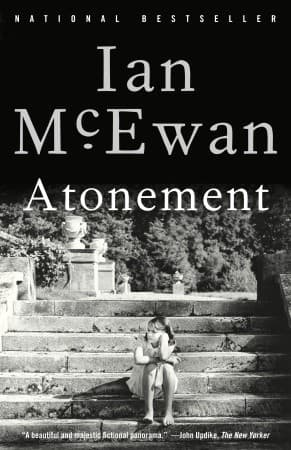
- Atonement
Ian McEwan
4.4 (70) average on GoodreadsExplores love, class, and a pivotal day's impact on a character's life and a writer's creation.
- The Remains of the Day
Kazuo Ishiguro
4.1 (200k) average on GoodreadsLiterary FictionFocuses on the internal life of a servant in an English country house, with themes of memory and unspoken emotion.
- On Chesil Beach
Ian McEwan
3.6 (76k) average on GoodreadsLiterary FictionExamines a single, impactful day in a relationship and its long-term consequences.
- The Old Man and the Sea
Ernest Hemingway
3.8 (831k) average on GoodreadsLiterary FictionA Cuban fisherman's long struggle with a giant marlin becomes a story of endurance and dignity, now retold for young adults with illustrations, phonetic guides, and writing prompts in Traditional Chinese.
- One Hundred Years of Solitude
Gabriel García Márquez
4.1 (753k) average on GoodreadsLiterary FictionThrough the multi-generational story of the Buendía family, a mythical town deals with the repeating patterns of time, love, and solitude, as the extraordinary mixes with the ordinary.
- The Goldfinch
Donna Tartt
3.9 (720k) average on GoodreadsLiterary FictionHaunted by a tragic explosion and clutching a stolen Dutch masterpiece, a young orphan navigates the opulent drawing rooms of New York and the gritty underbelly of the art world, desperately seeking connection and redemption amidst a life spiraling into crime and obsession.



Enjoyed the summary?
A summary gives you the shape of the book. The book itself has the detail, the examples and the voice.
Find Mothering Sunday on AmazonAs an Amazon Associate, BookBrief earns from qualifying purchases. How we're funded