
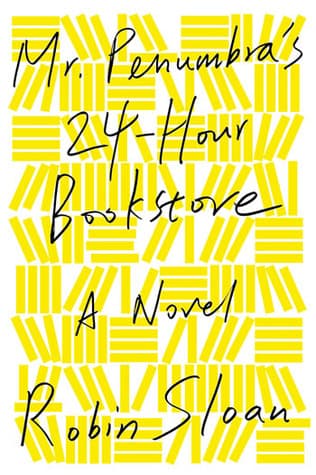
Synopsis
Covers the whole plot, including the ending.
- Difficulty
- Easy
- Pacing
- Moderate
- Mood
- Whimsical, Mysterious, Clever, Optimistic
- Read it if
- You love a blend of old-world mystery, secret societies, and modern tech culture, with a charming protagonist.
- Skip it if
- You prefer high-stakes action or hard fantasy; this is a more whimsical, cerebral mystery.
Mr. Penumbra's 24-Hour Bookstore Plot Summary
Covers the whole plot, including the ending.
A New Beginning at Penumbra's
After losing his job at a web design startup during the Great Recession, Clay Jannon finds a job opening at Mr. Penumbra's 24-Hour Bookstore in San Francisco. The store is dimly lit, filled with tall, old shelves, and run by the mysterious Mr. Penumbra. Clay's first tasks are simple: mind the register during the night shift and record the unusual 'customers' who never buy books but instead check out obscure, coded volumes from a restricted section. He is told not to look at the books, but his curiosity is immediately sparked by the strange rituals and the secretive nature of the place.
The Coded Books and Mysterious Patrons
Clay soon notices that the bookstore's patrons are a small, dedicated group, mostly older individuals, who carefully follow a specific check-out process for the ancient, often unreadable books. These books are not for sale and seem to contain no clear text, only symbols and diagrams. Mr. Penumbra has strict rules, forbidding Clay from opening or reading these 'codex' books. Driven by his web designer's feel for data and patterns, Clay secretly begins to record details about the patrons and the books they borrow, hoping to find the system or purpose behind these mysterious transactions.
Enlisting Tech-Savvy Friends
Unable to decipher the patterns alone, Clay asks his friends for help. He brings in Neel Shah, a wealthy and brilliant software engineer who founded the Google-like company 'Goolge,' and Kat Potente, a data visualization expert at Goolge. Later, he also involves his girlfriend, Kat's best friend, who works as a sculptor for a special effects company. Together, they begin to process the information Clay has gathered about the patrons, their borrowing habits, and the coded books. Their combined technological skills aim to solve the mystery of Penumbra's bookstore, using advanced algorithms and data analysis.
Unveiling the First Clues
Using Goolge's immense processing power, Neel and Kat analyze the data from the books. They discover that the seemingly random symbols within the codices are a complex, multi-layered cipher. Their first discovery reveals a hidden message and points to a secret society called the Unbroken Spine, which preserves the works of a forgotten Renaissance printer named Aldus Manutius. This society, they learn, believes that Manutius embedded clues to immortality within his typography and book designs, and the books in Penumbra's store are part of this grand, centuries-old search.
Confronting Mr. Penumbra
With their initial discoveries, Clay and his friends confront Mr. Penumbra. Though guarded at first, Penumbra is surprised and interested by their technological approach to a mystery that has puzzled the society for centuries. He reveals that he is a 'Reader' in the Unbroken Spine, and the books are part of a vast, ongoing project to decipher Aldus Manutius's 'Great Work' — a search for eternal life or understanding. He explains the society's long history and their traditional, slow methods of deciphering the texts, which are very different from Clay's modern, digital approach.
The Society's Headquarters in New York
Mr. Penumbra, seeing the potential of Clay's methods, decides to take him to the headquarters of the Unbroken Spine in New York City. There, they meet the society's leaders, including the stern and traditional Corvina, who views technology with suspicion. Clay, Neel, and Kat, through a video conference, present their findings and show how Goolge's algorithms can speed up the deciphering process. While some members resist this modern intrusion, the potential for a breakthrough is too great to ignore, and they are given a limited chance to prove their methods.
The Scion of Aldus and the Digital Breakthrough
The society grants Clay and his team access to their vast archives, including the legendary 'Scion of Aldus' — a complete, pristine collection of Aldus Manutius's works. With this access, Neel and Kat use Goolge's advanced imaging and text recognition software to scan and analyze every page. They race against time, converting centuries of physical text into digital data, searching for the key to Manutius's great work. Clay learns more about the society's history, its rivalries, and its deep belief in the power of typography and knowledge.
The Truth of the Great Work
After much effort, the Goolge team, led by Neel and Kat, finally cracks the code. The 'Great Work' is not a formula for literal immortality, but a deep philosophical text on the nature of knowledge, learning, and the human condition. Aldus Manutius, it is revealed, intended his typography and books to spread understanding and connect minds across generations, not to achieve physical immortality. The 'immortality' he sought was the lasting legacy of ideas and the continuous growth of human thought through shared knowledge.
A New Era for the Unbroken Spine
The revelation greatly impacts the Unbroken Spine. While some traditionalists are initially disappointed that the Great Work is not a literal key to eternal life, the deeper meaning resonates. The society, guided by Mr. Penumbra and influenced by Clay and his friends, begins to use technology to achieve Aldus's true vision: the wide spread and preservation of knowledge. They start digitizing their archives and making them accessible, changing from a secretive, isolated group to one dedicated to sharing past wisdom with the future.
Clay's Continued Journey
Clay Jannon, having played a key role in this change, finds his purpose. He continues to work closely with the Unbroken Spine, helping them navigate the digital world and establish an online presence. He also keeps his connection with Goolge and his friends, acting as a bridge between the ancient world of printed knowledge and the modern realm of digital information. The bookstore, now more of a center for digital archiving and collaboration, continues to do well, fulfilling a new, expanded mission under Mr. Penumbra, who seems content with this evolution.
Principal Figures
Clay Jannon
Protagonist
A laid-off web designer who becomes a night clerk at Mr. Penumbra's bookstore.
Clay Jannon is a curious and resourceful young man, a product of the digital age with a keen eye for patterns and data. Despite his tech background, he finds a strange allure in the ancient, physical books of Penumbra's store. He is observant, intelligent, and possesses a strong desire to understand the mysteries around him. His loyalty to his friends and his open-mindedness allow him to bridge the gap between traditional scholarship and modern technology.
Relationships: Mr. Penumbra (Employer and mentor, eventually a friend and colleague in the Unbroken Spine.); Neel Shah (Childhood friend and brilliant tech CEO, collaborator on the mystery.); Kat Potente (Girlfriend and data visualization expert, collaborator on the mystery.)
Mr. Penumbra
Supporting
The enigmatic owner of the 24-hour bookstore and a long-standing member of the Unbroken Spine.
Mr. Penumbra is an ancient, wise, and mysterious man, dedicated to the centuries-old quest of the Unbroken Spine. He is a 'Reader' in the society, tasked with guarding and lending out the coded books. He is initially traditional and skeptical of technology but possesses an open mind that allows him to recognize the value of Clay's modern approach. He is deeply committed to the preservation of knowledge and the legacy of Aldus Manutius.
Relationships: Clay Jannon (Employer and mentee, later a trusted colleague.); Corvina (Fellow member of the Unbroken Spine, representing traditionalism.); Aldus Manutius (Revered historical figure, the focus of his life's work.)
Neel Shah
Supporting
Clay's wealthy childhood friend and the founder of the Google-like tech company, Goolge.
Neel Shah is a brilliant and eccentric software engineer, a tech visionary who built a massive search engine company from the ground up. He is immensely wealthy and possesses an insatiable curiosity, always eager to tackle complex problems. His technological prowess and access to Goolge's resources are instrumental in deciphering the mysteries of the Unbroken Spine. Despite his success, he remains grounded and loyal to his friends.
Relationships: Clay Jannon (Childhood best friend and collaborator.); Kat Potente (Employee and fellow collaborator.)
Kat Potente
Supporting
Clay's girlfriend and a talented data visualization expert at Goolge.
Kat Potente is an intelligent, pragmatic, and highly skilled data visualization expert. She is Clay's girlfriend and a key member of the team, responsible for making complex data understandable and visually accessible. Her expertise is crucial in identifying patterns and connections within the coded books. She is supportive of Clay and brings a grounded, analytical perspective to their fantastical quest.
Relationships: Clay Jannon (Girlfriend and collaborator.); Neel Shah (Boss and fellow collaborator.)
Corvina
Antagonist/Supporting
A high-ranking, traditionalist member of the Unbroken Spine, initially resistant to new methods.
Corvina represents the conservative, traditional wing of the Unbroken Spine. She is deeply committed to the society's ancient rituals and methods, viewing modern technology with suspicion and disdain. She initially opposes Clay's digital approach, fearing it will corrupt the purity of their centuries-old quest. However, she is ultimately driven by the same goal as Penumbra – to uncover the Great Work – which allows her to eventually accept the evidence of the digital breakthrough.
Relationships: Mr. Penumbra (Fellow member of the Unbroken Spine, often in disagreement.); Clay Jannon (Initially a skeptic of his methods, later a reluctant acceptor.)
Aldus Manutius
Mentioned
A historical Renaissance printer whose 'Great Work' is the focus of the Unbroken Spine's quest.
Aldus Manutius is a historical figure, a Venetian printer and publisher from the Renaissance, whose life's work forms the core mystery of the novel. He is revered by the Unbroken Spine, who believe he embedded clues to immortality or profound knowledge within his typography and book designs. Though never physically present, his intellectual legacy drives the entire plot, representing the enduring power of ideas and the craft of bookmaking.
Relationships: Unbroken Spine members (Their venerated founder and the subject of their lifelong quest.)
Themes & Insights
The Clash and Collaboration of Old and New
The novel explores the tension and eventual cooperation between ancient traditions and modern technology. The Unbroken Spine, with its centuries-old rituals and physical books, represents the 'old,' while Clay's digital methods and Goolge's algorithms represent the 'new.' At first, there is resistance from traditionalists like Corvina, but the story shows how these different approaches can work together, leading to discoveries that neither could achieve alone. This is clear when Goolge's supercomputers finally crack the code that generations of human 'Readers' could not.
“What is the point of a book if you don't read it?”
The Nature of Immortality and Legacy
The Unbroken Spine's search is for literal immortality, but the ending reveals a deeper understanding of the concept. Aldus Manutius's 'Great Work' is not a magical cure but a philosophical framework for the lasting power of knowledge and shared ideas. True 'immortality' lies in the continuous transmission and evolution of human thought through books and information, ensuring that ideas and insights live on beyond an individual's life. This changes the society's purpose from a selfish goal to a selfless one.
“The true immortal is not the one who lives forever, but the one whose ideas live forever.”
The Power of Information and Data
The story highlights the power of information, both in its physical, coded forms within the ancient books and in its digital, analyzable forms. Clay's initial instinct to collect and analyze data, combined with Neel and Kat's sophisticated Goolge tools, shows how structured information can unlock deep secrets. The team's success comes from their ability to see patterns and connections where others saw only random symbols, showing that data, when properly collected and processed, holds the key to understanding complex systems, whether ancient or modern.
“Data is a tool, and like any tool, its power lies in how you use it.”
Community and Connection
Despite its focus on secretive societies and individual quests, the novel emphasizes the importance of community and collaboration. Clay relies heavily on his diverse group of friends — Neel's tech genius, Kat's data visualization skills, and even his girlfriend's artistic eye — to solve the mystery. The Unbroken Spine is a community, though a very traditional one. The ending suggests that Aldus Manutius's true 'Great Work' was about connecting minds and creating shared understanding, stressing that knowledge thrives best when many people share and build upon it.
“No man is an island, and no great work is created in isolation.”
Plot Devices & Literary Techniques
The Coded Books
Ancient, mysterious volumes containing a multi-layered cipher.
The coded books are the central mystery and the primary MacGuffin of the story. They serve as a physical manifestation of the Unbroken Spine's centuries-long quest. Their inscrutable nature drives Clay's curiosity and necessitates the blend of traditional scholarship and modern technology to decipher them. They symbolize the hidden knowledge of the past waiting to be unlocked, and their eventual decoding reveals the true philosophical core of the narrative.
Goolge's Algorithms and Data Processing
Advanced technological tools used to analyze and decipher ancient texts.
Goolge's technology acts as a powerful deus ex machina, providing the means to overcome the seemingly impossible task of deciphering the Great Work. It represents the transformative potential of modern computing power when applied to historical mysteries. This device highlights the novel's core theme of old meeting new, demonstrating how algorithms can process vast amounts of data and identify patterns far beyond human capability, accelerating a quest that had been stalled for centuries.
The Unbroken Spine Society
A secret society dedicated to preserving and deciphering the work of Aldus Manutius.
The Unbroken Spine serves as the primary external conflict and the source of the novel's mystery. It provides the historical context and the high stakes for the quest. The society's secretive nature, its ancient rituals, and its rigid hierarchy create an intriguing backdrop against which Clay's modern, open approach can be contrasted. Its existence introduces elements of fantasy and mystery, drawing the reader into a world beyond the ordinary bookstore.
The 'Great Work' of Aldus Manutius
The ultimate goal of the Unbroken Spine's quest, believed to hold the key to immortality.
The 'Great Work' functions as the ultimate prize and the central enigma driving the plot. Initially presented as a literal key to immortality, its true nature is revealed to be a profound philosophical statement on the enduring power of knowledge and human connection. This device allows for a satisfying twist, shifting the focus from a fantastical pursuit to a more grounded, yet equally profound, understanding of legacy and purpose. It provides the thematic resolution for the entire narrative.
Mr. Penumbra's 24-Hour Bookstore Quotes
“The world is a book and those who do not travel read only one page.”
“I am a man of simple tastes. I am always satisfied with the best.”
“Because the internet is a series of tubes, and those tubes are filled with cats.”
“A book is a string of words; a life is a string of experiences. You can read a book in a thousand ways; you can live a life in a thousand ways.”
“We are looking for a few good people who are able to work the night shift. Previous experience in this field is not necessary.”
“The greatest treasure in the world is not gold or jewels, but the stories that we tell.”
“When you have a thing to say, say it; don't make me pull it out of you with wild horses.”
“The internet is not a library. It's a gigantic, sprawling, uncurated, chaotic, and often beautiful conversation.”
“Every book is a world. Every world is a story. Every story is a mystery.”
“We're not just selling books, we're selling worlds.”
“There are people who read to understand, and there are people who read to escape.”
“The true meaning of a book is not in its words, but in the connections it makes within your mind.”
“You can never truly know a place until you've worked the night shift there.”
“The internet is a vast ocean of information, and most of it is just seaweed.”
Quiz
10 questions on the plot and the characters. Each answer comes with a short explanation.
Question 1
What is Clay Jannon's profession before he starts working at Mr. Penumbra's 24-Hour Bookstore?
- Software engineer
- Web designer
- Librarian
- Graphic artist
Show answer
B. Web designer Clay Jannon was a San Francisco web-design drone before the Great Recession led him to the bookstore.
Question 2
What unusual behavior do the customers of Mr. Penumbra's bookstore exhibit?
- They only buy bestsellers.
- They read books without purchasing them.
- They 'check out' large, obscure volumes without buying them.
- They only visit during closing hours.
Show answer
C. They 'check out' large, obscure volumes without buying them. The customers are few and never seem to buy anything; instead, they 'check out' large, obscure volumes.
Question 3
What is the name of the secret society that Mr. Penumbra and his special customers belong to?
- The Book Keepers
- The Unbroken Spine
- The Perpetuity
- The Codex Club
Show answer
C. The Perpetuity The secret society that Penumbra and his special customers are part of is known as the Perpetuity, dedicated to preserving the works of Aldus Manutius.
Question 4
Which tech company does Clay Jannon's friend, Kat Potente, work for?
- Goolge
- Apple
Show answer
C. Goolge Kat Potente works at 'Goolge', a thinly veiled fictional version of Google, where she is a data visualization expert.
Question 5
What is the primary goal of the members of the Perpetuity?
- To digitize all books in the world.
- To find the secret to immortality through Aldus Manutius's writings.
- To become the wealthiest book collectors.
- To create a universal language.
Show answer
B. To find the secret to immortality through Aldus Manutius's writings. The Perpetuity members believe that decoding Aldus Manutius's works will reveal the secret to immortality, or at least a form of extended life.
Question 6
What is the 'unbroken spine' that is frequently mentioned in relation to the books and the society?
- A metaphor for the enduring legacy of books.
- A physical binding technique used in ancient books.
- A specific sequence of books that, when read in order, reveals the 'text' of immortality.
- The name of Mr. Penumbra's personal library.
Show answer
C. A specific sequence of books that, when read in order, reveals the 'text' of immortality. The 'unbroken spine' refers to the complete, correct sequence of Aldus Manutius's books, which, when assembled and read, is believed to reveal the secret of long life.
Question 7
How does Clay initially analyze the clientele's behavior in the bookstore?
- He installs hidden cameras to record them.
- He manually records their visits and the books they check out in a spreadsheet.
- He interviews them about their reading habits.
- He creates a psychological profile for each customer.
Show answer
B. He manually records their visits and the books they check out in a spreadsheet. Clay, using his web-design and data organization skills, meticulously records customer visits and book check-outs, leading to his initial insights.
Question 8
What is the ultimate fate of the 'unbroken spine' that the Perpetuity has been searching for?
- It is destroyed by a fire.
- It is found to be a digital text, not a physical one.
- It is stolen by a rival society.
- It is discovered to be a hoax.
Show answer
B. It is found to be a digital text, not a physical one. The grand secret of the unbroken spine isn't a physical text but a digital one, contained within the algorithms and data, which is eventually uploaded to the cloud.
Question 9
What role does the 'font' play in the mystery of Aldus Manutius's work?
- It's a clue to the location of a hidden treasure.
- The unique typeface itself contains encoded information.
- It indicates the authenticity of the books.
- It is merely a stylistic choice by the author.
Show answer
B. The unique typeface itself contains encoded information. The specific typography, designed by Aldus Manutius, is not just aesthetic but is believed to hold hidden meanings and coded information crucial to the Perpetuity's quest.
Question 10
Who is the 'original' founder of the Perpetuity, whose life they are trying to extend or emulate?
- Mr. Penumbra
- Clay Jannon
- Aldus Manutius
- Ferris Faber
Show answer
C. Aldus Manutius The entire quest of the Perpetuity revolves around the works of Aldus Manutius, an historical Venetian printer, as they believe he held the key to a form of immortality.
Mr. Penumbra's 24-Hour Bookstore FAQ
What initially draws Clay Jannon to the 24-hour bookstore and Mr. Penumbra?
Clay Jannon is drawn to the bookstore out of necessity during the Great Recession, having lost his web design job. The '24-hour' aspect and the quirky handwritten sign for a night clerk pique his interest, offering a stark contrast to his previous tech-centric life in San Francisco.
What is the primary mystery Clay uncovers about the bookstore's customers?
Clay discovers that the bookstore's select clientele doesn't buy books but rather 'checks out' large, obscure, often unreadable volumes from specific sections of the store. Their secretive behavior and the lack of traditional transactions immediately signal to Clay that something unusual is at play.
Who are Clay's main friends who assist him in his investigations, and what are their key skills?
Clay's main friends are Neel Shah, a wealthy Google employee with data analysis expertise; Kat Potente, a Google X employee specializing in information visualization; and Fred, a skilled bookbinder. Each contributes their unique tech or artisan skills to decipher the bookstore's mysteries.
What is the 'Unbroken Spine' and its significance to the narrative?
The 'Unbroken Spine' is a secret society dedicated to preserving and decoding the work of Aldus Manutius, specifically his 'Pondering' texts. It represents a long-standing tradition of knowledge preservation and the pursuit of immortality through deciphering ancient codes, making it central to the book's mystery.
What is the ultimate goal of the Unbroken Spine's members, particularly Mr. Penumbra and his predecessors?
The ultimate goal of the Unbroken Spine's members is to achieve 'corporeal immortality' by deciphering the Great Founder's text, which they believe contains the secret to eternal life. They dedicate their lives to meticulous study and transcription, hoping to unlock this profound secret.
How does the digital world, specifically Google, intersect with the ancient traditions of the Unbroken Spine?
The digital world, primarily through Google's vast data processing capabilities and Clay's friends' tech skills, is used to analyze the patterns in the Unbroken Spine's texts, far surpassing the speed of manual transcription. This intersection highlights a core theme of old knowledge meeting new technology, ultimately revealing the text's true nature.
What is the true nature of the 'Pondering' texts written by Aldus Manutius, and how is it revealed?
The 'Pondering' texts are revealed not as a secret code for immortality, but rather as a highly complex, personalized font. This is discovered when Clay and his friends use Google's advanced algorithms to analyze the vast textual data, revealing patterns consistent with typeface design rather than hidden messages.
What role does the 'fetish' or physical object play in the Unbroken Spine's rituals, and why is it important?
The 'fetish' is a small, unique trinket given to each member of the Unbroken Spine upon their initiation. It represents their personal connection to the society and serves as a physical reminder of their dedication, symbolizing their individual contribution to the collective pursuit of knowledge.
How does Clay's background as a web designer influence his approach to the bookstore's mystery?
Clay's background as a web designer makes him inherently analytical and pattern-seeking. He approaches the bookstore's mystery like a user experience problem, meticulously observing customer behavior and leveraging data to uncover hidden structures, a skill directly transferable from his tech career.
What psychological comfort or meaning do the members of the Unbroken Spine derive from their lifelong dedication?
The members of the Unbroken Spine derive profound psychological comfort from their shared purpose and the belief in achieving immortality through their work. This dedication provides structure, community, and a sense of profound meaning, elevating their lives beyond mundane existence, even if the ultimate goal is misinterpreted.
How does Mr. Penumbra's character embody a blend of traditional wisdom and reluctant acceptance of modern technology?
Mr. Penumbra embodies this blend by initially being deeply rooted in the ancient traditions of the Unbroken Spine and suspicious of technology. However, he eventually demonstrates a pragmatic willingness to embrace modern tools, like Google's algorithms, when they prove more efficient in solving the society's long-standing mystery, showing his priority is the solution, not the method.
What does the ultimate revelation about Aldus Manutius's 'immortality' suggest about human legacy and creativity?
The revelation that Manutius's 'immortality' lies in his creation of a unique font, rather than a secret elixir, suggests that true human legacy and immortality are found in creative contributions that shape culture and communication. It shifts the focus from literal eternal life to the enduring impact of artistic and intellectual work.
Is the ending of the book optimistic or melancholic, given the Unbroken Spine's long-held beliefs are debunked?
The ending can be interpreted as both optimistic and melancholic. It's melancholic because a centuries-old belief is debunked, potentially stripping meaning from many lives. However, it's optimistic in that it redefines 'immortality' in a more achievable, creative sense, and the society finds a new, meaningful purpose in preserving and sharing Manutius's true legacy.
How does the book explore the tension between belief systems and empirical evidence?
The book explores this tension by pitting the Unbroken Spine's centuries-old, faith-based belief in a literal immortality code against Clay and his friends' empirical, data-driven approach. The ultimate resolution, where empirical evidence refutes the long-held belief but reveals a different kind of truth, highlights this dynamic.
What is the significance of the book's setting in San Francisco, a hub of both old money and new technology?
San Francisco's dual identity as a city of historical charm and cutting-edge technology perfectly mirrors the book's central conflict and themes. It provides a natural backdrop for the convergence of ancient societies and modern tech giants, symbolizing the collision and eventual synthesis of tradition and innovation.
How does the book comment on the value of physical books and human connection in an increasingly digital world?
The book values physical books as tangible vessels of history and human labor, contrasting them with the ephemeral nature of digital data. It also emphasizes the irreplaceable value of human connection and collaboration, demonstrating that even with advanced tech, personal relationships and diverse skills are crucial for solving complex mysteries.
What is the 'secret' of the Unbroken Spine's archive, which Clay and his friends eventually access?
The 'secret' of the archive is not a hidden message, but the sheer volume and meticulous organization of the transcribed 'Pondering' texts. It's a vast collection of data points that, when digitized and analyzed, reveal the underlying structure of Aldus Manutius's font design, rather than a coded language for immortality.
How does Clay's relationship with Kat Potente evolve throughout his investigation?
Clay's relationship with Kat Potente evolves from a casual acquaintance to a romantic partnership, fueled by their shared intellectual curiosity and collaborative efforts in deciphering the bookstore's mystery. Her expertise in data visualization proves invaluable, strengthening both their personal and professional bond.
About the author

Robin Sloan is an American author known for his fiction, particularly the novel "Mr. Penumbra's 24-Hour Bookstore." This work explores themes of technology, books, and the intersection of the two, gaining attention for its imaginative narrative and unique premise. Sloan's writing often reflects his background in technology and storytelling.
Similar books
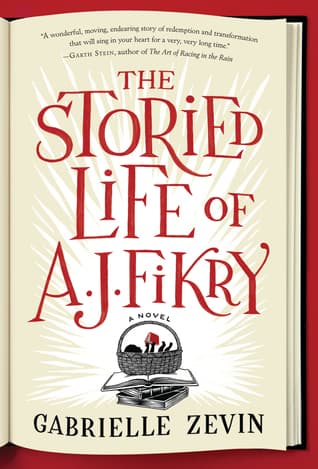
- The Storied Life of A.J. Fikry
Gabrielle Zevin
4.0 (202k) average on GoodreadsLiterary FictionFeatures a bookstore as a central setting with quirky characters and a love for books.
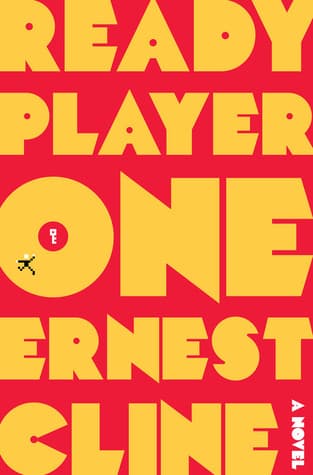
- Ready Player One
Ernest Cline
4.3 (861k) average on GoodreadsFantasyCombines a treasure hunt with pop culture references and technological puzzles, though with a different tone.
- Harry Potter and the Sorcerer's Stone
J.K. Rowling
4.5 (7M) average on GoodreadsFantasyRescued from a miserable life under the stairs, an orphaned boy discovers he's a wizard destined for a magical school, where he uncovers a dangerous secret tied to the dark wizard who murdered his parents.
- The Hunger Games
Suzanne Collins
4.3 (6.4M) average on GoodreadsFantasyIn a future where children fight to the death on live television, Katniss Everdeen volunteers for the arena, turning a death sentence into a fight for survival and a spark of rebellion.
- 1984
George Orwell
4.2 (3.1M) average on GoodreadsPoliticsIn a future where surveillance and thought control are absolute, a man's search for truth clashes with the Party, showing that hope can be a form of rebellion.
- Divergent
Veronica Roth
4.2 (2.9M) average on GoodreadsFantasyIn a society divided by virtues, a sixteen-year-old's difference from the norm starts a rebellion that threatens her world.




Enjoyed the summary?
A summary gives you the shape of the book. The book itself has the detail, the examples and the voice.
Find Mr. Penumbra's 24-Hour Bookstore on AmazonAs an Amazon Associate, BookBrief earns from qualifying purchases. How we're funded