
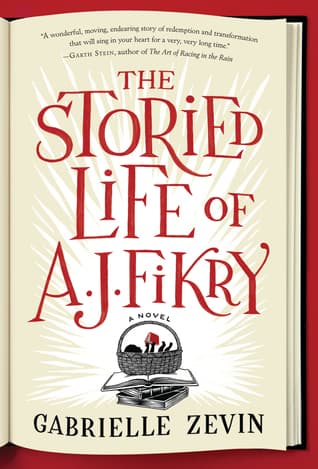
Synopsis
Covers the whole plot, including the ending.
- Difficulty
- Easy
- Pacing
- Moderate
- Mood
- Heartwarming, Witty, Reflective, Charming
- Read it if
- You love heartwarming stories about redemption, the power of books, and quirky characters finding love in unexpected places.
- Skip it if
- You prefer fast-paced thrillers or stories without emotional depth, or if you dislike character-driven narratives.
The Storied Life of A.J. Fikry Plot Summary
Covers the whole plot, including the ending.
A Life in Shambles on Alice Island
A.J. Fikry, owner of Island Books, is a widower living a lonely, cynical life. His bookstore struggles, and a rare first edition of Edgar Allan Poe's 'Tamerlane and Other Poems' was stolen from his apartment. The theft makes his bad mood worse. He is dismissive of customers and locals, including Police Chief Lambiase. His sister-in-law, Ismay, tries to help, but A.J. rejects her. He dislikes most modern books, preferring classics, which further separates him from potential customers and the publishing world. His life seems to be falling apart.
Amelia's Persistent Visits
Amelia Loman, a sales representative for Knightley Press, visits Island Books often, though usually without success. A.J. is always rude, but Amelia stays positive. She tries to talk about books she loves, but he responds with critical and condescending opinions. A.J. thinks her enthusiasm is naive, but a small bit of interest shows beneath his rough exterior. Their talks are a back-and-forth of his cynicism against her belief in stories, setting the stage for a slow change in A.J.'s isolated world. Each visit, though hard, chips away at his wall of indifference.
A Mysterious Package Arrives
One morning, A.J. finds a mysterious package in his bookstore. Inside is a two-year-old girl named Maya. Her mother left a note, explaining she could not care for her daughter and hoped Maya would have a better life with A.J. This event disrupts A.J.'s solitary life. He is overwhelmed and contacts Chief Lambiase, who explains the legal process. Despite his initial hesitation and lack of experience with children, A.J. feels drawn to Maya. He starts to feel a protective instinct he never knew he had.
Becoming a Father
After thinking it over and completing legal steps, A.J. adopts Maya. Her presence completely changes his life. The bookstore, once a place of grief, becomes a lively home with children's books and toys. Maya's curiosity and love for stories bring back A.J.'s own passion for reading, which had been gone since his wife's death. He reads to her constantly, introducing her to classics and teaching her to love literature. Maya's arrival also softens A.J., making him more approachable to the island community and to Amelia Loman, who notices a big change in him during her visits. His isolation ends as he finds joy and purpose as a father.
A New Beginning with Amelia
As A.J. changes through fatherhood, his talks with Amelia Loman also change. Their conversations go from arguments about books to more personal talks. Amelia sees past A.J.'s grumpy outside, noticing his new warmth and love for Maya. They find they both love books and are surprisingly compatible. Their relationship grows, and A.J. proposes to Amelia. They marry, and Amelia moves to Alice Island, becoming a loving stepmother to Maya and a part of Island Books. Their marriage shows a complete reversal of A.J.'s earlier isolation, bringing him companionship, love, and a family, all centered on their shared love for literature.
The Bookstore Flourishes
With Amelia's marketing skills and A.J.'s knowledge of books, Island Books becomes successful again. Amelia adds new events, author signings, and more types of books, bringing in more customers. The bookstore becomes a lively center for the Alice Island community, a place for people to buy books, connect, and share stories. A.J., now a kinder, more involved person, enjoys recommending books and talking with his customers. The bookstore, once a sign of his sadness, becomes a thriving business that reflects the happiness and stability of A.J.'s personal life.
The Return of the Stolen Poe
Years later, A.J. gets an anonymous package with his lost, valuable Poe 'Tamerlane' edition. With the book is a note from the thief, Daniel, Ismay's ex-husband. Daniel explains he stole the book out of desperation for money and later regretted it, returning it when he could. This explains the theft for A.J., removing a lingering worry from his past. The book's return, once a symbol of his isolation, now feels less important compared to the love and family he has found, showing his big personal growth.
Maya's Growing Years
Maya grows into a bright, smart, and well-adjusted young woman, shaped by growing up in the bookstore and her parents' love for literature. She shares A.J.'s curiosity and Amelia's warmth. As she gets ready for college, she applies to good universities, planning a future beyond Alice Island, but she stays connected to the bookstore and her family. Her success makes A.J. and Amelia very proud and happy, showing the success of their family and the good effect of a life full of stories and love.
A.J.'s Decline and Legacy
A.J. gets a rare and aggressive cancer, giving him a limited time to live. Facing death, A.J. thinks about his life, recognizing how much he changed thanks to Maya and Amelia. He starts to organize his affairs carefully, making sure Island Books will continue. He also begins writing short, heartfelt notes to Maya, each recommending a book and offering a life lesson, for her to read after his death. These notes are his final message, a way to keep guiding his daughter through literature even after he is gone, showing his deep love and his life's main passion.
The Final Chapters
A.J. Fikry dies peacefully, with his family around him. His death is a loss for Amelia, Maya, and the Alice Island community, but his legacy continues. Amelia keeps running Island Books, honoring his memory and their shared vision. Maya, now a young woman, values the book recommendations and life advice her father left her, finding comfort and guidance in his words. The bookstore remains a thriving part of the community, showing A.J.'s journey from a solitary, bitter widower to a beloved husband, father, and bookseller whose life was defined by connection, love, and the lasting power of stories.
The Storied Life of A.J. Fikry Characters
A.J. Fikry
Protagonist
The curmudgeonly owner of Island Books, transformed by love and fatherhood.
A.J. Fikry begins the story as a cynical, grief-stricken widower, isolated on Alice Island. He is an intellectual snob, dismissing most contemporary literature and preferring to immerse himself in classics. The death of his wife, Nic, and the theft of his rare Poe collection plunge him into a deep depression, making him rude and detached. His life undergoes a radical transformation with the unexpected arrival of Maya, an abandoned toddler he adopts. Fatherhood softens his edges, rekindling his love for books and opening his heart to Amelia Loman, whom he eventually marries. He evolves from a solitary figure into a loving husband, father, and cherished community member, finding purpose and joy in the connections he builds.
Relationships: Nic Fikry (Deceased wife, whose death plunged him into grief); Maya Fikry (Adopted daughter, who brings joy and purpose to his life); Amelia Loman (Wife, sales representative who initially frustrates him but later becomes his partner); Ismay (Sister-in-law, who tries to help him); Chief Lambiase (Friend and local police chief)
Amelia Loman
Protagonist/Love Interest
An optimistic book sales representative who falls in love with A.J. Fikry.
Amelia Loman is an enthusiastic and idealistic sales representative for Knightley Press. She is passionate about books, particularly contemporary fiction, and is initially frustrated by A.J.'s dismissive and critical attitude. Despite his initial rudeness, she persists in her visits to Island Books, drawn by a subtle intrigue and her unwavering belief in the power of stories. Amelia is kind, patient, and sees the good in people, eventually recognizing the warmth beneath A.J.'s gruff exterior. She plays a crucial role in A.J.'s transformation, becoming his wife, Maya's stepmother, and a partner in revitalizing Island Books. Her optimism and practicality complement A.J.'s intellectualism, creating a balanced and loving family.
Relationships: A.J. Fikry (Husband, initially a difficult client, then her loving partner); Maya Fikry (Stepdaughter, whom she loves and raises)
Maya Fikry
Supporting/Catalyst
The abandoned toddler who transforms A.J.'s life.
Maya is an abandoned two-year-old girl discovered by A.J. in his bookstore. Her unexpected arrival serves as the catalyst for A.J.'s profound personal transformation. Initially, a vulnerable child in need of a home, Maya quickly becomes the center of A.J.'s world, bringing joy, purpose, and love back into his life. She grows up surrounded by books, developing a deep appreciation for literature and a bright, curious mind. Maya's presence softens A.J., makes him more open to Amelia, and inspires him to create a loving family. Her journey from an abandoned child to a well-adjusted, intelligent young woman symbolizes hope and the power of second chances.
Relationships: A.J. Fikry (Adoptive father, who loves and raises her); Amelia Loman (Stepmother, who loves and helps raise her)
Chief Lambiase
Supporting
The kind-hearted police chief of Alice Island and A.J.'s friend.
Chief Lambiase is the friendly and observant police chief of Alice Island. He is one of the few people who maintains a connection with A.J. during his period of isolation, offering support and advice, particularly after the discovery of Maya. Lambiase is a quiet, thoughtful man who develops a deep respect and affection for A.J. as he witnesses his transformation. He is a steadfast presence in A.J.'s life, representing the supportive community of Alice Island. He eventually marries Ismay, A.J.'s sister-in-law, further cementing his place within A.J.'s extended family.
Relationships: A.J. Fikry (Friend and confidant); Ismay (Wife)
Ismay
Supporting
A.J.'s well-meaning but often exasperated sister-in-law.
Ismay is A.J.'s sister-in-law, the sister of his deceased wife, Nic. She is concerned about A.J.'s reclusive and bitter state after Nic's death and tries, often unsuccessfully, to pull him out of his despair. She is a practical and somewhat blunt woman, but her intentions are always good. Ismay represents A.J.'s last remaining tie to his past family life. She eventually finds happiness with Chief Lambiase, forming a new family unit that intersects with A.J.'s. Her character highlights the community's persistent efforts to connect with A.J. despite his difficult nature.
Relationships: A.J. Fikry (Brother-in-law); Nic Fikry (Deceased sister); Chief Lambiase (Husband)
Daniel Parish
Supporting/Antagonist (briefly)
Ismay's ex-husband and the thief of A.J.'s Poe collection.
Daniel Parish is Ismay's ex-husband. He is introduced as the thief of A.J.'s prized 'Tamerlane' collection, an act driven by desperation and financial hardship. His character represents the darker side of human struggle and the impact of poor choices. Years later, he anonymously returns the book with a letter of explanation and apology, seeking a form of redemption. His actions, though initially harmful, ultimately provide closure for A.J. and demonstrate the possibility of remorse and the desire to make amends, even if indirectly.
Relationships: Ismay (Ex-husband); A.J. Fikry (Victim of his theft)
Nic Fikry
Mentioned/Catalyst
A.J.'s deceased wife, whose death triggers his initial despair.
Nic Fikry is A.J.'s deceased wife. Although she never appears directly in the story, her death is the central event that plunges A.J. into his deep grief and isolation at the beginning of the novel. Her memory, and the void she left, shapes A.J.'s initial character and actions. The rare Poe collection was a gift from her, making its theft even more painful for A.J. Her absence is a constant presence, highlighting the extent of A.J.'s loss and serving as the benchmark against which his eventual recovery and new happiness are measured.
Relationships: A.J. Fikry (Deceased wife); Ismay (Sister)
Lambis
Supporting
Owner of the local restaurant, a staple of Alice Island.
Lambis is the owner of the local Greek restaurant on Alice Island, a popular spot where many of the characters gather. He is a friendly and observant member of the community, often privy to the island's goings-on. He provides a backdrop for social interactions and serves as a minor, consistent presence, symbolizing the tight-knit nature of the Alice Island community.
Relationships: A.J. Fikry (Customer and fellow island resident); Chief Lambiase (Fellow island resident)
The Storied Life of A.J. Fikry Themes
Transformation and Second Chances
The novel explores transformation through A.J. Fikry's journey. At first a bitter, isolated widower, A.J.'s life changes when Maya, an abandoned toddler, arrives. This event makes him open his heart and become a father, which then makes him open to love with Amelia. His entire view on life, books, and human connection changes, showing it is never too late for a new start. Island Books thriving under his and Amelia's care also shows this theme of renewal and hope.
“We are not quite novels. We are not quite short stories. In the end, we are collected works.”
The Power of Books and Storytelling
Books are not just a background; they are central to the characters' lives and the story. A.J.'s identity is tied to his bookstore and his literary tastes. The 'story introductions' at the start of each chapter, where A.J. recommends a book and gives a life lesson, show how literature can teach and comfort. Books bring A.J. and Amelia together, give comfort and guidance to Maya, and even help A.J. deal with his grief and eventual death. The bookstore itself becomes a symbol of community, knowledge, and the human need for stories.
“A book is a living thing. We live in it. It lives in us.”
Love and Family in Unconventional Forms
The novel redefines what family means. A.J., a single, reluctant man, becomes a devoted father to an abandoned child. His relationship with Amelia, initially difficult, grows into a deep, loving marriage, forming an unusual but strong family. The Alice Island community, including Chief Lambiase and Ismay, also forms an extended family, offering support and connection. The story shows that love and family are not limited by blood or traditional expectations but are built through shared experiences, commitment, and affection, bringing comfort and meaning to life.
“It is a truth universally acknowledged that a single man in possession of a good fortune, must be in want of a wife. Not true. A single man in possession of a good fortune is in want of nothing.”
Community and Connection
Alice Island is important to the story, showing the value of community. Despite A.J.'s initial isolation, the islanders—Chief Lambiase, Ismay, Lambis—do not completely abandon him. They are a persistent presence that eventually helps him rejoin the world. The bookstore changes from a solitary place to a lively community hub, creating connections among island residents. The novel suggests that even the most private people need human connection and that a supportive community can help with personal healing and growth.
“No man is an island, entire of itself; every man is a piece of the continent, a part of the main.”
Plot Devices & Literary Techniques
Epistolary Book Recommendations
Chapter introductions featuring A.J.'s personal book recommendations and life lessons.
Each chapter begins with a short, personalized introduction from A.J. Fikry, recommending a specific book and offering a brief, often poignant, life lesson or observation related to the upcoming events. These serve multiple purposes: they characterize A.J. through his literary taste and evolving wisdom, foreshadow thematic elements, and provide a unique narrative voice. They reinforce the central role of books in the story and act as a form of communication between A.J. and his beloved daughter, Maya, even after his death.
The Stolen 'Tamerlane'
A rare Poe collection whose theft symbolizes A.J.'s initial loss and isolation.
A.J.'s prized, rare first edition of Edgar Allan Poe's 'Tamerlane and Other Poems' is stolen early in the novel. This theft exacerbates A.J.'s grief and cynicism, symbolizing his sense of loss and the violation of his sanctuary. The book's eventual, anonymous return by the thief, Daniel, years later, provides closure for A.J. and highlights how far he has come. By that point, the book's monetary value and sentimental importance are overshadowed by the love and family he has found, showing his emotional growth beyond material possessions.
Alice Island as a Microcosm
The isolated island setting reflecting and enabling personal transformation.
Alice Island functions as a contained world, a microcosm where the characters' lives are intimately intertwined. Its isolation initially mirrors A.J.'s own emotional solitude. However, the close-knit nature of the island community also provides the consistent, gentle pressure and support that eventually helps A.J. to heal and reconnect. The island setting allows for the intimate focus on character development and relationships, emphasizing that profound changes can occur even in seemingly small, insular worlds. It fosters a sense of belonging and continuity that aids in the characters' transformations.
The Bookstore as a Character/Setting
Island Books as a central setting that reflects and influences character development.
Island Books is more than just a setting; it's a living entity that evolves with A.J. and his family. Initially, it's a reflection of A.J.'s grief and cynicism – dusty, disorganized, and unwelcoming. With Maya's arrival and Amelia's influence, it transforms into a vibrant, inviting community hub filled with children's books and warmth. The bookstore serves as the stage for most major plot points – Maya's abandonment, A.J. and Amelia's romance, and the community's interactions. Its transformation mirrors A.J.'s own, embodying the power of stories and connection to revitalize a life.
The Storied Life of A.J. Fikry Quotes
“We are not quite novels. We are not quite short stories. In the end, we are collected works.”
“Sometimes books don't find us until the right time.”
“A place is not really a place without a bookstore.”
“We read to know we're not alone. We read because we are alone.”
“You know everything you need to know about a person from the answer to the question, 'What is your favorite book?'”
“The words you can't find, you borrow. We read to know we're not alone.”
“No man is an island, entire of itself; every man is a piece of the continent, a part of the main.”
“The things we respond to at twenty are not necessarily the same things we will respond to at forty and vice versa.”
“We aren't the things we collect, acquire, read. We are, for as long as we are here, only love.”
“A good marriage, at least in my experience, is one in which each partner appoints the other to be the guardian of his solitude.”
“The secret to a happy life is to read a lot and expect little.”
“Sometimes I think my life is a series of losses, but then I remember the things I've gained.”
“Books are a way to travel without moving an inch.”
“The only thing that you absolutely have to know is the location of the library.”
Quiz
10 questions on the plot and the characters. Each answer comes with a short explanation.
Question 1
What is the rare collection that is stolen from A.J. Fikry at the beginning of the book?
- A first edition of 'Moby-Dick'
- A collection of Edgar Allan Poe poems
- A signed copy of 'To Kill a Mockingbird'
- A complete set of Shakespeare's works
Show answer
B. A collection of Edgar Allan Poe poems The theft of A.J.'s prized possession, a rare collection of Poe poems, is a key event that deepens his despair early in the story, symbolizing his loss of connection to literature and joy.
Question 2
Who is the 'mysterious package' that appears at A.J.'s bookstore, changing his life?
- A lost manuscript from a famous author
- A baby girl named Maya
- A box of rare books from an anonymous donor
- A letter from his deceased wife
Show answer
B. A baby girl named Maya The mysterious package is a baby girl left in the bookstore with a note asking A.J. to care for her. This event marks a turning point, leading to his transformation and new connections.
Question 3
What is the name of A.J.'s bookstore on Alice Island?
- Island Books
- Fikry's Books
- Alice Island Bookshop
- The Literary Haven
Show answer
A. Island Books A.J. owns and operates Island Books, which struggles with poor sales initially but becomes central to the community as the story progresses.
Question 4
Why does Amelia, the Knightley Press sales rep, persist in visiting A.J. despite his bad attitude?
- She is required by her job to make the sales calls
- She feels a personal connection to him and believes in his potential
- She is secretly investigating the theft of the Poe poems
- She wants to buy his bookstore for herself
Show answer
B. She feels a personal connection to him and believes in his potential Amelia is idealistic and sees beyond A.J.'s curmudgeonly exterior, eventually forming a deep bond with him that leads to romance and shared life changes.
Question 5
What role does Chief Lambiase play in A.J.'s life throughout the book?
- He is a distant relative who provides financial support
- He is a police officer who becomes a close friend and supporter
- He is the main suspect in the theft of the Poe poems
- He is a rival bookseller on the island
Show answer
B. He is a police officer who becomes a close friend and supporter Chief Lambiase is the well-intentioned police officer who investigates the theft and gradually becomes a loyal friend to A.J., often helping with Maya and the bookstore.
Question 6
How does A.J.'s relationship with books change after Maya arrives?
- He stops reading altogether to focus on parenting
- He sees them only as commodities to sell for profit
- He rediscovers their joy and meaning, sharing them with Maya
- He donates all his books to the local library
Show answer
C. He rediscovers their joy and meaning, sharing them with Maya Maya's arrival rekindles A.J.'s passion for literature; he starts reading to her and using books to bond, which helps heal his grief and isolation.
Question 7
What is the significance of the short story collections that A.J. recommends to Maya throughout the book?
- They are all written by A.J. himself under a pseudonym
- They represent life lessons and connections to their own experiences
- They are required reading for her school assignments
- They are all mysteries related to the stolen Poe poems
Show answer
B. They represent life lessons and connections to their own experiences A.J. uses short story collections to teach Maya about life, love, and loss, mirroring the book's theme that human lives are like 'collected works' of stories.
Question 8
What ultimately happens to the stolen collection of Poe poems?
- It is found and returned to A.J., who sells it to save the bookstore
- It is revealed that Ismay stole it and later returns it anonymously
- It is destroyed in a fire at the bookstore
- Chief Lambiase keeps it as evidence indefinitely
Show answer
B. It is revealed that Ismay stole it and later returns it anonymously Ismay, A.J.'s sister-in-law, confesses to stealing the poems in a misguided attempt to force him out of his depression, and she returns them later, highlighting themes of guilt and redemption.
Question 9
How does the book explore the theme of 'second chances' through A.J.'s life?
- By showing him winning a lottery and starting over financially
- Through his adoption of Maya, his marriage to Amelia, and his renewed purpose
- By having him move off Alice Island to escape his past
- Through a legal case that clears his name from false accusations
Show answer
B. Through his adoption of Maya, his marriage to Amelia, and his renewed purpose A.J. gets multiple second chances: becoming a father to Maya, finding love with Amelia, and revitalizing his bookstore and community ties, illustrating the book's focus on transformation.
Question 10
What is the final twist in A.J.'s life that he 'didn't see coming,' as mentioned in the summary?
- He discovers Maya is actually his biological daughter
- He is diagnosed with a terminal illness and reflects on his legacy
- The bookstore burns down, forcing him to retire
- Amelia leaves him for another man
Show answer
B. He is diagnosed with a terminal illness and reflects on his legacy Late in the book, A.J. is diagnosed with a brain tumor, leading to his death. This twist forces him and the characters to confront mortality and the impact of his storied life, adding depth to the narrative.
The Storied Life of A.J. Fikry FAQ
What is 'The Storied Life of A.J. Fikry' about?
The novel follows A.J. Fikry, a widowed bookstore owner on Alice Island who has become isolated and bitter after his wife's death and the theft of his rare Poe collection. His life transforms when a mysterious package—a toddler named Maya left in his bookstore—arrives, leading him to reconnect with his community, fall in love with sales rep Amelia, and rediscover his passion for books and life.
Why should I read 'The Storied Life of A.J. Fikry'?
This book is a heartfelt celebration of books, love, and second chances, blending literary references with a moving story of personal transformation. It explores themes of grief, community, and the power of stories to heal, making it an uplifting read for anyone who loves character-driven fiction.
What is the background/setting of 'The Storied Life of A.J. Fikry'?
The story is set on the fictional Alice Island, a small, close-knit community off the coast of Massachusetts, where A.J. owns Island Books. The island setting emphasizes isolation and connection, mirroring A.J.'s emotional journey from seclusion to integration with the locals.
What are the most memorable quotes from the book?
Key quotes include: 'We are not quite novels. We are not quite short stories. In the end, we are collected works,' reflecting the theme of life as a compilation of stories. Another is A.J.'s note to Maya: 'The things we respond to at twenty are not necessarily the same things we will respond to at forty and vice versa,' highlighting how perspectives change with experience.
What writing style does Gabrielle Zevin use in this book?
Zevin employs a warm, accessible literary style with interwoven book recommendations and chapter titles that reference short stories, mirroring A.J.'s love for literature. The narrative blends humor, emotion, and meta-commentary on reading, creating a layered, engaging experience.
What minor details add significant meaning to the story?
The recurring motif of the stolen 'Tamerlane' Poe collection symbolizes A.J.'s lost past and eventual redemption when it resurfaces. Small details like Maya's love for 'The Littlest Elf' book and A.J.'s handwritten notes in books underscore themes of legacy and personal connection through literature.
What are some subtle foreshadowing moments in the book?
Early mentions of A.J.'s headaches and memory lapses foreshadow his later brain tumor diagnosis. The initial coldness between A.J. and Amelia subtly hints at their eventual deep bond, and Maya's mysterious arrival prefigures the revelation about her biological mother's connection to the island.
What unexpected character connections exist in the story?
Maya's biological mother, Marian Wallace, is revealed to have been a troubled local who left her at the bookstore, connecting her to A.J.'s wife, Nic, through shared history. Chief Lambiase's evolution from a minor character to a book-loving figure ties the community's growth to A.J.'s influence.
What are A.J. Fikry's unspoken motivations throughout the book?
Beneath his curmudgeonly exterior, A.J. is driven by a deep fear of abandonment and loss, stemming from his wife's death. His initial resistance to Maya and Amelia masks a longing for connection, and his intellectual snobbery hides insecurity about his place in a changing world.
What psychological complexities do characters like Amelia exhibit?
Amelia appears idealistic and persistent, but her eccentricity and dedication to books reveal a vulnerability and desire for meaningful relationships. Her patience with A.J. shows emotional resilience, and her own fears of rejection add depth to her romantic arc with him.
What are the major emotional turning points in A.J.'s journey?
Key turning points include finding Maya, which shocks him out of isolation; falling in love with Amelia, which reopens his heart; learning of his brain tumor, which forces him to confront mortality; and his death, which is framed as a peaceful conclusion to a transformed life.
How do relationship dynamics evolve between A.J. and the community?
A.J. starts as a recluse, alienating Chief Lambiase, Ismay, and Amelia. Through Maya's arrival, he gradually reengages, forming a father-daughter bond, a romantic partnership with Amelia, and friendships that redefine his role on Alice Island, showcasing how love and books bridge social gaps.
Which parts of the book remain ambiguous or open-ended?
The exact circumstances of Marian Wallace's decision to leave Maya are left somewhat vague, inviting interpretation about motherhood and sacrifice. The book also leaves open how characters like Maya and Amelia move forward after A.J.'s death, emphasizing life's ongoing narrative.
What are controversial scenes or decisions in the story?
Some readers debate A.J.'s initial harshness toward Amelia and his snobbish literary tastes, questioning his likability. The rapid adoption of Maya without formalities might raise ethical questions, but it's framed as a transformative act of love central to the plot.
'The Storied Life of A.J. Fikry' ending explained: how it ends & what it means
The book ends with A.J.'s death from a brain tumor, but his legacy lives on through Maya, who inherits the bookstore, and Amelia, who continues their family. The ending reinforces themes of life as a 'collected work,' suggesting that stories and love endure beyond individual lives.
How does the theme of 'second chances' manifest in the plot?
Second chances are central: A.J. gets a new start as a father with Maya, a second shot at love with Amelia, and a renewed purpose through his bookstore. Characters like Chief Lambiase find new passions in books, illustrating how life offers redemption through unexpected opportunities.
What role do books and reading play in the characters' lives?
Books serve as emotional anchors: A.J.'s curated recommendations shape his relationships, Maya's upbringing in the bookstore fosters her creativity, and the community's reading group symbolizes connection. Literature is portrayed as a tool for healing, understanding, and legacy-building.
How does the structure of the book reflect its themes?
The novel is structured with chapter titles referencing short stories and interspersed with A.J.'s book reviews, mirroring the idea that life is a collection of stories. This meta-narrative technique emphasizes how we curate our experiences and find meaning in narratives.
About the author

Gabrielle Zevin is an American author known for her fiction, including notable works such as "Tomorrow, and Tomorrow, and Tomorrow," "The Storied Life of A.J. Fikry," and "Memoirs of a Teenage Amnesiac." Her writing often explores themes of identity, relationships, and the impact of storytelling. Zevin's books have garnered a wide readership and critical attention.
Similar books
- Major Pettigrew's Last Stand
Helen Simonson
3.9 (132k) average on GoodreadsLiterary FictionFeatures an endearing, curmudgeonly protagonist finding love and connection later in life.
- The Little Paris Bookshop
Nina George
3.5 (81k) average on GoodreadsLifestyleBoth novels feature a bookseller protagonist using literature to heal and connect. George's novel is more overtly about grief and a physical journey, with a slightly more poetic and melancholic tone, whereas Zevin's is more focused on community building and a gradual, internal transformation within a fixed setting.
- The Diary of a Bookseller
Shaun Bythell
3.8 (15k) average on GoodreadsBiographyWhile Bythell's is a non-fiction, often humorous and cynical, account of the realities of running a used bookshop, Zevin's offers a romanticized, idealized fictional portrayal. Bythell's sharp, unvarnished observations contrast with Zevin's more gentle and optimistic narrative, highlighting the difference between reality and fiction in the bookselling world.
- The Old Man and the Sea
Ernest Hemingway
3.8 (831k) average on GoodreadsLiterary FictionA Cuban fisherman's long struggle with a giant marlin becomes a story of endurance and dignity, now retold for young adults with illustrations, phonetic guides, and writing prompts in Traditional Chinese.
- One Hundred Years of Solitude
Gabriel García Márquez
4.1 (753k) average on GoodreadsLiterary FictionThrough the multi-generational story of the Buendía family, a mythical town deals with the repeating patterns of time, love, and solitude, as the extraordinary mixes with the ordinary.
- The Goldfinch
Donna Tartt
3.9 (720k) average on GoodreadsLiterary FictionHaunted by a tragic explosion and clutching a stolen Dutch masterpiece, a young orphan navigates the opulent drawing rooms of New York and the gritty underbelly of the art world, desperately seeking connection and redemption amidst a life spiraling into crime and obsession.



Enjoyed the summary?
A summary gives you the shape of the book. The book itself has the detail, the examples and the voice.
Find The Storied Life of A.J. Fikry on AmazonAs an Amazon Associate, BookBrief earns from qualifying purchases. How we're funded