

Synopsis
Covers the whole plot, including the ending.
- Difficulty
- Easy
- Pacing
- Moderate
- Mood
- Intriguing, Cozy, Observational, Classic
- Read it if
- You enjoy classic 'whodunit' mysteries with a large cast of suspects, intricate plotting, and a brilliant, unassuming detective. Perfect for fans of village settings and clever misdirection.
- Skip it if
- You prefer fast-paced thrillers, graphic violence, or stories with a single, clear-cut villain from the outset. This is a cozy mystery that relies on deduction and character observation.
Murder at the Vicarage Plot Summary
Covers the whole plot, including the ending.
A Village's Scorn and a Careless Remark
The story begins in St. Mary Mead, told by Reverend Leonard Clement, the vicar. He introduces the reader to the villagers, including his wife Griselda, his nephew Dennis, and Miss Jane Marple. Colonel Lucius Protheroe, the magistrate, is disliked for his controlling nature. At dinner at the vicarage, Reverend Clement, annoyed by Protheroe's unpleasantness and his criticism of church accounts, jokes that killing Colonel Protheroe would 'do the world at large a favour.' This comment hints at what will happen.
The First Discovery: Colonel Protheroe Murdered
The next day, the vicar gets a call from Colonel Protheroe, who wants to meet him at 6:30 PM. Earlier, Protheroe had also arranged to meet Lawrence Redding, an artist, at the vicarage at 6:15 PM. When Reverend Clement returns to his study, he finds Colonel Protheroe dead at his desk, shot in the head. The vicar calls Dr. Stone and Inspector Slack. The gun, a Luger pistol, is found nearby. The investigation focuses on the timing and the fact that Protheroe was killed in the vicar's study, making the vicar's earlier joke seem like a prophecy and putting him in a difficult spot.
Lawrence Redding's Confession and Miss Marple's Observations
Soon after the discovery, Lawrence Redding arrives and says he killed Protheroe after an argument. He says he then left the gun. But, the vicar's wife, Griselda, also confesses to the crime, though less convincingly. Miss Marple, watching from her window and listening to village talk, notices the unusual events and the different stories. She starts to connect the motives and alibis, watching behaviors and relationships, especially focusing on new arrivals and the colonel's difficult family life. She thinks there is more to the story than a simple confession.
The Second Murder and a Disappearing Clock
The investigation gets confusing when another body is found in the vicarage study — that of Mrs. Lestrange, a woman new to the village. This second victim is also shot, seemingly with the same Luger. The plot gets more complex with the discovery that the clock in the vicarage study was moved forward by ten minutes. This change in time makes alibis and the order of events for both murders harder to understand. Inspector Slack struggles with the new information, as the first, seemingly clear case becomes a more complex puzzle. Miss Marple, however, sees the changed clock as an important clue, showing a deliberate attempt to mislead.
Unraveling Protheroe's Affairs
As the police investigate, it becomes clear that many villagers had strong reasons to want Colonel Protheroe dead. His wife, Anne Protheroe, was having an affair with Lawrence Redding. Protheroe's daughter, Lettice, strongly disliked her father. Dr. Stone, an archaeologist, was involved in a questionable financial deal with Protheroe and was also having an affair with Mrs. Protheroe. Even the vicar himself had said he wanted Protheroe dead. A note from Protheroe to Lawrence Redding, arranging a meeting, suggests a confrontation was about to happen. The police start to suspect a conspiracy, given the many confessions and motives. Mrs. Lestrange further complicates things, linking back to Protheroe's past.
The Luger and the Missing Cartridges
The murder weapon, a Luger pistol, is identified as Lawrence Redding's. However, the police note that no spent cartridges were found where the first murder happened. This detail is important, as Luger pistols eject their cartridges. This difference suggests that the crime scene might have been altered, or that the gun used was not the one found, or that the shooting happened somewhere else. Miss Marple thinks about what this means, understanding that it points to a more complex plan than a simple, unplanned act of violence. The focus moves from who shot the gun to how the scene was set up.
Miss Marple's Deduction: The Vicar's Role and the Real Timeline
Miss Marple, through her quiet observations and listening to village talk, starts to understand the plot. She realizes that the clock was moved forward to mislead investigators about when Colonel Protheroe died. She concludes that the first shot fired was not the one that killed him, and that the 'body' found by the vicar was not actually dead. The vicar had left his study door unlocked, letting someone enter. She understands that the key to the mystery is who had the chance and the reason to alter the scene and the clock, and who would gain from a delayed discovery of the body.
The Confession of Anne Protheroe
Anne Protheroe, Colonel Protheroe's wife, eventually confesses to shooting her husband. She says she went to the study, found him alive, shot him, and then left, leaving the gun. However, her confession does not completely match all the facts, especially the missing cartridges and the staged scene. Miss Marple, with her understanding of the characters, knows that Anne is protecting someone or is not telling the whole truth. Anne's confession, though it seems to solve the case, only adds more deception, as Miss Marple suspects it is a partial truth meant to hide the real, more complex plan.
The True Scheme Revealed: Dr. Stone and Anne Protheroe
Miss Marple finally puts together the full truth. Dr. Stone and Anne Protheroe were lovers and planned to kill Colonel Protheroe. Dr. Stone first shot the Colonel in the woods earlier in the day, hurting him badly but not killing him right away. They then set up the scene in the vicarage study. Anne Protheroe was to 'discover' the body and confess to a 'mercy killing' after finding him already dead, making it seem like she shot him in the study. The clock was moved forward to give her an alibi for the earlier shooting in the woods. Lawrence Redding's Luger was planted, and his confession was a desperate attempt to protect Anne, whom he also loved. Mrs. Lestrange was Dr. Stone's former wife, who recognized him and was killed.
Justice Served and Village Life Resumes
With Miss Marple's deductions, the police arrest Dr. Stone and Anne Protheroe. It is revealed that Mrs. Lestrange was Dr. Stone's first wife, whom he had married illegally and left for dead years ago. She recognized him in St. Mary Mead and was about to expose him, leading him to kill her to protect his plan with Anne. Lawrence Redding is cleared, and he can be with Lettice Protheroe. St. Mary Mead slowly returns to normal, though the events leave a lasting impression. Reverend Clement, though relieved, remains somewhat confused by the evil uncovered, while Miss Marple continues her observations, her understanding of people again proven right.
Principal Figures
Miss Jane Marple
Supporting
The elderly, astute amateur detective of St. Mary Mead
An elderly spinster living in the village of St. Mary Mead, Miss Marple is known for her keen observations and unparalleled understanding of human nature, often comparing villagers' behaviors to past incidents or individuals. Despite her seemingly frail appearance, she possesses a sharp intellect and a remarkable ability to see through deception. She gathers clues not through active investigation but by listening to gossip, observing subtle details, and applying her vast experience of village life to solve complex crimes. She acts as an informal consultant to Inspector Slack, often providing the crucial insights he overlooks.
Relationships: Reverend Leonard Clement (neighbor and confidante); Inspector Slack (unofficial consultant/advisor)
Reverend Leonard Clement
Protagonist/Narrator
The vicar of St. Mary Mead and the story's bewildered narrator
Reverend Clement is the mild-mannered, somewhat naive vicar of St. Mary Mead, through whose eyes the story is primarily told. He is a generally good-natured man but prone to making careless remarks, such as his infamous wish for Colonel Protheroe's death. He struggles with the complexities of human sin and the shocking events that unfold in his quiet parish, often feeling overwhelmed and out of his depth. He is devoted to his much younger, sometimes exasperating wife, Griselda, and tries to maintain a dignified presence despite the chaos.
Relationships: Griselda Clement (wife); Dennis Clement (nephew); Miss Jane Marple (neighbor and occasional confidante); Colonel Lucius Protheroe (villager, object of dislike)
Colonel Lucius Protheroe
Victim
The universally disliked magistrate whose murder sparks the investigation
Colonel Protheroe is the first murder victim and a widely detested figure in St. Mary Mead. He is a domineering, rude, and self-righteous man who holds a position as magistrate, often using his authority to bully and criticize others. He is unfaithful to his wife, Anne, and frequently clashes with his daughter, Lettice, and many other villagers, including Reverend Clement. His unpleasant character ensures that almost everyone in the village has a motive to wish him dead, making the initial investigation incredibly broad. He represents the dark undercurrents of hypocrisy and resentment in the seemingly peaceful village.
Relationships: Anne Protheroe (wife); Lettice Protheroe (daughter); Lawrence Redding (rival for Anne's affection); Reverend Leonard Clement (antagonistic relationship)
Griselda Clement
Supporting
The young, vivacious, and somewhat mischievous wife of the vicar
Griselda is Reverend Clement's beautiful, much younger wife. She is lively, impulsive, and often bored by the staid routines of vicarage life. Her playful nature sometimes leads her to make flippant remarks or engage in minor mischief, such as her false confession to Protheroe's murder, initially confusing the police. Despite her flighty demeanor, she genuinely cares for her husband and is more intelligent than she often lets on. Her youth and beauty attract attention and provide a contrast to the older, more traditional villagers.
Relationships: Reverend Leonard Clement (husband); Dennis Clement (aunt, friendly with nephew)
Lawrence Redding
Supporting
A young artist in love with Anne Protheroe, initially a prime suspect
Lawrence Redding is a struggling young artist renting a studio in St. Mary Mead. He is deeply in love with Anne Protheroe and is having an affair with her, making him a prime suspect in Colonel Protheroe's murder. He is passionate, impulsive, and fiercely protective of Anne, to the point of falsely confessing to the murder to shield her. He is a romantic figure who is initially misunderstood and suspected due to his emotional nature and clear motive. His artistic temperament contrasts with the rigid social norms of the village.
Relationships: Anne Protheroe (lover); Lettice Protheroe (eventual love interest); Colonel Lucius Protheroe (rival)
Anne Protheroe
Antagonist
Colonel Protheroe's beautiful and unhappy wife, involved in an affair
Anne Protheroe is the beautiful, elegant, and seemingly fragile wife of Colonel Protheroe. Unhappy in her marriage to the domineering Colonel, she seeks solace in an affair with Lawrence Redding. She is portrayed as somewhat delicate and overwhelmed, but beneath this facade lies a cunning and manipulative mind. She plays a central role in the murder plot, using her perceived vulnerability to deceive others. Her actions are driven by a desire to escape her oppressive marriage and secure her future.
Relationships: Colonel Lucius Protheroe (husband (antagonistic)); Lawrence Redding (lover); Dr. Stone (co-conspirator and lover)
Dr. Stone
Antagonist
An archaeologist and the true mastermind behind the murders
Dr. Stone is a seemingly respectable archaeologist who moves into the village. He is intelligent, charming, and outwardly benign, but he harbors a dark secret and a ruthless ambition. He is Anne Protheroe's lover and the true mastermind behind Colonel Protheroe's murder, orchestrating the elaborate plot to frame Lawrence Redding. He also commits a second murder to silence Mrs. Lestrange, his first wife, who could expose his past bigamy. He embodies a calculated, cold-blooded evil hidden beneath a cultured exterior.
Relationships: Anne Protheroe (lover and co-conspirator); Mrs. Lestrange (first wife (victim))
Lettice Protheroe
Supporting
Colonel Protheroe's daughter, who despises her father
Lettice is Colonel Protheroe's daughter from a previous marriage. She is a spirited and independent young woman who openly despises her overbearing father. Her strained relationship with her father provides another strong motive for his murder. She is initially suspected due to her outspoken resentment. Despite her strong personality, she is ultimately a good person who finds love and happiness after the chaos subsides.
Relationships: Colonel Lucius Protheroe (father (antagonistic)); Anne Protheroe (stepmother); Lawrence Redding (eventual love interest)
Inspector Slack
Supporting
The official police investigator, often exasperated by the villagers
Inspector Slack is the lead police detective assigned to the Protheroe murder case. He is a capable but somewhat conventional and often brusque investigator who initially dismisses Miss Marple's insights. He is easily frustrated by the conflicting testimonies and the peculiar nature of the villagers. Despite his initial skepticism, he eventually comes to appreciate Miss Marple's unique ability to discern the truth, even if he doesn't always understand her methods. He represents the formal, logical approach to detection, contrasted with Miss Marple's intuitive understanding.
Relationships: Miss Jane Marple (reluctant collaborator); Reverend Leonard Clement (key witness)
Mrs. Lestrange
Mentioned
A mysterious newcomer to the village, later revealed as a second victim
Mrs. Lestrange is a new, somewhat enigmatic resident of St. Mary Mead who keeps to herself. Her mysterious background and sudden appearance in the village raise questions. She is later found murdered, shot with the same Luger pistol, making her the second victim. Her true identity is revealed to be Dr. Stone's first wife, whom he had bigamously married and left for dead, making her a crucial link in exposing Dr. Stone's true nature and the depth of his villainy.
Relationships: Dr. Stone (first wife (victim of bigamy and murder))
Themes & Insights
Appearances vs. Reality
The novel's main theme is how appearances can deceive, especially in St. Mary Mead. What seems like a peaceful community is full of secrets, affairs, and strong dislikes. Characters like Anne Protheroe seem weak but are clever, and Dr. Stone seems respectable but is a killer. Miss Marple is good at this theme, seeing past polite outsides to the darker truths of human nature, often comparing villagers' actions to people she has known.
“One always knew a good deal about one's neighbours in St. Mary Mead, but one never knew everything.”
The Nature of Evil
Christie shows how evil can exist in ordinary people and places. Colonel Protheroe's murder is not random but the result of widespread ill-will and specific, planned malice. The killers, Anne Protheroe and Dr. Stone, are not monsters but people driven by desire, greed, and no conscience, hiding behind respectable appearances. The theme shows how ordinary human faults and desires can lead to extreme acts, and that evil is not always obvious but can be subtly part of society.
“I suppose one ought not to say such things, but really, the Colonel was a very difficult man.”
Justice and Morality
The novel deals with justice and morality, especially when a disliked person is murdered. Reverend Clement's joke about Protheroe's death helping everyone shows the moral uncertainty. The legal system, shown by Inspector Slack, struggles with the many confessions and motives, while Miss Marple's justice relies on a deeper understanding of right and wrong and human behavior. The resolution, where the guilty are caught, brings back order, but the path to it questions if some deaths are 'deserved' or if all life has equal moral value.
“There are some people who are so bad that they deserve to die.”
The Power of Observation and Gossip
Miss Marple's way of detecting is almost entirely based on her skill in observation and her careful use of village talk. She knows that small details and idle chatter often contain important insights into why people do things. The novel shows how information, when understood correctly, can be a powerful tool. It contrasts Miss Marple's intuitive approach with the police's more formal, often less effective, methods. Gossip, often seen as unimportant, becomes a real source of information in Miss Marple's hands.
“One does hear things, you know, living in a village. One can't help it.”
Plot Devices & Literary Techniques
The Unreliable Narrator (Partial)
The story is told through the vicar's limited and often bewildered perspective.
Reverend Clement narrates the story, providing a subjective and sometimes naive viewpoint. His limited understanding of human depravity and his personal biases (e.g., his dislike for Protheroe, his affection for Griselda) mean that the reader only gets part of the picture. This device creates suspense and allows Miss Marple's superior intellect to shine, as she sees beyond the narrator's perceptions. The vicar often misses crucial details or misinterprets events, reflecting the common human tendency to judge by appearances, which is central to the novel's themes.
The Red Herring
Misleading clues and false confessions designed to mislead both characters and readers.
Christie masterfully employs red herrings throughout the novel. Multiple characters, including Lawrence Redding and Griselda Clement, confess to the murder, creating confusion and diverting suspicion from the true culprits. The initial discovery of the Luger pistol belonging to Lawrence, combined with his affair with Anne Protheroe, paints a clear, but ultimately false, picture of guilt. These misdirections force the reader to constantly re-evaluate their assumptions and highlight the difficulty of discerning truth from falsehood, even with seemingly strong evidence.
The Locked Room Mystery (Twist)
The murder occurs in a seemingly secure study, but the reality is more complex.
Colonel Protheroe is found shot in the vicar's study, a seemingly contained and private space. This setup initially suggests a 'locked room' scenario, where the killer must have been present or had unique access. However, the twist is that the room was not truly 'locked' in a way that prevented the killer's machinations, and the scene itself was staged. The apparent simplicity of the murder in the study is a deliberate deception, leading investigators to focus on the wrong timeline and immediate suspects, rather than the more elaborate pre-planning involved.
The Manipulated Timeline
The clock in the study is altered to mislead about the time of death.
A crucial plot device is the manipulation of the clock in the vicarage study, which is moved forward by ten minutes. This seemingly minor detail is vital to the murder plot, creating false alibis and confusing the exact time of Colonel Protheroe's death. Miss Marple's ability to recognize the significance of this altered clock is key to unraveling the true sequence of events and exposing the elaborate staging of the crime, demonstrating how a small, precise action can have profound implications for an investigation.
Murder at the Vicarage Quotes
“The young people think the old people are fools; but the old people know the young people are fools.”
“I always find that if one is patient and does not worry, things usually come right in the end.”
“There is a great deal of wickedness in village life.”
“One does see so much evil in a village.”
“I have no imagination. I only know what I see.”
“It is so difficult to know what people are really like.”
“The truth is never simple.”
“People are so fond of talking about things they know nothing about.”
“I have always found that there is usually a very simple explanation for everything.”
“One must never jump to conclusions.”
“It is amazing how much one can learn by just listening.”
“The most unlikely people are capable of the most unlikely things.”
“There is no detective like time.”
Quiz
10 questions on the plot and the characters. Each answer comes with a short explanation.
Question 1
Who is the first person to discover Colonel Protheroe's body in the vicarage study?
- Miss Marple
- The Vicar, Leonard Clement
- Inspector Slack
- Mrs. Price Ridley
Show answer
B. The Vicar, Leonard Clement The Vicar, Leonard Clement, discovers the body when he returns to his study after dinner, finding Colonel Protheroe shot dead in his chair. This discovery sets off the investigation.
Question 2
What is the name of Colonel Protheroe's second wife, who becomes a key suspect?
- Anne Protheroe
- Lettice Protheroe
- Mary Protheroe
- Griselda Clement
Show answer
A. Anne Protheroe Anne Protheroe is Colonel Protheroe's second wife and is suspected due to her unhappy marriage and possible involvement with other characters. Her actions and alibi are scrutinized throughout the investigation.
Question 3
Why does Miss Marple initially suspect that the murder might have been committed by more than one person?
- Because multiple weapons were found at the scene
- Because she overhears a conspiracy among villagers
- Because the timing and circumstances suggest coordinated efforts
- Because Inspector Slack tells her so
Show answer
C. Because the timing and circumstances suggest coordinated efforts Miss Marpie observes that the murder's timing and the various alibis and motives of suspects could indicate a collaborative act, as she pieces together village gossip and evidence.
Question 4
What object does Miss Marple use as a key piece of evidence to help solve the murder?
- A dropped handkerchief
- A broken clock
- A stolen painting
- A secret diary
Show answer
B. A broken clock Miss Marple notices that a clock in the study was stopped at a specific time, which helps establish the timeline of the murder and contradicts some alibis, playing a crucial role in her deductions.
Question 5
Which character confesses to the murder early in the investigation, but is later proven innocent?
- Lawrence Redding
- Dr. Haydock
- Mrs. Price Ridley
- Griselda Clement
Show answer
A. Lawrence Redding Lawrence Redding, an artist, confesses to protect Anne Protheroe, whom he loves. However, Miss Marple's investigation reveals he is not the actual murderer, highlighting themes of sacrifice and deception.
Question 6
What is the primary motive that many villagers have for wanting Colonel Protheroe dead?
- He was a notorious thief
- He was planning to leave the village
- He was universally disliked due to his harsh and interfering nature
- He had a large inheritance they wanted
Show answer
C. He was universally disliked due to his harsh and interfering nature Colonel Protheroe is described as a mean and meddlesome man who made enemies throughout the village, providing multiple suspects with motives based on personal grievances rather than financial gain alone.
Question 7
How does Miss Marple's method of solving the mystery primarily differ from that of the police?
- She relies on forensic science
- She uses her knowledge of human nature and village gossip
- She conducts undercover operations
- She interrogates suspects aggressively
Show answer
B. She uses her knowledge of human nature and village gossip Miss Marple solves crimes by observing people and drawing parallels to village life and human behavior, contrasting with the police's focus on physical evidence and formal procedures, emphasizing the theme of intuition vs. official investigation.
Question 8
What secret relationship is revealed that adds complexity to the murder investigation?
- Miss Marple is secretly related to Colonel Protheroe
- Anne Protheroe and Lawrence Redding are in love
- The Vicar is having an affair with Mrs. Price Ridley
- Inspector Slack is corrupt
Show answer
B. Anne Protheroe and Lawrence Redding are in love The love affair between Anne Protheroe and Lawrence Redding is a central plot point, providing motives for murder and false confessions, and complicating the investigation with emotional entanglements.
Question 9
Which minor character's actions inadvertently provide a crucial alibi for one of the suspects?
- The postman
- The gardener
- Dr. Haydock
- Mrs. Price Ridley
Show answer
D. Mrs. Price Ridley Mrs. Price Ridley's habit of watching the vicarage and her testimony about seeing someone at a specific time helps establish an alibi, showcasing how village life and its routines contribute to the mystery's resolution.
Question 10
What is the ultimate resolution regarding the murderer's identity and motive?
- Colonel Protheroe committed suicide
- It was a random act by a stranger
- Lettice Protheroe killed him for inheritance
- The murder was committed by someone seeking revenge for a past wrong, revealed through Miss Marple's deductions
Show answer
D. The murder was committed by someone seeking revenge for a past wrong, revealed through Miss Marple's deductions Miss Marple uncovers that the murderer is driven by a deep-seated grievance from the past, tying into the theme that crimes often stem from long-hidden motives and personal histories, rather than obvious suspects.
Murder at the Vicarage FAQ
What is 'Murder at the Vicarage' about?
The novel centers on the murder of the universally disliked Colonel Protheroe, who is found shot dead in the study of the local vicar, Reverend Leonard Clement. The investigation involves multiple suspects from the village of St. Mary Mead, with the elderly spinster Miss Marple using her keen observation of human nature to help solve the case.
Why should I read 'Murder at the Vicarage'?
It's the first full-length novel featuring Agatha Christie's beloved amateur detective Miss Marple, offering a classic village mystery with a complex web of suspects and motives. The book showcases Christie's skill at creating an intricate plot with surprising twists and a memorable cast of characters in a seemingly peaceful English setting.
What is the background/setting of 'Murder at the Vicarage'?
The story is set in the 1930s in the fictional English village of St. Mary Mead, a quintessential Christie setting where gossip and hidden secrets thrive beneath a veneer of respectability. Key locations include the vicarage, Colonel Protheroe's home (Old Hall), and various village houses that become relevant to the investigation.
What are the most memorable quotes?
The opening line—'Anyone who murdered Colonel Protheroe would be doing the world at large a favour!'—spoken by Reverend Clement, is iconic for its irony. Miss Marple's observation that 'Human nature is much the same everywhere' reflects her method of solving crimes through understanding village parallels.
What writing style does the author use?
Agatha Christie employs a third-person narrative primarily from Reverend Clement's perspective, blending traditional detective fiction with dry humor and social commentary. The prose is straightforward yet rich in dialogue and village atmosphere, allowing clues to emerge naturally through character interactions.
What minor details add significant meaning?
The timing of the church clock being wrong by a few minutes becomes crucial to establishing alibis and the murder timeline. Miss Marple's knitting, often dismissed as a trivial hobby, symbolizes her methodical unraveling of the case through careful observation of small inconsistencies.
What are some subtle foreshadowing moments?
Reverend Clement's careless remark about Colonel Protheroe's murder foreshadows his own involvement in the investigation and the suspicion that briefly falls on him. Early mentions of financial troubles and secret relationships among villagers hint at motives that later become central to the plot.
What unexpected character connections exist?
Lawrence Redding, the artist, is secretly involved with Anne Protheroe, the colonel's wife, creating a love triangle motive. Dr. Haydock's medical knowledge and access to information provide hidden insights, while village gossip like Mrs. Price Ridley reveals connections through overheard conversations.
What are unspoken character motivations?
Anne Protheroe's desire to escape her unhappy marriage with the colonel drives her affair with Lawrence Redding. Griselda Clement, the vicar's young wife, feels stifled by village life, influencing her interactions. Colonel Protheroe's controlling nature and financial disputes motivate multiple villagers beyond the obvious suspects.
What psychological complexities do characters exhibit?
Miss Marple demonstrates astute psychological insight by comparing villagers to types she's observed before, using analogies to solve the crime. Reverend Clement grapples with guilt over his initial flippant remark and his role as both suspect and moral authority in the community.
What are the major emotional turning points?
The discovery of Colonel Protheroe's body in the vicar's study creates shock and fear in the village. Anne Protheroe's confession of her affair and potential involvement adds emotional tension, while the revelation of the true murderer's identity brings a mix of relief and betrayal among the characters.
How do relationship dynamics evolve?
The murder strains the marriage of Reverend and Griselda Clement as stress exposes their differences. Suspicion shifts alliances among villagers, with friendships tested by hidden secrets. Miss Marple's relationship with the police evolves from skepticism to respect as she proves her deductive abilities.
Which parts remain ambiguous or open-ended?
The exact timeline of events around the murder relies on conflicting testimonies and the faulty church clock, leaving some ambiguity about movements. The moral implications of the villagers' motives—such as whether justice was truly served—are left for readers to ponder based on their own views.
What are controversial scenes or decisions?
Miss Marple's decision to withhold certain information until the end raises ethical questions about amateur detective interference. The portrayal of village gossip as both harmful and helpful to the investigation sparks debate about privacy versus truth-seeking in a small community.
'Murder at the Vicarage' ending explained: how it ends & what it means
The murderer is revealed to be Lawrence Redding, who shot Colonel Protheroe in a planned crime, with Anne Protheroe as an accomplice. Miss Marple solves the case by piecing together clues about alibis, the clock, and human motives. The ending underscores themes of hidden guilt and the idea that even in a quiet village, dark secrets can lead to violence.
About the author

Dame Agatha Mary Clarissa Christie, Lady Mallowan, was an English writer known for her 66 detective novels and 14 short story collections, particularly those revolving around fictional detectives Hercule Poirot and Miss Marple. She also wrote the world's longest-running play, the murder mystery The Mousetrap, which has been performed in the West End since 1952. A writer during the "Golden Age of Detective Fiction", Christie has been called the "Queen of Crime". She also wrote six novels under the pseudonym Mary Westmacott. In 1971, she was made a Dame (DBE) by Queen Elizabeth II for her contributions to literature. Guinness World Records lists Christie as the best-selling fiction writer of all time, her novels having sold more than two billion copies.
Similar books
- THE MURDER OF ROGER ACKROYD
Agatha Christie
4.2 (153k) average on GoodreadsThrillerFeatures a classic Christie twist and a village setting with many secrets.
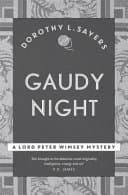
- Gaudy Night
Dorothy L. Sayers
4.2 (23k) average on GoodreadsHistorical FictionAn English mystery with a strong sense of place and intellectual detective work.
- A Morbid Taste for Bones
Ellis Peters
4.0 (34k) average on GoodreadsHistorical FictionSet in a historical village with a clever, observant protagonist solving a murder.
- The Moonstone
Wilkie Collins
3.9 (79k) average on GoodreadsHistorical FictionWhile 'The Moonstone' (1868) by Wilkie Collins is a foundational text in detective fiction, preceding Christie by decades, it differs significantly in its narrative structure. Collins employs multiple narrators, offering diverse perspectives on the crime, which builds suspense through varying accounts and unreliable testimony. Christie, in 'Murder at the Vicarage,' primarily uses a single, albeit slightly detached, third-person perspective (often filtered through the Vicar's observations), focusing more on the intellectual puzzle presented by the crime itself. 'The Moonstone' delves deeper into psychological suspense and the moral implications of its characters' actions, whereas Christie prioritizes the 'whodunit' aspect and the cleverness of the solution over profound character studies or social commentary. Collins's work feels more like a novel of character and social observation with a mystery embedded, while Christie's is a pure detective puzzle.
- Angels & Demons
Dan Brown
3.9 (2.7M) average on GoodreadsThrillerA Harvard symbologist races through Rome's ancient sites, deciphering cryptic clues to unmask the Illuminati and stop a vengeful plot to destroy the Vatican with a stolen antimatter weapon.
- Gone Girl
Gillian Flynn
4.1 (2.3M) average on GoodreadsThrillerA wife's sudden disappearance on her fifth anniversary reveals a web of lies and psychological warfare, exposing the secrets within a seemingly perfect marriage.





Enjoyed the summary?
A summary gives you the shape of the book. The book itself has the detail, the examples and the voice.
Find Murder at the Vicarage on AmazonAs an Amazon Associate, BookBrief earns from qualifying purchases. How we're funded