

Core Idea
- Difficulty
- Easy
- Read it if
- You are curious about the personal journey and motivations of Stephen Hawking, want a concise overview of his life and key scientific contributions, or seek inspiration on overcoming immense personal challenges.
- Skip it if
- You are looking for a deep dive into the technical aspects of Hawking's scientific theories, prefer an extensive or objective biography, or dislike memoirs that are highly personal and reflective.
Key Takeaways from My Brief History
The Unlikely Prodigy
Early life experiences shaped Hawking's unconventional path to genius.
Hawking's early life didn't fit the child prodigy stereotype; his path was one of curiosity rather than immediate academic brilliance. He describes a childhood of inventive, often messy, projects with friends, like building fireworks and model airplanes, instead of excelling in formal studies. This hands-on, problem-solving approach, combined with deep curiosity, prepared him for his later scientific methods. His initial lack of interest in schoolwork shows that genius isn't always obvious or straightforward; it often comes from a unique mix of passion and unconventional learning.
“I was not a good student at school. I was never in the top half of the class, and my handwriting was a nightmare.”
In the book: Hawking describes his school performance as mediocre, often not in the top half of his class, and his early fascination with how things worked, leading to complex, often dangerous, homemade experiments with friends.
Try this: Embrace diverse learning styles and environments. Encourage curiosity and hands-on exploration over rote memorization, especially in young people, recognizing that unconventional paths can lead to profound intellectual development.
Related ideas: early-life-influences, unconventional-learning, curiosity-driven-development
The Diagnosis as Catalyst
Confronting a terminal illness fueled Hawking's intellectual urgency.
Hawking's ALS diagnosis at age 21, initially devastating, became a strong driver for his scientific work. The thought of a shortened life created a sense of urgency, shifting his focus from academic complacency to intense intellectual pursuit. This period was a critical turning point, pushing him to concentrate on fundamental questions about the universe with unmatched intensity. His research became a race against time, showing how severe hardship can sometimes unlock hidden potential and lead to extraordinary achievements.
“Although there was a cloud hanging over my future, I found, to my surprise, that I was enjoying life in the present more than before. I began to make progress with my research.”
In the book: He explicitly states that his diagnosis made him realize the preciousness of time and motivated him to work harder on his physics research, leading to his breakthrough work on black holes.
Try this: Cultivate a sense of urgency and purpose in your work, understanding that limitations, whether perceived or real, can be powerful motivators. Don't wait for a crisis to fully engage with your passions.
Related ideas: adversity-as-motivation, intellectual-urgency, life-altering-events
Mind Over Matter
Hawking's profound contributions were a triumph of intellect over physical decline.
Hawking's life shows the lasting power of the human mind, even with extreme physical limitations. As his body declined, his intellectual output grew, proving that major scientific breakthroughs often come from pure thought and imagination, not physical form. His ability to mentally picture complex mathematical problems and cosmic events, even when speech and movement were severely limited, highlights the unique nature of theoretical physics and the remarkable adaptability of the human brain. This challenges common ideas about what 'ability' and 'disability' mean.
“I was lucky that my scientific work did not require physical dexterity, but rather the ability to think.”
In the book: Despite losing his ability to speak and move, Hawking continued to develop groundbreaking theories about black holes and the origins of the universe, communicating through a speech synthesizer controlled by a cheek muscle.
Try this: Focus on developing your cognitive strengths and intellectual resilience. Recognize that physical limitations do not inherently limit intellectual capacity, and cultivate environments that prioritize mental engagement and creativity.
Related ideas: cognitive-resilience, intellectual-triumph, disability-and-genius
The Power of Collaboration
Hawking's most significant work often emerged from intellectual sparring and partnerships.
Though often seen as a lone genius, Hawking's memoir reveals the important role of collaboration and intellectual discussion in his scientific progress. His partnerships, especially with Roger Penrose on singularity theorems, were key in shaping his most important theories. These collaborations involved not just sharing ideas but also rigorous, sometimes challenging, intellectual sparring that pushed his own thinking. This shows that even in highly theoretical fields, the combined effort of different viewpoints can lead to breakthroughs impossible through individual work alone.
“My collaboration with Roger Penrose was seminal. We showed that the universe must have begun with a singularity.”
In the book: He details his crucial collaboration with Roger Penrose, which led to the singularity theorems and the proof that black holes must form from the collapse of massive stars.
Try this: Actively seek out intellectual partners and engage in constructive debate. Understand that diverse perspectives and collaborative problem-solving can significantly accelerate progress and deepen understanding in any field.
Related ideas: scientific-collaboration, intellectual-partnerships, synergy-in-research
Humor as a Coping Mechanism
Hawking used wit and humor to navigate profound personal and professional challenges.
Throughout his life, Stephen Hawking used humor as a strong tool, not just for fun but also to cope with the huge challenges he faced. His memoir includes self-deprecating jokes and witty comments, showing a remarkable ability to keep perspective and lighten the mood even when discussing his declining health or the most complex cosmic theories. This use of humor shows deep resilience and a refusal to be defined only by his condition, allowing him to connect with others and keep his lively personality.
“My illness has certainly made me more famous, but I wouldn't recommend it as a career move.”
In the book: Hawking recounts instances of betting with colleagues (like Kip Thorne over the existence of Cygnus X-1) and his often dry, self-aware jokes about his fame and condition.
Try this: Cultivate a sense of humor, especially during difficult times. Laughter can be a powerful psychological tool for resilience, perspective, and connecting with others, preventing one from being overwhelmed by challenges.
Related ideas: humor-and-resilience, coping-strategies, self-deprecating-humor
The Quest for a Unified Theory
Hawking's life was driven by the ambition to understand the universe's fundamental laws.
The main goal of Hawking's intellectual journey was to find a unified theory that could bring together quantum mechanics and general relativity. This ambition, to understand the universe from its beginning to its end, drove his most important research. He believed such a theory would not only explain the cosmos but also offer insights into our existence. This deep philosophical motivation underscores the grand scope of theoretical physics and its potential to answer humanity's most basic questions about reality.
“My goal is simple. It is a complete understanding of the universe, why it is as it is and why it exists at all.”
In the book: His entire career, from his work on singularities to Hawking radiation and the no-boundary proposal, was aimed at unifying the laws of physics and creating a 'theory of everything'.
Try this: Identify your 'big questions' or overarching goals that give meaning and direction to your work. Pursue knowledge with a sense of wonder and a desire to understand the fundamental principles of your chosen field.
Related ideas: unified-field-theory, cosmology, fundamental-physics
The Public Scientist
Hawking embraced public engagement to share the wonders of science with the world.
Beyond his groundbreaking research, Hawking worked to make complex scientific concepts understandable to the public. His bestseller, A Brief History of Time, was a cultural event that made cosmology clear for millions. This dedication to public engagement came from a belief that scientific understanding should not be limited to academia but shared widely. His efforts turned him into a scientific icon, bridging the gap between specialized research and general curiosity, and inspiring countless people to think about the universe.
“I wanted to make these ideas accessible to everyone, not just a few scientists.”
In the book: The immense success of *A Brief History of Time*, despite its complex subject matter, and his numerous public lectures and television appearances, illustrate his dedication to popularizing science.
Try this: Strive to communicate complex ideas clearly and engagingly to a broader audience. Recognize the importance of sharing knowledge and inspiring others beyond your immediate professional circle.
Related ideas: science-communication, public-engagement, popular-science
Beyond the Cosmos: Human Relationships
The personal narrative reveals the profound impact of family and caregivers.
While mainly a scientific memoir, My Brief History subtly highlights the deep importance of human relationships in Hawking's life. His honest thoughts on his marriages, the support from his children, and the dedication of his caregivers show that even a mind as focused on the cosmos as his was deeply rooted in personal connections. These relationships provided emotional stability, practical help, and motivation, proving that even when pursuing the grandest theories, human connection is a basic part of a fulfilling life. The story acknowledges the great sacrifices made by those closest to him.
“My first marriage was very important to me. It gave me something to live for.”
In the book: Hawking discusses his two marriages, the birth of his children, and the critical role his wives and caregivers played in enabling him to continue his work despite his severe physical limitations.
Try this: Prioritize and nurture your personal relationships, recognizing their invaluable role in providing support, motivation, and emotional well-being, especially when facing significant challenges.
Related ideas: personal-relationships, caregiving, human-connection
Embracing Imperfection
Hawking's journey highlights the beauty and power found in human vulnerability.
Hawking's life story is a strong example of embracing imperfection and vulnerability. Instead of presenting a perfect genius, he openly shares his struggles, academic weaknesses, and the huge physical challenges he faced. This openness allows readers to connect with him on a deeply human level, seeing his successes not as the result of superhuman invulnerability, but as the outcome of tireless effort and a strong will operating within significant limits. His story normalizes the idea that great achievement can exist with, and even come from, deep vulnerability and difference.
“We are all different, and there is no such thing as a standard or normal human being.”
In the book: His self-deprecating remarks about his early academic performance, his honest account of his physical decline, and his acceptance of needing constant assistance all speak to his embrace of imperfection.
Try this: Accept and leverage your own vulnerabilities and imperfections. Understand that they are part of the human experience and can be sources of strength, empathy, and unique perspectives, rather than hindrances.
Related ideas: vulnerability-as-strength, human-imperfection, resilience-in-adversity
The Enduring Legacy of Inquiry
Hawking's greatest gift was fostering a universal sense of wonder and questioning.
Ultimately, Stephen Hawking's most lasting legacy may not just be his specific scientific discoveries, but his ability to spark wonder and intellectual curiosity in millions worldwide. His life was a living example of the scientific method: observing, questioning, forming hypotheses, and striving for understanding against all odds. He consistently urged humanity to look beyond the everyday and consider the grand mysteries of the cosmos. This lasting call to inquiry—to never stop asking 'why'—is a strong reminder of the human spirit's ability to explore and the vital importance of scientific thought in society.
“Remember to look up at the stars and not down at your feet. Try to make sense of what you see, and wonder about what makes the universe exist.”
In the book: His concluding remarks in many of his books and lectures, encouraging people to be curious about the universe, serve as a testament to this legacy.
Try this: Cultivate and maintain a lifelong sense of curiosity and inquiry. Never stop asking fundamental questions about the world around you and actively seek to understand its complexities.
Related ideas: scientific-legacy, intellectual-curiosity, wonder-and-exploration
My Brief History Quotes
“I have noticed that even people who claim that everything is predestined, and that we can do nothing to change it, look before they cross the road.”
“However difficult life may seem, there is always something you can do and succeed at. It matters that you don't just give up.”
“My expectations were reduced to zero when I was 21. Everything since then has been a bonus.”
“The greatest enemy of knowledge is not ignorance, it is the illusion of knowledge.”
“We are just an advanced breed of monkeys on a minor planet of a very average star. But we can understand the Universe. That makes us something very special.”
“I have lived with the prospect of an early death for the last 49 years. I'm not afraid of death, but I'm in no hurry to die. I have so much I want to do first.”
“The universe doesn't allow perfection.”
“One of the basic rules of the universe is that nothing is perfect. Perfection simply doesn't exist....Without imperfection, neither you nor I would exist.”
“So next time someone complains that you have made a mistake, tell him that may be a good thing. Because without imperfection, neither you nor I would exist.”
“I believe alien life is quite common in the universe, although intelligent life is less so. Some say it has yet to appear on Earth.”
“I am sure that the universe is not a computer program. It is a genuine physical system.”
“People won't have time for you if you are always angry or complaining.”
“Science is not only a discipline of reason but also one of romance and passion.”
“My goal is simple. It is a complete understanding of the universe, why it is as it is and why it exists at all.”
Quiz
10 questions on the main ideas. Each answer comes with a short explanation.
Question 1
Which university did Stephen Hawking attend for his undergraduate studies, where he initially felt bored and found the work 'ridiculously easy'?
- University of Cambridge
- University College London
- Oxford University
- Imperial College London
Show answer
C. Oxford University Hawking recounts attending Oxford University for his undergraduate degree, where he initially found the academic work not challenging enough.
Question 2
At what approximate age was Stephen Hawking diagnosed with Amyotrophic Lateral Sclerosis (ALS)?
- Seventeen
- Twenty-one
- Thirty
- Thirty-five
Show answer
B. Twenty-one The book explicitly states that Hawking was diagnosed with ALS at age twenty-one, a pivotal moment in his life.
Question 3
What was the nickname given to Stephen Hawking by his classmates during his schoolboy years, as mentioned in the book?
- The Professor
- Cosmos Kid
- Einstein
- The Thinker
Show answer
C. Einstein The memoir notes that his classmates nicknamed him 'Einstein' due to his inquisitive nature.
Question 4
How did the prospect of an early death due to ALS impact Hawking's intellectual pursuits and motivation, according to his own account?
- It made him withdraw from academic life and focus on personal comfort.
- It urged him onward through numerous intellectual breakthroughs.
- It shifted his focus entirely from theoretical physics to medical research.
- It led him to abandon his Ph.D. studies for a less demanding career.
Show answer
B. It urged him onward through numerous intellectual breakthroughs. Hawking explains that the prospect of an early death 'urged him onward through numerous intellectual breakthroughs,' providing a powerful drive for his work.
Question 5
What specific bet did Stephen Hawking famously make with a colleague, as mentioned in the book, showcasing his 'jokester' side?
- Whether time travel was theoretically possible.
- Over the existence of a particular black hole.
- About the ultimate fate of the universe.
- Regarding the validity of string theory.
Show answer
B. Over the existence of a particular black hole. The book highlights Hawking's 'jokester' side by mentioning he 'once placed a bet with a colleague over the existence of a particular black hole.'
Question 6
How does 'My Brief History' differentiate itself from Hawking's previous scientific bestsellers like 'A Brief History of Time'?
- It focuses primarily on detailed mathematical equations of cosmology.
- It is a fictional account of a scientist's life.
- It turns his gaze inward for a revealing look at his own life and intellectual evolution.
- It provides a comprehensive history of the entire field of physics.
Show answer
C. It turns his gaze inward for a revealing look at his own life and intellectual evolution. The description clearly states that 'Now, for the first time...the most brilliant cosmologist of our age turns his gaze inward for a revealing look at his own life and intellectual evolution,' distinguishing it from his science-focused works.
Question 7
According to the book, what was a significant challenge Hawking faced as a 'young husband and father' while trying to establish himself in the world of physics and cosmology?
- Lack of access to necessary research equipment.
- Struggling to gain a foothold in the world of physics and cosmology.
- Balancing his family life with extensive travel demands.
- Overcoming skepticism from his peers about his theories.
Show answer
B. Struggling to gain a foothold in the world of physics and cosmology. The text mentions him as 'the young husband and father struggling to gain a foothold in the world of physics and cosmology,' highlighting this specific challenge.
Question 8
How did Hawking's physical condition, particularly the progression of ALS, influence his ability to conceive and develop complex scientific ideas?
- It severely limited his ability to think abstractly and creatively.
- It forced him to rely more on visual aids and physical models for his work.
- It encouraged him to think more visually and abstractly, without the distraction of writing or speaking.
- It necessitated a shift from theoretical physics to experimental physics.
Show answer
C. It encouraged him to think more visually and abstractly, without the distraction of writing or speaking. While not explicitly stated as a direct quote, the narrative implies that his condition, by removing physical distractions, may have intensified his internal mental processes, allowing for more abstract and visual thinking, which aligns with how many with severe physical limitations adapt intellectually.
Question 9
What does Hawking's description of his early academic life at Oxford, where he found the work 'ridiculously easy,' suggest about his intellectual capacity prior to his major scientific breakthroughs?
- He was unmotivated and lacked interest in serious academic pursuits.
- He possessed an exceptionally high intellectual capacity that was not always adequately challenged by conventional education.
- He was more interested in social activities than in his studies at that time.
- His early education was of poor quality, leading to a false sense of ease.
Show answer
B. He possessed an exceptionally high intellectual capacity that was not always adequately challenged by conventional education. His statement about the work being 'ridiculously easy' suggests a mind that was already operating at a very high level, indicating a profound intellectual capacity that sought greater challenges, even before his most famous scientific contributions.
Question 10
Considering Hawking's 'witty and candid account' and his 'characteristic humility and humor,' what is a likely practical takeaway for readers facing personal adversity?
- Adversity inevitably leads to intellectual stagnation.
- Maintaining a sense of humor and intellectual curiosity can be powerful tools for navigating severe personal challenges.
- Only those with a background in science can truly overcome life's major obstacles.
- The only way to cope with adversity is to withdraw from public life.
Show answer
B. Maintaining a sense of humor and intellectual curiosity can be powerful tools for navigating severe personal challenges. The description emphasizes his 'witty and candid account' and 'characteristic humility and humor' in confronting challenges. This suggests that these qualities, combined with his continued intellectual pursuit despite ALS, are presented as effective ways to navigate adversity.
My Brief History FAQ
What is 'My Brief History' about?
'My Brief History' is Stephen Hawking's autobiography, offering an intimate look into his life from his childhood in postwar London to his rise as a world-renowned cosmologist. It explores his personal journey, intellectual development, and the challenges he faced, including his diagnosis with ALS.
Does 'My Brief History' cover Stephen Hawking's scientific theories?
While the book traces Hawking's intellectual evolution and the genesis of his work, including 'A Brief History of Time,' it focuses more on his personal life and the context of his scientific pursuits rather than detailing the theories themselves. It offers insight into the mind behind the science.
What challenges did Stephen Hawking face as described in the book?
Hawking candidly discusses the profound challenges he encountered, most notably his diagnosis with ALS at age twenty-one and its progressive impact on his life. He also shares his struggles as a young husband and father striving to establish himself in the demanding fields of physics and cosmology.
How is 'My Brief History' different from 'A Brief History of Time'?
'My Brief History' is a memoir detailing Stephen Hawking's personal life story and intellectual journey, whereas 'A Brief History of Time' is a non-fiction book explaining complex cosmological concepts for a general audience. The former is about the author, the latter about the universe.
What is the tone and style of Stephen Hawking's writing in this memoir?
Hawking writes with characteristic humility, humor, and candor throughout 'My Brief History.' His wit is evident in anecdotes, and he maintains a clear-eyed, intimate, and wise tone, making his personal cosmos accessible to readers.
Does the book include photographs or illustrations?
Yes, 'My Brief History' is lavishly illustrated with rarely seen photographs from Stephen Hawking's personal collection. These images offer a unique visual dimension to his life story, showing him from his schooldays to his later international acclaim.
What is the 'personal cosmos' referred to in the book's description?
The 'personal cosmos' refers to Stephen Hawking's inner world of thoughts, experiences, and the unique perspective he gained through his life's challenges and intellectual breakthroughs. The book opens a window into his personal journey and the universe as he experienced it.
Who would enjoy reading 'My Brief History'?
This book is ideal for anyone interested in Stephen Hawking's life, the human spirit's resilience, or the personal side of scientific genius. Readers who appreciate memoirs, biographies, and inspirational stories will find it particularly engaging, whether they are science enthusiasts or not.
About the author
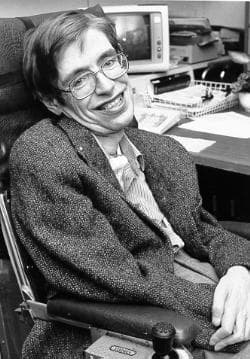
Stephen Hawking was a theoretical physicist and cosmologist known for his work on black holes and the nature of the universe. His notable books include "A Brief History of Time," which explores complex scientific concepts for a general audience, "The Grand Design," which discusses the origins of the universe, and "A Briefer History of Time," a more accessible version of his earlier work. He also authored "My Brief History," an autobiographical account of his life and career.
Similar books
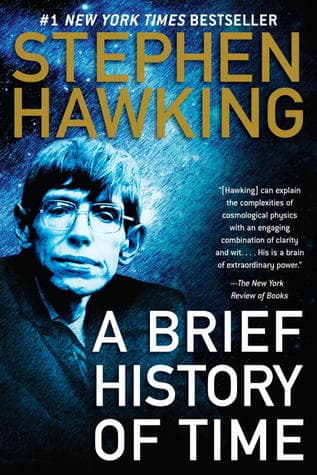
- A Brief History of Time
Stephen Hawking
4.2 (303k) average on GoodreadsHistoryProvides a more detailed, yet still accessible, overview of his scientific theories.
- The Diary of a Young Girl
Anne Frank
4.2 (2.7M) average on GoodreadsBiographyDuring the Nazi occupation, a teenage girl's diary, written from a secret annex, shares observations on humanity, hope, and the wait for freedom.
- Eat, Pray, Love
Elizabeth Gilbert
3.6 (1.5M) average on GoodreadsLifestyleA heartbroken writer leaves her conventional life for a year-long global search for pleasure in Italy, spiritual devotion in India, and unexpected love and balance in Bali.
- Night
Elie Wiesel
4.3 (970k) average on GoodreadsBiographyIn the darkness of Auschwitz and Buchenwald, a teenage Elie Wiesel faces the extermination of his family, the loss of his faith, and the lasting scars of humanity's deepest cruelty.
- Steve Jobs
Walter Isaacson
4.1 (957k) average on GoodreadsBusinessSteve Jobs was a visionary who fused creativity and technology to revolutionize six industries and shape our digital world.
- The Glass Castle
Jeannette Walls
4.3 (903k) average on GoodreadsBiographyJeannette Walls's memoir describes her unusual childhood with brilliant, free-spirited parents whose poverty-stricken life shaped her independence and love despite family problems.





Enjoyed the summary?
A summary gives you the shape of the book. The book itself has the detail, the examples and the voice.
Find My Brief History on AmazonAs an Amazon Associate, BookBrief earns from qualifying purchases. How we're funded