
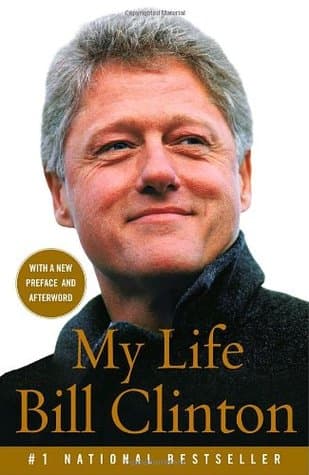
Core Idea
- Difficulty
- Medium
- Read it if
- You are deeply interested in American political history, the inner workings of a presidential administration, or gaining a first-hand perspective on the life and career of one of the most influential figures of the late 20th century.
- Skip it if
- You prefer concise biographies, are looking for an unbiased account of Clinton's presidency, or have little patience for extensive personal reflection and detailed political defense.
Key Takeaways from My Life
The Formative Power of Early Life
Clinton's youth, marked by both hardship and love, forged his resilient character and shaped his political worldview.
Clinton's memoir highlights how much his early life in Arkansas affected him. Raised by a strong mother and grandparents, he dealt with an abusive stepfather and an absent biological father. These experiences gave him a deep understanding of people's struggles, a strong will to overcome problems, and a nuanced view of human imperfections. The stories from his youth, often clear and vibrant, show where his charm came from and his lasting belief in most people's goodness, despite their flaws. This early period set the stage for his later political goals and his leadership style, marked by a desire to connect with and support everyday citizens.
“I learned a lot from the stories my uncle, aunts, and grandparents told me: that no one is perfect but most people are good; that people can't be judged only by their worst or weakest moments; that harsh judgments can make hypocrites of us all; that a lot of life is just showing up and hanging on; that laughter is often the best, and sometimes the only, response to pain.”
In the book: Tales of giant watermelons, a nine-pound tumor, a charging ram, famous mobsters and jazz musicians, and a BB gun standoff are used to illustrate his formative years. The quote directly reflects the lessons learned from his family.
Try this: Reflect on your own formative experiences and identify how they shaped your core values and resilience. Understand that empathy often stems from personal hardship and exposure to diverse human experiences.
Related ideas: childhood-influences, resilience, empathy-development
Politics as a 'Contact Sport'
Clinton views politics as an aggressive arena where one must be prepared to absorb hits and retaliate forcefully.
Clinton's political beliefs are based on the idea that politics is inherently confrontational. He accepts conflict as an unavoidable part of the process. This view shaped his strategy throughout his career, especially during times of intense scrutiny and opposition. He describes being willing to absorb initial attacks, often from what he saw as a 'vast right-wing operation,' and then to respond with equal or greater force. This is not just about winning; it is about survival and protecting his agenda and reputation. His memoir, in many ways, supports this belief, acting as a 'scathing rebuke' and 'retaliation' against his critics.
“Politics is a contact sport. Take the first hit, then counterpunch as hard as I could.”
In the book: His description of a 'vast right-wing operation' and his portrayal of the Kenneth Starr investigation as a 'mindless search for scandal' are prime examples of this perspective. The quote explicitly states his strategy.
Try this: In any competitive environment, be prepared for challenges and develop a strategy for responding to criticism or attacks. Understand that defending your work or beliefs may require a robust counter-response.
Related ideas: political-strategy, adversarial-politics, conflict-resolution
Autobiography as Therapy
The act of writing his memoir served as a personal journey for Clinton to confront and reconcile with his past actions and public image.
Beyond a historical account, 'My Life' is Clinton's attempt at self-examination. The memoir is honest, as he carefully details both his successes and his 'morally indefensible' failures. This confessional tone suggests a deep need to process public humiliation and personal regret. By revealing his vulnerabilities and admitting his mistakes, Clinton engages in a public act of self-reflection, aiming to understand why he acted as he did and to, perhaps, gain some forgiveness – from the public and himself. This therapeutic approach sets 'My Life' apart from many political memoirs, offering a rare look at the psychological cost of high-stakes public life.
“My Life is autobiography as therapy--a personal history written by a man trying to face and banish his private demons.”
In the book: The review explicitly states 'autobiography as therapy' and highlights his open discussion of 'morally indefensible' acts for which he was nearly impeached.
Try this: Consider journaling or writing as a tool for self-reflection and processing difficult experiences. Articulating your past can provide clarity and aid in personal growth and reconciliation.
Related ideas: self-reflection, memoir-writing, emotional-processing
The Weight of the Presidency
Clinton offers intimate 'Kitchen Confidential'-type revelations about the immense pressures and unique challenges of leading the free world.
Clinton offers a unique look into the daily realities of the presidency, going beyond policy debates to explore the personal and psychological demands of the office. He details the constant watchfulness required, the burden of making life-or-death decisions, and the isolation that comes with such power. These 'Kitchen Confidential'-type revelations remove the grandeur, showing the human being behind the title. He recounts the relentless schedule, global crises like Waco, Bosnia, and Somalia, and personal attacks that constantly tried to undermine his administration. This section of the book is compelling because it humanizes the office, making it relatable even in its extraordinary context, and shows the deep personal sacrifice involved in public service at the highest level.
“What it is like to be President.”
In the book: The review highlights 'Kitchen Confidential-type revelations about what it is like to be President' and mentions his handling of events like Waco, Bosnia, and Somalia.
Try this: Appreciate the immense responsibility and pressure that comes with leadership roles, particularly in high-stakes environments. Understand that public figures often operate under extraordinary personal and professional scrutiny.
Related ideas: presidential-duties, leadership-pressure, public-service-challenges
The Power of the Pithy Voice
Clinton's distinctive, charming, and unassuming narrative voice is central to the memoir's appeal, even if it sometimes leads to excessive detail.
One of the most notable parts of 'My Life' is the strong presence of Clinton's unique narrative voice. It is described as unassuming, charming, and pithy, a style that draws readers in and makes even complex political discussions feel approachable. This voice is deeply personal, reflecting his Southern roots and storytelling tradition. It is the same charisma that defined his political career, put into writing. While this love for detail can sometimes lead to a 'distractible laundry list of events,' it also gives the book authenticity and a sense of closeness. Readers feel as though they are having a direct conversation with the former president, making the memoir both engaging and convincing.
“Clinton's unassuming, charmingly pithy voice: I learned a lot from the stories my uncle, aunts, and grandparents told me: that no one is perfect but most people are good; that people can't be judged only by their worst or weakest moments; that harsh judgments can make hypocrites of us all; that a lot of life is just showing up and hanging on; that laughter is often the best, and sometimes the only, response to pain.”
In the book: The review specifically praises his 'unassuming, charmingly pithy voice' and provides a direct quote illustrating its character. It also notes how this voice can lead to 'minute details.'
Try this: Develop your unique voice in communication, whether written or spoken. Authenticity and personal style can make your message more engaging and memorable, even if it means including some 'extra' details.
Related ideas: narrative-voice, charisma, storytelling
Against the 'Vast Right-Wing Operation'
Clinton frames his presidency as a constant battle against a concerted effort to undermine him, influencing his policy and personal defense.
A repeated idea in 'My Life' is Clinton's view of himself as a target of a relentless and organized opposition. He details what he saw as a 'vast right-wing operation' dedicated not just to disagreeing with his policies, but to discrediting and destroying him. This belief heavily influenced his approach to both governing and personal defense. It explains his 'counterpunch' strategy and his view of investigations like Kenneth Starr's as politically motivated attacks rather than genuine searches for justice. This narrative provides context for many of his actions and reactions, showing him as a leader fighting for his vision against powerful, established adversaries. It is key to understanding his resilience and his often-defensive stance.
“His war against a 'vast right-wing operation' determined to destroy him.”
In the book: His characterization of the Kenneth Starr investigation as a 'mindless search for scandal' that 'persecuted the innocent' and distracted from international matters (like al Qaeda strikes) supports this claim.
Try this: Be aware of potential organized opposition in any competitive field. Understand that external pressures can significantly influence decision-making and require robust defense strategies.
Related ideas: political-opposition, media-scrutiny, crisis-management
The Burden of Historical Events
Clinton's life and presidency were profoundly shaped by pivotal historical moments, both in his youth and during his time in office.
Clinton's memoir shows how personal stories are deeply connected with larger historical events. He clearly recounts how the assassinations of JFK and Martin Luther King Jr. affected his early years, shaping his understanding of justice, leadership, and how easily progress can be lost. Later, as president, he dealt with huge global and domestic crises like Waco, Bosnia, and Somalia. These events were not just policy challenges but deeply personal burdens, requiring difficult choices with far-reaching effects. The book effectively shows how a leader's character and decisions are formed during historical moments, highlighting the constant interaction between individual actions and external forces beyond one's control.
“Covering the historical events that shaped his early years (namely the deaths of Martin Luther King Jr. and JFK) and the events that shaped his presidency (Waco, Bosnia, Somalia).”
In the book: Specific mention of the deaths of MLK Jr. and JFK shaping his youth, and Waco, Bosnia, and Somalia shaping his presidency.
Try this: Recognize the influence of historical context on individual lives and leadership. Understand that current events often have deep roots in past societal shifts and conflicts.
Related ideas: historical-impact, political-history, global-events
Flawed but Intriguing
Clinton presents himself as a complex, multifaceted individual, acknowledging his imperfections while asserting his fundamental character.
At its core, 'My Life' is the story of a man who is deeply human, acknowledging his 'worst failures and humiliations' without fully excusing them. Clinton does not try to present a perfect image; instead, he offers an open portrayal of his struggles, including the 'morally indefensible' acts that led to impeachment proceedings. This self-awareness, along with his undeniable charisma and intelligence, makes him an 'intriguing and flawed' figure. The memoir's strength is in this very imperfection, as it allows readers to connect with a leader who, despite his extraordinary position, faced very human challenges and made regrettable choices. He tries to show that despite public failings, he kept the core character with which he was raised, striving to 'drain the most out of every moment.'
“A charming and intriguing if flawed book by an equally intriguing and flawed man who had his worst failures and humiliations made public.”
In the book: The review's characterization of him as 'charming and intriguing if flawed' and his open discussion of 'morally indefensible' acts and public humiliations.
Try this: Embrace your own complexities and imperfections; authenticity often resonates more deeply than a facade of flawlessness. Understand that past mistakes, when acknowledged, can contribute to a more complete and compelling personal narrative.
Related ideas: human-nature, authenticity, personal-growth
The Art of 'Showing Up and Hanging On'
A key lesson from Clinton's life is the importance of perseverance and resilience in the face of adversity.
This simple but profound philosophy captures much of Clinton's approach to both personal and political life. From dealing with an unstable childhood with an abusive stepfather to enduring relentless political attacks and a near-impeachment, Clinton consistently showed an ability to 'show up' – to stay engaged, present, and active – and to 'hang on' – to persevere through immense pressure and hardship. This lesson speaks to a fundamental resilience, a refusal to be defeated by circumstances or critics. It emphasizes that consistency, determination, and sheer staying power are often as important as talent or strategy in achieving long-term goals and surviving difficult periods. His entire career, marked by both great successes and public humiliations, demonstrates this lasting principle.
“A lot of life is just showing up and hanging on.”
In the book: The direct quote is attributed to lessons learned from his family. His entire political career, particularly surviving the impeachment proceedings, serves as evidence of 'hanging on.'
Try this: Adopt a mindset of persistence and resilience. In the face of setbacks, remember the value of simply continuing to show up and exert effort, even when the path is difficult.
Related ideas: perseverance, resilience, grit
My Life Quotes
“I refuse to believe that we are so different that we cannot find common ground. We must try.”
“The price of leadership is loneliness.”
“It all started when I was a boy in Hot Springs, Arkansas, with a vivid imagination and a strong desire to make things better.”
“Character is a journey, not a destination.”
“There is nothing wrong with America that cannot be cured by what is right with America.”
“The most important thing I learned in politics was that you have to be able to take a punch.”
“I have always believed that America does better when we work together, when we are united by a common purpose.”
“I learned early on that if you want to get something done, you have to be willing to compromise.”
“My life has been a constant quest to understand and to improve.”
“Every day in the White House was a learning experience, a test of will and a challenge to my beliefs.”
“The greatest joy in public service is the opportunity to make a difference in people's lives.”
“I always tried to see the good in people, even when they didn't see it in themselves.”
“The world is full of people who are willing to give up, but there are also those who never stop fighting for what they believe in.”
Quiz
10 questions on the main ideas. Each answer comes with a short explanation.
Question 1
According to the review, what is one of the key themes Clinton explores regarding his personal life in 'My Life'?
- His early aspirations to become a jazz musician.
- His struggle to face and banish his private demons.
- His journey to reconcile with his estranged biological father.
- His ambition to become a successful businessman.
Show answer
B. His struggle to face and banish his private demons. The review explicitly states that 'My Life' is 'autobiography as therapy--a personal history written by a man trying to face and banish his private demons.'
Question 2
Which historical event is mentioned as shaping Clinton's early years?
- The Cuban Missile Crisis
- The moon landing
- The deaths of Martin Luther King Jr. and JFK
- The Watergate scandal
Show answer
C. The deaths of Martin Luther King Jr. and JFK The review states, 'covering the historical events that shaped his early years (namely the deaths of Martin Luther King Jr. and JFK)'.
Question 3
What is one of the 'morally indefensible' acts Clinton discusses in his memoir, as highlighted by the review?
- His involvement in the Whitewater controversy.
- The events for which he was nearly impeached.
- His decision regarding the bombing of Serbia.
- His campaign finance practices.
Show answer
B. The events for which he was nearly impeached. The review mentions Clinton 'painstakingly outlines the history behind his greatest successes and failures, including...the 'morally indefensible' acts for which he was nearly impeached.'
Question 4
The review notes that Clinton's voice is 'unassuming, charmingly pithy.' What specific lesson did he learn from his family stories, as quoted in the review?
- That power corrupts absolutely.
- That hard work always guarantees success.
- That no one is perfect but most people are good, and laughter is often the best response to pain.
- That revenge is a dish best served cold.
Show answer
C. That no one is perfect but most people are good, and laughter is often the best response to pain. The review quotes Clinton directly: 'I learned a lot from the stories my uncle, aunts, and grandparents told me: that no one is perfect but most people are good; that people can't be judged only by their worst or weakest moments; that harsh judgments can make hypocrites of us all; that a lot of life is just showing up and hanging on; that laughter is often the best, and sometimes the only, response to pain.'
Question 5
According to the review, what is a potential drawback for readers regarding Clinton's writing style in 'My Life'?
- His overly academic and formal tone.
- His tendency to be overly dramatic and sensational.
- His penchant for minute details, creating a 'distractible laundry list of events'.
- His lack of personal reflection or emotional depth.
Show answer
C. His penchant for minute details, creating a 'distractible laundry list of events'. The review states, 'However, that same voice might tire readers as Clinton applies his penchant for minute details to a distractible laundry list of events, from his youth through the years of his presidency.'
Question 6
The review characterizes Clinton's approach to politics using a specific analogy. What is it?
- Politics is a chess game.
- Politics is a contact sport.
- Politics is a theatrical performance.
- Politics is a constant negotiation.
Show answer
B. Politics is a contact sport. The review explicitly states: 'To Clinton, 'politics is a contact sport,' and while he claims that My Life is not intended to make excuses or assign blame, it does portray him as a fighter whose strategy is to 'take the first hit, then counterpunch as hard as I could.'
Question 7
Which of the following figures is mentioned as a target of Clinton's 'scathing rebuke' and 'retaliation' in 'My Life'?
- Al Gore
- George H.W. Bush
- Kenneth Starr
- Newt Gingrich
Show answer
C. Kenneth Starr The review states, 'My Life is also a scathing rebuke--a retaliation against his detractors, including Kenneth Starr, whose 'mindless search for scandal' protected the guilty while 'persecuting the innocent' and distracted his Administration from pressing international matters.'
Question 8
What specific aspect of Clinton's memoir is compared to 'Kitchen Confidential-type revelations' by the reviewer?
- His frank discussions about foreign policy.
- His detailed descriptions of campaign strategies.
- His intimate revelations about 'what it is like to be President'.
- His personal anecdotes about world leaders.
Show answer
C. His intimate revelations about 'what it is like to be President'. The review states, 'But when Clinton sticks to the meat of his story...Kitchen Confidential-type revelations about 'what it is like to be President' make My Life impossible to put down.'
Question 9
The review describes Clinton's 'war against a 'vast right-wing operation' determined to destroy him.' What does this highlight about his perspective in the memoir?
- His belief in the inherent fairness of political discourse.
- His acknowledgment of bipartisan cooperation during his presidency.
- His perception of being under constant attack from political adversaries.
- His regret over not engaging more with his political opponents.
Show answer
C. His perception of being under constant attack from political adversaries. The phrase 'his war against a 'vast right-wing operation' determined to destroy him' directly indicates his perspective of being targeted and under attack, framing his political life as a struggle against powerful opposition.
Question 10
Despite its flaws, the review concludes that 'My Life' is a 'remarkably intimate, persuasive look' at Clinton's journey. What is the ultimate takeaway for readers about the man himself?
- He remains an enigma, unwilling to reveal his true self.
- He successfully absolves himself of all past mistakes and blame.
- He offers an honest and open account, struggling to 'drain the most out of every moment' while maintaining his character.
- He ultimately confirms that his public persona was merely an act.
Show answer
C. He offers an honest and open account, struggling to 'drain the most out of every moment' while maintaining his character. The final sentence of the review states: 'Ultimately, the man who left office in the shadow of scandal offers an honest and open account of his life, allowing readers to witness his struggle to 'drain the most out of every moment' while maintaining the character with which he was raised.'
My Life FAQ
What is the primary focus of Bill Clinton's 'My Life'?
'My Life' is an exhaustive, soul-searching memoir by Bill Clinton, offering a candid look at his life as a son, brother, teacher, father, husband, and public figure. It delves into the history behind his successes and failures, both personal and political.
Does 'My Life' offer new insights into Clinton's presidency and personal struggles?
Yes, the book provides Kitchen Confidential-type revelations about 'what it is like to be President' and offers an honest account of his struggles, including the 'morally indefensible' acts that led to his impeachment. It's autobiography as therapy, facing private demons.
How does 'My Life' differ from other political memoirs?
What makes 'My Life' remarkable is how thoroughly it is infused with Clinton's unassuming, charmingly pithy voice, making it an intimate and persuasive look at his journey. While detailed, it offers genuine emotional veracity and personal insights often lacking in other political accounts.
What is Clinton's perspective on the controversies and scandals during his time in office?
Clinton portrays himself as a fighter, taking the first hit and then counterpunching hard. The memoir is also a scathing rebuke against detractors like Kenneth Starr, whom he accuses of a 'mindless search for scandal' that distracted his administration.
Does 'My Life' cover Clinton's early life and formative experiences?
Absolutely. Clinton approaches the story of his youth with gusto, sharing tales from his childhood, the influence of his mother and abusive stepfather, and the historical events like the deaths of MLK and JFK that shaped his early years.
Is 'My Life' an easy read for those interested in American history and politics?
While infused with Clinton's engaging voice, the book can be dense due to his penchant for minute details and a 'distractible laundry list of events.' However, when he focuses on key relationships and political revelations, it becomes impossible to put down.
Does 'My Life' serve as an apology or an attempt to make excuses for past actions?
Clinton claims 'My Life' is not intended to make excuses or assign blame. Instead, it offers an honest and open account of his life, allowing readers to witness his struggle to 'drain the most out of every moment' while maintaining his character.
What is the overarching theme or message Clinton conveys in 'My Life'?
The core message revolves around the idea that 'no one is perfect but most people are good,' and that 'people can't be judged only by their worst or weakest moments.' It's about facing one's demons and striving to live fully despite flaws and public scrutiny.
About the author
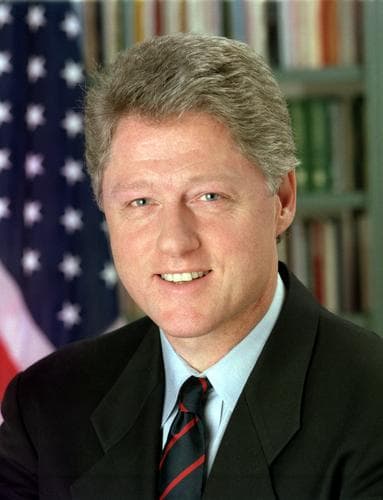
Bill Clinton is the 42nd President of the United States. His political memoir, "My Life," was a bestseller. He co-authored the thriller novel "The President Is Missing" with James Patterson, blending his political insights with fictional storytelling.
Similar books
- Dreams from My Father: A Story of Race and Inheritance
Barack Obama
3.9 (193k) average on GoodreadsPoliticsAnother presidential memoir reflecting on early life's formative impact and the path to political prominence.
- Decision Points
George W. Bush
3.8 (37k) average on GoodreadsPoliticsGeorge W. Bush's Decision Points shares Clinton's thematic focus on presidential decision-making and the weight of office, presenting key moments and the rationale behind his choices. However, Bush's memoir is significantly more concise and structured around specific critical decisions, offering a more direct and less sprawling narrative than Clinton's expansive 'My Life'. While both defend their presidencies, Bush's approach is often seen as more straightforward and less rhetorical, focusing on a clear articulation of his thought process during major crises. Clinton's book, in contrast, offers a more comprehensive (and lengthy) chronological journey through his entire life and career.
- 1984
George Orwell
4.2 (3.1M) average on GoodreadsPoliticsIn a future where surveillance and thought control are absolute, a man's search for truth clashes with the Party, showing that hope can be a form of rebellion.
- Animal Farm
George Orwell
4.0 (2.7M) average on GoodreadsPoliticsA farm animals' rebellion against humans turns into a pig-led dictatorship, showing how power corrupts and revolutionary ideals are betrayed.
- Freakonomics: A Rogue Economist Explores the Hidden Side of Everything
Steven D. Levitt
4.0 (709k) average on GoodreadsBusinessThis book uses economic principles to reveal the surprising incentives behind everything from drug dealing and real estate to cheating teachers and the decline of crime.
- I Am Malala: The Story of the Girl Who Stood Up for Education and Was Shot by the Taliban
Malala Yousafzai
4.1 (419k) average on GoodreadsPoliticsA teenage girl from a Taliban-controlled valley refuses to give up her books, becoming a global voice for education even after an assassination attempt.





Enjoyed the summary?
A summary gives you the shape of the book. The book itself has the detail, the examples and the voice.
Find My Life on AmazonAs an Amazon Associate, BookBrief earns from qualifying purchases. How we're funded