
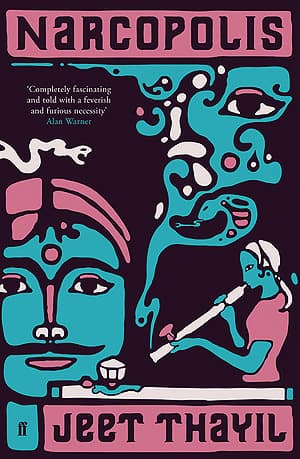
Synopsis
Covers the whole plot, including the ending.
- Difficulty
- Hard
- Pacing
- Slow
- Mood
- Atmospheric, Gritty, Melancholy, Hallucinatory, Dark
- Read it if
- You are fascinated by vivid, immersive portrayals of historical urban underworlds and complex characters grappling with addiction and identity.
- Skip it if
- You prefer a straightforward plot with clear resolutions or are sensitive to explicit depictions of drug use and violence.
Narcopolis Plot Summary
Covers the whole plot, including the ending.
The Opium Room of Rashid
The novel begins in 1970 with Dom Ullis, an American, arriving in Bombay and finding Rashid's opium den on Shuklaji Street. There, he meets Dimple, a eunuch and former courtesan, who carefully prepares and serves the opium pipes. Dimple, a striking figure, introduces Dom to his first opium experience, an entry into the den's hazy, time-bending world. The den is a haven for its regulars, including poets, hustlers, and dreamers, all seeking escape from Bombay's harsh realities. Dom observes the rituals and the strong sense of community among the addicts, feeling an immediate pull to this hidden world. Rashid, the owner, oversees his space with quiet authority, a keeper of secrets and dreams.
Dimple's Past and Present
The story then explores Dimple's past, showing her life as a famous courtesan named Laxmi. She describes her experiences in the kothas (brothels), her relationships with various clients, and the complex social rules of that world. Driven by a wish for change and a rejection of the traditional female role, Laxmi undergoes a voluntary castration to become a eunuch, taking the name Dimple. This act is both a liberation and a redefinition of self, allowing her to navigate Bombay's underworld with a unique viewpoint. Her transition is a main theme, looking at identity, gender, and the search for belonging in a society that often pushes aside the unconventional.
The Poet and the Lover
Newton Francis X. D'Souza, a struggling poet and a regular at Rashid's den, is in love with Dimple. His life is a cycle of opium dreams and attempts to write about his experiences. Newton sees Dimple as a muse and an ideal he cannot reach. His unreturned love fuels his creative efforts and his sadness. He often reads his poetry in the den, seeking approval and connection. His story shows how addiction, art, and the search for meaning are linked in a life lived on society's edges. His inner struggles reflect the wider themes of longing and the hard-to-reach nature of beauty.
The Arrival of Rumi
Rumi, a young man from a wealthy Parsi family, finds Rashid's opium den, looking for an escape from his privileged but restrictive life. Despite his background, he finds comfort and a sense of belonging among the den's residents. He quickly forms a close, almost family-like, relationship with Dimple, who sees in him a vulnerability that connects with her own past. Rumi's presence brings a different social class into the den, showing how opium appeals to people from all backgrounds as a refuge. His journey into addiction is marked by a slow separation from his old life and a deeper immersion into the den's world.
The Pathar Maar and the City's Underbelly
Throughout the story, the shadow of the Pathar Maar, a serial killer who attacks Bombay's homeless and poor by crushing their heads with stones, hangs over the city. This figure represents the city's brutality and indifference towards its marginalized people. The fear of the Pathar Maar highlights the dangerous lives of those on the streets and in the city's hidden parts, including many who visit Rashid's den. The police are largely ineffective, and the murders are a stark reminder of how little value is placed on the lives of the invisible poor, contrasting sharply with the relative safety and escape offered by the opium den.
Bombay's Transformation
As the 1970s turn into the 1980s, Bombay changes significantly. The traditional opium dens, like Rashid's, begin to fade as a new, stronger drug, heroin, appears. This shift marks a darker turn in the city's drug culture, as heroin addiction is shown as more destructive and less communal than opium. The novel captures the end of an era, showing the slow death of the opium dens and the rise of a more dangerous, isolating form of addiction. This transformation is not just about drugs but also reflects wider social and economic changes in Bombay, as the city modernizes and its underworld adapts.
Dimple's Journey to Delhi
Wanting change and perhaps feeling disappointed with the fading opium culture, Dimple decides to leave Bombay and travel to Delhi. This journey represents a symbolic break from her past and an attempt to create a new identity beyond Shuklaji Street. Her departure is a sad moment for the remaining den regulars, especially Newton and Rumi, who feel her absence deeply. In Delhi, Dimple tries to fit into a new community, but her past and the challenges of her unique identity continue to shape her experiences. Her journey shows the ongoing search for belonging and self-acceptance.
The Decline of the Den
With more heroin and a changing social scene, Rashid's opium den slowly but surely declines. Many of its regulars either die from addiction, move on, or switch to heroin, which Rashid dislikes. The communal spirit of the opium den starts to disappear, replaced by the more isolating and destructive nature of heroin use. Rashid, a steady figure for decades, struggles to keep his establishment going, a symbol of a past era. The den, once a lively sanctuary, becomes a quieter, sadder place, reflecting the wider loss of a particular cultural and historical moment in Bombay.
Dom's Return and Reflection
Years after his first visit, Dom Ullis returns to Bombay, now a different city, and tries to find out what happened to the people he met in Rashid's den. He discovers that much has changed: the opium dens have mostly vanished, replaced by the heroin trade, and many of the characters have died tragically or become forgotten. Dom's return is a journey of sadness and memory, as he deals with the passing of time and addiction's destructive power. He looks for any remaining connections, piecing together the fates of Dimple, Newton, Rumi, and Rashid, offering a look back at their intertwined lives and the city's transformation.
The Fate of the Characters
The novel ends by revealing what ultimately happened to its main characters. Dimple, despite her resilience, continues to live a marginalized life, her journey marked by both strength and vulnerability. Newton Francis X. D'Souza, the poet, dies from his addiction, his artistic hopes overcome by his dependence on opium. Rumi, the young Parsi, also falls deeper into addiction, losing his connection to his privileged past. Rashid, the quiet owner, eventually closes his den, a victim of changing times and the shifting drug scene. Their individual stories combine to form a sad picture of life, loss, and the enduring spirit of Bombay's forgotten people.
Principal Figures
Dimple
Protagonist
A eunuch and former courtesan who serves opium in Rashid's den.
Dimple, originally named Laxmi, is a complex and captivating character. Born male but identifying as female, she undergoes a voluntary castration to become a eunuch, a pivotal moment in her self-definition. She is a former renowned courtesan, possessing an innate elegance and a deep understanding of human nature. In Rashid's opium den, she is the meticulous pipe-preparer, a figure of grace and authority. Driven by a search for identity and a desire to transcend societal norms, Dimple embodies both vulnerability and resilience, navigating a harsh world with a unique inner strength.
Relationships: Dom Ullis (mentor/initiation into opium); Newton Francis X. D'Souza (object of unrequited love); Rumi (close, almost maternal bond); Rashid (employer and protector)
Dom Ullis
Protagonist/Narrator (Frame)
An American who visits Bombay and becomes initiated into the opium den.
Dom Ullis serves as an observer and, at times, a participant in the world of Shuklaji Street. An American drawn to the exotic and the illicit, he is initially a newcomer to Bombay and the opium den. His experiences in the den, particularly his interactions with Dimple, shape his understanding of the city and its inhabitants. Years later, he returns to Bombay, acting as a retrospective narrator, attempting to piece together the fates of the characters he once knew. He represents an outsider's perspective, both fascinated and repelled by the city's underbelly, and his journey frames the novel's exploration of memory and loss.
Relationships: Dimple (initiate and guide); Rashid (proprietor of the den he frequented)
Newton Francis X. D'Souza
Supporting
A struggling poet and opium addict, deeply in love with Dimple.
Newton is a melancholic figure, a poet whose life is consumed by opium and an unrequited love for Dimple. He is educated and sensitive, but his addiction has rendered him largely ineffective in the outside world. He finds solace and inspiration in the opium den, where he often recites his verses. His love for Dimple is a central driving force, a source of both artistic creation and profound despair. Newton embodies the romantic ideal of the suffering artist, whose existence is a constant negotiation between the beauty of his dreams and the harsh reality of his addiction.
Relationships: Dimple (unrequited romantic love); Rashid (fellow regular at the den)
Rumi
Supporting
A young Parsi man from a wealthy family who becomes an opium addict.
Rumi represents the intersection of privilege and addiction. From a respectable Parsi background, he seeks refuge in Rashid's opium den, escaping the pressures and expectations of his family. He is initially naive but quickly becomes deeply immersed in the drug culture. He forms a strong, almost familial, bond with Dimple, who sees him as a vulnerable soul. Rumi's story highlights how addiction can cross social strata, affecting even those from seemingly secure backgrounds. His descent into the world of drugs is gradual but ultimately consuming, illustrating the seductive and destructive power of opium.
Relationships: Dimple (close, protective bond); Rashid (fellow regular at the den)
Rashid
Supporting
The stoic proprietor of the opium den on Shuklaji Street.
Rashid is the quiet, watchful patriarch of the opium den. He presides over his establishment with a calm authority, a keeper of secrets and a provider of temporary oblivion. He is a figure of stability in a chaotic world, offering a sanctuary for his regulars. Rashid represents the traditional opium culture, a contrast to the newer, more destructive heroin trade. His character embodies the fading of an era, as his den slowly declines. He is a man of few words, but his presence is deeply felt, a symbol of the enduring, yet ultimately vulnerable, traditions of Old Bombay.
Relationships: Dimple (employer and protector); Dom Ullis (proprietor to a regular); Newton Francis X. D'Souza (proprietor to a regular); Rumi (proprietor to a regular)
The Pathar Maar
Antagonist/Mentioned
A mysterious serial killer targeting the homeless in Bombay.
The Pathar Maar, or 'stone killer,' is a shadowy, terrifying figure who serves as a symbolic antagonist rather than a direct character. He preys on the nameless, invisible poor of Bombay, crushing their heads with stones. His existence highlights the brutal indifference of the city towards its most marginalized inhabitants and the pervasive sense of fear in the underbelly. The Pathar Maar embodies the dark, unforgiving aspect of Bombay, a stark contrast to the fleeting peace found in Rashid's opium den. He is a constant, unsettling presence, a reminder of the fragility of life for those on the fringes.
Themes & Insights
Addiction and Escape
Addiction, especially to opium and later heroin, is a main theme, shown not just as destructive but also as a way to escape and find community. Rashid's opium den offers a sanctuary where people like Dimple, Newton, and Rumi can briefly forget their pain and social pressures. The shared ritual of preparing and sharing pipes creates a sense of belonging. However, the novel also contrasts the 'gentler' opium addiction with the isolating and more destructive nature of heroin, showing the increasing toll of drug use on individuals and the city. The characters' lives are tied to their chosen escapes, shaping who they are and what happens to them, as seen in Newton's inability to write without opium or Rumi's complete separation from his old life.
“You introduce only your worst enemy to opium. But in that den, in that moment, it felt like the only friend I had.”
Identity and Transformation
The novel deeply explores how identity is fluid and created, especially through Dimple's character. Her journey from Laxmi, a male-born courtesan, to Dimple, a eunuch, is a strong act of self-creation and defiance against what society expects. This change allows her to navigate the world with a unique perspective, challenging traditional ideas of gender and belonging. Other characters also struggle with who they are, whether it's Newton as a poet-addict, Rumi as a privileged youth lost to drugs, or Rashid as the keeper of a dying tradition. Bombay itself is always changing, mirroring the personal transformations of its residents, as seen in the shift from opium to heroin dens.
“I was born a man, became a woman, and then became something else entirely. It was a choice, you see, a freedom.”
Memory and Nostalgia
Memory and nostalgia fill the story, especially through Dom Ullis's look back. The novel brings to life a specific time and place—Bombay of the 1970s and 80s—as a lively yet decaying place. The opium den itself holds memories and stories, a place where time seems to slow. Dom's return to Bombay years later is a search to recover these memories and understand what happened to the characters, creating a sense of longing for a lost era and its unique culture. The shift from opium to heroin symbolizes a loss of innocence and a city transformation that can only be fully understood through memory, as the past is constantly re-evaluated through the present.
“Bombay was a city of ghosts, and I was one of them, searching for the shadows of a life I had once touched.”
The Underbelly of the City
Bombay (Narcopolis) is presented as a character itself, particularly its chaotic, lively, and often brutal hidden parts. The novel vividly shows the lives of pimps, pushers, poets, and eunuchs who live on Shuklaji Street, revealing a hidden world beneath the city's surface. This theme highlights the resilience of those marginalized by society, but also the dangers they face, shown by the terrifying figure of the Pathar Maar. The squalor, the illegal trades, and the sense of community among the outcasts all contribute to a rich, complex picture of a city that is both beautiful and cruel. This hidden world serves as a background for the characters' struggles to survive and find meaning.
“The city was a beast, and we were its fleas, clinging to its skin, feeding off its waste, and sometimes, if we were lucky, catching a ride.”
Plot Devices & Literary Techniques
Non-linear Narrative
The story jumps between different time periods and character perspectives.
The novel employs a non-linear narrative structure, shifting between the 1970s and later decades, and between the perspectives of various characters, primarily Dom Ullis, Dimple, Newton, and Rumi. This fragmented approach mirrors the hazy, time-bending experience of opium use and the fractured memories of addiction. It allows the author to gradually reveal character backstories and the city's transformation, creating a rich tapestry of interconnected lives and events. The jumps in time and perspective contribute to the dreamlike, hallucinatory quality of the narrative, immersing the reader in the chaotic and often disorienting world of Bombay's underworld.
Frame Narrative (Dom Ullis)
Dom Ullis's later return to Bombay frames the retrospective recounting of events.
Dom Ullis's initial visit to Rashid's opium den in 1970 and his subsequent return years later serve as a frame for the entire narrative. His later journey to trace the fates of the characters he knew allows for a reflective, retrospective examination of the past. This device provides a sense of closure and allows the author to comment on the passage of time, the impact of addiction, and the changing face of Bombay. Dom acts as an anchor for the reader, guiding them through the complex lives of the characters and the city's transformation, while also embodying the theme of memory and loss.
Symbolism of Opium and Heroin
The drugs symbolize different eras and forms of escape/destruction.
Opium and heroin function as powerful symbols throughout the novel. Opium, particularly in Rashid's den, symbolizes a communal, ritualistic escape, a gentler form of oblivion associated with a fading era of Old Bombay. It represents a shared experience, a haven from harsh reality. Heroin, conversely, symbolizes a darker, more isolating, and destructive form of addiction, representative of the city's modernization and a more brutal drug culture. The transition from opium to heroin mirrors the decline of traditional Bombay and the rise of a more dangerous, unforgiving urban landscape, highlighting the escalating stakes of addiction and societal change.
The City as a Character
Bombay is depicted with its own personality, influencing characters' lives.
Bombay is not merely a setting but a living, breathing character in 'Narcopolis.' It possesses its own personality, moods, and transformative powers, directly impacting the lives and destinies of its inhabitants. The city's squalor, vibrancy, brutality, and beauty are meticulously detailed, shaping the characters' choices and experiences. Shuklaji Street, with its opium dens and red-light districts, becomes a microcosm of the city's underbelly. The city's evolution, from the opium-infused 1970s to the heroin-ridden later decades, mirrors the personal transformations and declines of the characters, making Bombay an integral and dynamic force in the narrative.
Narcopolis Quotes
“Bombay, you will always be my first, my last, my only love. You will always be the city of my dreams, the city of my nightmares.”
“The opium den was a place where time ceased to exist, where the past and the future dissolved into an eternal present.”
“Every addiction is a story, a long and winding tale of desire and despair.”
“The city was a palimpsest, layers of history written over each other, each layer revealing a different truth.”
“To live in Bombay was to live in a constant state of flux, to be always on the verge of something new, something unexpected.”
“We were all searching for something, some elusive truth, some forgotten memory, some lost love.”
“The silence of the opium pipe was a language in itself, a language understood by those who had tasted its bitter sweetness.”
“History is not a straight line, but a labyrinth, full of dead ends and unexpected turns.”
“In the city of dreams, nightmares were just as real, just as vivid.”
“He was a connoisseur of oblivion, a collector of forgotten moments.”
“The past was not something to be left behind, but something to be carried, a burden and a blessing.”
“Every face in the opium den told a story, a silent narrative of longing and loss.”
“The most dangerous addiction is the one you don't even know you have.”
“Bombay teaches you how to disappear, how to become invisible in plain sight.”
Quiz
10 questions on the plot and the characters. Each answer comes with a short explanation.
Question 1
In which specific location is Rashid's opium room situated?
- Colaba Causeway
- Shuklaji Street
- Marine Drive
- Bandra West
Show answer
B. Shuklaji Street The excerpt explicitly states that Rashid's opium room is on Shuklaji Street, in Old Bombay.
Question 2
What is the common saying about introducing someone to opium, according to the text?
- You introduce only your best friend to opium.
- You introduce only your worst enemy to opium.
- You introduce only a stranger to opium.
- You introduce only family to opium.
Show answer
B. You introduce only your worst enemy to opium. The text states, 'Here, people say that you introduce only your worst enemy to opium,' highlighting the destructive nature of the drug.
Question 3
What is the name given to the 'stone killer' whose victims are the nameless, invisible poor?
- The Ghost
- The Shadow Man
- The Pathar Maar
- The Night Creeper
Show answer
C. The Pathar Maar The excerpt introduces 'the Pathar Maar, the stone killer, whose victims are the nameless, invisible poor.'
Question 4
Which of the following descriptions best characterizes the atmosphere inside Rashid's opium room?
- Bright, bustling, and full of lively conversation.
- Air thick and potent, men sprawling and muttering in gloom, each drifting with his own tide.
- Quiet, sterile, and filled with a sense of anxiety.
- Clean, organized, and frequented by high-society figures.
Show answer
B. Air thick and potent, men sprawling and muttering in gloom, each drifting with his own tide. The text describes the air as 'thick and potent' and men 'sprawl and mutter in the gloom, each one drifting with his own tide,' painting a picture of drug-induced lethargy and haze.
Question 5
What is the general perception of the city outside Rashid's opium room, based on the provided text?
- A thriving metropolis of commerce and opportunity.
- A quiet, peaceful city with minimal crime.
- A broken city with stray dogs, hustling vendors, and visible prostitution, hinting at an underworld.
- A modern city rapidly developing with new infrastructure.
Show answer
C. A broken city with stray dogs, hustling vendors, and visible prostitution, hinting at an underworld. The description of 'stray dogs,' 'street vendors hustle,' 'hookers call for custom through the bars of their cages,' and 'pimps slouch in doorways' clearly depicts a squalid and chaotic urban environment.
Question 6
Which social groups are explicitly mentioned as part of the 'cast' in the novel 'Narcopolis'?
- Doctors, lawyers, teachers, and students.
- Pimps, pushers, poets, gangsters, and eunuchs.
- Merchants, farmers, soldiers, and priests.
- Artists, musicians, actors, and dancers.
Show answer
B. Pimps, pushers, poets, gangsters, and eunuchs. The summary states that the novel features 'a cast of pimps, pushers, poets, gangsters and eunuchs,' indicating a focus on the city's underworld.
Question 7
What is the primary sensory detail used to describe the air in Rashid's opium room?
- It is cold and damp.
- It is thick and potent.
- It is fresh and clean.
- It is thin and stale.
Show answer
B. It is thick and potent. The text states, 'In Rashid's opium room the air is thick and potent,' directly describing the olfactory and tactile experience.
Question 8
How does the author describe the overall narrative style and atmosphere of 'Narcopolis'?
- A straightforward, documentary-style account of Bombay's history.
- A lighthearted, comedic exploration of urban life.
- A rich, chaotic, hallucinatory dream of a novel, written in electric and utterly original prose.
- A somber, realistic portrayal of poverty and despair.
Show answer
C. A rich, chaotic, hallucinatory dream of a novel, written in electric and utterly original prose. The final sentence of the excerpt explicitly describes the novel as 'a rich, chaotic, hallucinatory dream of a novel that captures the Bombay of the 1970s in all its compelling squalor. With a cast of pimps, pushers, poets, gangsters and eunuchs, it is a journey into a sprawling underworld written in electric and utterly original prose.'
Question 9
What does the phrase 'each one drifting with his own tide' suggest about the men in the opium room?
- They are actively engaged in group discussions and activities.
- They are in a state of individual, internalized experience, likely due to the opium.
- They are planning a collective uprising against the city's authorities.
- They are physically moving around the room in a synchronized manner.
Show answer
B. They are in a state of individual, internalized experience, likely due to the opium. The phrase 'drifting with his own tide' implies a state of individual introspection, detachment, and possibly hallucination or deep relaxation induced by the opium, where each person is lost in their own experience rather than interacting externally.
Question 10
The mention of 'hookers call for custom through the bars of their cages' and 'pimps slouch in doorways' contributes most directly to which thematic element of the novel?
- The theme of technological advancement in Bombay.
- The theme of political corruption and governance.
- The theme of the city's 'compelling squalor' and sprawling underworld.
- The theme of natural beauty and environmental preservation.
Show answer
C. The theme of the city's 'compelling squalor' and sprawling underworld. These vivid descriptions of prostitution and pimping are direct evidence of the 'squalor' and the 'sprawling underworld' that the novel aims to capture, as stated in the concluding summary.
Narcopolis FAQ
What is the central setting and time period of 'Narcopolis'?
'Narcopolis' is primarily set in the opium dens and red-light districts of Old Bombay (now Mumbai) during the 1970s. The narrative largely unfolds around Shuklaji Street, immersing readers in the city's gritty, chaotic underworld.
Who is Dimple, and what is her significance to the narrative?
Dimple is a hijra (eunuch) and an opium pipe-preparer in Rashid's opium den. She is a central figure, embodying themes of identity, transformation, and belonging, and serves as a focal point for many characters' interactions and emotional lives.
What role does opium play in the lives of the characters and the novel's atmosphere?
Opium is not just a drug but a way of life, a social ritual, and a coping mechanism for many characters in 'Narcopolis'. It shapes their perceptions, governs their routines, and creates a unique, hallucinatory atmosphere that pervades the entire novel.
Who is the 'Pathar Maar' and how does this figure impact the story?
The 'Pathar Maar' is a mysterious 'stone killer' who targets the city's poor and nameless. This figure introduces an element of terror and social commentary, highlighting the vulnerability of the marginalized and the pervasive violence within Bombay's underbelly.
Which character serves as the primary narrator or point of view for much of the story?
While the narrative shifts, the story largely begins and is often anchored by the perspective of Dom Ullis, an American who comes to Bombay and becomes entangled in Rashid's opium den. His outsider's gaze provides an initial entry point into this complex world.
What is the significance of the shift in the narrative voice and perspective later in the book, particularly concerning Dimple?
The narrative perspective subtly shifts, giving more prominence to Dimple's internal world and experiences, eventually revealing her as the true, retrospective narrator. This shift underscores her central importance and offers a deeply personal, intimate account of her life and the world she inhabits, providing a crucial emotional core to the story.
Are there any subtle indications of the changing times or the impending modernization of Bombay within the narrative?
Yes, subtle hints of change appear, such as the gradual encroachment of different drugs and the eventual decline of the traditional opium dens. These details foreshadow the larger societal shifts that would transform Bombay, contrasting with the entrenched traditions and the specific subculture depicted.
What is the implied connection between Rashid's opium den and the broader social structure of Bombay?
Rashid's den, while a hidden underworld, mirrors the social stratification and interconnectedness of Bombay, drawing in people from all walks of life. It functions as a microcosm where societal outcasts and the seemingly respectable converge, revealing the city's complex, often hypocritical, moral landscape.
How does the novel explore the psychological impact of addiction on characters like Dom and Rashid?
The novel delves into the psychological grip of addiction, showing how it shapes Dom's perception of reality and his detachment from his past, and how it becomes Rashid's defining purpose, dictating his routines and relationships. It portrays addiction as both a source of comfort and a profound limiter of personal growth and freedom.
What psychological motivations drive Dimple's dedication to her role in the opium den?
Dimple's dedication stems from a deep need for belonging and purpose, as the opium den offers her a form of acceptance and a defined identity in a society that often marginalizes hijras. Her meticulous pipe-preparations are a ritualistic expression of care and control in a life otherwise marked by vulnerability.
How does the novel explore themes of identity and self-discovery, particularly through Dimple's character arc?
Dimple's character arc profoundly explores identity through her journey as a hijra, her physical transformation, and her quest for acceptance. Her self-discovery is intertwined with her evolving relationships and her eventual embrace of her unique place within the community of the opium den, highlighting the fluidity and resilience of identity.
What is the psychological effect of the 'hallucinatory dream' narrative style on the reader?
The hallucinatory narrative style immerses the reader in the subjective, often disoriented, experiences of the characters, mirroring the effects of opium. This technique blurs the lines between reality and illusion, fostering a sense of disorientation and intimacy, and encourages a deeper, more visceral engagement with the novel's themes and atmosphere.
Is 'Narcopolis' ultimately a critique of drug use, or does it offer a more nuanced perspective?
'Narcopolis' offers a nuanced perspective rather than a straightforward critique. While it depicts the destructive aspects of addiction, it also portrays opium as a source of community, ritual, and escape for its characters, suggesting its complex role in their lives without solely condemning it.
How does the novel challenge conventional notions of morality and social order?
The novel challenges conventional morality by presenting a world where marginalized figures like pimps, pushers, and eunuchs form their own complex social order with distinct codes and loyalties. It blurs the lines between good and evil, forcing readers to question societal judgments and recognize humanity in unexpected places.
What is the significance of the ending of 'Narcopolis' and its implications for the characters and Bombay?
The ending of 'Narcopolis' is often interpreted as both elegiac and a testament to resilience. It signifies the passing of an era, the fading of the traditional opium dens, and the relentless march of time that transforms both the city and its inhabitants. It suggests that while specific lives and places may vanish, the spirit of survival endures.
How does the author use sensory details to create the vivid atmosphere of Old Bombay?
Thayil masterfully employs rich sensory details, describing the 'thick and potent' air of the opium room, the 'stray dogs lop[ing] in packs,' and the 'hustle' of street vendors. These vivid descriptions of sights, sounds, and smells immerse the reader directly into the compelling squalor and vibrant chaos of 1970s Bombay.
What is the thematic role of the 'invisible poor' and the 'nameless' victims of the Pathar Maar?
The 'invisible poor' and 'nameless' victims highlight the extreme social inequality and dehumanization prevalent in Bombay, suggesting that some lives are considered expendable. Their plight underscores the novel's broader commentary on systemic neglect and the brutal realities faced by the city's most vulnerable inhabitants.
In what ways does 'Narcopolis' function as a historical novel, beyond its setting?
Beyond its 1970s Bombay setting, 'Narcopolis' functions as a historical novel by meticulously detailing a specific subculture and its rituals—the opium dens—that were on the cusp of disappearing. It captures a vanishing way of life and the socio-political undercurrents of the era, offering a poignant historical record of a unique time and place.
About the author

Jeet Thayil is an Indian author and poet known for his fiction. His notable work, "Narcopolis," explores themes of addiction and urban life in Mumbai. Thayil's writing often reflects his experiences and observations, contributing to contemporary Indian literature.
Similar books
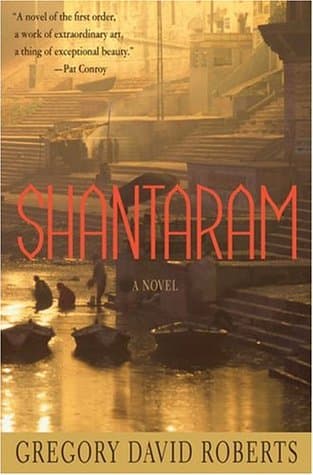
- Shantaram
Gregory David Roberts
4.3 (168k) average on GoodreadsLifestyleFeatures an expat's immersion into the criminal underworld of Bombay with rich character detail.
- Trainspotting
Irvine Welsh
4.1 (153k) average on GoodreadsThrillerExplores the harsh realities of drug addiction and subculture with a unique, unflinching narrative voice.
- A Fine Balance
Rohinton Mistry
4.3 (129k) average on GoodreadsLiterary FictionWhile both novels depict the lives of marginalized individuals in India during periods of significant political and social change, Mistry's A Fine Balance offers a more traditional, character-driven narrative with a broader focus on societal injustice and resilience. Narcopolis, in contrast, delves deeper into the specific subculture of opium addiction, employing a more experimental and atmospheric prose style, focusing more on the internal worlds and existential struggles of its characters rather than a sprawling social commentary.
- Sacred Games
Vikram Chandra
3.9 (8k) average on GoodreadsThrillerBoth novels explore Mumbai's criminal underworld and its intricate connections to the city's fabric. However, Sacred Games is an expansive, plot-driven crime epic that prioritizes suspense, a complex narrative web, and a wide array of characters across different social strata. Narcopolis, while sharing a setting, is more focused on the specific, intimate world of opium dens and the lives of a smaller, more interconnected group of addicts and outcasts, prioritizing mood, poetic language, and the subjective experience of addiction over a conventional thriller plot.
- The Old Man and the Sea
Ernest Hemingway
3.8 (831k) average on GoodreadsLiterary FictionA Cuban fisherman's long struggle with a giant marlin becomes a story of endurance and dignity, now retold for young adults with illustrations, phonetic guides, and writing prompts in Traditional Chinese.
- One Hundred Years of Solitude
Gabriel García Márquez
4.1 (753k) average on GoodreadsLiterary FictionThrough the multi-generational story of the Buendía family, a mythical town deals with the repeating patterns of time, love, and solitude, as the extraordinary mixes with the ordinary.


Enjoyed the summary?
A summary gives you the shape of the book. The book itself has the detail, the examples and the voice.
Find Narcopolis on AmazonAs an Amazon Associate, BookBrief earns from qualifying purchases. How we're funded