
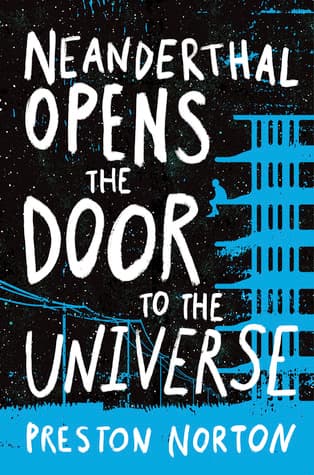
Synopsis
Covers the whole plot, including the ending.
- Difficulty
- Easy
- Pacing
- Moderate
- Mood
- Humorous, Hopeful, Emotional, Quirky
- Read it if
- You enjoy YA stories about unlikely friendships, finding purpose after loss, and a touch of quirky, high-stakes high school drama.
- Skip it if
- You prefer realistic fiction without fantastical elements (like divine intervention) or find some of the high school hijinks too outlandish.
Neanderthal Opens the Door to the Universe Plot Summary
Covers the whole plot, including the ending.
The Neanderthal and the Quarterback's Vision
Cliff Hubbard, a large and isolated student at Happy Valley High, deals with the pain of his older brother Shane's suicide. He faces constant bullying, especially from the popular quarterback, Aaron Zimmerman, who calls him 'Neanderthal.' But Aaron returns to school after a car accident and a near-death experience, claiming he saw God. God, Aaron says, gave him a 'List' of tasks to improve Happy Valley High and told Aaron to get Cliff's help. Despite his initial disbelief and strong dislike for Aaron, Cliff, needing a purpose, agrees to join this strange mission.
The First Task: Operation 'Cool Teacher'
The first item on Aaron's 'God List' is to 'Make Mrs. Rinaldi Cool.' Mrs. Rinaldi is the strict English teacher everyone dislikes, who gives seemingly pointless essays. Cliff struggles at first, but Aaron, surprisingly smart, suggests they find out what Mrs. Rinaldi really cares about. They learn she is a passionate, but frustrated, poet. Cliff, using his own grief and understanding of hidden pain, helps Mrs. Rinaldi anonymously publish one of her poems in the school newspaper. This changes how students see her and creates new respect, including from Cliff and Aaron.
Unmasking the Hacker and the Jesus Teens
The 'List' continues, leading Cliff and Aaron to investigate 'The Hacker,' who has been defacing school property with strange messages. They discover the hacker is a quiet, overlooked student named Penelope, who uses her skills to expose hypocrisy and unfairness in the school. Later, they deal with the 'Jesus Teens,' a very religious group led by Bethany, who push their conservative views on other students. Cliff and Aaron plan to gently challenge their strict beliefs, encouraging more open-minded spiritual talk in the school, instead of direct arguments.
The Drug Dealers and the Bully
The 'List' becomes more dangerous when it tells them to 'Stop the Drug Dealers.' They uncover a network operating in the school, leading to a tense meeting where Cliff's large size helps in an unexpected way. After this, they must face 'The Bully,' a student named Diesel known for being aggressive. Instead of fighting him, Cliff and Aaron learn about Diesel's difficult home life and why he acts the way he does. They find a way to offer him support and another path, showing that real change often needs understanding and empathy, not force.
Growing Bonds and Unveiling Secrets
As Cliff and Aaron work through the List, their initial dislike slowly turns into a real, though still awkward, friendship. Cliff starts to talk about his grief over Shane, and Aaron reveals his own weaknesses and the pressures of being the popular quarterback. They learn to use each other's strengths – Cliff's quiet strength and Aaron's social charm. Through their interactions with Penelope, Mrs. Rinaldi, and even Diesel, they begin to see the hidden struggles and complexities of their classmates, changing their old ideas about the 'cool' and 'unpopular' groups at Happy Valley High.
The List's True Meaning and the Principal's Involvement
The List begins to point to problems with the school system, specifically involving Principal Thompson. Cliff and Aaron realize that some of the school's issues come from the principal's neglect and focus on image over student well-being. They gather evidence and, using skills learned from Penelope, expose some of the principal's questionable choices. This forces the school board to act, which starts to fix bigger problems, not just individual ones. This shows Cliff and Aaron the power of working together.
The Unfinished Business: Shane's Legacy
As the List nears its end, Cliff feels a growing unease. He realizes that many of the issues they've fixed – bullying, loneliness, hidden pain, and lack of support – are like what his brother, Shane, faced before his suicide. The last item on the List, left vague by Aaron, is 'Heal the Heart of Happy Valley.' Cliff starts to think that Aaron's 'divine' mission is not just about the school, but about helping Cliff deal with his grief and find peace. This suggests a deeper, more personal link to Aaron's near-death experience and the 'List.'
Aaron's Confession and the Truth of the List
Aaron finally tells Cliff the full truth. During his near-death experience, he didn't see God, but Shane, Cliff's dead brother. Shane, as a spirit or vision, gave Aaron the 'List' and told him to help Cliff. Shane wanted Cliff to find purpose, face the issues that led to his own despair, and ultimately, to heal. Aaron, deeply changed by this meeting, felt he had to follow Shane's instructions, even if it meant risking his popularity and becoming friends with someone he used to torment. This news changes everything for Cliff.
Confronting Grief and Forgiveness
The truth about Shane's involvement forces Cliff to face his unresolved grief and the guilt he's carried since his brother's death. He realizes that Shane's 'List' was a final act of love, a way to guide Cliff towards healing and prevent others from suffering the same way. Cliff processes the anger he felt towards Shane for leaving him, and begins to understand the depth of his brother's pain. This moment is a turning point, letting Cliff move from passive suffering to active healing, finding a path towards forgiving both Shane and himself.
A New Beginning for Happy Valley High
With the List done and the truth known, Happy Valley High slowly begins to change. The principal is held responsible, Mrs. Rinaldi does well, Penelope finds her voice, and even Diesel starts to improve his life. Cliff, no longer just 'Neanderthal,' has found a community and a sense of belonging. His friendship with Aaron becomes stronger, built on shared experience and respect. He realizes that while the 'List' started things, real change comes from people choosing empathy, understanding, and working together, and he now has the strength to be part of that change.
Neanderthal Opens the Door to the Universe Characters
Cliff Hubbard
Protagonist
The massive, introverted 'Neanderthal' grappling with his brother's suicide.
Cliff is a physically imposing, yet deeply sensitive and introverted teenager, often nicknamed 'Neanderthal' due to his size. He carries immense grief and guilt over his older brother Shane's suicide, which has left him feeling isolated and purposeless. He struggles with low self-esteem, believing himself to be a loser, and avoids social interaction. Despite his outward appearance, Cliff possesses a keen observational mind and a surprising capacity for empathy, which slowly emerges as he undertakes the 'List' with Aaron.
Relationships: Aaron Zimmerman (Initial bully, then reluctant partner, evolving into a close friend.); Shane Hubbard (Deceased older brother, whose suicide is the central trauma in Cliff's life.); Penelope (Fellow outcast and eventual ally, whom Cliff respects.)
Aaron Zimmerman
Co-protagonist
The popular quarterback tasked with a divine mission after a near-death experience.
Aaron is the quintessential popular quarterback – charming, athletic, and seemingly carefree. However, beneath the surface, he's burdened by the expectations of his family and the pressures of maintaining his image. His near-death experience, where he 'sees' Shane, profoundly shakes him, compelling him to undertake the 'List' despite the social risks. He is genuinely committed to the mission, showing unexpected depth and a growing compassion, particularly towards Cliff. He initially uses humor and a facade of confidence to mask his own insecurities.
Relationships: Cliff Hubbard (His 'divinely' appointed partner, who becomes his closest friend.); Shane Hubbard (The deceased brother whose spirit guides Aaron's mission.)
Shane Hubbard
Mentioned/Catalyst
Cliff's deceased older brother, whose suicide drives the narrative's central mystery.
Shane is Cliff's older brother, whose suicide a year prior to the story's start is the central trauma in Cliff's life. Though never physically present, his memory and the circumstances of his death loom large over Cliff and the entire narrative. He is implicitly depicted as having struggled with his own pain and isolation, similar to Cliff. His 'appearance' to Aaron during the near-death experience makes him the true architect of the 'List,' a final attempt to help his brother and mend the brokenness he perceived in Happy Valley High.
Relationships: Cliff Hubbard (Younger brother, whom he loves and tries to help from beyond the grave.); Aaron Zimmerman (The unexpected messenger for his posthumous mission.)
Penelope
Supporting
The mysterious computer hacker and fellow outcast.
Penelope is a quiet, intelligent, and observant student who operates as 'The Hacker' within Happy Valley High. She uses her computer skills to expose injustices and hypocrisies, though her methods are anonymous and sometimes misunderstood. Like Cliff, she is an outsider, preferring the solitude of her computer to social interaction. She is fiercely independent and morally driven, becoming a valuable, albeit reluctant, ally to Cliff and Aaron, providing them with crucial information and technical assistance for their missions.
Relationships: Cliff Hubbard (Mutual respect as fellow outsiders and allies.); Aaron Zimmerman (Initially skeptical, but comes to trust him.)
Mrs. Rinaldi
Supporting
The strict English teacher who secretly harbors poetic ambitions.
Mrs. Rinaldi is initially portrayed as a rigid, unapproachable English teacher, disliked by most students for her demanding assignments and stern demeanor. She seems burnt out and disconnected from her students. However, Cliff and Aaron discover her hidden passion for poetry, revealing a more sensitive and artistic side. Her transformation after her poem is published shows her to be a person who yearns for recognition and connection, and who, once seen, can inspire and engage her students more effectively.
Relationships: Cliff Hubbard (Student who helps her find her voice.); Aaron Zimmerman (Student who helps her find her voice.)
Diesel
Supporting
The school bully, whose aggression masks deeper pain.
Diesel is the archetypal school bully, known for his intimidating presence and aggressive behavior. He instills fear in other students and is a key target on the 'List.' However, Cliff and Aaron discover that Diesel's bullying stems from a difficult and abusive home life. His aggression is a coping mechanism and a manifestation of his own pain and insecurity. Instead of fighting him, Cliff and Aaron's approach of understanding and offering support helps Diesel begin to address his underlying issues.
Relationships: Cliff Hubbard (Initial target, then recipient of unexpected empathy.); Aaron Zimmerman (Initial target, then recipient of unexpected empathy.)
Principal Thompson
Antagonist
The principal more concerned with image than student well-being.
Principal Thompson represents the institutional flaws within Happy Valley High. He is primarily concerned with maintaining the school's public image and avoiding controversy, often at the expense of addressing real student issues. His negligence and focus on superficial metrics contribute to the toxic environment that Cliff and Shane experienced. He is a symbol of the adult world's failure to truly see and support its younger population, and his actions are a target for some of the later items on the 'List.'
Bethany
Supporting
The leader of the zealous 'Jesus Teens' cult.
Bethany is the charismatic and devout leader of the 'Jesus Teens,' a student group that interprets Christianity in a rigid and exclusive manner. She is well-intentioned but often dogmatic, attempting to impose her beliefs on others and creating a sense of division within the school. Her role on the 'List' is to challenge the narrowness of her group's perspective, encouraging a more open and compassionate approach to faith. She represents the potential for good intentions to become exclusionary without empathy.
Neanderthal Opens the Door to the Universe Themes
Grief and Healing
The novel explores grief, especially after suicide. Cliff's journey is shaped by his unresolved sadness and guilt over Shane's death. The 'List' helps him process this grief, not just by helping others but by confronting the issues that led to Shane's despair. The reveal that Shane created the List helps Cliff find peace and understand his brother's last act as one of love and guidance. The story shows that healing is about finding meaning and connection within the pain, not forgetting.
“Maybe the whole point of the List wasn't for God to fix Happy Valley High, but for me to fix myself.”
The Power of Empathy and Connection
A main theme is how empathy changes things, helping overcome prejudice and isolation. Cliff and Aaron, who started as enemies, learn to see past their old ideas about each other and their classmates. By taking time to understand Mrs. Rinaldi's poetry, Penelope's reasons, and Diesel's hard home life, they make real change. The novel suggests that real solutions to problems, even in a high school, come from true connection and a willingness to understand 'why' people act as they do, rather than just judging 'what' they do.
“It was amazing what you could learn about people if you just took the time to look.”
Finding Purpose and Belonging
Cliff starts the novel feeling lost and alone, a direct result of his brother's death and being an outcast. The 'List' gives him a mission, a reason to engage with the world, and a sense of direction. Through working with Aaron, he starts to build meaningful relationships and see his own worth. This theme shows how contributing to something bigger than oneself, and being part of a community, can fight loneliness and bring a renewed sense of self-worth. By helping others, Cliff ultimately helps himself find his place.
“For the first time since Shane died, I felt like I was part of something. Like I mattered.”
Challenging Assumptions and Appearances
The novel always challenges characters, and the reader, to look past appearances. Aaron, the popular quarterback, has insecurities and a strong sense of responsibility. Cliff, the intimidating 'Neanderthal,' is sensitive and deeply hurt. Mrs. Rinaldi, the strict teacher, is a frustrated poet. The 'Jesus Teens' mean well but exclude others. The 'List' forces Cliff and Aaron to look deeper into their peers' lives, showing the hidden complexities and struggles beneath high school's social masks. This theme encourages looking critically at stereotypes and understanding people in a more nuanced way.
“Everyone had their own secret List, I realized. Their own battles they were fighting that no one else knew about.”
Plot Devices & Literary Techniques
The 'God List'
A seemingly divine mandate that drives the plot and character development.
The 'God List' serves as the primary plot driver, providing a clear, episodic structure to the narrative. Initially presented as a genuine divine instruction to Aaron, its true origin (Shane's posthumous guidance) is a major twist. It functions as a MacGuffin that forces Cliff and Aaron into unlikely collaboration, leading them to confront various social issues and personal demons. Beyond its literal tasks, the List is a symbolic journey for Cliff's healing and a catalyst for change within the school community.
The Unreliable Narrator (Aaron's Vision)
Aaron's initial claim of seeing God, which is later revealed to be a vision of Shane.
Aaron's initial claim of seeing God and receiving the 'List' acts as an unreliable narrative element. While Aaron believes it to be true at first, the reader is encouraged to question its literal divinity. This device builds suspense and allows for the eventual reveal that it was Shane, not God, who appeared to Aaron. This twist deepens the emotional impact of the story, personalizing the mission for Cliff and transforming the seemingly random tasks into a profound act of love and guidance from his deceased brother.
The 'Neanderthal' Nickname
A derogatory nickname that symbolizes Cliff's isolation and self-perception.
Cliff's nickname, 'Neanderthal,' is a powerful symbol of his physical size, his social ostracization, and his internalized sense of being an outsider. It highlights how others perceive him based on appearance and how he, in turn, views himself. As the story progresses and Cliff gains confidence and purpose, the nickname's power diminishes. By the end, he is defined by his actions and his growing sense of self, rather than by a label given to him by bullies, signifying his personal growth and acceptance.
The Suicide of Shane Hubbard
A past tragic event that serves as the story's emotional core and catalyst.
Shane's suicide, which occurred a year before the story begins, is not merely a backstory element but the foundational trauma that drives Cliff's character arc and motivates the entire 'List.' It provides the story with its emotional depth, exploring themes of grief, guilt, and the lingering impact of mental health struggles. The mystery surrounding Shane's motivations and his posthumous involvement in the 'List' gives the narrative a compelling underlying purpose beyond the immediate tasks, ultimately leading to Cliff's confrontation with his unresolved feelings.
Neanderthal Opens the Door to the Universe Quotes
“Being lonely is like being thirsty, but for people.”
“The universe is full of amazing things, and sometimes, those things are right in front of you.”
“Maybe the point of life isn't to be perfect, but to be perfectly yourself.”
“Sometimes the biggest adventures start with the smallest steps.”
“It's hard to see the stars when you're always looking at your feet.”
“Everyone's got their own kind of weird. The trick is finding someone whose weird matches yours.”
“Silence isn't empty. It's full of possibilities.”
“You don't have to be a genius to do something great. You just have to try.”
“Love isn't about finding someone to complete you. It's about finding someone who accepts your incomplete parts.”
“The past can hurt, but you can either run from it, or learn from it.”
“Sometimes the best way to find yourself is to get a little lost.”
“The world is a lot bigger than your high school hallway, Jeremy.”
“Being different isn't a curse. It's a superpower waiting to be discovered.”
“It's okay to not have all the answers. The universe doesn't either.”
Quiz
10 questions on the plot and the characters. Each answer comes with a short explanation.
Question 1
What is Cliff Hubbard's nickname at Happy Valley High School, and why?
- Giant, because he's a talented basketball player.
- Neanderthal, due to his large size.
- Lurch, because he's clumsy and awkward.
- Hulk, because of his aggressive nature.
Show answer
B. Neanderthal, due to his large size. Cliff Hubbard is nicknamed Neanderthal because of his enormous size, being 6'6" and 250 pounds.
Question 2
What tragic event happened in Cliff's family that deeply affected him?
- His parents got divorced.
- His older brother committed suicide.
- His family lost their home in a fire.
- His younger sister ran away from home.
Show answer
B. His older brother committed suicide. Cliff's life in his trailer park home went from bad to worse after his older brother's suicide, which is a key motivating factor for his character.
Question 3
How does Aaron Zimmerman claim to have received the 'List' of things to do?
- He found it written in an old family bible.
- He dreamt it after a vivid nightmare.
- He saw God while unconscious after a near-death experience.
- A mysterious stranger handed it to him.
Show answer
C. He saw God while unconscious after a near-death experience. Aaron claims that after a near-death experience, he saw God while unconscious, and God gave him the list.
Question 4
Why does Aaron Zimmerman specifically ask Cliff to help him with the List?
- Because Cliff is secretly a genius who can solve complex problems.
- Because God told him that Cliff was the only person who could help.
- Because Cliff owes him a favor from a past incident.
- Because Cliff is the strongest person in the school.
Show answer
B. Because God told him that Cliff was the only person who could help. Aaron states that God specifically told him that 'there's only one person who can help: Neanderthal,' referring to Cliff.
Question 5
What is Cliff's initial feeling towards Aaron Zimmerman before they start working together?
- Admiration, as Aaron is popular and athletic.
- Indifference, as he barely notices Aaron.
- Hatred, considering Aaron the 'nauseatingly cool quarterback'.
- Jealousy, wishing he could be as popular as Aaron.
Show answer
C. Hatred, considering Aaron the 'nauseatingly cool quarterback'. The description explicitly states, 'There's no one Cliff hates more than the nauseatingly cool quarterback, Aaron Zimmerman.'
Question 6
Which of the following groups or individuals is NOT mentioned as being involved in the tasks on Aaron's List?
- The local drug dealers.
- A mysterious computer hacker.
- The school principal.
- A vindictive English teacher.
Show answer
C. The school principal. The text mentions a vindictive English teacher, a mysterious computer hacker, a decidedly unchristian cult of Jesus Teens, the local drug dealers, and the meanest bully at HVHS. The principal is not listed.
Question 7
What is one significant emotional change Cliff experiences as he works through the List with Aaron?
- He becomes more isolated and withdrawn.
- He develops a deep resentment towards Aaron.
- He feels like he's part of something for the first time since losing his brother.
- He becomes overly confident and arrogant.
Show answer
C. He feels like he's part of something for the first time since losing his brother. The text states, 'Cliff feels like he's part of something for the first time since losing his brother,' highlighting his emotional growth and connection.
Question 8
What does Cliff eventually realize about the mission of fixing the broken school?
- That it's an impossible task and he should give up.
- That Aaron has been manipulating him all along.
- That their mission hits closer to home than he ever imagined.
- That the list was a prank by another student.
Show answer
C. That their mission hits closer to home than he ever imagined. The summary concludes, 'just when Cliff thinks they've completed the List, he realizes their mission hits closer to home than he ever imagined,' indicating a deeper, personal connection to the tasks.
Question 9
The description mentions a 'decidedly unchristian cult of Jesus Teens'. What thematic element does this detail likely introduce into the story?
- A clear endorsement of organized religion.
- A critique or ironic commentary on superficial or misguided faith.
- A straightforward conflict between good and evil.
- A subplot focused on genuine spiritual enlightenment.
Show answer
B. A critique or ironic commentary on superficial or misguided faith. The phrase 'decidedly unchristian cult of Jesus Teens' suggests an ironic or critical perspective on groups that claim religious affiliation but act in ways contrary to their stated beliefs, hinting at themes of hypocrisy or misguided faith.
Question 10
Given Cliff's physical description and nickname, 'Neanderthal', what primary challenge does he likely face in terms of how others perceive him?
- People assume he is unintelligent or brutish, despite his potential for depth.
- People are intimidated by his strength and avoid him out of fear.
- People constantly ask him to play sports due to his size.
- People mistake him for a teacher or adult.
Show answer
A. People assume he is unintelligent or brutish, despite his potential for depth. The nickname 'Neanderthal' implies a perception of being primitive, slow, or less evolved. This suggests that people likely judge him based on his physical appearance, assuming a lack of intelligence or sophistication, which is a common trope for large, introverted characters.
Neanderthal Opens the Door to the Universe FAQ
What is the central premise of 'Neanderthal Opens the Door to the Universe'?
The novel follows Cliff Hubbard, a giant, ostracized high school student nicknamed 'Neanderthal,' who is recruited by popular quarterback Aaron Zimmerman. Aaron claims God gave him a list of tasks to improve Happy Valley High after a near-death experience, and insists Cliff is the only one who can help him complete it.
Who are the two main protagonists and what are their initial dynamics?
Cliff Hubbard is a grieving, isolated outcast, struggling with his brother's suicide and his immense size. Aaron Zimmerman is the popular, seemingly perfect quarterback. Initially, Cliff despises Aaron, but their forced collaboration on 'The List' gradually breaks down their preconceived notions of each other, revealing hidden depths and shared vulnerabilities.
What kind of tasks are on 'The List' Aaron receives from God?
The List involves a series of seemingly disparate tasks aimed at improving the school, such as confronting a vindictive English teacher, dealing with local drug dealers, engaging with a mysterious computer hacker, and addressing the school's meanest bully. These tasks force Cliff and Aaron to interact with various segments of the student body and faculty they would normally avoid.
How does Cliff's personal life influence his decision to help Aaron?
Cliff's older brother's suicide has left him feeling profoundly isolated and without purpose, exacerbating his existing struggles with bullying and his home life in a trailer park. The opportunity to be part of something, even with someone he dislikes, offers him a sense of belonging and direction he desperately craves, providing a distraction from his grief.
What is the significance of Cliff's nickname, 'Neanderthal'?
The nickname 'Neanderthal' highlights Cliff's physical imposingness (6'6" and 250 pounds) and his social isolation, framing him as an archaic, out-of-place figure in the high school hierarchy. It underscores how he is perceived as different and less evolved by his peers, reflecting his deep-seated insecurities.
What is the true identity of the mysterious computer hacker assisting Cliff and Aaron?
The mysterious computer hacker is revealed to be Aaron's younger sister, Sarah. She uses her technical skills to help them with various tasks on The List, demonstrating her intelligence and her own quiet way of rebelling against the superficiality of their school environment, while also trying to connect with her brother.
How does the 'vindictive English teacher' subplot connect to the larger themes of the book?
The English teacher subplot initially appears to be about rectifying a specific injustice. However, it gradually reveals the pervasive nature of adult failures and biases within the school system, highlighting how even figures of authority contribute to the toxic environment that 'The List' aims to dismantle, and how students are often overlooked.
What is the significance of the 'Jesus Teens' cult within the narrative?
The 'Jesus Teens' initially appear as a seemingly benign, if overly zealous, religious group. Their 'uncristian' practices and rigid beliefs serve as a critique of performative piety and hypocrisy, contrasting sharply with Aaron's genuine, if unconventional, spiritual awakening. They represent another facet of the school's broken social fabric.
How does the resolution of 'The List' hit closer to home for Cliff?
The ultimate revelation is that The List's final, unspoken task is to help Aaron confront and accept his own sexuality, and to find the courage to reveal it. This hits close to home for Cliff because it parallels his own struggles with grief and identity, and deepens their bond as they both navigate personal truths.
How does Cliff's physical size contribute to his psychological state and interactions?
Cliff's immense size, while making him a target for the nickname 'Neanderthal,' also serves as a physical manifestation of his emotional barriers and his feeling of being an outsider. It makes him seem intimidating, but internally, he feels vulnerable and small, creating a powerful contrast that shapes his self-perception and how he engages with others.
What psychological journey does Aaron undergo as he completes 'The List' with Cliff?
Aaron begins as a seemingly confident, popular figure, but beneath the surface, he's grappling with the profound experience of his near-death encounter and a desperate need for authentic connection. The List forces him to shed his popular facade, confront his own fears and vulnerabilities, and ultimately embrace his true identity, leading to significant personal growth.
How does the book explore themes of grief and loss through Cliff's character?
The book deeply explores Cliff's unresolved grief over his brother's suicide, portraying his isolation, anger, and numbness. His journey with Aaron and 'The List' becomes a therapeutic process, allowing him to slowly process his loss, find new connections, and begin to heal, moving from a state of stagnant sorrow to cautious hope.
In what ways do Cliff and Aaron challenge traditional masculinity throughout the story?
Cliff, despite his large physique, is emotionally vulnerable and struggles with self-worth, subverting the 'strong silent type' trope. Aaron, the star quarterback, grapples with his sexuality and the pressure to conform, eventually choosing authenticity over social expectations. Together, they dismantle expectations of stoicism and conventional male roles.
Is Aaron's claim of seeing God and receiving 'The List' meant to be taken literally, or is it a metaphor?
While Aaron genuinely believes he saw God, the narrative strongly suggests it's a metaphorical experience, a coping mechanism, or a profound psychological shift in response to his near-death experience. The 'God' figure and 'The List' serve as catalysts for self-discovery and social change, rather than literal divine intervention, allowing for a broader interpretation of faith and purpose.
How does the book use the setting of Happy Valley High School to comment on broader societal issues?
Happy Valley High School functions as a microcosm of societal problems, showcasing bullying, social stratification, adult negligence, and the pressure to conform. By attempting to 'fix' the school, Cliff and Aaron expose and challenge these issues, suggesting that change often starts at a local, personal level before impacting the wider world.
What is the ultimate message about finding one's place and purpose that the book conveys?
The book conveys that finding one's place and purpose often involves embracing one's authentic self, even if it deviates from societal expectations. Both Cliff and Aaron, initially feeling lost and alienated, discover their purpose through unexpected friendships and by actively working to improve their community, highlighting the power of connection and self-acceptance.
How does the romance aspect develop between Cliff and Aaron, given their initial animosity?
The romance between Cliff and Aaron develops gradually from a place of mutual distrust and forced alliance. As they work through 'The List,' they witness each other's vulnerabilities, strengths, and hidden depths, leading to a deep emotional bond that blossoms into a romantic relationship, built on understanding and shared purpose rather than initial attraction.
Does the book offer a definitive answer regarding the existence of God or the supernatural?
The book intentionally leaves the question of God's literal existence ambiguous. Aaron's experience is presented as deeply personal and transformative, regardless of its objective reality. The focus is less on theological debate and more on the impact of belief, hope, and the search for meaning in a secular world, allowing readers to draw their own conclusions.
Similar books
- The Perks of Being a Wallflower
Stephen Chbosky
4.2 (1.3M) average on GoodreadsPsychologyExplores themes of trauma, friendship, and finding your place in high school.
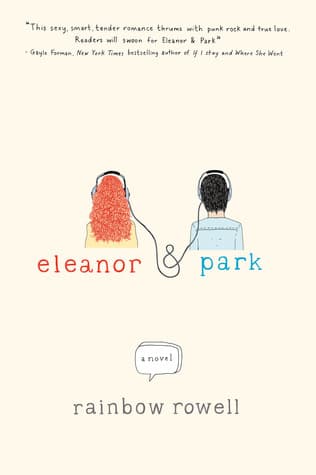
- Eleanor & Park
Rainbow Rowell
4.0 (860k) average on GoodreadsYoung AdultFeatures an unlikely, heartwarming connection between high school outcasts.
- It's Kind of a Funny Story
Ned Vizzini
4.1 (211k) average on GoodreadsPsychologyDeals with mental health struggles and self-discovery in a poignant yet often humorous way.
- Eleanor Oliphant Is Completely Fine
Gail Honeyman
4.3 (708k) average on GoodreadsLiterary FictionWhile Eleanor Oliphant is an adult novel, it offers an interesting comparison due to its portrayal of a socially awkward, literal-minded protagonist who struggles with social cues and has a traumatic past, much like Aaron in Neanderthal. Both characters experience a transformative friendship that helps them heal and connect with the world. However, Neanderthal is firmly rooted in the YA experience, with its high school setting, typical adolescent concerns, and a more overt romantic subplot. Eleanor Oliphant explores themes of loneliness and recovery in a more understated, character-driven manner, without the YA genre's typical plot-driven mysteries or overt high school social dynamics.
- Harry Potter and the Sorcerer's Stone
J.K. Rowling
4.5 (7M) average on GoodreadsFantasyRescued from a miserable life under the stairs, an orphaned boy discovers he's a wizard destined for a magical school, where he uncovers a dangerous secret tied to the dark wizard who murdered his parents.
- The Hunger Games
Suzanne Collins
4.3 (6.4M) average on GoodreadsFantasyIn a future where children fight to the death on live television, Katniss Everdeen volunteers for the arena, turning a death sentence into a fight for survival and a spark of rebellion.





Enjoyed the summary?
A summary gives you the shape of the book. The book itself has the detail, the examples and the voice.
Find Neanderthal Opens the Door to the Universe on AmazonAs an Amazon Associate, BookBrief earns from qualifying purchases. How we're funded