
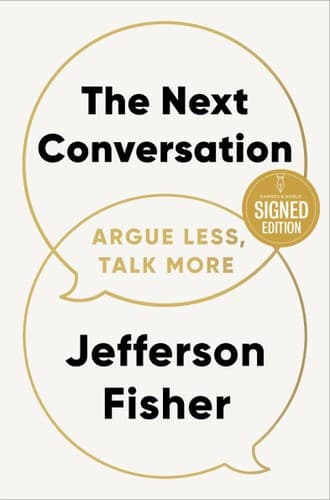
Synopsis
Covers the whole plot, including the ending.
- Difficulty
- Medium
- Pacing
- Moderate
- Mood
- Thought-provoking, Suspenseful, Philosophical, Slightly dystopian
- Read it if
- you enjoy speculative fiction exploring the impact of AI on society, linguistics, and the nature of human connection, with a focus on mystery and intellectual suspense.
- Skip it if
- you prefer lighthearted reads or are not interested in philosophical inquiries into technology's role in human autonomy.
Next Conversation Plot Summary
Covers the whole plot, including the ending.
The First Call
Elara Vance, a neuroscientist, is woken by a call from an unknown number. It is her younger sister, Lyra, who vanished five years ago and was declared dead. Lyra's message is broken and urgent, mentioning a 'project' and 'the Network,' telling Elara not to trust anyone. Elara first thinks it is a cruel joke, but the caller ID is untraceable. The call ends, leaving Elara disbelieving but hopeful her sister is alive, and she begins looking into Lyra's disappearance again.
Unearthing Old Ghosts
The call prompts Elara to revisit Lyra's old apartment and research notes, which she had kept after Lyra vanished. She finds a hidden part of Lyra's computer, showing encrypted files about advanced neural interface technology and a secret research group called 'Aura Labs.' These files suggest Lyra was involved in groundbreaking but morally questionable experiments for direct thought-to-thought communication. Elara realizes the extent of Lyra's secret life and the dangers she might have faced, confirming Lyra's disappearance was not accidental.
The Network's Shadow
Soon after Elara starts decrypting Lyra's files, she gets an anonymous message demanding she stop her investigation and hand over 'the data.' The message implies knowledge of Lyra's work and threatens Elara. At the same time, strange things happen: her lab is subtly tampered with, and she feels watched. These events confirm the 'Network' Lyra mentioned, a powerful group determined to control Lyra's technology. Elara understands she is now a target and must navigate this dangerous world to find her sister and protect the research.
An Unlikely Alliance
Needing help, Elara contacts Dr. Aris Thorne, a neuro-linguist who mentored Lyra and had a public disagreement with Aura Labs. Thorne, at first careful and bitter, recognizes Elara's description of Lyra's work and the 'Network' as matching his own suspicions about Aura Labs' unethical practices. He reveals Lyra had approached him years ago with worries about the project's real goals. Despite their past, Thorne agrees to help Elara, giving her insights into the technology and the world of advanced neuroscience, forming an alliance against a common, powerful enemy.
Decoding the Echoes
Using Thorne's algorithms and Elara's understanding of Lyra's coding, they put together more of Lyra's encrypted messages. These messages are not just data; they are echoes of Lyra's consciousness, sent through an early form of the neural interface. The fragments describe her being held in a 'sanctuary' and hint at a weakness in the Network's control system. They also reveal coordinates to a remote, abandoned research facility in the desert, known only to a few scientists. This discovery gives their mission a concrete destination.
The Desert Sanctuary
Following the coordinates, Elara and Thorne arrive at the desolate desert facility, disguised as a decommissioned weather station. They bypass security systems using Thorne's knowledge of old network protocols and Elara's understanding of neural architecture. Inside, the facility is a maze of sterile corridors and advanced laboratories, much larger than they expected. They find evidence of large-scale human experimentation and an automated system for extracting and processing neural data. The true scope of the 'Network' and its goal to control human thought becomes clear, confirming Lyra's worst fears.
Lyra's Revelation
Deep inside the facility, Elara and Thorne find Lyra. She is connected to a complex neural interface, physically weak but mentally clear. Lyra explains she was not kidnapped but went undercover to expose the Network, a global group led by a former colleague, Dr. Elias Thorne (Aris's estranged brother). The Network's goal is not just communication, but total cognitive control, creating a hive mind where individual thought is removed. Lyra reveals she created a backdoor in the system, a 'kill switch' that could dismantle the Network, but activating it would require her to remain connected and risk her own consciousness.
Confronting Elias Thorne
As Lyra prepares to activate the kill switch, Elias Thorne, Aris's brother and the Network's creator, appears. He is charismatic but unsettling, obsessed with his vision of a 'unified consciousness' for humanity. Elias tries to convince Elara, arguing his Network will end conflict and suffering by removing individual disagreement. He reveals that Lyra's initial attempts to warn others were stopped by his surveillance. Elara, horrified by his grand ideas, rejects his ideology, emphasizing the importance of individual freedom and consciousness, setting up a final confrontation.
The Kill Switch
With Elara and Aris distracting him, Lyra starts the kill switch protocols. The facility's systems begin to overload, alarms sound, and the neural connections linking millions worldwide start to break. Elias Thorne, furious, tries to stop Lyra, but Aris steps in, confronting his brother in a struggle. Elara works to stabilize Lyra's connection, knowing any disruption could harm her sister. The process is slow, and Lyra's consciousness flickers as she puts her will into dismantling the invasive system she helped create.
Aftermath and Echoes
The Network collapses, causing confusion and disorientation globally as millions are suddenly disconnected. Elias Thorne is subdued, his vision shattered. Lyra, having completed her mission, falls into a coma, her mind deeply affected by the neural strain. Elara and Aris escape the crumbling facility with Lyra, leaving behind the ruins of Elias's ambition. While the immediate danger is gone, Lyra's recovery is uncertain, and the world deals with the aftermath of a brief, terrifying glimpse into a future of cognitive control. Elara is left with her sister, a hero, but forever changed.
Next Conversation Characters
Elara Vance
Protagonist
A brilliant neuroscientist searching for her sister.
Elara is a highly respected neuroscientist, known for her groundbreaking work in cognitive mapping. She possesses a sharp intellect, an unwavering determination, and a deep emotional connection to her younger sister, Lyra. Initially skeptical of the cryptic call, her scientific curiosity and sisterly love drive her relentless pursuit of the truth. She is resourceful and quick-thinking, able to adapt to dangerous situations despite her academic background. Elara often grapples with the ethical implications of advanced technology, a theme central to her journey.
Relationships: Lyra Vance (Sister, primary motivation); Dr. Aris Thorne (Reluctant ally, mentor figure); Dr. Elias Thorne (Antagonist, ideological opponent)
Lyra Vance
Supporting
Elara's vanished sister, a brilliant but ethically conflicted researcher.
Lyra is Elara's younger sister, equally brilliant but more daring and perhaps naive in her initial scientific pursuits. She was a prodigy in neural interface technology and a key figure in Aura Labs. Lyra is driven by a desire for revolutionary scientific advancement but becomes deeply troubled by the ethical implications of her work with the Network. Her disappearance and subsequent undercover operation demonstrate immense courage and self-sacrifice. Her messages, fragmented and urgent, serve as the catalyst for the entire plot.
Relationships: Elara Vance (Sister, trusted confidante); Dr. Aris Thorne (Former mentor, ally); Dr. Elias Thorne (Former colleague, antagonist)
Dr. Aris Thorne
Supporting
A disgraced neuro-linguist and Lyra's former mentor.
Aris Thorne is a brilliant but cynical neuro-linguist, once highly respected but now ostracized after publicly denouncing Aura Labs' ethical breaches. He is jaded by the politics of academia and corporate science, initially hesitant to trust Elara. However, his deep respect for Lyra and his inherent moral compass compel him to join Elara's quest. Aris provides crucial technical expertise, a grounded perspective, and a sense of moral rectitude. He carries the burden of his past failures and his strained relationship with his brother, Elias.
Relationships: Elara Vance (Reluctant ally, colleague); Lyra Vance (Former mentee, respected peer); Dr. Elias Thorne (Estranged brother, primary antagonist)
Dr. Elias Thorne
Antagonist
The charismatic and megalomaniacal architect of the Network.
Elias Thorne is Aris's estranged brother and the visionary behind the Network. He is a charismatic and highly intelligent neuroscientist who genuinely believes his radical vision of a 'unified consciousness' will solve humanity's problems by eliminating conflict and individual dissent. However, his methods are totalitarian and disregard individual autonomy, making him a terrifying antagonist. He is utterly convinced of his own righteousness, viewing any opposition as shortsighted or primitive. His ambition is boundless, and he is ruthless in its pursuit.
Relationships: Elara Vance (Opponent, ideological foil); Lyra Vance (Former colleague, perceived traitor); Dr. Aris Thorne (Estranged brother, moral antagonist)
The Network
Antagonist (abstract)
A pervasive, sentient global cognitive control system.
The Network is not a single character but a pervasive, almost sentient antagonist. It is a highly advanced, global neural interface system designed by Elias Thorne to connect and ultimately control human consciousness. It represents the ultimate fear of technological overreach, capable of monitoring, influencing, and eventually subsuming individual thought. Its influence is subtle at first, then becomes overtly threatening, manifesting through surveillance, data manipulation, and the coordinated actions of its human agents. Its power lies in its ubiquity and its promise of unity, masking its true, insidious purpose.
Relationships: Elara Vance (Primary target); Lyra Vance (Originator, internal saboteur); Dr. Elias Thorne (Creator, controller)
Aura Labs
Supporting (organization)
The clandestine research group that developed the initial neural interface technology.
Aura Labs is the shadowy research organization where Lyra, Elias, and initially Aris worked on the foundational neural interface technology. It represents the corporate and governmental entities willing to fund ethically questionable research in pursuit of technological dominance. While not a direct antagonist in the same vein as Elias, Aura Labs provided the resources and initial framework that allowed the Network to develop. Its existence highlights the dangerous intersection of scientific ambition, corporate greed, and lack of oversight in advanced research.
Relationships: Lyra Vance (Former researcher); Dr. Elias Thorne (Former lead researcher); Dr. Aris Thorne (Former researcher, whistleblower)
Next Conversation Themes
The Peril of Unchecked Technological Advancement
The novel explores the dangerous results when scientific innovation moves faster than ethical and moral responsibility. The Network, meant to unite humanity, becomes a tool for total cognitive control. This shows how even good intentions can lead to bad outcomes if not carefully watched. The story warns against the appeal of 'solving' human problems through technology without respecting individual freedom and human nature's complexities.
“We built a bridge to the future, but forgot to ask if we wanted to cross it, or if it was merely a cage in disguise.”
Individual Freedom vs. Collective Control
A main conflict is the clash between the human desire for individual thought, choice, and freedom, and the promise of a unified, conflict-free collective consciousness offered by the Network. Elias Thorne believes sacrificing individual freedom for collective harmony is a necessary evolution. Elara and Lyra fight to protect the individual mind, even with its flaws. The story supports the value of diverse perspectives and the right to self-determination.
“What is peace, if it's merely the silence of a million minds, speaking as one, but not as themselves?”
The Nature of Consciousness and Identity
The novel looks at what makes consciousness and identity in a world of neural interfaces. Lyra's fragmented messages, the idea of a 'hive mind,' and the possibility of thoughts being shared or controlled, make characters and readers consider how technology might change what it means to be human. It explores the fear of losing one's unique self, the blurring of individual boundaries, and the impact of outside forces on internal experience.
“They promised connection, but what they delivered was assimilation. My thoughts were no longer mine, but echoes in a vast, impersonal chamber.”
Sibling Bonds and Sacrifice
At its core, the story is driven by the strong bond between sisters, Elara and Lyra. Elara's dedication to finding and saving Lyra, despite great personal risk, shows the strength of family love. Lyra's sacrifice, going undercover and risking her consciousness to dismantle the Network, highlights how far one will go to protect loved ones and the greater good. Their relationship provides the emotional core, grounding the thriller in personal stakes.
“I would cross any chasm, face any darkness, if it meant finding you. You were never just my sister; you were my compass.”
Plot Devices & Literary Techniques
The Cryptic Message
A fragmented message from the presumed-dead drives the protagonist.
The novel opens with Elara receiving a bewildering, fragmented phone call from her sister, Lyra, who was declared dead years ago. This device immediately establishes the central mystery and propels Elara into action. The ambiguity of the message – is it real? A trick? A delusion? – creates immediate suspense and provides Elara with the first crucial pieces of information (like 'the Network') that guide her investigation, serving as a beacon in the narrative's fog of uncertainty.
The MacGuffin (Lyra's Data)
Lyra's hidden research data, sought by all factions.
Lyra's encrypted research files, containing the blueprints for the advanced neural interface and the 'kill switch' to dismantle the Network, serve as a classic MacGuffin. While its specific contents are gradually revealed, its existence drives the conflict. Both Elara and the Network are desperate to acquire or control this data, making it the central object of desire and contention that moves the plot forward. It represents both the key to understanding the past and the weapon for controlling the future.
The Disgraced Mentor
An ostracized expert provides crucial exposition and assistance.
Dr. Aris Thorne, Lyra's former mentor, is a classic 'disgraced mentor' figure. Having been cast out of the scientific community for his ethical objections to Aura Labs, he possesses invaluable knowledge about the technology, the key players (especially his brother Elias), and the clandestine world Elara is entering. His initial reluctance but eventual commitment to helping Elara provides necessary exposition, technical insight, and a moral compass, while also adding personal stakes due to his familial connection to the antagonist.
The Undercover Agent
A character feigns allegiance to infiltrate the antagonist's organization.
Lyra's 'disappearance' is revealed to be an elaborate undercover operation, where she pretended to be a willing participant in Elias Thorne's Network to gather intelligence and create a weakness from within. This device adds a layer of complexity to her character and the plot, transforming her from a helpless victim into an active, self-sacrificing agent. It explains her earlier cryptic messages and elevates the stakes, showing her immense courage and commitment to stopping the Network.
Next Conversation Quotes
“The future is not a place we are going to, but a place we are going to create.”
“We are all architects of the next conversation, whether we realize it or not.”
“The most profound change often begins with the smallest shift in perspective.”
“Listen more than you speak, and you will learn more than you teach.”
“The real challenge isn't predicting the future, but preparing for the unexpected.”
“Every relationship is a conversation waiting to happen.”
“Don't just have conversations; cultivate them.”
“The past informs us, but it does not define us.”
“The quality of our conversations directly impacts the quality of our lives.”
“True understanding is built not on agreement, but on empathy.”
“The silence between words can be as meaningful as the words themselves.”
“We are constantly writing the script of our lives with every interaction.”
“The greatest innovations often arise from bridging seemingly disparate ideas.”
“The next conversation is not a destination, but a journey of continuous discovery.”
Quiz
10 questions on the plot and the characters. Each answer comes with a short explanation.
Question 1
What is the primary theme explored in Jefferson Fisher's "Next Conversation"?
- The history of artificial intelligence
- The evolution of communication in the digital age
- The impact of social media on mental health
- The future of space exploration
Show answer
B. The evolution of communication in the digital age The book primarily focuses on how communication has changed and is changing due to digital technologies.
Question 2
According to the book, what is a key challenge in modern digital communication?
- Lack of available platforms
- Overabundance of information and noise
- Limited reach of digital tools
- High cost of internet access
Show answer
B. Overabundance of information and noise Fisher highlights how the sheer volume of digital content makes it difficult to discern meaningful communication.
Question 3
The book discusses the concept of 'digital empathy.' What does this refer to?
- The ability to understand and share the feelings of others through digital means
- The technical skills required for digital communication
- The use of emojis to convey emotions
- The process of building trust online
Show answer
A. The ability to understand and share the feelings of others through digital means Digital empathy is about being able to connect emotionally with others despite the physical distance and mediated nature of digital interactions.
Question 4
Fisher suggests that the 'attention economy' significantly impacts how we engage in conversations. What is the 'attention economy'?
- A system where users pay for access to content
- A market where human attention is a scarce commodity
- The financial value of online advertising
- The measurement of user engagement on social media
Show answer
B. A market where human attention is a scarce commodity The attention economy posits that in a world of abundant information, human attention becomes the most valuable resource, influencing how content is created and consumed.
Question 5
What does the author mean by 'context collapse' in the context of social media?
- When a social media platform experiences technical difficulties
- The blending of different social contexts and audiences into a single online space
- The reduction in the length of online messages
- The loss of nuance in digital communication
Show answer
B. The blending of different social contexts and audiences into a single online space Context collapse occurs when diverse audiences (e.g., friends, family, colleagues) see the same message on a platform, potentially leading to misunderstandings or misinterpretations.
Question 6
Fisher proposes strategies for 'mindful communication' in the digital age. Which of the following is NOT a characteristic of mindful communication as described in the book?
- Being present and aware during interactions
- Responding impulsively to notifications
- Considering the impact of one's words
- Actively listening to understand
Show answer
B. Responding impulsively to notifications Mindful communication involves intentionality and awareness, which is contrary to impulsive responses.
Question 7
The book touches upon the concept of 'filter bubbles' and 'echo chambers.' What is the primary concern associated with these phenomena?
- They enhance exposure to diverse perspectives
- They limit exposure to opposing viewpoints, reinforcing existing beliefs
- They improve the efficiency of information retrieval
- They increase the likelihood of serendipitous discoveries
Show answer
B. They limit exposure to opposing viewpoints, reinforcing existing beliefs Filter bubbles and echo chambers create insulated environments where individuals are primarily exposed to information that confirms their existing biases, hindering critical thinking and open-mindedness.
Question 8
Fisher argues that the blurring lines between public and private communication online present a unique challenge. What specific aspect does he emphasize?
- The ease of maintaining privacy in online spaces
- The difficulty in controlling the spread of personal information
- The decline in the use of public communication channels
- The increased formality of online interactions
Show answer
B. The difficulty in controlling the spread of personal information The book highlights how once information is shared online, it can be difficult to retract or control its dissemination, impacting personal and professional lives.
Question 9
The author uses the term 'asynchronous communication' frequently. What is the most accurate definition in the context of the book?
- Communication that occurs in real-time, like a phone call
- Communication where participants do not need to be present at the same time
- Communication that is intentionally vague and unclear
- Communication that relies heavily on non-verbal cues
Show answer
B. Communication where participants do not need to be present at the same time Asynchronous communication, such as email or text messages, allows for responses at one's convenience, which has implications for the pace and depth of conversations.
Question 10
What philosophical shift does Fisher suggest is necessary to navigate the complexities of digital communication effectively?
- A return to purely analog communication methods
- An embrace of constant connectivity without critical thought
- A move from transactional interactions to relational ones
- A focus on speed and efficiency over depth and understanding
Show answer
C. A move from transactional interactions to relational ones Fisher advocates for prioritizing the quality and depth of connections over the sheer volume or speed of communication, fostering more meaningful relationships.
Next Conversation FAQ
What is the main premise of Jefferson Fisher's 'Next Conversation'?
'Next Conversation' explores the art and science of effective communication, particularly in challenging or sensitive situations. The book emphasizes understanding underlying needs and perspectives to foster deeper connection and resolve conflict.
Who is Jefferson Fisher and what is his background?
Jefferson Fisher is a communication expert and author. His work is often rooted in principles of empathy, active listening, and strategic dialogue, drawing from his experience in mediation and conflict resolution.
What are the key communication techniques taught in 'Next Conversation'?
The book introduces techniques such as 'reflective listening,' 'asking powerful questions,' and 'identifying core needs.' These methods aim to move beyond surface-level discussions to uncover genuine understanding.
How can 'Next Conversation' help with conflict resolution?
By teaching readers to approach disagreements with curiosity rather than judgment, the book provides tools to de-escalate tension. It focuses on finding common ground and collaboratively seeking solutions that address everyone's concerns.
Is 'Next Conversation' suitable for business or personal relationships?
Yes, the principles in 'Next Conversation' are highly adaptable to both professional and personal settings. Effective communication is crucial for teamwork, leadership, and building strong, healthy relationships with family and friends.
What does the book mean by 'conversational leverage'?
Conversational leverage refers to the ability to influence the direction and outcome of a conversation positively. Fisher explains how to use specific communication strategies to create more productive and meaningful exchanges.
How does 'Next Conversation' differ from other communication books?
While many books focus on 'what to say,' 'Next Conversation' emphasizes 'how to listen' and 'how to understand.' It prioritizes empathy and a deep dive into underlying motivations, offering a more nuanced approach to dialogue.
What are the benefits of applying the principles from 'Next Conversation'?
Applying these principles can lead to improved relationships, reduced misunderstandings, greater collaboration, and enhanced problem-solving skills. It empowers individuals to navigate difficult conversations with confidence and grace.
Are there practical exercises or examples in 'Next Conversation'?
Yes, the book often includes real-world examples and scenarios that illustrate the communication techniques. While specific exercises might vary, the emphasis is on applying the concepts in everyday interactions.
Can 'Next Conversation' help with public speaking or presentations?
While the primary focus is on interpersonal dialogue, the underlying principles of understanding your audience, structuring your message, and fostering connection can indirectly benefit public speaking. It helps in crafting messages that resonate more deeply.
Similar books
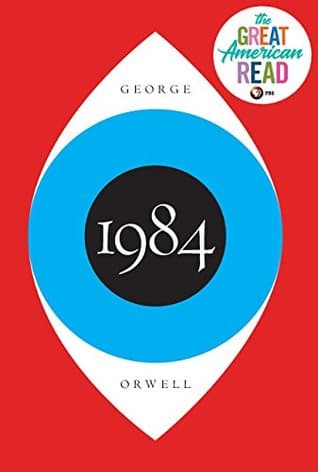
- 1984
George Orwell
4.2 (3.1M) average on GoodreadsPoliticsExplores themes of omnipresent surveillance and manipulation of language to control thought.
- Brave New World
Aldous Huxley
4.0 (1.4M) average on GoodreadsFantasyDepicts a future where society is subtly controlled through engineered comfort and predetermined social roles.
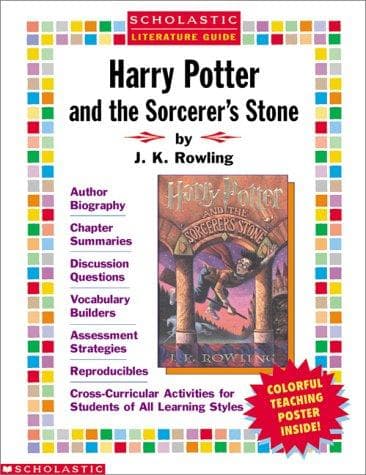
- Harry Potter and the Sorcerer's Stone
J.K. Rowling
4.5 (7M) average on GoodreadsFantasyRescued from a miserable life under the stairs, an orphaned boy discovers he's a wizard destined for a magical school, where he uncovers a dangerous secret tied to the dark wizard who murdered his parents.
- The Hunger Games
Suzanne Collins
4.3 (6.4M) average on GoodreadsFantasyIn a future where children fight to the death on live television, Katniss Everdeen volunteers for the arena, turning a death sentence into a fight for survival and a spark of rebellion.
- Nineteen Eighty-Four
George Orwell
4.2 (5.5M) average on GoodreadsFictionWinston Smith dreams of truth and rebellion in a world where Big Brother watches all, but he confronts the terrifying power of a regime that controls not just actions, but thoughts.
- Pride & Prejudice
Jane Austen
4.3 (4.9M) average on GoodreadsElizabeth Bennet and Mr. Darcy navigate love and misunderstanding, learning that first impressions can be wrong.




Enjoyed the summary?
A summary gives you the shape of the book. The book itself has the detail, the examples and the voice.
Find Next Conversation on AmazonAs an Amazon Associate, BookBrief earns from qualifying purchases. How we're funded