

Core Idea
- Difficulty
- Medium
- Read it if
- You are grappling with suffering, searching for purpose, or want a profound perspective on human resilience and the power of choice in the face of adversity. This book is essential for understanding existential philosophy and the human spirit.
- Skip it if
- You are looking for a light, easy read with prescriptive self-help steps, or if you are not prepared to engage with profound philosophical questions about suffering and existence.
Key Takeaways from Man's Search for Meaning
Meaning Over Pleasure
The primary human drive is the pursuit of meaning, not pleasure.
Frankl says that Freud's focus on pleasure as the main human motivator is wrong. Instead, from his observations in the concentration camps, he concluded that people with a 'why'—a reason for living, a future goal, or a loved one to return to—were much more resilient and likely to survive. This search for meaning, even in great suffering, gives the psychological and spiritual strength needed to endure. Logotherapy, Frankl's therapy, is built on this idea, stating that life's challenges are chances to find and fulfill one's unique meaning.
“Man's Search for Meaning is a profound exploration of the human spirit's ability to transcend suffering by finding a purpose.”
In the book: Frankl's own experience and observations of fellow prisoners in Auschwitz and other concentration camps, noting that those who lost their sense of future or purpose often succumbed more quickly.
Try this: Identify your 'why.' What is your overarching purpose, a task yet to be completed, or a person you love? Consciously connect daily actions to this larger meaning to build resilience and motivation.
Related ideas: logotherapy, will-to-meaning, existential-vacuum
Freedom of Inner Choice
Even in extreme suffering, we retain the freedom to choose our attitude.
This is perhaps Frankl's most powerful idea. Despite the terrible conditions and dehumanization in the concentration camps, he saw that prisoners still had a 'last inner freedom.' They could choose how they reacted to their suffering: with despair, or with defiance, compassion, and inner dignity. This freedom is not about changing outside events, but about the internal decision of how one relates to those events. This choice shows character and offers a strong sense of control, even when everything else is gone. It shows that our response to suffering is a basic part of being human.
“Everything can be taken from a man but one thing: the last of the human freedoms—to choose one’s attitude in any given set of circumstances, to choose one’s own way.”
In the book: Frankl's examples of prisoners who shared their last crust of bread, comforted others, or found beauty in a sunset, despite their own imminent demise, demonstrating a chosen attitude of nobility.
Try this: When faced with unavoidable difficulty, pause and consciously choose your response. Instead of reacting impulsively, ask yourself: 'How can I choose to interpret this? What attitude will best serve my values and dignity?'
Related ideas: existential-freedom, response-ability, dignity-of-suffering
Suffering as Achievement
Unavoidable suffering can be transformed into a profound human achievement.
Frankl says that suffering, when it cannot be avoided, is not meaningless. Instead, it offers a chance for human growth and finding unique meaning. By facing the challenge of suffering with a courageous and dignified attitude, a person can achieve a deep inner victory. This view changes suffering from a negative experience to be avoided, into something that can build character, show inner strength, and deepen one's understanding of life. It is about finding meaning in pain, guilt, and death, and turning them into personal success.
“When we are no longer able to change a situation, we are challenged to change ourselves.”
In the book: Frankl's observation that some prisoners, despite their suffering, grew spiritually, becoming more compassionate or insightful, demonstrating a 'triumph of the spirit' over adversity.
Try this: When facing unavoidable hardship, instead of asking 'Why me?', ask 'What is this teaching me?' or 'How can I grow through this?' Seek to find the meaning or lesson embedded within the struggle.
Related ideas: tragic-optimism, meaning-in-suffering, character-development
Anticipatory Anxiety & Hyper-Intention
Over-focusing on a desired outcome can paradoxically prevent its achievement.
Frankl describes 'anticipatory anxiety' and 'hyper-intention' to explain how trying too hard to achieve certain states (like happiness, sleep, or sexual potency) can make them harder to get. Anticipatory anxiety happens when the fear of a bad outcome (e.g., insomnia, performance anxiety) creates that very outcome. Hyper-intention is focusing too much on a goal, which can stop natural processes. Logotherapy often uses 'paradoxical intention'—telling patients to wish for what they fear—to break this cycle, showing the power of changing one's mindset.
“The more one aims at pleasure, the more one misses it.”
In the book: Frankl's therapeutic examples, such as a man with a severe sweating phobia being told to try and sweat more, or an insomniac encouraged to stay awake, which often broke the cycle of anxiety and allowed the desired outcome to occur naturally.
Try this: If you're struggling with something you're trying too hard to achieve (e.g., falling asleep, being spontaneous), try 'paradoxical intention.' Lean into the fear or the opposite outcome, or simply detach from the intense desire. Often, the desired state will emerge naturally when the pressure is released.
Related ideas: paradoxical-intention, self-transcendence, noo-dynamics
The Provisional Existence
Living without a clear future purpose erodes the will to live.
In the concentration camps, Frankl saw 'provisional existence.' This state, marked by indefinite waiting and uncertainty, deeply affected prisoners. Those who could not imagine a future, a 'return home' or a task to finish, often fell into deep despair. Without a future goal, the present suffering became unbearable and meaningless, leading to a loss of the will to live. This shows how important hope and future-oriented meaning are for psychological survival.
“A man who could not see the end of his provisional existence was not able to aim at an ultimate goal in life.”
In the book: Frankl recounts how many prisoners succumbed to 'giving up' around Christmas or New Year's if they had set arbitrary release dates that passed without fulfillment, demonstrating the psychological impact of shattered future expectations.
Try this: Cultivate future goals and projects, no matter how small, to give your present actions meaning and direction. Regularly remind yourself of your long-term aspirations and break them into achievable steps to maintain hope and purpose.
Related ideas: future-orientation, hope, existential-frustration
Love as Ultimate Meaning
Love is the highest goal and the most profound source of meaning.
Frankl often says love is a main source of meaning. He describes how, even in brutal conditions, thoughts of his wife and their love gave him great strength. Love lets one see the unique essence of another person and find meaning in that connection, even if the loved one is absent. It is not just an emotion but an act of deep recognition and commitment. This view suggests that our deepest human fulfillment comes from looking beyond ourselves to connect with and value others, offering a timeless message of hope and purpose.
“The salvation of man is through love and in love.”
In the book: Frankl's vivid internal experiences of conversing with his wife's image, feeling her presence, and finding solace and meaning in their shared love, even when uncertain of her fate.
Try this: Actively cultivate and express love in your relationships. Recognize that genuine connection and care for others are not just pleasant experiences but fundamental sources of meaning and resilience in life.
Related ideas: self-transcendence, unconditional-love, spiritual-survival
The Tragic Triad & Optimism
Meaning can be found even in pain, guilt, and death.
Frankl introduces pain, guilt, and death as unavoidable parts of human existence. However, he does not suggest passive acceptance but 'tragic optimism.' This means keeping hope and meaning when facing these inevitable sufferings. It is about finding purpose in suffering (when unavoidable), learning from guilt, and accepting life's finite nature as a reason to act meaningfully. This optimistic stance is not naive; it shows human ability to turn adversity into personal success and find value even in life's darkest moments. It reminds us that meaning is always available, even if our circumstances are not ideal.
“To suffer unnecessarily is masochistic rather than heroic.”
In the book: Frankl's own journey through the camps, where he contemplated suicide but found a reason to live in his unfinished scientific work and the possibility of helping others, demonstrating the choice for optimism amidst tragedy.
Try this: When confronted with loss, regret, or the realization of mortality, instead of succumbing to despair, actively seek out what meaning can be derived. How can this experience shape your future actions or appreciation for life?
Related ideas: tragic-optimism, existential-analysis, meaning-therapy
Beyond Self-Actualization
True fulfillment comes from self-transcendence, not self-focus.
While Abraham Maslow's hierarchy of needs ends with self-actualization, Frankl says true human fulfillment goes beyond it, to 'self-transcendence.' This means looking beyond oneself, dedicating one's life to something greater than personal gain—a cause, a loved one, a creative work. Happiness and self-actualization, he says, are not direct goals but 'side effects' of pursuing meaning outside oneself. When a person focuses on contributing to the world or serving others, personal fulfillment naturally follows. This view challenges modern society's individualistic focus, suggesting that meaning is found in connection and contribution, not isolation.
“Man is not fully self-actualized unless he is self-transcendent.”
In the book: Frankl's observation that prisoners who focused on helping others, sharing resources, or maintaining their dignity for the sake of a higher principle (e.g., God, family) seemed to fare better psychologically than those solely focused on their own survival.
Try this: Shift your focus from 'What can I get?' to 'What can I give?' Actively seek opportunities to contribute to a cause, help others, or create something of value. Your own well-being will often improve as a byproduct.
Related ideas: self-transcendence, altruism, contribution
The Uniqueness of Meaning
Each individual's meaning in life is unique and must be discovered.
Frankl says that meaning is not a universal concept dictated by others but is deeply personal and unique to each person. It is not made up but found through one's actions, experiences, and attitude towards suffering. This 'meaning of the moment' can change often. Logotherapy's role is not to tell a patient their meaning, but to help them see and accept their unique responsibilities and chances for meaning. This individual approach helps people find purpose in their specific situations, affirming the inherent value and potential of every life.
“Everyone has his own specific vocation or mission in life to carry out a concrete assignment which demands fulfillment.”
In the book: Frankl's therapeutic practice, where he guided patients to reflect on their own lives, relationships, and unfulfilled tasks rather than imposing a predefined meaning.
Try this: Regularly reflect on your unique talents, passions, and the needs of the world around you. Ask yourself: 'What is life asking of me right now?' or 'What unique contribution can I make in this situation?'
Related ideas: meaning-of-the-moment, personal-responsibility, existential-analysis
Life's Unconditional Meaning
Life holds meaning under all circumstances, even the most dire.
A main idea of logotherapy is that life's meaning is unconditional. This means that even with terminal illness, deep loss, or extreme suffering, life always has potential meaning. It is not man who questions life, but life that questions man, and our job is to answer these questions through our actions, our love, and our attitude towards unavoidable suffering. This strong affirmation of life's inherent meaning offers a powerful way to counter nihilism and despair, suggesting that even a single moment can have great value and purpose, regardless of outside conditions. It is a call to always find a 'yes' to life.
“The meaning of life is unconditional, for it is life itself that asks questions of man.”
In the book: Frankl's personal survival and subsequent work, demonstrating his unwavering belief in life's meaning despite having lost his entire family and enduring unimaginable suffering.
Try this: Even in moments of profound doubt or despair, remind yourself that life itself is asking something of you. Seek out the smallest glimmer of purpose, a connection, or an opportunity to respond meaningfully to your circumstances.
Related ideas: unconditional-meaning, existential-affirmation, will-to-meaning
Quiz
10 questions on the main ideas. Each answer comes with a short explanation.
Question 1
What is the primary human drive according to Viktor Frankl's logotherapy?
- The pursuit of pleasure
- The avoidance of suffering
- The pursuit of power
- The pursuit of meaning
Show answer
D. The pursuit of meaning Frankl argues that the primary human drive is not pleasure (as Freud suggested) or power (as Adler suggested), but rather the 'will to meaning'—the pursuit of what we find meaningful in life.
Question 2
In which Nazi concentration camps was Viktor Frankl imprisoned during World War II?
- Auschwitz and Dachau
- Auschwitz and Buchenwald
- Auschwitz and Bergen-Belsen
- Auschwitz and Türkheim
Show answer
D. Auschwitz and Türkheim Frankl was first sent to Auschwitz and later transferred to Türkheim, a sub-camp of Dachau, where he was liberated. He describes his experiences in these camps in detail.
Question 3
According to Frankl, what are the three main ways to discover meaning in life?
- Work, love, and suffering
- Money, fame, and power
- Religion, family, and community
- Education, travel, and creativity
Show answer
A. Work, love, and suffering Frankl identifies three avenues to find meaning: through work (creating something or doing a deed), through love (caring for another person), and through suffering (finding meaning in unavoidable pain).
Question 4
What does Frankl mean by 'tragic optimism'?
- The belief that everything happens for the best
- The ability to remain hopeful despite suffering, guilt, and death
- The idea that optimism is always naive and unrealistic
- The practice of ignoring negative emotions to stay positive
Show answer
B. The ability to remain hopeful despite suffering, guilt, and death Tragic optimism is Frankl's concept that one can remain hopeful and find meaning even in the face of the 'tragic triad' of human existence: pain, guilt, and death. It involves turning suffering into achievement, guilt into improvement, and transitoriness into action.
Question 5
What key realization did Frankl have while marching to work in the camp that helped him survive?
- That he could escape if he planned carefully
- That his wife might still be alive and he needed to see her again
- That the guards were also victims of the system
- That he should focus on getting extra food rations
Show answer
B. That his wife might still be alive and he needed to see her again During a forced march, Frankl imagined his wife's face and realized that love transcends physical presence. This gave him a profound sense of meaning and strength to endure, illustrating how finding meaning in love can sustain people through suffering.
Question 6
What is the 'existential vacuum' that Frankl describes in modern society?
- A lack of religious faith in contemporary culture
- A feeling of emptiness and meaninglessness when people's basic needs are met
- The vacuum left by the decline of traditional family structures
- The gap between scientific knowledge and spiritual understanding
Show answer
B. A feeling of emptiness and meaninglessness when people's basic needs are met Frankl observes that when people's basic needs are satisfied, they often experience an 'existential vacuum'—a sense of boredom, apathy, and meaninglessness. This arises when the 'will to meaning' is frustrated, leading to issues like depression and addiction.
Question 7
How does Frankl define 'logotherapy'?
- A therapy focused on analyzing dreams and childhood memories
- A therapy that helps patients find meaning in their lives
- A therapy based on medication and biological treatments
- A therapy that emphasizes changing negative thought patterns
Show answer
B. A therapy that helps patients find meaning in their lives Logotherapy, derived from the Greek 'logos' (meaning), is Frankl's psychotherapeutic approach that focuses on helping individuals discover personal meaning in life as a primary way to overcome psychological issues.
Question 8
What does Frankl suggest is the last of the human freedoms?
- The freedom to speak one's mind
- The freedom to choose one's attitude in any given set of circumstances
- The freedom to pursue happiness
- The freedom to practice one's religion
Show answer
B. The freedom to choose one's attitude in any given set of circumstances Even in the extreme conditions of concentration camps, Frankl observed that prisoners could choose their attitude toward suffering. This 'freedom to choose one's attitude' is the last human freedom that cannot be taken away.
Question 9
What practical technique does Frankl recommend for finding meaning, involving imagining oneself in the future?
- Future projection therapy
- Dereflection
- Paradoxical intention
- Socratic dialogue
Show answer
D. Socratic dialogue Frankl uses a form of Socratic dialogue where he asks patients to imagine themselves looking back from the future. For example, asking 'What would you regret not having done?' to help them identify meaningful goals. Note: While paradoxical intention and dereflection are also logotherapy techniques, this specific future-imagining method is highlighted in the book.
Question 10
What was Frankl's profession before and after his imprisonment?
- He was a lawyer who became a writer
- He was a teacher who became a politician
- He was a psychiatrist who continued as a psychiatrist
- He was a scientist who became a philosopher
Show answer
C. He was a psychiatrist who continued as a psychiatrist Frankl was a psychiatrist and neurologist before World War II. After surviving the camps, he returned to Vienna, where he continued his work as a psychiatrist, developed logotherapy, and wrote 'Man's Search for Meaning' based on his experiences.
Man's Search for Meaning FAQ
What is logotherapy?
Logotherapy is Viktor Frankl's psychotherapeutic approach that posits the primary human drive is not pleasure or power, but the pursuit of meaning. It focuses on helping individuals discover purpose in their lives, even in the face of suffering, by finding meaning in their experiences and responsibilities.
Does logotherapy work for modern mental health issues?
Yes, logotherapy has been applied to various modern mental health challenges, including depression, anxiety, and existential crises. Its emphasis on finding meaning and purpose remains relevant in contemporary therapy, often integrated with other approaches to help individuals cope with life's difficulties.
How is logotherapy different from Freudian psychoanalysis?
Logotherapy differs from Freudian psychoanalysis by focusing on the future and meaning-seeking rather than past traumas and unconscious drives. While Freud emphasized pleasure and aggression as primary motivators, Frankl argues that the will to meaning is the central human drive, offering a more optimistic and purpose-oriented framework.
What are the three ways to find meaning according to Frankl?
Frankl identifies three primary ways to find meaning: through creative work or deeds, through experiencing something or encountering someone (like love), and through the attitude we take toward unavoidable suffering. This framework helps individuals discover purpose in various aspects of life.
Is 'Man's Search for Meaning' based on Frankl's personal experiences?
Yes, the book is largely based on Frankl's personal experiences as a prisoner in Nazi concentration camps during World War II. He uses these harrowing experiences to illustrate his psychological insights and the development of logotherapy, blending memoir with philosophical and therapeutic analysis.
How does Frankl's view of suffering differ from other philosophies?
Frankl views suffering not as something to be avoided at all costs, but as an inevitable part of life that can be transformed into a source of meaning. Unlike hedonistic philosophies that prioritize pleasure, he argues that finding purpose in suffering can lead to spiritual growth and resilience.
Can logotherapy help with everyday stress and anxiety?
Yes, logotherapy can help with everyday stress and anxiety by encouraging individuals to reframe challenges as opportunities for meaning. By focusing on values, goals, and personal responsibilities, it provides tools to cope with stress and find a sense of direction in daily life.
What is the 'tragic triad' in logotherapy?
The 'tragic triad' in logotherapy refers to three unavoidable aspects of human existence: pain, guilt, and death. Frankl argues that by confronting these with a meaningful attitude, individuals can transcend suffering and find purpose, turning potential despair into a catalyst for growth.
How has 'Man's Search for Meaning' influenced modern psychology?
The book has significantly influenced modern psychology by popularizing existential therapy and highlighting the importance of meaning in mental health. It has inspired therapies like Acceptance and Commitment Therapy (ACT) and continues to be cited in research on resilience, post-traumatic growth, and well-being.
Does Frankl believe happiness is the goal of life?
No, Frankl argues that happiness is not the primary goal of life; instead, it is a byproduct of finding meaning. He suggests that pursuing meaning directly, through work, love, and attitude toward suffering, leads to a more fulfilling and resilient life, with happiness emerging as a natural consequence.
About the author
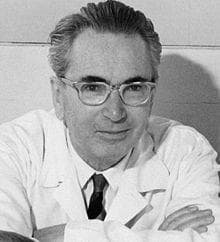
Viktor E. Frankl was an Austrian neurologist and psychiatrist, best known for his work in existential psychology. His most notable book, "Man's Search for Meaning," reflects on his experiences in Nazi concentration camps and explores the importance of finding purpose in life. Frankl's ideas have had a significant impact on psychology and philosophy, particularly in the field of meaning-centered therapy.
Similar books
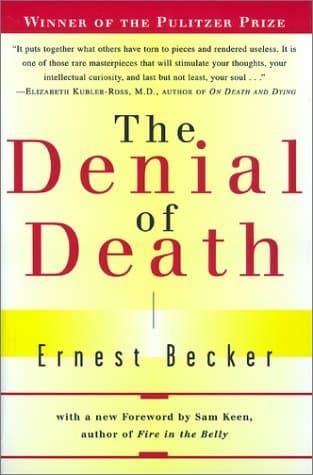
- The Denial of Death
Ernest Becker
4.2 (8k) average on GoodreadsPsychologyExplores the human need for meaning and heroism in the face of mortality, echoing Frankl's themes of transcending finite existence.
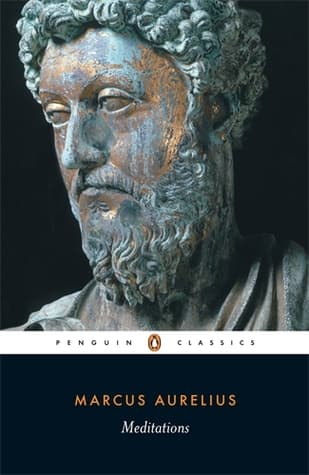
- Meditations
Marcus Aurelius
4.2 (124k) average on GoodreadsLeadershipOffers stoic philosophical reflections on finding inner peace, virtue, and purpose amidst life's challenges, emphasizing control over one's perceptions.
- Siddhartha
Hermann Hesse
4.0 (583k) average on GoodreadsHistorical FictionA philosophical novel about one man's spiritual journey to find meaning and enlightenment through various life experiences, including suffering and love.
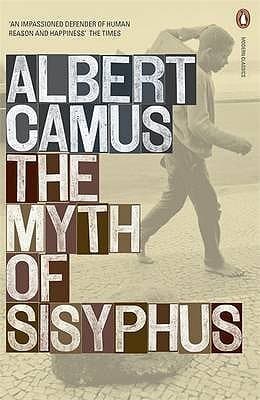
- The Myth of Sisyphus
Albert Camus
4.2 (25k) average on GoodreadsPhilosophyBoth Frankl and Camus grapple with the absurd and the search for meaning in a seemingly meaningless world. However, Camus, a proponent of absurdism, suggests that meaning must be created in defiance of the absurd, embracing revolt and passion. Frankl, while acknowledging suffering, posits an inherent, discoverable meaning in life, even in the face of the absurd. Camus's solution is to live fully without hope, while Frankl's is to find hope through meaning, even in suffering. Frankl offers a more optimistic and prescriptive path towards meaning, rooted in responsibility and purpose, rather than just rebellion.
- The Diary of a Young Girl
Anne Frank
4.2 (2.7M) average on GoodreadsBiographyDuring the Nazi occupation, a teenage girl's diary, written from a secret annex, shares observations on humanity, hope, and the wait for freedom.
- Eat, Pray, Love
Elizabeth Gilbert
3.6 (1.5M) average on GoodreadsLifestyleA heartbroken writer leaves her conventional life for a year-long global search for pleasure in Italy, spiritual devotion in India, and unexpected love and balance in Bali.



Enjoyed the summary?
A summary gives you the shape of the book. The book itself has the detail, the examples and the voice.
Find Man's Search for Meaning on AmazonAs an Amazon Associate, BookBrief earns from qualifying purchases. How we're funded