

Core Idea
- Difficulty
- Medium
- Read it if
- You are seeking a profound exploration of Christian spirituality, the nature of the self, and the interconnectedness of humanity and divinity, especially if you appreciate contemplative and philosophical prose.
- Skip it if
- You prefer a purely academic or secular approach to philosophy and self-discovery, or if you are averse to theological language and concepts.
Key Takeaways from No Man Is an Island
The Paradox of Self-Discovery
True self-discovery is found not in isolation, but in authentic connection with others and the divine.
Merton's main idea challenges the modern pursuit of self. He says that our being is connected to others and to God. Solitude is important for thinking, but it is not the goal; it is a way to deepen our ability to love and connect. We find our true identity not by cutting ties, but by understanding our natural connections. The 'self' is not separate but a part of a larger spiritual and human system. This idea frees us from needing to be self-sufficient, inviting us into a more expansive, interdependent life where our individual journey adds to the shared human experience.
“No man is an island, entire of itself; every man is a piece of the continent, a part of the main.”
In the book: Merton's foundational essay, 'No Man Is an Island,' directly addresses this, asserting that our existence is inherently communal and that isolating ourselves diminishes our humanity.
Try this: Cultivate both solitude for inner reflection and active, empathetic engagement with your community. Recognize that your personal growth is intrinsically linked to the well-being and growth of those around you.
Related ideas: interconnectedness, solitude, community, self-transcendence
Love as Self-Gift
Love is not a possession to be hoarded, but a dynamic act of giving that expands both giver and receiver.
Merton redefines love, changing it from a static emotion or possession to an active, self-giving process. He says that love must be expressed and shared; trying to 'keep' love for oneself makes it smaller. Real love involves giving oneself, being open, and sharing one's inner life and resources with others. This act of giving is not a loss but an expansion, as the love given, or the act of giving itself, makes the giver richer. This idea challenges views of love as a transaction, supporting a selfless, abundant generosity that reflects divine love.
“Love can be kept only by being given away.”
In the book: The opening essay, 'Love Can Be Kept Only by Being Given Away,' explicitly details this principle, using the analogy of a spring that must flow to remain fresh and vital.
Try this: Practice acts of selfless giving and service without expectation of return. Look for opportunities to share your time, talents, and compassion with others, understanding that this is how love truly grows.
Related ideas: agape, self-giving, generosity, altruism
The Necessity of Silence
Silence is not an absence, but a fertile ground for listening, self-awareness, and encountering the divine.
In a noisy world, Merton supports quiet as a spiritual practice. He says that true quiet is more than just no sound; it is an active state of openness, an inner space where we can truly hear ourselves, others, and God. Without quiet, our inner lives become messy, our thoughts broken, and our ability to think deeply lessens. In quiet, we face our true selves, process experiences, and open ourselves to insights and graces that are lost in constant outside stimulation. Quiet is needed for meaningful speech and real action.
“Silence is the mother of the word.”
In the book: Merton's essays frequently return to the theme of silence, describing it as a fundamental aspect of monastic life and a necessary condition for prayer and contemplation.
Try this: Integrate regular periods of silence into your daily routine, even if only for a few minutes. Practice mindful listening and resist the urge to fill every quiet moment with distraction. Use this time for reflection or contemplative prayer.
Related ideas: contemplation, mindfulness, introspection, meditation
The Integrated Self
Spiritual maturity involves integrating our fragmented selves into a unified whole, embracing both light and shadow.
Merton says that the spiritual journey is not about removing our imperfections but about bringing all parts of our being—our strengths and weaknesses, our good and bad traits, our conscious and unconscious reasons—into a whole self. He criticizes the tendency to separate or deny parts of ourselves, saying this leads to inner conflict and being untrue to ourselves. True completeness involves honest self-acceptance and a willingness to bring our hidden selves into the light, letting them be changed. This process is lifelong and needs humility, self-compassion, and trust in divine grace. It is about becoming truly human, not superhuman.
“We are not called to be perfect, but to be whole.”
In the book: Merton often discusses the need for self-knowledge and the acceptance of one's own limitations and sinfulness as a prerequisite for spiritual growth, rather than striving for an impossible perfection.
Try this: Practice self-reflection to acknowledge and understand all parts of yourself, including those you might prefer to hide. Seek to integrate these aspects with compassion, rather than suppressing or judging them harshly.
Related ideas: wholeness, shadow-self, self-acceptance, authenticity
Freedom Through Obedience
Authentic freedom is found not in boundless autonomy, but in aligning one's will with a higher, divine purpose.
Merton offers a different view of freedom. He suggests it is not just the absence of outside limits, but an inner liberation found by willingly aligning with a higher truth or divine will. This 'obedience' is not weak submission but an intelligent, loving surrender that frees one from the control of the ego, temporary desires, and societal pressures. By aligning our will with what is good and true, we go beyond our individual desires and access a deeper source of meaning and purpose. This freedom allows for a deeper, selfless love for others, as it moves past self-interest.
“The true contemplative is not a man who has achieved a special and mysterious 'freedom' from others, but a man who has achieved a special and mysterious kind of love for others.”
In the book: Merton's reflections on monastic vows and the spiritual disciplines within a contemplative life illustrate this principle, showing how structure and commitment can lead to profound inner liberty and focus.
Try this: Identify areas in your life where you can voluntarily commit to a higher principle or purpose. This could be through spiritual practices, ethical commitments, or selfless service, understanding that these acts can lead to deeper personal freedom.
Related ideas: divine will, surrender, spiritual discipline, inner freedom
The Sacramental Nature of Reality
Every aspect of creation, even the mundane, holds the potential to reveal divine presence and meaning.
Merton encourages us to look beyond the surface, to recognize the sacred in everyday things. He says that all of creation, from a small leaf to the cosmos, has a divine presence and can be a way to encounter the spiritual. This 'sacramental vision' changes how we see the world, turning daily experiences into chances for thought and connection with God. It asks us to pay attention, to find beauty, meaning, and transcendence not just in holy texts or rituals, but in the very fabric of existence. This view creates a deep respect for life and a deeper connection to the natural world.
“The whole world is a sacramental sign and instrument of God's presence and action.”
In the book: Merton's writings frequently describe his experiences in nature, particularly his time in the woods surrounding Gethsemani Abbey, where he found profound spiritual insights in trees, birds, and the changing seasons.
Try this: Practice mindful observation of your surroundings. Look for moments of beauty, wonder, or profound connection in everyday objects and natural phenomena. Approach mundane tasks with a sense of presence and intentionality.
Related ideas: sacredness, immanence, contemplative vision, mindful observation
Prayer as Relationship
Prayer is less about asking for things and more about cultivating an authentic, personal relationship with the divine.
Merton offers a new way to think about prayer, changing it from a duty or a request to a deeply relational act. He says that real prayer is a conversation, a connection, an intimate meeting with God, rather than just saying words or a list of requests. It involves listening as much as speaking, presence as much as asking. This kind of prayer needs openness, honesty, and a willingness to simply 'be' in God's presence, even in quiet or confusion. It is a journey into the mystery of divine love, where the goal is not to control outcomes but to deepen one's union with God, changing the self in the process.
“Prayer is not a problem to be solved, but a mystery to be entered into.”
In the book: Merton's extensive writings on contemplative prayer, particularly his emphasis on interior silence and the 'prayer of the heart,' underscore this relational aspect.
Try this: Shift your prayer practice from a focus on requests to a focus on presence and listening. Dedicate time to simply 'be' with God, cultivating an open heart and mind without specific agendas.
Related ideas: contemplative prayer, divine communion, spiritual intimacy, listening prayer
The True Self Beyond Ego
Our deepest identity lies beyond the superficial constructs of ego and societal roles, in our connection to the divine.
Merton separates the 'false self' (the ego, built from societal expectations, desires, and fears) from the 'true self' (our deepest, real identity rooted in God). Much of our suffering, he suggests, comes from holding onto the false self and its illusions. The spiritual journey involves removing these layers, letting go of who we think we should be, to find the person we are truly meant to be in divine love. This process needs humility, self-knowledge, and a willingness to go beyond the ego's limits, leading to a deep inner peace and freedom that does not depend on outside situations.
“The spiritual life is first of all a life in which we are open to the Spirit of God.”
In the book: Merton's ongoing exploration of the 'true self' and 'false self' is a recurrent theme across his works, often tied to his monastic experience of shedding worldly attachments.
Try this: Practice self-inquiry to identify thoughts, desires, and behaviors driven by ego or external validation. Cultivate practices that help you quiet the ego and connect with a deeper sense of self, such as meditation or contemplative prayer.
Related ideas: ego-transcendence, false self, true self, self-realization
Suffering as Transformation
Embracing suffering, rather than avoiding it, can be a profound path to spiritual growth and deeper compassion.
Merton offers a mature perspective on suffering. He moves beyond simple explanations to see it as a part of the human experience and, surprisingly, a possible way to spiritual change. He suggests that by facing our suffering with courage, faith, and an open heart, we can let it break down our ego defenses, deepen our empathy for others, and bring us closer to God. Avoiding pain or always seeking comfort can stop our spiritual growth. Instead, when taken on purpose, suffering can improve our character, expand our ability to love, and lead to a deep sense of connection with all humanity. This is not about seeking pain, but finding meaning within it.
“The fact that we are loved and love others does not mean that we will not suffer.”
In the book: Merton's own life, marked by personal loss and the challenges of monastic discipline, informed his reflections on the redemptive power of suffering and its role in spiritual purification.
Try this: When faced with difficulty, try to approach it with an attitude of openness and acceptance, rather than resistance. Seek to understand what lessons or deeper insights the experience might offer, and how it might foster greater compassion.
Related ideas: redemptive suffering, spiritual growth, compassion, resilience
No Man Is an Island Quotes
“No man is an island, entire of itself; every man is a piece of the continent, a part of the main.”
“The more we are in union with God, the more we are in union with all men.”
“The beginning of love is the will to let those we love be perfectly themselves, the resolution not to twist them to fit our own image.”
“To be a saint means to be myself. Therefore the problem of sanctity and salvation is in fact the problem of finding out who I am and of discovering my true self.”
“We are not at peace with others because we are not at peace with ourselves.”
“The deepest need of man is the need to overcome his separateness, to leave the prison of his solitude.”
“Love is our true destiny. We do not find the meaning of life by ourselves alone - we find it with another.”
“A life of prayer is a life of work, and it is a work of love.”
“The spiritual life is not a theory. It has to be lived.”
“The greatest need of our time is to clean out the enormous mass of mental and emotional rubbish that clutters our minds and makes us incapable of pure and meditative thought.”
“Every moment and every event of every man's life on earth plants something in his soul.”
“We cannot be at peace with others because we are not at peace with ourselves.”
“The man who is truly poor is the one who has nothing left to give.”
“It is a spiritual axiom that 'blessed are the pure in heart' means 'blessed are those who have no wish to be anything but what they are.'”
Quiz
10 questions on the main ideas. Each answer comes with a short explanation.
Question 1
Which classic treatise opens 'No Man Is an Island' and sets a foundational theme for the book?
- The Action and Contemplation Paradox
- Love Can Be Kept Only by Being Given Away
- The Solitary Life in Community
- Seeds of True Understanding
Show answer
B. Love Can Be Kept Only by Being Given Away The book opens with Merton's classic treatise 'Love Can Be Kept Only by Being Given Away,' which immediately establishes the theme of selfless love and its essential role in spiritual life.
Question 2
How does Merton reconcile the importance of 'silence and solitude' with the 'deep connectedness to others' in 'No Man Is an Island'?
- He argues that solitude is a temporary phase before one fully engages with community.
- He suggests that true solitude makes one more capable of profound connection and love for others.
- He implies that community is necessary only for those who struggle with deep contemplative practice.
- He posits that these are two distinct paths, with one being superior to the other.
Show answer
B. He suggests that true solitude makes one more capable of profound connection and love for others. Merton doesn't see solitude and community as opposing forces. Instead, he emphasizes that a deeper engagement with silence and solitude can lead to a more authentic and profound capacity for love and connection with others, making one truly present in community.
Question 3
What is the relationship of 'No Man Is an Island' to Merton's earlier work, 'Seeds of Contemplation'?
- It is a complete refutation of the ideas presented in 'Seeds of Contemplation'.
- It is an entirely new collection of unrelated essays on different topics.
- It serves as a sequel, providing further meditations and fresh insights on similar spiritual themes.
- It is a simplified version of 'Seeds of Contemplation' for a broader audience.
Show answer
C. It serves as a sequel, providing further meditations and fresh insights on similar spiritual themes. The book description explicitly states that 'No Man Is an Island' is a 'sequel to Seeds of Contemplation,' offering further meditations and fresh insights into Merton's spiritual themes.
Question 4
According to Merton in this book, what is the 'inevitable basis of the spiritual life'?
- Strict adherence to religious dogma and rituals.
- Complete withdrawal from society into monastic life.
- The deep connectedness to others, whether in solitude or in a crowd.
- Mastery over one's own desires and ambitions.
Show answer
C. The deep connectedness to others, whether in solitude or in a crowd. Merton underscores 'the importance of community and the deep connectedness to others that is the inevitable basis of the spiritual life—whether one lives in solitude or in the midst of a crowd.' This highlights his holistic view of spirituality.
Question 5
Which of the following is NOT a primary theme explored in the essays of 'No Man Is an Island'?
- The paradox of love requiring giving.
- The practicalities of managing large organizations.
- The significance of silence and solitude.
- The necessity of human connection.
Show answer
B. The practicalities of managing large organizations. While Merton discusses spiritual life in various contexts, the book focuses on personal spiritual growth and interpersonal connection, not the practicalities of organizational management. The other options are core themes.
Question 6
Merton's title, 'No Man Is an Island,' directly references a famous work. Which concept from that work is most central to Merton's spiritual philosophy in this book?
- The inherent sinfulness of humanity.
- The interconnectedness of all people, implying mutual responsibility and shared humanity.
- The futility of individual effort without divine intervention.
- The importance of self-reliance and independence.
Show answer
B. The interconnectedness of all people, implying mutual responsibility and shared humanity. The title 'No Man Is an Island' is a direct reference to John Donne's meditation, emphasizing the fundamental interconnectedness of all human beings. Merton applies this concept to the spiritual life, showing that even in solitude, one is deeply connected to others.
Question 7
How many essays are contained within 'No Man Is an Island'?
- Ten
- Twelve
- Sixteen
- Eighteen
Show answer
C. Sixteen The book provides 'further meditations on the spiritual life in sixteen thoughtful essays,' as stated in the description.
Question 8
Merton's work often explores the tension between action and contemplation. In 'No Man Is an Island,' how does he likely view the relationship between these two aspects of spiritual life?
- Contemplation is a superior state, and action is a distraction from it.
- Action is necessary for societal change, while contemplation is a purely personal pursuit.
- True contemplation should inform and enrich one's actions, making them more meaningful and effective.
- He advocates for a strict division, where some individuals are called to action and others to contemplation.
Show answer
C. True contemplation should inform and enrich one's actions, making them more meaningful and effective. While 'No Man Is an Island' emphasizes silence and solitude, Merton consistently integrates these practices with the reality of human connection. He would argue that deep contemplation provides the inner ground for authentic and loving action in the world, rather than separating them.
Question 9
One of Merton's central arguments is that 'Love Can Be Kept Only by Being Given Away.' What is the practical implication of this statement for an individual's spiritual life, as discussed in the book?
- Love is a finite resource that must be carefully conserved.
- Spiritual growth occurs through detachment from all worldly affections.
- To truly possess and grow in love, one must actively express it through compassion and self-giving to others.
- Love is primarily a feeling that cannot be controlled or cultivated.
Show answer
C. To truly possess and grow in love, one must actively express it through compassion and self-giving to others. The opening treatise 'Love Can Be Kept Only by Being Given Away' implies that love is dynamic and increases through its expression. For Merton, this means actively practicing compassion, empathy, and self-giving to others is essential for one's own spiritual development and experience of love.
Question 10
Given Merton's emphasis on community and connectedness, what challenge might a modern reader face in applying the book's principles in a highly individualistic society?
- Finding sufficient quiet time for solitude and contemplation.
- Overcoming the cultural tendency to prioritize personal achievement over communal well-being and interdependence.
- The difficulty of accessing spiritual texts and teachings.
- The lack of diverse religious traditions in modern society.
Show answer
B. Overcoming the cultural tendency to prioritize personal achievement over communal well-being and interdependence. Merton's work strongly counters individualism by highlighting the 'deep connectedness to others' as the 'inevitable basis of the spiritual life.' In a society that often champions self-reliance and individual success, embracing this interdependence can be a significant challenge.
No Man Is an Island FAQ
What is the main theme of 'No Man Is an Island' by Thomas Merton?
'No Man Is an Island' explores the interconnectedness of all humanity and the paradox of finding spiritual solitude within community. Merton emphasizes that true self-discovery and love for God are inseparable from our relationships with others, even while valuing personal contemplation.
Does solitude work in fostering spiritual growth according to Thomas Merton?
Yes, Merton affirms the critical role of solitude and silence in spiritual development, as they provide space for introspection and communion with God. However, he balances this by arguing that the fruits of solitude must ultimately lead back to a deeper, more compassionate engagement with the human community.
What is Merton's view on 'love' as discussed in the book?
Merton's view on love is encapsulated in the idea that 'Love Can Be Kept Only by Being Given Away.' He sees love not as a static possession but as an active, outward-flowing force that deepens as it is shared, connecting individuals to each other and to the divine.
How does 'No Man Is an Island' differ from Merton's earlier work 'Seeds of Contemplation'?
'No Man Is an Island' serves as a sequel to 'Seeds of Contemplation,' further developing themes of spiritual life and contemplation. While 'Seeds' lays foundational insights, 'No Man Is an Island' expands on the practical implications of love and community, showing how solitude and connection are intertwined.
Is 'No Man Is an Island' suitable for someone new to spiritual philosophy?
Yes, while deeply philosophical, Merton's essays are written with clarity and poetic insight, making them accessible. It offers profound reflections that can resonate with both seasoned spiritual seekers and those just beginning to explore contemplative thought.
What role does 'community' play in the spiritual life according to Merton?
Merton posits that community is essential for the spiritual life, as it provides the context for practicing love, compassion, and humility. Even for those seeking solitude, the awareness of human interconnectedness and responsibility to others remains fundamental to authentic spiritual growth.
Does Merton advocate for a specific religious practice in 'No Man Is an Island'?
While Thomas Merton was a Catholic monk, the spiritual insights in 'No Man Is an Island' transcend specific dogmas. He explores universal themes of human nature, divine love, and the search for meaning that can resonate with individuals from diverse faith backgrounds or no particular faith.
What practical advice does 'No Man Is an Island' offer for daily living?
The book encourages readers to cultivate inner silence, practice mindfulness, and deepen their capacity for love and compassion in their daily interactions. It suggests that true spiritual growth is found not in escaping the world, but in finding profound connection within it.
About the author
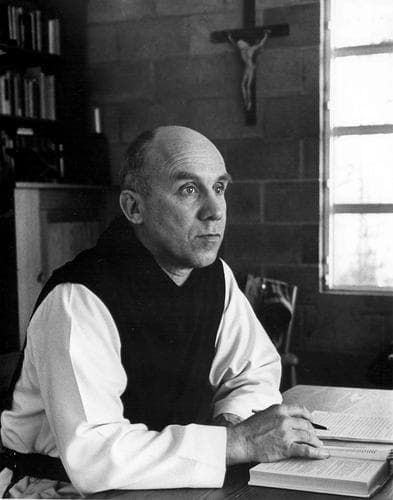
Thomas Merton was an American writer, theologian, and Trappist monk known for his contributions to spiritual literature. His notable works include "The Seven Storey Mountain," an autobiographical account of his conversion to Catholicism, "New Seeds of Contemplation," which explores contemplative spirituality, and "No Man Is an Island," a reflection on the interconnectedness of humanity. Merton's writings have had a lasting impact on modern spirituality and interfaith dialogue.
Similar books
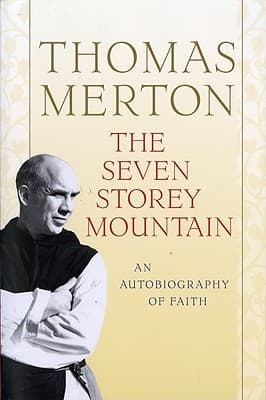
- The Seven Storey Mountain
Thomas Merton
4.1 (15k) average on GoodreadsBiographyAn autobiographical account of Merton's own spiritual journey, offering personal context to his later philosophical works.
- The Practice of the Presence of God
Brother Lawrence
4.3 (38k) average on GoodreadsSpiritualityExplores the theme of finding God in everyday life and the importance of constant communion, echoing Merton's focus on prayer and the sacramental nature of reality.
- Man's Search for Meaning
Viktor E. Frankl
4.4 (401k) average on GoodreadsBiographyExamines the human quest for meaning and the transformative power of suffering, themes also central to Merton's reflections on self and spirituality.
- Eat, Pray, Love
Elizabeth Gilbert
3.6 (1.5M) average on GoodreadsLifestyleA heartbroken writer leaves her conventional life for a year-long global search for pleasure in Italy, spiritual devotion in India, and unexpected love and balance in Bali.
- Educated
Tara Westover
4.5 (796k) average on GoodreadsBiographyRaised in the Idaho mountains by fundamentalist survivalists, a young woman forges her own path to education, battling fierce family loyalty and personal demons to discover a world beyond her isolated upbringing.
- The Poisonwood Bible
Barbara Kingsolver
4.1 (659k) average on GoodreadsLiterary FictionA zealous missionary's rigid faith clashes with the Belgian Congo's wilderness and people, unraveling his family through the eyes of his five unforgettable women.





Enjoyed the summary?
A summary gives you the shape of the book. The book itself has the detail, the examples and the voice.
Find No Man Is an Island on AmazonAs an Amazon Associate, BookBrief earns from qualifying purchases. How we're funded