
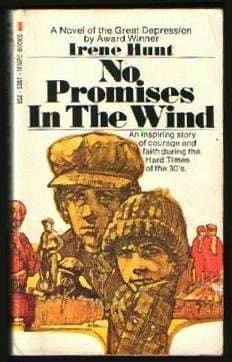
Synopsis
Covers the whole plot, including the ending.
- Difficulty
- Easy
- Pacing
- Moderate
- Mood
- Somber, Hopeful, Resilient, Reflective
- Read it if
- You enjoy poignant historical fiction about resilience and coming-of-age during difficult times, particularly stories set during the Great Depression.
- Skip it if
- You prefer fast-paced adventure or lighthearted stories, or find themes of poverty and hardship too somber.
No Promises in the Wind Plot Summary
Covers the whole plot, including the ending.
The Burden of Poverty and a Desperate Decision
In 1932, during the Great Depression, fifteen-year-old Josh Grondowski lives with his family in Chicago, dealing with extreme poverty. His father, Stefan, is jobless and often irritable, blaming Josh for not helping enough. Josh's younger brother, Joey, is often sick, and their mother, Mama, tries to keep peace. The family's small food supply and constant tension become too much for Josh. After a harsh argument with his father, Josh decides he can no longer be a burden and impulsively runs away, hoping to find work and send money home.
A Young Brother's Loyalty and the Open Road
As Josh gets ready to leave, he finds that his younger brother, Joey, has secretly followed him. Josh initially tries to send Joey back, but Joey's loyalty and fragile health convince Josh to let him stay. Together, the two brothers begin a journey as hobos. They quickly learn to ride trains, beg for food, and live a dangerous, unpredictable life on the road. Their first experiences involve hunger, fear, and the constant threat of being caught or meeting hostile people, but they support each other for survival.
Meeting Lonnie and the Kindness of Strangers
While riding a freight train, Josh and Joey meet Lonnie Bromer, an older, experienced hobo who helps them. Lonnie teaches them survival skills, like finding food, avoiding trouble, and understanding hobo rules. Lonnie's kindness and wisdom give the boys a sense of security and guidance. They also meet other kind strangers, including a woman who gives them food, showing that compassion exists even in desperate times. These early encounters on the road shape Josh's view of people and the importance of helping others.
Separation and the Search for Joey
Their journey takes a bad turn when Josh and Joey get separated during a chaotic event involving a train yard and a suspicious hobo named Charley. Josh jumps off a moving train, thinking Joey is behind him, only to realize he is alone. Overwhelmed with guilt and fear, Josh starts a frantic search for his younger brother. He travels through towns, asking questions and following leads, driven by his promise to protect Joey. This time is marked by intense loneliness and despair for Josh as he considers the possibility of having lost Joey forever.
Working on a Farm and a Glimmer of Hope
During his search for Joey, Josh finds temporary work on a farm run by a kind, elderly couple, the Streeters. They offer him food, shelter, and a small wage for his work. Josh values the stability and the chance to earn money, but he remains sad about Joey's absence. He keeps asking about his brother, always listening for any news. The Streeters, who lost their own son, treat Josh with warmth and understanding, giving him a brief break from the harsh realities of the road, though his longing for Joey never truly goes away.
The Artist and the Circus
Josh leaves the farm and later meets an artist named Emily. She sees his talent for drawing and encourages him, giving him a new view of his abilities. Later, Josh works for a traveling circus, where he finds he is good at performing. He uses his agility and strength for acrobatic acts, earning a living and gaining a sense of purpose. Despite these new experiences and temporary distractions, Josh's main goal is still finding Joey, and every new town or person he meets is a possible lead in his search.
Reunion with Lonnie and News of Joey
After many months of searching, Josh has a chance reunion with Lonnie Bromer. Lonnie, who had also been looking for the boys, shares news: Joey is safe and has been taken in by a kind, elderly couple. Lonnie explains that Joey, after being separated from Josh, had fallen ill and was cared for by strangers. This reunion brings Josh immense relief, replacing his long-standing worry with hope and joy. Lonnie and Josh decide to travel together to find Joey, strengthening their bond and Lonnie's role as a mentor.
Finding Joey and a New Home
Josh and Lonnie arrive at the home of the couple who took in Joey. Josh is very happy to find his brother alive and well, though Joey is at first hesitant, having found comfort and stability with his new caregivers. The couple, Mr. and Mrs. Williams, are good people who have given Joey a loving home, a contrast to the hardships he faced on the road. Josh realizes that Joey has found a better life than he could currently offer, and with a heavy heart, he makes the selfless decision to leave Joey in their care, knowing it is for his brother's good.
Lonnie's Sacrifice and Josh's Growing Independence
After reuniting with Joey, Josh and Lonnie continue their journey. Lonnie, who has been sick during their travels, makes a sacrifice for Josh. He uses his remaining strength and resources to help Josh get a stable job, ensuring Josh has a chance at a better life. Lonnie then disappears, leading Josh to believe he died. This event is a turning point for Josh, forcing him to fully embrace his independence and the lessons Lonnie taught him. Josh is now more resilient, mature, and determined to make a life for himself.
A New Beginning and Hope for the Future
Josh finds steady work in a small town, using the skills he learned and his new maturity. He works hard, saves money, and begins to build a stable life for himself. He often thinks of Joey and his family, and he sends letters and money home when he can, keeping his original promise. While the difficulties of his journey remain, Josh has changed from a frightened boy into a capable and resilient young man. He remembers Lonnie and the lessons of the road, looking towards the future with hope and self-reliance, having found his own strength amidst the Depression's challenges.
Principal Figures
Josh Grondowski
Protagonist
A fifteen-year-old boy who runs away to escape poverty and find his place.
Josh is a sensitive and artistic fifteen-year-old boy burdened by his family's poverty and his father's harshness. He is initially impulsive and somewhat naive but possesses a deep sense of responsibility and loyalty, especially towards his younger brother, Joey. Throughout his journey as a hobo, Josh develops resilience, resourcefulness, and a profound understanding of human nature. He learns to fend for himself, adapts to difficult circumstances, and matures significantly, eventually becoming a self-reliant young man driven by the desire to provide for himself and his family.
Relationships: Joey Grondowski (younger brother, whom he protects); Stefan Grondowski (father, with whom he has a strained relationship); Mama Grondowski (mother, whom he loves and feels responsible for); Lonnie Bromer (mentor and friend); Emily (artistic friend and encourager)
Joey Grondowski
Supporting
Josh's frail younger brother, who accompanies him on his journey.
Joey is Josh's younger brother, a delicate and often sickly child who is deeply devoted to Josh. Despite his physical weakness, Joey possesses a surprising tenacity and unwavering loyalty, insisting on accompanying Josh when he runs away. He relies heavily on Josh for protection and comfort, often serving as Josh's emotional anchor and motivation. Joey's innocence and vulnerability highlight the harshness of their circumstances and the profound responsibility Josh feels. His eventual adoption by a kind couple provides a bittersweet resolution to his part of the brothers' shared struggle.
Relationships: Josh Grondowski (older brother and protector); Stefan Grondowski (father); Mama Grondowski (mother); Mr. and Mrs. Williams (adoptive caregivers)
Lonnie Bromer
Supporting
An experienced hobo who becomes a mentor and friend to Josh.
Lonnie is an older, wise, and kind-hearted hobo who takes Josh and Joey under his wing early in their journey. He is a seasoned traveler of the rails, possessing a deep understanding of the hobo lifestyle, its dangers, and its unwritten rules. Lonnie teaches Josh invaluable survival skills, offers practical advice, and provides much-needed emotional support and companionship. He acts as a surrogate father figure, guiding Josh through the harsh realities of the Great Depression. Lonnie's generosity, selflessness, and eventual sacrifice profoundly impact Josh's development and worldview.
Relationships: Josh Grondowski (mentee and friend); Joey Grondowski (younger brother whom he cares for)
Stefan Grondowski
Supporting
Josh's father, an unemployed and embittered man.
Stefan Grondowski is Josh's father, a man embittered and broken by the inability to provide for his family during the Great Depression. His unemployment and the constant struggle for survival make him irritable, harsh, and prone to taking out his frustrations on Josh. He represents the crushing weight of economic hardship on men who once prided themselves on being providers. Despite his harsh exterior, there are hints of his underlying pain and despair, but his inability to cope constructively with his circumstances drives Josh away.
Relationships: Josh Grondowski (son, with whom he has a strained and conflict-ridden relationship); Mama Grondowski (wife); Joey Grondowski (son)
Mama Grondowski
Supporting
Josh's mother, who tries to maintain peace in the family.
Mama Grondowski is Josh's mother, a quiet and resilient woman who tries her best to hold her family together amidst their dire poverty. She is a calming presence, often acting as a buffer between Josh and his angry father. Her love for her children is evident, and she suffers silently through the hardships. While she cannot prevent Josh from leaving, her presence in his thoughts serves as a constant reminder of home and his underlying desire to help his family. She embodies the quiet strength and enduring love of mothers during the Depression.
Relationships: Josh Grondowski (son, whom she loves deeply); Stefan Grondowski (husband); Joey Grondowski (son)
Mr. and Mrs. Streeter
Supporting
A kind farming couple who offer Josh temporary work and shelter.
The Streeters are an elderly farming couple who provide Josh with temporary work, food, and shelter during his search for Joey. Having lost their own son, they treat Josh with warmth and compassion, offering him a brief respite from the harshness of the road. They represent the pockets of genuine kindness and generosity that Josh encounters, reminding him that good people still exist. Their farm offers Josh a temporary sense of stability and a chance to earn an honest wage, contributing to his growing self-reliance.
Relationships: Josh Grondowski (temporary employer and caregiver)
Emily
Supporting
An artist who encourages Josh's artistic talent.
Emily is an artist whom Josh encounters during his travels. She recognizes Josh's natural talent for drawing and encourages him to pursue his artistic inclinations. Emily offers Josh a different perspective on his abilities and potential, reminding him of a part of himself he had suppressed due to the necessities of survival. Her encouragement is a brief but significant moment that helps Josh to reconnect with his inner self and consider possibilities beyond mere subsistence.
Relationships: Josh Grondowski (friend and artistic mentor)
Mr. and Mrs. Williams
Supporting
The kind couple who take in and care for Joey.
The Williams are an elderly couple who take in Joey after he is separated from Josh and falls ill. They provide Joey with a loving and stable home, offering him the care, food, and security that he desperately needs. Their selfless act of kindness allows Joey to thrive and find a better life. They represent the profound generosity and compassion that can emerge during times of great hardship, ultimately providing a safe haven for one of the Grondowski brothers.
Relationships: Joey Grondowski (adoptive caregivers)
Themes & Insights
Survival and Resilience
The novel shows the realities of survival during the Great Depression, showing the characters' resilience in extreme poverty, hunger, and homelessness. Josh and Joey learn to ride trains, beg for food, and endure harsh weather, showing their ability to adapt and persist. Lonnie's help in navigating hobo life and Josh's determination to find work and protect his brother show the human spirit's ability to endure and overcome difficulty. Their journey shows the strength found when desperate.
“A man's got to take care of himself out here. No promises in the wind.”
Family and Brotherhood
The bond between Josh and Joey is central to the story, showing the strength of family love. Despite Josh's initial hesitation, he takes on the responsibility of protecting his younger, weaker brother. Their shared journey has many challenges, but their reliance on each other and affection keep them going. The pain of their separation and Josh's search for Joey show how deep his devotion is. Ultimately, Josh's selfless choice to leave Joey in a better home shows a mature understanding of what is best for his brother, even if it means personal sacrifice.
“I promised Mama I'd take care of you, Joey. And I will.”
Loss of Innocence and Coming of Age
Josh's journey involves losing his innocence as he is forced into the realities of the adult world. At fifteen, he faces poverty, hunger, danger, and the selfishness and kindness of strangers. He quickly loses his youthful naivety, becoming resourceful, independent, and understanding people better. The experiences on the road, especially the separation from Joey and Lonnie's sacrifice, force him to mature quickly, changing him from a dependent boy into a responsible, self-reliant young man.
“There was no room for a boy in the world he had entered. He had to be a man.”
The Kindness and Cruelty of Strangers
The novel explores human nature during times of crisis. Josh and Joey meet both great cruelty, such as hostile railroad guards and exploitative people, and great kindness, from Lonnie Bromer's generosity to the Streeter family and the Williams couple. These encounters shape Josh's view of the world, teaching him to be careful yet also to recognize and value genuine human empathy. The acts of kindness provide important moments of relief and hope, showing that even in dark times, compassion can win.
“You meet all kinds on the road, son. Some good, some bad. You learn to tell the difference.”
Hope and Despair
The Great Depression creates a constant tension between despair and hope. The Grondowski family's initial situation is hopeless, leading Josh to run away. On the road, Josh experiences deep despair, especially when separated from Joey. However, hope appears through acts of kindness, the promise of work, and the reunion with Joey. The novel ends with a sense of cautious hope, as Josh finds stability and begins a new life, showing that even in difficult circumstances, people strive for a better future.
“He knew that the road ahead would be long and hard, but for the first time in a long time, he felt a flicker of hope.”
Plot Devices & Literary Techniques
The Road/Journey Motif
The physical journey as a metaphor for personal growth and discovery.
The extended journey Josh and Joey undertake as hobos is a central plot device. The 'road' represents not just a physical path through Depression-era America but also a metaphorical journey of self-discovery, maturation, and survival. Each new town, train car, and encounter on the road contributes to Josh's education and development, forcing him to confront harsh realities and build resilience. The constant movement and uncertainty of the road mirror the instability of their lives and the broader societal upheaval.
Symbolism of the Train
Symbol of opportunity, danger, and the transient nature of life.
Freight trains serve as a powerful symbol throughout the novel. They represent both a means of escape and potential opportunity for the hobos, carrying them towards unknown futures. However, they are also symbols of danger, with the constant threat of injury, arrest, or separation. The transient nature of life on the rails, where people come and go, reflects the fleeting connections and unpredictable circumstances faced by those displaced during the Depression. The sound of a train often signals a new chapter or a moment of crisis for Josh and Joey.
The Hobo Code
An unwritten set of rules and a symbol of community.
The 'hobo code' is an unwritten set of rules and signals shared among hobos, which Lonnie teaches Josh. This device highlights the existence of a unique subculture and community that formed out of necessity during the Depression. It provides structure and a moral compass within an otherwise lawless existence, demonstrating that even in desperation, people create systems of mutual support and understanding. The code symbolizes the resilience and ingenuity of the marginalized and offers Josh a framework for survival beyond mere instinct.
Contrast between City and Rural Life
Highlighting different forms of hardship and kindness.
The novel uses the contrast between urban Chicago and the various rural landscapes Josh travels through. Chicago represents the initial, suffocating poverty and despair that drives Josh away. Rural areas, while still economically depressed, often offer different forms of hardship (farm labor, isolation) but also different forms of kindness (the Streeters, the Williams family). This contrast illustrates the varied impact of the Depression across different environments and shows Josh encountering different facets of American life and human nature during his journey.
No Promises in the Wind Quotes
“There are no promises in the wind, but there is always hope.”
“Sometimes you have to leave what you love to find what you need.”
“A man's worth isn't in his pockets, but in his heart and the work of his hands.”
“The wind could carry away your dreams if you didn't hold onto them tight.”
“Hunger is a teacher that doesn't let you forget its lessons.”
“Even in the darkest times, there are stars if you only look up.”
“Home isn't just a place; it's the people you share it with.”
“A kindness given when you have nothing to give is the greatest kindness of all.”
“The dust was a constant reminder of what they had lost and what they still had to fight for.”
“Sometimes silence speaks louder than any words.”
“You can't choose your hardships, but you can choose how you face them.”
“Every sunrise is a chance to start over, no matter what yesterday brought.”
“The world outside our fence is bigger and harder than you can imagine, but it also holds more chances.”
Quiz
10 questions on the plot and the characters. Each answer comes with a short explanation.
Question 1
What major historical event forms the backdrop for Josh's struggles in 'No Promises in the Wind'?
- World War I
- The Dust Bowl
- The Great Depression
- The Spanish Flu Pandemic
Show answer
C. The Great Depression The book is set in 1932, a period explicitly stated as when 'America's dreams were simple' due to the widespread economic hardship of the Great Depression, which the book refers to as the 'Clutch Plague'.
Question 2
At what age does Josh leave home to make his own way in the world?
- Thirteen
- Fifteen
- Seventeen
- Nineteen
Show answer
B. Fifteen The book's description clearly states, 'When he was just fifteen years old, Josh had to make his own way through a country of angry and frightened people.'
Question 3
Which of the following best describes the primary theme of 'No Promises in the Wind'?
- The importance of family loyalty above all else
- The challenges of pioneering in the American West
- The struggle for self-reliance and survival during hardship
- The pursuit of the American Dream through entrepreneurship
Show answer
C. The struggle for self-reliance and survival during hardship The synopsis highlights Josh's 'struggle to find his own strength' and 'his struggle to find a life for himself' during turbulent times, pointing directly to themes of self-reliance and survival.
Question 4
What does the phrase 'Clutch Plague' refer to in the context of the book?
- A severe epidemic affecting livestock during the 1930s
- A period of extreme economic hardship and poverty
- A widespread famine caused by drought and crop failure
- A political movement that sought to seize control of industries
Show answer
B. A period of extreme economic hardship and poverty The book explicitly states, 'From the Newbery Award-winning author... comes a tale of a brave young man's struggle to find his own strength during the Clutch Plague,' immediately followed by describing the economic struggles of 1932, equating the 'Clutch Plague' with the Great Depression.
Question 5
What were considered 'simple dreams' for Americans in 1932, according to the book?
- Owning a car, a radio, and a new house
- A job, food to eat, a place to sleep, and shoes without holes
- Access to higher education and travel opportunities
- Starting a successful business and becoming wealthy
Show answer
B. A job, food to eat, a place to sleep, and shoes without holes The description states, 'In 1932, American's dreams were simple: a job, food to eat, a place to sleep, and shoes without holes.' These basic necessities became luxuries during the Depression.
Question 6
How does the book characterize the general mood of people Josh encounters during his journey?
- Optimistic and cooperative
- Indifferent and aloof
- Angry and frightened
- Joyful and resilient
Show answer
C. Angry and frightened The synopsis mentions Josh making his way 'through a country of angry and frightened people,' reflecting the widespread despair and desperation of the Great Depression.
Question 7
The author, Irene Hunt, is also known for which other Newbery Award-winning books?
- Island of the Blue Dolphins and The Witch of Blackbird Pond
- Bridge to Terabithia and A Wrinkle in Time
- Across Five Aprils and Up a Road Slowly
- The Giver and Holes
Show answer
C. Across Five Aprils and Up a Road Slowly The book description explicitly states, 'From the Newbery Award-winning author of Across Five Aprils and Up a Road Slowly comes a tale...', confirming her other notable works.
Question 8
What specific challenge does Josh face that forces him to leave his home and family?
- A personal dispute with his parents
- The inability of his family to provide for him due to economic collapse
- A desire to seek adventure in a new city
- He was forced out by local authorities due to a crime
Show answer
B. The inability of his family to provide for him due to economic collapse While not explicitly stated as 'forced out,' the context of the 'Clutch Plague' and the 'simple needs' being dreams implies that Josh's departure is driven by the family's inability to sustain him, a common reality during the Great Depression.
Question 9
The title 'No Promises in the Wind' most likely symbolizes what about Josh's journey?
- His love for sailing and the sea
- The unpredictable and harsh nature of life during the Depression
- A metaphor for the fleeting nature of childhood dreams
- A warning against making hasty decisions without guarantees
Show answer
B. The unpredictable and harsh nature of life during the Depression The title suggests a lack of security or certainty, mirroring the turbulent and unpredictable times of the Great Depression where survival was a daily struggle and the future held no guarantees, much like promises made 'in the wind' that cannot be held.
Question 10
What genre does 'No Promises in the Wind' primarily belong to?
- Fantasy Adventure
- Mystery Thriller
- Historical Fiction
- Science Fiction
Show answer
C. Historical Fiction The book description explicitly lists its genres as 'Children's, Historical Fiction, Young Adult,' with a strong emphasis on the historical setting of 1932 and the Great Depression.
No Promises in the Wind FAQ
What is No Promises in the Wind about?
No Promises in the Wind is a historical fiction novel set during the Great Depression in 1932. It follows fifteen-year-old Josh Grondowski, who, along with his younger brother Joey, leaves his impoverished family in Chicago to seek work and relieve the financial burden on his parents. Their journey takes them across the country, encountering both cruelty and kindness, as they struggle to survive and mature.
Why should I read No Promises in the Wind?
You should read No Promises in the Wind for its poignant portrayal of resilience and the human spirit during one of America's darkest economic periods. It offers a powerful coming-of-age story through Josh's eyes, highlighting themes of family, independence, and the stark realities faced by those displaced and impoverished during the Great Depression, making it relevant for understanding historical struggles and personal growth.
What is the background/setting of No Promises in the Wind?
The book is set in the United States during the height of the Great Depression in 1932. It primarily follows Josh and Joey's journey from Chicago through various rural and urban landscapes, including encounters with hobo camps, farms, and small towns, vividly depicting the widespread poverty, unemployment, and social unrest of the era.
What are the most memorable quotes?
One memorable quote is when Josh reflects, 'There were no promises in the wind, only a cold, empty whistle.' This encapsulates the bleak uncertainty of their journey. Another is when Lonnie asks, 'You got a dream, boy?' highlighting the elusive hope people clung to amidst despair.
What writing style does the author use?
Irene Hunt employs a straightforward, evocative narrative style, rich in descriptive detail that paints a vivid picture of the Depression-era landscape and the characters' emotional states. Her prose is accessible for young adult readers yet carries a profound emotional weight, often utilizing internal monologue to convey Josh's evolving thoughts and feelings.
What minor details add significant meaning?
The recurring motif of Josh's harmonica, initially a source of comfort for Joey, later becomes a means for Josh to earn food and even express his own burgeoning artistic talent. Also, the small, often inadequate meals they receive or share underscore the pervasive hunger and the profound value placed on even the smallest acts of generosity during the Depression.
What are some subtle foreshadowing moments?
Early on, the argument between Josh and his father about Josh's desire to play the piano rather than work foreshadows Josh's eventual independence and his struggle to reconcile his artistic dreams with practical survival. Also, the initial easy separation of the brothers from their family hints at the deeper, more painful separations and reunions they will experience.
What unexpected character connections exist?
An unexpected connection is between Josh and Lonnie, the kind, elderly truck driver who offers them rides and philosophical advice. Lonnie acts as a surrogate father figure, providing guidance and protection that Josh desperately needs, contrasting sharply with his strained relationship with his biological father. Another is the brief but impactful bond Josh forms with Katy, who offers him comfort and a sense of belonging.
What are unspoken character motivations?
Josh's father's motivation for sending his sons away, while stated as economic necessity, also seems to stem from a deep-seated pride and perhaps a feeling of inadequacy that prevents him from openly accepting charity or admitting his inability to provide. Josh's own motivation for protecting Joey is not just brotherly love, but also a fierce desire to prove his own capability and worth.
What psychological complexities do characters exhibit?
Josh exhibits the complex psychology of a teenager forced into adulthood, grappling with resentment towards his father, overwhelming responsibility for Joey, and an internal conflict between his artistic aspirations and the harsh demands of survival. Joey, in contrast, displays a fragile innocence that slowly erodes, manifesting in withdrawal and emotional dependency on Josh.
What are the major emotional turning points?
A major emotional turning point occurs when Josh and Joey are separated, forcing Josh to confront his deepest fears and realize the profound depth of his love and responsibility for his brother. Another is when Josh finally uses his musical talent to earn money and respect, marking a shift from viewing his music as a frivolous dream to a vital skill.
How do relationship dynamics evolve?
The relationship between Josh and his father transforms from one of resentment and misunderstanding to a more mature, if still complex, respect born of shared hardship. The dynamic between Josh and Joey evolves from a protective older brother and dependent younger brother to a more equal partnership in survival, though Josh retains his guardianship.
Which parts remain ambiguous or open-ended?
The long-term stability of the Grondowski family's situation remains somewhat ambiguous, as the ending focuses more on Josh's personal growth and immediate future. While they are reunited, the underlying economic challenges of the Depression are still present, leaving the reader to ponder their continued struggles and resilience.
What are controversial scenes or decisions?
The most controversial decision is Josh's father's choice to send his two young sons, Josh and Joey, away from home to fend for themselves. While framed as a desperate measure during the Depression, it sparks debate about parental responsibility versus survival and the emotional toll it takes on the children.
No Promises in the Wind ending explained: how it ends & what it means
The book ends with Josh, having endured incredible hardship and matured significantly, reuniting with his family, including a recovered Joey, in a new, more stable situation. Josh has found a job and a newfound confidence in his ability to survive and make his own way, and his musical talent has become a source of strength. The ending signifies not just a physical reunion but Josh's internal reconciliation with his past and a hopeful, albeit cautious, outlook on his future, having learned that strength comes from within.
Similar books
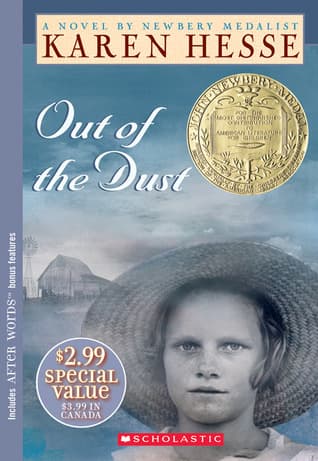
- Out of the Dust
Karen Hesse
3.8 (69k) average on GoodreadsChildren'sShares themes of hardship, resilience, and coming-of-age during the Great Depression and Dust Bowl.
- The Grapes of Wrath
John Steinbeck
4.0 (750k) average on GoodreadsHistorical FictionDepicts the struggles of a family during the Great Depression, focusing on migration and poverty.
- Harry Potter and the Sorcerer's Stone
J.K. Rowling
4.5 (7M) average on GoodreadsFantasyRescued from a miserable life under the stairs, an orphaned boy discovers he's a wizard destined for a magical school, where he uncovers a dangerous secret tied to the dark wizard who murdered his parents.
- The Hobbit, or There and Back Again
J.R.R. Tolkien
4.3 (2.9M) average on GoodreadsFantasyA comfort-loving hobbit named Bilbo Baggins is whisked away by a mischievous wizard and a band of dwarves on an unexpected journey to reclaim stolen treasure from a fearsome dragon, discovering courage and a magical ring along the way.
- Harry Potter and the Goblet of Fire
J.K. Rowling
4.6 (2.6M) average on GoodreadsFantasyA bewildered Harry Potter, underage and thrust into a deadly Triwizard Tournament, must brave dragons, mermaids, and a resurgent dark magic to survive a year that will forever alter the wizarding world.
- Harry Potter and the Order of the Phoenix
J.K. Rowling
4.5 (2.5M) average on GoodreadsFantasyIn a year of oppressive secrets and the threat of Voldemort, Harry Potter and Dumbledore's Army secretly train for war, shown through Jim Kay and Neil Packer's dark illustrations.





Enjoyed the summary?
A summary gives you the shape of the book. The book itself has the detail, the examples and the voice.
Find No Promises in the Wind on AmazonAs an Amazon Associate, BookBrief earns from qualifying purchases. How we're funded