
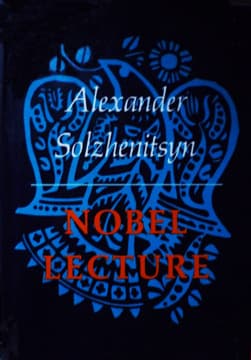
Core Idea
- Difficulty
- Medium
- Read it if
- You are interested in the moral responsibility of art and artists, the power of truth against totalitarianism, or Solzhenitsyn's philosophical underpinning for his literary work.
- Skip it if
- You prefer practical how-to guides or light, entertaining reads without deep philosophical engagement.
Key Takeaways from Nobel Lecture
Art as a Moral Compass
True art possesses an inherent moral force, transcending propaganda.
Solzhenitsyn states that true art is more than entertainment or political messaging; it is a moral tool. It can reveal truth, expose lies, and thus shape humanity's ethical outlook. Unlike changing political ideas or scientific theories, art's truth lasts across generations and cultures, acting as a constant guide. It illuminates rather than dictates, helping people see the world with more clarity and a stronger sense of justice. This moral weight of art makes it a powerful, though often underestimated, force for good in a world often swayed by practical interests or strong beliefs. Solzhenitsyn’s lecture stresses that artists, by creating, engage in a sacred act of truth-telling, offering humanity a way to see its own soul.
“The artist is a small man who can give to the world a new and different image of the world.”
In the book: Solzhenitsyn's entire lecture is a testament to this, implicitly contrasting the truthful power of art with the deceptive nature of Soviet propaganda he personally experienced.
Try this: Seek out and engage with art that challenges your perspectives and deepens your understanding of human nature and morality, rather than merely confirming existing biases.
Related ideas: moral-authority, truth-in-art, art-and-ethics
The Power of One Voice
Even a single, honest voice can pierce through the loudest lies.
This statement shows Solzhenitsyn's belief that truth, even from one person, has an unchanging strength that can overcome any structure of lies, no matter how large or established. In a time of state propaganda and silenced dissent, Solzhenitsyn, through his own life and work, showed this principle. He believed that artists, because of their commitment to truth and their unique ability to share it, become important witnesses against injustice. This single voice, free from power or fear, can deeply affect human conscience, waking others to reality and starting change. It is a strong claim for individual action against systemic oppression, suggesting that moral courage can indeed change history.
“One word of truth shall outweigh the whole world.”
In the book: Solzhenitsyn's own experience as a dissident writer in the Soviet Union, where his single voice (through works like 'The Gulag Archipelago') exposed vast state crimes.
Try this: Do not underestimate the impact of speaking your truth, even when it feels insignificant against overwhelming opposition. Your conviction can inspire others.
Related ideas: individual-agency, dissent, moral-courage, truth-vs-power
Violence and Lies
Violence inherently relies on lies for its sustenance and justification.
Solzhenitsyn describes a terrible link between violence and falsehood. He argues that no act of violence, especially on a large scale, can last without a made-up story to justify it. Oppressive governments, for example, must create complex lies about their enemies, their goals, or the need for their actions to get compliance or stop opposition. In turn, these lies can only continue through the threat or use of violence, as truth-tellers would otherwise expose the deception. This creates a cycle where violence leads to more lies, and lies require more violence to hide the truth. Understanding this link is key to breaking oppressive systems, as it means attacking the lies is as important as resisting the violence itself. Breaking this chain requires a full commitment to truth.
“Violence has nothing to cover itself with but lies, and lies can be maintained only by violence.”
In the book: The systematic use of propaganda and state terror in the Soviet Union, which Solzhenitsyn lived through and documented, exemplifies this relationship.
Try this: When confronted with injustice or conflict, critically examine the narratives presented. Identify the lies that are being used to justify harmful actions and challenge them directly.
Related ideas: propaganda, totalitarianism, state-violence, deception
The Universal Human Experience
Art transcends national borders by speaking to universal human experiences.
Solzhenitsyn supports art as a strong connection between different cultures and peoples. He states that while political systems and national interests often divide humanity, true art speaks to basic, shared parts of the human condition—love, loss, hope, despair, courage, and fear. A great novel or play, no matter where it comes from, can create empathy and understanding in audiences worldwide because it connects to these universal feelings. This makes art a unique tool for building global unity and mutual understanding, especially in a world often split by different beliefs and locations. By seeing themselves in the struggles and successes shown in art from other cultures, people can move past narrow nationalism and see a wider, shared humanity. This view raises art beyond just cultural expression to a key part of global peace and understanding.
“Art has the capacity to convey the entire human experience, regardless of national boundaries.”
In the book: The international resonance of classic literature and music, which speaks to people across different languages and historical contexts.
Try this: Actively seek out art, literature, and films from diverse cultures to broaden your empathy and understanding of the global human experience.
Related ideas: global-humanity, cross-cultural-understanding, empathy, universal-themes
The Artist's Burden and Gift
Artists bear the unique responsibility and privilege of conveying truth to humanity.
Solzhenitsyn sees the artist not just as an entertainer but as an important channel for truth and understanding. This role brings both a heavy responsibility and a unique talent. The responsibility is the huge duty to see and state reality, especially its more uncomfortable or hidden parts, without compromise. The talent is the special ability to simplify complex truths into forms that others can easily understand and feel. Through their art, they can offer humanity a new way of seeing, challenge old beliefs, and show the hidden parts of existence. This is not just about making beautiful things; it is about shaping awareness and guiding humanity toward a more truthful and humane path. The artist's courage in doing this is vital, especially in oppressive societies where speaking truth can be dangerous.
“The artist is a small man who can give to the world a new and different image of the world.”
In the book: Solzhenitsyn's own life as a writer who felt compelled to expose the atrocities of the Gulag, despite immense personal risk.
Try this: Support artists who bravely challenge norms and expose uncomfortable truths. If you are an artist, embrace your role as a truth-teller.
Related ideas: artistic-responsibility, truth-teller, creative-courage, societal-role-of-art
Rejecting the Lie
The simplest act of resistance is to refuse to participate in falsehood.
In a world full of propaganda and intentional misinformation, Solzhenitsyn offers a simple yet powerful way to resist: the personal choice to avoid participating in lies. This is not about actively fighting every falsehood (though that is also important), but about a personal, inner commitment to honesty. It means refusing to repeat untruths, to sign false statements, to pretend to believe things you know are false, or to stay silent when your silence implies agreement with a lie. While seemingly small, this individual act of not participating weakens the base of any system built on deception. It denies the lie the support it needs to live and spread, slowly reducing its power. This approach gives power to individuals, even against strong state power, to keep their moral independence and help bring down falsehood.
“The simplest and most accessible key to our liberation is: personal non-participation in lies!”
In the book: Solzhenitsyn's own practice of refusing to compromise his literary integrity or beliefs even under severe Soviet pressure, which he advocated for others.
Try this: Identify areas in your life where you might be tacitly supporting or repeating falsehoods (e.g., gossip, political rhetoric, corporate spin) and consciously choose to refrain.
Related ideas: moral-autonomy, passive-resistance, integrity, truthfulness
The World is Interconnected
The suffering of one part of the world affects all humanity.
Solzhenitsyn, writing during the Cold War, clearly stated the idea of a globally connected humanity, long before the internet made this common. He argued that suffering, injustice, or oppression in any one nation or area cannot be dismissed as just an 'internal matter' because its effects will spread globally. Moral outrage, economic instability, refugee crises, or the spread of dangerous ideas are not stopped by national borders. This view calls for a stronger sense of global responsibility, urging individuals and nations to see their shared fate and to act with a wider sense of unity. Ignoring terrible acts abroad is not only morally wrong but also strategically short-sighted, as the problems of others will eventually become our own. This interdependence requires a universal moral system.
“There are no longer any internal affairs on our crowded Earth.”
In the book: The global impact of the Cold War itself, and how events in one superpower directly affected lives across the world.
Try this: Educate yourself about global issues and support organizations working on international human rights and aid, recognizing that these efforts contribute to overall global stability and well-being.
Related ideas: global-solidarity, interdependence, human-rights, global-responsibility
The Artist's Plea for Peace
Art can foster peace by cultivating empathy and mutual understanding.
Solzhenitsyn sees the artist as an important force for peace, not through political action, but through building empathy and understanding. By showing the complexities of human experience, the details of suffering, and the shared hopes of people across different cultures, art can break down barriers of prejudice and ignorance. When a reader or viewer deeply connects with characters from a foreign land or a different background, their ability to empathize grows, making it harder to demonize or dehumanize 'the other.' This emotional and intellectual bridge-building is, for Solzhenitsyn, the real path to lasting peace—a peace built not on treaties or threats, but on a basic recognition of shared humanity. The artist, then, has a moral duty to use their skill to highlight common ground and create a more compassionate world.
“And the task of the writer is to bring the truth to the people, and to show them how to live.”
In the book: The way literature can humanize 'enemies' or bridge cultural divides, fostering understanding that political rhetoric often fails to achieve.
Try this: Engage with art and literature that presents diverse perspectives, particularly those that challenge preconceived notions about other cultures or groups, to cultivate deeper empathy.
Related ideas: empathy-building, cultural-exchange, peace-through-art, humanizing-the-other
Escaping the 'Spirit of Munich'
Appeasement of evil only emboldens it; moral courage is essential.
Solzhenitsyn critically refers to the 'Spirit of Munich,' a term that now means the failed policy of giving in to aggressive totalitarian governments. He argues that the desire for comfort and avoiding conflict, especially among wealthy nations, can lead to a dangerous moral weakness where evil is allowed or even rewarded for the sake of peace. This 'sickness of the will' ultimately encourages aggressors, leading to greater suffering later. Solzhenitsyn, having seen the results of such policies, calls for steady moral courage and a refusal to compromise on basic principles of justice and freedom. He suggests that true peace cannot be achieved by sacrificing integrity or ignoring oppression; instead, it requires a firm stand against injustice, even when it is inconvenient or risky. This is a call for moral watchfulness and active resistance against tyranny.
“The spirit of Munich is a sickness of the will of successful people.”
In the book: The historical context of the Munich Agreement (1938) where Western powers appeased Hitler, which Solzhenitsyn uses as a cautionary tale.
Try this: Be wary of arguments for appeasement when confronted with clear injustices or aggressions. Support policies and leaders who demonstrate moral courage and principled stands.
Related ideas: appeasement, moral-courage, tyranny-resistance, historical-lessons
Nobel Lecture Quotes
“One word of truth outweighs the whole world.”
“Violence does not live alone and is not capable of living alone: it is necessarily intertwined with falsehood. Between them lies the most intimate, most natural, and most fundamental connection.”
“The simple step of a courageous individual is not to take part in the lie. Let the lie come into the world, let it even triumph. But not through me.”
“Art is a revelation, it is a sudden, unexpected discovery of a world where there seemed to be none.”
“The artist is an assistant to God. He is not a competitor.”
“We are told that the world is too complicated, that it has split into too many different parts, and that it is beyond the power of literature to grasp all these parts and synthesize them.”
“And the writer's task is just this: to grasp the whole picture, to grasp it in its entirety, as if it were a single, living, breathing organism.”
“For violence has nothing to cover itself with but lies, and lies can be maintained only by violence.”
“The only substitute for experience is art.”
“But the truth is that the artist's mission is not to invent a new world, but to rediscover the old one.”
“The great books, the great works of art, are not just about their time; they are about all time.”
“The writer is not a judge, but a witness.”
“And the writer, if he is truly a writer, is the only one who can explain to us what is happening to us.”
“It is not the artist's business to set up the world in a new order, but to tell us about the order that already exists.”
Quiz
10 questions on the main ideas. Each answer comes with a short explanation.
Question 1
In his 'Nobel Lecture,' Solzhenitsyn argues that the single most important instrument for overcoming global divisions and fostering understanding is:
- Economic sanctions against oppressive regimes.
- The relentless pressure of world public opinion, especially through art and literature.
- The establishment of a unified global government.
- Advanced military alliances among democratic nations.
Show answer
B. The relentless pressure of world public opinion, especially through art and literature. Solzhenitsyn emphasizes the unique power of art and literature to convey truth across borders and move the conscience of humanity, forming a 'united front of universal truth' against lies and violence.
Question 2
Solzhenitsyn states that the artist's task is not to 'force a solution' but rather to:
- Serve the prevailing political ideology.
- Create works that are purely for aesthetic pleasure.
- Communicate the truth as he has seen it, thus enriching the common human experience.
- Document historical facts without any personal interpretation.
Show answer
C. Communicate the truth as he has seen it, thus enriching the common human experience. He argues that the artist's role is to 'force no solution, but to give us a picture of the world as it is,' allowing truth to resonate and influence understanding.
Question 3
Which of the following best describes Solzhenitsyn's view on the nature of 'violence' and 'lies' as presented in the lecture?
- Violence is a necessary evil, while lies are merely harmless deceptions.
- Lies are a direct consequence of violence, but cannot exist independently.
- Violence cannot exist without being buttressed by lies, and lies are the most insidious form of violence.
- Lies are only problematic if they lead to physical harm.
Show answer
C. Violence cannot exist without being buttressed by lies, and lies are the most insidious form of violence. Solzhenitsyn famously states, 'Violence finds its only refuge in falsehood, and falsehood its only support in violence.' He sees lies as a fundamental enabler and extension of violence.
Question 4
Solzhenitsyn critiques the modern world for its tendency to compartmentalize human experience, leading to a lack of shared moral ground. He calls for a recognition of:
- The inherent superiority of certain cultures over others.
- A single, universal scale for human beings and their actions.
- The necessity of cultural relativism in all ethical judgments.
- The ultimate triumph of scientific rationalism over all other forms of knowledge.
Show answer
B. A single, universal scale for human beings and their actions. He laments that 'various scales of values are applied to the same events,' and argues for the existence of 'a single, universal scale for human beings and all their actions.'
Question 5
When Solzhenitsyn discusses the 'three-cornered world,' he is referring to the division between:
- The past, the present, and the future.
- The developed, developing, and underdeveloped nations.
- The three main ideological blocs of the Cold War era: the First World, the Second World, and the Third World.
- The spiritual, the intellectual, and the material aspects of human life.
Show answer
C. The three main ideological blocs of the Cold War era: the First World, the Second World, and the Third World. He explicitly mentions the 'three-cornered world' in the context of the Cold War, referring to the West, the Soviet bloc, and the developing nations, each with their own perceived truths and scales of value.
Question 6
Solzhenitsyn suggests that the artist, unlike politicians or scientists, has a unique capability due to their ability to:
- Manipulate public opinion for political gain.
- Convey a concentrated, undeniable truth that transcends rational argument.
- Predict future historical events with accuracy.
- Unify scientific theories with religious dogma.
Show answer
B. Convey a concentrated, undeniable truth that transcends rational argument. He describes art as possessing 'the power to transmit human experience from generation to generation' and to 'condense into a short, convincing form a lifetime of experience,' making truth accessible and undeniable.
Question 7
What primary danger does Solzhenitsyn identify regarding the isolation of individuals or nations from the 'common stream of information'?
- It leads to economic stagnation and technological backwardness.
- It prevents the acquisition of foreign languages and cultural exchange.
- It allows lies to flourish unchallenged and prevents the development of a universal human conscience.
- It fosters excessive nationalism and military buildup.
Show answer
C. It allows lies to flourish unchallenged and prevents the development of a universal human conscience. He argues that when people are cut off from true information, they are easily manipulated by propaganda and lies, hindering the formation of a 'universal human mind' that can judge good and evil.
Question 8
Solzhenitsyn's lecture implicitly criticizes the intellectual climate of his time by suggesting that:
- Too much emphasis is placed on spiritual contemplation over practical action.
- Intellectuals are too quick to align themselves with political power, losing their independent voice.
- There is a lack of scientific rigor in most academic disciplines.
- The pursuit of knowledge has become too specialized, neglecting interdisciplinary approaches.
Show answer
B. Intellectuals are too quick to align themselves with political power, losing their independent voice. He laments the 'cowardice' of intellectuals and artists who fail to speak truth to power, often out of fear or self-interest, thereby allowing lies and violence to persist.
Question 9
What is the primary implication of Solzhenitsyn's statement that 'one word of truth shall outweigh the whole world'?
- Truth is a more effective weapon in war than military might.
- The moral force of truth is ultimately more powerful and enduring than any physical or political power.
- Global communication technologies will inevitably lead to universal truth.
- Individual actions are insignificant compared to collective movements.
Show answer
B. The moral force of truth is ultimately more powerful and enduring than any physical or political power. This powerful phrase encapsulates his belief in the ultimate triumph of truth over lies and violence, emphasizing the moral weight and transformative power of a single, honestly spoken truth.
Question 10
Solzhenitsyn suggests that humanity's greatest hope for survival and progress lies in its ability to:
- Develop advanced technologies to solve global problems.
- Achieve a unified understanding of good and evil through shared artistic and moral experience.
- Establish a single, dominant political ideology across the globe.
- Prioritize economic growth and material prosperity above all else.
Show answer
B. Achieve a unified understanding of good and evil through shared artistic and moral experience. His entire lecture builds towards the idea that a 'universal human mind' and a shared moral consciousness, fostered by art's ability to transmit truth, are essential to overcome the divisions and violence threatening humanity.
Nobel Lecture FAQ
What is the main theme of Aleksandr Solzhenitsyn's Nobel Lecture?
Solzhenitsyn's Nobel Lecture primarily explores the power of art and literature to transcend national borders and political systems, advocating for a universal understanding of truth and justice. He argues that the writer's duty is to combat lies and violence through the unique ability of art to convey human experience authentically.
When did Solzhenitsyn deliver his Nobel Lecture?
Aleksandr Solzhenitsyn was awarded the Nobel Prize in Literature in 1970 but was unable to deliver his lecture until 1972 due to political pressure and fear of not being allowed to return to the Soviet Union. The lecture was ultimately delivered and published while he was still in the USSR.
What is 'the one great truth' Solzhenitsyn refers to in his lecture?
Solzhenitsyn refers to 'the one great truth' as the universal human experience of suffering and justice, which art can uniquely convey across different cultures and political divides. He believes this shared understanding can unite humanity against falsehoods and violence.
Does literature really have the power to stop violence as Solzhenitsyn suggests?
Solzhenitsyn posits that literature, by exposing lies and revealing the truth of human suffering, can erode the foundations upon which violence and oppression are built. While not a direct physical deterrent, he believes it fosters a moral resistance and global empathy that can ultimately undermine tyrannical regimes.
How does Solzhenitsyn's view of art differ from socialist realism?
Solzhenitsyn's view of art in his Nobel Lecture is a stark contrast to socialist realism, which mandated art serve state ideology. He champions art as an independent force for truth, capable of revealing inconvenient realities and universal human values, rather than being a propaganda tool for any political system.
What role does the 'world literature' play in Solzhenitsyn's vision?
Solzhenitsyn envisions 'world literature' as a unifying force, a single heart that can feel and understand the joys and pains of humanity across all nations. He believes it can create a shared global conscience, enabling people to recognize injustice and suffering wherever it occurs.
How did the Soviet authorities react to the Nobel Lecture?
The Soviet authorities viewed Solzhenitsyn's Nobel Prize and lecture as a hostile act and further evidence of his anti-Soviet stance. They intensified their persecution, which ultimately led to his arrest and forced exile from the Soviet Union in 1974, two years after the lecture's publication.
What is the practical implication of Solzhenitsyn's call for writers?
The practical implication of Solzhenitsyn's call is for writers to embrace their moral responsibility to speak truth to power, to act as a 'second government' or 'second world government' against lies and violence. He urges them to use their craft to expose injustice and foster global understanding, even at great personal risk.
About the author

Aleksandr Isayevich Solzhenitsyn was a Russian writer. A prominent Soviet dissident, Solzhenitsyn was an outspoken critic of communism and helped to raise global awareness of political repression in the Soviet Union, in particular the Gulag system.
Similar books
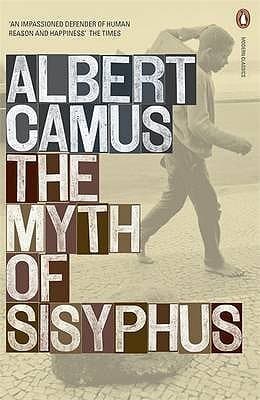
- The Myth of Sisyphus
Albert Camus
4.2 (25k) average on GoodreadsPhilosophyAddresses the absurd and the individual's search for meaning in a chaotic world.
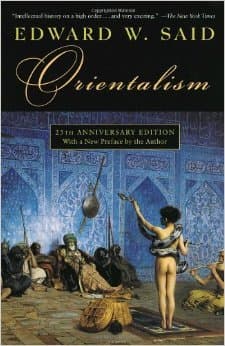
- Orientalism
Edward W. Said
4.1 (18k) average on GoodreadsPoliticsWhile seemingly disparate, Said's Orientalism offers a stark contrast in its approach to truth and representation. Said meticulously deconstructs how power structures influence knowledge production and portrayals of 'the other,' arguing that representations are often shaped by political and cultural hegemony. Solzhenitsyn, conversely, asserts a universal, transcendent truth accessible through art, untainted by political manipulation. Said would likely critique Solzhenitsyn's universalism as potentially overlooking the power dynamics inherent in whose 'truth' gets amplified, while Solzhenitsyn would likely see Said's deconstruction as potentially undermining the very foundation of objective moral judgment necessary to fight oppression.
- The Diary of a Young Girl
Anne Frank
4.2 (2.7M) average on GoodreadsBiographyDuring the Nazi occupation, a teenage girl's diary, written from a secret annex, shares observations on humanity, hope, and the wait for freedom.
- Night
Elie Wiesel
4.3 (970k) average on GoodreadsBiographyIn the darkness of Auschwitz and Buchenwald, a teenage Elie Wiesel faces the extermination of his family, the loss of his faith, and the lasting scars of humanity's deepest cruelty.
- Steve Jobs
Walter Isaacson
4.1 (957k) average on GoodreadsBusinessSteve Jobs was a visionary who fused creativity and technology to revolutionize six industries and shape our digital world.
- Unbroken: A World War II Story of Survival, Resilience and Redemption
Laura Hillenbrand
4.4 (767k) average on GoodreadsBiographyLouis Zamperini's incredible World War II odyssey transforms him from a rebellious youth and Olympic runner into a survivor of a plane crash, shark-infested waters, and brutal Japanese POW camps, only to find redemption through forgiveness.




Enjoyed the summary?
A summary gives you the shape of the book. The book itself has the detail, the examples and the voice.
Find Nobel Lecture on AmazonAs an Amazon Associate, BookBrief earns from qualifying purchases. How we're funded