
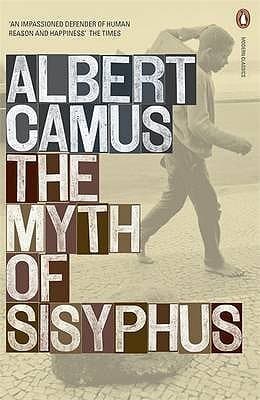
Core Idea
- Difficulty
- Hard
- Read it if
- You are grappling with questions of life's meaning, feel a sense of existential unease, or are interested in how to live passionately and freely in a world devoid of inherent purpose.
- Skip it if
- You prefer clear, prescriptive life advice, are uncomfortable with philosophical challenges to traditional meaning systems, or seek comfort in definitive answers rather than embracing ambiguity.
Key Takeaways from The Myth of Sisyphus
Embrace the Absurd
Life's inherent meaninglessness is not a cause for despair, but a call to revolt.
Camus states that the basic human condition is the 'absurd'—the conflict between our natural human desire for meaning and the universe's cold, silent indifference. This conflict is not a problem to solve, but a reality to accept. The universe offers no inherent meaning, no divine plan, and no ultimate answers to our big questions. To deny this absurdity through religious faith or philosophical escape is 'philosophical suicide.' Instead, we must face this meaninglessness directly, seeing that it frees us from outside rules and lets us define our own values and purpose.
“There is but one truly serious philosophical problem, and that is suicide. Judging whether life is or is not worth living amounts to answering the fundamental question of philosophy.”
In the book: Camus begins by framing suicide as the central philosophical question, arguing that if life is truly meaningless, then suicide becomes a rational response. He then systematically dismisses traditional religious and philosophical systems for attempting to provide a false sense of meaning.
Try this: Confront your own existential anxieties and the lack of inherent meaning without resorting to comforting illusions. Recognize that this absence of pre-ordained purpose empowers you to create your own values and meaning.
Related ideas: absurdity, existentialism, meaninglessness
Revolt Against Meaninglessness
Our defiance against the absurd gives life its value and dignity.
Revolt, for Camus, is not a political uprising, but a constant, conscious stand against the absurd. It is refusing to accept the universe's silence, living fully despite the lack of ultimate meaning, and rejecting any escape. This revolt gives human life its dignity and value. It is an ongoing process of questioning what is given, asserting one's freedom, and living with full awareness of life's fragility and limits. This defiance does not come from hope for a better future, but from an active engagement with existence now.
“The absurd man will not commit suicide; he wants to live, without renouncing any of his certainties, without a future. That is his revolt.”
In the book: Camus contrasts the absurd hero, who embraces life without illusions, with those who seek solace in religious faith or nihilistic despair. He argues that persistent revolt is the only logical conclusion once the absurd is recognized.
Try this: Actively challenge societal norms and personal expectations that are based on false hopes or external meanings. Live authentically, defining your own purpose through your actions and experiences, rather than passively accepting pre-set paths.
Related ideas: revolt, defiance, authenticity
Freedom in the Present
The absence of eternal meaning liberates us to live fully and intensely in the here and now.
Once we let go of the idea of an afterlife or a grand cosmic plan, we are free from living for a future reward or outside judgment. This freedom lets us fully experience the present, feeling life's sensations, joys, and sorrows with greater intensity. Our freedom is not just the lack of outside chains, but the conscious choice to create our own values and purposes within our limited lives. Every moment becomes precious, not as a step to something greater, but for its own sake.
“The absurd man thus has no other law than what springs from his reason. He knows that he is the master of his days.”
In the book: Camus discusses the 'absurd man' who, freed from hope for the future, lives with a singular focus on the present, maximizing his experiences. He uses figures like Don Juan and the actor as examples of those who embrace a multiplicity of experiences without attachment to a single, ultimate meaning.
Try this: Practice mindfulness and intentional living, focusing on the quality of your present experiences rather than constantly striving for future outcomes. Make choices that reflect your self-created values, rather than external pressures or promises of future rewards.
Related ideas: present-moment, freedom, intentionality
Passion and Experience
Quantity of experience, not quality of purpose, defines a rich absurd life.
Camus questions the traditional idea that a life is judged by its ultimate purpose or the 'goodness' of its goals. Instead, he suggests that the value of an absurd life comes from the sheer number and intensity of experiences it gathers. To live 'the most' means to embrace a wide range of sensations, emotions, and involvements, without favoring one over another based on some external moral code. This does not mean hedonism, but a deep, passionate engagement with every part of existence, recognizing that each authentically lived moment adds to the richness of one's finite life.
“What counts is not the best living but the most living.”
In the book: Camus illustrates this through archetypes like Don Juan, who embraces a multitude of loves without seeking a single, ultimate love; the actor, who lives many lives on stage; and the conqueror, who ceaselessly strives without an ultimate goal, embodying the spirit of quantity over quality of purpose.
Try this: Seek out diverse experiences, cultivate curiosity, and engage passionately with the world around you. Don't be afraid to try new things, even if they don't seem to have a 'grand purpose,' as the act of living them fully is valuable in itself.
Related ideas: experience, passion, intensity
Sisyphus as the Absurd Hero
Finding joy and meaning in the struggle itself, despite its futility.
The myth of Sisyphus is the ultimate symbol for the absurd condition: a life of endless, repetitive, and ultimately pointless labor. Yet, Camus argues that Sisyphus is the absurd hero not because he finds meaning in his punishment, but because he consciously accepts it. In the moment he walks down the mountain, knowing his rock waits, he becomes stronger than his fate. His clarity, his awareness of the futility, and his continued effort turn his punishment into a win. His happiness is in the conscious act of revolt, in the struggle itself, not in the result.
“The struggle itself toward the heights is enough to fill a man's heart. One must imagine Sisyphus happy.”
In the book: Camus dedicates the final essay to Sisyphus, meticulously analyzing his predicament and concluding that his conscious awareness and defiance make him the ultimate absurd hero, finding joy in the very act of pushing the rock.
Try this: Identify areas in your own life that feel repetitive or meaningless. Instead of despairing, consciously choose to engage in the effort, finding satisfaction and dignity in the struggle itself. Embrace tasks not for their end result, but for the act of doing them with full awareness.
Related ideas: Sisyphus, heroism, struggle, happiness
Lucidity Over Hope
Clear-sighted acceptance of reality is more valuable than comforting illusions.
Camus values clarity—a clear, steady look at life's harsh realities, including death and meaninglessness—over false hope. Hope, in the absurd sense, means believing in a future purpose, an ultimate reward, or an escape from the present. Such hope, he argues, is a form of self-deception that stops us from truly living. Embracing clarity means letting go of these illusions, accepting life's finite nature and the indifferent universe, and finding strength in this raw truth. It is a difficult path, but one that leads to true freedom and a more intense appreciation of life.
“What is called a reason for living is also an excellent reason for dying.”
In the book: Camus critiques various philosophical and religious systems for offering 'leaps of faith' that aim to resolve the absurd, thereby denying its fundamental nature. He argues that such leaps betray reason and prevent true freedom.
Try this: Practice radical honesty with yourself about your fears, limitations, and the lack of ultimate answers. Avoid seeking comfort in beliefs that require you to deny reality. Cultivate a mindset that values truth, even if it's uncomfortable, over comforting fictions.
Related ideas: lucidity, hope, truth, self-deception
The Absurd Artist
Art is a powerful act of creation and revolt against the silence of the world.
For Camus, the artist is a prime example of an absurd hero. Art is not about finding ultimate meaning or providing final answers, but about describing and reflecting the human condition in its absurdity. The act of creation itself is a form of revolt—an assertion of human will and imagination against the universe's indifference. The artist, like Sisyphus, creates endlessly, knowing their work will eventually be lost to time, yet finds deep satisfaction and meaning in the act of bringing something into being. Through art, we expand our experiences and give shape to the shapeless.
“Creating is living twice.”
In the book: Camus dedicates a section to 'Absurd Creation,' discussing the novel, drama, and painting as ways for the absurd man to live out his revolt. He emphasizes that the value of the art lies in its creation, not in its eternal truth.
Try this: Engage in creative pursuits, whether writing, painting, music, or any form of making. Recognize that the act of creation is a powerful way to assert your individuality and find meaning in the process, regardless of the 'success' or longevity of the final product.
Related ideas: art, creation, artist, imagination
Solidarity in Shared Absurdity
While solitary, our shared human condition fosters a unique form of connection.
Although facing the absurd is a deeply personal and solitary experience, Camus implies a subtle connection among those who recognize it. We are all, ultimately, pushing our own rocks. This shared situation, while not offering a solution, can lead to deeper empathy and understanding between people. It is a recognition that despite our individual struggles, we are united by the common fate of living in an indifferent universe. This does not lead to traditional collective action, but to a deep, unspoken acknowledgment of shared human vulnerability and resilience.
“There are truths that are not told, not because they are inexpressible, but because they are useless.”
In the book: While not explicitly stated as a central theme, Camus's consistent focus on the 'absurd man' as a universal figure implicitly suggests a shared human condition. His later works, like 'The Plague,' more directly explore themes of solidarity in the face of existential threats.
Try this: Cultivate empathy for others, recognizing that everyone is grappling with their own version of the absurd. Find connection in shared human experiences, even the difficult ones, without needing to find ultimate answers together.
Related ideas: solidarity, empathy, human-condition, connection
Rejecting Nihilism
The absurd is not an invitation to despair, but a starting point for action.
It is important to tell the difference between Camus's absurdism and nihilism. While both acknowledge the lack of inherent meaning, nihilism often leads to passive despair, inaction, and rejecting all values. Camus explicitly rejects this path. For him, recognizing the absurd is not an end but a beginning. It is the trigger for revolt, freedom, and passionate living. If nothing has ultimate meaning, then we are free to create our own values and to act with intensity, knowing that every moment we choose to live and create is a defiance against the void. This active engagement is the opposite of nihilistic resignation.
“Nihilism is not only despair and negation but above all the desire to despair and to negate.”
In the book: Camus repeatedly contrasts the absurd man, who chooses to live and revolt, with those who fall into the trap of nihilism or philosophical suicide, arguing that despair is a choice, not an inevitable outcome of recognizing the absurd.
Try this: When confronted with the meaninglessness of certain situations, resist the urge to fall into apathy or despair. Instead, use that realization as an impetus to define your own purpose and take action, however small, that aligns with your self-created values.
Related ideas: nihilism, action, values, despair
Death as the Ultimate Absurdity
The finality of death makes our finite lives all the more precious.
Death is the ultimate and undeniable sign of the absurd. It is the final, irreversible end to all our struggles, achievements, and hopes, making all future hopes meaningless. There is no 'justice' or ultimate reward after this life. However, for Camus, this stark fact does not lessen life; it makes it more intense. Knowing our limited existence, and the certainty of death, makes every moment of life more precious and urgent. It pushes us to live more fully, more passionately, and to embrace our revolt against the void with greater conviction, for this brief, conscious existence is all we have.
“At the end of his effort, man is faced with death. There is no justice for the absurd man.”
In the book: Camus highlights death as the ultimate 'leap' that cannot be overcome, a universal certainty that underscores the finality and meaninglessness of human endeavors in a cosmic sense. It is the ultimate boundary of our freedom.
Try this: Contemplate your own mortality not as a source of fear, but as a motivator to live more authentically and passionately in the present. Prioritize experiences and relationships that truly matter to you, recognizing the finite nature of your time.
Related ideas: death, mortality, finality, urgency
The Myth of Sisyphus Quotes
“The struggle itself towards the heights is enough to fill a man's heart. One must imagine Sisyphus happy.”
“There is but one truly serious philosophical problem, and that is suicide.”
“Living an experience, a particular fate, is accepting it fully.”
“It is not rebellion itself that is noble but the demands it makes upon itself.”
“The absurd man says yes and his effort will henceforth be unceasing.”
“What is called a reason for living is also an excellent reason for dying.”
“The need to be understood is a form of spiritual laziness.”
“Seeking what is true is not seeking what is desirable.”
“The absurd is born of this confrontation between the human need and the unreasonable silence of the world.”
“For if there is a sin against life, it consists perhaps not so much in despairing of life as in hoping for another life and in eluding the implacable grandeur of this life.”
“There is no fate that cannot be surmounted by scorn.”
“All Sisyphus's silent joy is there. His fate belongs to him. His rock is his thing.”
“That revolt is the certainty of a crushing fate, but not a resignation.”
“The world is not rational, that is all that can be said. But the absurd is precisely this confrontation between the irrational and the wild longing for clarity whose call echoes in the human heart.”
Quiz
10 questions on the main ideas. Each answer comes with a short explanation.
Question 1
According to Camus in 'The Myth of Sisyphus', what is the fundamental human experience that gives rise to the feeling of the absurd?
- The inherent evil of human nature.
- The conflict between humanity's desire for meaning and the universe's indifference.
- The fear of death and the unknown.
- The societal pressures to conform to established norms.
Show answer
B. The conflict between humanity's desire for meaning and the universe's indifference. Camus defines the absurd as the confrontation between the human need for clarity and meaning, and the silent unreasonableness of the world.
Question 2
What are the 'three consequences' Camus proposes for living in the face of the absurd?
- Faith, hope, and charity.
- Revolt, freedom, and passion.
- Acceptance, resignation, and despair.
- Logic, reason, and understanding.
Show answer
B. Revolt, freedom, and passion. Camus argues that recognizing the absurd leads to revolt against its limits, freedom from traditional values, and passion for life's experiences.
Question 3
Camus explicitly rejects which of the following as a solution to the absurd?
- Suicide (physical or philosophical).
- Artistic creation.
- Living in the present moment.
- Embracing human solidarity.
Show answer
A. Suicide (physical or philosophical). Camus dedicates significant portions of the book to rejecting both physical suicide and 'philosophical suicide' (leaps of faith into transcendent meaning) as ways to evade the absurd.
Question 4
Why does Camus consider Sisyphus the 'absurd hero'?
- Because he successfully overcomes his punishment.
- Because he is eternally punished for his defiance of the gods.
- Because he acknowledges the futility of his task yet continues it with scorn, finding his joy in the struggle itself.
- Because he finds a hidden, ultimate meaning in his repetitive labor.
Show answer
C. Because he acknowledges the futility of his task yet continues it with scorn, finding his joy in the struggle itself. Sisyphus embodies the absurd hero by recognizing the meaninglessness of his task but embracing it through his consciousness and defiance, finding satisfaction in the effort itself.
Question 5
Camus writes, 'There is but one truly serious philosophical problem, and that is ______.'
- the existence of God
- suicide
- the meaning of happiness
- the nature of reality
Show answer
B. suicide This famous opening line sets the stage for Camus's exploration of whether life is worth living in the face of its apparent meaninglessness.
Question 6
Which of the following figures does Camus analyze in 'The Myth of Sisyphus' as an example of an 'absurd creator'?
- The philosopher, whose system seeks ultimate truth.
- The conqueror, who seeks to dominate the world.
- The actor, who multiplies lives and experiences.
- The scientist, who seeks to understand natural laws.
Show answer
C. The actor, who multiplies lives and experiences. Camus discusses the actor as an absurd creator because they live intensely through many different lives and experiences, embracing quantity over quality or ultimate meaning.
Question 7
How does Camus's concept of 'revolt' differ from a simple act of rebellion or revolution?
- Revolt aims to destroy existing societal structures.
- Revolt is a perpetual confrontation with the absurd, not a means to eliminate it.
- Revolt seeks to establish a new, rational order in the universe.
- Revolt is primarily a political act against oppressive governments.
Show answer
B. Revolt is a perpetual confrontation with the absurd, not a means to eliminate it. For Camus, revolt is not about changing the absurd condition, but about maintaining consciousness of it and refusing to accept its limits, thus affirming human dignity.
Question 8
What is the practical implication of embracing the absurd, according to Camus, regarding morality?
- It leads to nihilism and the rejection of all moral codes.
- It necessitates creating one's own values and living by them intensely.
- It requires adherence to universal ethical principles to avoid chaos.
- It suggests that all actions are equally meaningless, so morality is irrelevant.
Show answer
B. It necessitates creating one's own values and living by them intensely. Upon recognizing the absurd, one is freed from pre-established moral frameworks and must create their own values, experiencing life's richness without external justification.
Question 9
Camus uses the image of Sisyphus's descent down the mountain as a metaphor for what?
- The moments of rest and peace in life.
- The periods of reflection and conscious awareness of his condition.
- The brief moments of hope for escape.
- The inevitable failure of all human endeavors.
Show answer
B. The periods of reflection and conscious awareness of his condition. Camus emphasizes that Sisyphus's consciousness during his descent, when he is aware of his fate and the futility, is precisely where his victory and scorn lie.
Question 10
Which of the following best encapsulates Camus's ultimate message about happiness in an absurd world?
- Happiness is impossible to achieve in a meaningless universe.
- Happiness is a fleeting illusion that distracts from the truth of the absurd.
- Happiness can be found in the conscious embrace of the absurd and the defiance of its limits.
- Happiness is only attainable through a 'leap of faith' into religious or philosophical systems.
Show answer
C. Happiness can be found in the conscious embrace of the absurd and the defiance of its limits. Camus concludes that 'The struggle itself toward the heights is enough to fill a man's heart. One must imagine Sisyphus happy,' implying that happiness comes from conscious revolt against the absurd, not from its resolution.
The Myth of Sisyphus FAQ
What is the central argument of 'The Myth of Sisyphus'?
The book argues that life is inherently without meaning or purpose in a universe devoid of God and objective values. Despite this 'absurd' condition, Camus proposes that we can find happiness and revolt against this meaninglessness by embracing life's experiences and creating our own values.
Does 'The Myth of Sisyphus' advocate for suicide as a response to life's absurdity?
Absolutely not. Camus explicitly rejects suicide as a solution to the absurd. He sees it as an escape rather than a confrontation, advocating instead for a 'revolt' against the absurd through conscious awareness, passion, and defiance.
What is the 'absurd' in Camus's philosophy?
The 'absurd' is the fundamental conflict between humanity's inherent desire for meaning, clarity, and purpose, and the universe's indifferent silence and lack of inherent meaning. It's the confrontation between our rational expectations and the world's irrationality.
How does Camus's concept of the absurd differ from nihilism?
While both acknowledge a lack of inherent meaning, nihilism often concludes with despair and inactivity. Camus's absurdism, in contrast, is a starting point for action and revolt. He encourages embracing life despite its meaninglessness, finding joy and creating value, rather than succumbing to nothingness.
What does Sisyphus represent in the book?
Sisyphus symbolizes humanity's absurd condition. Condemned to an eternal, futile task, he embodies the repetitive, seemingly meaningless nature of human existence. However, Camus reinterprets his fate, suggesting that Sisyphus finds joy and defiance in his consciousness and acceptance of his lot, making his struggle his own.
Does 'The Myth of Sisyphus' offer practical advice for living?
While not a self-help book, it provides a philosophical framework for living authentically. It encourages embracing life's experiences, rejecting false hopes, finding joy in the present moment, and creating personal meaning through conscious revolt against the absurd, rather than seeking external purpose.
How is Camus's existentialism different from Jean-Paul Sartre's?
While sharing common ground, Camus's absurdism focuses more on the confrontation between human desire for meaning and the universe's indifference, emphasizing revolt and defiance. Sartre's existentialism, particularly 'existence precedes essence,' places more emphasis on radical freedom and the burden of creating one's own essence through choices, leading to anguish and responsibility.
Is 'The Myth of Sisyphus' a religious book?
No, quite the opposite. The book explicitly argues for finding value and meaning in a world 'without religious meaning.' Camus confronts the absence of God and divine purpose, urging individuals to live fully within this secular reality rather than seeking solace in religious belief.
What is the significance of the 'lucid revolt' in the context of the absurd?
The 'lucid revolt' is the conscious, continuous defiance against the absurd. It's not about overcoming the absurd, but about maintaining awareness of it and refusing to surrender to despair or false hope. This revolt is expressed through passion, freedom, and the creation of personal meaning in the face of meaninglessness.
About the author
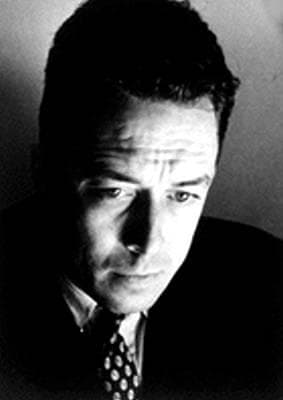
Albert Camus was a French-Algerian philosopher, author, dramatist, and journalist. He was the recipient of the 1957 Nobel Prize in Literature at the age of 44, the second-youngest recipient in history. His works include The Stranger, The Plague, The Myth of Sisyphus, The Fall, and The Rebel.
Similar books
- Being and Nothingness
Jean-Paul Sartre
4.0 (26k) average on GoodreadsPsychologyExplores existential freedom, responsibility, and the nature of consciousness in a godless world.
- Existentialism is a Humanism
Jean-Paul Sartre
4.0 (24k) average on GoodreadsPhilosophyA more accessible introduction to key existentialist tenets, emphasizing freedom and responsibility.
- Man's Search for Meaning
Viktor E. Frankl
4.4 (401k) average on GoodreadsBiographyExamines finding meaning even in extreme suffering, though from a different perspective than Camus.
- Brave New World
Aldous Huxley
4.0 (1.4M) average on GoodreadsFantasyIn a future where happiness comes from chemicals and individuality is gone, one man's desire for real experience threatens the calm, controlled society.
- Life of Pi
Yann Martel
3.9 (1.3M) average on GoodreadsFantasyStranded in the vast Pacific, a young Indian boy forms an unlikely bond with a Bengal tiger, questioning belief and survival.
- The Picture of Dorian Gray
Oscar Wilde
4.1 (966k) average on GoodreadsFantasyA beautiful young man's soul decays within a cursed portrait, mirroring the grotesque cost of his hedonistic pursuit of eternal youth and illicit pleasure.




Enjoyed the summary?
A summary gives you the shape of the book. The book itself has the detail, the examples and the voice.
Find The Myth of Sisyphus on AmazonAs an Amazon Associate, BookBrief earns from qualifying purchases. How we're funded