
Synopsis
Covers the whole plot, including the ending.
- Difficulty
- Easy
- Pacing
- Slow
- Mood
- Whimsical, Nostalgic, Gentle, Imaginative, Heartwarming
- Read it if
- You enjoy classic children's poetry with a gentle, imaginative tone and charming illustrations.
- Skip it if
- You prefer complex narratives or modern, fast-paced children's literature.
Now We Are Six Plot Summary
Covers the whole plot, including the ending.
King John's Christmas
The poem describes King John, a 'bad' king, who has no Christmas presents. He feels sad and alone while others celebrate. Despite his reputation, having no gifts affects him deeply. A change happens when he realizes that not getting presents means he doesn't have to give any. This thought cheers him up, and he has a surprisingly happy Christmas, free from the need to give back gifts. This shows a childlike selfishness, even in a king.
Down By The Pond
The poem focuses on watching a duck by a pond. The child narrator describes the duck's routine: waddling, diving for food, and coming back up. There is a sense of wonder and calm as the child watches this ordinary scene. The poem highlights the quiet beauty of nature and the steady movements of the animal, creating a peaceful mood and showing a child's interest in the natural world.
Furry Bear
This poem explores the imagined thoughts of a small, furry bear. The child narrator wonders if the bear is lonely or if it likes being alone. The bear is shown as quiet and thoughtful, perhaps thinking about its place. The poem looks at companionship and solitude through a child's empathy for an animal, suggesting that even a simple toy or creature might have deep feelings. This prompts the reader to think about the bear's view.
The Old Sailor
The poem introduces an old sailor who tells amazing stories of his travels. He describes strange creatures like a 'whale with a feather' and a 'fish with a hat.' His stories are clearly exaggerated and funny, meant to entertain. The sailor's tales are a mix of the impossible and the whimsical, showing the power of imagination and storytelling. The child narrator listens closely, enjoying the wild adventures, which highlights the charm of tall tales.
The End
This poem reflects on the change from 'five' to 'six' years old. The narrator, Christopher Robin, acknowledges that he is growing up and that some parts of his younger self are fading. There is a sweet sadness as he looks back on past experiences and looks forward to new ones. The poem captures how quickly childhood passes, suggesting that while some things change, the core spirit of wonder and imagination stays, marking a gentle shift in his view as he matures.
Sneezles
The poem tells of Winnie-the-Pooh's 'sneezles.' Piglet, a worried friend, tries to cure him with various unusual and funny methods, like wrapping him in blankets and giving him strange drinks. Their efforts are sincere but do not work, leading to more sneezes and funny situations. The poem shows the lasting friendship between Pooh and Piglet and their innocent attempts to help each other, even when their solutions are impractical. This emphasizes their childlike thinking.
The Friend
The narrator describes the constant presence and comfort of an imaginary friend. This friend is always there, offering company and understanding, even when others cannot see them. The poem captures the vividness of a child's imagination and the deep effect an imaginary friend can have on their emotional well-being. It explores loneliness and the power of inner worlds, showing how children create their own sources of support and happiness.
Busy
The poem shows a child so involved in imaginary play that they are 'too busy' for everyday chores or adult requests. Their mind is full of grand adventures and important tasks in their own world, making ordinary things seem unimportant. This poem celebrates the intensity and importance of a child's inner life and their ability to create whole worlds through play, highlighting the difference between adult priorities and the rich, all-consuming world of childhood imagination.
Us Two
This poem is about the deep bond between Christopher Robin and Winnie-the-Pooh. It highlights their shared adventures, their understanding of each other, and their steady companionship. They are shown as a team, facing the world together, whether exploring or just being. The poem captures the essence of childhood friendship and loyalty, showing a relationship built on mutual affection and shared experiences. It is a sign of their lasting connection.
The Knight Whose Armour Didn't Squeak
The poem introduces a knight whose armor does not squeak, unlike others. This small detail is a source of both pride and slight awkwardness. He is a brave knight, but his quiet armor makes him less noticeable in the noisy world of knights. The poem gently makes fun of knightly traditions while celebrating being unique. It is a humorous look at standing out by not fitting in, even in a small way, highlighting the charm of being different.
The Little Black Hen
The poem focuses on a little black hen, describing its quiet life and movements. The child narrator watches the hen pecking, scratching, and doing its daily activities. There is a gentle curiosity and empathy as the child tries to understand the hen's view and routines. The poem brings to mind the simple beauty of country life and a child's natural desire to watch and connect with animals, finding wonder in the ordinary.
Lines and Squares
The poem describes a child's game of walking on the pavement by only stepping on the lines or avoiding them, creating an imaginary challenge. The lines and squares become a personal obstacle course, turning a normal walk into an adventure. This poem shows how children invent games and find entertainment in their immediate surroundings, turning ordinary objects into props for imaginary play, showing their ability to find joy and structure in simple rules.
Now We Are Six
The poem sees Christopher Robin thinking about his sixth birthday. He remembers his past age and recognizes the subtle changes in his thoughts and understanding that come with getting older. There is a gentle longing for being 'five' but also an acceptance of the new experiences and knowledge that 'six' brings. The poem captures the innocent yet deep realization of time passing from a child's view, marking a small but important step in his growth.
The Good Little Girl
The poem follows a 'good little girl' who tries to follow all the rules and expectations set for her. She aims for perfection, but the effort to always be good proves to be huge and tiring. The poem gently questions the pressure on children to always conform and highlights the natural impulsiveness and curiosity that often clash with adult expectations. It is a humorous and understanding look at the challenges of childhood obedience and the occasional wish to be a little bit naughty.
Journey's End
This poem reflects on the end of a journey or a day, highlighting the comfort and safety of returning home. It brings a sense of peace and contentment after activity or exploration. The imagery suggests a winding down, a gentle close to adventures, and the warmth of familiar surroundings. The poem captures the feeling of coming home, a universal comfort, and the quiet satisfaction that follows a day's efforts, preparing for rest and thought.
Now We Are Six Characters
Christopher Robin
Protagonist
The imaginative and reflective child at the heart of the poems.
Christopher Robin is depicted as a sensitive, imaginative, and often thoughtful young boy, usually around the age of six in this collection. He is the central figure, with many poems exploring his inner thoughts, observations, and interactions with his toys and the world around him. He embodies the wonder and curiosity of childhood, often reflecting on the passage of time and his own growth. His perspective is the lens through which many of the book's themes are explored.
Relationships: Winnie-the-Pooh (Best friend, confidant, and adventure companion.); Piglet (Close friend, often involved in Pooh's escapades.); Eeyore (Friend, though often a source of gentle amusement for Christopher Robin.)
Winnie-the-Pooh
Supporting
Christopher Robin's beloved, food-loving teddy bear.
Winnie-the-Pooh is portrayed as a kind-hearted, somewhat naive, and perpetually hungry teddy bear. He is fiercely loyal to Christopher Robin and his friends. Pooh's simple logic and endearing innocence often lead to humorous situations, particularly when his love for honey is involved. He represents the comfort and steadfastness of a beloved toy, and his presence often grounds Christopher Robin's more whimsical thoughts, providing a tangible companion for his imaginative play.
Relationships: Christopher Robin (Best friend, owner, and source of wisdom.); Piglet (Close companion, often sharing adventures and worries.); Eeyore (Friend, though Pooh often tries to cheer him up.)
Piglet
Supporting
Pooh's timid but loyal and caring best friend.
Piglet is a small, timid pig who is deeply devoted to Winnie-the-Pooh. Despite his nervous disposition, he often shows bravery when his friends are in need. He is thoughtful and caring, frequently worrying but always ready to offer support. Piglet's anxieties provide a gentle contrast to Pooh's more straightforward nature, and his earnest attempts to help, even when clumsy, highlight the purity of his friendship. He represents loyalty and the quiet strength found in even the smallest of creatures.
Relationships: Winnie-the-Pooh (Best friend and constant companion.); Christopher Robin (Friend and admired figure.)
The Old Sailor
Supporting
A whimsical character who tells exaggerated tales of the sea.
The Old Sailor is a character who appears in one poem, known for his fantastical and highly improbable stories of maritime adventures. He serves as a vehicle for imaginative storytelling, captivating the child narrator with tales of peculiar creatures and impossible voyages. He represents the allure of tall tales and the power of narrative to transport listeners to extraordinary places, embodying the joy of pure, unadulterated fantasy.
Relationships: Christopher Robin (narrator) (Storyteller to an eager listener.)
King John
Mentioned
A historical figure reimagined as a 'bad' king who learns a lesson about Christmas.
King John is presented as a 'bad' king who is initially miserable about not receiving Christmas presents. However, his character arc in the poem takes a humorous turn as he finds unexpected joy in not having to give presents either. This portrayal is a lighthearted, childlike interpretation of a historical figure, used to explore themes of selfishness and unexpected happiness. He serves as a comedic example of how even a king can be driven by simple, relatable desires.
Furry Bear
Supporting
A quiet, thoughtful bear whose inner life is imagined by a child.
Furry Bear is a small, quiet bear whose thoughts and feelings are imagined by the child narrator. He is a symbol of solitude and introspection, prompting the child to ponder the inner lives of others, even inanimate objects or simple creatures. The bear's presence encourages empathy and imagination, allowing the child to project human-like emotions and experiences onto a beloved toy or animal.
Relationships: Christopher Robin (narrator) (Object of empathetic imagination.)
The Knight Whose Armour Didn't Squeak
Supporting
A unique knight who stands out by not conforming to expectations.
This knight is a humorous character defined by a single, peculiar trait: his armor doesn't squeak. In a world where squeaky armor is the norm, his quietness makes him distinctive. He represents individuality and the subtle ways one can be different from the crowd. The poem uses him to gently mock conventions and celebrate the charm of being unique, even if it means being slightly less noticeable in a noisy world.
The Little Black Hen
Supporting
A simple hen whose daily life inspires observation and wonder.
The Little Black Hen is a creature observed by the child narrator. It symbolizes the simple beauty and routine of nature, inspiring quiet contemplation and curiosity. The hen's mundane activities become a source of wonder and connection for the child, highlighting the ability to find interest and meaning in the ordinary aspects of the natural world.
Relationships: Christopher Robin (narrator) (Object of observation and empathy.)
Now We Are Six Themes
The Wonder of Childhood Imagination
Many poems in 'Now We Are Six' celebrate the limitless imagination of a child. Christopher Robin, through his interactions with toys and observations of the world, turns ordinary things into magic. For instance, in 'Furry Bear,' he gives complex emotions to a simple toy, wondering about its inner life. Similarly, in 'Lines and Squares,' a pavement becomes an elaborate game, showing how children create detailed worlds and adventures from their immediate surroundings. This theme highlights the richness of a child's inner life and their unique way of seeing and interacting with the world, where everyday objects become deeply meaningful and full of possibility.
“What is the matter with Mary Jane? / She's perfectly well, and she hasn't a pain, / And I've been to call on the doctor and he / Says, 'Mary Jane, get up, if you please!'”
The Comfort and Power of Friendship
Friendship, especially the bond between Christopher Robin and Winnie-the-Pooh, is a central and comforting theme. Poems like 'Us Two' clearly show their inseparable companionship, highlighting mutual understanding and shared experiences. Even in 'Sneezles,' Piglet's well-meaning (though ineffective) attempts to cure Pooh show the loyalty and care within their friendships. These relationships offer emotional security, a sense of belonging, and a basis for shared adventures, reflecting how important early friendships are in a child's life. The poems consistently portray friendship as a source of joy, support, and steady affection.
“Wherever I am, there's always Pooh, / There's always Pooh and Me. / 'What would I do?' I said to Pooh, / 'If it wasn't for you,' and Pooh said, 'True.'”
The Passage of Time and Growing Up
The collection often touches on the theme of growing up and the subtle but important changes that come with time. The poem, 'Now We Are Six,' directly addresses Christopher Robin's move from five to six years old, reflecting on what he knows and understands now that he didn't before. This theme is handled with a gentle, sweet sadness, recognizing that while some parts of childhood fade, new views and experiences appear. It captures the innocent realization of maturing, marking milestones not just in age but in understanding, and highlights the ongoing journey of self-discovery in childhood.
“But now I am Six, I'm as clever as clever, / So I think I'll be six now for ever and ever.”
Observation and Appreciation of the Ordinary
Many poems in the collection encourage sharp observation and appreciation for the simple, everyday parts of the world. From watching a duck by the pond in 'Down By The Pond' to observing 'The Little Black Hen,' the poems find wonder and beauty in ordinary animals and natural scenes. This theme teaches children (and reminds adults) to slow down, pay attention to their surroundings, and find joy and interest in the usual. It turns simple observations into moments of quiet thought and connection, encouraging curiosity about the natural world and the small details of daily life, emphasizing that beauty and meaning can be found everywhere.
“And he goes to the Pond, though I don't know why, / And he dives to the bottom, though I don't know where, / And he comes to the top with a fish in his eye.”
Plot Devices & Literary Techniques
Anthropomorphism
Giving human characteristics or emotions to animals or inanimate objects.
Anthropomorphism is a prevalent device, most notably with Winnie-the-Pooh, Piglet, and other animal characters who think, speak, and behave with human-like emotions and motivations. Even less central figures, like 'Furry Bear,' are imagined with complex inner lives by Christopher Robin. This device allows for the exploration of human emotions and social dynamics through the accessible and charming lens of animal characters, making complex feelings relatable to young readers and adding a layer of whimsical charm to the narratives.
Child's Perspective Narrator
Telling the story or poem through the eyes and understanding of a child.
The majority of the poems are narrated from a child's perspective, often Christopher Robin's. This allows the reader to experience the world with a sense of wonder, innocence, and imaginative freedom. The child's logic, observations, and priorities shape the narrative, offering a unique and authentic voice that resonates with young readers. This device grounds the fantastical elements in a relatable reality, making the poems feel personal and intimate, and highlighting the distinct way children perceive their surroundings and interactions.
Humor and Whimsy
The use of lighthearted, playful, and often absurd elements to entertain.
Humor and whimsy are central to the book's appeal. This device manifests in various ways, from the exaggerated tales of 'The Old Sailor' to the comical attempts to cure Pooh's 'Sneezles.' The gentle absurdity, wordplay, and unexpected turns of phrase create a joyful and lighthearted tone. This humor is often innocent and derived from childlike logic or exaggerated scenarios, providing entertainment while also subtly teaching about human nature and social interactions in a non-threatening way.
Repetition and Rhyme
The use of recurring words, phrases, and rhyming patterns for musicality and memorability.
Milne frequently employs repetition and consistent rhyme schemes, giving the poems a musical quality that is highly appealing to children. This device aids in memorization, creates a rhythmic flow, and enhances the playful nature of the verses. Simple, predictable rhymes and repeated phrases, such as in 'King John's Christmas' or 'Us Two,' make the poems engaging and accessible, reinforcing key ideas and emotions while providing a comforting and familiar structure for young listeners and readers.
Now We Are Six Quotes
“But now I am Six, I'm as clever as clever. So I think I'll be six now for ever and ever.”
“James James Morrison Morrison Weatherby George Dupree Took great care of his Mother, though he was only three.”
“The more it snows (tiddely pom), the more it goes (tiddely pom) on snowing.”
“Christopher Robin goes Hoppity, Hoppity, Hoppity. What does he do? I don't know.”
“I've got a little Shadow that goes in and out with me, And what can be the use of him is more than I can see.”
“If I were a bear, And a big bear too, I shouldn't much care If it rained or snew.”
“They're changing guards at Buckingham Palace – Christopher Robin went down with Alice.”
“Wherever I go, there's always an I, but there's never an I where I am not.”
“Halfway up the stairs Is a stair where I sit. There isn't any other stair Quite like it.”
“I could be a King, or a Lord, or a Knight, I could be anything, I could be right.”
“So I've got a new name, And I think it is grand, And I'm going to tell it to all of the land.”
“Little Bo-Peep Has lost her sheep And doesn't know where to find them. Leave them alone, And they'll come home, Wagging their tails behind them.”
“If I were a one, And I lived in a tree, I'd climb up to the sun, And I'd wave to the sea.”
“They're waiting outside for the end of the book, To know what the end of the book is.”
Quiz
10 questions on the plot and the characters. Each answer comes with a short explanation.
Question 1
In the poem 'King John's Christmas', what did King John specifically ask for in his letter to Father Christmas?
- A golden crown
- A big red india-rubber ball
- A chocolate cake
- A new horse
Show answer
B. A big red india-rubber ball King John, despite being a king, expressed a simple desire for a big red india-rubber ball in his letter to Father Christmas.
Question 2
Which animal character is featured in the poem 'Furry Bear'?
- A tiger
- A lion
- A bear
- A rabbit
Show answer
C. A bear The poem 'Furry Bear' directly refers to and describes a bear.
Question 3
In 'The Old Sailor', what does the Old Sailor specifically say he has 'never seen'?
- A mermaid
- A whale
- A ship with a sail
- The sea
Show answer
D. The sea The whimsical twist in 'The Old Sailor' is that despite being a sailor, he claims to have never seen the sea.
Question 4
What is the primary activity of the speaker's 'three little foxes' in the poem 'Us Two'?
- Playing hide-and-seek
- Eating honey
- Sitting on the stairs
- Chasing butterflies
Show answer
C. Sitting on the stairs In 'Us Two', the speaker mentions his 'three little foxes' who are 'sitting on the stairs'.
Question 5
Which of the following Winnie-the-Pooh characters is NOT explicitly mentioned or featured in a poem within 'Now We Are Six'?
- Pooh
- Piglet
- Tigger
- Eeyore
Show answer
C. Tigger While Pooh, Piglet, and Eeyore (as 'Eeyore's Tail') are present, Tigger does not make an appearance in 'Now We Are Six' as he was introduced later in 'The House at Pooh Corner'.
Question 6
In 'The End', the speaker reflects on growing up. What specific age is the speaker 'six'?
- At the beginning of the book
- At the end of the book
- In the middle of the book
- He is always six throughout the book
Show answer
B. At the end of the book The book's title 'Now We Are Six' refers to Christopher Robin turning six, and the poem 'The End' specifically states 'But now I am Six, I'm clever as clever'.
Question 7
What is the primary theme explored in the poem 'Sneezles'?
- The joy of playing outdoors
- The discomfort and minor inconveniences of being ill
- The excitement of receiving gifts
- The importance of good manners
Show answer
B. The discomfort and minor inconveniences of being ill 'Sneezles' humorously describes the experience of having a cold, focusing on the sneezes and associated discomfort.
Question 8
In 'The Little Black Hen', what does the hen specifically lay?
- Golden eggs
- Chocolate eggs
- A tiny white egg
- No eggs at all
Show answer
C. A tiny white egg The poem 'The Little Black Hen' describes the hen laying 'a tiny white egg'.
Question 9
The poem 'Wind on the Hill' uses personification to describe the wind. What specific action does the wind 'do' as it passes by?
- It sings a loud song
- It cries 'Who-oo-oo!'
- It whispers secrets
- It dances with the trees
Show answer
B. It cries 'Who-oo-oo!' In 'Wind on the Hill', the wind is described as crying 'Who-oo-oo!' as it passes.
Question 10
Which poem in 'Now We Are Six' features a character named James James Morrison Morrison Weatherby George Dupree?
- 'Binker'
- 'Forgiven'
- 'Bad Sir Brian Botany'
- 'Disobedience'
Show answer
D. 'Disobedience' The famously long-named character, James James Morrison Morrison Weatherby George Dupree, is from the poem 'Disobedience'.
Now We Are Six FAQ
What is the primary content of 'Now We Are Six'?
'Now We Are Six' is a collection of children's poems by A.A. Milne, often featuring Christopher Robin and exploring themes of childhood, imagination, and the everyday world from a child's perspective. It includes classic poems like 'King John's Christmas' and 'Binker', accompanied by Ernest H. Shepard's iconic illustrations.
How does 'Now We Are Six' relate to the Winnie-the-Pooh stories?
While 'Now We Are Six' is primarily a poetry collection, many of its poems feature Christopher Robin, the character who also interacts with Winnie-the-Pooh in Milne's prose stories. The imaginative world presented in the poems often mirrors the whimsical, gentle spirit of the Hundred Acre Wood, even if Pooh himself isn't always explicitly present.
Who is the central 'character' or voice in most of the poems?
The central voice or character is often Christopher Robin, or a child very much like him, reflecting on his observations, games, and feelings as he grows older. The title itself, 'Now We Are Six', signifies a specific age milestone for this recurring persona, marking a slight shift in perspective from the earlier 'When We Were Very Young'.
What kind of illustrations can readers expect in this deluxe edition?
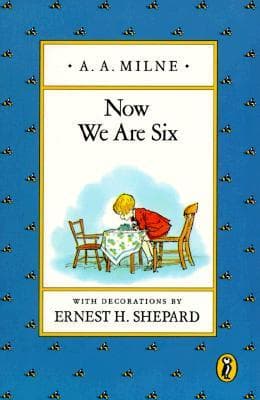
Readers can expect the complete, original illustrations by Ernest H. Shepard, presented in full color on cream-colored stock. Shepard's witty and loving artwork perfectly complements Milne's text, bringing to life the characters and scenes with a timeless charm that has become synonymous with Milne's works.
What is the significance of the title 'Now We Are Six'?
The title signifies Christopher Robin's age, marking a developmental stage where he is still deeply imaginative but also beginning to grapple with more complex thoughts and observations. It suggests a slight maturing from the younger perspective of 'When We Were Very Young', though still firmly rooted in childhood wonder.
Are there any subtle connections between the poems in 'Now We Are Six' and specific Winnie-the-Pooh plotlines?
While not direct plot connections, the imaginative play and internal monologues in poems like 'The Friend' or 'Furry Bear' echo the types of adventures and character dynamics found in the Pooh stories. The sense of a child creating their own world, often with animal companions, is a strong thematic link.
Does the poem 'King John's Christmas' contain any hidden historical references or satirical elements?
'King John's Christmas' is a whimsical take on historical figures, portraying King John as a relatable child-like figure who simply wants a big red india-rubber ball. While not deeply satirical, it playfully humanizes a monarch often remembered for political strife, focusing instead on a universal childhood desire.
How does Shepard's artwork subtly enhance specific character traits of Christopher Robin or other figures?
Shepard's illustrations are masterful at conveying emotion and personality; for instance, the wide-eyed wonder in Christopher Robin's face in 'The Little Black Hen' or the determined posture in 'The Good Little Girl'. His line work often adds a layer of gentle humor or poignant reflection that deepens the poem's impact.
Is there a recurring motif of solitude or internal reflection in the poems?
Yes, many poems, such as 'Binker' or 'Us Two', feature Christopher Robin engaged in solitary play or deep thought, sometimes with an imagined companion. This recurring motif highlights the rich inner world of a child and the importance of imagination in shaping their reality, even when physically alone.
How do the poems explore the concept of growing up from a child's perspective?
The poems gently touch upon growing up through observations about learning new things, understanding rules, and the passage of time, as seen in the title itself. However, they consistently affirm the enduring power of imagination and the unique logic of childhood, suggesting that growing up doesn't mean losing wonder.
What psychological insights can be drawn from Christopher Robin's interactions with his toys or imagined friends?
Christopher Robin's interactions reveal the vital role of imaginative play in child development, showing how toys and imagined friends serve as companions, confidantes, and extensions of his own inner world. They allow him to explore emotions, test boundaries, and process experiences in a safe, creative space.
How does Milne use simple language to convey complex emotions or philosophical ideas in poems like 'Furry Bear'?
Milne masterfully employs simple, accessible language and rhythm to articulate profound feelings like loneliness, loyalty, and the comfort of companionship in 'Furry Bear'. The directness of the child's voice allows these emotions to resonate purely, without needing complex vocabulary to convey their depth.
Is there an underlying message about the fleeting nature of childhood in 'Now We Are Six'?
While the poems celebrate the present joy of childhood, there's a subtle, wistful undertone in some pieces, particularly when considering the progression from 'When We Were Very Young'. It acknowledges that this magical stage is transient, making the capturing of its essence even more precious.
How does this collection compare thematically to 'When We Were Very Young'?
'Now We Are Six' generally presents a slightly older, perhaps more reflective Christopher Robin, with poems that might touch on slightly more complex observations or internal monologues than the earlier collection. While both celebrate childhood, 'Now We Are Six' hints at a child who is beginning to notice the world beyond his immediate play.
Could the poem 'Binker' be interpreted as an exploration of a child's inner critic or alter ego?
'Binker' can certainly be interpreted as such, representing an imaginative alter ego or even a personification of a child's independent thoughts and will. Binker is a unique, self-contained entity that exists solely within the child's mind, allowing for playful exploration of identity and self-dialogue.
What makes 'Now We Are Six' a timeless classic for both children and adults?
Its timeless appeal stems from Milne's uncanny ability to capture the authentic voice and perspective of a child, coupled with Shepard's enduring illustrations. For children, it validates their imaginative world; for adults, it offers a nostalgic journey back to the innocence and wonder of their own childhoods, resonating with universal human experiences.
Are there any poems that suggest a slight melancholic tone about the future or change?
While generally joyful, some poems carry a gentle undertone of the transient nature of things or the inevitable passage of time. The very act of looking back from 'Now We Are Six' to 'When We Were Very Young' implies an awareness of change, even if it's not overtly melancholic.
About the author
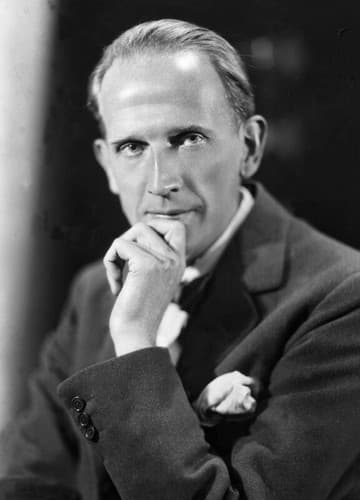
A.A. Milne was an English playwright, novelist, and poet, best known for his children's books featuring the character Winnie-the-Pooh. His collections of poems, When We Were Very Young and Now We Are Six, along with the stories Winnie-the-Pooh and The House at Pooh Corner, have become beloved classics of children's literature worldwide. Milne's work is celebrated for its gentle humor, whimsical characters, and exploration of childhood innocence.
Similar books
- When We Were Very Young
A.A. Milne
4.3 (23k) average on GoodreadsFantasyAnother collection of classic children's poetry by Milne, featuring Christopher Robin and Pooh.
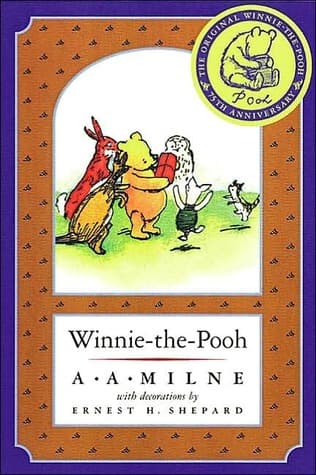
- Winnie-the-Pooh
A.A. Milne
4.3 (270k) average on GoodreadsFantasyShares characters and the gentle, imaginative world of Christopher Robin and his friends.
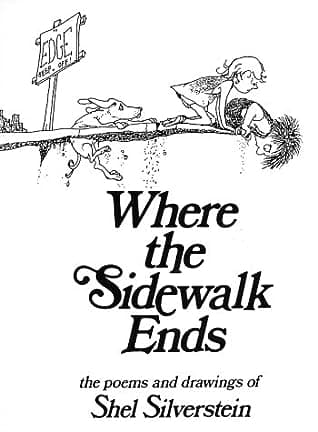
- Where the Sidewalk Ends
Shel Silverstein
4.3 (1.2M) average on GoodreadsFantasySilverstein's 1974 collection offers a stark contrast. While both use poetry to explore childhood, Silverstein's work is often characterized by its subversive humor, dark wit, and willingness to challenge conventions. Milne's world is comforting and safe, whereas Silverstein frequently delves into the absurd, the slightly macabre, or the genuinely thought-provoking with a sharper, less sentimental edge. For instance, while Milne's 'The Good Little Girl' gently plays with expectations, Silverstein's poems often outright subvert them, appealing to a different, perhaps more irreverent, aspect of childhood sensibility. Milne's illustrations are gentle and complementary; Silverstein's are integral to the humor and often more surreal.
- Harry Potter and the Sorcerer's Stone
J.K. Rowling
4.5 (7M) average on GoodreadsFantasyRescued from a miserable life under the stairs, an orphaned boy discovers he's a wizard destined for a magical school, where he uncovers a dangerous secret tied to the dark wizard who murdered his parents.
- The Hunger Games
Suzanne Collins
4.3 (6.4M) average on GoodreadsFantasyIn a future where children fight to the death on live television, Katniss Everdeen volunteers for the arena, turning a death sentence into a fight for survival and a spark of rebellion.
- 1984
George Orwell
4.2 (3.1M) average on GoodreadsPoliticsIn a future where surveillance and thought control are absolute, a man's search for truth clashes with the Party, showing that hope can be a form of rebellion.




Enjoyed the summary?
A summary gives you the shape of the book. The book itself has the detail, the examples and the voice.
Find Now We Are Six on AmazonAs an Amazon Associate, BookBrief earns from qualifying purchases. How we're funded