

Synopsis
Covers the whole plot, including the ending.
- Difficulty
- Easy
- Pacing
- Slow
- Mood
- Whimsical, Nostalgic, Gentle, Playful, Innocent
- Read it if
- You enjoy classic children's poetry, gentle humor, and nostalgic reflections on childhood innocence.
- Skip it if
- You prefer complex narratives, adult themes, or modern, fast-paced children's literature.
When We Were Very Young Plot Summary
Covers the whole plot, including the ending.
Corner-of-the-Street
The poem begins with Christopher Robin at a street corner, watching the world. He then meets a Lion and a Unicorn, two mythical creatures shown in a friendly way. The Lion and Unicorn talk, and Christopher Robin watches. This scene creates a playful and imaginative mood, where the ordinary meets the fantastical. The brief meeting sets up the whimsical adventures and observations that follow in the book. It immediately shows that the book will explore a child's imagination, where anything is possible and the line between real and fantasy is delightfully unclear.
Daffodowndilly
This short poem features a daffodil, described as a graceful and proud flower. It talks about its own beauty and how it likes the attention it gets. The daffodil's voice is light and charming, showing the simple joys and beauty of nature. The poem captures the feeling of spring and a flower's innocent pride, celebrating its color and shape. It is a moment of pure, natural beauty, seen through a child's eyes. The poem uses simple words and images to create a sense of wonder and thanks for nature, showing the small, beautiful details often missed by adults but loved by children.
Buckingham Palace
Christopher Robin is at Buckingham Palace, watching the changing of the guard. He is fascinated by the soldiers and their movements, but his thoughts go to the King and Queen inside. He wonders if they are happy and if they ever come out to play. The poem captures a child's innocent view of royalty, imagining them with the same desires for play and friendship as himself. This scene contrasts the palace's formal grandeur with a child's simple thoughts, showing a gentle curiosity about the lives of powerful people. It highlights the universal human desire for connection and happiness, no matter one's status.
Teddy Bear
This poem features a teddy bear, a loved friend, who speaks its thoughts. The teddy bear thinks about its life, its purpose, and its bond with Christopher Robin. It considers the simple joys of being loved and played with, but also hints at a deeper understanding of its role in a child's life. The bear's thoughts are sweet and innocent, yet have a touch of sadness, as it thinks about time passing and childhood ending. This poem captures the emotional link between a child and their toy, giving the toy a strong sense of feeling and loyalty.
Halfway Down
Christopher Robin sits halfway down the stairs, a common childhood situation. He is neither going up nor down, but simply in that middle space, thinking about the world around him. This simple act becomes a moment of deep thought, as he watches others in the house. The poem captures a child's imagination, turning an ordinary moment into an adventure, finding wonder in the everyday. It shows the importance of quiet observation, letting a child process their surroundings and think. The stairs become a symbol of childish daydreaming and freedom from adult rules.
Vespers
This poem shows Christopher Robin's bedtime routine, specifically his evening prayers. He kneels by his bed, saying simple, heartfelt prayers, sometimes getting a little distracted or sleepy. The poem captures a child's innocence and sincerity in faith, as well as the common experience of a child trying to stay awake during prayer. It is a tender and private moment, showing the quiet routines of childhood and the comfort found in regularity. The images are gentle and warm, emphasizing the loving bond between child and parent, and the feeling of security that comes with a peaceful end to the day.
The King's Breakfast
The King's Breakfast is a funny poem about a demanding king who wants butter for his bread. The Queen, the Dairymaid, and the Cow all work to meet his simple wish. The King's growing frustration and the characters' attempts to please him create a lighthearted story. This poem shows Milne's ability to create engaging stories with a touch of silliness, highlighting the sometimes-unreasonable demands of powerful people and how far others will go to fulfill them. It is a fun look at power dynamics, in a very gentle and funny way, ending with the King getting his butter.
Hoppity
This poem celebrates the simple joy of hopping. Christopher Robin hops with great excitement, finding pleasure in the rhythmic movement and freedom. The poem captures a child's endless energy and innocent fun in play, emphasizing the sheer joy of physical activity. It shows that joy can be found in the simplest actions, and that a child's imagination can turn ordinary movements into grand adventures. The repeated hopping and cheerful tone of the poem perfectly show the free spirit of childhood.
The Three Foxes
This poem introduces three hungry foxes, each with a different personality. They talk about their situation and their desire for food, their individual traits clear in their conversation. The poem is a charming and slightly sad picture of animal life, focusing on their basic needs and wants. It uses simple language to show empathy for the creatures and their struggles, while keeping a whimsical tone. It is a gentle look at nature, seen through a child's wonder and compassion, highlighting the universal experience of hunger and the bonds of friendship even among animals.
Market Square
The poem describes a child's observations at a busy market square. The market's sights, sounds, and smells are clearly shown, from vendors calling out their goods to people doing their business. The child takes in the lively atmosphere, noticing small details and imagining stories behind the faces they see. This poem captures a child's wonder and curiosity experiencing a new and exciting place, highlighting their ability to find interest and fun in the everyday world. It celebrates sensory experience and the simple pleasures of watching human activity.
Lines and Squares
This poem follows a child who invents a game while walking on the pavement, stepping only on the lines or only on the squares. This simple act turns an ordinary walk into an imaginative adventure, where rules are made and followed seriously. The poem shows a child's imagination creating structure and play from nothing, finding joy and purpose in the most ordinary places. It reminds us how children can turn everyday environments into playgrounds, using their creativity to make their own fun and interact with the world uniquely.
The Fourth
This poem focuses on a child celebrating their fourth birthday. It captures the excitement and anticipation of the special day, from presents to cake. The child thinks about getting older and the new experiences that come with each year. The poem is a joyful and tender portrayal of an important milestone in a child's life, highlighting the innocence and wonder of birthdays. It brings a sense of nostalgia for the simple joys of childhood celebrations and the comfort of family traditions, emphasizing the magic of growing up and the preciousness of these early memories.
When We Were Very Young Characters
Christopher Robin
Protagonist
A young boy with a vivid imagination.
Christopher Robin is the central figure in many of the poems, often serving as the observer or participant in the whimsical scenes. He embodies the innocence, curiosity, and boundless imagination of childhood. He is thoughtful, sometimes a little mischievous, and deeply connected to his toys and the natural world. His perspective grounds the fantastical elements of the book, making them relatable through his childlike wonder and simple observations. He is often seen contemplating everyday occurrences or engaging in imaginative play, making him a universal symbol of youth.
Relationships: Teddy Bear (Beloved companion and confidant); Parents (Loving and nurturing figures, often in the background)
Teddy Bear
Supporting
Christopher Robin's loyal and philosophical toy.
The Teddy Bear is more than just a toy; it's a character with its own thoughts and feelings, often acting as a silent confidant or a source of comfort for Christopher Robin. In some poems, it is personified, expressing its own reflections on life, loyalty, and the joy of being loved. The bear symbolizes the deep emotional bond between a child and their cherished possessions, embodying the idea that toys can have a profound impact on a child's emotional development and imaginative world. Its presence often adds a layer of warmth and security to Christopher Robin's adventures.
Relationships: Christopher Robin (Best friend and owner); Other Toys (Companions in play)
The King
Supporting
A demanding monarch with simple desires.
Featured prominently in 'The King's Breakfast,' the King is a comically demanding figure whose royal authority is undercut by his very simple, relatable desire for butter on his bread. He represents a gentle parody of power, showing that even the highest authority can be reduced to a child-like insistence on a trivial matter. His character adds humor and a touch of absurdity to the collection, demonstrating that even kings have their quirks. Despite his initial frustration, he is ultimately portrayed as a harmless and somewhat endearing figure, whose whims are easily satisfied.
Relationships: The Queen (Wife, attempts to satisfy his demands); Dairymaid (Servant, tasked with fulfilling his request)
The Queen
Supporting
The patient and resourceful monarch's wife.
The Queen, also in 'The King's Breakfast,' is depicted as patient and resourceful, trying to placate her husband's demands for butter. She acts as a mediator, attempting to solve the royal dilemma with grace and efficiency. Her character provides a foil to the King's demanding nature, showcasing a more practical and understanding approach to problems. She symbolizes the often-unseen efforts of those who work behind the scenes to maintain harmony and fulfill the needs of others, even if those needs seem trivial. Her calm demeanor contrasts with the King's growing impatience.
Relationships: The King (Husband, whose whims she manages); Dairymaid (Collaborates with her to solve the problem)
The Dairymaid
Supporting
A diligent servant who helps the King.
The Dairymaid is a minor but crucial character in 'The King's Breakfast.' She is the one directly responsible for getting the butter for the King. Her role highlights the chain of command and the effort involved in fulfilling even the simplest royal requests. She is depicted as diligent and earnest, embodying the working class who ensure the smooth running of the household. Her interaction with the Cow adds another layer of humor to the story, showcasing the practical steps involved in food production and service. She is a symbol of humble service and dedication.
Relationships: The King (Serves him directly); The Queen (Receives instructions from her); The Cow (Relies on her for milk)
The Cow
Mentioned
The source of the King's desired butter.
The Cow, though not a speaking character, is central to the plot of 'The King's Breakfast' as the ultimate source of the butter. Her simple existence and contribution to the royal meal underscore the basic needs and interconnectedness of life. Her reluctance to give milk without being asked politely adds a touch of personality and humor, making her more than just an animal but an almost sentient being with her own preferences. She represents the fundamental elements of nature that provide sustenance, even for royalty.
Relationships: The Dairymaid (Provides milk to her)
The Lion
Supporting
A mythical creature encountered by Christopher Robin.
The Lion, appearing in 'Corner-of-the-Street,' is a mythical creature from the traditional English rhyme, brought to life in Milne's whimsical world. He is depicted as a friendly and somewhat domestic figure, conversing with the Unicorn. His presence immediately signals the book's blend of reality and fantasy, inviting readers into a world where such encounters are possible. He embodies the imaginative elements of childhood, where ordinary street corners can become stages for extraordinary meetings with legendary beasts. His gentle portrayal contrasts with typical fierce depictions of lions.
Relationships: The Unicorn (Companion and conversational partner)
The Unicorn
Supporting
A mythical creature encountered by Christopher Robin.
The Unicorn, also in 'Corner-of-the-Street,' is another mythical creature who engages in conversation with the Lion. Like the Lion, the Unicorn's presence enhances the fantastical and imaginative atmosphere of the collection. It represents purity, magic, and the wonder of the unknown, fitting perfectly into the dreamlike quality of Christopher Robin's world. Its gentle and conversational nature makes it an approachable figure, further blurring the lines between the real and the imagined, and inviting children to embrace the magic in everyday observations.
Relationships: The Lion (Companion and conversational partner)
The Nursery Cook
Mentioned
The cook who prepares meals.
The Nursery Cook is a background character, mentioned in poems like 'The King's Breakfast' and other domestic settings. Although not directly interacting, the cook represents the unseen domestic labor that ensures comfort and sustenance in Christopher Robin's world. This character subtly reinforces the structured, nurturing environment in which Christopher Robin thrives, highlighting the daily routines and care provided by adults. The cook's presence contributes to the overall sense of warmth and security in the home, even if only in passing.
Relationships: Christopher Robin (Prepares his meals); Parents (Works for them)
When We Were Very Young Themes
The Power of Imagination
The collection highlights a child's boundless imagination. Everyday things and places—like a street corner ('Corner-of-the-Street') or stairs ('Halfway Down')—become settings for adventures or deep thought. Mythical creatures talk, and even a Teddy Bear gains an inner life. This theme celebrates how children see the world, turning ordinary things into magic and finding wonder everywhere. It suggests that imagination is not just escape, but a basic way to understand the world.
“Wherever I am, there's always Pooh, There's always Pooh and me.”
Innocence and Wonder of Childhood
A main theme is childhood as a time of pure innocence, curiosity, and wonder. Christopher Robin's observations, whether of the guard change at Buckingham Palace or simply hopping ('Hoppity'), are fresh. The poems capture the joy in simple pleasures, the earnestness of a child's questions, and their unique way of understanding the world. This theme asks readers to remember their own childlike awe and see beauty in everyday life with an untainted view.
“But all the while I'm waiting for the King, the Queen, the Dairymaid, and the Cow.”
The Comfort of Routine and Security
Many poems quietly show the comfort and security found in routines and a loving home. From Christopher Robin's evening prayers ('Vespers') to his Teddy Bear's familiar presence, there is a consistent sense of safety. Even the humorous 'The King's Breakfast' is about a routine morning meal. This theme shows how important a stable and caring environment is for a child, providing a setting where their imagination can grow freely without fear.
“And when I'm feeling sleepy, a little sleepy head, I just go on my knees and say my prayers in bed.”
The Beauty of Nature and Animals
Nature and animals are often shown with tenderness. Poems like 'Daffodowndilly' give flowers voices and pride, while 'The Three Foxes' creates empathy for hungry creatures. The natural world is presented as a source of beauty, wonder, and simple lessons. Milne encourages appreciation for environmental details, from the smallest flower to the largest animal, fostering a connection and respect for all living things. This theme reflects an ideal where nature is a gentle, ever-present companion.
“Oh, Daffodowndilly, how bright you are!”
Plot Devices & Literary Techniques
Personification
Giving human qualities to inanimate objects or animals.
Milne frequently uses personification to bring his world to life. The Teddy Bear has thoughts and feelings, a daffodil expresses pride in its beauty, and even the Cow in 'The King's Breakfast' has a clear opinion. This device allows the reader to connect with non-human elements on an emotional level, blurring the lines between reality and fantasy. It enriches the imaginative landscape, making the world more vibrant and engaging for children, and reinforcing the idea that everything can have a voice and a story.
Rhyme and Meter
Consistent use of poetic structure for rhythm and musicality.
The entire collection is built upon a strong foundation of traditional rhyme schemes (AABB, ABAB) and consistent meter. This creates a musicality and rhythm that is highly appealing to young readers and listeners. The predictable structure makes the poems easy to follow, memorize, and recite, enhancing their charm and accessibility. It also contributes to the whimsical and lighthearted tone of the book, making the fantastical elements feel natural and inviting, while providing a comforting sense of order.
Child's Perspective
Narrating events and observations through the eyes of a child.
A.A. Milne masterfully employs a child's perspective throughout the poems, primarily through Christopher Robin's experiences. This device allows for a fresh, unjaded view of the world, where small details become significant and everyday occurrences are filled with wonder. It emphasizes simplicity, directness, and an innocent curiosity that adults often lose. By adopting this viewpoint, Milne not only makes the poems relatable to children but also invites adult readers to rediscover the magic and joy of seeing the world through uninhibited eyes, fostering empathy and nostalgia.
Repetition
Repeating words or phrases for emphasis and rhythm.
Repetition is frequently used in the poems to create a rhythmic flow, emphasize certain ideas, and make the verses more memorable for children. For example, in 'Hoppity,' the repeated 'Hoppity, hoppity, hop' reinforces the joy of the action. This device is characteristic of children's literature, aiding in comprehension and engagement. It also contributes to the playful and comforting tone of the collection, creating a sense of familiarity and reinforcing the simple, cyclical nature of many childhood activities and observations.
When We Were Very Young Quotes
“Christopher Robin is saying his prayers, He's finished the first, and he's started the spares.”
“Halfway down the stairs Is a stair Where I sit.”
“James James Morrison Morrison Weatherby George Dupree Took great care of his Mother, though he was only three.”
“They're changing Guard at Buckingham Palace -- Christopher Robin went down with Alice.”
“Little Bo-Peep Has lost her sheep And doesn't know where to find them.”
“What is the matter with Mary Jane? She's perfectly well, and she hasn't a pain, And it's only the dark that is making her fret, And Mary Jane will be all right yet.”
“If I were a bear, And a big bear too, I shouldn't much care If it rained or snew.”
“Wherever I go, there's a Pooh, There's a Pooh and a Pooh and a Pooh; And wherever I go, there's a Pooh, And a Pooh and a Pooh and a Pooh.”
“The King asked The Queen, and The Queen asked The Dairymaid: 'Could we have some butter for the Royal slice of bread?'”
“Oh, I'm a little -- I'm a little -- I'm a little Humbug.”
“If you were a bear, And I were a bear, And we both lived up a tree, I shouldn't mind if it froze or snowed -- I shouldn't mind if it snowed.”
“They told me you had been to her, And mentioned me to him: They gave me a good character, But said I was too dim.”
“I've got a little Shadow that goes in and out with me, And what can be the use of him is more than I can see.”
“Every morning When the sun is up, I love to take a walk With my little pup.”
Quiz
10 questions on the plot and the characters. Each answer comes with a short explanation.
Question 1
In the poem 'Halfway Down,' where does the narrator like to sit?
- On the top step
- Halfway down the stairs
- At the bottom of the garden
- On a swing
Show answer
B. Halfway down the stairs The poem 'Halfway Down' explicitly states, 'Halfway down the stairs / Is a stair / Where I sit.'
Question 2
What animal does Christopher Robin take to the zoo in the poem 'Buckingham Palace'?
- A lion
- A bear
- A guard
- A Private
Show answer
D. A Private In 'Buckingham Palace,' Christopher Robin takes 'A Private' to see the Queen, not an actual animal.
Question 3
What is the primary activity of the King in the poem 'The King's Breakfast'?
- Playing with his toys
- Eating toast and honey
- Complaining about his breakfast
- Riding his horse
Show answer
C. Complaining about his breakfast The King in 'The King's Breakfast' is famously unhappy because he wants 'a little bit of butter for his bread,' leading to much complaint.
Question 4
Which character in 'When We Were Very Young' is known for their love of 'hums' or songs?
- Christopher Robin
- Winnie-the-Pooh
- Eeyore
- Piglet
Show answer
B. Winnie-the-Pooh Winnie-the-Pooh, though more prominent in later books, is introduced here with his characteristic love for making up little 'hums' or songs.
Question 5
In 'The Three Foxes,' what does the third fox want to eat?
- A turnip
- A cabbage
- Some peas
- A carrot
Show answer
C. Some peas The poem states, 'The third fox said, 'I'd rather have some peas.''
Question 6
What is the main theme explored in the poem 'Lines and Squares'?
- The importance of following rules
- The imaginative world of a child's play
- The joy of outdoor adventures
- The challenge of learning new games
Show answer
B. The imaginative world of a child's play The poem 'Lines and Squares' vividly describes how a child transforms the mundane pavement into a fantastical landscape through imagination, avoiding 'cracks' and stepping on 'squares.'
Question 7
Which of the following describes the Queen's reaction to the King's breakfast problem in 'The King's Breakfast'?
- She immediately solves it herself.
- She consults the Dairymaid and then the Cow.
- She ignores his complaints.
- She asks the Royal Cook to try again.
Show answer
B. She consults the Dairymaid and then the Cow. The Queen first asks the Dairymaid, who then consults the Cow directly, illustrating a chain of command to solve the King's butter dilemma.
Question 8
What does James James Morrison Morrison Weatherby George Dupree repeatedly tell his mother he will NOT do?
- Go to bed
- Wash his hands
- Go to the end of the town
- Eat his vegetables
Show answer
C. Go to the end of the town The poem 'James James Morrison Morrison' is about his mother telling him never to go to the end of the town, and his repeated affirmation that he will not.
Question 9
In the poem 'Daffodowndilly,' what color is Daffodowndilly supposed to be?
- White
- Yellow
- Green
- Orange
Show answer
B. Yellow The poem describes Daffodowndilly as 'All in yellow dressed,' referring to the yellow daffodil flower.
Question 10
The repetitive structure and simple language of many poems in 'When We Were Very Young' primarily serve to reinforce which aspect?
- The complex philosophical ideas within children's minds.
- The playful, rhythmic nature suited for young children and oral reading.
- The strict adherence to traditional poetic forms.
- The detailed narrative progression of a fantasy world.
Show answer
B. The playful, rhythmic nature suited for young children and oral reading. Milne's poems are renowned for their simplicity, rhythm, and repetition, which make them highly engaging and memorable for young children, encouraging read-alouds and early literacy.
When We Were Very Young FAQ
What is the overarching theme or premise of 'When We Were Very Young'?
'When We Were Very Young' is a collection of children's poems that explore the imaginative world and daily experiences of a young child, often inspired by Christopher Robin Milne. The poems delve into simple joys, observations, and musings, capturing the innocence and wonder of early childhood through whimsical verse and playful rhythm, often featuring familiar toys and settings.
Who is the primary 'protagonist' or central figure in most of the poems?
The primary central figure is a young boy, largely understood to be Christopher Robin, son of the author. He is depicted engaging in various childhood activities, from playing with toys like Edward Bear (later Winnie-the-Pooh) to contemplating everyday occurrences and expressing imaginative thoughts, serving as the lens through which the world is viewed.
Are any characters from the Winnie-the-Pooh stories introduced or hinted at in this collection?
Yes, several characters who would later become iconic in the Winnie-the-Pooh stories make their debut or are clearly referenced. Most notably, Edward Bear, who is Christopher Robin's beloved teddy bear, appears in poems like 'Teddy Bear' and 'Vespers', laying the groundwork for his future as Winnie-the-Pooh. Piglet is also mentioned in 'The Friend'.
What kind of settings or environments do the poems typically describe?
The settings are predominantly domestic and natural, reflecting the typical environment of a young child. They include nurseries, gardens, staircases, and the immediate surroundings of a home, often infused with a sense of wonder and adventure. These familiar spaces become stages for imaginative play and quiet contemplation.
What is the significance of the poem 'Vespers'?
'Vespers' is significant for its quiet, observational tone, depicting Christopher Robin kneeling by his bed in prayer, seemingly unaware of the narrator's gaze. It offers a tender, intimate glimpse into a child's private moments, highlighting innocence and the simple routine of bedtime, and is one of the most poignant and well-known poems in the collection.
How does the poem 'The King's Breakfast' subtly introduce political or societal themes?
'The King's Breakfast' subtly introduces themes of hierarchy and the absurdity of rigid protocol through the King's simple desire for butter on his bread. The poem humorously portrays the extensive chain of command and the eventual resolution by a Cow, gently mocking the complexities of royal life and the power of simple needs.
Are there any hidden references to A.A. Milne's own experiences or family life beyond Christopher Robin?
Many poems are directly inspired by Milne's observations of his son, Christopher Robin. However, the general atmosphere of a comfortable, loving, upper-middle-class English home, the presence of nannies and servants (like Alice in 'Buckingham Palace'), and the pastoral setting of Cotchford Farm, where the family lived, all reflect aspects of Milne's own family life and environment.
What is the deeper meaning behind Christopher Robin's 'invisible friends' in some poems?
Christopher Robin's 'invisible friends' symbolize the boundless imagination of childhood and the way children create intricate inner worlds. They represent a common developmental stage where imaginary companions help process emotions, explore social interactions, and provide comfort, blurring the lines between reality and fantasy in a child's mind.
How do the poems explore the concept of childhood innocence and its fleeting nature?
The poems primarily celebrate childhood innocence through their focus on simple joys, unburdened curiosity, and imaginative play, as seen in Christopher Robin's interactions with his toys or nature. However, poems like 'Vespers' subtly hint at the fragility and preciousness of these moments, implying that this pure state is temporary and cherished by adults looking back.
In what ways do the poems reflect a child's developing sense of self and autonomy?
The poems show Christopher Robin exploring his world independently, making decisions (like wanting to march in 'The Marching Song'), and expressing preferences (like the King wanting butter). While still guided by adults, these instances reveal a nascent sense of self, a growing awareness of his own desires, and the beginnings of asserting personal agency within his small world.
How does the rhythm and rhyme scheme contribute to the psychological impact on a child reader?
The consistent and often predictable rhythm and rhyme scheme provide comfort and a sense of security for a child reader. This musicality makes the poems engaging and memorable, aiding in language development and fostering a positive association with literature, while also reflecting the playful, often repetitive nature of a child's thoughts and games.
What is the significance of the poem 'Halfway Down' in terms of a child's perspective?
'Halfway Down' perfectly captures a child's unique perspective on everyday spaces, transforming a simple staircase landing into a magical, liminal zone. It highlights how children imbue ordinary places with extraordinary meaning and imagination, creating personal sanctuaries and points of reflection that adults often overlook, emphasizing the richness of a child's inner world.
To what extent do the poems romanticize childhood, potentially overlooking its difficulties?
The poems largely present a romanticized view of childhood, focusing on joy, wonder, and innocent mischief, often from an adult's nostalgic perspective. While they don't explicitly address common childhood difficulties like frustrations or anxieties, the occasional depiction of minor dilemmas (like the King's breakfast problem) is resolved with a gentle humor, maintaining an idyllic tone.
How does the collection's portrayal of adults differ from its portrayal of children?
Adults in the collection, such as the Nanny (Alice) or the King and Queen, are often depicted as either caregivers, figures of authority, or sometimes slightly bewildered by a child's logic. They serve as a backdrop or facilitators for Christopher Robin's world, whereas children are portrayed as imaginative, curious, and central to their own universe, with their inner lives taking precedence.
What enduring legacy has 'When We Were Very Young' had on children's literature?
'When We Were Very Young' established A.A. Milne as a master of children's verse, influencing generations of poets and authors. Its gentle humor, keen observation of childhood, and introduction of Edward Bear laid crucial groundwork for the Winnie-the-Pooh stories, cementing its place as a foundational work that redefined the depth and charm possible in literature for young readers.
How do the illustrations by E.H. Shepard enhance the poems' meaning and impact?
E.H. Shepard's iconic line drawings are integral to the book's charm, perfectly capturing the whimsy and innocence of Milne's verse. His illustrations often depict Christopher Robin and Edward Bear with tender detail, adding visual depth to the poems' narratives and characterizations, making the imaginative world more tangible and relatable for young readers, and becoming inseparable from the text.
Is there a specific poem that encapsulates the spirit of the entire collection?
While many poems contribute, 'The Dormouse and the Doctor' or 'Buckingham Palace' capture much of the collection's spirit. 'Buckingham Palace' particularly showcases the blend of a child's imaginative play with real-world settings, the gentle humor, and the focus on Christopher Robin's perspective, embodying the whimsical and innocent tone prevalent throughout the book.
How does the language used by Milne appeal to both children and adults?
Milne's language is simple and accessible for children, with clear rhythms and memorable rhymes, making it engaging and easy to follow. For adults, the language carries a layer of sophisticated wit, nostalgic sentiment, and a profound understanding of child psychology, allowing them to appreciate the clever wordplay and deeper emotional resonance, creating a dual appeal.
About the author
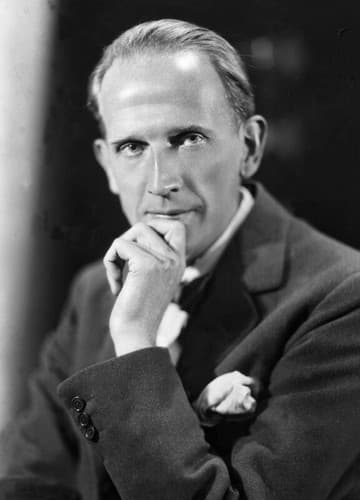
A.A. Milne was an English playwright, novelist, and poet, best known for his children's books featuring the character Winnie-the-Pooh. His collections of poems, When We Were Very Young and Now We Are Six, along with the stories Winnie-the-Pooh and The House at Pooh Corner, have become beloved classics of children's literature worldwide. Milne's work is celebrated for its gentle humor, whimsical characters, and exploration of childhood innocence.
Similar books
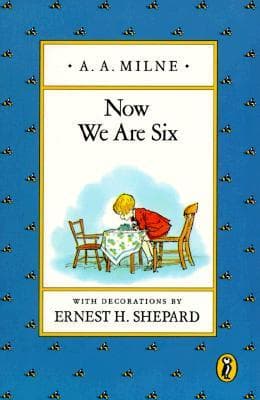
- Now We Are Six
A.A. Milne
4.3 (20k) average on GoodreadsFantasyA direct companion and continuation of Milne's charming children's poetry.
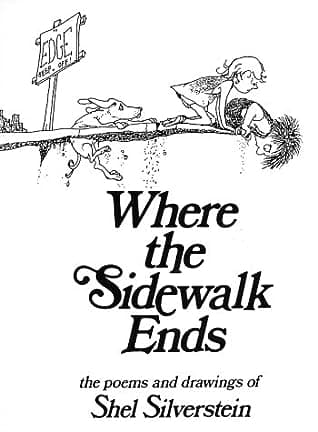
- Where the Sidewalk Ends
Shel Silverstein
4.3 (1.2M) average on GoodreadsFantasyA collection of imaginative and often humorous children's poems, though with a more modern sensibility.
- Harry Potter and the Sorcerer's Stone
J.K. Rowling
4.5 (7M) average on GoodreadsFantasyRescued from a miserable life under the stairs, an orphaned boy discovers he's a wizard destined for a magical school, where he uncovers a dangerous secret tied to the dark wizard who murdered his parents.
- The Hunger Games
Suzanne Collins
4.3 (6.4M) average on GoodreadsFantasyIn a future where children fight to the death on live television, Katniss Everdeen volunteers for the arena, turning a death sentence into a fight for survival and a spark of rebellion.
- 1984
George Orwell
4.2 (3.1M) average on GoodreadsPoliticsIn a future where surveillance and thought control are absolute, a man's search for truth clashes with the Party, showing that hope can be a form of rebellion.
- Divergent
Veronica Roth
4.2 (2.9M) average on GoodreadsFantasyIn a society divided by virtues, a sixteen-year-old's difference from the norm starts a rebellion that threatens her world.




Enjoyed the summary?
A summary gives you the shape of the book. The book itself has the detail, the examples and the voice.
Find When We Were Very Young on AmazonAs an Amazon Associate, BookBrief earns from qualifying purchases. How we're funded