
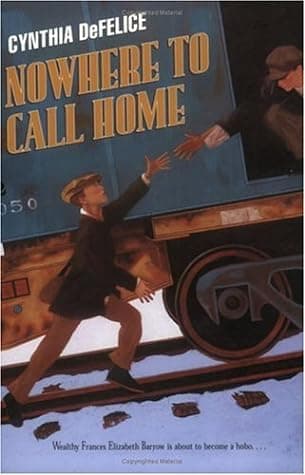
Synopsis
Covers the whole plot, including the ending.
- Difficulty
- Easy
- Pacing
- Moderate
- Mood
- Gritty, Resilient, Reflective, Hopeful
- Read it if
- You enjoy historical fiction set during the Great Depression, stories about resilience and self-discovery, or narratives featuring strong female protagonists defying societal norms.
- Skip it if
- You prefer fast-paced action or shy away from themes of poverty, loss, and the harsh realities of life during the Depression.
Nowhere to Call Home Plot Summary
Covers the whole plot, including the ending.
A Father's Despair and a Daughter's Decision
The story begins with thirteen-year-old Frances Ward experiencing the devastating loss of her father, Mr. Ward, who takes his own life due to the financial pressure of the Great Depression. His suicide leaves Frances and her mother, Mrs. Ward, in dire straits. Mrs. Ward arranges for Frances to live with her Aunt Louise in Chicago, hoping for a better life for her daughter. However, Frances, feeling grief, anger, and a desperate need for independence, makes a life-altering decision. Instead of using her train ticket to Chicago, she cashes it in for money. She then cuts her hair, trades her dress for a boy's trousers and cap, and renames herself 'Frankie Blue,' determined to ride the rails and escape her past.
First Steps on the Rails
Frankie Blue's first attempts at hobo life are hard. She struggles to board a moving train, nearly injuring herself, and finds herself alone and hungry. Her romantic ideas of freedom quickly clash with the harsh realities of survival. While trying to hop a freight train in a rail yard, she meets a gruff but helpful older hobo named 'Stewpot.' Stewpot, seeing her inexperience and vulnerability, reluctantly takes her under his wing. He teaches her the basic skills for rail-riding: how to properly jump on and off a moving train, how to find food, and the unspoken rules of the hobo community.
Life with Stewpot
Under Stewpot's guidance, Frankie starts to adapt to her new life. They travel together, riding boxcars and learning to navigate the dangerous world of the rails. Stewpot teaches her about 'hobo signs,' secret symbols left by other travelers to indicate safe houses, dangerous towns, or food sources. They face hunger, cold, and the constant threat of 'bulls' (railroad police) who patrol the yards. Despite the hardships, Frankie finds a sense of camaraderie with Stewpot. He becomes a mentor, sharing his knowledge and experience, and a fragile bond of trust begins to form between the young girl and the seasoned hobo.
Encounters and Escapes
Frankie and Stewpot continue their journey, encountering a mix of kindness and cruelty on the road. They learn to be wary of strangers and to rely on their wits. They narrowly escape capture by railroad police several times, forcing them to run and hide. They also meet other hobos, some friendly and willing to share, others suspicious or even predatory. Frankie's disguise as a boy, 'Frankie Blue,' is key to her safety, as being a young girl alone on the rails would be far more dangerous. Stewpot's protective presence is also vital, shielding her from many of the harsher realities they face.
Stewpot's Illness
The harsh conditions of hobo life begin to affect Stewpot. He falls gravely ill with a persistent cough and fever, his health rapidly worsening. Frankie, who has grown to depend on him, now faces the daunting task of caring for her ailing companion. They are stranded in a small town, unable to move on. Frankie realizes the stark reality of their situation: without Stewpot's strength and experience, her own survival is precarious. She has to find food, shelter, and medicine for him, a responsibility far beyond what she initially imagined.
Seeking Help in a Hostile Town
With Stewpot's condition worsening, Frankie must make a difficult decision. She has to break their hobo code of staying hidden and seek help from the townspeople, despite the risk of exposure. She tries to beg for food and medicine, but many doors are slammed in her face, reflecting the widespread hardship and suspicion of the Depression era. Desperate, she eventually finds a kind woman who, seeing Frankie's plight and Stewpot's severe illness, offers some assistance. However, Stewpot's condition is beyond simple remedies, and Frankie realizes he needs proper medical attention, something she cannot provide alone.
A Hospital and a New Friend
Frankie makes the agonizing decision to take Stewpot to a local hospital, knowing it means revealing their identities and risking being separated. Stewpot is admitted, and Frankie is left alone once more, feeling a profound sense of loss and uncertainty. While waiting outside the hospital, she meets another young hobo, a boy named 'Chip.' Chip is closer to her age and less experienced than Stewpot. They form a tentative friendship, sharing stories and fears. Chip offers Frankie a different kind of companionship, one based on shared vulnerability rather than mentorship, and they decide to travel together for a while.
Life with Chip and the Pull of the Past
Frankie and Chip travel together for some time, facing similar challenges of hunger and evasion. Their dynamic is different from her relationship with Stewpot; Chip is less a teacher and more a fellow survivor. However, Frankie finds herself increasingly reflecting on her past, her family, and the life she left behind. The initial thrill of freedom has worn off, replaced by the constant insecurity. The romantic image of hobo life has completely faded, and she begins to question her choices. The emotional toll of her father's death and her mother's probable worry weigh heavily on her conscience.
The Decision to Return
After some time with Chip, Frankie comes to a realization. She misses her mother and acknowledges the pain she has caused by running away. The glamour of the rails is gone, replaced by a deep longing for stability and connection. She decides she must return home, even if it means facing the consequences of her actions. She tells Chip of her decision, and while he is sad to see her go, he understands. This moment shows a major shift in Frankie's character, as she moves from impulsive rebellion to a more mature understanding of responsibility and belonging.
A Journey Back Home
Frankie begins her journey back home, no longer as the defiant 'Frankie Blue' but as Frances, a girl who has grown significantly through her experiences. The trip is challenging, but she uses the skills she learned on the rails to make her way. During her travels, she reflects on everything she has endured: the loss of her father, the harshness of hobo life, her bond with Stewpot, and the lessons of survival. She understands the world in a more complex way now, recognizing the widespread suffering of the Depression but also the resilience of the human spirit. She is no longer the naive girl who ran away, but a more self-aware and empathetic individual.
Reunion and Reconciliation
Frankie finally arrives back in her hometown and makes her way to her old house. The reunion with her mother, Mrs. Ward, is emotional and bittersweet. Her mother is overwhelmed with relief and joy, but also sadness and worry over Frances's absence. There are tears, apologies, and a deep sense of reconciliation. Frances, no longer hiding behind her 'Frankie Blue' persona, is able to openly share some of her experiences and the hardships she faced. While the pain of her father's death remains, their reunion signifies a new beginning, a chance for them to heal together and rebuild their lives, facing the future with a renewed sense of hope and connection.
Nowhere to Call Home Characters
Frances Ward / Frankie Blue
Protagonist
A grieving girl who transforms into a hobo to escape her painful past.
Frances is a thirteen-year-old girl whose life is shattered by her father's suicide during the Great Depression. Initially naive and impulsive, she adopts the persona of 'Frankie Blue,' cutting her hair and donning boy's clothes to ride the rails. Driven by a mix of grief, anger, and a desire for independence, she seeks to outrun her pain. She is observant, resilient, and possesses a strong will, but also carries deep emotional wounds. Her journey is one of self-discovery and a harsh education in survival.
Relationships: Mr. Ward (Father) (Loving but ultimately tragic relationship; his suicide is the catalyst for her journey.); Mrs. Ward (Mother) (Strained by grief and separation, but ultimately loving and reunites.); Stewpot (Mentor and surrogate father figure; their bond is forged through shared hardship.); Chip (Fellow young hobo and companion; a friendship based on shared vulnerability.)
Stewpot
Supporting
A seasoned hobo who becomes Frankie's reluctant mentor and protector.
Stewpot is an older, experienced hobo with a gruff exterior but a kind heart. He is a survivor of the rails, knowledgeable about the routes, hobo codes, and dangers of the road. He takes Frankie under his wing, teaching her essential survival skills and protecting her from harm. Stewpot represents the resilience and resourcefulness of those displaced by the Depression, but also the vulnerability to its harsh conditions. His illness highlights the precariousness of life on the rails.
Relationships: Frankie Blue (Mentor and mentee; a protective, almost paternal bond.)
Mrs. Ward
Supporting
Frances's mother, left to cope with immense loss and worry.
Mrs. Ward is Frances's mother, a woman devastated by her husband's suicide and the subsequent disappearance of her daughter. She represents the many families fractured by the Great Depression, struggling to maintain hope and stability. Her love for Frances is evident in her attempts to send her to Aunt Louise. She carries the burden of grief and worry, embodying the emotional toll of the era. Her reunion with Frances signifies the possibility of healing and rebuilding.
Relationships: Mr. Ward (Husband) (Loving but tragically ended marriage.); Frances Ward (Deep maternal bond, strained by Frances's flight but ultimately restored.)
Chip
Supporting
A young, inexperienced hobo who becomes Frankie's temporary companion.
Chip is a young boy, closer to Frankie's age, whom she meets after Stewpot falls ill. He is also riding the rails, having been displaced by the Depression, but lacks Stewpot's experience and wisdom. Chip offers Frankie companionship and a sense of shared vulnerability, representing another facet of the youth affected by the economic crisis. His presence helps Frankie understand that she is not alone in her struggles, but also highlights the limitations of relying on someone equally inexperienced.
Relationships: Frankie Blue (Temporary travel companion and friend.)
Mr. Ward
Mentioned
Frances's father, whose suicide sets the entire plot in motion.
Mr. Ward is Frances's father, a man driven to despair and suicide by the overwhelming financial ruin brought on by the Great Depression. Though he appears only at the beginning of the story through his tragic act, his presence looms large throughout Frances's journey. He represents the silent victims of the economic crisis, the men who felt the crushing weight of responsibility and failure. His death is the catalyst for Frances's transformation and her decision to run away.
Relationships: Frances Ward (Loving father-daughter bond, shattered by his death.); Mrs. Ward (Husband in a loving marriage, ultimately unable to cope with financial pressure.)
Nowhere to Call Home Themes
The Illusion vs. Reality of Freedom
Frances first sees riding the rails as a romantic escape and a way to freedom from her grief and responsibility. She believes becoming 'Frankie Blue' will free her. However, the reality of hobo life is stark: constant hunger, cold, danger from 'bulls' and predatory individuals, and the ever-present threat of illness. Her bond with Stewpot, while comforting, also highlights the dependence and vulnerability in their nomadic existence. The freedom she sought is ultimately a different kind of confinement, one dictated by survival rather than choice, as seen when she must desperately seek help for Stewpot.
“She had thought freedom would taste like adventure, but it mostly tasted like dust and fear.”
Loss and Grief
The novel focuses on loss and grief, beginning with the devastating suicide of Frances's father. This loss causes her to run away, as she struggles to process her sorrow and anger. Her journey on the rails is, in part, an attempt to outrun her grief, but it follows her. She experiences further loss when Stewpot falls ill, forcing her to confront the impermanence of even her new connections. Ultimately, her decision to return home shows a willingness to face her grief and begin healing with her mother.
“The ache in her chest wasn't just hunger; it was the space where her father used to be.”
Resilience and Survival
The Great Depression forces individuals like Frances and Stewpot to develop great resilience and resourcefulness to survive. Frankie learns quickly from Stewpot how to jump trains, find food, and evade danger. She adapts to sleeping in boxcars and under bridges, facing hunger and harsh weather with determination. Her ability to care for Stewpot when he falls ill, despite her own fear and inexperience, shows her growing inner strength. Even during widespread hardship, the characters find ways to endure, whether through individual grit or the unexpected kindness of strangers, showing the human spirit's capacity to persist.
“You learn quick out here, or you don't learn at all.”
The Importance of Connection and Belonging
Initially, Frances rejects her family and seeks solitude, believing it to be independence. However, her journey on the rails teaches her the importance of human connection. Her bond with Stewpot becomes vital for her survival and emotional well-being, showing the need for companionship even in the harshest environments. When Stewpot becomes ill, Frankie realizes how much she depends on him. Her eventual decision to return home is driven by a longing for her mother and a recognition that true belonging and love are more valuable than a solitary, dangerous 'freedom.'
“Being free didn't feel so good if you were all alone in it.”
Plot Devices & Literary Techniques
Coming-of-Age Journey
Frances's physical journey transforms her from a naive girl to a mature young woman.
The entire novel functions as a coming-of-age story for Frances. Her decision to run away and adopt the persona of 'Frankie Blue' is an impulsive act of a child grappling with immense loss. Her experiences on the rails, under Stewpot's tutelage, force her to confront harsh realities, learn practical survival skills, and develop emotional resilience. She sheds her naivety about the world and her own capabilities. By the end, her choice to return home signifies a mature understanding of responsibility, love, and the true meaning of belonging, marking her transition into young adulthood.
Disguise and Hidden Identity
Frances's adoption of the 'Frankie Blue' persona as a boy protects her and allows her to navigate the dangerous world of hobos.
Frances's disguise as 'Frankie Blue' is a crucial plot device. By cutting her hair and wearing boy's clothes, she gains a measure of safety and anonymity that would be impossible for a young girl traveling alone during the Depression. This hidden identity allows her access to the hobo community and protects her from the specific dangers faced by females on the road. The disguise also symbolizes her attempt to shed her past and her identity as Frances Ward, enabling her to experiment with a new, tougher persona. The eventual shedding of this disguise marks her return to her true self and her acceptance of her past.
The Railroad as a Metaphor
The trains and the rails symbolize escape, movement, and the transient nature of life during the Depression.
The railroad itself serves as a powerful metaphor throughout the novel. For Frances, the trains initially represent escape from her grief and a path to freedom and adventure. However, they also come to symbolize the transient, uncertain nature of life for many during the Great Depression—constantly moving, searching for opportunity, but never truly finding a stable home. The rails are both a means of travel and a dangerous, unforgiving environment. The rhythm of the trains, the hobo codes, and the constantly shifting landscapes reflect the journey of self-discovery and the ever-changing circumstances faced by the characters.
Mentor Figure
Stewpot acts as a guide and protector, teaching Frankie the ways of the rails and shaping her survival skills.
Stewpot serves as a classic mentor figure in Frankie's journey. He provides her with essential knowledge, teaching her the practical skills needed to survive as a hobo, such as how to board trains safely, find food, and understand the unwritten rules of the road. More than just practical skills, he also offers a form of protection and companionship, filling a void left by her father. His eventual illness forces Frankie to step up and take responsibility, demonstrating her growth and the success of his mentorship, even as it forces her to consider a different path.
Nowhere to Call Home Quotes
“The wind was a living thing, always trying to snatch your hat or whisper secrets in your ear.”
“Every day brought a new challenge, a new way to prove you were strong enough to stay.”
“A good neighbor was worth more than a wagon full of gold, especially when winter came calling.”
“The stars out here were so bright, they felt like they were watching you, judging your every move.”
“Sometimes, the quiet was the loudest sound of all, filled with all the things you didn't say.”
“Hope was a stubborn weed, growing even in the rockiest soil, refusing to be pulled up.”
“You learned to read the sky like a book, because your life depended on understanding its stories.”
“Home wasn't just a place; it was the people you shared it with, and the memories you made.”
“Fear was a cold hand on your heart, but courage was the fire that melted it away.”
“Every sunrise was a fresh start, a chance to try again, to build something new.”
“The land took a piece of you, but it also gave something back, if you were willing to listen.”
“Silence could be a comfort, a blanket against the world, or it could be a heavy burden.”
“Growing up out here meant learning to stand on your own two feet, no matter how much the ground shook.”
“The past was like a shadow, always following you, but you had to keep walking towards the light.”
Quiz
10 questions on the plot and the characters. Each answer comes with a short explanation.
Question 1
What tragic event compels Frances to leave her home and embark on a life as a hobo?
- Her house burned down, leaving her homeless.
- Her mother disowned her after a major argument.
- Her father committed suicide due to financial ruin during the Great Depression.
- She was offered a scholarship to a distant school, requiring her to travel.
Show answer
C. Her father committed suicide due to financial ruin during the Great Depression. Frances's father took his own life, unable to cope with the financial ruin caused by the Great Depression, which directly led to her decision to become a hobo.
Question 2
What is the name Frances adopts when she disguises herself as a boy and begins her life on the rails?
- Frankie Red
- Frankie Green
- Frankie Blue
- Frankie Gray
Show answer
C. Frankie Blue Frances trades her dress for trousers and a cap and adopts the hobo name 'Frankie Blue' to conceal her identity as a girl.
Question 3
Who is the first young hobo Frances (as Frankie Blue) meets and learns from on the rails?
- Roadie
- Stewpot
- Boxcar Bill
- Dusty
Show answer
B. Stewpot Stewpot is introduced as another young hobo who becomes Frankie Blue's guide, teaching her the ropes of life on the rails.
Question 4
What specific actions does Frankie learn from Stewpot to survive as a hobo?
- How to drive a car and hotwire it for quick escapes.
- How to sneak on and off trains, find food, and protect herself.
- How to beg for money in crowded city centers and avoid police.
- How to forge documents to gain access to soup kitchens.
Show answer
B. How to sneak on and off trains, find food, and protect herself. The text explicitly states that Stewpot teaches Frankie 'to sneak on and off trains, find food, and protect herself.'
Question 5
What was Frances's original plan before she decided to become a hobo?
- To find work in a factory in a large city.
- To attend a boarding school far from home.
- To travel by railroad to her aunt's home.
- To join a traveling circus as an acrobat.
Show answer
C. To travel by railroad to her aunt's home. Frances 'cashes in the railroad ticket that would have carried her to her aunt's home,' indicating this was her initial plan.
Question 6
What key event makes Frankie realize that her 'romantic notions' about life on the rails are far from the reality?
- She gets caught by a railroad detective and is nearly arrested.
- Stewpot gets sick, highlighting the harshness and vulnerability of their situation.
- She runs out of money and realizes she cannot buy food.
- She witnesses a violent fight between two other hobos.
Show answer
B. Stewpot gets sick, highlighting the harshness and vulnerability of their situation. The text states, 'Then Stewpot gets sick, and Frankie realizes that the reality of life on the rails is far different from her romantic notions.'
Question 7
What specific item does Frances trade in to facilitate her disguise as a boy?
- Her father's watch
- Her railroad ticket
- Her dress for trousers and a cap
- Her last remaining coins for a new coat
Show answer
C. Her dress for trousers and a cap She 'trades in her dress for trousers and a cap' to help her pass as a boy named Frankie Blue.
Question 8
The novel's setting during the Great Depression directly influences Frances's journey by:
- Providing ample job opportunities for young people like Frances.
- Causing the financial ruin that leads to her father's suicide and her subsequent homelessness.
- Encouraging a widespread romantic view of hobo life across the country.
- Making train travel highly regulated and difficult for stowaways.
Show answer
B. Causing the financial ruin that leads to her father's suicide and her subsequent homelessness. The Great Depression caused the financial ruin that led to her father's suicide, which is the catalyst for Frances's entire journey.
Question 9
Frances's decision to become 'Frankie Blue' and live as a hobo is primarily driven by:
- A desire for adventure and to see the country.
- A need to escape the painful reality of her father's death and her lack of a stable home.
- A political protest against the economic policies of the time.
- An attempt to find her long-lost mother who also became a hobo.
Show answer
B. A need to escape the painful reality of her father's death and her lack of a stable home. Sad and bewildered by her father's suicide, Frances rejects her original plan and seeks an escape from her circumstances by becoming a hobo.
Question 10
The title 'Nowhere to Call Home' reflects which central theme of the novel?
- The joy of traveling freely without responsibilities.
- The widespread displacement and lack of security experienced by many during the Great Depression.
- The difficulty of finding suitable employment in rural areas.
- The freedom of living an unconventional lifestyle.
Show answer
B. The widespread displacement and lack of security experienced by many during the Great Depression. The title directly addresses the theme of homelessness and the instability faced by people, like Frances, during the economic hardship of the Great Depression.
Nowhere to Call Home FAQ
What is the central premise of 'Nowhere to Call Home'?
The novel follows Frances, a young woman whose father commits suicide due to financial ruin during the Great Depression. Instead of going to her aunt's, she disguises herself as a boy named Frankie Blue and becomes a hobo, learning to survive on the rails with the help of an experienced young hobo named Stewpot.
Who is Frankie Blue, and what is her significance?
Frankie Blue is the alias Frances adopts to hide her gender and navigate the dangerous world of hobo life. This new identity allows her to experience freedom and independence, but also exposes her to harsh realities that challenge her romanticized view of life on the rails.
What role does Stewpot play in Frances's journey?
Stewpot acts as Frankie Blue's mentor and guide, teaching her essential survival skills like how to hop trains, find food, and avoid dangers on the hobo trails. His practical knowledge and companionship are crucial for Frances's initial adaptation to her new life.
What is the primary conflict Frances faces throughout the story?
Frances's primary conflict is the struggle to survive and maintain her identity while facing the brutal realities of the Great Depression and hobo life. She battles hunger, exposure, the constant threat of discovery, and the emotional toll of her father's death, all while trying to reconcile her romantic ideals with harsh truths.
How does Frances's perception of hobo life change from the beginning to the end of the book?
Initially, Frances romanticizes hobo life as an adventure and an escape from her grief and the societal expectations of women. However, after experiencing constant hunger, danger, and especially Stewpot's illness, she realizes the stark, unforgiving reality and the constant struggle for survival, shedding her naive notions.
Are there any subtle clues about Frances's gender before her disguise is explicitly revealed to other characters?
Yes, there are subtle hints, such as her initial discomfort in trousers and cap, her heightened awareness of personal space around male hobos, and perhaps her more empathetic reactions in certain situations. These details might hint at her true identity to an observant reader.
How does the author use the changing landscape to reflect Frances's internal state?
The author often uses the vast, open landscapes and the isolation of the rail lines to mirror Frances's initial feelings of loneliness and rootlessness after her father's death. As she gains confidence, the changing scenery might reflect her growing resilience, but the harshness of winter scenes directly parallels her despair and physical struggles.
What is the significance of the name 'Frankie Blue' beyond just a disguise?
The name 'Frankie Blue' symbolizes Frances's transformation and her attempt to shed her past identity and grief. 'Blue' could subtly allude to her underlying sadness or the vast, open skies she now travels under, representing both freedom and exposure. It's a persona that allows her to be someone new, unburdened by her previous life.
Are there any recurring symbols or motifs related to home or belonging?
Yes, the recurring motif of 'home' is central, often contrasted with the transient nature of hobo life. Images of warm meals, stable shelters, and family photographs serve as constant reminders of what Frances has lost and what she yearns for, highlighting her journey to find a new sense of belonging.
How does Frances's decision to become a hobo reflect her coping mechanism for grief?
Frances's choice to become a hobo is a direct response to the traumatic loss of her father and the subsequent financial ruin. It serves as an escape from her grief, a way to exert control over her life when everything else feels out of control, and a means to avoid facing her emotions by constantly being in motion.
Discuss the psychological impact of Frances's gender disguise on her self-perception.
The gender disguise as Frankie Blue profoundly impacts Frances's self-perception, forcing her to adopt traditionally masculine behaviors and suppress her femininity for survival. This creates internal conflict, but also allows her to discover inner strength and resilience she might not have known she possessed as Frances.
How does the trauma of her father's suicide manifest in Frances's interactions with others?
The trauma of her father's suicide makes Frances initially guarded and distrustful of intimacy, fearing abandonment or loss. While she eventually forms a bond with Stewpot, her past trauma can make her hesitant to fully rely on others or reveal her true vulnerability, influencing her cautious interactions.
What psychological changes does Frances undergo as she adapts to the harsh realities of hobo life?
Frances undergoes significant psychological hardening; she becomes more resourceful, resilient, and less naive. Her initial romanticism is replaced by a pragmatic understanding of survival, and she develops a strong sense of self-reliance, though not without moments of despair and longing for her former life.
Is Frances's choice to become a hobo an act of rebellion or desperation?
It is arguably both. It's an act of desperation driven by her father's suicide and the lack of options, but also an act of rebellion against the societal norms that might have dictated her future, and against the grief that threatened to consume her. She actively chooses a path outside expectations.
To what extent is Stewpot a symbol, rather than just a character?
Stewpot can be seen as a symbol of the resilience and resourcefulness of children during the Depression, and also the transient, often forgotten, population. He represents both the harshness and the unexpected camaraderie found on the rails, guiding Frankie through a world he has already mastered out of necessity.
How does the ending of the novel challenge or affirm the idea of 'home' for Frances?
The ending likely challenges the traditional idea of 'home' as a fixed physical location. While she may eventually find a new place to settle, her journey has redefined 'home' to include a sense of internal peace, self-acceptance, and potentially the companionship she found, rather than just a house and family.
What message about resilience and the human spirit does 'Nowhere to Call Home' convey?
The novel powerfully conveys the message that the human spirit possesses immense resilience even in the face of overwhelming adversity and trauma. Frances's journey illustrates her capacity to adapt, survive, and even find strength and connection amidst profound loss and hardship, highlighting the enduring will to live.
Could Frances have found an alternative path that would have led to a similar personal growth?
It's debatable. While other paths might have offered growth, the specific, extreme challenges of hobo life forced Frances to confront her deepest fears and develop a unique set of survival skills and self-reliance that might not have been fostered in a more conventional setting. Her chosen path accelerated her maturation significantly.
Similar books
- Out of the Dust
Karen Hesse
3.8 (69k) average on GoodreadsChildren'sDepression-era setting, focus on a young girl's struggles and resilience, historical fiction.
- The Evolution of Calpurnia Tate
Jacqueline Kelly
4.0 (30k) average on GoodreadsChildren'sYoung female protagonist challenging gender expectations, historical setting with a strong sense of place.
- To Kill a Mockingbird
Harper Lee
4.3 (4.5M) average on GoodreadsHistorical FictionIn the 1930s Jim Crow South, Harper Lee writes about racial injustice, moral growth, and the quiet courage of a lawyer father, Atticus Finch, as seen through his young daughter's eyes.
- The Great Gatsby
F. Scott Fitzgerald
3.9 (3.8M) average on GoodreadsHistorical FictionIn the opulent Roaring Twenties, a mysterious millionaire's lavish parties hide his desperate, tragic pursuit of a lost love, exposing the emptiness within the American Dream.
- Pride and Prejudice
Jane Austen
4.3 (3M) average on GoodreadsHistorical FictionIn a society focused on status and money, Elizabeth Bennet navigates love and pride, challenging Mr. Darcy and social expectations to find true affection.
- Angels & Demons
Dan Brown
3.9 (2.7M) average on GoodreadsThrillerA Harvard symbologist races through Rome's ancient sites, deciphering cryptic clues to unmask the Illuminati and stop a vengeful plot to destroy the Vatican with a stolen antimatter weapon.





Enjoyed the summary?
A summary gives you the shape of the book. The book itself has the detail, the examples and the voice.
Find Nowhere to Call Home on AmazonAs an Amazon Associate, BookBrief earns from qualifying purchases. How we're funded