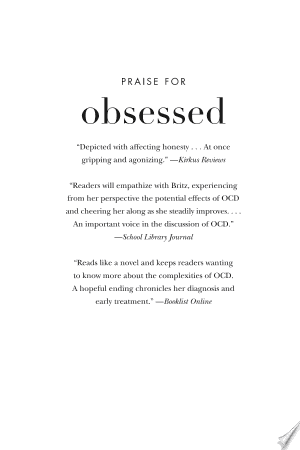
Estimated read time: 12 min read
Table of Contents
List of Characters
| Character Name | Role in Story |
|---|---|
| Allison Britz | Protagonist, narrator |
| Allison’s Mother | Parental support figure |
| Allison’s Father | Parental support figure |
| Erin | Allison’s close friend |
| Dr. Stevens | Therapist |
| School Guidance Counselor | Support at school |
| Allison’s Siblings | Family support |
| Various Classmates | Peers and minor influence |
Role Identification
| Character Name | Role Identification |
|---|---|
| Allison Britz | Central figure, her struggle and recovery from OCD drive the narrative. |
| Allison’s Mother | Provides emotional and practical support, helps Allison seek treatment. |
| Allison’s Father | Offers stability, occasionally struggles to understand Allison’s illness. |
| Erin | Represents the social impact of Allison’s OCD, source of friendship and conflict. |
| Dr. Stevens | Medical professional, guides Allison through therapy and coping mechanisms. |
| School Guidance Counselor | School-based ally, helps accommodate Allison’s needs. |
| Allison’s Siblings | Secondary support, highlight family dynamics and Allison’s sense of responsibility. |
| Various Classmates | Reflect social pressures and misunderstandings about mental illness. |
Character Descriptions
Allison Britz
Allison is a high-achieving, athletic, and ambitious high school student. She is described as intelligent, dedicated, and initially confident. After a vivid nightmare, she develops Obsessive-Compulsive Disorder (OCD). Her compulsions and obsessions quickly escalate, disrupting her school and home life.
Allison’s Mother
Allison’s mother is nurturing and attentive. She notices changes in Allison’s behavior and actively seeks ways to help her daughter, both emotionally and medically.
Allison’s Father
He is depicted as loving but sometimes out of his depth. While supportive, he initially struggles to comprehend the severity of Allison’s condition.
Erin
Erin is Allison’s close friend. She offers companionship and understanding but also represents the strain that OCD can put on friendships.
Dr. Stevens
Dr. Stevens is Allison’s therapist. She is calm, methodical, and encouraging, guiding Allison through cognitive-behavioral therapy (CBT) and exposure and response prevention (ERP).
School Guidance Counselor
This character helps Allison navigate the academic and social challenges at school. They provide practical solutions and advocate for Allison within the school system.
Allison’s Siblings
They are not heavily featured but serve to emphasize Allison’s sense of familial responsibility and the impact of her illness on family dynamics.
Various Classmates
Classmates reflect the broader social context—some are supportive, others are dismissive or uncomprehending.
Character Traits
| Character | Main Traits |
|---|---|
| Allison Britz | Intelligent, driven, anxious, perfectionist, resilient |
| Allison’s Mother | Compassionate, proactive, patient |
| Allison’s Father | Supportive, pragmatic, occasionally confused |
| Erin | Loyal, empathetic, sometimes frustrated |
| Dr. Stevens | Knowledgeable, patient, calm, encouraging |
| School Guidance Counselor | Supportive, resourceful, understanding |
| Allison’s Siblings | Supportive, occasionally confused, loving |
| Classmates | Varied: supportive, indifferent, or judgmental |
Character Background
Allison Britz
Allison was a typical overachiever before OCD. She excelled academically and athletically, maintained close friendships, and had a supportive family. Her life changes dramatically after a nightmare about brain cancer prompts her to develop compulsive behaviors, aiming to prevent harm to herself and her loved ones.
Allison’s Mother
She comes from a background of care and involvement. She is attuned to Allison’s emotional state and is quick to seek professional help when her daughter’s OCD symptoms become apparent.
Allison’s Father
He provides for the family and has a stable background. His experiences with Allison’s illness are marked by confusion and a desire to help, even when he does not always understand.
Erin
Erin’s background is less detailed, but she and Allison have a longstanding friendship. Erin’s reactions to Allison’s OCD shed light on the importance of peer support and the challenges of maintaining relationships during mental health crises.
Dr. Stevens
Her professional experience in adolescent therapy is evident. She explains OCD to Allison and her family and works to empower Allison through treatment.
School Guidance Counselor
The counselor has experience with students facing challenges. Their background is rooted in helping students succeed academically and socially.
Allison’s Siblings
Their background is typical of siblings in a supportive family, serving to underscore Allison’s feelings of responsibility and the ripple effect of her illness.
Various Classmates
Classmates come from diverse backgrounds. Their reactions illustrate the spectrum of understanding and stigma around mental health.
Character Arcs
Allison Britz
| Stage | Description |
|---|---|
| Pre-OCD | High-achieving, confident, socially engaged |
| Onset of OCD | Develops compulsions and obsessions, life becomes dominated by rituals and anxiety |
| Crisis | Academic and social life deteriorate, relationships suffer, and isolation increases |
| Seeking Help | Begins therapy, learns about OCD, faces resistance to change |
| Recovery | Gradually improves, learns coping mechanisms, rebuilds confidence and relationships |
| Ongoing Journey | Accepts that recovery is non-linear, remains vigilant and hopeful |
Allison’s Mother
| Stage | Description |
|---|---|
| Unaware | Notices subtle changes, struggles to understand initial symptoms |
| Recognition | Understands the seriousness, seeks medical advice |
| Advocacy | Becomes Allison’s primary advocate, supports treatment and education |
| Acceptance | Accepts the ongoing nature of OCD, adjusts parenting to Allison’s needs |
Allison’s Father
| Stage | Description |
|---|---|
| Unaware | Struggles to recognize the severity |
| Involvement | Supports wife and daughter, seeks to understand OCD |
| Support | Adjusts expectations, becomes more empathetic |
Erin
| Stage | Description |
|---|---|
| Friendship | Provides social support, shares Allison’s interests |
| Strain | Struggles to understand and adapt to Allison’s behaviors |
| Growth | Learns more about OCD, becomes a more informed and supportive friend |
Dr. Stevens
| Stage | Description |
|---|---|
| Introduction | Explains OCD and therapy process to Allison |
| Treatment | Guides Allison through CBT and ERP |
| Support | Adjusts approach based on Allison’s progress |
School Guidance Counselor
| Stage | Description |
|---|---|
| Awareness | Notices academic decline, reaches out to Allison |
| Advocacy | Coordinates with teachers, creates accommodations |
| Ongoing | Continues to monitor and support Allison’s progress |
Allison’s Siblings
| Stage | Description |
|---|---|
| Confusion | Do not fully understand Allison’s behaviors |
| Adjustment | Learn about OCD, offer support in their own ways |
Various Classmates
| Stage | Description |
|---|---|
| Ignorance | Unaware of Allison’s struggles, some are dismissive |
| Awareness | Some become more understanding as Allison’s story unfolds |
| Indifference | Others remain indifferent or judgmental |
Relationships
| Relationship Pair | Nature of Relationship | Evolution |
|---|---|---|
| Allison & Mother | Deeply supportive, mother advocates for Allison | Becomes stronger through adversity |
| Allison & Father | Supportive but less expressive, struggles with understanding | Grows as he learns more about OCD |
| Allison & Erin | Close friendship, tested by OCD behaviors | Survives through communication and empathy |
| Allison & Dr. Stevens | Professional, therapeutic | Becomes a source of hope and empowerment |
| Allison & Guidance Counselor | School-based support, helps with accommodations | Builds trust, enables Allison to remain in school |
| Allison & Siblings | Siblings offer support, sometimes confused | Relationship endures, siblings become more supportive |
| Allison & Classmates | Ranges from supportive to indifferent or judgmental | Mixed impact, highlights social aspects of OCD |
In-Depth Character Analysis
Allison Britz
Allison Britz is the protagonist and narrator, and the memoir is a first-person account of her struggle with OCD. Her characterization is both specific and relatable, as she represents the experience of a young person confronting mental illness for the first time.
Personality and Traits
Allison is defined by her intelligence and ambition. Before OCD, she excelled in academics and sports, had a close-knit group of friends, and was highly organized. Her personality is also marked by a tendency for perfectionism and high self-expectations. The onset of OCD amplifies her anxiety, self-doubt, and feelings of isolation.
Background and Motivation
Allison’s life is upended by a nightmare that convinces her she must engage in specific rituals to prevent catastrophic outcomes. Her initial motivation is fear: she believes her actions are necessary for survival. As her OCD intensifies, her motivations shift towards seeking relief from overwhelming anxiety.
Development and Arc
Allison’s character arc is one of descent and recovery. She moves from confident high-achiever to someone consumed by compulsions and obsessions. The narrative tracks her lowest points: failing grades, isolation from friends, and an inability to communicate effectively with her family. Through therapy, education, and support, Allison reclaims her autonomy. Her arc is not a simple “cure,” but a realistic depiction of managing a lifelong condition.
Relationships
Allison’s relationships are central to her story. Her mother’s unwavering support is essential in her seeking help. Her friendship with Erin is strained but ultimately survives, demonstrating the impact of mental illness on social connections. Allison’s interactions with Dr. Stevens and the school guidance counselor show her willingness to trust professionals and embrace vulnerability.
Resilience
Allison’s most defining trait is resilience. Despite setbacks and relapses, she persists in her recovery. Her journey is marked by incremental progress and periods of doubt, but she continually chooses to fight for her well-being.
Allison’s Mother
Allison’s mother is a pillar of strength and compassion. She is quick to notice behavioral changes and proactive in seeking help. Her arc reflects a parent’s journey from confusion to advocacy. She is patient and persistent, working diligently to understand OCD and support Allison.
Her relationship with Allison is foundational. She balances empathy with practical action, ensuring Allison receives the care she needs. Her character exemplifies the critical role family support plays in recovery.
Allison’s Father
Allison’s father is a less expressive but loving figure. Initially, he represents the confusion and misunderstanding that often surround mental illness. His arc involves moving from bewilderment to a more nuanced understanding of Allison’s struggles.
He supports Allison’s treatment and participates in family therapy sessions. His character illustrates the importance of parental involvement, even when comprehension is incomplete.
Erin
Erin is Allison’s confidante and friend. Their friendship is tested as Allison’s OCD escalates. Erin experiences frustration and confusion but makes efforts to learn about and respect Allison’s needs.
Erin’s character highlights the challenges friends face when supporting someone with a mental health condition. Her willingness to adapt and communicate demonstrates the power of empathy and education in sustaining meaningful relationships.
Dr. Stevens
Dr. Stevens is a calm, supportive therapist who introduces Allison to exposure and response prevention therapy. Her approach is methodical and encouraging. She validates Allison’s fears while challenging her to confront them.
Dr. Stevens’s relationship with Allison is instrumental in her recovery. She provides a safe space for Allison to explore her thoughts and fears, and she empowers Allison to reclaim control over her life.
School Guidance Counselor
The guidance counselor is a practical ally within the school system. They recognize the impact of Allison’s OCD on her academic performance and work to secure necessary accommodations. This character’s involvement allows Allison to remain in school and pursue her goals.
Their relationship is professional but supportive. The counselor’s advocacy is vital in reducing Allison’s academic stress and facilitating her recovery.
Allison’s Siblings
Allison’s siblings play a minor but meaningful role. Their confusion and adjustment reflect the broader family impact of mental illness. Over time, they learn to support Allison in small, significant ways.
Classmates
Classmates serve as a microcosm of societal attitudes towards mental illness. Some are supportive, others are dismissive or judgmental. Their reactions impact Allison’s self-esteem and sense of belonging.
Major Themes Through Characters
| Theme | How Characters Embody the Theme |
|---|---|
| Stigma | Classmates and initial family reactions reflect misunderstandings about OCD |
| Support Systems | Mother, father, friends, and professionals show the importance of support |
| Personal Growth | Allison’s arc from victimhood to agency highlights resilience and self-acceptance |
| Education | Dr. Stevens and the counselor educate both Allison and her family/friends |
| Friendship | Erin’s evolving support underscores the challenges and rewards of true friendship |
Character Dynamics and Interactions
Family Dynamics
Allison’s illness strains family relationships but ultimately brings them closer. Her mother becomes an advocate, her father learns to understand, and her siblings adapt. The family’s journey is one of collective growth.
Friendship and Social Interaction
Erin’s support is crucial, though not without friction. The pressures of high school and the stigma of mental illness are embodied in Allison’s interactions with classmates. These dynamics highlight the importance of education and empathy.
Therapeutic Relationships
Dr. Stevens’s guidance is transformative for Allison. The therapeutic alliance is built on trust and mutual respect. The school guidance counselor extends this support into the academic realm, advocating for Allison’s needs.
Conclusion
The characters in "Obsessed" by Allison Britz are nuanced and realistic. Through Allison’s journey, the narrative explores the complexities of mental illness, the importance of support, and the ongoing process of recovery. Each character serves a specific role in Allison’s life, contributing to her growth and illustrating the broader social context of OCD.
The interplay between personal struggle and communal support is central. Relationships are tested and strengthened, and each character grows in understanding and empathy. Allison’s story is ultimately one of hope, resilience, and the enduring power of human connection.