Estimated read time: 9 min read
One Sentence Summary
After a terrifying dream convinces her she’ll get brain cancer, Allison Britz develops debilitating OCD and must fight to reclaim her life.
Table of Contents
Introduction
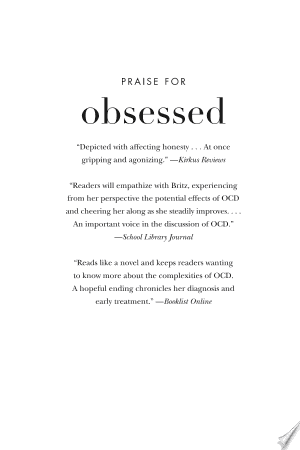
Imagine waking up one morning and realizing your mind has turned against you. That’s the gripping reality Allison Britz shares in her memoir, “Obsessed: A Memoir of My Life with OCD.” This book is not just a window into the world of obsessive-compulsive disorder (OCD)—it’s a front-row seat to a high-stakes, real-life drama where the villain is invisible, relentless, and, heartbreakingly, internal.
For college students, mental health can feel like a buzzword—until it becomes deeply personal. Britz’s raw and honest account makes the abstract concrete, the statistics real, and the stigma around mental illness less suffocating. Whether you’ve struggled with OCD, know someone who has, or just want a deeper understanding of how the mind can unravel and heal, “Obsessed” offers insights, hope, and the kind of emotional punch that sticks with you long after the final page.
Historical Context
OCD isn’t new—it’s been described since the 19th century, but only in recent decades has it stepped out of the shadows of misunderstanding. In the early 2000s, when Allison Britz was a high school student, awareness of OCD was growing, but stigma and stereotypes persisted. Back then, OCD was often portrayed as quirky neatness or funny habits. The real agony—compulsive rituals, intrusive thoughts, and desperate, irrational logic—was rarely discussed.
Britz’s struggle emerges in the context of early 21st-century America: a time of rising awareness, but still lacking the nuanced conversations about mental health we are having today. Her memoir lands right at the intersection of adolescent pressure, mental illness, and the fight for self-acceptance—a combination that’s as relevant now as ever for students and educators.
Brief Synopsis
Plot Overview
“Obsessed” traces Allison Britz’s journey from a high-achieving, outgoing teen to someone consumed by OCD. After a vivid nightmare about developing brain cancer, Allison becomes convinced that her only protection lies in elaborate rituals and strict avoidance of certain objects and behaviors. What begins as an attempt to ward off an imagined illness spirals into a labyrinth of compulsions—counting steps, avoiding colors, and checking locks—dominating her daily life.
The memoir chronicles her descent into OCD, her desperate attempts to hide her struggles, the toll it takes on her academic and social life, and, eventually, her path toward understanding and recovery. Britz’s story is not about a swift victory, but about resilience, support, and the ongoing challenge of managing a misunderstood mental illness.
Setting
The memoir unfolds primarily in suburban North Carolina, in the corridors of a competitive high school and the privacy of Allison’s home. The setting is familiar to anyone who’s walked high school halls or juggled academic pressures. The atmosphere is charged with the intensity of adolescent ambition, parental expectation, and the silent chaos of mental illness. Britz’s narrative makes these spaces feel both claustrophobic and universal—a reminder that mental health battles can lurk behind the most ordinary facades.
Main Characters
Let’s meet the key players in Allison’s journey:
| Name | Role | Key Traits | Importance to the Plot |
|---|---|---|---|
| Allison Britz | Protagonist, narrator | Intelligent, driven, vulnerable | Central figure; story is her lived experience |
| Allison’s Parents | Support system | Loving, confused, well-meaning | Provide support but struggle to understand |
| Allison’s Friends | Peers, observers | Social, sometimes oblivious | Reflect normalcy and highlight Allison’s isolation |
| Dr. K | Therapist | Compassionate, knowledgeable | Guides Allison toward diagnosis and treatment |
| Teachers | Authority figures | Inconsistent, sometimes dismissive | Highlight challenges in accessing support |
Plot Summary
Let’s break down Allison’s journey into key stages, each marked by emotional highs, lows, and moments of hard-won insight.
The Nightmare and the Onset
It all starts with a nightmare. Allison dreams she has brain cancer—a vision so vivid it shakes her to the core. The following morning, she can’t shake the fear. Her mind, desperate for control, concocts a plan: avoid certain triggers and perform specific rituals, and she might stave off the disease.
What begins as magical thinking—the belief that actions can prevent disaster—snowballs. Allison starts avoiding green objects (reminders of tumors), skips cracks in the sidewalk, and counts everything. Each ritual offers fleeting relief, but the compulsions multiply. She’s caught in a mental trap, and the rules become ever more elaborate.
Spiraling Isolation
Allison’s life grows smaller. Friends notice she’s acting “weird,” but she can’t explain. Teachers see her grades slip. Her family is supportive, but baffled. The stakes feel enormous—if she slips up, her fear tells her, she’ll die.
This is the heart of the memoir: the chasm between the rational world and the tyranny of OCD. Allison tries to hide her rituals, but the effort is exhausting. Her sense of self erodes. Shame and fear become constant companions.
Seeking Help
After months of suffering, Allison’s parents intervene. They find her a therapist, Dr. K, who finally names her tormentor: OCD. For Allison, the diagnosis is both a relief and a challenge—it means she’s not alone, but it also means facing a new kind of fight.
The Road to Recovery
Therapy is grueling. Exposure and Response Prevention (ERP), the gold-standard treatment for OCD, requires Allison to confront her fears head-on. She resists her compulsions, endures the anxiety, and slowly, painfully, reclaims her life.
Recovery isn’t linear. There are setbacks, tears, and moments of doubt. But there are also triumphs: reconnecting with friends, regaining confidence, and learning to accept imperfection.
Themes and Motifs
Allison Britz’s memoir is rich with themes that resonate far beyond her personal story.
| Theme | Description | Broader Relevance |
|---|---|---|
| The Nature of OCD | Explores the complexity and agony of OCD, beyond stereotypes | Demystifies mental illness |
| The Power of Fear | Shows how fear can shape reality and behavior | Universal to anxiety and trauma |
| Stigma & Isolation | Highlights the loneliness of invisible illness | Relevant to all marginalized experiences |
| The Role of Support | Emphasizes the importance of family, friends, and professionals | Advocates for empathy and understanding |
| Struggle for Control | Examines the human need for control in an unpredictable world | Resonates with anyone facing uncertainty |
| Hope & Resilience | Underlines the possibility of recovery and growth | Inspirational for those facing adversity |
Motifs
- Rituals: The rituals Allison creates are a motif for her struggle to regain control and safety.
- Counting and Avoidance: Recurring patterns that illustrate how OCD narrows her world, symbolizing anxiety’s grip.
- Green Objects: Serve as a trigger and symbol for her deepest fears.
Literary Techniques and Style
Allison Britz’s writing is direct, vivid, and emotionally honest. Her memoir uses several techniques to draw readers into her world:
- First-person narration: Creates intimacy and immediacy, making readers feel her anxiety and hope firsthand.
- Vivid imagery: Her descriptions of intrusive thoughts and rituals are detailed and immersive.
- Non-linear storytelling: The narrative occasionally jumps in time to highlight the contrast between “before” and “after” OCD.
- Dialogues: Conversations with parents, friends, and Dr. K humanize the struggle and add authenticity.
- Internal monologue: Britz offers an unfiltered look at the logic of OCD, making the irrational feel heartbreakingly rational.
Her style is accessible yet nuanced, making the book a powerful resource for students and educators alike.
Author’s Background
Allison Britz is not a clinician or a celebrity—she’s an ordinary person with an extraordinary story. Her memoir draws on her lived experience as a teenager coping with severe OCD. She grew up in North Carolina, attended college, and now advocates for mental health awareness.
Britz’s work stands alongside other important OCD memoirs, like John Green’s “Turtles All the Way Down,” but is notable for its candid, unflinching look at adolescent mental illness. Her willingness to expose her most vulnerable moments has inspired countless readers to seek help or support others.
Key Takeaways
- OCD is more than quirks: It’s a debilitating mental illness, not a personality trait.
- Early intervention matters: Seeking help made a pivotal difference for Allison.
- Support systems are critical: Family, friends, and professionals all play a role in recovery.
- Recovery is not linear: Progress is possible, but setbacks are part of the journey.
- Stigma is real but surmountable: Sharing stories can break down the walls of isolation.
- Self-compassion is vital: Healing involves accepting imperfection and finding self-worth beyond illness.
Reader’s Takeaway
“Obsessed” is more than a memoir—it’s a lifeline. For students facing invisible battles, Allison’s story is a powerful reminder: you are not alone, and help is out there. For educators and friends, it’s a call to empathy, patience, and action. The memoir will tug at your heartstrings, challenge your assumptions, and leave you with a renewed appreciation for the courage it takes to fight your own mind.
Conclusion
Allison Britz’s “Obsessed” is a must-read for anyone interested in mental health, resilience, and the untold stories behind the labels we so often misunderstand. It’s a tribute to the power of vulnerability and the possibility of recovery, even when hope seems impossible. Britz’s journey will stay with you—reminding you that, in a world full of invisible struggles, compassion and understanding can be revolutionary.
Whether you’re a student, teacher, or simply a curious reader, “Obsessed” offers both a gripping narrative and a vital education. If you’re seeking a book that will expand your empathy and deepen your understanding of mental illness, this memoir deserves a spot at the top of your list.
For further exploration, consider discussing the book in a mental health awareness group, or using it as a touchstone in courses on psychology, health, or literature. As Britz so bravely demonstrates, sharing our stories is the first step toward healing—both for ourselves and for our communities.
Obsessed FAQ
What is 'Obsessed' by Allison Britz about?
'Obsessed' is a memoir by Allison Britz that chronicles her teenage struggle with undiagnosed Obsessive-Compulsive Disorder (OCD). The book details her sudden onset of irrational fears and compulsive behaviors, her journey through misdiagnosis, and eventual treatment and recovery.
Is 'Obsessed' based on a true story?
Yes, 'Obsessed' is a true story. It is Allison Britz's own account of her personal experiences living with OCD during her high school years.
Who is the intended audience for 'Obsessed'?
'Obsessed' is primarily targeted at young adults and teenagers, but it is also valuable for parents, educators, and anyone interested in mental health awareness, particularly OCD.
What mental health themes are explored in the book?
The book explores themes such as anxiety, obsessive-compulsive disorder, stigma around mental health, the importance of proper diagnosis and treatment, and the challenges and recovery process for those living with mental illness.
How does Allison Britz describe her experience with OCD?
Allison Britz describes her OCD as a sudden and overwhelming force in her life, leading to irrational rules, compulsive behaviors, and intrusive thoughts. She details the impact on her daily life, relationships, and education, and how she eventually sought help.
What message does Allison Britz hope to convey with 'Obsessed'?
Allison Britz aims to raise awareness about OCD and mental health, encourage understanding and empathy, and offer hope to those who are struggling by sharing her journey toward diagnosis, therapy, and recovery.
Does the book provide insights into treatment and recovery for OCD?
Yes, the memoir discusses different aspects of treatment, including therapy and coping mechanisms. It highlights the challenges of finding the right help and the gradual process of recovery.
Is the book appropriate for readers who do not have experience with mental health issues?
Absolutely. The book is written in an accessible way that helps readers understand the realities of living with OCD, regardless of their background or personal experience with mental health.
Are there any resources or support suggestions mentioned in the book?
While the main focus is Allison's personal journey, the book also points toward the importance of professional help, support from family and friends, and the value of being informed about mental health resources.