
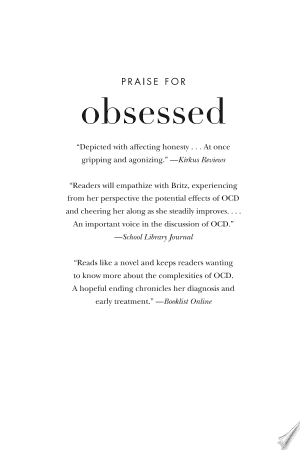
Core Idea
- Difficulty
- Medium
- Read it if
- You want a deeply personal and unflinching first-person account of living with severe OCD, or if you're seeking to understand the internal experience of the disorder and the path to recovery.
- Skip it if
- You are looking for a clinical textbook on OCD, or if highly detailed descriptions of anxiety and compulsive rituals might be too distressing for you.
Key Takeaways from Obsessed
The Nightmare's Grip
How a vivid dream about cancer triggered debilitating OCD rituals.
Allison Britz's OCD started with a nightmare that she had brain cancer. This wasn't just a bad dream; it became a perceived prediction, a warning she felt she had to prevent. Her mind, trying to protect her, believed that specific actions could stop this imagined threat. This belief started her once-normal life into a maze of rituals and worries. A single, strong psychological event can act as a trigger, starting a chain of irrational fears and compulsive behaviors that quickly go out of control. This shows how fragile the mind's hold on reality can be when facing intense internal distress.
“I was convinced the dream had been a warning. I believed that I must do something to stop the cancer in my dream from becoming a reality.”
In the book: The author's account of waking from a vivid nightmare about brain cancer and immediately believing it was a warning, leading to her first compulsive behaviors like avoiding sidewalk cracks.
Try this: Recognize that seemingly irrational fears can stem from deep-seated anxieties or traumatic events, even if those events are internal (like a dream). Early identification of such triggers is crucial for intervention.
Related ideas: ocd-triggers, anxiety-onset, psychological-trauma
The Escalating Web of Compulsions
From simple avoidances to an all-encompassing system of irrational rules.
What began as avoiding sidewalk cracks quickly grew into a complex system of compulsions. Allison's 'brain' – her OCD – constantly created new dangers and ways to 'fix' them. This shows how OCD works: small rituals create a pattern for more complex and demanding behaviors. The illness does not stop at one or two compulsions; it tries to control more parts of life, turning everyday objects and actions into possible threats. This constant expansion shows how OCD reinforces itself. Temporary relief from a compulsion only strengthens the fear, leading to a greater need for more rituals.
“It started with avoiding sidewalk cracks and quickly grew to counting steps as loudly as possible. Over the following weeks, her brain listed more dangers and fixes.”
In the book: Her progression from avoiding sidewalk cracks to counting steps loudly, and then to a long list of forbidden items like hair dryers, cell phones, green objects, bananas, and specific clothing.
Try this: Be vigilant for any escalating patterns in anxiety-driven behaviors, even if they seem minor initially. Early intervention is key before the web of compulsions becomes too intricate and debilitating.
Related ideas: ocd-progression, compulsive-rituals, avoidance-behavior
Isolation and Misunderstanding
How OCD transformed a popular teen into an outcast.
Allison's struggle with OCD separated her from her friends and family. Her inability to act normally because of her growing list of compulsions made her an outcast among friends, who likely did not understand her sudden, strange behaviors. At home, her parents, unaware of the disorder, questioned her actions, which led to painful arguments. This shows the social and family cost of mental illness, especially when it appears in ways others do not understand. The lack of understanding from her support system deepened her isolation, showing how external reactions can make the internal suffering of someone with OCD worse.
“Unable to act 'normal,' the once-popular Allison became an outcast. Her parents questioned her behavior, leading to explosive fights.”
In the book: The narrative describes her transformation from a popular student to an outcast, and the explosive fights with her parents who questioned her behavior.
Try this: Educate yourself and others about mental health conditions to foster empathy and understanding. When observing drastic behavioral changes in loved ones, approach with concern and seek professional help rather than judgment.
Related ideas: social-isolation, family-conflict, mental-health-stigma
Academic Implosion
OCD's devastating impact on education and future prospects.
As Allison's OCD worsened, it began to interfere with her academic life. School supplies became perceived threats. Calling notebook paper, pencils, and textbooks 'dangerous' meant she could no longer study effectively. This led to a significant drop in her grades, putting her academic future and college plans at risk. This shows how OCD can destroy a person's life, not just by causing distress, but by preventing them from doing daily tasks and pursuing long-term goals. The loss of academic potential shows the widespread destructive power of untreated mental illness, affecting the present and future opportunities and self-worth.
“When notebook paper, pencils, and most schoolbooks were declared dangerous to her health, her GPA imploded, along with her plans for the future.”
In the book: Her inability to use common school supplies like notebook paper, pencils, and textbooks due to her compulsions, leading to her GPA imploding.
Try this: For students struggling with mental health, schools must provide accommodations and support to prevent academic failure. Early intervention can preserve educational pathways.
Related ideas: academic-decline, ocd-impact, educational-barriers
The Courage to Ask for Help
The pivotal moment of vulnerability leading to diagnosis and treatment.
After a long period of suffering, isolation, and academic decline, Allison reached a point where she 'finally allowed herself to ask for help.' This moment was important, representing a courageous step out of her illness and towards recovery. It shows the big internal battle fought before seeking help, often caused by shame, fear, or feeling unable to explain her experience. Her diagnosis of OCD was not an end but a beginning, giving a name to her pain and a path to understanding and treatment. This shows the role of self-advocacy and the courage needed to talk about mental illness, which is often the first and hardest step towards healing.
“Finally, she allowed herself to ask for help and was diagnosed with obsessive-compulsive disorder.”
In the book: The turning point in the memoir when Allison makes the conscious decision to seek help, leading to her official diagnosis of OCD.
Try this: Encourage open conversations about mental health to reduce stigma. For those struggling, acknowledge that asking for help is a sign of strength, not weakness, and is the first step toward recovery.
Related ideas: seeking-help, mental-health-diagnosis, vulnerability-strength
The Hopeful Climb
Navigating the challenging path from diagnosis to recovery.
Allison's story, while describing her difficult experience with OCD, ends with a hopeful recovery. This shows that a diagnosis is not a life sentence but the start of a recovery journey. The recovery process is challenging, often involving therapy (like Exposure and Response Prevention), medication, and much personal effort. It shows resilience and the effectiveness of proper treatment. The hopeful aspect is important, as it offers a guide for others struggling, showing that even debilitating mental illnesses can be managed, and a fulfilling life is possible. This emphasizes the importance of persistence in treatment and the power of professional support.
“This brave memoir tracks Allison’s descent and ultimately hopeful climb out of the depths.”
In the book: The overarching theme of the memoir, which promises to track her 'descent and ultimately hopeful climb out of the depths' after her diagnosis.
Try this: Understand that recovery from mental illness is a process, not an event. Support consistency in treatment and celebrate small victories along the way.
Related ideas: ocd-recovery, mental-health-resilience, treatment-journey
The Brain's Deception
Understanding OCD as a trick of the mind, not a personal failing.
Allison often calls 'her brain' the part that lists dangers and fixes, separating it from her true self. This choice of words helps understand OCD: it is not a character flaw or lack of willpower, but a disorder that affects the brain's alarm system. The 'dangers' her brain perceives are often irrational, and the 'fixes' (compulsions) are illogical attempts to stop these perceived threats. This shows that people with OCD often know their thoughts are irrational but feel unable to stop them. Thinking of OCD as a 'trick of the mind' can reduce self-blame and stigma, leading to more compassionate self-understanding and effective treatment that targets these faulty brain pathways.
“Over the following weeks, her brain listed more dangers and fixes.”
In the book: Allison's consistent phrasing of 'her brain' listing dangers, suggesting a disconnect between her conscious self and the compulsive thoughts.
Try this: When discussing OCD, emphasize that it's a medical condition, not a choice. This helps destigmatize the illness and encourages individuals to seek help without shame.
Related ideas: ocd-neurobiology, cognitive-distortions, mental-illness-stigma
The Power of Specificity
How OCD fixates on precise, often arbitrary, details.
One striking aspect of Allison's OCD is how specific her compulsions and avoidances are. It was not just 'technology' but 'hair dryers, calculators, cell phones, computers.' It was not just 'food' but 'bananas, oatmeal.' And 'anything green.' This detailed level shows how OCD focuses on specific things, creating a very limited world for the person with it. The brain assigns too much danger to these specific items, making daily life a constant challenge of avoidance. This specificity is a main feature of OCD, showing its constant attempt to control small details of one's environment, making it hard to manage without professional help.
“She had to avoid hair dryers, calculators, cell phones, computers, anything green, bananas, oatmeal, and most of her own clothing.”
In the book: The incredibly detailed list of items Allison had to avoid: hair dryers, calculators, cell phones, computers, anything green, bananas, oatmeal, and most of her own clothing.
Try this: Recognize that OCD manifests in highly individualized and specific ways. Treatment plans need to be tailored to the individual's unique set of compulsions and obsessions, often requiring precise exposure therapy.
Related ideas: ocd-manifestations, cognitive-rigidity, specific-phobias
Beyond the Surface
Understanding that outward behavior can mask severe internal suffering.
Allison's life before OCD seemed perfect: popular, academically successful, and from a loving home. This contrast between her outward appearance and her later internal pain shows that mental illness can affect anyone, regardless of their advantages or 'normalcy.' It makes clear that outward calm or a seemingly ideal life does not mean there is no severe internal suffering. People can be fighting intense psychological battles while appearing normal, making it hard for others to see their distress. This shows the need for empathy, awareness, and open communication, and the recognition that mental health issues are often invisible battles fought internally.
“Until sophomore year of high school, fifteen-year-old Allison Britz lived a comfortable life in an idyllic town. She was a dedicated student with tons of extracurricular activities, friends, and loving parents at home.”
In the book: The description of Allison's life pre-OCD: dedicated student, many extracurriculars, friends, and loving parents, contrasting sharply with her subsequent decline.
Try this: Avoid making assumptions about others' well-being based solely on external appearances. Foster environments where people feel safe to share their struggles, knowing that mental illness can affect anyone.
Related ideas: invisible-illness, mental-health-awareness, empathy-building
Obsessed Quotes
“I am not my thoughts. I am the one who hears them.”
“The rituals were my armor, but they were also my prison.”
“Anxiety is a liar. It tells you stories that feel true but aren't.”
“Sometimes the bravest thing you can do is ask for help.”
“My mind had become a haunted house, and I was living in every room.”
“Recovery isn't a straight line; it's a messy, winding path with setbacks and victories.”
“I had to learn to sit with uncertainty, to breathe through the discomfort.”
“The numbers ruled my life - 4, 8, 12 - they were my gods and my demons.”
“In the silence between thoughts, I found moments of peace.”
“My family watched me disappear into a world they couldn't understand.”
“The scariest monsters aren't under the bed; they're in your own mind.”
“Healing began when I stopped fighting myself and started understanding myself.”
“Every 'what if' was a brick in the wall that kept me from living.”
“The same brain that created the prison also held the key to freedom.”
Quiz
10 questions on the main ideas. Each answer comes with a short explanation.
Question 1
What event triggered Allison Britz's obsessive-compulsive disorder symptoms in 'Obsessed'?
- A panic attack during a school exam
- A vivid nightmare about being diagnosed with brain cancer
- A traumatic car accident she witnessed
- A family member's actual cancer diagnosis
Show answer
B. A vivid nightmare about being diagnosed with brain cancer In the memoir, Allison's OCD symptoms began after she awoke from a vivid nightmare in which she was diagnosed with brain cancer. She interpreted this dream as a warning and started developing compulsions to prevent the imagined cancer from becoming reality.
Question 2
Which of these was NOT one of Allison's compulsions or avoidance behaviors as described in the book?
- Counting steps as loudly as possible
- Avoiding anything green
- Washing her hands exactly 100 times daily
- Avoiding bananas and oatmeal
Show answer
C. Washing her hands exactly 100 times daily While Allison developed numerous compulsions including counting steps loudly, avoiding green items, and avoiding bananas and oatmeal, the book does not mention a specific hand-washing ritual of exactly 100 times. Her compulsions were more varied and specific to her personal fears.
Question 3
What was the ultimate diagnosis Allison received for her symptoms?
- Generalized anxiety disorder
- Schizophrenia
- Obsessive-compulsive disorder
- Post-traumatic stress disorder
Show answer
C. Obsessive-compulsive disorder After finally seeking help, Allison was diagnosed with obsessive-compulsive disorder (OCD), which explained her intrusive thoughts about cancer and the compulsive behaviors she developed to try to prevent it.
Question 4
How did Allison's OCD symptoms affect her academic performance?
- She became a straight-A student through obsessive studying
- Her GPA imploded when she declared school supplies dangerous
- She transferred to a special education school
- She dropped out of high school entirely
Show answer
B. Her GPA imploded when she declared school supplies dangerous Allison's OCD expanded to include notebook paper, pencils, and most schoolbooks as 'dangerous,' making it impossible for her to complete schoolwork normally. This caused her GPA to plummet, threatening her future plans.
Question 5
What was Allison's life like BEFORE her OCD symptoms began?
- She was already struggling with anxiety and social isolation
- She lived comfortably with friends, activities, and loving parents
- She was homeschooled due to previous mental health issues
- She was a rebellious teen constantly fighting with her parents
Show answer
B. She lived comfortably with friends, activities, and loving parents Before her OCD developed, Allison lived what she describes as a comfortable life in an idyllic town. She was a dedicated student involved in extracurricular activities, had friends, and came from a loving family.
Question 6
How did Allison's relationships change as her OCD symptoms worsened?
- She became more popular due to her unique behaviors
- She maintained all her friendships by explaining her condition
- The once-popular Allison became an outcast
- She developed closer bonds with teachers who understood her
Show answer
C. The once-popular Allison became an outcast As Allison's compulsive behaviors made her unable to act 'normally,' she transformed from a popular student to an outcast. Her unusual behaviors alienated her from peers who didn't understand what she was experiencing.
Question 7
What was the primary theme of Allison's intrusive thoughts that drove her compulsions?
- Fear of social humiliation
- Preventing imagined brain cancer
- Avoiding contamination from germs
- Preventing harm to her family members
Show answer
B. Preventing imagined brain cancer Allison's core obsession was the fear that she would develop brain cancer, stemming from her nightmare. Her compulsions (avoiding cracks, counting steps, avoiding specific objects) were attempts to prevent this imagined outcome.
Question 8
Which practical insight does 'Obsessed' provide about seeking help for mental health issues?
- Mental health issues should always be handled privately without professional help
- Asking for help is a sign of weakness to be avoided
- Allowing oneself to ask for help is a crucial first step toward recovery
- Only severe cases require professional intervention
Show answer
C. Allowing oneself to ask for help is a crucial first step toward recovery A key message of the memoir is that Allison's recovery began when she 'allowed herself to ask for help.' The book emphasizes that seeking professional assistance is a brave and necessary step in addressing mental health challenges.
Question 9
How does the memoir structure Allison's experience with OCD?
- As a linear progression from mild to severe symptoms without hope
- As a 'descent and ultimately hopeful climb' through the disorder
- As a series of unrelated episodes with no overall narrative
- As primarily focusing on her life after recovery
Show answer
B. As a 'descent and ultimately hopeful climb' through the disorder The book is described as tracking 'Allison's descent and ultimately hopeful climb out of the depths.' This structure shows both the worsening of her condition and her journey toward recovery, providing a complete narrative arc.
Question 10
What does Allison's experience reveal about how OCD can manifest beyond stereotypical symptoms?
- OCD always involves visible cleaning or organizing rituals
- OCD symptoms can be highly personalized and tied to specific fears
- OCD primarily affects academic performance without emotional impact
- OCD symptoms are always consistent across different individuals
Show answer
B. OCD symptoms can be highly personalized and tied to specific fears Allison's experience shows that OCD manifests in highly individualized ways. Her specific fears about brain cancer led to unique compulsions like avoiding sidewalk cracks, counting steps loudly, and avoiding seemingly random objects like bananas or anything green.
Obsessed FAQ
What is Obsessed by Allison Britz about?
Obsessed is a memoir about a teenage girl's struggle with obsessive-compulsive disorder (OCD). It details how a vivid nightmare triggers debilitating compulsions and rituals that disrupt her life, leading to her diagnosis and journey toward recovery.
Does Obsessed accurately portray OCD?
Yes, as a personal memoir, Obsessed provides a raw and authentic account of living with OCD from the author's own experience. It illustrates the intrusive thoughts, compulsive behaviors, and the profound impact on daily life, relationships, and mental health.
What is obsessive-compulsive disorder (OCD) as described in the book?
In the book, OCD is depicted as a mental health condition characterized by intrusive, distressing thoughts (obsessions) and repetitive behaviors or mental acts (compulsions) performed to alleviate anxiety. Allison's compulsions include avoiding specific objects, counting steps, and ritualistic actions to prevent perceived dangers.
How different is Obsessed from other mental health memoirs like The Bell Jar?
Obsessed focuses specifically on OCD in a modern teenage context, with a narrative centered on compulsions triggered by a nightmare. In contrast, The Bell Jar by Sylvia Plath deals more broadly with depression and societal pressures in the 1950s, offering a different era and mental health perspective.
Does the book offer hope for recovery from OCD?
Yes, the memoir emphasizes a hopeful climb out of OCD's depths. It shows Allison seeking help, getting diagnosed, and working toward recovery, highlighting that treatment and support can lead to improvement and resilience.
What are some specific compulsions Allison experiences in Obsessed?
Allison's compulsions include avoiding sidewalk cracks, counting steps loudly, and steering clear of items like hair dryers, calculators, cell phones, computers, green objects, bananas, oatmeal, and certain clothing. These rituals escalate to affect her schoolwork and social life.
How does Obsessed compare to Turtles All the Way Down by John Green?
Both books explore teenage OCD, but Obsessed is a non-fiction memoir based on real-life experiences, while Turtles All the Way Down is a fictional novel. Obsessed provides a personal, chronological account, whereas Green's work uses fiction to delve into thought spirals and anxiety.
Is Obsessed suitable for young adults or teens?
Yes, Obsessed is particularly relevant for young adults and teens as it addresses mental health issues in a high school setting. Its honest portrayal can help readers understand OCD, reduce stigma, and encourage seeking help for similar struggles.
What triggers Allison's OCD in the book?
Allison's OCD is triggered by a vivid nightmare in which she is diagnosed with brain cancer. She interprets the dream as a warning, leading to obsessive fears and compulsive behaviors aimed at preventing the imagined cancer from becoming reality.
Does the book discuss treatment options for OCD?
While primarily a personal narrative, the book touches on treatment by showing Allison's path to diagnosis and her willingness to seek help. It implies the importance of professional intervention, such as therapy, in managing OCD, though it doesn't detail specific clinical methods.
Similar books
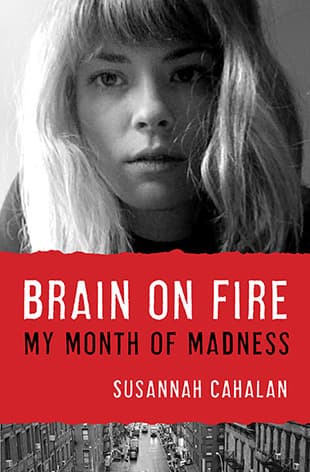
- Brain on Fire: My Month of Madness
Susannah Cahalan
4.1 (168k) average on GoodreadsPsychologyA young woman's memoir of a sudden, severe neurological illness and her journey to diagnosis and recovery, highlighting the brain's impact on behavior.
- Turtles All the Way Down
John Green
4.0 (314k) average on GoodreadsPsychologyA fictional but realistic portrayal of a teenager grappling with severe OCD and anxiety, offering insight into the internal monologue of the condition.
- The Diary of a Young Girl
Anne Frank
4.2 (2.7M) average on GoodreadsBiographyDuring the Nazi occupation, a teenage girl's diary, written from a secret annex, shares observations on humanity, hope, and the wait for freedom.
- Twisted 1. Twisted love
Ana Huang
3.7 (1.7M) average on GoodreadsA quiet billionaire with a difficult past finds his guarded heart opening to the woman he must protect, but their growing passion uncovers dangerous secrets and a shared, traumatic history.
- Eat, Pray, Love
Elizabeth Gilbert
3.6 (1.5M) average on GoodreadsLifestyleA heartbroken writer leaves her conventional life for a year-long global search for pleasure in Italy, spiritual devotion in India, and unexpected love and balance in Bali.
- Night
Elie Wiesel
4.3 (970k) average on GoodreadsBiographyIn the darkness of Auschwitz and Buchenwald, a teenage Elie Wiesel faces the extermination of his family, the loss of his faith, and the lasting scars of humanity's deepest cruelty.





Enjoyed the summary?
A summary gives you the shape of the book. The book itself has the detail, the examples and the voice.
Find Obsessed on AmazonAs an Amazon Associate, BookBrief earns from qualifying purchases. How we're funded