
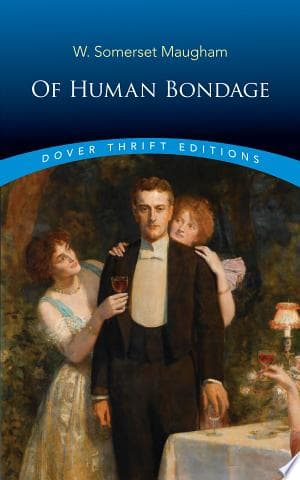
Synopsis
Covers the whole plot, including the ending.
- Difficulty
- Medium
- Pacing
- Slow
- Mood
- Melancholy, Introspective, Realistic, Somber
- Read it if
- You appreciate deep character studies, psychological realism, and a sprawling narrative about a young man's journey of self-discovery through hardship and obsessive love.
- Skip it if
- You prefer fast-paced plots, clear moralizing, or stories with consistently likable characters and an uplifting tone throughout.
Of Human Bondage Plot Summary
Covers the whole plot, including the ending.
Childhood Isolation and Early Loss
The novel begins with Philip Carey, a nine-year-old orphan, being sent to live with his Uncle William, a vicar, and his Aunt Louisa after the death of his mother. Philip has a club foot, which makes him self-conscious and an easy target for bullying at his preparatory school, King's School, Canterbury. He struggles to fit in and feels lonely and alienated. His aunt and uncle, though providing for him, are emotionally distant, and Philip finds little comfort or understanding in their home. He develops a passion for reading as an escape. He attempts to find solace in religion but ultimately experiences a crisis of faith, rejecting Christianity after much internal turmoil, feeling that it does not offer the answers or comfort he seeks.
University Life and Artistic Aspirations
After leaving school, Philip decides against a traditional university path in England and instead goes to Heidelberg, Germany, to study. Here, he experiences a brief period of intellectual freedom and forms friendships, notably with Weeks and Hayward. He then moves to Paris, wanting to become an artist. He enrolls in an art school, where he meets a variety of bohemian characters, including Fanny Price, an untalented but dedicated painter who eventually commits suicide. Despite his earnest efforts and passion for art, Philip comes to the painful realization that he lacks artistic talent. This realization is a significant blow to his aspirations and forces him to re-evaluate his future.
Return to London and Medical Studies
Disillusioned with his artistic failures, Philip returns to England. After a period of aimlessness and considering various professions, he decides to study medicine, largely because of his uncle's suggestion and the practical need for a stable career. He enrolls at St. Luke's Hospital in London. Initially, he finds the work tedious and uninspiring, often feeling out of place among his fellow students. He struggles with the demanding curriculum and the often grim realities of hospital life. During this time, he lives a modest existence, relying on his small inheritance and his uncle's allowance, feeling the weight of his past failures and an uncertain future.
The Obsession with Mildred Rogers
While studying medicine, Philip meets Mildred Rogers, a waitress at a tea shop. Despite her plain appearance, common manners, and cold, calculating nature, Philip becomes intensely infatuated with her. He is drawn to her inexplicably, finding himself obsessed with her, even as she treats him with disdain and indifference. He pursues her relentlessly, showering her with attention and gifts, while she manipulates him, often using him for money and attention before rejecting him. This begins a deeply unhealthy and emotionally abusive relationship that consumes much of Philip's emotional and financial resources, leaving him constantly humiliated and heartbroken.
Mildred's Betrayals and Departures
Mildred's relationship with Philip is marked by a series of rejections and returns. She leaves him for another man, Emil Miller, a German commercial traveler, causing Philip immense pain. However, she later returns to Philip, pregnant and abandoned by Miller, appealing to his pity. Philip, still deeply infatuated, takes her in and cares for her, even helping her through childbirth. After the baby's birth, she leaves him again, this time for Philip's friend, Griffith, a medical student. This betrayal is particularly painful, as it involves someone from his own social circle, further isolating Philip and deepening his humiliation.
Financial Ruin and Despair
Philip's financial situation becomes bad. His remaining inheritance, which he had invested, is lost because of a bad investment recommended by a seemingly trustworthy acquaintance, Cronshaw. This, coupled with his generous spending on Mildred and his inability to earn a steady income while studying, leaves him almost penniless. He is forced to pawn his possessions and consider dropping out of medical school. He experiences a period of extreme poverty, often going hungry and struggling to pay for basic necessities. This period of destitution forces him to confront the harsh realities of life and the consequences of his poor decisions.
The Death of Uncle William and a New Inheritance
Just as Philip reaches the depths of his despair and is on the verge of abandoning his medical studies because of lack of funds, his Uncle William dies. This unexpected event brings Philip a new inheritance, a sum large enough to clear his debts and allow him to continue his education without financial strain. This timely windfall provides a turning point, rescuing him from destitution and allowing him to focus on completing his medical degree. The death of his uncle, while sad, ultimately provides Philip with the means to rebuild his life and achieve stability.
Reconciliation with Mildred and Her Downfall
After a period of relative peace, Mildred reappears in Philip's life, more desperate and degraded than ever. She has fallen into prostitution and is severely ill, suffering from syphilis. Despite her past cruelties, Philip, with a mix of pity and lingering attachment, helps her once again, providing her with money and assisting her in obtaining treatment. However, her condition is terminal, and she eventually dies in a workhouse hospital. Her tragic end marks the definitive conclusion of their destructive relationship, finally freeing Philip from her manipulative influence and the emotional bondage he had endured.
Completion of Studies and Professional Beginnings
With Mildred finally out of his life and his medical studies completed, Philip graduates and begins his career as a doctor. He takes up a position as an assistant to a general practitioner, Dr. South, in a quiet, seaside town. This move is a conscious decision to seek a simpler, more stable existence away from the emotional turmoil and complexities of London. He finds satisfaction in his work, helping people, and gradually begins to heal from his past wounds. He reflects on his experiences, seeking meaning and understanding in the patterns of life he has observed.
Sally Athelny and a Vision of Contentment
During his time working with Dr. South, Philip becomes acquainted with the Athelny family, particularly Sally Athelny, one of Dr. South's daughters. Sally is practical, good-natured, and unassuming, a stark contrast to Mildred. Philip develops a quiet affection for her, finding comfort and genuine companionship in her presence. He realizes that the dramatic love he once yearned for might not be the key to happiness. Instead, he finds contentment in the simple, everyday joys of a stable relationship with Sally. They marry, and Philip anticipates a life of domestic peace and professional fulfillment, finally finding a sense of belonging and release from his long emotional bondage.
Of Human Bondage Characters
Philip Carey
Protagonist
A sensitive orphan with a club foot, on a lifelong quest for meaning and belonging.
Philip Carey is the central character, a thoughtful and introspective young man burdened by a physical deformity (a club foot) and a deep sense of alienation. He is highly sensitive, prone to introspection, and constantly searching for a purpose in life, whether through art, religion, or love. Despite his intelligence, he often makes self-destructive choices, particularly in his relationships, driven by a desperate need for affection and acceptance. His journey is one of trial and error, marked by intellectual and emotional struggles, leading him from youthful idealism to a more pragmatic and self-aware maturity.
Relationships: Mildred Rogers (obsessive, destructive infatuation); Sally Athelny (loving, stable, and mutually respectful); Uncle William Carey (distant, authoritarian guardian); Aunt Louisa Carey (distant, somewhat sympathetic guardian); Fanny Price (fellow art student, tragic acquaintance); Dr. South (employer and mentor)
Mildred Rogers
Antagonist
A cold, manipulative waitress who becomes the object of Philip's destructive obsession.
Mildred Rogers is a working-class waitress who becomes the central obsession of Philip's young adulthood. She is portrayed as common, uneducated, and emotionally cold, often treating Philip with indifference or outright contempt. She lacks empathy and uses Philip for his money and attention, repeatedly leaving him for other men only to return when in need. Her manipulative nature and Philip's inexplicable infatuation with her drive much of the novel's conflict and Philip's suffering. She represents a destructive force in Philip's life, embodying the painful lessons he must learn about love and self-worth.
Relationships: Philip Carey (exploitative, obsessive, and ultimately destructive); Emil Miller (brief lover, father of her child); Griffith (brief lover, Philip's friend)
Sally Athelny
Supporting
A practical and kind young woman who offers Philip stability and genuine affection.
Sally Athelny is one of Dr. South's daughters and eventually becomes Philip's wife. She is portrayed as a sensible, good-natured, and unassuming young woman. In stark contrast to Mildred, Sally offers Philip a stable, uncomplicated, and genuinely affectionate relationship. She embodies a more realistic and attainable form of happiness for Philip, based on companionship and mutual respect rather than passionate, tumultuous infatuation. Her presence in Philip's life signifies his eventual acceptance of life's simpler pleasures and his release from emotional bondage.
Relationships: Philip Carey (loving, stable, and mutually respectful); Dr. South (father)
Uncle William Carey
Supporting
Philip's authoritarian and emotionally distant vicar uncle and guardian.
Uncle William Carey is Philip's guardian after his parents' death. A clergyman, he is portrayed as strict, conservative, and emotionally reserved. While he provides for Philip, he offers little in the way of warmth or understanding, often criticizing Philip and imposing his own rigid views. His influence contributes to Philip's sense of isolation and his early struggles with faith. His death, however, provides Philip with a timely inheritance, which allows him to complete his medical studies, thus ironically aiding Philip's eventual independence.
Relationships: Philip Carey (guardian, distant and critical); Aunt Louisa Carey (wife)
Aunt Louisa Carey
Supporting
Philip's kind but submissive aunt, who offers limited comfort.
Aunt Louisa Carey is Philip's aunt and his uncle's wife. She is a kinder, more gentle figure than her husband, offering Philip what little emotional comfort he receives during his childhood. However, she is largely submissive to her husband and unable to significantly intervene in Philip's upbringing or offer him true understanding. Her quiet sympathy is a small balm in Philip's lonely early life, but her inability to assert herself means her influence is limited. She dies relatively early in the novel, leaving Philip solely under his uncle's care.
Relationships: Philip Carey (guardian, quiet and somewhat sympathetic); Uncle William Carey (husband)
Fanny Price
Supporting
A talented but despairing art student in Paris who commits suicide.
Fanny Price is a fellow art student Philip meets in Paris. She is a serious and dedicated artist, but also highly sensitive and prone to despair. Despite her talent, she struggles with poverty and a deep sense of hopelessness, eventually taking her own life. Her tragic story serves as a stark warning to Philip about the potential pitfalls of the artistic life and the fragility of human existence. Her death deeply affects Philip, forcing him to confront the harsh realities of unfulfilled dreams and the consequences of despair.
Relationships: Philip Carey (fellow art student, platonic acquaintance)
Cronshaw
Supporting
A bohemian intellectual in Paris who offers Philip philosophical insights and bad financial advice.
Cronshaw is an older, cynical, and bohemian intellectual Philip encounters in Paris. He is a poet and philosopher who often engages Philip in discussions about life, art, and meaning. While his philosophical musings initially intrigue Philip and offer a counterpoint to his own youthful idealism, Cronshaw also proves to be unreliable and ultimately gives Philip disastrous financial advice, leading to the loss of Philip's inheritance. He represents a certain type of intellectual decadence and irresponsibility, demonstrating that philosophical insight doesn't always translate to practical wisdom.
Relationships: Philip Carey (philosophical mentor, unreliable acquaintance)
Griffith
Supporting
A medical student and Philip's friend, who betrays him by having an affair with Mildred.
Griffith is a medical student at St. Luke's Hospital and initially a friend of Philip's. He is presented as a somewhat more conventional and less complicated figure than Philip. However, he becomes involved in Philip's tangled relationship with Mildred Rogers when he has an affair with her, leading to a significant betrayal of Philip's trust. This incident causes Philip immense pain and further isolates him, highlighting the destructive power of Mildred's influence and the fragility of friendship in the face of obsession.
Relationships: Philip Carey (friend, then betrayer); Mildred Rogers (lover)
Dr. South
Supporting
The country doctor who employs Philip and offers him a path to a stable life.
Dr. South is a general practitioner in a quiet seaside town who hires Philip as his assistant after Philip graduates from medical school. He is a kind, practical, and unassuming man who provides Philip with his first professional opportunity. Dr. South's stable family life and grounded perspective offer a stark contrast to the tumultuous existence Philip has known. He represents a mentor figure who helps Philip transition into a more settled and purposeful life, and his family, particularly Sally, becomes central to Philip's eventual happiness.
Relationships: Philip Carey (employer, mentor); Sally Athelny (father)
Of Human Bondage Themes
Identity and Self-Discovery
Philip's entire journey is a quest to understand himself and find his place in the world. From his early struggles with his club foot and religious doubt, through his failed artistic ambitions in Paris, his tumultuous obsession with Mildred, and finally to his practical career in medicine and marriage, Philip continually grapples with who he is and what constitutes a meaningful life. He sheds various external identities (religious believer, artist, passionate lover) to eventually arrive at a more authentic, albeit less romantic, understanding of himself and his desires, realizing that happiness is in acceptance rather than grand ideals.
“He seemed to think that the object of life was to get as much as you could out of it. He began to think that he had made a great discovery. He looked upon the world as a game of cards, in which you had to play your hand as best you could. He was not sure that it was worth playing at all, but since he had to play, he would try to play it well.”
Love and Obsession
The novel explores the destructive nature of obsessive love through Philip's infatuation with Mildred Rogers. His relationship with her is not based on mutual affection or respect, but on an almost masochistic desire and an inability to break free from her manipulative hold. This contrasts sharply with the quiet, domestic love he eventually finds with Sally Athelny. The book suggests that true love is not necessarily the grand, passionate, and painful ideal Philip initially seeks, but rather a more mundane, stable, and comforting companionship, free from the 'bondage' of unhealthy attachment.
“He was like a man who has had a limb amputated, and though he knows that it is gone, still feels at times an intolerable ache as though it were there.”
Alienation and Loneliness
Philip's club foot is a constant physical manifestation of his emotional and social alienation. From his childhood bullying to his feelings of being an outsider in various social circles (school, art community, medical school), Philip grapples with loneliness. His search for connection often leads to disappointment and further isolation, particularly in his relationship with Mildred. The novel explores how physical difference, social awkwardness, and intellectual introspection can contribute to a pervasive sense of being apart from others, making the eventual finding of a simple, accepting companionship with Sally all the more significant.
“He was a lonely soul, and he knew it. He had always been alone, and he always would be.”
The Search for Meaning and Purpose
Philip's life is a continuous search for a philosophy or belief system that can give meaning to his existence. He experiments with religion, atheism, art, and various philosophical ideas (like Cronshaw's Persian carpet metaphor). His initial idealism is repeatedly shattered by reality, forcing him to abandon grand theories for a more pragmatic, almost stoic acceptance of life's inherent meaninglessness, and finding purpose in simple acts of kindness, work, and domestic stability. The novel ultimately suggests that meaning is not found in abstract ideals but created through lived experience and personal acceptance.
“He was not sure that there was any meaning in life. If there was, it was a meaning that he could not grasp. He was content to live, and to let live, and to take what came.”
Social Class and Aspiration
The novel explores the rigidities of early 20th-century British society and Philip's navigation of different social classes. Born into a middle-class family, he attempts to transcend his background through artistic pursuits in bohemian Paris, then falls into the lower-middle class through his obsession with Mildred and subsequent poverty. His interactions with characters like Mildred and the working-class families he treats as a doctor highlight the divides and prejudices of the time. Philip's eventual choice of a stable, respectable, but not extravagant, medical career and marriage to Sally reflects a pragmatic acceptance of his place and a rejection of the more elusive social aspirations of his youth.
“He knew that he was a gentleman, and that she was not. It was a barrier that he felt, though he tried to ignore it.”
Plot Devices & Literary Techniques
Bildungsroman (Coming-of-Age Story)
The narrative traces Philip's psychological and moral growth from childhood to adulthood.
The novel is a quintessential Bildungsroman, chronicling Philip Carey's development from a sensitive, orphaned boy grappling with a physical deformity and religious doubt, through his idealistic youth and various life experiments (art, philosophy, destructive love), to his eventual maturity and self-acceptance as a pragmatic doctor. The narrative focuses on his internal struggles, the lessons learned from his mistakes, and his gradual understanding of himself and the world, ultimately leading to a more grounded and realistic outlook on life and happiness.
First-Person Limited Perspective (Implied)
The story is primarily told from Philip's viewpoint, granting deep insight into his internal world.
While not strictly first-person, the narrative maintains a very close, limited third-person perspective, almost exclusively focusing on Philip's thoughts, feelings, and experiences. This allows the reader deep access to his introspective nature, his struggles with self-doubt, his intellectual ponderings, and the intensity of his emotional 'bondage' to Mildred. This subjective lens means characters and events are filtered through Philip's perception, shaping the reader's understanding and emphasizing his internal journey over objective reality.
The Club Foot as a Symbol
A physical deformity symbolizing Philip's emotional and social alienation.
Philip's club foot is more than just a physical ailment; it functions as a powerful symbol throughout the novel. It represents his inherent difference, his feelings of inadequacy, and his social alienation. The physical pain and self-consciousness associated with it mirror his emotional suffering and his struggle to fit in. It's a constant reminder of his 'otherness' and serves as a catalyst for his introspection and his search for acceptance, both from others and from himself. Its presence underscores the theme of bondage, both physical and emotional.
The Persian Carpet Metaphor
A philosophical device representing life's perceived patterns and meaninglessness.
Introduced by Cronshaw, the metaphor of the Persian carpet suggests that life, like a carpet, appears to have an intricate, beautiful pattern from a distance (or from an eternal perspective), but when viewed up close, it's just a jumble of threads with no inherent design or meaning. This device challenges Philip's earlier quests for grand purpose and abstract truth, pushing him towards an acceptance of life's inherent meaninglessness and the idea that one must create one's own pattern or find satisfaction in the simple act of living, rather than searching for an elusive grand design.
Of Human Bondage Quotes
“It's no use crying over spilt milk, because all the forces of the universe were bent on spilling it.”
“He had lived always in the future, and the present always, always had slipped through his fingers.”
“Money is like a sixth sense without which you cannot make a complete use of the other five.”
“The greatest tragedy of life is not that men perish, but that they cease to love.”
“People ask you for criticism, but they only want praise.”
“There is no meaner thing than to accept advantages and make no return.”
“The secret of life is to fall seven times and to get up eight times.”
“Insensibly he formed the most delightful habit in the world, the habit of reading.”
“It is an illusion that youth is happy, an illusion of those who have lost it.”
“The only way to get rid of a temptation is to yield to it.”
“He had a great desire to be good, but he did not know how.”
“The world is what it is; men are what they are; and he who quarrels with the fact quarrels with the universe.”
“Love is like a butterfly; it goes where it pleases and it pleases where it goes.”
“The most important thing in life is to learn how to give out love, and to let it come in.”
Quiz
10 questions on the plot and the characters. Each answer comes with a short explanation.
Question 1
What physical characteristic sets Philip Carey apart from his peers and contributes to his sense of isolation?
- A hunched back
- A club foot
- A severe limp from a childhood accident
- A facial scar
Show answer
B. A club foot Philip Carey's club foot is a central aspect of his character that makes him feel different and isolated from others throughout the novel, symbolizing his emotional and social struggles.
Question 2
Where does Philip go to pursue his dreams of becoming an artist before returning to London?
- Heidelberg and Paris
- Rome and Florence
- Vienna and Berlin
- Madrid and Barcelona
Show answer
A. Heidelberg and Paris Philip travels to Heidelberg and Paris to study art, but he eventually returns to London after realizing his artistic limitations, marking a turning point in his search for purpose.
Question 3
What is the profession of the woman with whom Philip becomes obsessively involved, leading to his emotional degradation?
- A shop assistant
- A waitress
- A nurse
- A teacher
Show answer
B. A waitress Mildred Rogers is a vulgar and cold-hearted waitress whom Philip becomes obsessed with, despite her mistreatment of him, illustrating his desperate need for love and his self-destructive tendencies.
Question 4
According to Maugham, how did he describe 'Of Human Bondage' in relation to his own life?
- A pure work of fiction with no personal elements
- A direct autobiography of his early years
- An autobiographical novel where fact and fiction are mingled
- A historical account of Victorian society
Show answer
C. An autobiographical novel where fact and fiction are mingled Maugham stated that the novel is 'not an autobiography, but an autobiographical novel; fact and fiction are inexorably mingled; the emotions are my own,' reflecting his personal experiences, such as his homosexuality and feelings of alienation.
Question 5
What major theme does Philip's obsession with Mildred primarily explore in the novel?
- The pursuit of artistic excellence
- The conflict between science and religion
- Emotional isolation and destructive love
- The rise of industrialization in England
Show answer
C. Emotional isolation and destructive love Philip's unhealthy obsession with Mildred highlights themes of emotional isolation, the destructive nature of unrequited love, and his struggle for self-worth, central to the novel's exploration of human bondage.
Question 6
Where does Philip grow up after becoming an orphan?
- With his aunt in a bustling city
- In his uncle's vicarage
- In a boarding school for orphans
- With distant relatives in the countryside
Show answer
B. In his uncle's vicarage Philip grows up in the oppressive confines of his uncle's vicarage, which contributes to his feelings of loneliness and desire to escape into a wider world.
Question 7
How does Maugham's personal experience with homosexuality relate to the novel's themes?
- It is directly depicted through Philip's romantic relationships
- It parallels Philip's club foot as a source of anxiety and alienation
- It inspired the character of Mildred as a symbol of acceptance
- It led to the novel being banned upon publication
Show answer
B. It parallels Philip's club foot as a source of anxiety and alienation Maugham's homosexuality, like Philip's club foot, was a constant source of anxiety, alienation, and shame, informing the novel's exploration of societal constraints and personal suffering.
Question 8
What realization does Philip come to after his artistic pursuits in Europe, which humbles him?
- That he is a genius who has been misunderstood
- That his true calling is in medicine
- That he lacks the talent to become a great artist
- That he should abandon all ambitions and live simply
Show answer
C. That he lacks the talent to become a great artist Philip returns to London humbled by the realization of his own mediocrity as an artist, which forces him to reevaluate his life goals and contributes to his emotional vulnerability.
Question 9
Which of the following best describes the novel's blend of literary elements, as noted in the description?
- Pure Victorian romance with no modern influences
- A mix of residual Victorian values with early 20th-century irony and despair
- A futuristic critique of societal norms
- A straightforward adventure story set in Europe
Show answer
B. A mix of residual Victorian values with early 20th-century irony and despair Maugham combines residual Victorian values with the early twentieth century's mood of irony and despair, creating a nuanced portrayal of emotional isolation and the search for meaning.
Question 10
What does Philip ultimately find redemption through, according to the novel's themes?
- Wealth and social status
- Religious conversion
- Self-knowledge and maturity
- Revenge against those who wronged him
Show answer
C. Self-knowledge and maturity The novel suggests that redemption comes through self-knowledge and maturity, as Philip learns to accept his limitations and find peace after his tumultuous experiences.
Of Human Bondage FAQ
What is 'Of Human Bondage' about?
The novel follows Philip Carey, a sensitive orphan with a club foot, as he grows from childhood to adulthood while grappling with loneliness, artistic ambition, and destructive romantic obsession. His journey takes him from his oppressive uncle's vicarage to art studies in Heidelberg and Paris, then to medical training in London, where his obsession with the vulgar waitress Mildred Rogers nearly destroys him before he finds redemption through self-knowledge.
Why should I read 'Of Human Bondage'?
It's considered Maugham's masterpiece for its profound exploration of human vulnerability, the search for meaning, and emotional growth. The novel offers timeless insights into how people become trapped by their own desires and insecurities, with Philip's journey from idealism to degradation to hard-won maturity providing a compelling narrative of self-discovery.
What is the background/setting of 'Of Human Bondage'?
The novel spans late 19th to early 20th century England and Europe, moving from Philip's childhood in the restrictive vicarage of Blackstable to his artistic education in Heidelberg and Paris, then to his medical studies in London. These settings reflect Philip's evolving search for identity and meaning against the backdrop of shifting social values.
What are the most memorable quotes from 'Of Human Bondage'?
Key quotes include Philip's realization that 'life has no meaning' but that individuals must create their own meaning, and his observation about Mildred that 'he hated her and he loved her.' Another significant line describes how 'the normal is the rarest thing in the world,' reflecting Maugham's exploration of human complexity.
What writing style does W. Somerset Maugham use in this novel?
Maugham employs a straightforward, unadorned prose style that combines Victorian narrative tradition with early 20th-century psychological realism. His clinical detachment allows for clear-eyed examination of human frailty, while the autobiographical elements lend emotional authenticity to Philip's struggles with isolation and desire.
What minor details add significant meaning to the story?
Philip's club foot serves as both a physical deformity and a powerful symbol of his psychological isolation throughout the novel. Similarly, the repeated financial struggles Philip faces—inheriting money, losing it, and finally achieving stability—mirror his emotional journey from dependence to self-sufficiency.
What are some subtle foreshadowing moments in the novel?
Early scenes of Philip's humiliation at school due to his club foot foreshadow his later emotional vulnerability. His initial artistic failures in Paris subtly predict his eventual recognition of his own mediocrity, while his first encounters with Mildred's coldness hint at the destructive obsession to come.
What unexpected character connections exist in the story?
Philip's relationship with the writer Cronshaw, who introduces him to the idea that life has no inherent meaning, profoundly influences his philosophical development. Later, his friendship with the kind, uncomplicated Sally Athelny provides the emotional stability that contrasts sharply with his toxic relationship with Mildred.
What are Philip Carey's unspoken motivations?
Beneath his stated desires for artistic success and romantic fulfillment, Philip is driven by a deep need to overcome his sense of physical and emotional inadequacy stemming from his club foot and orphan status. His obsession with Mildred represents an unconscious attempt to prove he's worthy of love despite his perceived flaws.
What psychological complexities do the characters exhibit?
Philip displays masochistic tendencies in his relationship with Mildred, repeatedly returning to her despite her cruelty. Mildred herself shows narcissistic traits, exploiting Philip's devotion while remaining emotionally detached. These psychological dynamics create a powerful study of unhealthy attachment and self-destructive behavior.
What are the major emotional turning points in Philip's journey?
Key turning points include his realization in Paris that he lacks true artistic talent, his humiliating financial collapse after speculating, his final break from Mildred after she becomes a prostitute, and his acceptance of Sally Athelny's simple, genuine affection. Each represents a step in his painful maturation process.
How do Philip's relationship dynamics evolve throughout the novel?
Philip moves from the oppressive, religious relationship with his uncle to intellectual friendships in Europe, then to the destructive obsession with Mildred, and finally to the healthy, reciprocal relationship with Sally. This evolution mirrors his growth from dependence through degradation to mature self-acceptance.
Which parts of the novel remain ambiguous or open-ended?
The novel leaves ambiguous whether Philip has truly achieved happiness or merely settled for contentment with Sally. Additionally, Mildred's ultimate fate after her final appearance remains unknown, reflecting how some destructive relationships leave permanent scars even after they end.
What are controversial scenes or decisions in the story?
Philip's continued financial and emotional support of Mildred even after she has another man's child is often debated, as is his eventual decision to marry Sally despite lacking passionate love for her. Some readers also question whether Philip's redemption comes at the cost of compromising his earlier ideals.
How does 'Of Human Bondage' end and what does it mean?
The novel ends with Philip abandoning his travel plans to marry Sally Athelny, who is pregnant with his child. This represents his acceptance of ordinary life and human connection over grand ambitions, suggesting that true freedom comes not from escaping bonds but from choosing meaningful ones. His physical journey to the countryside with Sally symbolizes his emotional arrival at a place of peace.
How does Maugham's personal experience influence the novel's themes?
Maugham's own homosexuality, which he described as a source of 'anxiety, alienation, and shame,' directly informs Philip's experience of being an outsider due to his club foot. The novel's exploration of secret shame, social constraint, and the search for authentic self-expression reflects Maugham's autobiographical elements while transcending them to address universal human struggles.
About the author

William Somerset Maugham was an English writer, known for his plays, novels and short stories. Born in Paris, where he spent his first ten years, Maugham was schooled in England and went to a German university. He became a medical student in London and qualified as a physician in 1897. He never practised medicine, and became a full-time writer. His first novel, Liza of Lambeth (1897), a study of life in the slums, attracted attention, but it was as a playwright that he first achieved national celebrity. By 1908 he had four plays running at once in the West End of London. He wrote his 32nd and last play in 1933, after which he abandoned the theatre and concentrated on novels and short stories.
Similar books
- Great Expectations
Charles Dickens
3.8 (652k) average on GoodreadsHistorical FictionFollows a young, ambitious protagonist's journey through social classes and unrequited love, dealing with themes of class, ambition, and self-deception.
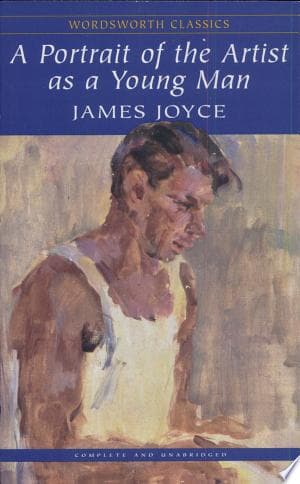
- A Portrait of the Artist as a Young Man
James Joyce
3.6 (128k) average on GoodreadsLiterary FictionExplores the intellectual, religious, and artistic awakening of a young man, featuring a protagonist grappling with his identity and societal expectations.
- The Razor's Edge
W. Somerset Maugham
4.2 (36k) average on GoodreadsLiterary FictionAnother Maugham novel exploring a protagonist's quest for meaning and spiritual fulfillment, but with a different focus on post-war disillusionment.
- Sons and Lovers
David Herbert Lawrence
Both explore a young man's psychological growth and complex romantic/familial relationships. Lawrence's novel is known for its intense emotionality, visceral portrayal of passion, and deep dive into Oedipal themes. Maugham's approach is more analytical and intellectual, focusing on Philip's conscious philosophical quest for meaning and freedom from emotional bondage, offering a more detached, yet equally insightful, perspective on personal liberation compared to Lawrence's emphasis on instinct and familial ties.
- The Old Man and the Sea
Ernest Hemingway
3.8 (831k) average on GoodreadsLiterary FictionA Cuban fisherman's long struggle with a giant marlin becomes a story of endurance and dignity, now retold for young adults with illustrations, phonetic guides, and writing prompts in Traditional Chinese.
- One Hundred Years of Solitude
Gabriel García Márquez
4.1 (753k) average on GoodreadsLiterary FictionThrough the multi-generational story of the Buendía family, a mythical town deals with the repeating patterns of time, love, and solitude, as the extraordinary mixes with the ordinary.




Enjoyed the summary?
A summary gives you the shape of the book. The book itself has the detail, the examples and the voice.
Find Of Human Bondage on AmazonAs an Amazon Associate, BookBrief earns from qualifying purchases. How we're funded