
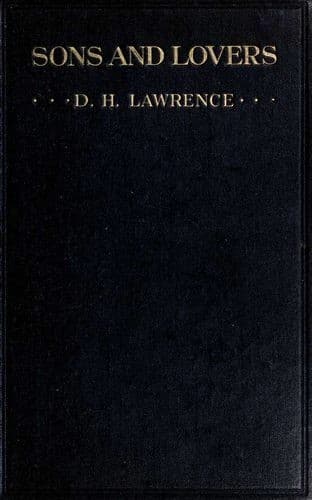
Synopsis
Covers the whole plot, including the ending.
- Difficulty
- Medium
- Read it if
- You are interested in character-driven psychological novels, explore complex mother-son relationships, enjoy stories set in early 20th-century industrial England, or appreciate the works of D.H. Lawrence and literary modernism.
- Skip it if
- You prefer fast-paced plots, dislike detailed psychological introspection, or are put off by potentially intense and sometimes uncomfortable familial and romantic dynamics.
Sons and Lovers Plot Summary
Covers the whole plot, including the ending.
The Morel Family's Origins and Early Struggles
Gertrude Coppard, a refined and educated woman, marries Walter Morel, a coal miner, captivated by his vibrant, if unpolished, charm. Their early love quickly sours under the weight of Walter's alcoholism, financial irresponsibility, and Gertrude's growing disillusionment. This marital discord creates a suffocating atmosphere for their children, particularly William, Annie, Paul, and Arthur. Gertrude pours her unfulfilled ambitions and intense emotional energy into her sons, developing an almost suffocating bond, especially with William, and later, Paul, as they become her primary source of solace and intellectual companionship.
William's Rise and Tragic Demise
William, the eldest son, becomes the family's hope for escaping the poverty and drudgery of the mining village. He moves to London, finding a respectable job and becoming engaged to Lily, a frivolous woman whom Gertrude dislikes. William's efforts to establish an independent life are constantly shadowed by his mother's emotional demands and his own lingering attachment to home. Tragically, he falls ill and dies in London, leaving Gertrude devastated and creating a void that Paul, still a young man, is destined to fill, intensifying his already complex relationship with his mother.
Paul's Early Life and Artistic Awakening
Paul, a delicate and sensitive child, often falls ill, further cementing his mother's protective instincts. He develops a deep, almost symbiotic relationship with Gertrude, becoming her confidant and emotional anchor after William's death. Paul shows an early aptitude for drawing and painting, which Gertrude encourages, seeing it as his path to a better life. He works at a surgical appliance factory but continues to pursue his art, finding solace and expression in his creative endeavors, which also serve as a way to differentiate himself from his father's working-class existence.
Miriam Leivers: The Spiritual Love
Paul forms a deep, intellectual, and spiritual bond with Miriam Leivers, a sensitive and devout farmer's daughter. They share a love for nature, literature, and art. However, their relationship is fraught with tension. Miriam's intense spirituality and Paul's mother's possessiveness create a chasm. Gertrude sees Miriam as a rival for Paul's affections and criticizes her for being too spiritual and not sufficiently physical. Paul, torn between his mother's demands and Miriam's ethereal love, struggles to fully commit, desiring a more earthy passion that Miriam, in his eyes, cannot provide.
Clara Dawes: The Sensual Awakening
While still entangled with Miriam, Paul becomes involved with Clara Dawes, an older, married, and estranged woman who works at the same factory. Clara is a passionate, independent, and physically expressive woman who offers Paul the sensual experience he feels is lacking with Miriam. Their affair is intense and physically fulfilling, allowing Paul to explore a different facet of love and desire. However, Clara's own bitterness from her failed marriage and Paul's inability to fully detach from his mother eventually strain their relationship, leading to its eventual decline.
The Mother's Influence and Paul's Internal Conflict
Gertrude Morel's powerful and often suffocating love for Paul is a central force throughout the novel. She subtly, and sometimes overtly, sabotages his relationships with both Miriam and Clara, viewing them as threats to her hold on him. Paul, deeply devoted to his mother and psychologically bound to her, finds himself incapable of forming a complete and independent romantic relationship. He constantly compares his lovers to his mother, finding them all lacking in some essential way, leading to his internal conflict and inability to fully commit.
The Decline of Walter Morel and Family Dissolution
As the children grow up and leave home, Walter Morel becomes increasingly isolated and frail, his alcoholism having taken its toll. The once vibrant, if flawed, man is reduced to a shadow, living a lonely existence in the family home. The family unit, once held together by Gertrude's fierce will, begins to unravel. Annie marries, Arthur enlists in the army, and Paul's own struggles prevent him from fully settling down. The home, once a focal point of intense emotional drama, becomes quieter, reflecting the fading life force of its patriarch.
Gertrude's Illness and Paul's Ultimate Devotion
Gertrude falls gravely ill with cancer, a protracted and painful ordeal. Paul dedicates himself entirely to her care, demonstrating his profound love and devotion. Witnessing her suffering, and unable to bear her prolonged pain, Paul, in an act of mercy and intense love, helps her to die by giving her an overdose of morphine with his sister Annie. This traumatic event marks the culmination of their intense bond, leaving Paul utterly bereft and directionless, having lost the central figure of his emotional life.
Paul's Isolation and Despair
After his mother's death, Paul experiences profound grief and a sense of utter desolation. He feels entirely alone, adrift without the anchor of his mother's presence. He wanders aimlessly, contemplating suicide, feeling that his own life force has been extinguished with hers. His previous relationships with Miriam and Clara now seem distant and incomplete, unable to fill the immense void left by Gertrude. He is haunted by her memory, unable to break free from her pervasive influence even in death.
A Glimmer of Hope: Facing the Future
In his deepest despair, contemplating walking into the sea, Paul has a moment of realization. He sees his mother's ghost beckoning him towards oblivion, but he resists. He turns away from the darkness, towards the distant lights of the town, symbolizing a conscious decision to choose life. Though still grieving and profoundly altered, he makes a tentative step towards an unknown, independent future, finally beginning the slow, painful process of forging an identity separate from his mother's overwhelming influence, however uncertain that path may be.
Principal Figures
Paul Morel
Protagonist
The sensitive artist torn between maternal love and romantic desire.
Paul is the central character, a gifted and sensitive young man with artistic aspirations. He is deeply, almost pathologically, attached to his mother, Gertrude, who channels her unfulfilled ambitions into him. This intense bond makes him incapable of forming complete, independent romantic relationships, as he constantly seeks his mother's approval and compares his lovers to her. He struggles with his identity, caught between the working-class world of his father and the intellectual, artistic world he strives for. His journey is one of emotional entanglement, artistic development, and ultimately, a painful struggle for self-liberation after his mother's death.
Relationships: Gertrude Morel (Intense, suffocating, Oedipal mother-son bond); Walter Morel (Distant, antagonistic, resentful father-son relationship); Miriam Leivers (Spiritual, intellectual, unconsummated romantic love); Clara Dawes (Passionate, sensual, ultimately unfulfilling affair)
Gertrude Morel
Major Character / Paul's Mother
The strong-willed, intellectual, and possessive matriarch.
Gertrude is Paul's mother, a woman of strong intellect and refined tastes who married beneath her station. Disillusioned by her husband Walter's alcoholism and lack of ambition, she pours all her emotional and intellectual energy into her sons, particularly William and later Paul. She is fiercely possessive and subtly sabotages Paul's relationships with other women, seeing them as rivals for his affection and loyalty. Her love, while deeply devoted, is also suffocating and ultimately prevents Paul from achieving emotional independence. She represents the destructive power of maternal love when it becomes too intense.
Relationships: Paul Morel (Intense, suffocating, Oedipal mother-son bond); Walter Morel (Antagonistic, loveless, deeply resentful marriage); William Morel (Deeply devoted, almost obsessive mother-son bond (until his death)); Miriam Leivers (Rivalry, disapproval, thinly veiled hostility)
Walter Morel
Major Character / Paul's Father
The unrefined, alcoholic coal miner.
Walter is Paul's father, a coal miner whose initial charm attracted Gertrude. However, his alcoholism, impulsiveness, and lack of intellectual companionship quickly lead to a bitter and loveless marriage. He is often portrayed as crude and insensitive, prone to outbursts of temper, and increasingly isolated from his family as his children grow older and side with their mother. Though he has moments of tenderness, his inability to connect with Gertrude or his sons on an emotional level creates a pervasive sense of estrangement and resentment within the family.
Relationships: Gertrude Morel (Antagonistic, loveless, deeply resentful marriage); Paul Morel (Distant, antagonistic, resentful father-son relationship)
Miriam Leivers
Love Interest
The spiritual and intellectual farmer's daughter.
Miriam is Paul's first serious love interest, a sensitive, highly spiritual, and intellectual young woman from a nearby farm. She shares Paul's love for art, nature, and literature, and their connection is initially profound and intellectual. However, her intense spirituality and Paul's mother's disapproval create tension. Paul finds her too ethereal and not physically passionate enough, a reflection of his own emotional immaturity and his mother's influence. She loves Paul deeply but struggles to give him the physical intimacy he craves, leaving their relationship unfulfilled.
Relationships: Paul Morel (Spiritual, intellectual, unconsummated romantic love); Gertrude Morel (Rivalry, disapproval, thinly veiled hostility)
Clara Dawes
Love Interest
The emancipated, sensual, and estranged factory worker.
Clara is Paul's second major love interest, an older, married woman who is estranged from her husband, Baxter Dawes. She is independent, passionate, and physically expressive, offering Paul the sensual and physical experiences he felt were missing with Miriam. Clara represents a more modern, emancipated woman. Their affair is intense and liberating for Paul, allowing him to explore his sexuality. However, Clara carries her own bitterness from her failed marriage, and Paul's continued emotional ties to his mother eventually strain their relationship, leading to its dissolution.
Relationships: Paul Morel (Passionate, sensual, ultimately unfulfilling affair); Baxter Dawes (Estranged husband, later reconciled)
Themes & Insights
The Oedipus Complex and Maternal Dominance
The central theme explores the destructive power of an overly intense mother-son bond, particularly through Paul's relationship with Gertrude. Gertrude's unfulfilled desires are projected onto her sons, especially Paul, leading to an Oedipal attachment that prevents him from forming healthy, independent romantic relationships. Her possessive love subtly sabotages his affairs, highlighting how a mother's influence can cripple a son's emotional and sexual development.
“A man's got to be a man, not a mother's darling.”
Class Conflict and Social Mobility
The novel vividly portrays the stark class divisions in early 20th-century England, contrasting the harsh realities of working-class life in the mining community with the aspirations for intellectual and artistic advancement. Gertrude's marriage to Walter highlights the challenges of marrying across class lines. Paul's artistic ambitions are a direct attempt to transcend his working-class origins, reflecting the societal pressures and personal struggles associated with upward social mobility and the desire for a life beyond the mines.
“They had wanted to get away from the colliery, and the life there. They had wanted to make a new place, a new home, a new life.”
The Nature of Love and Desire
Lawrence explores different facets of love: the spiritual and intellectual love shared with Miriam, the passionate and sensual love experienced with Clara, and the suffocating, possessive maternal love from Gertrude. Paul's inability to reconcile these different forms of love within one relationship, or even within himself, underscores his emotional fragmentation. The novel suggests that true, fulfilling love requires a balance of spiritual, intellectual, and physical connection, a balance Paul struggles to find due to his unresolved Oedipal complex.
“He felt he wanted to be at peace with her, and at peace with Miriam. But he could not be.”
Art as Escape and Expression
For Paul, art, particularly painting, serves as both an escape from the drudgery and emotional turmoil of his home life and a vital means of self-expression. It is his path to intellectual fulfillment and a way to differentiate himself from his father's working-class existence. His artistic talent is nurtured by his mother, becoming a source of pride and hope, but it also reflects his internal world, often depicting the beauty and melancholy he perceives in nature and human relationships.
“He loved to paint, to draw, to be able to express something of the unutterable things he felt.”
Plot Devices & Literary Techniques
Symbolism of Nature
The use of natural settings and elements to reflect characters' emotional states.
Lawrence frequently employs natural imagery to symbolize the characters' inner lives and the state of their relationships. The lush, vibrant landscapes of the English countryside often reflect Paul's moments of joy, artistic inspiration, or sensual awakening, particularly with Miriam. Conversely, the dark, suffocating environment of the coal mine represents the oppressive reality of working-class life and the emotional confinement felt by the characters. Flowers, particularly orchids, are used to symbolize passionate, often destructive, desire.
Foreshadowing
Hints and clues about future tragic events and character developments.
Lawrence uses subtle foreshadowing to build suspense and emphasize the inevitability of certain outcomes. William's early illness and his mother's intense devotion to him foreshadow Paul's similar trajectory and the tragic consequences of such a bond. The early descriptions of Gertrude's disillusionment with Walter foreshadow the deep marital discord that will shape the children's lives. The recurring motif of death and illness, particularly Gertrude's suffering, subtly prepares the reader for her eventual demise and its devastating impact on Paul.
Interior Monologue and Free Indirect Discourse
Techniques used to convey characters' thoughts and feelings directly to the reader.
Lawrence extensively uses interior monologue and free indirect discourse to delve deep into the psychological states of his characters, especially Paul and Gertrude. This allows the reader direct access to their complex emotions, unresolved conflicts, and hidden desires, making their motivations and suffering acutely palpable. This technique is crucial for understanding the nuances of Paul's Oedipal struggle and Gertrude's possessive love, as their unspoken thoughts and feelings often contradict their outward actions.
Sons and Lovers Quotes
“He seemed to be like a house with a fire in every window.”
“The child, in the first flush of his adolescence, wanted to give her everything, to make her happy, to be her hero.”
“She had all the vividness of an electric wire.”
“But the real tragedy was that they had not loved each other enough to make it work.”
“There was a gap in her soul, a sort of hollowness, where the love of a man should have been.”
“He felt as if he were being torn in two, between his mother and Miriam.”
“Her love was a sort of prison to him, a delicious prison, but a prison nonetheless.”
“The pit was like a magnet, drawing all the men down, and holding them fast.”
“He was always looking for something, some essential core of himself, that he felt he had lost.”
“She knew she was only a temporary haven, a place for him to rest before he flew off again.”
“It was as if she had given him life, and now she was taking it back.”
“He wanted to go out into the world, to live, to experience everything.”
“And she was the one who had kept him from it, always drawing him back, holding him fast.”
“The darkness was not something to be feared, but something to be embraced, a part of the great unknown.”
Quiz
10 questions on the plot and the characters. Each answer comes with a short explanation.
Question 1
Which character in 'Sons and Lovers' is the mother of Paul Morel?
- Clara Dawes
- Miriam Leivers
- Gertrude Morel
- Annie Morel
Show answer
C. Gertrude Morel Gertrude Morel is the strong-willed and often unhappy mother of Paul Morel, whose relationship with her is central to the novel.
Question 2
What is the profession of Walter Morel, Paul's father?
- Schoolteacher
- Coal miner
- Factory worker
- Farmer
Show answer
B. Coal miner Walter Morel is a coal miner, a profession that reflects the working-class setting of the novel and contributes to the family's struggles.
Question 3
Which character represents Paul Morel's intellectual and spiritual love interest, often associated with nature and contemplation?
- Clara Dawes
- Miriam Leivers
- Fanny
- Annie Morel
Show answer
B. Miriam Leivers Miriam Leivers is Paul's first significant love interest, representing a more spiritual and intellectual connection, often at odds with his physical desires.
Question 4
What is the primary conflict in the relationship between Paul Morel and his mother, Gertrude?
- Disagreement over his career choice
- A struggle for emotional and psychological independence
- Her disapproval of his artistic pursuits
- Financial disputes within the family
Show answer
B. A struggle for emotional and psychological independence The central conflict is Paul's struggle to achieve emotional and psychological independence from his intensely possessive mother, which impacts all his other relationships.
Question 5
Which character does Paul Morel have a more passionate and physical relationship with, contrasting with his relationship with Miriam?
- Miriam Leivers
- Clara Dawes
- Annie Morel
- Fanny
Show answer
B. Clara Dawes Clara Dawes represents Paul's more sensual and physical awakening, offering a passionate relationship that Miriam could not.
Question 6
What is William Morel's fate early in the novel?
- He moves to America
- He dies from an illness
- He becomes a successful artist
- He marries Miriam Leivers
Show answer
B. He dies from an illness William, the eldest son, dies from erysipelas, leaving a void that Paul tries to fill in his mother's affections.
Question 7
What artistic pursuit does Paul Morel engage in throughout the novel?
- Music composition
- Sculpture
- Painting
- Writing poetry
Show answer
C. Painting Paul Morel is an aspiring painter, and his artistic endeavors provide him with an outlet and a path towards self-expression.
Question 8
How does Gertrude Morel react to Paul's relationships with Miriam and Clara?
- She encourages them wholeheartedly
- She is indifferent to his romantic life
- She subtly undermines and disapproves of them
- She tries to set him up with other women
Show answer
C. She subtly undermines and disapproves of them Gertrude Morel, due to her intense bond with Paul, subtly or overtly disapproves of his relationships, seeing them as threats to her connection with him.
Question 9
What is the underlying psychological theory that 'Sons and Lovers' is often said to explore?
- The inferiority complex
- The Oedipus complex
- The Electra complex
- Cognitive dissonance
Show answer
B. The Oedipus complex The novel is widely seen as an exploration of the Oedipus complex, focusing on Paul's intense emotional attachment to his mother and its impact on his romantic relationships.
Question 10
What is the ultimate state of Paul Morel at the end of the novel, following his mother's death?
- He finds happiness with Miriam Leivers
- He returns to his father and the mining community
- He feels lost, isolated, and without direction, yet walks towards the light
- He successfully establishes himself as a renowned artist
Show answer
C. He feels lost, isolated, and without direction, yet walks towards the light After his mother's death, Paul is profoundly lost and isolated, feeling a profound void. The ending, however, shows him turning away from the darkness and walking towards the 'faintly humming, glowing town,' suggesting a fragile hope for the future.
Sons and Lovers FAQ
Who are the main characters in 'Sons and Lovers'?
The central characters are Paul Morel, the protagonist, and his parents, Walter and Gertrude Morel. His love interests, Miriam Leivers and Clara Dawes, also play significant roles in his development and relationships.
What is the primary theme of 'Sons and Lovers'?
The novel primarily explores the complexities of Oedipal relationships, particularly Paul's intense bond with his mother and how it impacts his romantic relationships. It also delves into class struggle, industrialization's effects, and the search for identity.
Is 'Sons and Lovers' an autobiographical novel?
Yes, 'Sons and Lovers' is largely considered autobiographical, drawing heavily from D.H. Lawrence's own life experiences. The character of Paul Morel mirrors Lawrence, and the Morel family dynamic reflects his own family's struggles and relationships.
What is the significance of the title 'Sons and Lovers'?
The title directly refers to the sons (William and Paul) and their intense, often destructive, love for their mother. It highlights how these filial bonds overshadow and complicate their ability to form healthy, independent romantic relationships with other women.
How does the industrial setting influence the characters in the book?
The mining community and its harsh realities deeply impact the Morel family, particularly Walter Morel, who is a miner. The industrial environment contributes to the family's financial struggles, social class tensions, and the general bleakness that pervades their lives, contrasting with the natural world.
What role do Miriam Leivers and Clara Dawes play in Paul's life?
Miriam represents Paul's spiritual and intellectual connection, a platonic ideal that he struggles to reconcile with physical desire. Clara represents the passionate, physical, and rebellious aspect of love, offering him a different kind of fulfillment but ultimately proving unsatisfying.
How does Paul's relationship with his mother evolve throughout the novel?
Paul's relationship with his mother begins as deeply loving and supportive, but it gradually becomes suffocating and possessive, especially after his brother William's death. Her emotional grip prevents him from fully committing to other women, ultimately leading to his despair after her passing.
What is the ending of 'Sons and Lovers' and what does it signify?
The novel ends with Paul walking towards the city lights after his mother's death, feeling utterly alone and contemplating suicide but ultimately choosing life. This signifies his painful liberation from his mother's influence and his tentative step towards an unknown, independent future, albeit with profound grief.
Is 'Sons and Lovers' a feminist novel?
While it explores the lives and inner worlds of female characters like Gertrude, Miriam, and Clara, 'Sons and Lovers' is not typically classified as a feminist novel. It often portrays women through the lens of Paul's perceptions and desires, and its focus is more on the Oedipal complex than on female empowerment or societal critique from a feminist perspective.
How does 'Sons and Lovers' compare to other D.H. Lawrence novels?
'Sons and Lovers' is often seen as Lawrence's breakthrough novel, establishing themes he would further explore, such as psychology, class, and sexuality, in works like 'The Rainbow' and 'Women in Love.' It is more overtly autobiographical and focuses on the formative years of its protagonist compared to his later, more philosophical novels.
What literary period does 'Sons and Lovers' belong to?
'Sons and Lovers' is a key work of early 20th-century Modernism, published in 1913. It incorporates psychological realism, stream of consciousness elements, and a focus on inner lives and complex human relationships, characteristic of the period.
Are there any film adaptations of 'Sons and Lovers'?
Yes, the novel has been adapted into film. The most notable adaptation is the 1960 British film directed by Jack Cardiff, which received critical acclaim and several Academy Award nominations, including Best Picture.
What kind of language and style does D.H. Lawrence use in 'Sons and Lovers'?
Lawrence employs a rich, descriptive, and often poetic prose style that delves deep into the characters' psychological states and sensory experiences. He uses vivid imagery, particularly when describing nature, and his dialogue captures the regional accents and social dynamics of the mining community.
Similar books
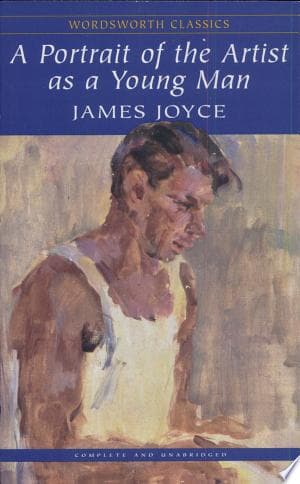
- A Portrait of the Artist as a Young Man
James Joyce
3.6 (128k) average on GoodreadsLiterary FictionExplores the artistic and intellectual development of a young man, featuring complex family dynamics and a journey of self-discovery, much like Paul Morel's.
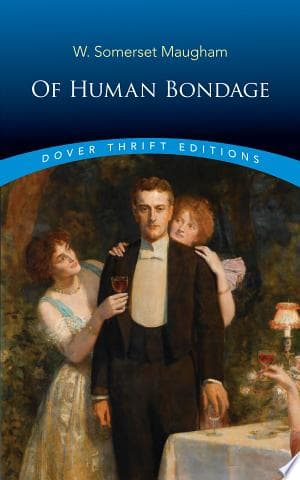
- Of Human Bondage
W. Somerset Maugham
4.1 (50k) average on GoodreadsLiterary FictionA bildungsroman following a young man's difficult journey through love, art, and self-understanding, often dealing with challenging relationships and societal pressures.
- Jude the Obscure
Thomas Hardy
3.8 (64k) average on GoodreadsHistorical FictionFeatures a protagonist from a working-class background striving for intellectual and social advancement, encountering societal obstacles and tragic romantic entanglements, echoing the struggles of the Morel family.
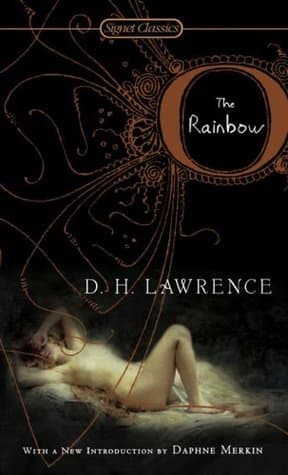
- The Rainbow
D.H. Lawrence
3.7 (19k) average on GoodreadsHistorical FictionWhile both are by Lawrence and explore family dynamics and changing social structures, 'The Rainbow' offers a broader, multi-generational saga of the Brangwen family, focusing more on the evolution of consciousness and sexual relationships across time. 'Sons and Lovers' is more intensely focused on the Oedipal complex within a single family unit and the specific psychological damage it inflicts on the protagonist. 'The Rainbow' is arguably more ambitious in scope and thematic exploration, moving beyond the individual's psychological struggles to examine societal shifts and the search for spiritual fulfillment.
- The Diary of a Young Girl
Anne Frank
4.2 (2.7M) average on GoodreadsBiographyDuring the Nazi occupation, a teenage girl's diary, written from a secret annex, shares observations on humanity, hope, and the wait for freedom.
- Twisted 1. Twisted love
Ana Huang
3.7 (1.7M) average on GoodreadsA quiet billionaire with a difficult past finds his guarded heart opening to the woman he must protect, but their growing passion uncovers dangerous secrets and a shared, traumatic history.



Enjoyed the summary?
A summary gives you the shape of the book. The book itself has the detail, the examples and the voice.
Find Sons and Lovers on AmazonAs an Amazon Associate, BookBrief earns from qualifying purchases. How we're funded