
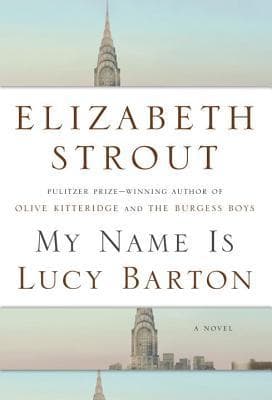
Synopsis
Covers the whole plot, including the ending.
- Difficulty
- Medium
- Pacing
- Slow
- Mood
- Reflective, Poignant, Intimate, Melancholy
- Read it if
- You appreciate reflective, character-driven literary fiction about memory, family dynamics, and the power of storytelling, especially from a female perspective.
- Skip it if
- You prefer fast-paced plots with clear conflicts and resolutions, or explicit details about trauma.
My Name Is Lucy Barton Plot Summary
Covers the whole plot, including the ending.
A Hospital Stay and an Unexpected Visitor
In 1980s New York City, Lucy Barton, a writer in her early forties, stays in the hospital for nine weeks due to complications from an appendectomy. She gets an infection and stays in the hospital for a long time. During this time, her husband, William, visits regularly, bringing their two young daughters, but Lucy feels very lonely. Her mother, whom Lucy has not seen in many years and with whom she has a difficult relationship, arrives from Amgash, Illinois, to visit her. This visit is important, as Lucy thought her mother would never come. It immediately creates a feeling of both comfort and unresolved tension between them.
Reconnecting Through Shared Memories
Lucy's mother stays for five days, sleeping on a cot in Lucy's hospital room. Their talks mix everyday observations about other patients, family gossip, and shared memories from Lucy's childhood in Amgash. They discuss neighbors, relatives, and simple events, carefully avoiding the painful facts of Lucy's poor and often traumatic childhood. Lucy's mother mentions a woman named Catherine, who gossiped about Lucy's family. They talk about the cold winters in Illinois and their past difficulties. Despite the surface nature of the talks, Lucy finds great comfort in her mother's presence, valuing the simple act of being together after so long.
Childhood in Amgash: Poverty and Isolation
As her mother tells stories and even after she leaves, Lucy's mind goes back to her childhood in Amgash, Illinois. She remembers her family's extreme poverty. They lived in a broken-down house with no running water or electricity for long periods. They were often hungry, wore old clothes, and other children at school made fun of them for how they looked and their lack of cleanliness. Lucy remembers being locked in a truck for hours as punishment and the general feeling of isolation and shame that filled her early life. Her parents, especially her father, were often distant and emotionally unavailable. This led to a childhood with neglect and unspoken hardships.
The Seeds of a Writer: Escaping Through Books
Despite her difficult home life, Lucy finds comfort and possibility through reading. She remembers spending hours in the school library, reading books and finding a world beyond Amgash. This love for reading later grows into a desire to become a writer. She remembers a time when a teacher encouraged her writing, planting a seed that would later shape her adult life. This early interest in ideas and the escape it offered were important in shaping Lucy's desire to break free from her family's cycle of poverty and emotional deprivation. It gave her a purpose and a dream for the future.
Leaving Amgash and the Path to New York
Lucy leaves Amgash, going to college on a scholarship. She works hard, wanting to build a new life for herself, away from her past. She moves to New York City, where she meets and marries William, a man from a different social background. Lucy's marriage to William is a source of stability and love, though it has its difficulties, especially in how her past affects their relationship. Her move to New York shows her physical and emotional escape, a clear break from the environment that defined her childhood. This allows her to pursue her writing dreams and raise her own family in a different setting.
The Unspoken Truths of Family
During and after her mother's visit, Lucy thinks about the deep emotional distance that stayed in her family. She understands that her parents, especially her father, carried their own burdens and traumas, which affected their parenting style. She remembers an incident involving a man named 'Old Ricky,' and her mother's vague but unsettling answers to Lucy's questions about her father's past. Lucy senses unspoken horrors and secrets within her family, especially about her father's experiences during the war and his emotional withdrawal later. This helps Lucy begin to understand, though not fully forgive, the difficulties of her upbringing, recognizing the generational impact of trauma.
The Writer's Struggle and the Power of Observation
Lucy often returns to her identity as a writer. She describes the challenges of getting published, the rejections, and the constant inner drive to tell stories. She recounts her talks with a writing teacher, Sarah Payne, who becomes an important mentor. Sarah encourages Lucy to write honestly and use her own experiences, even the painful ones. Lucy learns to observe the world around her carefully, noticing small details and human interactions that inform her fiction. This dedication to her craft is a central idea, showing how writing helps her process her past and make sense of the world.
Motherhood and the Echoes of the Past
Lucy is a mother to two daughters, and her experiences with them are greatly shaped by her own childhood. She tries to give them a loving and stable environment, very different from her own upbringing. She thinks about the moments of joy and connection she shares with her daughters, such as teaching them to make snow angels, which she never experienced herself. However, shadows of her past sometimes appear, affecting her interactions. She is aware of the possibility of inherited trauma and works to break negative cycles, making sure her daughters feel loved and secure in a way she often did not.
The Enduring Impact of Love and Forgiveness
As the story goes on, Lucy considers love and forgiveness, especially concerning her parents. She recognizes that despite the hardships, there was a form of love, perhaps imperfect, within her family. She acknowledges that her parents did their best with what they had and the limitations they faced. Lucy's thoughts are not about excusing her parents' mistakes, but about understanding their humanity and the circumstances that shaped them. This view allows her to find some peace and to move forward, understanding that her past, however painful, is a lasting part of who she is.
Finding Her Voice: The Writer's Triumph
Years after her hospital stay, Lucy Barton becomes a published author. She continues to write, often using her life experiences, including her difficult childhood and her complex relationship with her mother. Her writing connects people, allowing her to express universal human experiences of pain, love, and strength. The end of the book suggests that Lucy's journey, from a silenced and poor child to a successful writer, shows the power of storytelling and the human spirit's ability to survive and change. Her voice, once suppressed, now connects with many.
Principal Figures
Lucy Barton
Protagonist
A successful writer reflecting on her difficult childhood and complex family relationships.
Lucy Barton is the narrator and protagonist, a woman in her forties who, while recovering from a hospital stay, reflects on her impoverished and traumatic childhood in Amgash, Illinois. She is highly observant, sensitive, and deeply empathetic, using her experiences to inform her writing. Lucy is driven by a profound desire to understand her past and to forge a different future for herself and her daughters. Her journey is one of self-discovery, grappling with the meaning of love, family, and forgiveness. She is a survivor who finds her voice through literature.
Relationships: Lucy's Mother (Estranged but deeply connected; source of comfort and unresolved tension); William (Husband, source of stability and love); Lucy's Daughters (Children, for whom she strives to provide a better life); Sarah Payne (Writing mentor and guide)
Lucy's Mother
Supporting
Lucy's estranged mother whose hospital visit triggers deep reflection.
Lucy's mother is a quiet, reserved woman from Amgash, Illinois, who makes an unexpected five-day visit to Lucy in the hospital. She is a figure of both comfort and mystery for Lucy, providing a connection to her past but also representing the emotional distance and unspoken truths of Lucy's childhood. Her conversations are often mundane, avoiding deep emotional disclosure, yet her presence itself is a profound act of love for Lucy. She embodies the stoicism and resilience of people from impoverished rural backgrounds, doing her best within her limited means.
Relationships: Lucy Barton (Daughter, with a complex and estranged but ultimately loving bond); Lucy's Father (Husband, with whom she shared a difficult life)
William
Supporting
Lucy's husband, a constant and loving presence in her adult life.
William is Lucy Barton's husband and the father of their two daughters. He is presented as a stable, loving, and supportive partner, in stark contrast to the emotional neglect Lucy experienced in her childhood. He visits her regularly in the hospital and brings their children, providing a sense of normalcy and connection during her recovery. While not deeply explored, his character represents the new, healthier family unit Lucy has built, a testament to her escape from her past. He offers a grounding presence in Lucy's often turbulent emotional landscape.
Relationships: Lucy Barton (Husband, a loving and supportive partner); Lucy's Daughters (Father)
Lucy's Father
Supporting
A distant and traumatized figure from Lucy's childhood.
Lucy's father is a largely silent and emotionally distant figure from her childhood in Amgash. He is a veteran of World War II, and Lucy hints at his probable PTSD, which contributed to his withdrawn nature and occasional acts of harsh discipline, such as locking Lucy in a truck. He represents the unacknowledged trauma and emotional repression within Lucy's family, and his past is shrouded in a sense of unspoken secrets. Despite his harshness, Lucy later develops a nuanced understanding of his suffering, recognizing him as a flawed individual shaped by his own difficult experiences.
Relationships: Lucy Barton (Daughter, with whom he had a distant and often frightening relationship); Lucy's Mother (Husband)
Sarah Payne
Supporting
Lucy's influential writing teacher and mentor.
Sarah Payne is Lucy Barton's writing teacher and a significant mentor in her development as an author. She encourages Lucy to write with honesty and to delve into her own experiences, no matter how painful, emphasizing the importance of truth in storytelling. Sarah's guidance helps Lucy find her authentic voice and validate her life story as worthy of narration. She represents the external validation and intellectual nurturing that Lucy lacked in her childhood, playing a crucial role in Lucy's transformation from a silent observer to a published writer.
Relationships: Lucy Barton (Mentor and teacher)
Lucy's Daughters
Supporting
The children Lucy strives to protect from her past.
Lucy's two young daughters represent the future and the opportunity for Lucy to create a loving, stable family life, a stark contrast to her own upbringing. They visit her in the hospital with William, bringing moments of joy and normalcy. Lucy often reflects on her interactions with them, consciously trying to be a present and affectionate mother, striving to break the cycle of emotional neglect. They are a tangible reminder of her success in building a new life and her deep commitment to providing them with a childhood free from the poverty and trauma she endured.
Relationships: Lucy Barton (Children, for whom she has deep love and protective instincts); William (Father)
Catherine
Mentioned
A gossiping neighbor from Amgash.
Catherine is a woman from Amgash, mentioned by Lucy's mother during their hospital conversations. She is remembered for gossiping about Lucy's family, particularly about their poverty and perceived oddities. Catherine represents the judgmental and often cruel social environment Lucy grew up in, where her family was ostracized and looked down upon. Her character, though minor, highlights the pervasive shame and isolation Lucy experienced as a child, reinforcing the difficult circumstances from which Lucy eventually escaped.
Old Ricky
Mentioned
A mysterious figure linked to Lucy's father's past.
Old Ricky is a shadowy figure briefly mentioned in connection to Lucy's father's past, particularly in the context of unsettling and potentially traumatic events. Lucy's mother's evasiveness when discussing Old Ricky hints at dark, unspoken secrets or violence associated with him and Lucy's father. His brief presence in the narrative underscores the deep-seated, unaddressed trauma within Lucy's family history and the sense of danger that sometimes permeated her childhood home, contributing to her father's emotional withdrawal.
Relationships: Lucy's Father (Implied connection to a past trauma)
Themes & Insights
Memory and the Shaping of Identity
The novel uses Lucy's fragmented memories, brought on by her mother's visit. These memories of her poor childhood in Amgash, her parents' emotional distance, and her escape to New York are not in order. They are a fluid look at how her past experiences have shaped her adult identity, her relationships, and her goals as a writer. Lucy often revisits these memories, trying to understand them and fit them into her understanding of herself.
“And this is the way it is with memory, at least for me. I re-create it, and in re-creation, I am changed.”
The Complexity of Mother-Daughter Relationships
At its core, the book looks at the complex and often contradictory nature of the bond between Lucy and her mother. Despite years of not seeing each other and a childhood with neglect, Lucy finds great comfort in her mother's presence. Their talks, though often superficial, show a deep, unspoken connection and a shared history. Lucy deals with feelings of longing, resentment, and a deep, almost primal love for her mother, recognizing the sacrifices and limitations her mother faced. This theme shows how maternal relationships, even imperfect ones, leave a lasting mark.
“But the truth is, I was so happy my mother was there. I was so happy to see her.”
Poverty, Shame, and Social Class
Lucy's childhood in Amgash is defined by extreme poverty, which brings strong feelings of shame and being left out socially. She talks about living without basic things, wearing worn-out clothes, and being made fun of by peers. This experience of class difference and the resulting humiliation greatly affect Lucy, driving her desire to escape and build a different life. The novel subtly explores how poverty can cause not just material hardship but also deep emotional wounds and a lasting feeling of being an outsider, even after becoming successful.
“We were poor. I knew that. It was a shame. I knew that too.”
The Healing Power of Storytelling and Writing
Lucy's journey is connected to her growth as a writer. Writing helps her escape her painful past and also process and understand it. Her mentor, Sarah Payne, encourages her to write honestly and use her own life experiences. Through storytelling, Lucy finds her voice, turns her personal suffering into universal art, and finds healing and connection with others. The act of narration itself is shown as a strong tool for survival and self-discovery.
“That is the way of a writer, to be always observing. It is a terrible thing, really, but it is how we are.”
The Unspoken and Unresolved Trauma
The novel often suggests deeper, unspoken traumas within Lucy's family, especially about her father's past and the general feeling of fear and emotional repression. Lucy's mother's avoidance about certain events, like 'Old Ricky,' suggests a history of violence or abuse that is never fully stated. This theme shows the lasting impact of unaddressed trauma across generations and how silence can continue pain. Lucy's story tries to bring these unspoken truths to light, even if they remain partly hidden, acknowledging their deep influence.
“And there were so many things that were never said.”
Plot Devices & Literary Techniques
Non-Linear Narrative / Stream of Consciousness
Lucy's reflections jump between past and present, creating a fluid mental landscape.
The novel employs a non-linear narrative, moving fluidly between Lucy's present hospital stay and her childhood memories in Amgash, her marriage, and her development as a writer. This stream-of-consciousness style mirrors the way memory works, with one thought or observation triggering another, regardless of chronological order. This device allows the reader to experience Lucy's internal world directly, emphasizing the interconnectedness of her past and present and how her early experiences continue to inform her adult life and perceptions.
First-Person Retrospective Narration
Lucy tells her own story, looking back on her life with a writer's perspective.
The entire novel is narrated in the first person by Lucy Barton, who is not just recounting her life but doing so as a seasoned writer reflecting on her experiences. This retrospective voice allows for moments of wisdom, analysis, and emotional distance that an in-the-moment narration would lack. Lucy's writer's sensibility shapes how she observes and interprets events, giving the narrative a reflective, almost meditative quality, where events are filtered through the lens of her later understanding and the craft of storytelling.
The Hospital Room as a Microcosm
The confined space of the hospital room becomes a catalyst for introspection.
The hospital room where Lucy spends nine weeks recovering acts as a literal and metaphorical enclosed space. Physically confined, Lucy's mind is free to wander through her past. The limited setting intensifies her internal reflections and makes her mother's visit a singular, pivotal event. It becomes a microcosm where the outside world is filtered, allowing Lucy to focus intensely on her inner life, her memories, and the complex relationship with her mother, making the visit feel intimate and profound.
Unreliable Narration (Subtle)
Lucy's memory and interpretations are presented as inherently subjective.
While Lucy is largely truthful, her narration subtly hints at the subjective nature of memory and interpretation. She acknowledges that 'this is the way it is with memory, at least for me. I re-create it.' She sometimes recounts events with a child's understanding, or admits to not knowing the full truth, particularly regarding her parents' past. This device underscores that the story is Lucy's personal truth, shaped by her feelings and perspective, rather than an objective historical account, inviting the reader to consider the gaps and biases inherent in any personal narrative.
My Name Is Lucy Barton Quotes
“I was a writer, and I was not a writer. It was like a dream, and it was real.”
“We are all of us more than the worst thing we have ever done.”
“But what I wanted to say was that I loved my mother. And she loved me. Not in the way a mother should love a child, but in the way a person loves a person.”
“There are people who can’t imagine the kind of poverty we lived in. And then there are people who can.”
“You can love what you lose, and you can lose what you love.”
“It is in the nature of things for us to be unaware of the effects of our actions.”
“And this is the thing: sometimes you have to be away from people to love them.”
“My mother never said, 'I love you.' Not once. Not ever. But she loved me. I know she did.”
“And it was this, I think, that became the germ of my writing: the great and terrible knowledge that we are all alone.”
“What I have learned is this: that it is not the truth of a story that matters, but the emotion it evokes.”
“But the strangest thing was this: being in the hospital, I felt a kind of peace.”
“And there are people, I know, who would say I should have forgiven my mother. But what is forgiveness, really?”
“We are all just trying to do our best, aren’t we?”
“It is a human need to tell stories. Not just to tell them, but to hear them.”
Quiz
10 questions on the plot and the characters. Each answer comes with a short explanation.
Question 1
What is the primary reason Lucy Barton is in the hospital at the beginning of the novel?
- She was in a car accident.
- She had a simple operation that developed complications.
- She is suffering from a mysterious, undiagnosed illness.
- She gave birth to her second daughter.
Show answer
B. She had a simple operation that developed complications. The book states that Lucy is recovering slowly from what should have been a simple operation, indicating complications arose.
Question 2
Who unexpectedly visits Lucy in the hospital, prompting many of her reflections?
- Her estranged husband, William.
- Her childhood friend, Patty.
- Her mother, to whom she hasn't spoken in years.
- Her older sister, Vicky.
Show answer
C. Her mother, to whom she hasn't spoken in years. The novel explicitly states that 'Her mother, to whom she hasn't spoken for many years, comes to see her,' driving much of the narrative.
Question 3
Where did Lucy Barton grow up, a place she often reflects upon?
- Brooklyn, New York
- Amgash, Illinois
- Boise, Idaho
- Omaha, Nebraska
Show answer
B. Amgash, Illinois Lucy's impoverished childhood in Amgash, Illinois, is a recurring memory and a significant part of her backstory.
Question 4
What is Lucy's primary ambition after escaping her childhood home?
- To become a successful actress.
- To open her own business.
- To become a writer.
- To become a doctor.
Show answer
C. To become a writer. The synopsis mentions 'her escape to New York and her desire to become a writer,' which is a central theme of her personal journey.
Question 5
The novel explores the complex relationship between Lucy and her mother. Which of the following best describes their long-standing dynamic prior to the hospital visit?
- A close and supportive bond.
- A relationship marked by frequent arguments but underlying affection.
- A distant relationship with years of silence, yet underlying longing.
- A purely transactional relationship based on financial support.
Show answer
C. A distant relationship with years of silence, yet underlying longing. The text states 'Her mother, to whom she hasn't spoken for many years, comes to see her,' and the visit 'forces Lucy to confront the tension and longing.'
Question 6
How does Lucy's perspective as a narrator contribute to the novel's overall tone?
- She is highly critical and judgmental of others.
- She is emotionally detached and purely factual.
- She is keenly observant, deeply human, and reflective.
- She is overly optimistic and naive about her past.
Show answer
C. She is keenly observant, deeply human, and reflective. The description highlights Lucy's 'brilliant storytelling voice: keenly observant, deeply human, and truly unforgettable,' which shapes the novel's introspective tone.
Question 7
What role do Lucy's memories of her impoverished childhood in Amgash, Illinois, play in her adult life and reflections?
- They are a source of comfort and nostalgia.
- They are largely forgotten and have no impact.
- They inform every aspect of her life, fueling her longing and tension.
- They inspire her to return and help her community.
Show answer
C. They inform every aspect of her life, fueling her longing and tension. The text states her unexpected visit 'forces Lucy to confront the tension and longing that have informed every aspect of her life: her impoverished childhood.'
Question 8
The novel is described as illuminating 'the most tender relationship of all.' Which relationship is specifically referred to?
- Between a husband and wife.
- Between a writer and her readers.
- Between mother and daughter.
- Between siblings.
Show answer
C. Between mother and daughter. The final sentence of the synopsis explicitly states the book 'shows how a simple hospital visit illuminates the most tender relationship of all-the one between mother and daughter.'
Question 9
How does the hospital setting itself contribute to the narrative's exploration of Lucy's past and relationships?
- It provides a neutral, impersonal backdrop that allows her to focus solely on the present.
- Its quiet isolation and vulnerability create a space for introspection and the unexpected reunion.
- It symbolizes her complete detachment from her previous life and family.
- It highlights her physical suffering more than her emotional journey.
Show answer
B. Its quiet isolation and vulnerability create a space for introspection and the unexpected reunion. The hospital's quiet, confined setting, coupled with Lucy's vulnerability, creates the perfect environment for her mother's visit and the deep introspection that follows, allowing her to confront long-held feelings.
Question 10
Beyond the mother-daughter relationship, what other significant personal aspects of Lucy's life are explored through her hospital reflections?
- Her career as a successful lawyer and her philanthropic work.
- Her early career as a musician and her travels abroad.
- Her faltering marriage, her love for her two daughters, and her desire to be a writer.
- Her political activism and her involvement in community organizing.
Show answer
C. Her faltering marriage, her love for her two daughters, and her desire to be a writer. The synopsis clearly states the visit forces her to confront 'her impoverished childhood... her escape to New York and her desire to become a writer, her faltering marriage, her love for her two daughters.'
My Name Is Lucy Barton FAQ
What is My Name Is Lucy Barton about?
My Name Is Lucy Barton tells the story of Lucy Barton, a writer recovering from surgery in a New York hospital. Her estranged mother comes to visit, and their conversations over several days dredge up Lucy's traumatic, impoverished childhood in Amgash, Illinois, her escape to New York, her aspirations to be a writer, and her complex relationships, particularly with her mother. The novel explores memory, trauma, and the enduring impact of family.
Why should I read My Name Is Lucy Barton?
You should read My Name Is Lucy Barton for its profound exploration of a mother-daughter relationship, the power of memory, and the struggle to overcome a difficult past. Elizabeth Strout's prose is deceptively simple yet deeply moving, offering a raw and honest portrayal of human connection and the quiet resilience of its protagonist, Lucy, as she processes her life's defining moments.
What is the background/setting of My Name Is Lucy Barton?
The primary setting is a hospital room in New York City during Lucy Barton's recovery from surgery. However, through Lucy's memories and conversations with her mother, the narrative frequently shifts to her childhood in rural Amgash, Illinois, depicting a life of extreme poverty, isolation, and abuse, which profoundly shaped Lucy's identity and her longing for escape.
What are the most memorable quotes?
One memorable quote is, 'We are all of us more than the sum of our parts.' Another significant line is Lucy's reflection, 'There are times when I think, What if I had died? And then I think, My God, I am still alive.' These quotes encapsulate the novel's themes of resilience, the complexity of identity, and the profound human experience of survival and self-discovery.
What writing style does the author use?
Elizabeth Strout employs a first-person narrative, told from Lucy Barton's perspective, characterized by its conversational, reflective, and often fragmented quality. The prose is sparse and precise, yet deeply empathetic, allowing Lucy's voice to convey complex emotions and past traumas with a sense of quiet authority and profound vulnerability. It feels like a memoir, blurring the lines between fiction and lived experience.
What minor details add significant meaning?
The detail of Lucy's childhood experience of being locked in a truck for hours, or the recurring image of her family's extreme poverty, such as having only one pair of shoes, profoundly illuminates the depth of her trauma and isolation. These seemingly small details underscore the emotional deprivation and the sheer struggle for survival that defined her early life, making her later successes feel all the more significant.
What are some subtle foreshadowing moments?
Subtle foreshadowing occurs in Lucy's early, seemingly innocuous mentions of her parents' distant and unloving nature, hinting at the deeper, more painful revelations about her childhood abuse that are gradually unveiled. The initial politeness between Lucy and her mother also subtly foreshadows the underlying tension and unspoken grievances that will surface during their hospital conversations.
What unexpected character connections exist?
While not 'unexpected' in a plot-twist sense, the profound connection Lucy feels to her writing teacher, Sarah Payne, serves as a crucial, almost maternal, bond that helps Lucy escape her past and find her voice. This intellectual and emotional mentorship is a powerful counterpoint to her fraught relationship with her biological mother, highlighting the chosen family and influences that shape a person.
What are unspoken character motivations?
Lucy's mother's unspoken motivation for visiting her estranged daughter appears to be a complex mix of guilt, residual love, and perhaps a desire for reconciliation or understanding before it's too late. Lucy's own unspoken motivation for allowing her mother to stay and engaging in these difficult conversations is a deep-seated longing for maternal love and validation, despite the pain it brings.
What psychological complexities do characters exhibit?
Lucy exhibits complex psychological patterns, including a persistent feeling of being an outsider, a deep-seated need for approval, and a quiet resilience born from trauma. Her mother, too, displays complexities: a harsh exterior masking her own past suffering and a limited capacity for expressing affection, yet she shows up, indicating a buried love or duty. Both navigate the psychological scars of their shared history.
What are the major emotional turning points?
A major emotional turning point is when Lucy's mother recounts a story about Lucy's father being kind to a neighbor, which briefly softens Lucy's hardened perception of her father. Another is when Lucy realizes the depth of her mother's own suffering and the limitations of her mother's ability to express love, leading to a complex mix of understanding, grief, and forgiveness.
How do relationship dynamics evolve?
The dynamic between Lucy and her mother evolves from one of strained politeness and unspoken tension to a fragile, temporary truce built on shared memories and a flicker of understanding. While the fundamental issues of their past are not 'resolved,' their hospital conversations allow for a moment of raw, unvarnished connection, changing Lucy's internal relationship with her mother, if not fully mending the external one.
Which parts remain ambiguous or open-ended?
The novel leaves the full extent of the abuse Lucy suffered as a child somewhat ambiguous, hinted at rather than explicitly detailed, allowing the reader to infer the trauma's depth. The long-term impact of the hospital visit on Lucy's relationship with her mother also remains open-ended; while Lucy gains understanding, it's unclear if a true, lasting reconciliation outside the hospital setting is achieved.
What are controversial scenes or decisions?
One might consider Lucy's decision to maintain distance from her family for many years, despite her longing for connection, as a controversial choice, reflecting the difficult balance between self-preservation and familial duty. The ambiguity surrounding the precise nature of her childhood abuse, rather than explicit depiction, could also be seen as a narrative decision that some readers might debate.
My Name Is Lucy Barton ending explained: how it ends & what it means
The novel ends with Lucy reflecting on her life after her mother's visit, years later. She becomes a successful writer, and though her marriage falters, she finds love again. The ending signifies Lucy's journey of understanding and self-acceptance, realizing that her past, particularly her relationship with her mother, is an indelible part of who she is. It means that while some wounds never fully heal, one can find peace and meaning through storytelling and connection, even if imperfect.
About the author

Elizabeth Strout is an American author known for her literary fiction that often explores complex human relationships and emotional depth. Her notable works include "Olive Kitteridge," which won the Pulitzer Prize for Fiction, "My Name Is Lucy Barton," and "Amy and Isabelle." Strout's writing frequently delves into the lives of ordinary people in small-town settings.
Similar books
- Olive Kitteridge
Elizabeth Strout
3.8 (172k) average on GoodreadsLiterary FictionExplores the quiet complexities of small-town life and human relationships with deep psychological insight.
- A Tree Grows in Brooklyn
Betty Smith
4.3 (388k) average on GoodreadsHistorical FictionFeatures a young girl's difficult childhood and her escape through reading and writing.
- Gilead (Oprah's Book Club)
Marilynne Robinson
3.9 (126k) average on GoodreadsFictionA reflective, first-person narrative that explores memory, family, and the search for meaning.
- The Old Man and the Sea
Ernest Hemingway
3.8 (831k) average on GoodreadsLiterary FictionA Cuban fisherman's long struggle with a giant marlin becomes a story of endurance and dignity, now retold for young adults with illustrations, phonetic guides, and writing prompts in Traditional Chinese.
- One Hundred Years of Solitude
Gabriel García Márquez
4.1 (753k) average on GoodreadsLiterary FictionThrough the multi-generational story of the Buendía family, a mythical town deals with the repeating patterns of time, love, and solitude, as the extraordinary mixes with the ordinary.
- The Goldfinch
Donna Tartt
3.9 (720k) average on GoodreadsLiterary FictionHaunted by a tragic explosion and clutching a stolen Dutch masterpiece, a young orphan navigates the opulent drawing rooms of New York and the gritty underbelly of the art world, desperately seeking connection and redemption amidst a life spiraling into crime and obsession.





Enjoyed the summary?
A summary gives you the shape of the book. The book itself has the detail, the examples and the voice.
Find My Name Is Lucy Barton on AmazonAs an Amazon Associate, BookBrief earns from qualifying purchases. How we're funded